

Mazda CX-9 Best Years: Which Models Are Worth Buying?

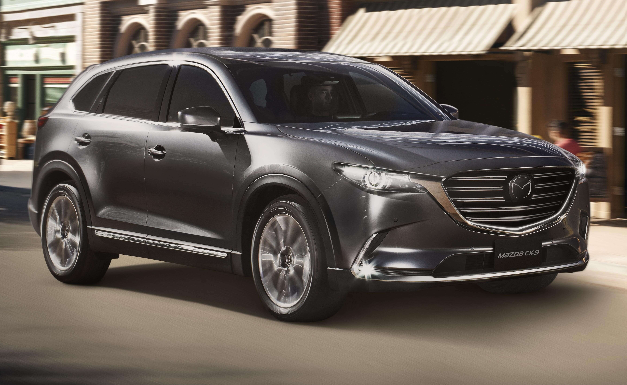
Shopping for a used Mazda CX-9 can feel a little like choosing a table at a busy restaurant. Most options look appealing from a distance, but some seats are clearly better once we know what to look for.
The Mazda CX-9 best years are generally concentrated toward the later part of the second generation, particularly 2022, with 2021 and 2023 also worth considering depending on price, maintenance history, and vehicle condition. Among older examples, certain 2018–2020 models can still represent good value, but they require more careful inspection because Mazda later extended warranty coverage for a specific cylinder-head coolant leak affecting certain 2016–2020 CX-9 vehicles.
That distinction matters.
A cheap CX-9 isn't necessarily a bargain, and an expensive one isn't automatically the safer purchase. Mileage, service history, accident history, climate, ownership habits, and even where the vehicle spent most of its life can matter almost as much as the model year printed on the registration.
So, which Mazda CX-9 years would we actually buy?
Let's work through the generations, strongest years, questionable years, reliability considerations, engines, trims, and used-car inspection points so we can narrow the search without turning it into a full-time job.
Content in this publication
- What Are the Best Years for the Mazda CX-9?
- Understanding Mazda CX-9 Generations
- 2022 Mazda CX-9: The Best Year Overall
- 2023 Mazda CX-9: The Best Final-Year Choice
- 2021 Mazda CX-9: A Strong Used-SUV Candidate
- 2019 Mazda CX-9: One of the Best Value Years
- 2018 Mazda CX-9: Good If the Price Is Right
- What Mazda CX-9 Years Should We Be Careful With?
- 2008–2013 Mazda CX-9: Older and Riskier
- 2015 Mazda CX-9: A Year We Would Approach Cautiously
- 2016–2020 Mazda CX-9: The Coolant-Leak Question
- Mazda CX-9 Reliability by Generation
- Which Mazda CX-9 Engine Is Best?
- Which Mazda CX-9 Trim Should We Buy?
- How Many Miles Is Too Many for a Used CX-9?
- What to Check Before Buying Any Mazda CX-9
- Best Mazda CX-9 Year for Different Buyers
- Is a Used Mazda CX-9 Worth Buying?
- Should We Buy the CX-9 or the Newer CX-90?
- Our Final Mazda CX-9 Model-Year Ranking
- Conclusion: Which Mazda CX-9 Year Should You Buy?
- Frequently Asked Questions
What Are the Best Years for the Mazda CX-9?
For shoppers who want the short answer first, our preferred Mazda CX-9 model years are:
- 2022 Mazda CX-9 — best overall choice
- 2023 Mazda CX-9 — best final-year model
- 2021 Mazda CX-9 — attractive newer used option, but inspect carefully
- 2019 Mazda CX-9 — strong value if properly maintained
- 2018 Mazda CX-9 — potentially affordable second-generation option
- 2014 Mazda CX-9 — reasonable first-generation choice when condition is excellent
However, we wouldn't rank those years equally.
The 2022 CX-9 is the sweet spot for many buyers because it sits late enough in the second generation to benefit from years of refinement while avoiding the earliest years covered by Mazda's cylinder-head coolant-leak warranty extension. It also gained standard i-Activ AWD in the U.S. market. Mazda equipped every 2022 CX-9 with its turbocharged 2.5-liter four-cylinder and six-speed automatic transmission.
Consumer Reports currently describes the 2022 CX-9 as more reliable than other vehicles from the same model year, strengthening its case as our preferred used CX-9.
Mazda CX-9 Best Years at a Glance
| Model year | Our verdict | Main reason |
|---|---|---|
| 2023 | Excellent | Final year, mature design, standard AWD |
| 2022 | Best overall | Strong reliability case and mature engineering |
| 2021 | Good | Modern features and updated technology |
| 2020 | Good with caution | Refined, but certain vehicles fall under coolant-leak CSP |
| 2019 | Good value | Useful updates and strong driving experience |
| 2018 | Worth considering | Affordable second-generation entry |
| 2016–2017 | Inspect carefully | Early second-generation years |
| 2012–2015 | More caution | Aging first-generation mechanical concerns |
| 2007–2011 | Mostly budget buys | Age and repair exposure becoming significant |
There is one essential point behind this table: condition beats model year.
We would rather own a meticulously maintained 2019 CX-9 with complete records than a neglected 2022 CX-9 that skipped oil changes, suffered collision damage, and spent years running on worn tires.
Understanding Mazda CX-9 Generations
Before declaring one year a winner, we need to understand that the CX-9 essentially lived two very different lives.
First-Generation Mazda CX-9: 2007–2015
The original CX-9 arrived for the 2007 model year and established the recipe that made the vehicle interesting: three-row practicality wrapped around handling that felt unusually composed for a family crossover.
These models used a naturally aspirated V6 rather than the turbocharged four-cylinder found in the later CX-9.
They can now appear surprisingly inexpensive on used-car listings.
And that's precisely why we need restraint.
A 15-year-old SUV selling for a fraction of its original price can seem irresistible. But the purchase price is only the cover charge. Aging cooling-system components, suspension parts, seals, drivetrain components, electronics, wheel bearings, brakes, and other wear items can quickly change the economics.
The Aging-Vehicle Problem
When evaluating an older CX-9, asking whether the model was reliable when new isn't enough.
We need to ask:
What has happened during the last 100,000 or 150,000 miles?
An older crossover can have a perfectly respectable engineering reputation and still become expensive if previous owners deferred repairs.
That is why we generally prefer later second-generation vehicles whenever the budget allows.
Second-Generation Mazda CX-9: 2016–2023
The CX-9 underwent a dramatic redesign for 2016.
Mazda replaced the previous V6 formula with its Skyactiv-G 2.5-liter turbocharged four-cylinder, creating a vehicle that felt lighter, more sophisticated, and more premium inside.
The transformation was substantial.
Rather than simply feeling like a mainstream three-row SUV, the second-generation CX-9 often came across as something halfway between a conventional family crossover and an entry-level luxury vehicle.
The design aged beautifully too.
Park a clean 2022 CX-9 beside plenty of newer SUVs and it hardly looks dated.
Mazda ultimately discontinued the CX-9 in the United States after the 2023 model year, with the CX-90 taking its place in Mazda's three-row lineup.
2022 Mazda CX-9: The Best Year Overall
If someone asked us to choose one CX-9 year without knowing anything else about their budget, 2022 would be our starting point.
Why?
Because it combines maturity, equipment, driving quality, and a favorable reliability case.
By 2022, Mazda had been producing the second-generation CX-9 for several years. The vehicle wasn't undergoing a risky ground-up redesign. Instead, Mazda had spent successive model years refining an already established platform.
Consumer Reports currently rates the 2022 CX-9 as more reliable than other vehicles from its model year.
Standard AWD Makes 2022 Especially Attractive
For the U.S. market, Mazda made i-Activ AWD standard across the 2022 CX-9 range.
Earlier second-generation CX-9s could be found with front-wheel drive depending on trim and year, whereas every U.S.-spec 2022 model came with AWD.
Mazda also paired the 2.5-liter turbo engine with its six-speed automatic transmission. With premium fuel, Mazda rated the engine at up to 250 horsepower and 320 lb-ft of torque; it could also operate on regular fuel at reduced output.
That makes the 2022 model feel muscular without becoming frantic.
It doesn't attack the road like a performance SUV. Instead, the torque arrives like a strong current beneath a boat—steady, immediate, and useful in everyday driving.
Who Should Buy a 2022 CX-9?
The 2022 model makes particular sense if we want:
- A relatively modern CX-9 without paying top dollar for the final model year
- Standard AWD
- Strong standard safety technology
- A mature version of Mazda's second-generation design
- Three-row seating without driving something that feels enormous
- A more premium cabin than many similarly priced mainstream used SUVs
For most used buyers, this is where we'd begin searching.
2023 Mazda CX-9: The Best Final-Year Choice
The 2023 CX-9 was the final U.S. model year, which gives it a certain appeal.
Final-year vehicles often attract used buyers because the manufacturer has had years to refine the underlying platform. The formula is already baked; nobody is experimenting with the ingredients anymore.
For 2023, Mazda continued fitting the CX-9 with standard AWD, while the Touring became the entry model in the U.S. lineup. Mazda also highlighted the CX-9's performance in the Insurance Institute for Highway Safety's tougher side-impact testing.
Is 2023 Better Than 2022?
Not automatically.
The biggest enemy here is price.
Because 2023 CX-9s are newer, have generally accumulated fewer miles, and represent the final production year, sellers may ask considerably more for them.
If a comparable 2022 costs several thousand dollars less, we'd usually lean toward the 2022.
But when the price difference is small?
The 2023 becomes extremely attractive.
One Reliability Caveat
We should avoid assuming that "newest" always equals "most reliable."
Consumer Reports' current reliability page describes the 2023 CX-9 as less reliable than other vehicles from the same model year, with climate-system issues among the reported trouble areas.
That doesn't mean every 2023 CX-9 is problematic. Reliability surveys measure populations, not individual vehicles.
It does mean we shouldn't buy one blindly just because it was the final year.
2021 Mazda CX-9: A Strong Used-SUV Candidate
The 2021 CX-9 lands in an interesting position.
It feels modern enough to satisfy buyers who care about technology and cabin presentation, yet depreciation can make it noticeably more attainable than a 2023 example.
Mazda's 2021 lineup included additional technology and equipment improvements, while higher trims offered features such as a 360-degree monitor, ventilated front seats, heated rear seating, head-up display, and driver-assistance technology.
Why We Would Still Inspect a 2021 Carefully
Consumer Reports currently places the 2021 CX-9 below average compared with other vehicles from the same model year. It also notes a recall involving certain 2020–2021 vehicles equipped with a second-row bench seat, where components could allow the seat to slide forward during a crash.
That recall is exactly why VIN research matters.
A recall isn't automatically a reason to reject a vehicle. If the proper repair has been completed, the issue may already have been addressed.
Always check the specific VIN rather than assuming that every vehicle from a particular year was affected.
2019 Mazda CX-9: One of the Best Value Years
If our budget won't stretch comfortably into 2021–2023 territory, we like the 2019 CX-9 as a value-oriented candidate.
This model year received several worthwhile refinements. Mazda added availability of Apple CarPlay and Android Auto, made suspension revisions, and offered features such as ventilated seats and a 360-degree camera on appropriately equipped versions.
That makes a well-equipped 2019 Grand Touring or Signature surprisingly contemporary.
Why 2019 Can Be the Smart-Money Pick
A 2019 CX-9 has already absorbed much more depreciation than a 2022 or 2023 model.
Yet from behind the wheel, the fundamental experience remains familiar:
The same elegant proportions.
The same torque-rich turbocharged engine philosophy.
The same unusually polished steering and handling.
The same upscale cabin atmosphere.
In other words, we aren't sacrificing six years of driving quality simply because we're buying a vehicle several model years older.
But Check for Cylinder-Head Coolant Leakage
This is where our recommendation needs an asterisk.
Mazda's CSP11 warranty extension applies to certain 2016–2020 CX-9s equipped with the Skyactiv-G 2.5T engine. The documented concern involves coolant leaking at the cylinder head around the exhaust manifold.
For qualifying U.S. vehicles, Mazda extended specific repair coverage to 10 years or 120,000 miles, whichever comes first.
So before buying a 2019—or any 2016–2020 turbo CX-9—we would investigate the VIN and service history carefully.
2018 Mazda CX-9: Good If the Price Is Right
The 2018 model sits in what we might call the bargain zone of the second generation.
It has the newer CX-9 design and turbocharged powertrain while typically costing substantially less than the final production years.
That sounds appealing.
And it can be.
However, we're now dealing with a vehicle old enough that maintenance history starts carrying serious weight.
A low advertised price shouldn't hypnotize us.
What Matters More Than Mileage
Suppose we're choosing between:
A 2018 CX-9 with 70,000 miles and incomplete service records.
You may be interested in reading Mazda CX-9 Trim Levels: Complete Guide to Every Version
Or a 2018 CX-9 with 95,000 miles, one long-term owner, regular oil changes, documented fluid maintenance, quality tires, and comprehensive repair receipts.
We'd investigate the second vehicle first.
Mileage is easy to understand, which is why buyers obsess over it.
Maintenance is harder to quantify—but often tells the more important story.
What Mazda CX-9 Years Should We Be Careful With?
There isn't one universally disastrous CX-9 year that makes every example an automatic rejection.
However, several periods deserve greater caution.
2008–2013 Mazda CX-9: Older and Riskier
First-generation CX-9s can now be very inexpensive.
But complaint histories show recurring concern around older models, particularly relating to brakes and engine/cooling-system issues.
CarComplaints' model-year comparison records substantially more complaints for years such as 2010, 2011, and 2012 than for many later CX-9s. Its database shows 2012 with the most overall owner-submitted complaints among the model years listed, while it rates 2015 as the worst year when severity and other factors are considered.
The site also identifies costly water-pump-related engine damage among major first-generation complaints.
Why Water Pump Problems Matter
A water pump sounds like a relatively ordinary component.
And sometimes it is.
But when a water-pump problem causes coolant contamination or contributes to major engine damage, the repair conversation suddenly changes from hundreds to potentially thousands of dollars.
CarComplaints lists examples of first-generation CX-9 owners reporting water-pump failures followed by severe engine damage, including reports for the 2008 and 2015 model years.
This doesn't prove every older CX-9 will suffer that failure.
It simply changes our risk calculation.
When newer second-generation vehicles are available at reasonable used prices, saving a few thousand dollars upfront on a much older CX-9 may not always make financial sense.
2015 Mazda CX-9: A Year We Would Approach Cautiously
CarComplaints currently labels 2015 as the worst CX-9 model year overall based on its combination of complaint patterns, repair expense, mileage, and severity, despite 2012 accumulating more total complaints in its database.
One of the site's prominent 2015 owner reports involves water-pump failure followed by engine damage, with an average reported repair figure of roughly $4,800 for that particular complaint category.
Again, owner-complaint websites aren't controlled reliability studies.
But expensive patterns deserve attention.
If two similarly priced CX-9s are sitting in front of us—one 2015 and one well-maintained later second-generation model—we're generally moving toward the newer one.
2016–2020 Mazda CX-9: The Coolant-Leak Question
Here's the part every used second-generation CX-9 shopper should understand.
Mazda issued Customer Service Program CSP11 concerning certain 2016–2020 CX-9 vehicles equipped with the turbocharged 2.5-liter Skyactiv-G engine.
The issue involves potential coolant leakage from the cylinder head around the exhaust manifold.
Mazda extended coverage for the specified repair to 10 years or 120,000 miles for qualifying vehicles.
Does That Mean We Should Avoid Every 2016–2020 CX-9?
No.
That would be too simplistic.
Instead, we'd use the information as a screening tool.
Check whether the VIN falls within the applicable population.
Examine dealer records.
Ask whether coolant-related repairs have already been performed.
Look underneath for evidence of leakage.
Check coolant level.
Pay attention to overheating history.
And pay for a pre-purchase inspection.
That's how we turn a known concern into a manageable purchasing decision.
Why the VIN Matters More Than Internet Rumors
Owners often search something like:
"Does the 2019 CX-9 have cylinder-head problems?"
But vehicles aren't affected according to internet headlines. Coverage and campaigns apply according to specific manufacturing criteria and VIN ranges.
For U.S. buyers, Mazda's CSP documentation identifies a production range for affected CX-9 vehicles and describes the extended warranty terms.
The smart approach is simple: check the actual vehicle.
Mazda CX-9 Reliability by Generation
Reliability is never one number.
A vehicle can have a robust transmission but troublesome electronics.
Another might have an excellent engine but expensive suspension components.
And even the world's most reliable SUV can become a nightmare after ten years of neglected maintenance.
First Generation Reliability
The first-generation CX-9 deserves credit for surviving well into high mileage in many owners' hands.
But age now works against it.
Even a strong 2014 model is more than a decade old.
Rubber hardens.
Bushings crack.
Seals deteriorate.
Hoses age.
Electrical contacts corrode.
Suspension dampers weaken.
That's simply physics doing what physics does.
So when buying a first-generation CX-9 today, we aren't merely evaluating Mazda engineering. We're evaluating the entire life the individual vehicle has lived.
Second Generation Reliability
The second generation is our preferred hunting ground.
Later examples combine stronger modern safety equipment, a more efficient turbocharged powertrain, substantially more contemporary interiors, and less age-related deterioration.
But the 2016–2020 cylinder-head coolant issue means maintenance records become especially important on those years.
If our budget permits it, moving into 2022 sidesteps that specific CSP11 model-year range while giving us a mature late-generation CX-9.
Which Mazda CX-9 Engine Is Best?
There are essentially two eras to consider.
V6 First-Generation Engine
Older CX-9s offered naturally aspirated V6 power.
Drivers who prefer the linear response and sound of a larger naturally aspirated engine may enjoy it.
However, we'd judge an old V6 CX-9 almost entirely on condition.
At this age, service records matter more to us than theoretical engine preference.
2.5 Turbo Second-Generation Engine
The second-generation CX-9's turbocharged four-cylinder changed the SUV's personality.
Instead of chasing high-rpm horsepower, Mazda emphasized low-end torque.
For 2022, Mazda quoted up to 320 lb-ft of torque using 93-octane premium fuel, or 310 lb-ft when running regular 87-octane fuel.
That makes normal driving pleasantly effortless.
Passing traffic doesn't require dramatic engine theatrics. The CX-9 simply gathers speed and goes.
For most buyers, this is the engine we'd choose—preferably in a later model year with documented maintenance.
Which Mazda CX-9 Trim Should We Buy?
Model year is only half the equation.
Trim level can transform the vehicle.
Touring: The Sensible Choice
Touring models often hit the practical sweet spot.
We get many of the comfort and convenience features people actually use without paying the premium associated with the flagship Signature.
For families shopping carefully, Touring deserves serious attention.
Grand Touring: Our Favorite Used Luxury-Value Trim
Grand Touring is often where the CX-9 starts punching above its badge.
Depending on year, equipment can include:
- 360-degree camera
- Head-up display
- Heated second-row seats
- Ventilated front seats
- Navigation
- Larger wheels
- Additional driver-assistance equipment
- Premium audio features
Used depreciation can make this equipment much cheaper than it was when new.
Signature models are the fancy seats at the front of the theater.
Mazda equipped later Signature versions with higher-grade materials including Nappa leather and distinctive interior trim. The 2022 Signature, for example, featured heated second-row captain's chairs, premium cabin materials, and additional exterior detailing.
Would we pay thousands extra for it?
Only if we genuinely value the luxury touches.
You may be interested in readingMazda CX-9 Trim Levels: Complete Guide to Every VersionYou may be interested in reading
 BMW M4 vs M2: Which BMW M Coupe Is Better?
Mechanically, a pristine Touring can be a smarter purchase than a neglected Signature.
How Many Miles Is Too Many for a Used CX-9?
There is no magic mileage where a CX-9 suddenly becomes unreliable.
Instead, we use mileage as context.
A 40,000-mile vehicle with no maintenance history can worry us.
A 90,000-mile example with excellent records can impress us.
Once a CX-9 approaches six-figure mileage, however, we want more evidence.
At Higher Mileage, Check These Items
Pay particular attention to:
- Cooling-system condition
- Oil leaks
- Suspension wear
- Brake condition
- Transmission behavior
- AWD operation
- Engine mounts
- Turbocharger performance on second-generation models
- Battery and charging system
- Air-conditioning operation
- Infotainment functions
- Tire wear patterns
- Rust underneath the vehicle
- Accident repairs
- Service history
Think of 100,000 miles not as a cliff but as an audit.
The higher the mileage climbs, the more documentation we want.
What to Check Before Buying Any Mazda CX-9
This might be the most important section of the entire guide.
Picking one of the best CX-9 years doesn't protect us from buying a bad individual vehicle.
1. Run the VIN
Use the VIN to check for open safety recalls.
NHTSA's recall lookup allows U.S. consumers to search a specific vehicle and determine whether unrepaired safety recalls remain outstanding.
For relevant 2016–2020 models, we'd also investigate Mazda's CSP11 coolant-leak coverage.
2. Demand Maintenance Records
A clean Carfax-style history report is useful.
Maintenance invoices are better.
We want evidence showing how the vehicle was actually treated.
Regular oil changes are especially important on a turbocharged engine.
3. Start the Vehicle Cold
Ask the seller not to warm it before we arrive.
A cold start can reveal noises, smoke, rough running, warning lights, or other symptoms that disappear once everything reaches operating temperature.
4. Test Every Electronic Feature
Don't assume a button works because it looks shiny.
Test:
- Cameras
- Parking sensors
- Heated seats
- Ventilated seats
- Infotainment
- Bluetooth
- USB connections
- Power liftgate
- Power seats
- Climate control
- Adaptive cruise control
- Blind-spot monitoring
Modern vehicles can hide expensive problems behind tiny switches.
5. Get a Professional Pre-Purchase Inspection
This isn't where we'd save $150 or $200.
A professional inspection before purchase can uncover worn suspension parts, leaks, collision repairs, brake issues, poor tires, corrosion, or developing mechanical problems.
Spending a little before buying can prevent spending a lot after buying.
Best Mazda CX-9 Year for Different Buyers
Different buyers need different answers.
Best Overall: 2022 Mazda CX-9
This remains our number-one choice.
It offers late-generation refinement, standard AWD in the U.S., abundant safety features, and a favorable current Consumer Reports reliability assessment.
Best Newest Option: 2023 Mazda CX-9
Want the youngest possible CX-9?
Choose 2023.
It's the final production year in the U.S., retains standard AWD, and gives buyers the benefit of the mature second-generation platform.
Just don't assume final-year automatically means perfect reliability.
Best Value: 2019 Mazda CX-9
The 2019 model delivers many of the traits that make later CX-9s desirable while benefiting from greater depreciation.
Apple CarPlay and Android Auto availability also makes it easier to live with today.
Just verify coolant-related history and applicable coverage.
Best Budget Choice: A Well-Maintained 2018
We wouldn't buy the cheapest 2018 available.
We'd buy the best-maintained 2018 available.
There is a huge difference.
Is a Used Mazda CX-9 Worth Buying?
For the right owner, absolutely.
The CX-9 stands out because it refuses to behave like an appliance.
Many three-row crossovers perform their duties competently but leave virtually no impression once we park them.
The CX-9 is different.
Its steering feels deliberate.
Its cabin wraps around the driver.
Its exterior styling remains restrained rather than cartoonish.
Its turbo engine produces useful torque.
And higher trims can feel remarkably upscale for the money.
The compromises?
The third row isn't enormous.
Cargo space with all seats raised isn't class-leading.
A Toyota Highlander may appeal more strongly to buyers who place maximum emphasis on resale value and perceived long-term dependability.
A Honda Pilot can provide more family-oriented interior packaging.
But if driving enjoyment matters almost as much as practicality, the CX-9 makes a compelling case.
Should We Buy the CX-9 or the Newer CX-90?
The CX-90 replaced the CX-9 in Mazda's U.S. three-row lineup after 2023.
However, newer doesn't automatically mean better value.
The CX-90 uses a newer platform and offers more modern powertrain choices, but used CX-9 prices can make the older model far more affordable.
There is also something appealing about buying a vehicle late in a long production cycle.
The CX-9 is the known quantity.
We understand its weak points.
We know which years deserve scrutiny.
Mechanics have years of experience with it.
Parts availability is established.
Used-car buyers often underestimate the value of maturity.
Our Final Mazda CX-9 Model-Year Ranking
If we were shopping today, we'd roughly rank the second-generation CX-9 this way:
- 2022 — our overall favorite
- 2023 — excellent if the price is reasonable
- 2021 — appealing but verify history and recalls
- 2019 — strong value with careful inspection
- 2018 — worthwhile at the right price
- 2020 — potentially good, but CSP11 deserves attention
- 2017 — increasingly dependent on maintenance and condition
- 2016 — first-year redesign requiring the most caution
We'd treat first-generation models as a separate category.
At this point, their individual condition and maintenance history matter so much that ranking one model year above another becomes less useful.
Conclusion: Which Mazda CX-9 Year Should You Buy?
So, where does all of this leave us?
If we want the simplest answer, the 2022 Mazda CX-9 is our pick for the best year overall.
It lands in a particularly attractive part of the model's timeline: late enough to benefit from years of second-generation development, modern enough to provide the technology most buyers expect, and old enough to offer meaningful depreciation compared with newer alternatives.
The 2023 CX-9 comes next for shoppers wanting the final and newest model year.
The 2019 CX-9 is our value-oriented choice for buyers trying to spend less without dropping back into the aging first generation.
Most importantly, however, we shouldn't shop by year alone.
A model-year recommendation gets us into the right neighborhood. Maintenance history helps us choose the right house.
Check the VIN.
Review recalls.
Investigate coolant-loss history on applicable 2016–2020 models.
Look at service records.
Drive the vehicle from cold.
And have an independent mechanic inspect it.
Do those things, and a well-chosen CX-9 can offer something increasingly rare: a practical three-row family SUV that doesn't feel like it was designed by people who forgot driving can actually be enjoyable.
Frequently Asked Questions
What is the best year Mazda CX-9 to buy?
For most used buyers, we consider the 2022 Mazda CX-9 the best overall year. It belongs to the mature end of the second generation, has standard AWD in the U.S. market, and Consumer Reports currently rates the 2022 model as more reliable than other vehicles from its model year.
What Mazda CX-9 years should I avoid?
Rather than completely avoiding specific years, we'd exercise greater caution with older first-generation vehicles—particularly examples showing poor maintenance—and investigate 2016–2020 CX-9s carefully for the cylinder-head coolant-leak condition covered by Mazda's CSP11 warranty extension. CarComplaints also identifies 2015 as its worst CX-9 year overall based on its complaint-severity methodology.
Is the 2023 Mazda CX-9 a good year?
Yes, the 2023 CX-9 can be an excellent used choice because it was the final U.S. model year and benefits from the mature second-generation platform. However, Consumer Reports currently rates its reliability below other 2023 vehicles overall, so we'd still prioritize maintenance records and a pre-purchase inspection rather than assuming the newest CX-9 must be the safest bet.
You may be interested in readingMazda CX-9 Trim Levels: Complete Guide to Every VersionYou may be interested in reading
BMW M4 vs M2: Which BMW M Coupe Is Better?You may be interested in reading
BMW M4 and M3: Which BMW M Car Is Right for You?How reliable is a used Mazda CX-9?
Reliability varies substantially by year, mileage, maintenance history, and generation. Later second-generation models are generally the CX-9s we'd target first. The 2022 model is particularly appealing because Consumer Reports currently places it above average relative to its model year. Older vehicles require more scrutiny simply because age adds wear even when the underlying design is sound.
Is a high-mileage Mazda CX-9 worth buying?
It can be, provided the vehicle has excellent maintenance documentation and passes a thorough mechanical inspection. We would rather buy a higher-mileage CX-9 with consistent oil changes and documented maintenance than a lower-mileage vehicle with an unclear history. On 2016–2020 turbo models, we'd additionally verify whether the specific vehicle is relevant to Mazda's cylinder-head coolant-leak warranty program.
If you want to know other articles similar to Mazda CX-9 Best Years: Which Models Are Worth Buying? you can visit the category Models.
Honda Passport vs Toyota 4Runner: Which SUV Is Better?
Honda Passport vs Ford Bronco: Which SUV Is Better?
Honda Passport vs Ford Explorer: Which SUV Is Better?
Honda Passport or Pilot: Which SUV Is Better?
Honda Passport vs Jeep Grand Cherokee: Which SUV Is Better?
Honda Passport vs Nissan Pathfinder: Which SUV Is Better?
Leave a Reply
More content of your interest