

BMW M4 vs M4 Competition: Which One Should You Buy?

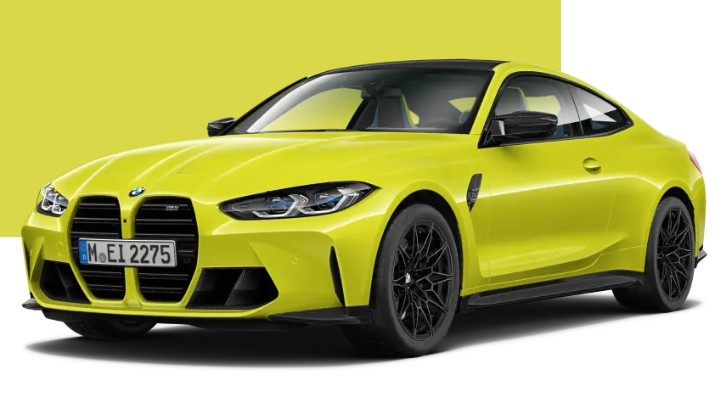
The BMW M4 vs M4 Competition debate looks simple on paper. One has more power, one accelerates faster, and naturally, we might assume the Competition is automatically the better car.
Not quite.
These two versions of the M4 share the same basic DNA, yet they deliver surprisingly different experiences behind the wheel. The regular BMW M4 is aimed squarely at enthusiasts who still want to work for their speed. It combines rear-wheel drive with a six-speed manual transmission, giving us a traditional sports-car experience that is becoming increasingly difficult to find.
The M4 Competition follows another philosophy. It adds power and torque, exchanges the manual gearbox for BMW's rapid eight-speed automatic, and focuses more heavily on outright performance. Depending on configuration and market, BMW also offers the Competition with M xDrive all-wheel drive.
For the current U.S. lineup, BMW lists the M4 Coupe at 473 hp, the rear-wheel-drive M4 Competition at 503 hp, and the M4 Competition xDrive at 523 hp. BMW quotes respective 0–60 mph times of approximately 4.1, 3.8, and 3.4 seconds.
But numbers don't tell the whole story.
So, which M4 deserves a spot in our garage? Let's dig into the differences that actually matter.
Content in this publication
- BMW M4 vs M4 Competition at a Glance
- What Is the Difference Between the BMW M4 and M4 Competition?
- BMW M4 vs M4 Competition Engine
- BMW M4 vs M4 Competition Acceleration
- BMW M4 Manual vs M4 Competition Automatic
- What Makes the M4 Competition Automatic Special?
- BMW M4 vs M4 Competition Handling
- M4 Competition RWD vs M4 Competition xDrive
- BMW M4 vs M4 Competition Exterior
- BMW M4 vs M4 Competition Interior
- BMW M4 vs M4 Competition Comfort
- BMW M4 vs M4 Competition Sound and Character
- BMW M4 vs M4 Competition for Track Driving
- Which M4 Is Better in Rain or Snow?
- BMW M4 vs M4 Competition Reliability
- BMW M4 vs M4 Competition Fuel Economy
- BMW M4 vs M4 Competition Price
- BMW M4 vs M4 Competition Used
- BMW M4 vs M4 Competition: Which Holds Value Better?
- Who Should Buy the Standard BMW M4?
- Who Should Buy the BMW M4 Competition?
- BMW M4 vs M4 Competition: Pros and Cons
- Which BMW M4 Is the Sweet Spot?
- BMW M4 vs M4 Competition: Final Verdict
- Frequently Asked Questions
BMW M4 vs M4 Competition at a Glance
Before diving deep into engines, transmissions, handling, comfort, and ownership, here's the broad picture.
| Feature | BMW M4 | BMW M4 Competition |
|---|---|---|
| Engine | 3.0L twin-turbo inline-six | 3.0L twin-turbo inline-six |
| Current U.S. output | 473 hp | 503 hp RWD / 523 hp xDrive |
| Transmission | 6-speed manual | 8-speed M Steptronic automatic |
| Standard drivetrain | Rear-wheel drive | Rear-wheel drive |
| AWD availability | No | Yes, with Competition xDrive |
| Current U.S. 0–60 mph | 4.1 sec | 3.8 sec RWD / 3.4 sec xDrive |
| Character | Interactive, old-school | Faster, more polished |
| Best for | Driving enthusiasts | Maximum everyday performance |
BMW itself describes the regular M4 as the purist-oriented model with its six-speed manual and rear-wheel-drive layout, while the Competition versions use an eight-speed M Steptronic transmission.
That's essentially the entire argument in miniature: engagement versus efficiency of speed.
What Is the Difference Between the BMW M4 and M4 Competition?
The biggest differences between the BMW M4 and BMW M4 Competition are power output, torque delivery, transmission, available drivetrain, acceleration, and overall personality.
Both cars use BMW's high-performance 3.0-liter turbocharged inline-six engine, but the Competition extracts more from it.
Yet the transmission may matter even more than the extra horsepower.
The standard M4 gives us three pedals.
The Competition doesn't.
That single distinction can completely change which model makes sense.
The Standard M4 Is About Involvement
Think of the regular M4 as the version that wants us to participate.
We select the gear. We operate the clutch. We decide whether we nailed the downshift or made ourselves look silly leaving the coffee shop.
There's imperfection involved, and that's precisely why some drivers love it.
At a time when high-performance cars increasingly automate everything, the regular M4 still allows us to play an active role in extracting performance.
The Competition Is About Maximum Effectiveness
The Competition approaches the same problem like a stopwatch.
Its automatic transmission changes gear faster than most humans ever could, its additional output provides stronger acceleration, and the available M xDrive version can deploy enormous amounts of power without turning every hard launch into a wrestling match.
It's less about doing things the traditional way and more about doing them quickly.
Neither philosophy is objectively superior.
They're simply different.
BMW M4 vs M4 Competition Engine
Underneath both cars sits one of the biggest reasons enthusiasts love the modern M4: BMW's turbocharged inline-six.
The current M4 family uses a 3.0-liter BMW M TwinPower Turbo inline six-cylinder engine.
The engine is muscular without behaving like a blunt instrument. It can cruise quietly through traffic and then transform completely when we push the throttle deeper.
BMW M4 Horsepower
The current U.S.-market regular M4 produces 473 horsepower.
That's already serious performance.
A 473-hp rear-wheel-drive coupe with a manual gearbox isn't exactly begging for more muscle.
BMW quotes a 0–60 mph time of around 4.1 seconds for the current model.
And remember: acceleration times don't necessarily capture what makes this version attractive.
The fun comes from being involved.
BMW M4 Competition Horsepower
The rear-wheel-drive M4 Competition currently produces 503 horsepower, while the M4 Competition xDrive reaches 523 horsepower in BMW's U.S. lineup.
That's a noticeable step upward.
More importantly, the Competition combines its stronger engine output with an automatic gearbox capable of keeping the engine inside its most effective operating range.
The result feels relentless.
Plant the accelerator and the Competition simply gets on with the business of disappearing down the road.
Does the Extra Power Actually Matter?
Yes, although perhaps not as much as the brochures suggest.
During normal city driving, both cars are ridiculously powerful.
You're not going to leave the driveway in the standard M4 thinking, "What this desperately needs is another 30 horsepower."
Where the Competition's advantage becomes clearer is during hard acceleration, highway overtaking, repeated high-speed driving, and track use.
The faster we're going, the more useful the extra performance becomes.
BMW M4 vs M4 Competition Acceleration
Here's where the Competition starts earning its badge.
BMW currently quotes these 0–60 mph times for the U.S. lineup:
- BMW M4 Coupe: approximately 4.1 seconds
- BMW M4 Competition Coupe: approximately 3.8 seconds
- BMW M4 Competition xDrive Coupe: approximately 3.4 seconds
Those are BMW's own comparison figures, and actual results can vary with equipment, conditions, tires, road surface, and testing procedure.
The important part isn't merely the numbers.
It's how easily the Competition achieves them.
Why the M4 Competition Feels Faster
Horsepower certainly contributes, but traction and transmission behavior make an enormous difference.
The automatic can execute shifts with ruthless consistency. Add xDrive, and the car gains the ability to translate more of its power into forward motion rather than tire smoke.
That's why the xDrive Competition can feel almost supernatural from a standing start.
Press the accelerator and you're launched toward the horizon like somebody attached the car to an invisible cable.
The standard M4 demands more finesse.
And depending on our priorities, that can actually make it more entertaining.
BMW M4 Manual vs M4 Competition Automatic
This is arguably the most important section of the entire comparison.
Forget horsepower for a moment.
Forget acceleration.
Ask yourself one question:
Do we want a manual transmission?
If the answer is yes, the decision becomes remarkably easy.
The regular M4 is the one.
BMW currently pairs the M4 Coupe with a six-speed manual transmission, while the Competition models receive an eight-speed M Steptronic Sport transmission with Drivelogic.
Why Choose the Manual M4?
Manual transmissions no longer win performance arguments.
Automatic gearboxes shift faster. They're easier in traffic. They're more consistent on a racetrack. They help generate quicker acceleration numbers.
But we're not buying an enthusiast car solely because it's convenient.
Changing gears manually adds another layer to driving.
Every corner becomes a little ritual: brake, clutch, downshift, release, turn, accelerate.
Do it correctly and the satisfaction is strangely addictive.
The Manual Makes Lower Speeds More Interesting
Here's another advantage nobody talks about enough.
Modern performance cars have become incredibly fast.
Sometimes too fast.
If excitement requires reaching outrageous speeds, opportunities to enjoy the car responsibly become limited.
A manual gearbox gives us something to do even when traveling at relatively modest speeds.
That matters.
What Makes the M4 Competition Automatic Special?
The Competition's eight-speed automatic isn't simply there because BMW thinks buyers don't know how to use a clutch.
It makes the car faster.
It can deliver rapid shifts, handle the engine's stronger output, cruise smoothly, and transform its behavior depending on the selected driving settings.
In daily driving, it's effortless.
On a twisty road, we can use the paddles.
At the track, it becomes brutally efficient.
For drivers who care more about extracting maximum performance than preserving traditional sports-car rituals, it's difficult to argue against it.
BMW M4 vs M4 Competition Handling
Both cars are serious performance machines, so neither should be mistaken for a normal 4 Series wearing aggressive bodywork.
BMW equips the M4 family with purpose-built M hardware and adaptive suspension technology intended to balance handling performance with road usability.
Yet their personalities differ.
Standard M4: More Analog in Spirit
We wouldn't call the G82 M4 analog in the traditional sense. There's far too much sophisticated electronics and technology underneath it.
But compared with the Competition xDrive in particular, the standard M4 feels conceptually simpler.
Rear-wheel drive.
Manual transmission.
Powerful straight-six.
Driver in the middle of the process.
That's an increasingly rare recipe.
You may be interested in reading BMW M4 vs M440i: Which BMW Coupe Should We Choose?
M4 Competition: More Clinical, More Capable
The Competition feels designed to shrink the margin between what the driver asks and what the car delivers.
It's quick to respond and devastatingly effective.
When equipped with xDrive, its ability to put power down transforms the personality further.
We can exit corners with enormous confidence, particularly when conditions aren't perfect.
The car feels like it has more tools available to solve the problem.
Which Is More Fun on a Twistier Road?
That's subjective.
The M4 Competition may cover the road more quickly.
The manual M4 may make the road feel more memorable.
That's the distinction we'd keep coming back to throughout this comparison.
M4 Competition RWD vs M4 Competition xDrive
There's actually another decision hiding inside the BMW M4 vs M4 Competition discussion.
Not every Competition is identical.
BMW currently offers both rear-wheel-drive and M xDrive Competition Coupe configurations in the U.S. market.
That gives buyers three distinct personalities within the M4 family.
M4 Competition Rear-Wheel Drive
The RWD Competition represents a middle ground.
We get the stronger Competition powertrain and automatic gearbox while retaining the traditional rear-driven layout.
For drivers who don't need all-wheel-drive traction, this version can be extremely appealing.
M4 Competition xDrive
The xDrive model is the acceleration monster.
BMW's M xDrive system is performance focused rather than simply a bad-weather safety net. BMW describes its available drive settings as including 4WD, 4WD Sport, and a 2WD mode under appropriate configurations/settings.
More importantly for everyday drivers, all-wheel drive makes the car much better at deploying power when conditions are less than ideal.
If we live somewhere wet, cold, or snowy, that's a significant advantage.
BMW M4 vs M4 Competition Exterior
Visually, the regular M4 and M4 Competition are close relatives.
We're not choosing between a discreet executive coupe and a wild homologation special.
Both have the unmistakable M4 body, aggressive stance, muscular proportions, and that enormous grille that has probably generated enough online arguments to power a small city.
The Competition gets its own badging and model identification, but overall styling similarities mean this is unlikely to be the deciding factor. BMW specifically notes exclusive Competition badging among the model's distinctions.
Which One Looks Better?
That's mostly going to depend on configuration.
Wheel design, exterior paint, carbon options, brake finish, ride height, and interior specification can dramatically change how an M4 looks.
A tastefully configured standard M4 may look more expensive than an oddly configured Competition.
So we'd avoid choosing solely based on the badge.
BMW M4 vs M4 Competition Interior
Step inside and the difference remains more philosophical than architectural.
Both are fundamentally M4s.
We get BMW's performance-focused cockpit, M-specific controls, supportive seats, digital interfaces, high-quality materials, and enough customization to make configuring the car online dangerously time-consuming.
BMW currently offers optional upgrades including M Carbon Bucket Seats and an M Alcantara steering wheel, depending on configuration.
Are the Carbon Bucket Seats Worth It?
They're fantastic if we prioritize driving.
They're less fantastic when we're trying to climb out of the car gracefully in tight jeans after eating too much dinner.
The carbon buckets hold the body more securely and look sensational, but standard seats generally make the M4 easier to live with every day.
For frequent track users, we'd seriously consider them.
For a daily commuter, we'd try them before buying.
BMW M4 vs M4 Competition Comfort
Neither version is a 7 Series, obviously.
But one of the impressive things about modern M cars is how broad their capabilities have become.
The adaptive suspension allows the M4 to vary its behavior depending on road conditions and selected settings.
That doesn't mean potholes magically disappear.
Large wheels, low-profile performance tires, firm suspension, and an aggressive chassis still remind us we're driving a serious sports coupe.
Which Is Better for Daily Driving?
If commuting is the priority, we'd give the Competition automatic an advantage.
Not because its ride is magically plush, but because the automatic gearbox makes traffic far easier.
The standard M4 manual can absolutely function as a daily driver.
But creeping through stop-and-go traffic while repeatedly working a clutch isn't everyone's idea of relaxation.
The Competition asks less of us when we're tired.
BMW M4 vs M4 Competition Sound and Character
Both cars use essentially the same engine family, so their fundamental voice is similar.
But the transmission changes how we interact with that soundtrack.
The standard M4 encourages us to stretch gears manually and decide when the next ratio arrives.
That creates drama.
The Competition's automatic produces a more rapid-fire experience. Accelerate hard and the car tears through ratios with much less interruption.
One feels like we're playing the instrument.
The other feels like we've hired a professional musician.
BMW M4 vs M4 Competition for Track Driving
Which car belongs on track?
Both.
The more interesting question is what we want from the track day.
Choose the Standard M4 If You Want to Learn and Engage
A manual rear-wheel-drive M4 gives us plenty to think about.
Gear selection matters.
Throttle control matters.
Timing matters.
Smoothness matters.
We become a bigger component in the equation.
For someone interested in the craft of driving rather than chasing the fastest possible lap, that can be deeply satisfying.
Choose the Competition If Lap Times Matter More
If our objective is maximizing speed and consistency, the Competition has obvious advantages.
More power.
More torque.
Faster gear changes.
And with M xDrive, dramatically improved traction.
It allows us to focus more heavily on braking points, steering inputs, and corner placement rather than spending attention coordinating every shift.
Does xDrive Ruin the M4?
No.
It changes it.
Some enthusiasts hear "all-wheel drive" and imagine a numb front-heavy machine that has forgotten how to have fun.
That's an outdated stereotype.
BMW's M xDrive application is designed around high-performance driving, and the resulting car remains extremely serious.
The bigger question is whether we personally value the simplicity of pure rear-wheel drive.
Which M4 Is Better in Rain or Snow?
This one is straightforward.
The M4 Competition xDrive is the strongest choice when traction is a major concern.
That doesn't mean an xDrive badge turns summer performance tires into snow tires. Proper tires remain essential.
But mechanically, distributing power across both axles can make the Competition xDrive easier to use confidently in challenging conditions.
Drivers in warm climates may care much less.
If it barely rains where we live and winter means putting on a light sweater, rear-wheel drive suddenly looks far more attractive.
BMW M4 vs M4 Competition Reliability
The reliability conversation requires some perspective because we're comparing two closely related vehicles rather than completely different cars.
Both share major mechanical architecture.
That means the difference in ownership risk isn't as dramatic as comparing an M4 with a completely unrelated sports car.
However, complexity matters.
The Competition xDrive adds drivetrain hardware compared with the rear-wheel-drive manual M4, while the regular car's clutch is itself a wear component influenced heavily by how the vehicle is driven.
Maintenance History Matters More Than the Badge
This becomes especially important when shopping used.
A carefully maintained Competition can be a better purchase than a neglected base M4.
Likewise, a well-kept manual car owned by a sympathetic enthusiast can be preferable to a car that has spent its entire life performing smoky launches for social media.
We'd prioritize:
- Complete service history
- Correct oil-change intervals
- Quality tires
- Healthy brakes
- Evidence of accident repairs
- Signs of track abuse
- Transmission behavior
- Clutch condition on manual cars
- Modifications or ECU tuning
- Warranty status
The badge tells us which version we're looking at.
You may be interested in readingBMW M4 vs M440i: Which BMW Coupe Should We Choose?You may be interested in reading
BMW M4 vs Porsche 911: Which Performance Coupe Is Better?The history tells us whether we should actually buy it.
BMW M4 vs M4 Competition Fuel Economy
Let's establish expectations.
Nobody wakes up, buys an M4, and then becomes shocked that a twin-turbo performance coupe isn't a Prius.
Both cars can be reasonably civilized during highway cruising, but fuel consumption changes dramatically depending on driving style.
And driving style tends to change when 500-ish horsepower is sitting underneath our right foot.
The Competition's automatic transmission can keep engine speeds optimized during normal use, while xDrive models carry additional drivetrain hardware.
Real-world consumption will consequently depend heavily on traffic, wheel-and-tire configuration, climate, driving style, and model year.
BMW M4 vs M4 Competition Price
The Competition costs more.
The question is whether the difference buys things we actually want.
For BMW's current U.S. 2027 model listing, starting MSRP is shown at approximately $82,200 for the M4 Coupe, $86,600 for the M4 Competition Coupe, and $91,700 for the M4 Competition xDrive Coupe, before options and associated charges.
That means the rear-wheel-drive Competition's premium isn't enormous relative to the overall price of the car.
This can make the Competition appear like an obvious upgrade.
But there's a catch.
More Expensive Doesn't Always Mean More Desirable
Suppose we specifically want a manual transmission.
Paying more money for the Competition doesn't improve the car for us.
It actually removes one of the features we care about most.
That's why performance-car shopping shouldn't work like ordering a laptop where the higher specification automatically wins.
Sometimes the supposedly lower model is intentionally different.
BMW M4 vs M4 Competition Used
Things become even more interesting on the secondhand market.
Depreciation can narrow the original price difference between trims, and option combinations can matter almost as much as the model itself.
A Competition loaded with carbon ceramic brakes, carbon buckets, premium paint, and desirable packages could sit in an entirely different price category from a relatively simple standard M4.
What Should We Look for in a Used M4?
First, identify exactly what we're buying.
Model years matter because BMW has revised specifications throughout the G82 generation, and power figures or available configurations from one year shouldn't automatically be applied to another.
Then investigate the individual vehicle.
Service records are gold.
Modification history matters tremendously.
Performance cars are commonly tuned, lowered, tracked, launched repeatedly, or modified in ways that may influence reliability and warranty coverage.
A pre-purchase inspection from a BMW specialist is cheap insurance when buying a used example.
BMW M4 vs M4 Competition: Which Holds Value Better?
Predicting future depreciation is tricky.
Desirability changes.
BMW updates the lineup.
Special editions appear.
Market conditions shift.
Yet there is an interesting long-term argument for the manual M4.
Manual high-performance cars are disappearing rapidly. That doesn't guarantee the regular M4 will become a collectible, but rarity of the drivetrain format could support enthusiast demand.
The Competition has another advantage: it's the model many buyers instinctively perceive as the higher-performance specification.
So we'd avoid buying either solely as an investment.
Buy the configuration we'd want to drive.
Anything else is a bonus.
Who Should Buy the Standard BMW M4?
We'd choose the standard M4 if the experience matters more than the stopwatch.
It's particularly compelling for drivers who want:
- A six-speed manual transmission
- Rear-wheel drive
- Greater driver involvement
- Traditional performance-car character
- More interaction at normal road speeds
- A slightly lower purchase price
- Something increasingly rare in the modern sports-car market
This is the M4 for people who understand that missing the perfect shift occasionally is part of the fun.
Perfection isn't always entertaining.
Who Should Buy the BMW M4 Competition?
The Competition makes more sense if we prioritize outright capability.
Choose it if we want:
- More horsepower
- More torque
- Quicker acceleration
- Rapid automatic shifts
- Easier daily commuting
- Stronger straight-line performance
- Available M xDrive
- Better traction in imperfect weather
- More consistent performance during aggressive driving
The Competition is the version we'd recommend to someone who says, "I just want the fastest, easiest M4 to drive quickly."
And especially with xDrive, that's exactly what it delivers.
BMW M4 vs M4 Competition: Pros and Cons
BMW M4 Pros
The regular car's strongest advantages are its manual transmission, old-school rear-wheel-drive layout, slightly lower entry price, and greater sense of interaction.
It may not win a drag race against the Competition, but it can win the emotional argument.
BMW M4 Cons
The manual is slower than the Competition's automatic.
Rear-wheel drive also requires more finesse when putting power down, particularly in poor conditions.
And if chasing performance numbers is our main priority, the Competition simply provides more.
BMW M4 Competition Pros
The Competition gives us stronger acceleration, extra engine output, fast gear changes, and the option of M xDrive.
It's astonishingly competent.
For real-world overtaking or fast track driving, the advantages aren't theoretical.
We can feel them.
BMW M4 Competition Cons
It sacrifices the manual gearbox.
That may mean absolutely nothing to some buyers and everything to others.
It also costs more, particularly once we step up to the xDrive version and begin exploring BMW's tempting options list.
Which BMW M4 Is the Sweet Spot?
Here's where we'd divide the answer.
For an enthusiast weekend car, we'd seriously consider the regular manual M4.
For a daily-driven performance coupe, the rear-wheel-drive Competition makes enormous sense.
For someone who wants the fastest and most versatile everyday configuration, the Competition xDrive is extremely difficult to beat.
That's what makes the M4 lineup so interesting.
There isn't simply a bad, good, and better version.
There are different tools.
The regular M4 is a chef's knife.
The Competition is a food processor.
Both get dinner on the table, but one makes us participate a lot more.
BMW M4 vs M4 Competition: Final Verdict
The winner of the BMW M4 vs M4 Competition comparison depends entirely on what we believe makes a performance car special.
If speed, acceleration, traction, and convenience dominate our priorities, the BMW M4 Competition wins.
It has more muscle, shifts faster, accelerates harder, and offers the enormous real-world advantage of M xDrive if we choose that configuration.
It's a devastatingly effective performance coupe.
But we'd hesitate before automatically calling it the better M4.
The regular BMW M4 manual offers something increasingly precious: involvement.
We're responsible for choosing gears. We're managing the clutch. We're controlling how the engine and transmission communicate.
The car asks something from us.
And that interaction can make an ordinary Sunday drive more interesting than shaving a few tenths from a 0–60 time ever could.
So here's the simplest way to choose.
If we ask, "Which one is faster?"
Buy the M4 Competition.
If we ask, "Which one lets me row my own gears?"
Buy the M4.
If we ask, "Which version launches hardest and offers the most traction?"
Buy the M4 Competition xDrive.
And if we're still undecided?
Drive both.
Sometimes our left foot answers the question faster than a specification sheet ever will.
Frequently Asked Questions
Is the BMW M4 Competition Better Than the M4?
The M4 Competition is objectively faster and more powerful, but that doesn't make it universally better. The regular M4 offers a six-speed manual transmission and rear-wheel drive, making it more appealing to drivers who prioritize engagement. The Competition is preferable if outright performance and automatic shifting matter more.
How Much Faster Is the M4 Competition Than the M4?
In BMW's current U.S. lineup, the company quotes approximately 4.1 seconds from 0–60 mph for the M4 Coupe, 3.8 seconds for the M4 Competition Coupe, and 3.4 seconds for the M4 Competition xDrive Coupe. Actual performance varies with conditions and specification.
Does the BMW M4 Competition Come With a Manual Transmission?
No. In the current U.S. lineup, the M4 Competition uses BMW's eight-speed M Steptronic Sport automatic transmission. Buyers who want a six-speed manual need the regular M4 Coupe.
Is the M4 Competition Available With Rear-Wheel Drive?
Yes. BMW currently offers a rear-wheel-drive M4 Competition Coupe in the U.S. alongside the M4 Competition xDrive Coupe. The latter adds BMW's performance-oriented M xDrive all-wheel-drive system.
You may be interested in readingBMW M4 vs M440i: Which BMW Coupe Should We Choose?You may be interested in reading
BMW M4 vs Porsche 911: Which Performance Coupe Is Better?You may be interested in reading
BMW M4 vs Audi RS5: Which Performance Car Is Better?Should I Buy an M4 or M4 Competition for Daily Driving?
For most daily drivers, we'd lean toward the M4 Competition because the automatic transmission makes traffic easier and the car still delivers extraordinary performance. If driving enjoyment and using a manual gearbox are central reasons for buying an M car, however, the standard M4 may be the more satisfying choice.
If you want to know other articles similar to BMW M4 vs M4 Competition: Which One Should You Buy? you can visit the category Models.
Honda Passport vs Toyota 4Runner: Which SUV Is Better?
Honda Passport vs Ford Bronco: Which SUV Is Better?
Honda Passport vs Ford Explorer: Which SUV Is Better?
Honda Passport or Pilot: Which SUV Is Better?
Honda Passport vs Jeep Grand Cherokee: Which SUV Is Better?
Honda Passport vs Nissan Pathfinder: Which SUV Is Better?
Leave a Reply
More content of your interest