

BMW M4 vs Audi RS5: Which Performance Car Is Better?

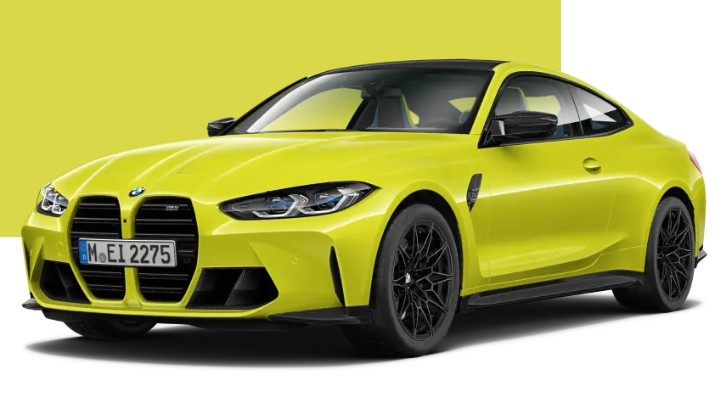
The BMW M4 vs Audi RS5 debate is one of those automotive arguments that can turn a quiet coffee break into a full-blown enthusiast conference. Both cars promise serious speed, premium interiors, everyday usability, and the sort of badge prestige that makes us glance back after parking. Yet they approach the performance-car formula from noticeably different directions.
The BMW M4 feels like the more extroverted athlete. It wants us to know there is serious hardware underneath its sculpted bodywork. Depending on the version, we get rear-wheel drive or all-wheel drive, a powerful twin-turbocharged inline-six engine, and a chassis developed with aggressive driving high on the priority list.
The Audi RS5 takes another route. It mixes performance with restraint, wrapping its twin-turbo V6 and Quattro all-wheel-drive system inside a package that tends to feel polished, predictable, and remarkably easy to live with.
So which one should we buy?
There is no universal answer. The BMW tends to satisfy drivers chasing involvement and raw performance, while the Audi makes a compelling argument for those wanting speed without turning every commute into a qualifying lap.
Let's dig deeper.
Content in this publication
- BMW M4 vs Audi RS5 at a Glance
- BMW M4 Engine and Performance
- Audi RS5 Engine and Performance
- BMW M4 vs Audi RS5 Acceleration
- BMW M4 vs Audi RS5 Handling
- Steering Feel and Driver Engagement
- Rear-Wheel Drive vs Quattro vs M xDrive
- BMW M4 vs Audi RS5 Transmission
- BMW M4 vs Audi RS5 Interior
- Seats and Driving Position
- BMW M4 vs Audi RS5 Practicality
- Ride Comfort
- BMW M4 vs Audi RS5 Sound
- BMW M4 vs Audi RS5 Exterior Design
- Technology and Infotainment
- BMW M4 vs Audi RS5 Daily Driving
- BMW M4 vs Audi RS5 in Rain and Winter
- Fuel Economy
- Maintenance and Running Costs
- Reliability: BMW M4 vs Audi RS5
- BMW M4 vs Audi RS5 Modification Potential
- BMW M4 vs Audi RS5 for Track Driving
- BMW M4 vs Audi RS5 for Long Trips
- Which Car Has the Better Image?
- BMW M4 vs Audi RS5 Resale Value
- BMW M4 vs Audi RS5 Price and Value
- Who Should Buy the BMW M4?
- Who Should Buy the Audi RS5?
- BMW M4 vs Audi RS5: Pros and Cons
- BMW M4 vs Audi RS5: Which Is Faster?
- BMW M4 vs Audi RS5: Which Handles Better?
- BMW M4 vs Audi RS5: Which Is Better for Everyday Use?
- BMW M4 vs Audi RS5: Final Verdict
- Frequently Asked Questions
BMW M4 vs Audi RS5 at a Glance
Comparing specifications gives us a useful starting point, although exact figures can vary by model year, market, body style, and trim.
| Category | BMW M4 | Audi RS5 |
|---|---|---|
| Engine | 3.0L twin-turbo inline-six | 2.9L twin-turbo V6 |
| Transmission | 6-speed manual or 8-speed automatic, depending on version | 8-speed automatic |
| Drivetrain | RWD or AWD | AWD |
| Power | Roughly 470–520+ hp depending on version | Around mid-400-hp range in recent models |
| Character | Aggressive and driver-focused | Refined and confidence-inspiring |
| Everyday comfort | Good, but firmer | Excellent |
| Interior design | Modern and technology-heavy | Clean and understated |
| Performance focus | Very high | High |
| Bad-weather traction | Excellent with xDrive | Excellent |
| Practicality | Good | Very good, especially RS5 Sportback |
The numbers already reveal something important.
The M4 usually carries the greater performance ceiling, particularly when we move into Competition and xDrive versions. The RS5 counters with accessibility. Audi makes deploying its performance remarkably easy.
The Core Personality Difference
Imagine two talented athletes.
The M4 is the sprinter constantly bouncing on the starting blocks, waiting for an excuse to explode forward.
The RS5 is the decathlete wearing a tailored suit. It can move extremely quickly, but it rarely feels like it is trying to prove anything.
Neither philosophy is wrong.
Which one works better depends heavily on what we expect from our car.
BMW M4 Engine and Performance
The engine is one of the strongest arguments for choosing the M4.
BMW's turbocharged inline-six delivers the smooth yet forceful acceleration that has become a signature of modern M cars. Power builds with remarkable urgency, and once the turbochargers are fully awake, the M4 can feel like someone has attached an invisible cable to the horizon and started pulling.
Why the Inline-Six Feels Special
An inline-six naturally delivers excellent mechanical balance. In the M4, that architecture combines refinement with a surprisingly aggressive personality.
Press the accelerator gently and the engine behaves like a perfectly civilized premium coupe.
Press harder and everything changes.
Throttle response becomes sharper, the transmission works more aggressively, and the car begins devouring road at a rate that makes motorway overtaking almost comically easy.
M4 Competition Changes the Equation
The standard M4 is already quick, but the Competition versions increase the intensity.
Depending on the generation and market, buyers may find configurations including rear-wheel drive and M xDrive all-wheel drive. The AWD version is particularly impressive because it converts a huge amount of engine output into forward motion with very little drama.
For pure acceleration, the M4 Competition xDrive is difficult to ignore.
Audi RS5 Engine and Performance
Audi uses a smaller 2.9-liter twin-turbocharged V6 in recent RS5 models.
On paper, the RS5 may appear to enter the fight carrying a slightly smaller sword. In reality, the performance difference feels less dramatic during normal driving than horsepower figures might suggest.
The RS5 produces strong torque across a broad portion of the rev range. That means acceleration arrives immediately and predictably.
There is little waiting around.
Put your foot down and the Audi simply goes.
Quattro Makes Performance Effortless
Audi's Quattro system has always been a major component of the RS formula.
In the RS5, it gives the car enormous confidence when accelerating out of corners or driving on wet roads. Rather than demanding delicate throttle management, the Audi encourages us to use its performance.
This accessibility is one of the RS5's greatest strengths.
Speed Without Theater
There is something almost deceptive about the RS5.
We can be traveling extremely quickly without feeling as though the car is straining. Wind noise is controlled, the engine remains relatively refined, and the chassis feels planted.
For some drivers, that makes the Audi less exciting.
For others, it makes it brilliant.
BMW M4 vs Audi RS5 Acceleration
Straight-line performance is where the M4 often gains a clear advantage, particularly in higher-output Competition configurations.
The combination of additional horsepower, rapid automatic shifting, launch-control technology, and available xDrive allows certain M4 variants to deliver seriously impressive acceleration.
The RS5 is hardly slow.
Far from it.
Its Quattro traction lets it launch hard, especially from low speeds. But once both cars are moving quickly, the BMW's stronger engine can begin stretching the distance between them.
Which One Feels Faster?
Interestingly, perceived speed and actual speed are not always the same thing.
The M4 tends to feel more dramatic. Its engine is more vocal, its chassis communicates more movement, and the whole experience feels slightly more aggressive.
The RS5 often disguises its velocity.
We look down at the speedometer and occasionally discover we are traveling considerably faster than expected.
That difference matters.
Some of us want drama.
Others want devastating speed delivered with minimum fuss.
BMW M4 vs Audi RS5 Handling
This is where the personalities really separate.
BMW has historically built M cars around driver involvement, and the M4 continues that philosophy even as technology increasingly manages what happens between the steering wheel and the tires.
The Audi focuses more heavily on stability.
BMW M4: The More Playful Choice
Drive the M4 through a winding road and its chassis immediately begins communicating.
The front end responds eagerly, the rear axle feels involved in changing direction, and rear-wheel-drive versions can feel particularly adjustable using the throttle.
Even the xDrive M4 retains more of a rear-biased personality than many traditional AWD performance cars.
It feels willing to rotate.
It feels alive.
And when driven aggressively, it constantly reminds us that this is not simply a regular 4 Series wearing a faster engine.
Audi RS5: Stable and Precise
The RS5 handles differently.
Turn into a corner and there is enormous grip. The Quattro system provides reassurance, especially when road conditions deteriorate.
Instead of dancing through corners, the Audi tends to attack them with disciplined precision.
We point.
The car follows.
We accelerate.
The drivetrain finds grip.
It is incredibly effective.
Which Is Better on a Twisty Road?
For pure entertainment, we would generally lean toward the M4.
For confidence and consistency, the RS5 has a strong argument.
An experienced enthusiast may appreciate the BMW's adjustability, while someone who simply wants to travel quickly with minimal uncertainty might prefer the Audi.
Steering Feel and Driver Engagement
Modern performance cars increasingly rely on electrically assisted steering, so neither car provides the completely unfiltered sensation of older hydraulic systems.
Still, differences remain.
The M4's steering tends to feel faster and more purposeful. The car reacts immediately to inputs, encouraging us to push harder.
Audi steering is typically lighter and less talkative, but that does not mean inaccurate. In fact, precision is one of the RS5's strongest characteristics.
The BMW communicates more emotion.
The Audi communicates more reassurance.
Rear-Wheel Drive vs Quattro vs M xDrive
Drivetrain layout can dramatically change which car makes sense for us.
This is also one area where the M4 offers greater flexibility.
Depending on the model, BMW buyers may choose between traditional rear-wheel drive and M xDrive.
Audi buyers receive the familiar Quattro formula.
The differences can be summarized simply:
- Rear-wheel-drive M4: best for traditional enthusiasts wanting maximum involvement.
- M4 xDrive: extraordinary acceleration with strong traction while retaining a sporty rear-biased character.
- Audi Quattro: predictable, confidence-inspiring traction that works brilliantly during daily driving and poor weather.
- Manual M4: a rare choice for drivers who prioritize interaction over outright acceleration.
- Automatic RS5: effortless, refined, and perfectly suited to the Audi's grand-touring personality.
That range gives BMW an important advantage.
We can configure the M4 according to our priorities rather than accepting one drivetrain philosophy.
BMW M4 vs Audi RS5 Transmission
Audi keeps things straightforward with an automatic gearbox.
It shifts smoothly during ordinary driving and responds quickly when we begin pushing harder. For a car designed to function as both a premium daily driver and a high-performance machine, it suits the RS5 extremely well.
BMW gives us more variety.
The M4 Manual Is Something Special
Few modern performance cars still offer a manual gearbox.
The availability of one in certain M4 versions gives BMW a major enthusiast advantage.
Is it faster?
No.
The automatic Competition models will generally win the stopwatch battle.
But speed is not everything.
Changing gears ourselves adds another layer of involvement. Each acceleration run becomes something we participate in rather than merely command.
Automatic M4 Is the Faster Option
Drivers chasing maximum performance will likely prefer the automatic.
Shifts are fast, the ratios work well with the engine's broad powerband, and launch performance becomes dramatically easier to repeat.
The M4 automatic feels serious.
The manual feels special.
BMW M4 vs Audi RS5 Interior
Performance cars cannot survive on horsepower alone anymore.
We expect comfortable seats, premium materials, digital displays, connectivity, driver-assistance technology, and enough refinement to make long journeys pleasant.
Both deliver.
But they feel different.
BMW M4 Cabin
The M4 interior feels sporty from the moment we climb inside.
Depending on configuration, buyers can choose aggressive bucket seats that transform the cabin visually and physically. They look spectacular and hold us tightly during hard cornering.
The trade-off?
Getting in and out can become a small daily gymnastics routine.
BMW's newer dashboard layouts also lean heavily toward digital technology, with large integrated displays dominating the cabin.
The result feels modern, dramatic, and appropriately expensive.
Audi RS5 Cabin
The Audi interior tends to be more restrained.
There is less visual shouting.
Instead, Audi focuses on clean design, strong materials, excellent ergonomics, and a sense that everything has been carefully considered.
Some drivers may find the cabin less theatrical than the M4.
Others will appreciate how effortlessly it works.
Which Interior Feels More Premium?
This becomes subjective.
The BMW looks more modern and performance-oriented.
The Audi often feels more understated and mature.
If we want our performance car to remind us constantly that we bought something special, the M4 has the edge.
If we prefer quiet sophistication, the RS5 wins points.
You may be interested in reading BMW M4 vs Mustang GT: Which Performance Coupe Is Better?
Seats and Driving Position
Both cars provide excellent driving positions.
The M4 generally places us low inside the chassis, helping create that proper sports-car sensation.
BMW's optional performance seats take things further, holding the body extremely securely.
Audi seats are often easier to live with every day.
They still provide plenty of lateral support, but they place a slightly greater emphasis on comfort.
This illustrates the larger comparison perfectly.
BMW asks, "How sporty can we make this?"
Audi asks, "How fast can we make this without sacrificing comfort?"
BMW M4 vs Audi RS5 Practicality
Performance cars become far more appealing when they can replace a normal daily driver.
Fortunately, both of these cars are surprisingly usable.
The M4 offers rear seats, a respectable trunk, and enough cabin storage for normal daily life.
An RS5 Sportback takes practicality even further thanks to its rear hatch and additional cargo flexibility.
The RS5 Sportback Advantage
For drivers carrying children, luggage, work equipment, or large grocery loads, the Sportback layout makes enormous sense.
It essentially disguises a practical five-door car inside something that looks dramatically more exciting.
The M4 coupe cannot quite match that versatility.
What About Rear Passengers?
Neither car is a limousine.
Adults can use the rear seats, but access and headroom may become compromises depending on body style.
The RS5 Sportback again gains an advantage because rear passengers can simply open their own doors.
With an M4 Coupe, climbing into the back requires more effort.
If rear passengers are frequent companions, Audi becomes increasingly attractive.
Ride Comfort
Performance suspension always involves compromise.
Engineers want tight body control, while our spines occasionally request something softer.
The M4 leans toward performance.
Even in its more forgiving settings, the chassis communicates plenty of road texture. On smooth pavement this feels wonderful.
On broken city streets?
Not always.
The RS5 generally approaches poor surfaces with greater composure.
Which Is Better for Commuting?
We would choose the Audi if commuting represents most of our driving.
Its performance remains impressive, but the car is slightly easier to relax in.
The BMW never completely hides its athletic intentions.
That can be exciting at 7 a.m. on an empty road.
It may become less charming after an hour in traffic.
BMW M4 vs Audi RS5 Sound
Sound is increasingly complicated in modern performance cars due to turbocharging, emissions equipment, particulate filters in certain markets, and artificial cabin enhancement.
Still, the two engines have distinct characters.
BMW's inline-six produces a harder, more mechanical tone as the revs rise.
Audi's V6 provides a deeper note, though it can feel more subdued.
Neither necessarily delivers the old-school soundtrack enthusiasts remember from naturally aspirated performance cars.
But both provide enough personality to remind us that something serious lives beneath the hood.
BMW M4 vs Audi RS5 Exterior Design
Now we reach dangerous territory.
Design debates rarely end peacefully.
The modern M4 adopts an aggressive visual identity. Its large front grille became controversial immediately, but time has softened some criticism.
In person, the car looks low, wide, and unmistakably performance-focused.
The RS5 follows Audi's more restrained design language.
M4: Aggressive and Unapologetic
There is nothing shy about the M4.
Large openings, muscular bodywork, wide wheels, and dramatic styling elements make it obvious that this is not an ordinary BMW.
Some people love that.
Others still struggle with the front end.
RS5: Understated but Muscular
Audi plays things cooler.
The RS5 receives wider bodywork, larger intakes, performance wheels, and RS-specific details without abandoning the clean lines associated with the brand.
It looks expensive without demanding attention.
Which Will Age Better?
The Audi arguably has the safer design.
Conservative styling tends to age gracefully.
However, bold designs sometimes become more desirable over time precisely because they were controversial when new.
The M4 may eventually become one of those cars.
Technology and Infotainment
Both brands load these cars with technology.
BMW's latest interface delivers a large digital environment with navigation, connectivity, performance menus, vehicle settings, and extensive customization.
Audi's Virtual Cockpit remains one of the industry's most intuitive digital instrument systems.
BMW Offers More Performance Customization
One thing enthusiasts may appreciate about the M4 is the enormous number of configurable settings.
We can change elements such as steering weight, suspension behavior, engine response, braking characteristics, drivetrain behavior, and stability-control intervention.
This creates impressive flexibility.
It can also feel overwhelming.
Do we really need several menus before attacking our favorite road?
Audi's approach often feels simpler.
Choose the appropriate driving mode and get moving.
BMW M4 vs Audi RS5 Daily Driving
A good performance car should make a boring trip feel slightly less boring.
Both succeed.
The RS5 arguably performs this role better because its compromises are smaller.
Visibility is reasonable, traction is excellent, the transmission behaves smoothly, and the cabin remains calm.
The M4 brings more personality.
Even driving slowly, we sense the potential underneath us.
Which One Works Better as an Only Car?
The RS5 Sportback may be the stronger single-car solution.
It offers serious speed, AWD traction, rear doors, useful cargo capacity, and enough refinement for long-distance travel.
But if our lifestyle comfortably accommodates a coupe, the M4 provides something the Audi struggles to match: a genuine sense of occasion.
Every drive feels slightly more deliberate.
BMW M4 vs Audi RS5 in Rain and Winter
This comparison once would have heavily favored Audi.
Quattro was the obvious answer when roads became slippery.
Today, the M4 xDrive changes the conversation.
BMW's AWD system produces excellent traction while maintaining the rear-focused personality expected from an M car.
The RS5 remains exceptionally reassuring.
Its behavior feels predictable and secure, especially on wet roads.
Do We Still Need Quattro?
Audi's advantage is no longer as overwhelming as it once was.
An xDrive M4 can deliver tremendous all-weather capability.
Still, Quattro's confidence and intuitive behavior make the RS5 exceptionally easy to drive quickly when conditions deteriorate.
With appropriate tires, either can serve as a year-round performance car.
Fuel Economy
Nobody buys an M4 or RS5 because fuel is expensive and they are determined to save every possible drop.
Still, consumption matters when we live with these cars every day.
The Audi's smaller V6 and refined cruising character can deliver respectable efficiency considering its performance.
The M4 can also achieve surprisingly reasonable highway economy when driven calmly.
The problem is temptation.
Driving either car enthusiastically changes the numbers quickly.
Twin turbochargers plus enthusiastic throttle inputs are rarely a recipe for tiny fuel bills.
Maintenance and Running Costs
This is premium German performance-car territory.
Cheap ownership should not be part of our expectations.
Routine maintenance may be manageable, but tires, brakes, suspension components, insurance, and unexpected repairs can become expensive.
BMW M4 Running Costs
High-performance tires can disappear surprisingly quickly if we regularly explore the M4's potential.
Large brakes are also expensive, particularly if the car has upgraded braking hardware.
BMW maintenance costs depend heavily on location, warranty coverage, servicing choices, and how the vehicle is driven.
Audi RS5 Running Costs
The RS5 faces similar realities.
Quattro hardware, performance brakes, premium tires, and tightly packaged turbocharged components mean neglected maintenance can become financially painful.
Neither car is the kind we should buy using our final dollar.
Used Examples Require Careful Inspection
Service history matters enormously.
A cheap M4 or RS5 can become an expensive M4 or RS5 remarkably quickly.
Before buying used, we would prioritize maintenance documentation, evidence of modifications, tire condition, brake wear, accident history, cooling-system health, and proper diagnostic inspection.
The cheapest advertisement is not necessarily the cheapest car to own.
Reliability: BMW M4 vs Audi RS5
Modern BMW and Audi performance models can be dependable when properly maintained, but reliability cannot be separated from complexity.
These cars contain sophisticated engines, turbocharging systems, adaptive suspension components, electronic modules, advanced transmissions, and elaborate cooling systems.
More technology means more potential repair points as mileage rises.
Does the M4 Have the Better Engine Reputation?
BMW's modern turbocharged inline-six architecture has earned considerable respect among enthusiasts.
That does not make every M4 maintenance-free, but the engine itself is one reason many buyers feel confident keeping the car beyond its warranty period.
Is the RS5 Reliable Enough for Daily Use?
Yes, provided maintenance is taken seriously.
The Audi can work perfectly well as a daily driver.
However, we should budget like premium-performance-car owners rather than ordinary compact-car owners.
Preventive maintenance is usually cheaper than delayed maintenance.
That rule applies equally to both cars.
You may be interested in readingBMW M4 vs Mustang GT: Which Performance Coupe Is Better?You may be interested in reading
BMW M4 vs Z4: Which BMW Sports Car Is Better?BMW M4 vs Audi RS5 Modification Potential
For enthusiasts planning to modify their cars, the M4 becomes particularly attractive.
BMW's turbocharged inline-six platform responds strongly to tuning, and the aftermarket ecosystem is enormous.
Software, exhaust systems, suspension components, wheels, cooling upgrades, and cosmetic parts are widely available.
The RS5 also has significant tuning potential.
Its twin-turbo V6 can produce considerably more performance with the right upgrades.
Which Is Better for Tuning?
We would generally give the advantage to the M4.
The combination of strong factory hardware, enthusiastic aftermarket support, and significant power potential makes it an appealing platform.
But modification always introduces additional mechanical and warranty considerations.
More boost produces more heat.
More grip produces more drivetrain stress.
More speed requires better brakes.
There is always another domino waiting to fall.
BMW M4 vs Audi RS5 for Track Driving
Take both cars onto a circuit and the differences become clearer.
The M4 feels more at home.
Its chassis, power delivery, cooling capability, braking options, and driver-focused setup encourage repeated hard use.
Audi's RS5 is capable on track, but its fundamental personality remains closer to an extremely fast grand tourer.
M4 Wins the Enthusiast Battle
If weekend track days are genuinely part of our ownership plan, we would choose the M4.
Its balance and adjustability provide more room for a driver to develop skills.
That does not mean the RS5 cannot be fast.
It absolutely can.
The distinction lies in involvement.
The BMW makes us feel like part of the process.
The Audi makes the process easier.
BMW M4 vs Audi RS5 for Long Trips
Flip the question and Audi begins recovering ground.
For a six-hour motorway journey, the RS5's quieter and more relaxed personality becomes extremely appealing.
The seats remain comfortable, the drivetrain settles down, and the car can transform from performance weapon into premium cruiser.
The M4 is also perfectly capable of long journeys, especially with conventional seats.
But there is always slightly more intensity underneath the experience.
Grand Tourer or Sports Coupe?
This may be the simplest way to separate them.
The RS5 is a grand tourer that happens to be seriously fast.
The M4 is a serious performance car that happens to be comfortable enough for touring.
That sounds like a tiny distinction.
Behind the wheel, it matters enormously.
Which Car Has the Better Image?
Brand image depends heavily on where we live and what automotive culture surrounds us.
BMW M cars carry enormous enthusiast credibility.
The M badge represents decades of high-performance road cars linked closely to motorsport philosophy.
Audi RS models represent something slightly different.
They are famous for combining huge performance with all-weather usability and subtle styling.
Neither badge needs explaining at a car meet.
But they send different signals.
The BMW says enthusiast.
The Audi says understated performance.
BMW M4 vs Audi RS5 Resale Value
Resale values vary considerably by country, model year, specification, mileage, color, and broader used-car market conditions.
Rare or desirable M4 configurations may attract enthusiasts, particularly well-maintained cars with unusual specifications.
RS5 models also retain strong appeal, especially examples with desirable options and complete service histories.
Specification Matters More Than We Think
When buying new, unusual personalization can be fun.
When selling later, mainstream combinations are often easier to move.
Good colors, desirable wheels, popular seats, premium audio, driver-assistance equipment, and complete maintenance records can make a significant difference.
A neglected high-spec car may still be worth less than a pristine lower-spec example.
Condition always speaks loudly.
BMW M4 vs Audi RS5 Price and Value
Prices vary dramatically across markets and model years, so direct comparisons require looking at equivalent vehicles.
At similar prices, the M4 often delivers more outright performance.
That gives BMW a strong value argument for drivers judging performance per dollar.
Audi's value comes from versatility.
The RS5 can perform several roles extremely well without forcing major compromise.
What Are We Actually Paying For?
With the M4, a larger portion of the experience feels centered around performance engineering.
With the RS5, we are paying for balance.
Neither approach is inherently more valuable.
We simply need to identify what we will actually use.
Buying a track-focused car for endless city traffic can be like buying hiking boots to walk around the living room.
Technically possible.
Not necessarily logical.
Who Should Buy the BMW M4?
The BMW makes the strongest case for drivers who consider driving itself a hobby.
We should seriously consider the M4 if cornering behavior, acceleration, drivetrain choice, tuning potential, and driver involvement sit near the top of our priority list.
The availability of rear-wheel drive, all-wheel drive, manual and automatic configurations across the range gives the M4 unusual breadth.
It can be configured as a traditional enthusiast coupe or an astonishingly quick AWD performance machine.
Either way, personality remains one of its greatest strengths.
Who Should Buy the Audi RS5?
The RS5 suits someone who wants one premium car capable of doing almost everything.
It is extremely fast without becoming exhausting.
It offers excellent all-weather traction.
The Sportback version provides serious practicality.
And its understated appearance allows the car to blend into normal traffic more easily than the more theatrical M4.
For someone traveling frequently, carrying passengers, navigating rain or winter conditions, and commuting daily, that balance can matter more than winning a track-day comparison.
BMW M4 vs Audi RS5: Pros and Cons
Strip away the marketing language and the decision becomes relatively straightforward.
The M4's greatest strengths are its engine, stronger performance potential, handling involvement, drivetrain variety, tuning possibilities, and enthusiast character.
Its disadvantages include a firmer ride, controversial styling, potentially high running costs, and less practicality than an RS5 Sportback.
The Audi responds with exceptional traction, refinement, premium build quality, easy everyday performance, discreet styling, and strong practicality.
Its weaknesses are equally clear. It can feel less exciting, offers fewer drivetrain choices, lacks a manual option, and does not communicate with the driver quite as vividly as the BMW.
Neither car has a fatal flaw.
Instead, each exposes the other's priorities.
BMW M4 vs Audi RS5: Which Is Faster?
For most comparable modern versions, particularly when an M4 Competition xDrive enters the conversation, the BMW generally has the stronger straight-line performance credentials.
It also tends to feel more explosive once speeds increase.
The RS5 remains extremely quick, especially from a standing start where Quattro traction works beautifully.
Yet if pure acceleration is the goal, the M4 is usually where our money should go.
BMW M4 vs Audi RS5: Which Handles Better?
Again, the BMW.
But "better" requires context.
The M4 provides greater adjustability and communicates more clearly with an enthusiastic driver.
The RS5 counters with tremendous stability.
Most drivers may actually find the Audi easier to drive quickly.
Experienced drivers are more likely to find the BMW rewarding.
BMW M4 vs Audi RS5: Which Is Better for Everyday Use?
Here we would give Audi the advantage.
The RS5, particularly in Sportback form, combines speed, comfort, traction, rear-seat access, cargo space, and refinement beautifully.
The M4 is usable every day.
The Audi simply asks us to compromise less.
And that can matter enormously after the novelty of the first few months disappears.
BMW M4 vs Audi RS5: Final Verdict
Choosing between the BMW M4 and Audi RS5 ultimately comes down to one question:
Do we want the driving experience itself to be the main event?
If the answer is yes, buy the BMW M4.
Its stronger performance potential, charismatic inline-six engine, more playful chassis, drivetrain options, and deeper level of driver involvement make it our winner for enthusiasts.
Every element feels slightly sharper.
Slightly louder.
Slightly more demanding.
The RS5 takes a different approach.
It sacrifices a little excitement in exchange for remarkable versatility. The Audi is fast enough to embarrass many sports cars while remaining calm enough for the morning commute. Quattro traction inspires confidence, the cabin feels beautifully considered, and Sportback practicality transforms it into a genuinely useful family performance car.
If we had to choose one purely for weekend enjoyment, we would take the BMW M4.
If we needed one car to commute, travel, carry passengers, handle difficult weather, and still make us smile on a Sunday morning, the Audi RS5 would be incredibly difficult to beat.
The M4 wins our performance vote.
The RS5 wins our versatility vote.
And that is exactly why this rivalry remains so interesting.
Frequently Asked Questions
Is the BMW M4 faster than the Audi RS5?
Generally, yes. Higher-output M4 Competition models, particularly those equipped with M xDrive, tend to offer stronger acceleration than recent Audi RS5 versions. Exact performance varies by model year and specification, but the BMW normally holds the advantage when outright speed is the priority.
Is the Audi RS5 better than the BMW M4 for daily driving?
For many drivers, yes. The RS5 offers excellent ride quality, predictable Quattro traction, a refined cabin, and impressive practicality. An RS5 Sportback is particularly attractive for someone who frequently carries passengers or luggage. The M4 remains perfectly usable every day but feels more obviously performance-focused.
Which is more reliable, the BMW M4 or Audi RS5?
Both can provide reliable service when maintained properly, but neither should be treated like a low-cost economy car. Service history is particularly important when buying used. BMW's modern inline-six performance engines have developed a strong enthusiast reputation, while Audi's twin-turbo V6 can also be dependable when servicing has not been neglected.
Which is better in snow, the BMW M4 or Audi RS5?
The Audi RS5's Quattro system makes it extremely capable in slippery conditions. However, an M4 equipped with M xDrive also delivers excellent traction. With proper winter tires, both can perform very well. A rear-wheel-drive M4 requires more care and is less forgiving when traction is limited.
Should I buy a BMW M4 or Audi RS5?
Buy the BMW M4 if you prioritize performance, handling involvement, tuning potential, and an emotional driving experience. Choose the Audi RS5 if comfort, AWD confidence, practicality, refinement, and everyday usability matter more. Neither is objectively better for everyone—the right choice depends on how we actually intend to use the car.
You may be interested in readingBMW M4 vs Mustang GT: Which Performance Coupe Is Better?You may be interested in reading
BMW M4 vs Z4: Which BMW Sports Car Is Better?You may be interested in reading
BMW M4 vs Corvette C8: Which Performance Car Wins?If you want to know other articles similar to BMW M4 vs Audi RS5: Which Performance Car Is Better? you can visit the category Models.
Honda Passport vs Toyota 4Runner: Which SUV Is Better?
Honda Passport vs Ford Bronco: Which SUV Is Better?
Honda Passport vs Ford Explorer: Which SUV Is Better?
Honda Passport or Pilot: Which SUV Is Better?
Honda Passport vs Jeep Grand Cherokee: Which SUV Is Better?
Honda Passport vs Nissan Pathfinder: Which SUV Is Better?
Leave a Reply
More content of your interest