
BMW M4 vs Mustang GT: Which Performance Coupe Is Better?

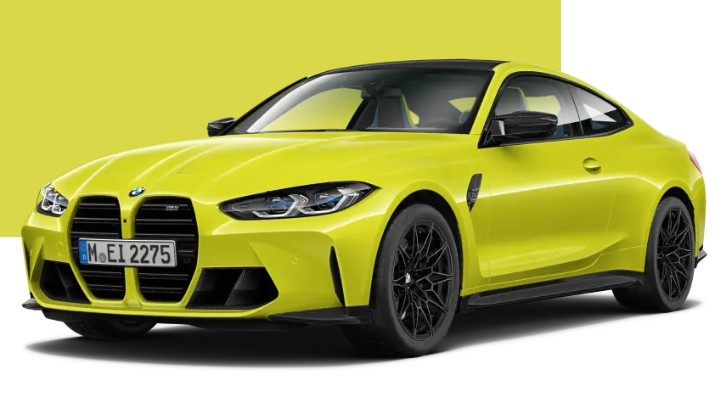
The BMW M4 vs Mustang GT debate is one of those automotive matchups that looks straightforward until we actually start digging into it. Both cars are fast. Both are rear-wheel-drive performance coupes at heart. Both can be ordered with a manual transmission. And both have enough personality to turn a boring trip to the supermarket into an excuse to take the long way home.
But underneath those similarities are two dramatically different philosophies.
The BMW M4 approaches speed like an engineer with a stopwatch. It combines turbocharged power, sophisticated chassis tuning, premium materials, advanced electronics, and—in Competition xDrive form—seriously effective all-wheel-drive traction.
The Ford Mustang GT, meanwhile, keeps one foot planted firmly in old-school muscle-car culture. There's a naturally aspirated 5.0-liter V8 under its hood, rear-wheel drive underneath it, and an available six-speed manual between the driver and one of the most recognizable exhaust notes in the business.
So which one should we actually buy?
If we're judging purely on outright performance, the BMW has some powerful arguments. If we're judging excitement per dollar, however, the Mustang GT becomes much harder to beat.
Let's break down the BMW M4 vs Ford Mustang GT comparison piece by piece.
Content in this publication
- BMW M4 vs Mustang GT at a Glance
- BMW M4 vs Mustang GT Engine Comparison
- Mustang GT: Naturally Aspirated V8 Drama
- BMW M4 vs Mustang GT 0–60 MPH
- BMW M4 vs Mustang GT Top Speed
- BMW M4 vs Mustang GT Handling
- BMW M4 vs Mustang GT Manual Transmission
- BMW M4 vs Mustang GT Automatic
- BMW M4 vs Mustang GT Sound
- BMW M4 vs Mustang GT Interior
- BMW M4 vs Mustang GT Comfort and Daily Driving
- BMW M4 vs Mustang GT Rear Seats and Practicality
- BMW M4 vs Mustang GT Technology
- BMW M4 vs Mustang GT Reliability
- BMW M4 vs Mustang GT Maintenance Costs
- BMW M4 vs Mustang GT Fuel Economy
- BMW M4 vs Mustang GT Price
- Which Gives More Performance for the Money?
- BMW M4 vs Mustang GT Styling
- BMW M4 vs Mustang GT for Highway Driving
- BMW M4 vs Mustang GT for Track Driving
- BMW M4 vs Mustang GT for Modifications
- BMW M4 vs Mustang GT Driving Experience
- Who Should Buy the BMW M4?
- Who Should Buy the Mustang GT?
- BMW M4 vs Mustang GT: Advantages and Disadvantages
- BMW M4 vs Mustang GT: Which Is Faster?
- BMW M4 vs Mustang GT: Which Is More Fun?
- BMW M4 vs Mustang GT: Final Verdict
- Frequently Asked Questions
BMW M4 vs Mustang GT at a Glance
Before going deeper, here's the basic personality of each car.
| Category | BMW M4 | Ford Mustang GT |
|---|---|---|
| Engine | 3.0L twin-turbo inline-six | 5.0L naturally aspirated V8 |
| Character | Precise, sophisticated, aggressive | Raw, charismatic, traditional |
| Drivetrain | RWD or available AWD | RWD |
| Manual available | Yes, on base M4 | Yes |
| Automatic | 8-speed | 10-speed |
| Best strength | Performance and handling | Value and V8 experience |
| Luxury | Excellent | Good |
| Everyday usability | Very good | Good |
| Sound | Sporty turbo six | Thunderous V8 |
| Typical price position | Considerably more expensive | More affordable |
The current M4 family illustrates how broad BMW's performance envelope has become. BMW lists the M4 Coupe at 473 horsepower, the M4 Competition at 503 horsepower, and the M4 Competition xDrive at 523 horsepower. The xDrive model is also quoted at 3.4 seconds from 0–60 mph.
Ford's current Mustang GT uses a 5.0-liter V8 producing 480 horsepower in standard configuration or 486 horsepower with the available active-valve performance exhaust, along with up to 418 lb-ft of torque. A six-speed manual remains standard, while a 10-speed automatic is optional.
Already we can see why this comparison is so interesting. A regular Mustang GT sits surprisingly close to the standard M4 in horsepower, yet the two deliver that performance in completely different ways.
BMW M4 vs Mustang GT Engine Comparison
BMW M4: Turbocharged Precision
The BMW M4 uses a 3.0-liter twin-turbocharged inline-six.
On paper, a six-cylinder engine might sound less exciting than the Mustang's V8. Drive one hard, though, and that concern disappears rather quickly.
The M4 engine feels relentlessly strong.
Turbocharging gives it a broad wave of torque, meaning we don't have to chase the upper reaches of the tachometer every time we want serious acceleration. Push the throttle, wait barely a heartbeat, and the BMW launches forward like someone pulled it with an industrial-strength elastic band.
The base M4 also retains something enthusiasts increasingly struggle to find: a six-speed manual transmission paired with rear-wheel drive. BMW specifically positions this configuration toward driving purists.
Step into the Competition versions and things become more serious. Power increases, the eight-speed M Steptronic automatic becomes part of the formula, and xDrive can bring all-wheel-drive traction into play.
The M4 engine rewards speed
The BMW's powertrain feels engineered around maximum effectiveness.
It doesn't just make impressive power. It deploys that power with almost clinical efficiency.
That's what makes it frighteningly quick.
Mustang GT: Naturally Aspirated V8 Drama
Then we start the Mustang.
Suddenly numbers feel less important.
The Mustang GT's 5.0-liter Coyote V8 delivers something the turbocharged BMW simply cannot reproduce in exactly the same way: naturally aspirated V8 response, sound, and character.
Throttle response feels immediate. Rev it harder and the personality keeps building.
Then there's the soundtrack.
A Mustang GT accelerating through several gears with its V8 singing near the upper end of the tachometer can turn a tunnel into a concert hall. With Ford's active-valve exhaust, the current GT can produce as much as 486 horsepower.
This engine isn't merely propulsion.
It's half the reason to buy the car.
Which Engine Is Better?
For sheer effectiveness, we prefer the M4's twin-turbo six.
For character, the Mustang GT's V8 wins.
The BMW punches harder in everyday situations and becomes substantially faster in its more powerful Competition configurations.
The Mustang, however, asks us to participate. We hear the engine breathe, feel it build revs, and enjoy chasing the redline.
One is a precision instrument.
The other is an electric guitar plugged into a wall of amplifiers.
Both are entertaining. Just in different languages.
BMW M4 vs Mustang GT 0–60 MPH
Acceleration is where the BMW begins to justify its higher price.
The base M4 is already seriously quick. The Competition increases the urgency, while the Competition xDrive turns acceleration into something bordering on absurd for a practical four-seat coupe.
BMW quotes 0–60 mph times of:
- M4 Coupe: 4.1 seconds
- M4 Competition Coupe: 3.8 seconds
- M4 Competition xDrive Coupe: 3.4 seconds
Those are BMW's current U.S. figures and actual results naturally depend on conditions.
The Mustang GT is certainly not slow, but rear-wheel drive and a naturally aspirated power delivery make launching it perfectly more demanding.
That distinction matters.
From a Stop, the BMW Has the Advantage
Put an M4 Competition xDrive next to a normal Mustang GT at a stoplight—or preferably on a drag strip—and the BMW has the hardware to get away exceptionally quickly.
All-wheel drive lets it convert power into acceleration instead of tire smoke.
The Mustang GT is more theatrical.
The M4 xDrive is more ruthless.
Rolling Acceleration Tells a Similar Story
At highway speeds, the BMW's turbocharged torque becomes another advantage.
Press the accelerator to overtake and it immediately feels muscular.
The Mustang needs more revs, particularly if we're driving the manual. Some enthusiasts will actually see this as a positive because dropping two gears and hearing a V8 explode toward the redline is hardly a punishment.
But if we simply want effortless speed?
The BMW wins.
BMW M4 vs Mustang GT Top Speed
Both vehicles can reach speeds that are completely unnecessary for public roads, so top speed shouldn't dominate a purchasing decision.
Still, it reveals something about their intentions.
The M4 is engineered as a German high-performance coupe capable of sustained autobahn-speed stability. Certain configurations and packages can raise its electronically governed maximum speed.
The Mustang GT is also capable of serious speed, especially when equipped with performance-focused hardware.
The important difference isn't the number on the speedometer.
It's how the cars feel getting there.
At very high speeds, the M4 tends to feel tightly controlled and unusually composed. The Mustang feels larger, louder, and more physical.
For real-world drivers, acceleration and braking matter far more than maximum speed anyway.
BMW M4 vs Mustang GT Handling
Here's where the comparison becomes more complicated.
Modern Mustangs handle dramatically better than the stereotype suggests. Anyone still imagining a Mustang as nothing more than a straight-line muscle car hasn't been paying attention.
Yet the M4 remains the more sophisticated cornering machine.
BMW M4 Handling
The M4 changes direction with remarkable confidence.
Steering responses are immediate. Body movements are tightly controlled. The chassis encourages us to carry increasingly ridiculous speeds through corners.
BMW also equips the car with adaptive M suspension technology designed to balance performance with road comfort.
What impresses us most is how broad the M4's ability is.
We can commute quietly on Monday, drive several hundred highway miles on Friday, attack mountain roads on Saturday and attend a track day on Sunday.
It never feels completely out of place.
M4 xDrive Adds Another Dimension
M xDrive adds tremendous traction.
For drivers living somewhere with wet roads, cold winters or unpredictable weather, this can transform how usable all that horsepower becomes.
It isn't merely about faster launches.
We can apply power earlier and more confidently.
Mustang GT Handling
The Mustang GT takes a different approach.
Its longer hood, heavier controls, rear-drive layout and V8 soundtrack create a more traditional performance-car sensation.
It feels physical.
Add Ford's available performance hardware and the Mustang becomes surprisingly capable on a twisty road or circuit.
Ford offers equipment such as Brembo brakes, upgraded rear differentials and performance packages on Mustang GT configurations, allowing buyers to move the car considerably closer to track territory.
Which Handles Better?
The BMW M4 wins overall.
Its chassis feels more polished, its power delivery is easier to exploit, and xDrive gives higher-output versions enormous traction.
But here's the twist:
The Mustang may feel more entertaining at lower speeds.
The BMW sometimes makes difficult driving feel easy.
The Mustang makes ordinary driving feel dramatic.
Which matters more to us?
That's personal.
BMW M4 vs Mustang GT Manual Transmission
This might be our favorite part of the comparison.
Both manufacturers still understand that some enthusiasts want three pedals.
BMW M4 Manual
The standard M4 combines:
- 473 horsepower
- Rear-wheel drive
- Six-speed manual transmission
- Turbocharged inline-six power
BMW describes the manual M4 as the purist-oriented member of the family.
And they're right.
The manual gearbox slows the experience down just enough to make driving more involving.
Mustang GT Manual
Ford also offers a six-speed manual with rev matching as standard equipment on the Mustang GT, while a 10-speed automatic is available.
With the Mustang, though, the manual feels even more central to the car's identity.
V8.
Rear-wheel drive.
Manual gearbox.
Few combinations are more traditional—or more endangered.
Which Manual Would We Choose?
For pure mechanical drama, we'd take the Mustang GT manual.
The BMW manual is excellent because it combines old-school interaction with modern turbocharged speed.
But the Mustang's manual gearbox and naturally aspirated V8 belong together like burgers and fries.
BMW M4 vs Mustang GT Automatic
Automatic buyers get radically different approaches.
The M4 Competition uses BMW's eight-speed M Steptronic automatic.
Ford offers a 10-speed automatic in the Mustang GT.
Both change gears quickly, but the BMW transmission feels more integrated with the chassis and the car's premium performance mission.
The Mustang's 10-speed can rip through ratios rapidly and keeps the V8 near its strongest operating range, making the automatic GT deceptively quick.
For daily driving, both work well.
For serious performance driving, we'd give the edge to the M4 Competition.
BMW M4 vs Mustang GT Sound
We don't need 500 words here.
Mustang GT wins.
The BMW inline-six sounds purposeful, aggressive and distinctive.
You may be interested in reading BMW M4 vs Z4: Which BMW Sports Car Is Better?
But a naturally aspirated 5.0-liter V8 is a naturally aspirated 5.0-liter V8.
That's hard to argue with.
Especially when the exhaust valves open.
Why Sound Matters More Than We Think
Performance cars aren't rational purchases.
If rational transportation were the goal, we'd probably buy an efficient hybrid and congratulate ourselves every time we passed a gas station.
Cars like the M4 and Mustang GT are emotional machines.
And sound is emotion.
The Mustang turns every downshift into an event.
That matters.
BMW M4 vs Mustang GT Interior
This round swings firmly back toward Germany.
M4 Interior Quality
The M4 feels expensive because it is expensive.
Materials, screens, seats, trim and switchgear create a noticeably more premium environment.
The cabin also combines technology and performance cues without becoming completely impractical.
Optional carbon-fiber components and M-specific seats can make the interior look like someone parked a racing simulator inside a luxury coupe.
Mustang GT Interior
The Mustang's cabin has improved considerably across generations.
The latest design incorporates large digital displays, configurable graphics, supportive seats and modern connectivity.
It feels contemporary.
What it doesn't feel like is an $80,000-plus German luxury performance car.
And that's fine.
We're paying significantly less.
Winner: BMW M4
The M4 wins the interior comparison easily.
Better materials.
More premium detailing.
Greater refinement.
More upscale atmosphere.
The Mustang fights back with distinctive styling and strong technology, but the BMW lives in another luxury category.
BMW M4 vs Mustang GT Comfort and Daily Driving
Performance cars spend most of their lives doing non-performance things.
Traffic.
Parking.
Commuting.
Grocery runs.
Road trips.
So daily usability matters.
The M4 Is the More Complete Daily Driver
The BMW manages its split personality exceptionally well.
Set everything to a softer configuration and it settles down.
The cabin is relatively refined, the automatic transmission behaves normally, modern driver-assistance features are available, and the rear seats can handle occasional passengers.
Then we press a few buttons and suddenly the same car wants to attack a racetrack.
That's impressive.
The Mustang Has Its Own Daily-Driver Advantages
The Mustang is also practical by sports-car standards.
There's usable cargo space, modern infotainment and enough comfort for long trips.
But the V8's fuel appetite, physical dimensions and lower-rent cabin materials remind us that this is a different type of vehicle.
Still, imagine commuting every morning with a 5.0-liter V8 waiting under your right foot.
Life could be worse.
BMW M4 vs Mustang GT Rear Seats and Practicality
Neither is a family SUV.
Let's establish that immediately.
Both have rear seats, but neither offers the effortless accessibility of a four-door sedan.
The M4 tends to feel slightly more mature as an all-purpose grand-touring coupe.
BMW's current M4 specification lists up to 15.5 cubic feet of cargo capacity, making it surprisingly usable for luggage.
The Mustang's fastback layout is practical enough for weekend luggage, groceries or a couple of travel bags.
If we regularly carry adults in the back, however, we'd probably reconsider both vehicles.
BMW M4 vs Mustang GT Technology
BMW packs the M4 with sophisticated electronics.
Drive modes can alter steering, suspension, engine response, transmission behavior and other parameters.
The Competition xDrive takes configuration even further by adding an electronically controlled all-wheel-drive system.
The Mustang counters with its own digital arsenal.
Drive modes, digital instruments, customizable displays, performance data and available driver-assistance technologies give the modern Mustang far more sophistication than its muscle-car ancestry might suggest.
BMW Wins on Integration
Ford's technology is impressive.
BMW's feels more deeply integrated into the driving experience.
The M4 almost behaves like several different cars living inside the same body.
BMW M4 vs Mustang GT Reliability
This question needs nuance.
Neither vehicle should be judged purely through stereotypes.
The Mustang uses a naturally aspirated V8 design without the M4's twin-turbo arrangement and has traditionally benefited from Ford's enormous Mustang ecosystem in North America.
That can mean easier access to independent specialists, aftermarket components and replacement parts.
The BMW, meanwhile, is an extremely sophisticated high-performance vehicle.
Sophistication creates capability, but it also creates complexity.
Long-term costs can include expensive tires, brakes, electronics, cooling-system components, turbo-related systems and M-specific hardware.
Which One Is Safer for Long-Term Ownership Costs?
We would generally expect the Mustang GT to be easier on the wallet over a long ownership period.
That doesn't automatically mean every Mustang will be trouble-free or every M4 expensive to repair.
Maintenance history matters enormously.
A neglected Mustang can become a nightmare.
A meticulously maintained M4 can perform beautifully for years.
When buying used, service records matter more than internet folklore.
BMW M4 vs Mustang GT Maintenance Costs
Here's another Mustang victory.
Premium German performance cars rarely become inexpensive to maintain simply because they've depreciated.
An older M4 may fall dramatically in purchase price.
Its brakes do not suddenly become economy-car brakes.
Its performance tires do not become cheap.
Its sophisticated components do not become simple.
The Mustang GT benefits from comparatively mainstream Ford servicing infrastructure and huge parts availability, particularly in the United States.
Don't Ignore Consumables
With either vehicle, expect to spend money on:
- Performance tires
- Premium fuel
- Brake pads and rotors
- Quality synthetic oil
- Insurance
- Alignment
- Track-day consumables, if applicable
Drive either car hard and these expenses increase quickly.
Horsepower eats tires for breakfast.
BMW M4 vs Mustang GT Fuel Economy
Nobody buys either car because they're trying to win an eco-driving championship.
Still, fuel consumption matters when the vehicle becomes a daily driver.
The Mustang's large naturally aspirated V8 can be thirsty, particularly in urban driving. Ford inventory listings for current GT configurations show EPA estimates around 15 mpg city and 24 mpg highway in some specifications.
The M4's smaller turbocharged six can potentially be more efficient under gentler conditions, though drivers using its performance frequently shouldn't expect economy-car numbers.
Realistically, our right foot determines a lot here.
BMW M4 vs Mustang GT Price
And now we arrive at the Mustang's knockout punch.
Value.
BMW's current U.S. M-model listings put the M4 family well into premium-car territory, with the base M4 starting above $80,000 and higher-output Competition variants costing more.
The Mustang GT occupies a fundamentally lower pricing category.
That changes the entire comparison.
Is the BMW M4 Better? Yes—in Several Areas
The M4 offers:
- Faster available acceleration
- More sophisticated suspension tuning
- Available all-wheel drive
- A considerably nicer interior
- More premium materials
- More luxury features
- Greater high-speed refinement
- More exotic engineering
But the Mustang buyer can reasonably respond:
"So what? I'm still getting nearly 500 horsepower and a 5.0-liter V8."
And that's a devastating argument.
Which Gives More Performance for the Money?
The Mustang GT wins.
Not slightly.
Comfortably.
There are faster cars than a Mustang GT.
There are more luxurious cars than a Mustang GT.
There are more sophisticated track cars than a Mustang GT.
But very few cars deliver its combination of V8 horsepower, rear-wheel drive, manual availability, aggressive styling and everyday usability at the same general price level.
That's the Mustang formula.
It's been working for decades for a reason.
BMW M4 vs Mustang GT Styling
We're entering completely subjective territory now.
The M4 looks aggressive, technical and unmistakably modern BMW.
Its enormous vertical grille remains polarizing, though the design has become increasingly familiar with time.
The Mustang preserves more classic proportions.
Long hood.
You may be interested in readingBMW M4 vs Z4: Which BMW Sports Car Is Better?You may be interested in reading
BMW M4 vs Corvette C8: Which Performance Car Wins?Short rear deck.
Wide stance.
Muscular shoulders.
Which Looks Better?
Our vote goes narrowly to the Mustang GT for timeless proportions.
The M4 looks more exotic and expensive.
The Mustang looks more classically handsome.
Neither disappears into a parking lot.
BMW M4 vs Mustang GT for Highway Driving
On long highway journeys, the M4 feels more like a grand tourer.
The cabin is more refined. Noise isolation is better. The seats and suspension can strike an impressive compromise between control and comfort.
It also possesses absurd overtaking capability.
The Mustang is still enjoyable on long drives, but we notice more of its muscle-car character.
Some drivers will consider that a disadvantage.
Others will consider it the entire point.
BMW M4 vs Mustang GT for Track Driving
Take both cars to a circuit and the BMW starts stretching its legs.
Why the M4 Has the Edge
The M4's advantages include its sophisticated chassis tuning, strong turbocharged acceleration, advanced differential technology and exceptionally capable Competition configurations.
The xDrive version adds devastating corner-exit traction.
For drivers chasing lap times, those details matter.
The Mustang Isn't Out of Place
A properly optioned Mustang GT can still be excellent track-day machinery.
Performance packages can add more serious braking, differential, tire and suspension hardware.
And because the Mustang has such an enormous aftermarket, owners can transform the chassis according to their goals.
Track Winner: BMW M4
Stock versus stock, our preference is the M4.
For building a modified track toy on a tighter budget?
The conversation gets much closer.
BMW M4 vs Mustang GT for Modifications
Now the tables turn again.
Mustangs practically grow up expecting to be modified.
Cold-air intakes.
Exhaust systems.
Wheels.
Suspension.
Superchargers.
Body kits.
Brake upgrades.
Tunes.
Walk around a large American car show and finding two identical modified Mustangs might actually be difficult.
The M4 also has a huge tuning community, particularly because turbocharged BMW engines can respond dramatically to software and supporting modifications.
But BMW modifications often become expensive very quickly.
Which Is Better for Tuners?
For affordable customization: Mustang GT.
For extracting enormous turbocharged performance while maintaining a luxury platform: BMW M4.
BMW M4 vs Mustang GT Driving Experience
Numbers don't fully explain either vehicle.
And that's probably the most important thing we've learned.
The BMW Experience
The M4 feels incredibly capable.
Everything happens quickly.
Steering inputs.
Gear changes.
Throttle response.
Cornering.
Braking.
It's the kind of car that can make us wonder whether we're a better driver than we actually are.
The Mustang Experience
The Mustang feels more theatrical.
The hood stretches ahead.
The V8 vibrates through the chassis.
The exhaust reminds everyone within several blocks that internal combustion isn't leaving quietly.
We work the gearbox.
We chase revs.
We manage rear-wheel-drive traction.
The car feels alive.
Precision vs Personality
That's the matchup condensed into two words.
BMW: precision.
Mustang: personality.
Obviously both cars have elements of each, but their priorities are different.
Who Should Buy the BMW M4?
The M4 makes the most sense if we want one coupe that does almost everything exceptionally well.
Choose the BMW if:
- Maximum performance matters more than price.
- We want premium interior quality.
- We regularly drive fast on technical roads.
- Available AWD appeals to us.
- We want luxury and performance together.
- Track capability matters.
- We prefer turbocharged torque.
- We want a more polished daily driver.
The M4 is expensive because it tries to combine several categories.
Sports car.
Luxury coupe.
Grand tourer.
Track weapon.
Daily driver.
It succeeds remarkably well.
Who Should Buy the Mustang GT?
The Mustang GT appeals to a different part of the brain.
Choose the Mustang if:
- We love naturally aspirated V8 engines.
- Exhaust sound matters.
- We want maximum fun per dollar.
- Rear-wheel-drive simplicity appeals to us.
- We want a manual transmission.
- Modification potential matters.
- Lower ownership costs are important.
- We prefer traditional muscle-car character.
The Mustang isn't trying to imitate the BMW.
That's why it works.
BMW M4 vs Mustang GT: Advantages and Disadvantages
BMW M4 Pros
- Exceptional acceleration
- Highly sophisticated chassis
- Available xDrive
- Excellent interior
- Strong turbocharged power
- Impressive track capability
- Manual transmission still available
- Better luxury credentials
BMW M4 Cons
- Expensive purchase price
- Potentially high maintenance costs
- Options can increase the price rapidly
- Styling is polarizing
- Less dramatic exhaust note than the Mustang
Mustang GT Pros
- Glorious naturally aspirated V8
- Excellent performance value
- Available six-speed manual
- Iconic styling
- Huge aftermarket
- Strong straight-line performance
- Lower barrier to ownership
- Highly entertaining personality
Mustang GT Cons
- Interior isn't as premium
- No GT all-wheel-drive alternative
- High fuel consumption
- Less refined than the BMW
- Standard GT can't match an M4 Competition xDrive for outright acceleration
BMW M4 vs Mustang GT: Which Is Faster?
The answer depends heavily on which M4 we're discussing.
Against a base M4, the Mustang GT creates an interesting fight because power figures are relatively close.
Move up to an M4 Competition and BMW gains an increasingly clear performance advantage.
Choose the M4 Competition xDrive, and the combination of 523 horsepower and AWD traction puts the BMW into another acceleration category. BMW quotes a 3.4-second 0–60 mph run for that configuration.
So if the question is simply:
Which car is faster overall?
The answer is the BMW M4, particularly in Competition xDrive form.
BMW M4 vs Mustang GT: Which Is More Fun?
This one doesn't have an objective answer.
And we're glad it doesn't.
The BMW's fun comes from discovering just how fast and capable it is.
The Mustang's fun starts when we press the starter button.
One gives us confidence.
The other gives us goosebumps.
For a winding mountain road where precision matters, we'd want the M4.
For a Sunday morning drive with no destination and the windows down?
Give us the manual Mustang GT and its V8.
BMW M4 vs Mustang GT: Final Verdict
So, BMW M4 or Mustang GT?
If money isn't the primary concern and we want the most complete performance coupe, the BMW M4 is the better overall car.
It's quicker in its strongest configurations, more sophisticated, better finished, more refined and more technologically advanced.
The M4 Competition xDrive, in particular, is almost frighteningly competent. It launches like a supercar, corners with tremendous confidence and still provides the comfort and technology expected from an expensive BMW.
But here's the important distinction:
The better car isn't necessarily the better buy.
The Mustang GT provides extraordinary performance for the money.
We get a naturally aspirated 5.0-liter V8, close to 500 horsepower depending on configuration, rear-wheel drive, an available performance-focused specification, a manual gearbox and one of the most charismatic personalities available in a modern coupe.
It makes every acceleration run sound special.
It can commute Monday through Friday and spend Saturday carving through back roads.
And it leaves considerably more money in our bank account.
Therefore our verdict is split.
For luxury, outright performance, handling and technical sophistication, choose the BMW M4.
For value, V8 sound, traditional driving character and emotional appeal, choose the Ford Mustang GT.
If we could afford either and needed just one high-performance car for everything, we'd take the M4.
If we wanted the car most likely to make us invent excuses to drive somewhere for absolutely no reason?
That Mustang key would be dangerously tempting.
Frequently Asked Questions
1. Is a BMW M4 faster than a Mustang GT?
Generally, yes. The strongest advantage comes with the BMW M4 Competition xDrive, which combines 523 horsepower with all-wheel-drive traction and has a manufacturer-quoted 0–60 mph time of 3.4 seconds. A Mustang GT remains extremely quick but cannot deploy its power from a standing start as effectively as an AWD M4 Competition xDrive.
2. Does the Mustang GT have more horsepower than the BMW M4?
It depends on the M4 version. The current Mustang GT produces 480 horsepower in standard form or as much as 486 horsepower with Ford's available active-valve performance exhaust. The standard M4 makes 473 horsepower, while the M4 Competition produces 503 horsepower and the Competition xDrive reaches 523 horsepower. Therefore, an appropriately equipped Mustang GT can outpower the base M4 on paper, but not the Competition models.
3. Is the BMW M4 more reliable than a Mustang GT?
Reliability depends heavily on maintenance, driving habits and individual vehicle history. However, the Mustang GT's naturally aspirated V8 and widespread Ford servicing ecosystem can make long-term ownership easier and potentially cheaper. The M4's turbocharged engine, sophisticated electronics and high-performance components can result in higher repair and maintenance expenses as the vehicle ages.
You may be interested in readingBMW M4 vs Z4: Which BMW Sports Car Is Better?You may be interested in reading
BMW M4 vs Corvette C8: Which Performance Car Wins?You may be interested in reading
 Nissan X-Trail vs Mitsubishi Outlander: Which Family SUV Is Better?
4. Which is better for daily driving, BMW M4 or Mustang GT?
The BMW M4 is our preference for daily driving because it combines high performance with a more luxurious cabin, sophisticated suspension, strong technology and greater refinement. The Mustang GT remains perfectly usable every day, but its character is louder, more physical and less premium.
5. Is the BMW M4 worth the extra money over a Mustang GT?
It can be. The M4 justifies much of its premium through better materials, sophisticated chassis engineering, significantly stronger performance in Competition versions, available all-wheel drive and greater overall refinement. However, buyers mainly interested in horsepower, sound and driving fun may find the Mustang GT delivers better value. The BMW is the more complete performance-luxury coupe, while the Mustang is the stronger performance-per-dollar proposition.
If you want to know other articles similar to BMW M4 vs Mustang GT: Which Performance Coupe Is Better? you can visit the category Models.
Nissan Rogue Dark Armor vs Platinum: Which Trim Is Better?

Kia Sorento Models: Complete Guide to Trims, Engines and Versions
BYD Shark 6 vs Ranger vs HiLux: Which Ute Makes the Most Sense in 2026?
BYD Shark 6 vs MG U9: Which Ute Makes More Sense in 2026?
BYD Shark 6 vs Ford Ranger Raptor: Which Performance Ute Is Better in 2026?
BYD Shark 6 vs Kia Tasman: Which Ute Is Better?
Leave a Reply
More content of your interest