

Leapmotor C10 2025 vs 2026: What Has Actually Changed?

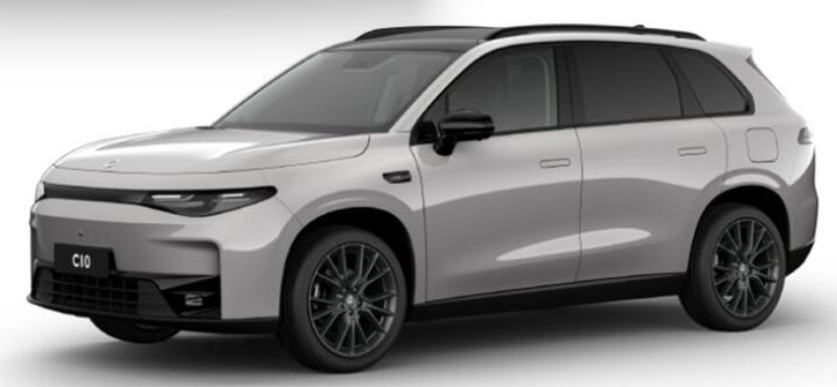
The Leapmotor C10 2025 vs 2026 comparison is much more interesting than the usual yearly SUV update. We are not simply looking at different wheels, a revised bumper, or a couple of extra software features. Depending on the market and specification, the 2026 C10 introduces changes to the electrical architecture, battery capacity, motor output, charging performance, drivetrain choice, and even the character of the car.
That makes the decision slightly complicated.
A discounted 2025 Leapmotor C10 can still look incredibly attractive. It is spacious, comfortable, generously equipped, and offers respectable electric range. Yet certain 2026 versions move onto an 800-volt electrical architecture, gain substantially more power and faster DC charging, and can be ordered with an 81.9 kWh battery or all-wheel drive.
So, should we save money and buy the 2025 C10, or is the 2026 upgrade worth stretching the budget?
Let’s break it down properly.
Important: Leapmotor specifications vary considerably between China, Europe, the UK, Australia, and other markets. A vehicle registered in 2026 is not automatically equipped with the new 81.9 kWh battery or 800V system. Always check the exact trim, battery and drivetrain rather than relying only on the registration year. In some European markets, for example, 69.9 kWh and 81.9 kWh C10 variants coexist within the MY2026 range.
Content in this publication
- Leapmotor C10 2025 vs 2026 at a Glance
- What Does “2026 Leapmotor C10” Actually Mean?
- Leapmotor C10 2025: The Starting Point
- Leapmotor C10 2026: A More Mature Electric SUV
- Battery: 69.9 kWh vs 81.9 kWh
- Range: Does the 2026 C10 Go Much Further?
- Charging Speed: Perhaps the Biggest 2026 Upgrade
- Performance: The 2026 C10 Gets Serious
- The 2026 AWD Changes the C10 Completely
- Handling and Chassis Changes
- Exterior Design: Surprisingly Familiar
- Interior: More Evolution Than Revolution
- Software: Does the 2026 Have Better Tech?
- 2025 vs 2026 C10 Range Extender
- 2025 C10 vs 2026 C10 for Road Trips
- 2025 C10 vs 2026 C10 for City Driving
- Which One Is More Efficient?
- Reliability: Is the 2025 or 2026 Safer to Buy?
- Safety: Did the 2026 Need a Major Upgrade?
- 2026 C10 AWD vs 2025 C10 RWD
- Does the 2026 C10 Make the 2025 Model Obsolete?
- When Should We Buy the 2025 Leapmotor C10?
- When Should We Buy the 2026 Leapmotor C10?
- What Price Difference Makes the 2025 Worthwhile?
- Resale Value: Which One Should Hold Up Better?
- The Best Leapmotor C10 for Most Buyers
- Leapmotor C10 2025 vs 2026: Final Verdict
- Frequently Asked Questions
Leapmotor C10 2025 vs 2026 at a Glance
Before diving into every nut and bolt, here is the simplified picture.
| Specification | 2025 C10 BEV | Newer 2026 C10 BEV* |
|---|---|---|
| Battery | Around 69.9 kWh LFP | Up to 81.9 kWh LFP |
| Electrical architecture | 400V-class system | 800V on upgraded versions |
| Rear-drive power | Around 160 kW | Up to 220 kW |
| Torque | Around 320 Nm | Around 360 Nm on higher-output RWD |
| WLTP range | Around 420 km | Up to roughly 510 km depending on market |
| DC fast charging | Around 80–84 kW on earlier cars | Up to 180 kW |
| 0–100 km/h | Around 7.5–7.8 sec | Around 6.2 sec RWD |
| AWD | Not the main original configuration | Available |
| AWD performance | — | Around 4.0 sec 0–100 km/h |
| Battery chemistry | LFP | LFP |
*Specifications depend heavily on country and trim.
The difference is therefore not cosmetic. On the right 2026 specification, we are dealing with a noticeably more capable EV platform.
What Does “2026 Leapmotor C10” Actually Mean?
This is where things become slightly messy.
Leapmotor launched what it described as the 2026 version of the C10 in China on May 15, 2025. That model introduced the company's newer electronic/electrical architecture, an 880V-class high-voltage fast-charging platform in its Chinese-market specification, updated chassis calibration and a 220 kW electric drive.
International versions followed their own schedules.
Consequently, someone searching for a “2026 C10” might encounter:
- a 69.9 kWh rear-wheel-drive car,
- an 81.9 kWh rear-wheel-drive model,
- an 81.9 kWh AWD version,
- a REEV/Hybrid EV range-extender,
- or market-specific combinations of Life, Design, Pro and ProMax-style specifications.
Think of “2026 C10” as an umbrella rather than one single recipe.
Why This Matters When Buying Used
Imagine two C10s sitting beside each other at a dealership.
One was registered late in 2025. The other was registered early in 2026.
The newer registration plate might tempt us immediately, but that does not guarantee the second vehicle carries the upgraded 800V hardware or bigger battery.
The sensible approach is to verify:
- battery capacity,
- drivetrain,
- charging specification,
- motor output,
- model year or build specification,
- and VIN-specific equipment.
That five-minute check could matter far more than the date printed on the registration document.
Leapmotor C10 2025: The Starting Point
The 2025 C10 established Leapmotor as a serious challenger rather than another obscure EV newcomer.
In European specification, the original battery-electric C10 paired a 69.9 kWh LFP battery with rear-wheel drive, offering approximately 420 km of WLTP range in commonly quoted configurations. Leapmotor positioned the SUV around value, space, technology and a premium-feeling interior without a premium-brand price.
That formula still makes sense.
The C10 is a family-sized SUV approximately 4.74 metres long with a 2.825-metre wheelbase. Its long wheelbase is one reason the passenger compartment feels unusually generous relative to the price.
What We Like About the 2025 C10
The 2025 model still gets many fundamentals right.
It offers a quiet electric drivetrain, plenty of cabin space, modern screens, good equipment levels and a relatively relaxed driving personality. More importantly, the earlier car does not suddenly become obsolete simply because a faster-charging version exists.
For someone charging mainly overnight at home, the original car's slower peak DC charging rate may rarely matter.
That distinction is important.
Specifications tell us what a vehicle can do. Our lifestyle determines whether we will ever use it.
Leapmotor C10 2026: A More Mature Electric SUV
The upgraded C10 tackles several weaknesses that critics could reasonably level at the original.
The biggest one?
Charging.
Earlier C10 versions could feel behind some rivals at rapid chargers. The newer high-voltage versions dramatically improve that side of the ownership experience.
The other major changes are power and range.
With an available 81.9 kWh LFP battery, 800V architecture and up to 180 kW DC charging, the newer C10 suddenly looks much better suited to frequent motorway travel.
Certain rear-wheel-drive versions also rise to approximately 220 kW, transforming acceleration from merely adequate to genuinely quick. Australian reporting on the MY26 Design Long Range, for instance, shows the move from 69.9 kWh to 81.9 kWh, from 160 kW to 220 kW, and from roughly 80 kW to 180 kW peak DC charging.
Battery: 69.9 kWh vs 81.9 kWh
Battery capacity is one of the clearest differences between many 2025 and upgraded 2026 C10 models.
2025 Battery
The earlier BEV commonly uses a 69.9 kWh LFP battery.
LFP chemistry has several advantages. It is generally durable, thermally stable and comfortable with regular high states of charge compared with some nickel-rich battery chemistries.
For commuting and moderate regional journeys, 69.9 kWh is hardly small.
2026 Battery
Higher-specification 2026 cars can receive an 81.9 kWh LFP pack.
That represents roughly 17 percent more nominal battery capacity than 69.9 kWh.
More importantly, the larger battery arrives alongside changes that make it substantially easier to replenish quickly.
That combination matters.
A larger bucket is useful. A larger bucket that can also be filled faster is much more useful.
Range: Does the 2026 C10 Go Much Further?
Yes, on the upgraded long-range versions.
The outgoing European-style C10 BEV has commonly been quoted at approximately 420 km WLTP.
Some new long-range versions extend that figure to approximately 510 km WLTP, although exact certification figures depend on drivetrain, wheels and country. Australian MY26 information, for example, lists different WLTP results between rear-drive and AWD configurations.
A theoretical 90 km increase does not mean we will always travel 90 km farther in reality.
Cold temperatures, motorway speeds, elevation, cabin heating, tyre pressure and driving style all influence consumption.
Still, the improvement meaningfully expands the car's usable road-trip envelope.
Real-World Perspective
Suppose we normally stop with 10 percent battery remaining and charge to 80 percent during motorway trips.
We are therefore using roughly 70 percent of the pack between charging stops.
With a larger battery and improved efficiency, that can translate into a significantly longer comfortable motorway stint.
Instead of asking, “Can we reach the next charger?”, we are more likely to ask, “Which charger has better coffee?”
That is the kind of EV improvement drivers actually notice.
Charging Speed: Perhaps the Biggest 2026 Upgrade
If we had to pick one reason to choose the updated C10 over the original, this might be it.
2025 Charging
The earlier C10's DC charging performance was modest by modern EV standards, with peak figures around the 80 kW region in several international specifications.
That is perfectly usable.
It just is not particularly fast.
2026 Charging
The high-voltage 81.9 kWh versions can support up to 180 kW DC fast charging.
Leapmotor states that its 81.9 kWh AWD can charge from 30 to 80 percent in approximately 22 minutes.
That fundamentally changes the vehicle's long-distance usability.
Why 800V Matters
An 800V-class architecture can deliver high power with lower current than a lower-voltage architecture supplying equivalent power.
In practical terms, it can support:
- faster charging,
- reduced electrical losses,
- improved thermal management,
- stronger sustained performance,
- and potentially better efficiency under high loads.
Not every 2026 C10 receives exactly the same hardware, however, so we should never assume that “MY26” automatically means “800V”.
Performance: The 2026 C10 Gets Serious
The original C10 never needed to be a sports SUV.
Its job was family transport.
Nevertheless, the updated models inject considerably more muscle into the platform.
2025 C10 Performance
The familiar rear-wheel-drive 2025 C10 produces roughly 160 kW and 320 Nm in widely sold international specifications.
Zero to 100 km/h takes around 7.5–7.8 seconds depending on configuration and quoted market figures.
That is brisk enough for everyday driving.
Overtaking is easy. Motorway merging is effortless. Nobody is going to call it slow.
2026 Rear-Wheel-Drive Performance
Certain long-range 2026 versions increase output to approximately 220 kW and 360 Nm.
The resulting 0–100 km/h time falls to roughly 6.2 seconds in the Australian long-range specification.
You may be interested in reading Mazda CX-9 Equivalent: The Best Alternatives to Mazda’s Three-Row SUV
That is a substantial difference.
We move from “perfectly adequate family SUV” territory toward genuinely fast family transport.
The 2026 AWD Changes the C10 Completely
Then things get a little wild.
Leapmotor added a dual-motor AWD C10 using the larger 81.9 kWh battery and 800V architecture.
European launch information quotes close to 600 hp, while official communications have cited figures around 585–598 hp depending on the regional measurement convention, together with very strong torque output and a claimed 0–100 km/h time of 4.0 seconds.
Four seconds.
In a roomy family SUV.
That is the automotive equivalent of seeing your quiet accountant suddenly win a 100-metre sprint.
Is AWD Necessary?
For most buyers, no.
Rear-wheel drive is already sufficient for normal commuting and motorway use.
AWD becomes more attractive if we:
- regularly drive in snow,
- live in mountainous areas,
- want maximum acceleration,
- encounter slippery rural roads,
- or simply enjoy high-performance EVs.
Otherwise, the RWD long-range model may represent the sweeter balance.
Handling and Chassis Changes
The 2026 update is not only about adding kilowatts.
Leapmotor stated when introducing the Chinese-market 2026 version that it had recalibrated and upgraded the chassis hardware alongside the newer electrical platform and higher-output drivetrain.
That matters because raw performance was never the only challenge facing early Chinese EVs.
Refinement is increasingly the battlefield.
Steering calibration, body control, damping, pedal mapping and regenerative braking can make the difference between a car that looks impressive on paper and one that genuinely feels polished.
The newer C10 therefore represents an evolution of the platform rather than merely a battery swap.
Exterior Design: Surprisingly Familiar
Expecting a dramatic visual facelift?
You may be disappointed.
The 2026 C10 retains the fundamental shape and design language of its predecessor.
That is not necessarily bad.
The C10 already uses clean surfaces, restrained lighting elements and fairly conventional SUV proportions. It looks modern without trying to resemble a spacecraft.
From across a parking lot, many people would struggle to distinguish equivalent 2025 and 2026 rear-drive versions immediately.
Why Leapmotor Did Not Reinvent the Styling
The original design was still fresh.
Changing perfectly serviceable bodywork would have added cost without addressing the areas that genuinely needed improvement.
Leapmotor instead appears to have concentrated much of its engineering effort beneath the skin.
We would take faster charging over a redesigned grille every day of the week.
Interior: More Evolution Than Revolution
The cabin remains one of the C10's strongest assets.
Its minimalist dashboard centres around a large infotainment display, while the long wheelbase provides impressive passenger room.
The newer AWD specification, for example, includes a 14.6-inch 2K central display, 10.25-inch driver display, panoramic glass roof and 12-speaker audio system in the equipment package described by Leapmotor.
Exact features depend on trim.
This is another reason we should compare individual cars rather than assume every MY2026 model contains every feature mentioned in launch materials.
Software: Does the 2026 Have Better Tech?
Leapmotor has continued developing Leap OS through over-the-air updates.
Interestingly, older C10s have also received software improvements, so the technology gap is not purely determined by model year.
Community tracking in Europe during 2026 showed separate software branches for MY2025 and MY2026 vehicles, with OTA releases continuing for both.
That is encouraging for 2025 owners.
A modern software-defined car should improve after purchase rather than being frozen in time.
Hardware Still Matters More
Software can improve menus, climate behaviour, media features and driver-assistance calibration.
It cannot turn a 400V charging system into an 800V architecture.
Nor can an OTA update magically enlarge a 69.9 kWh battery into an 81.9 kWh pack.
So although software support reduces the disadvantage of buying the older car, hardware remains the strongest argument for MY2026.
2025 vs 2026 C10 Range Extender
The comparison becomes more complicated once we introduce the C10 REEV, also marketed in certain countries as the Hybrid EV.
This version uses an electric drive system paired with a 28.4 kWh battery and a 1.5-litre petrol engine acting primarily as an electricity generator.
Leapmotor originally promoted the European C10 REEV with combined WLTP capability reaching approximately 974 km, depending on homologation and test conditions.
The concept is simple.
We drive electrically while the battery has sufficient charge. When more energy is needed, the petrol engine can generate electricity and extend the journey.
Who Should Consider the REEV?
It makes sense if we:
- cannot rely on charging infrastructure,
- frequently drive very long distances,
- want electric-style driving around town,
- but are not ready for a pure BEV.
For someone with easy home charging and a dense public charging network, however, the improved 2026 BEV becomes increasingly compelling.
2025 C10 vs 2026 C10 for Road Trips
This is where the updated battery-electric model wins most convincingly.
Long-distance EV usability depends on two things:
how long we can drive and how quickly we can recover that range.
The upgraded C10 improves both.
The bigger battery stretches the interval between charging stops. The high-voltage architecture shortens suitable rapid-charging sessions.
That compounds the benefit.
A car that goes 20 percent farther but takes forever to recharge may not improve travel time dramatically.
A car that goes farther and charges much faster does.
For frequent motorway users, MY2026 is therefore the obvious target if budget permits.
2025 C10 vs 2026 C10 for City Driving
The answer flips somewhat in urban use.
If we commute 30 kilometres per day and charge at home every few nights, do we truly need an 81.9 kWh battery?
Probably not.
The original 69.9 kWh car already carries more than enough energy for several days of ordinary commuting.
The 2025 C10 can therefore represent excellent value on the used or discounted-new market.
It becomes especially tempting when dealers clear older inventory following the arrival of technically upgraded models.
Home Charging Narrows the Gap
Imagine plugging in at 11 p.m. and leaving at 7 a.m.
Whether the car can accept 80 kW or 180 kW from a motorway DC charger means absolutely nothing while it is slowly charging overnight from a domestic wallbox.
For this owner, price may matter more than peak charging specification.
Which One Is More Efficient?
Battery size and efficiency should never be confused.
A larger battery can provide more range without consuming less energy.
Official Austrian 2026 information provides a useful illustration. It lists combined WLTP consumption of approximately 18.5 kWh/100 km for a 69.9 kWh C10, around 18.0 kWh/100 km for an 81.9 kWh C10, and roughly 20.9 kWh/100 km for an 81.9 kWh AWD version.
The lesson?
The long-range RWD version can be the efficiency sweet spot.
The AWD offers outrageous performance, but physics still sends the bill afterward.
Reliability: Is the 2025 or 2026 Safer to Buy?
There is no strong basis for saying that one model year is inherently unreliable simply because the hardware changed.
You may be interested in readingMazda CX-9 Equivalent: The Best Alternatives to Mazda’s Three-Row SUVYou may be interested in reading
Mazda CX-9 Years: Best, Worst, and Full Model GuideThe 2025 car has one advantage: more time on the road.
Owners, dealers and technicians have had longer to identify its quirks.
The 2026 high-voltage versions introduce newer drivetrain and charging hardware, which means less long-term field history.
Conversely, newer models may also incorporate production improvements learned from earlier cars.
We would therefore concentrate on:
- warranty coverage,
- local dealer support,
- software status,
- service history,
- charging behaviour,
- battery health,
- and whether recalls or campaigns have been completed.
Model year alone is not a reliability diagnosis.
Safety: Did the 2026 Need a Major Upgrade?
The existing C10 had already demonstrated strong safety performance.
Leapmotor highlighted the C10's five-star Euro NCAP rating, meaning safety was not an obvious weakness demanding a complete rethink for 2026.
Driver-assistance behaviour may continue to evolve through software updates, but buyers should still test systems personally.
Some people love assertive lane support.
Others turn it off before leaving the dealership car park.
Personal preference matters.
2026 C10 AWD vs 2025 C10 RWD
This is almost unfair.
The AWD model is not merely a newer version of the original C10. It introduces a different performance personality.
The 2025 RWD feels like a comfortable electric family SUV.
The 2026 AWD can launch to motorway speed with sports-car urgency.
Yet faster is not automatically better.
The AWD configuration is heavier, consumes more electricity and will generally cost more.
If our priorities are range, value and relaxed family travel, the rear-drive long-range version makes more sense.
If we grin every time the road opens up, the AWD is the one that will keep stealing our attention.
Does the 2026 C10 Make the 2025 Model Obsolete?
Not at all.
This is perhaps the most important conclusion of the entire comparison.
The 2026 update makes the C10 technologically stronger, but it does not erase the qualities of the earlier car.
A discounted 2025 example can still offer:
- spacious accommodation,
- plenty of standard technology,
- more than enough everyday performance,
- respectable EV range,
- LFP battery chemistry,
- comfortable road manners,
- and strong value.
What changes is the price at which we should be willing to buy one.
The larger the discount on MY2025, the stronger its case becomes.
When Should We Buy the 2025 Leapmotor C10?
We would seriously consider the 2025 C10 if most of the following apply:
- The discount is substantial.
- We charge mainly at home.
- Our typical journeys are short or medium-distance.
- Around 420 km WLTP is sufficient.
- We do not need AWD.
- We care more about value than acceleration.
- Local warranty and dealer support are strong.
Under those circumstances, paying thousands more for faster motorway charging we rarely use makes little sense.
When Should We Buy the 2026 Leapmotor C10?
The 2026 model becomes the better choice when:
- We regularly drive long distances.
- Fast charging matters.
- We want the 81.9 kWh battery.
- We want stronger acceleration.
- We plan to keep the vehicle for many years.
- We want AWD.
- The price gap to the 2025 model is relatively small.
In those scenarios, the newer electrical platform is more than a specification-sheet luxury.
It improves how the car fits into daily life.
What Price Difference Makes the 2025 Worthwhile?
There is no universal number because pricing differs enormously by country.
Still, we can think in percentages.
If an equivalent 2025 C10 is only a few percent cheaper than an upgraded 2026 81.9 kWh car, we would lean toward the newer model.
If the 2025 is discounted by 15–20 percent or more, the decision becomes much harder.
At that point we should ask ourselves what we are actually paying extra for.
Do we need the range?
Will we use 180 kW charging?
Do we care about stronger acceleration?
Would AWD change how we use the car?
If the answer to all four is “not really,” the older model may be the smarter purchase.
Resale Value: Which One Should Hold Up Better?
We would expect the upgraded high-voltage C10 to be more desirable on the future used market.
Why?
Because EV buyers increasingly compare three headline specifications:
range, charging speed and battery capacity.
An 81.9 kWh 800V model with faster charging naturally reads better in a classified advertisement than an earlier 69.9 kWh version with slower DC charging.
That does not mean the 2025 will collapse in value.
Its depreciation may simply occur faster if newer high-voltage models become widely available at similar prices.
This is another reason an attractive purchase discount matters.
Buy cheap enough, and future depreciation becomes much easier to swallow.
The Best Leapmotor C10 for Most Buyers
If available in our market, the 2026 rear-wheel-drive long-range 81.9 kWh C10 arguably sits in the sweet spot.
It combines:
- the larger battery,
- high-voltage charging architecture,
- up to 180 kW DC charging in relevant specifications,
- significantly stronger performance,
- better long-distance usability,
- and lower energy consumption than the high-performance AWD configuration.
It gives us most of the benefits of the new generation without paying the efficiency penalty of dual-motor performance.
The AWD remains the emotional choice.
The RWD Long Range is the rational one.
The discounted 2025 remains the value choice.
Three cars. Three personalities.
Our Simple Buying Rule
If the 2025 model is dramatically cheaper, buy it and enjoy the bargain.
If the price difference is modest, buy the 2026 long-range version.
If acceleration makes you giggle like a teenager and your budget permits it, buy the 2026 AWD.
Sometimes car buying really can be that simple.
Leapmotor C10 2025 vs 2026: Final Verdict
The Leapmotor C10 2025 vs 2026 comparison has a clearer winner technologically: the upgraded 2026 C10.
The combination of a larger available 81.9 kWh battery, high-voltage architecture, up to 180 kW DC charging, stronger rear-drive performance and optional AWD represents a meaningful step forward rather than a token model-year refresh. Leapmotor has addressed exactly the areas that matter most as EV competition intensifies.
Yet technology and value are not the same thing.
A heavily discounted 2025 C10 remains a very sensible family EV, particularly for owners who charge at home and rarely undertake lengthy motorway journeys. Its range remains perfectly usable, its cabin is spacious, and its everyday performance is more than sufficient.
Our choice?
For long-term ownership, we would aim for the 2026 81.9 kWh rear-wheel-drive version where available. It offers the strongest balance of range, charging speed, performance and efficiency.
But we would happily take a 2025 C10 if the dealer placed a sufficiently tempting number on the windscreen.
And that is ultimately the beauty of this comparison.
The 2026 model is the better car.
The 2025 model might still be the better deal.
Frequently Asked Questions
1. What is the main difference between the Leapmotor C10 2025 and 2026?
The biggest differences concern the electric drivetrain. Upgraded 2026 variants can offer an 81.9 kWh battery, 800V-class electrical architecture, up to 180 kW DC fast charging, higher motor output and optional AWD. Earlier 2025 BEVs commonly use a 69.9 kWh battery with slower DC charging. Exact specifications vary by country.
2. Does the 2026 Leapmotor C10 have more range?
Yes, certain upgraded 2026 long-range models offer considerably more range. Depending on market and configuration, figures can rise from around 420 km WLTP for the earlier C10 to approximately 510 km WLTP for newer long-range specifications.
3. Is every 2026 Leapmotor C10 an 800V car?
No. This is an important buying detail. Some markets continue to offer 69.9 kWh variants alongside newer 81.9 kWh high-voltage models. Check the exact battery, motor and charging specification before purchasing rather than assuming every 2026-registered C10 has the latest platform.
You may be interested in readingMazda CX-9 Equivalent: The Best Alternatives to Mazda’s Three-Row SUVYou may be interested in reading
Mazda CX-9 Years: Best, Worst, and Full Model GuideYou may be interested in reading
 Subaru XV Years to Avoid: The Used-Buyer’s Complete Guide
4. Is the 2026 Leapmotor C10 AWD much faster than the 2025 model?
Yes. The original rear-drive C10 takes roughly 7.5–7.8 seconds to reach 100 km/h in common specifications. The newer dual-motor AWD model can complete the same sprint in approximately 4.0 seconds, according to Leapmotor.
5. Should I buy a discounted 2025 C10 or wait for the 2026 model?
Buy the 2025 if it carries a substantial discount and you mostly charge at home. Choose an upgraded 2026 version if long-distance driving, rapid charging, extra range, stronger acceleration or AWD matter to you. When the price gap is small, the newer long-range model is generally the better long-term purchase.
If you want to know other articles similar to Leapmotor C10 2025 vs 2026: What Has Actually Changed? you can visit the category Models.
Honda Passport vs Toyota 4Runner: Which SUV Is Better?
Honda Passport vs Ford Bronco: Which SUV Is Better?
Honda Passport vs Ford Explorer: Which SUV Is Better?
Honda Passport or Pilot: Which SUV Is Better?
Honda Passport vs Jeep Grand Cherokee: Which SUV Is Better?
Honda Passport vs Nissan Pathfinder: Which SUV Is Better?
Leave a Reply
More content of your interest