

Mazda CX-9 Years: Best, Worst, and Full Model Guide

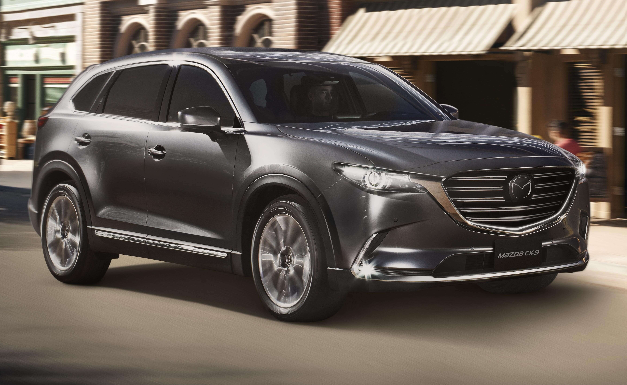
Shopping for a used three-row SUV can feel a little like walking through a used-car lot in the dark. Two vehicles may wear the same Mazda CX-9 badge, yet the ownership experience can be dramatically different depending on the model year.
That's why understanding the Mazda CX-9 years matters.
The CX-9 had an unusually long run. Mazda's first-generation model arrived in North American showrooms in early 2007, while an entirely redesigned second generation went on sale during 2016. Mazda ultimately discontinued the CX-9 in the United States after the 2023 model year, making room for the larger and more sophisticated CX-90.
That gives us nearly two decades of CX-9s to sort through.
Some years make particularly attractive used purchases because they combine modern technology, strong performance, and years of refinement. Others deserve a more cautious inspection because of age, known mechanical concerns, or simply because later versions improved considerably.
Let's break the entire story down.
Content in this publication
- Mazda CX-9 Years at a Glance
- First-Generation Mazda CX-9: 2007-2015
- Second-Generation Mazda CX-9: 2016-2023
- 2016 Mazda CX-9: Impressive but First-Year Caution Applies
- 2017 Mazda CX-9
- 2018 Mazda CX-9
- 2019 Mazda CX-9
- 2020 Mazda CX-9
- 2021 Mazda CX-9: A Particularly Appealing Used Choice
- 2022 Mazda CX-9: One of the Best All-Round Years
- 2023 Mazda CX-9: The Final Model Year
- What Are the Best Mazda CX-9 Years?
- Which Mazda CX-9 Years Require More Caution?
- Best Mazda CX-9 Years for Reliability
- Best Mazda CX-9 Years for Value
- Best First-Generation Mazda CX-9 Years
- First Generation vs Second Generation CX-9
- How Long Can a Mazda CX-9 Last?
- What Should We Check Before Buying Any Mazda CX-9?
- Is Mileage or Model Year More Important?
- Was the Mazda CX-9 Discontinued?
- Should We Buy a Mazda CX-9 in 2026?
- Our Mazda CX-9 Years Ranking
- Final Thoughts: Which Mazda CX-9 Year Should We Buy?
- Frequently Asked Questions About Mazda CX-9 Years
Mazda CX-9 Years at a Glance
Before diving deep, here's the broad timeline.
| Mazda CX-9 generation | Model years | Main engine | General character |
|---|---|---|---|
| First generation | 2007-2015 | Naturally aspirated V6 | Spacious, smooth, traditional |
| Second generation | 2016-2023 | 2.5L turbo four-cylinder | Quieter, more premium, more efficient |
| Successor | 2024 onward | Mazda CX-90 | New platform and powertrains |
Mazda itself identifies the original CX-9 as launching in 2007 and describes the redesigned model introduced for 2016 as the second generation.
So if we're shopping today, there are really two very different CX-9 personalities to consider.
The first-generation SUV is the old-school choice: bigger-engine character, simpler technology, and generally lower purchase prices.
The second generation feels much more contemporary. It introduced Mazda's SKYACTIV-G 2.5T turbo engine, a noticeably more upscale cabin, improved efficiency, and the sleek styling that helped push Mazda toward the near-premium space.
First-Generation Mazda CX-9: 2007-2015
2007: Where the CX-9 Story Began
The Mazda CX-9 debuted as a seven-seat crossover created largely with North American buyers in mind.
Production started in Hiroshima in 2006, with the vehicle reaching North American dealerships in early 2007. Mazda described it at launch as a seven-seat crossover engineered specifically for this market.
For its era, it was refreshingly sporty.
Many family SUVs of the mid-2000s drove like refrigerators with wheels. The CX-9 tried something different. Steering response, road manners, and styling mattered almost as much as carrying seven people.
Today, however, a 2007 CX-9 is approaching two decades old.
That changes the buying equation.
Even a fundamentally solid vehicle can develop expensive problems simply because rubber seals, suspension components, cooling-system parts, electronics, and drivetrain components have accumulated years of heat cycles and mileage.
A cheap early CX-9 can therefore become expensive surprisingly quickly.
2008-2010 Mazda CX-9 Years
These early CX-9 years continued developing the formula.
They're generally most interesting to budget-conscious buyers who want maximum space for minimum upfront cost.
But purchase price shouldn't be our only calculation.
At this age we need to investigate:
- Transmission behavior
- Cooling-system condition
- Suspension wear
- Engine leaks
- Wheel bearings
- Air-conditioning operation
- AWD system condition where fitted
- Rust in climates where road salt is common
- Complete maintenance history
A fifteen-plus-year-old SUV with meticulous service records can be preferable to a newer example whose previous owner treated oil changes like optional suggestions.
Condition beats calendar age surprisingly often.
2011-2012 Mazda CX-9 Years
By this stage, Mazda had several years to refine the first-generation CX-9.
These models can still work well for buyers on a strict budget, but age remains the elephant in the garage.
We're now dealing with vehicles that may have transported children, dogs, luggage, groceries, soccer equipment, and half a household over well above 100,000 miles.
That's not necessarily bad.
It simply means inspection matters more than trim level.
We'd rather buy a boring-looking CX-9 with invoices covering years of preventive maintenance than a shiny one with freshly detailed leather and absolutely no service documentation.
2013-2015: The Mature First-Generation CX-9
If we're deliberately shopping for a first-generation vehicle, the final years usually make the most sense.
Why?
Because late-production models benefit from the accumulated refinement of an established platform while being several years younger than the earliest examples.
The 2013-2015 vehicles also present a more modern visual package than early CX-9s.
Still, we shouldn't confuse "later" with "problem-free."
At this age, vehicle history remains critical.
Who Should Consider a 2013-2015 CX-9?
These years can fit buyers who:
- Want a low purchase price
- Prefer a naturally aspirated engine
- Don't need the newest infotainment systems
- Value passenger space
- Drive relatively few annual miles
- Can budget for age-related maintenance
If fuel economy, modern driver assistance, cabin refinement, and technology matter more, we'd skip ahead to the second generation.
Second-Generation Mazda CX-9: 2016-2023
The transformation for 2016 was enormous.
This wasn't merely a new grille attached to the same SUV.
Mazda unveiled the all-new CX-9 in November 2015 and began production in February 2016. North American sales followed in spring 2016. The redesigned SUV debuted Mazda's new SKYACTIV-G 2.5-liter turbocharged gasoline engine and incorporated the company's newer SKYACTIV platform philosophy and KODO design language.
In everyday terms?
The CX-9 grew up.
It felt less like a conventional mass-market family crossover and more like Mazda had borrowed a tailor from a luxury brand.
2016 Mazda CX-9: Impressive but First-Year Caution Applies
The 2016 model introduced nearly everything that made the second-generation CX-9 appealing.
The turbocharged four-cylinder delivered strong low-end torque. The cabin looked cleaner and substantially more expensive than before. Exterior styling was elegant rather than bulky.
But 2016 was also the first model year of an all-new generation.
That alone doesn't make it a bad purchase.
Still, when comparable later examples are available, we generally prefer allowing the first production year to serve as someone else's experiment.
More importantly, Mazda later established a warranty-extension program concerning coolant leakage around the cylinder head/exhaust-manifold area on certain 2016-2020 CX-9 vehicles equipped with the SKYACTIV-G 2.5T engine.
That makes careful inspection especially important.
2017 Mazda CX-9
The 2017 CX-9 retained the essential strengths introduced one year earlier.
It remains attractive on the used market because depreciation can make these vehicles surprisingly affordable compared with newer three-row SUVs.
Still, it falls inside the group of certain 2016-2020 vehicles addressed by Mazda's coolant-leak customer service program.
So rather than automatically rejecting a 2017, we'd investigate it.
Service records matter enormously.
Ask whether the cooling system has required repair. Check the vehicle identification number with Mazda. Look for coolant loss or evidence of previous repairs. And have the vehicle inspected by a technician familiar with Mazda's turbocharged SKYACTIV engines.
2018 Mazda CX-9
The 2018 CX-9 is another appealing middle-ground vehicle.
You get most of what makes the second generation desirable without paying late-model prices.
The problem is that depreciation cuts both ways.
A lower purchase price is attractive, but an older turbocharged three-row SUV may already have substantial mileage.
We'd therefore make the maintenance history part of the purchase decision rather than an afterthought.
A documented 2018 with conservative ownership could be a smarter purchase than a neglected 2021.
2019 Mazda CX-9
By 2019, the second-generation CX-9 was firmly established.
Cabin refinement, excellent driving manners, strong torque, and handsome styling continued making it one of the more distinctive vehicles in its segment.
The 2019 model can represent good value today.
You may be interested in reading Subaru XV Years to Avoid: The Used-Buyer’s Complete Guide
However, it remains inside the range cited in Mazda's cylinder-head coolant-leak service documentation for certain CX-9 vehicles.
That doesn't mean every 2019 CX-9 has the problem.
Far from it.
The technical documentation itself cautions against assuming every applicable vehicle will develop the concern.
That's an important distinction.
We shouldn't turn a known technical issue into internet mythology where every vehicle suddenly becomes a ticking bomb.
Instead, verify the particular vehicle.
2020 Mazda CX-9
The 2020 model sits in an interesting position.
On one hand, it's a relatively modern CX-9 with the refined second-generation formula.
On the other, certain 2020 examples are also included within Mazda's coolant-leak program.
Mazda's program specifies applicable 2016-2020 CX-9 vehicles produced before June 9, 2020 within the stated VIN range. For covered U.S. vehicles, Mazda extended warranty coverage for the relevant repair to 10 years or 120,000 miles, whichever comes first.
That manufacturing-date distinction makes VIN verification especially valuable when shopping for a 2020.
Why Production Date Matters
Model year and production date aren't identical.
A "2020 CX-9" could have been manufactured at a different point in the production cycle than another 2020 sitting beside it.
That's why internet advice like "avoid every 2020" is too simplistic.
The VIN tells a more precise story.
2021 Mazda CX-9: A Particularly Appealing Used Choice
Now we reach one of the CX-9 years we'd naturally put near the top of a used-shopping list.
The 2021 sits after the manufacturing range identified in Mazda's coolant-leak customer service program while retaining the same fundamental second-generation architecture.
That makes it an appealing sweet spot.
It's new enough to feel contemporary, old enough to have experienced meaningful depreciation, and late enough in the generation to benefit from years of development.
For many shoppers, this is where the CX-9 equation starts looking particularly attractive.
Why We Like the 2021 CX-9
Think of it as ordering a restaurant's signature dish after the chef has been making it for several years.
The fundamentals were already established.
Mazda wasn't reinventing the CX-9 anymore. It was polishing the formula.
Naturally, a 2021 still requires inspection. A poorly maintained newer car doesn't magically become reliable because its model year looks good on a spreadsheet.
But all else being equal, we'd generally feel more comfortable starting our search here than with an early second-generation example.
2022 Mazda CX-9: One of the Best All-Round Years
The 2022 model is another strong candidate.
By this point, the second-generation platform was mature.
The CX-9 still offered the combination that made it unusual among mainstream three-row crossovers: responsive handling, an upscale-feeling interior, relatively restrained exterior dimensions, and strong turbocharged torque.
A clean 2022 with complete maintenance records would sit very high on our shopping list.
The obvious downside?
Price.
Later CX-9s naturally command more money than early second-generation examples.
But sometimes paying more upfront reduces the number of question marks attached to the vehicle.
2023 Mazda CX-9: The Final Model Year
And then the curtain fell.
Mazda officially discontinued the CX-9 in the United States after the 2023 model year. The company had already announced that the three-row CX-90 would replace the CX-9 within its U.S. lineup.
That makes the 2023 CX-9 interesting.
It's the final evolution of a platform that had been produced since 2016.
There's something reassuring about buying a vehicle at the end of its lifecycle. Manufacturers have had years to understand how the platform behaves in the real world.
Of course, late-model pricing can approach newer alternatives.
That means we should compare carefully.
A 2023 CX-9 makes the most sense when its used price creates a meaningful discount compared with a CX-90 or another newer three-row SUV.
What Are the Best Mazda CX-9 Years?
If we were creating a short shopping list, we'd start with:
- 2023 Mazda CX-9
- 2022 Mazda CX-9
- 2021 Mazda CX-9
- 2015 Mazda CX-9 for budget-focused first-generation shoppers
- 2014 Mazda CX-9 when condition and history are excellent
Why favor 2021-2023?
They represent the mature end of the second generation and sit outside the 2016-2020 model-year range identified in Mazda's CSP11 cylinder-head coolant-leak warranty extension documentation.
That doesn't guarantee perfection.
No used vehicle comes with that promise.
But these later years make a logical starting point when reliability risk, modern equipment, depreciation, and overall ownership appeal are considered together.
Which Mazda CX-9 Years Require More Caution?
We'd divide "caution" into two categories rather than publishing a dramatic blacklist.
2007-2012: Caution Because of Age
Early first-generation models can be incredibly inexpensive.
That's tempting.
But age itself becomes a reliability variable.
A 2008 CX-9 may have been perfectly engineered and maintained beautifully, yet components still age.
Hoses harden. Bushings deteriorate. Sensors fail. Interior electronics grow temperamental. Suspension components wear out.
At some point, buying the cheapest example becomes like adopting an old house because the mortgage looks affordable while ignoring the roof, plumbing, boiler, and foundation.
2016-2020: Investigate the Cooling-System History
These years deserve targeted due diligence because certain CX-9s equipped with the 2.5T engine were included in Mazda's CSP11 warranty-extension program relating to coolant leakage at the cylinder head around the exhaust manifold.
Again, that doesn't mean we should automatically avoid every 2016-2020 CX-9.
Instead:
Before buying one, we would
- Check the VIN with a Mazda dealer
- Review maintenance and repair records
- Ask whether coolant loss has occurred
- Look for evidence of cooling-system repairs
- Confirm current coolant level
- Inspect beneath the vehicle and around the engine
- Have an independent pre-purchase inspection performed
- Verify whether applicable warranty-extension coverage remains
Knowledge transforms risk.
An undocumented 2017 CX-9 with suspicious coolant loss? We'd walk away.
A well-maintained applicable CX-9 whose issue was properly diagnosed and repaired with documentation? That's a very different proposition.
Best Mazda CX-9 Years for Reliability
For shoppers prioritizing reliability over bargain pricing, we'd focus on 2021-2023.
These vehicles benefit from being later in the second generation while avoiding the specific 2016-2020 model-year group in Mazda's coolant-leak CSP documentation.
But reliability isn't printed permanently onto the VIN.
Mileage and maintenance still matter.
A 2022 with 150,000 hard rental miles isn't automatically preferable to a privately owned 2019 with 45,000 miles and obsessive maintenance documentation.
Context wins.
You may be interested in readingSubaru XV Years to Avoid: The Used-Buyer’s Complete GuideYou may be interested in reading
Subaru XV Models: Complete Guide to Generations, Trims and VersionsBest Mazda CX-9 Years for Value
Value is slightly different from reliability.
Here, an intelligently purchased 2018-2020 model can become interesting.
Why?
Depreciation.
These years can provide much of the second generation's design, driving dynamics, turbocharged performance, and cabin quality for considerably less money than a 2022 or 2023.
We simply wouldn't buy one blindly.
Do the VIN homework. Investigate maintenance. Pay for a pre-purchase inspection.
Sometimes the best used-car bargain isn't the model everyone says is "best." It's the slightly overlooked one whose previous owner maintained it meticulously.
Best First-Generation Mazda CX-9 Years
If we specifically want the older V6 CX-9, we'd lean toward 2013-2015.
They're still old vehicles today, but they're the newest representatives of the first-generation design.
That means less age exposure than a 2007-2010 example and generally more mature execution.
These years make particular sense for shoppers prioritizing purchase price over fuel economy and cutting-edge technology.
First Generation vs Second Generation CX-9
Choose 2007-2015 if you want:
- Lower purchase prices
- A naturally aspirated V6
- Simpler old-school SUV character
- Three-row practicality on a budget
- Less concern about having modern infotainment
Choose 2016-2023 if you want:
- A much more modern interior
- Better refinement
- Turbocharged torque
- More contemporary styling
- Newer safety technology
- Better overall road manners
- A more premium ownership experience
For most buyers today, we'd prefer the second generation.
The difference feels substantial.
How Long Can a Mazda CX-9 Last?
There isn't a magical mileage where a CX-9 expires.
With consistent maintenance and sensible use, high mileage is entirely possible, but lifespan depends heavily on maintenance history, operating conditions, climate, repair quality, and how the vehicle was driven.
We'd pay more attention to records than odometer psychology.
Consider two vehicles:
One has 70,000 miles and no service history.
The other has 105,000 miles, documented oil changes, cooling-system maintenance, fresh transmission servicing where appropriate, new tires, recent brakes, and receipts dating back years.
Which one would we trust?
Probably the second.
Mileage tells us how far the vehicle traveled.
Maintenance tells us how it traveled.
What Should We Check Before Buying Any Mazda CX-9?
No matter which Mazda CX-9 year we choose, a proper pre-purchase inspection is worth the money.
Our CX-9 Used-Buying Checklist
Check:
- Cold-start behavior
- Engine warning lights
- Turbo performance on second-generation models
- Coolant level and evidence of leakage
- Transmission shift quality
- AWD operation
- Suspension noises
- Steering feel
- Brake condition
- Tire wear patterns
- Air conditioning
- Infotainment functions
- Cameras and sensors
- Power seats and liftgate
- Water intrusion
- Accident history
- Service documentation
- Outstanding recalls or service campaigns
Don't Skip the Cold Start
A warm engine can hide behavior that appears during startup.
Ask the seller not to start the car before you arrive.
That simple request can reveal more than fifteen minutes spent admiring polished paint.
Is Mileage or Model Year More Important?
Neither works alone.
Model year tells us which engineering version we're buying.
Mileage tells us how much use it has accumulated.
Maintenance tells us what actually happened.
We need all three pieces.
A younger CX-9 isn't automatically superior.
A low-mileage CX-9 isn't automatically healthier either. Cars that spend years barely moving can develop their own problems.
The ideal used vehicle combines reasonable mileage, consistent use, documented maintenance, and a clean inspection.
Was the Mazda CX-9 Discontinued?
Yes.
Mazda announced on June 30, 2023 that the CX-9 would be discontinued in the U.S. following the 2023 model year.
Its departure wasn't simply Mazda abandoning three-row SUVs.
Quite the opposite.
Mazda had already announced that the CX-90 would replace the CX-9 in its American lineup. The new model shifted toward Mazda's newer large-platform strategy, including longitudinal architecture and new powertrain options.
So the CX-9 essentially passed the baton.
Should We Buy a Mazda CX-9 in 2026?
Absolutely—provided we buy the right one at the right price.
The CX-9's discontinuation doesn't suddenly make it obsolete.
In fact, used-car shoppers can benefit because discontinued models sometimes lose some of the hype attached to their newer replacements.
A well-kept 2021-2023 CX-9 still offers a compelling mixture of space, style, handling, comfort, and turbocharged performance.
The bigger question is price.
If a late CX-9 costs nearly as much as a substantially newer competitor, the argument becomes weaker.
But at the right discount?
It can be one of those used SUVs that quietly makes more sense than the obvious choices.
Our Mazda CX-9 Years Ranking
If we grouped the years purely as a shopping starting point rather than an absolute reliability verdict, we'd think about them like this:
| Years | Shopping assessment |
|---|---|
| 2021-2023 | Excellent starting point |
| 2013-2015 | Good first-gen budget choices |
| 2018-2020 | Potentially strong value; investigate history carefully |
| 2016-2017 | Attractive pricing but more due diligence recommended |
| 2007-2012 | Buy primarily on condition, records, and price |
Remember: this isn't a declaration that every vehicle in one row will outperform every vehicle in another.
Used cars aren't clones.
Their lives matter.
Final Thoughts: Which Mazda CX-9 Year Should We Buy?
After looking across all Mazda CX-9 years, our preferred hunting ground is straightforward.
For the strongest overall combination of age, refinement, technology, and reduced exposure to the specific early-second-generation coolant concern discussed above, we'd begin with the 2021, 2022, and 2023 Mazda CX-9.
The 2022 may be the particularly interesting middle ground: late enough in production to benefit from a mature platform, but potentially cheaper than final-year examples.
Budget buyers interested in the first generation should look closely at 2013-2015, provided the vehicle passes a thorough inspection.
Meanwhile, 2016-2020 CX-9s shouldn't automatically be crossed off the list. They can represent attractive value, but we'd verify the VIN and cooling-system history because Mazda's CSP11 documentation covers certain vehicles from those model years.
Ultimately, the best CX-9 isn't simply the one with the "best year."
It's the one where model year, price, mileage, condition, ownership history, and maintenance records all line up.
Think of the model year as the cover of the book.
The service history tells us the actual story.
Frequently Asked Questions About Mazda CX-9 Years
1. What are the best Mazda CX-9 years to buy?
The 2021-2023 Mazda CX-9 years are strong places to begin because they're mature second-generation models and sit outside the 2016-2020 range addressed by Mazda's CSP11 coolant-leak warranty-extension documentation. Individual vehicle condition still matters considerably.
2. Which Mazda CX-9 years should we be cautious about?
Certain 2016-2020 CX-9s equipped with the SKYACTIV-G 2.5T were included in Mazda's customer service program concerning coolant leakage around the cylinder head and exhaust manifold. Early 2007-2012 examples also warrant careful inspection simply because of their age.
3. What years were Mazda CX-9s manufactured?
The first-generation CX-9 reached North American dealerships in 2007. The all-new second-generation vehicle arrived for 2016, and Mazda ended U.S. CX-9 sales following the 2023 model year.
You may be interested in readingSubaru XV Years to Avoid: The Used-Buyer’s Complete GuideYou may be interested in reading
Subaru XV Models: Complete Guide to Generations, Trims and VersionsYou may be interested in reading
 Kia Carnival vs Honda Odyssey: Which Family Minivan Wins?
4. Is a 2020 Mazda CX-9 a good used SUV?
Potentially, yes. A well-maintained 2020 can provide excellent value and most of the second-generation CX-9's desirable qualities. However, certain 2020 vehicles produced within Mazda's specified VIN and production range are covered by its CSP11 coolant-leak warranty extension, so VIN verification and inspection are advisable.
5. What replaced the Mazda CX-9?
The Mazda CX-90 replaced the CX-9 as Mazda's three-row offering in the U.S. Mazda had publicly announced this transition before the CX-9 was formally discontinued after 2023.
If you want to know other articles similar to Mazda CX-9 Years: Best, Worst, and Full Model Guide you can visit the category Models.
Honda Passport vs Toyota 4Runner: Which SUV Is Better?
Honda Passport vs Ford Bronco: Which SUV Is Better?
Honda Passport vs Ford Explorer: Which SUV Is Better?
Honda Passport or Pilot: Which SUV Is Better?
Honda Passport vs Jeep Grand Cherokee: Which SUV Is Better?
Honda Passport vs Nissan Pathfinder: Which SUV Is Better?
Leave a Reply
More content of your interest