

Subaru XV Models: Complete Guide to Generations, Trims and Versions

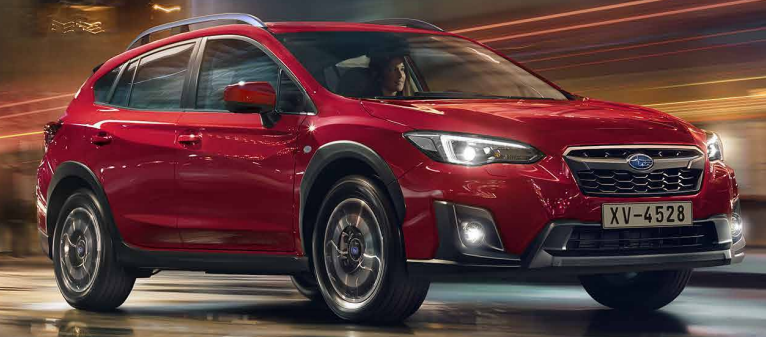
The Subaru XV has always been a slightly unusual member of the compact SUV crowd. While many rivals began life as conventional SUVs, the XV took a different road. Subaru essentially blended hatchback dimensions, raised ground clearance, permanent all-wheel-drive capability, and its familiar Boxer-engine formula into one adventurous package.
That combination helped the XV carve out its own corner of the market. It could tackle a weekday commute without feeling like a lumbering off-roader, yet it had enough ground clearance and traction to venture comfortably beyond smooth city streets.
But searching for Subaru XV models can become confusing surprisingly quickly. Depending on the year and country, we might encounter names such as XV 2.0i, 2.0i-L, Premium, 2.0i-S, Hybrid L, Hybrid S, Crosstrek, or completely different regional trim labels.
So, which Subaru XV model is which?
In this guide, we're going to untangle the entire family tree. We'll look at the major generations, petrol and hybrid versions, trim levels, engines, differences between models, and what happened when Subaru gradually shifted from the XV name to Crosstrek.
Content in this publication
- What Is the Subaru XV?
- Subaru XV Models at a Glance
- First-Generation Subaru XV Models
- Second-Generation Subaru XV Models
- Subaru XV 2.0i-L
- Subaru XV 2.0i Premium
- Subaru XV 2.0i-S
- Subaru XV Hybrid Models
- Subaru XV Hybrid L AWD
- Subaru XV Hybrid S AWD
- Petrol vs Hybrid Subaru XV Models
- The 2020 Subaru XV Update
- What Happened to the Subaru XV?
- Third-Generation XV: The Crosstrek Era
- Subaru XV vs Subaru Crosstrek
- Subaru XV Model Differences by Country
- Which Subaru XV Model Is Best?
- Which Subaru XV Models Have AWD?
- Which Subaru XV Models Have X-Mode?
- Are Higher Subaru XV Models Worth It?
- What Subaru XV Model Should We Buy Used?
- How to Identify a Subaru XV Model
- Subaru XV Model Timeline
- Subaru XV Models: Final Thoughts
- Frequently Asked Questions About Subaru XV Models
What Is the Subaru XV?
The Subaru XV is a compact crossover SUV derived closely from the Subaru Impreza platform.
Think of it as an Impreza that packed hiking boots.
Compared with a conventional hatchback, the XV typically brings greater ground clearance, SUV-inspired body cladding, roof rails, all-wheel drive, and suspension tuned to cope with rougher surfaces.
Yet it remains relatively compact.
That middle ground explains much of its appeal. Drivers who don't want the bulk of a Forester or Outback can still enjoy many characteristics associated with larger Subaru SUVs.
Subaru Australia describes the XV as having arrived in its market in 2012, with the second generation following in 2017.
Subaru XV Models at a Glance
Before diving deeper, here's the simplest way to understand the family.
| Generation | Approximate era | Main characteristics |
|---|---|---|
| First-generation XV | 2012-2017 | Impreza-based crossover, petrol engines, manual/CVT options in some markets |
| Second-generation XV | 2017-2022/23 | Subaru Global Platform, newer safety technology, improved refinement |
| XV Hybrid/e-Boxer | Mainly from 2020 in several markets | Petrol Boxer engine assisted by electric motor |
| Third-generation successor | From 2023 in many markets | XV renamed Crosstrek |
Exact model years, engines, equipment and trim names vary by country, so we shouldn't assume that an XV advertised in Australia has identical specifications to one sold in Europe, Japan or another region.
That's particularly important when shopping for a used car.
First-Generation Subaru XV Models
The XV Arrives
The first-generation Subaru XV established the formula that would define the model for years.
Rather than building a small SUV completely from scratch, Subaru took the compact-car fundamentals it already understood and added enough SUV character to make the XV genuinely useful outside urban environments.
In Australia, the XV officially arrived for the 2012 model year. Subaru also introduced Auto Start Stop technology to the range. Contemporary Australian specifications listed a 2.0-litre petrol engine paired with either a six-speed manual transmission or Lineartronic CVT.
That transmission choice alone makes the earliest XV models interesting today.
Many later versions moved increasingly toward CVT-only lineups, so buyers who specifically want a manual Subaru crossover may find the early generation more appealing.
First-Generation XV 2.0i
The 2.0i designation generally identified XV models using Subaru's naturally aspirated 2.0-litre Boxer petrol engine.
The horizontally opposed engine layout is one of Subaru's trademarks. Instead of cylinders standing upright like soldiers, opposing cylinders lie flatter and move horizontally.
Why does that matter?
A Boxer engine allows major engine mass to sit relatively low in the vehicle, contributing to the low-centre-of-gravity philosophy Subaru frequently uses throughout its range.
For everyday drivers, however, the important point is simpler: the 2.0i was designed as a practical, naturally aspirated engine rather than a turbocharged performance unit.
Manual vs CVT XV Models
Early Subaru XV buyers in some regions could choose between a traditional manual gearbox and Subaru's Lineartronic continuously variable transmission.
Australian MY2012 figures, for example, showed both a six-speed manual and Lineartronic version of the XV 2.0i.
The manual naturally gives the car a more involved character. It can also appeal to used-car buyers who prefer mechanical simplicity and direct control.
The CVT, meanwhile, suits the XV's broader mission better for many people.
It's easier in traffic, works smoothly with Subaru's AWD system, and became increasingly central to the XV range as driver-assistance systems grew more sophisticated.
Which First-Generation Version Makes More Sense?
If we're buying one today, condition matters more than the badge.
A beautifully maintained mid-level XV will normally be a smarter purchase than a neglected top-spec example.
We would prioritize:
- Complete servicing documentation
- Smooth transmission behavior
- Even tyre wear
- Evidence of proper AWD-compatible tyre replacement
- Suspension condition
- Oil-leak inspection
- Working air conditioning and electronics
- A pre-purchase mechanical inspection
Trim level is the icing. Mechanical condition is the cake.
Second-Generation Subaru XV Models
The second-generation XV represented a bigger jump than its familiar styling initially suggested.
Subaru launched the second-generation XV in Australia in 2017, and the vehicle became one of the models built on the Subaru Global Platform. Subaru said this architecture improved dynamics as well as on-road and off-road capability.
This generation is particularly important for used buyers because it blended recognizable XV character with more modern safety, infotainment and chassis technology.
Why the Subaru Global Platform Matters
Platforms sound painfully technical until we remember that they're essentially the bones of the vehicle.
A better structure can affect:
- Chassis rigidity
- Crash performance
- Steering feel
- Ride quality
- Noise and vibration
- Suspension behavior
The second XV still felt familiar, but underneath the skin Subaru had moved the vehicle into a newer engineering era.
That's one reason a 2018 or 2019 XV can feel noticeably more contemporary than an early first-generation example despite looking like part of the same family from across a parking lot.
Subaru XV 2.0i-L
The XV 2.0i-L became one of the recognizable trim names in markets such as Australia.
It sat toward the more accessible end of the later XV lineup but shouldn't necessarily be interpreted as a bare-bones budget vehicle.
Subaru increasingly packaged useful safety and convenience equipment into lower trims, particularly as the second generation matured.
For many used buyers, the 2.0i-L represents the sensible middle path.
You get the fundamental XV ingredients without necessarily paying top-trim prices for equipment you may rarely use.
Who Should Buy the XV 2.0i-L?
We'd put this model near the top of the list for drivers who mainly care about:
- Subaru AWD capability
- Compact external dimensions
- Practical everyday driving
- Reasonable used-market pricing
- Essential comfort rather than luxury
- Access to later-generation safety technology
It's the kind of trim that quietly does its job.
No fireworks. No red carpet. Just useful equipment wrapped around the parts that make an XV an XV.
The XV 2.0i Premium moved farther toward convenience and technology.
Exact features depend on model year, but Premium versions were generally positioned above mainstream grades.
That's where we start finding the goodies that make daily life more pleasant rather than fundamentally changing how the vehicle drives.
Depending on year and market, that can mean upgraded infotainment, navigation or additional convenience equipment.
When we're buying used, Premium versions can offer excellent value because optional-looking features depreciate much faster than the entire car.
Something that may have created a meaningful price gap when new might add only a modest premium several years later.
Subaru XV 2.0i-S
At the upper end of several Australian XV ranges sat the 2.0i-S.
This is often the version shoppers notice when they want the richest conventional petrol specification.
Higher XV trims typically add comfort, styling and technology rather than turning the XV into a high-performance SUV.
That's worth emphasizing.
The letter S does not magically transform the XV into a WRX on stilts.
Instead, the appeal comes from having more of the equipment Subaru offered at the time while retaining the familiar 2.0-litre naturally aspirated drivetrain.
Is the 2.0i-S the Best Subaru XV Model?
It depends on what we mean by "best."
The 2.0i-S can be one of the most desirable petrol models if we value specification.
However, a lower trim may be better value.
A higher-grade model makes sense when the added comfort and technology genuinely matter to us. If all we want is AWD transportation with good ground clearance, paying extra for the S badge may not improve the ownership experience proportionally.
Subaru XV Hybrid Models
Subaru eventually added electrification to the XV.
In Australia, Subaru introduced the XV Hybrid for 2020 as one of its first hybrid offerings alongside the Forester Hybrid.
Rather than turning the XV into a plug-in EV, Subaru used its e-Boxer hybrid concept.
That system combines a Boxer petrol engine, electric motor, battery and Subaru's all-wheel-drive philosophy.
Subaru XV Hybrid AWD
The initial Australian XV Hybrid AWD paired a 2.0-litre petrol engine with an electric motor.
Subaru's published Australian specifications listed the petrol engine at 110 kW and 196 Nm, while the electric motor provided 12.3 kW and 66 Nm. The quoted combined ADR fuel-consumption figure was 6.5 L/100 km.
That's important because the XV Hybrid shouldn't be viewed like a Toyota-style efficiency champion whose entire personality revolves around minimizing fuel use.
Subaru's approach attempted to preserve AWD characteristics while adding electric assistance.
How the e-Boxer System Works
The electric system can assist the petrol engine, recover energy and provide limited electric-only operation under suitable conditions.
You may be interested in reading Kia Carnival vs Honda Odyssey: Which Family Minivan Wins?
Subaru explains that the battery can be charged through regenerative processes and engine operation rather than requiring the owner to plug the car in.
In other words, we drive it much like a regular petrol XV.
No charging cable.
No planning our evening around a wall socket.
No wondering whether someone unplugged the car overnight.
Is the XV Hybrid a Full EV?
No.
Nor is the conventional e-Boxer XV a plug-in hybrid.
Its battery is relatively small compared with those found in EVs and many plug-in hybrids, and its electric-only capability is correspondingly limited.
The purpose is assistance and efficiency rather than long-distance electric driving.
Subaru XV Hybrid L AWD
For 2021, Subaru Australia repositioned the XV hybrid range into two variants: Hybrid L AWD and Hybrid S AWD.
The Hybrid L became the more accessible of the pair.
It preserved the central e-Boxer drivetrain concept while targeting buyers who wanted electrification without every available luxury feature.
This makes the Hybrid L worth considering on the used market.
Sometimes buyers overlook it because the Hybrid S sounds more complete, yet many people rarely use the extra equipment that separates high and mid-level trims.
Subaru XV Hybrid S AWD
The Hybrid S AWD represented the more highly equipped hybrid XV.
It gave buyers a way to combine the electrified drivetrain with higher trim-level luxuries.
By the final Australian XV range, Subaru's brochure listed five principal variants:
- XV 2.0i-L AWD
- XV 2.0i Premium AWD
- XV 2.0i-S AWD
- XV Hybrid L AWD
- XV Hybrid S AWD
All five used Lineartronic CVT transmissions in that later range. The petrol versions used a 1,995 cc Boxer four-cylinder engine, while the Hybrid L and Hybrid S paired a 2.0-litre e-Boxer engine with electric assistance.
That five-model structure is probably the cleanest snapshot of the mature Subaru XV lineup before the Crosstrek name took over.
Petrol vs Hybrid Subaru XV Models
This is one of the more interesting buying decisions.
The obvious assumption is that hybrid automatically equals better.
Not necessarily.
Why Choose a Petrol XV?
The regular petrol XV is straightforward.
It avoids the additional battery and hybrid components, offers familiar performance, and may be cheaper on the second-hand market.
For drivers who spend substantial time at higher speeds, the fuel-economy advantage of the mild hybrid approach may also matter less than it does in stop-start urban traffic.
Why Choose a Hybrid XV?
The hybrid makes greater sense when we:
- Spend plenty of time in urban traffic
- Like smoother low-speed operation
- Want reduced fuel consumption without plugging in
- Prefer newer, better-equipped XVs
- Are comfortable with hybrid-system complexity
Subaru stated that the original Australian XV Hybrid delivered more than a 14% fuel-efficiency improvement over equivalent petrol variants in the urban cycle and over 7% in the combined test cycle.
Real-world results naturally vary.
Still, it illustrates where the system was designed to deliver its biggest advantage: slower, stop-and-go conditions.
The 2020 Subaru XV Update
The 2020 period is important in XV history for more than the hybrid.
Subaru also introduced a mid-life refresh.
One notable addition across the Australian XV range was SI-Drive, which allows drivers to alter throttle and drivetrain response according to the selected mode.
Mid-cycle updates like this can make an interesting sweet spot in the used market.
We often get most of the engineering maturity of a generation, newer equipment than early examples, and a purchase price well below that of a brand-new successor.
What Happened to the Subaru XV?
Here's where things get confusing.
The XV didn't exactly disappear.
It changed its name.
Subaru XV Becomes Subaru Crosstrek
For the next generation, Subaru adopted the Crosstrek name in markets that previously knew the vehicle primarily as the XV.
In Australia, the all-new Crosstrek went on sale in May 2023. Subaru explicitly described it as the next iteration of the Subaru XV.
Subaru Australia later referred to the Crosstrek as the model formerly named XV.
So when we're looking at Subaru XV generations, the Crosstrek should be treated as the continuation of the same model lineage rather than an unrelated SUV.
Third-Generation XV: The Crosstrek Era
Calling it the "third-generation XV" isn't technically how Subaru markets it in many countries, but conceptually that's what we're dealing with.
The Crosstrek continues the formula.
Compact footprint?
Check.
Boxer engine?
Check.
Symmetrical AWD?
Check.
Raised SUV stance?
Check.
Adventurous styling?
Definitely.
It is evolution rather than a clean-sheet departure.
Modern Crosstrek Petrol Models
At its Australian launch, the new Crosstrek range included three petrol and two hybrid variants.
The petrol version used a direct-injection 2.0-litre Boxer engine with Lineartronic transmission, while hybrid versions continued with an e-Boxer setup.
Therefore, someone searching for a "2024 Subaru XV" in markets such as Australia may actually need to search for a 2024 Subaru Crosstrek.
The badge changed. The family tree didn't.
Subaru XV vs Subaru Crosstrek
Historically, the distinction mostly came down to market naming.
North America had long used the Crosstrek name while countries including Australia used XV.
With the newest generation, Subaru increasingly consolidated around Crosstrek.
So is a Crosstrek basically an XV?
Broadly, yes, when comparing equivalent generations and markets.
However, we should never assume exact trim levels, engines or specifications match across countries.
An American Crosstrek, Australian XV and European XV from the same general era can differ in:
- Engine choices
- Transmission availability
- Hybrid systems
- Safety equipment
- Trim names
- Wheel sizes
- Infotainment
- Emissions equipment
- Towing specifications
Model name and specification are two different things.
Subaru XV Model Differences by Country
This is perhaps the most important warning in the entire guide.
There is no single universal XV trim chart.
Subaru adjusts vehicles according to market demand, local regulations, fuel prices and homologation requirements.
We might therefore see an XV advertised with a badge that doesn't appear in another country's official brochure.
European versions, for example, historically included engine choices that weren't necessarily mirrored in Australia.
Similarly, the Crosstrek name appeared in North America while XV remained familiar elsewhere.
That's why searching only by trim badge can lead us down a rabbit hole.
You may be interested in readingKia Carnival vs Honda Odyssey: Which Family Minivan Wins?You may be interested in reading
Kia Carnival vs Hyundai Palisade: Which Family Hauler Wins?The smarter method is:
year + country + engine + trim.
For example:
2021 Subaru XV 2.0i-S Australia
is a much more useful search than simply:
Subaru XV S
Which Subaru XV Model Is Best?
If we're shopping used, there's no single winner.
Instead, several versions stand out for different priorities.
Best for Value: XV 2.0i-L
The 2.0i-L captures the fundamental Subaru XV recipe without necessarily carrying top-spec pricing.
It's our sensible-shoes choice.
Not glamorous, but hard to argue against when condition and price are right.
Best Petrol Specification: XV 2.0i-S
Want more equipment without going hybrid?
The 2.0i-S is the logical target in markets where it represented the top petrol trim.
Best for Urban Driving: XV Hybrid
Hybrid assistance makes its strongest case in stop-start conditions.
Drivers spending most of their time moving between traffic lights rather than crossing open highways may extract more benefit from the system.
Best for a Lower Purchase Price: First-Generation XV
Older XVs can bring the entry price down substantially.
Just remember that age makes servicing history increasingly important.
A cheap crossover can quickly stop being cheap if years of postponed maintenance arrive at our doorstep together.
Best Modern Equivalent: Subaru Crosstrek
If we want the newest interpretation of the XV concept, Crosstrek is where the story continues.
Today's Subaru Australia range lists Crosstrek rather than XV among its current models.
Which Subaru XV Models Have AWD?
All-wheel drive is central to the XV identity in major markets.
Rather than offering AWD only as an expensive optional upgrade, Subaru built its compact crossover around its Symmetrical AWD concept.
That helps differentiate the XV from numerous small SUVs whose least-expensive versions drive only the front wheels.
For people living somewhere with snow, gravel roads, steep wet hills or regularly changing road surfaces, this can be one of the XV's strongest arguments.
That said, AWD cannot rewrite the laws of physics.
Tyre quality still matters enormously.
An AWD car on poor tyres can easily have less useful grip than a two-wheel-drive vehicle wearing excellent tyres suited to the conditions.
Which Subaru XV Models Have X-Mode?
X-Mode appears on later XV versions and complements the AWD system by coordinating drivetrain and vehicle-control systems for difficult low-speed surfaces.
We can think of it like giving the vehicle a more specialized set of instructions when terrain becomes slippery or uneven.
The newer Crosstrek continues the feature, reinforcing how much of the XV's engineering philosophy survived the name change. Subaru's launch material specifically highlighted both Symmetrical AWD and X-Mode.
For occasional gravel tracks, muddy access roads or slippery inclines, X-Mode can add useful confidence.
The XV still isn't a heavy-duty body-on-frame 4x4, though.
We wouldn't confuse it with a rock-crawling expedition vehicle.
Are Higher Subaru XV Models Worth It?
Sometimes.
The temptation when buying used is to chase the highest badge because the price gap has shrunk.
That can work brilliantly.
Leather, better lighting, upgraded cameras and premium convenience features can make an older high-spec XV feel surprisingly modern.
But additional equipment also means additional systems that can eventually require repair.
The ideal used XV isn't automatically the fanciest.
It's the one whose:
- History makes sense
- Mileage matches its condition
- Transmission behaves properly
- Tyres match correctly
- Electronics operate normally
- Servicing has been consistent
- Price reflects its age
A spotless 2.0i-L beats a neglected 2.0i-S every day of the week.
What Subaru XV Model Should We Buy Used?
If our budget permits it, second-generation examples are arguably the most broadly attractive used XV models.
Why?
They sit in a particularly comfortable middle ground.
They're newer than the original XV, based on the Subaru Global Platform, and available with more modern driver-assistance and infotainment technology.
At the same time, they avoid the new-car pricing of the Crosstrek generation.
Later second-generation petrol models are especially easy to recommend for buyers who want a conventional drivetrain.
Hybrid models can also be compelling, but we would pay closer attention to hybrid-system condition and obtain an appropriate inspection.
How to Identify a Subaru XV Model
Badges help, but don't rely on them alone.
Cars can lose badges after bodywork, receive replacement tailgates or occasionally wear aftermarket emblems.
Instead, verify the vehicle using several pieces of information:
- Model year
- VIN
- Registration documentation
- Engine type
- Transmission
- Factory trim specification
- Original build information where available
This matters especially when paying more for a high-spec trim.
A few plastic letters on a tailgate aren't proof.
Subaru XV Model Timeline
The easiest timeline to remember is this:
2012: First-Generation XV Arrives
Australia received its first-generation XV in 2012, including 2.0-litre manual and Lineartronic versions.
2017: Second-Generation XV
Subaru launched the second generation on its newer Global Platform.
2020: Hybrid and Mid-Life Changes
Hybrid power joined the Australian XV lineup, while the broader range received updates including SI-Drive.
2021: Two Hybrid Grades
Hybrid L AWD and Hybrid S AWD expanded the electrified choice.
2023: Crosstrek Replaces the XV Name
The all-new Crosstrek arrived as the next evolution of the XV in Australia.
That's the XV story in five dates.
Subaru XV Models: Final Thoughts
The Subaru XV range looks complicated at first because the same basic crossover wore different trim names, engines and even model names depending on where and when it was sold.
Strip away those layers, though, and the picture becomes much clearer.
The first-generation XV created the recipe: compact dimensions, Boxer power, elevated ground clearance and Subaru AWD.
The second generation polished that formula with the Subaru Global Platform, additional technology, improved safety systems and eventually e-Boxer hybrid power.
Models such as the XV 2.0i-L, 2.0i Premium and 2.0i-S formed the core petrol lineup in markets such as Australia, while Hybrid L and Hybrid S expanded the later range.
Then came the biggest change of all—one that was actually smaller than it sounded.
Subaru replaced the XV badge with Crosstrek in markets including Australia.
The name changed, but the idea survived.
And perhaps that's the best way to understand the XV. It was never trying to be the biggest SUV, the fastest crossover or the cheapest hatchback. It lived between categories, mixing pieces of each like a Swiss Army knife on wheels.
For plenty of owners, that's exactly the point.
Frequently Asked Questions About Subaru XV Models
1. How many generations of Subaru XV are there?
There are two principal generations sold specifically under the XV name in markets such as Australia. The first arrived in 2012 and the second in 2017. The subsequent generation adopted the Crosstrek name in Australia from 2023, so it can effectively be regarded as the continuation of the XV lineage.
2. What are the main Subaru XV models?
Later Australian XV lineups included the 2.0i-L AWD, 2.0i Premium AWD, 2.0i-S AWD, Hybrid L AWD and Hybrid S AWD. Earlier lineups and models sold in other countries can use different trim names and specifications.
3. What is the top Subaru XV model?
In later Australian ranges, the 2.0i-S sat at the upper end of the petrol lineup, while Hybrid S served as the more highly equipped hybrid version. Exact hierarchy varies between countries and model years.
You may be interested in readingKia Carnival vs Honda Odyssey: Which Family Minivan Wins?You may be interested in reading
Kia Carnival vs Hyundai Palisade: Which Family Hauler Wins?You may be interested in reading
Kia Carnival vs Hyundai Staria: Which MPV Is Better?4. Is the Subaru Crosstrek the same as the XV?
The Crosstrek is the direct continuation of the Subaru XV. Subaru Australia described the new Crosstrek as the next iteration of the XV and later referred to Crosstrek as formerly named XV.
5. Which Subaru XV model should I buy?
For many used buyers, a well-maintained second-generation petrol XV offers the best balance of price, technology and mechanical familiarity. The 2.0i-L can be excellent value, while the 2.0i-S suits buyers wanting more equipment. Urban drivers should also consider the Hybrid L or Hybrid S. Regardless of trim, maintenance history and vehicle condition should come before badge prestige.
If you want to know other articles similar to Subaru XV Models: Complete Guide to Generations, Trims and Versions you can visit the category Models.
Honda Passport vs Toyota 4Runner: Which SUV Is Better?
Honda Passport vs Ford Bronco: Which SUV Is Better?
Honda Passport vs Ford Explorer: Which SUV Is Better?
Honda Passport or Pilot: Which SUV Is Better?
Honda Passport vs Jeep Grand Cherokee: Which SUV Is Better?
Honda Passport vs Nissan Pathfinder: Which SUV Is Better?
Leave a Reply
More content of your interest