

Subaru XV Fuel Consumption: MPG, Real-World Economy, and What to Expect

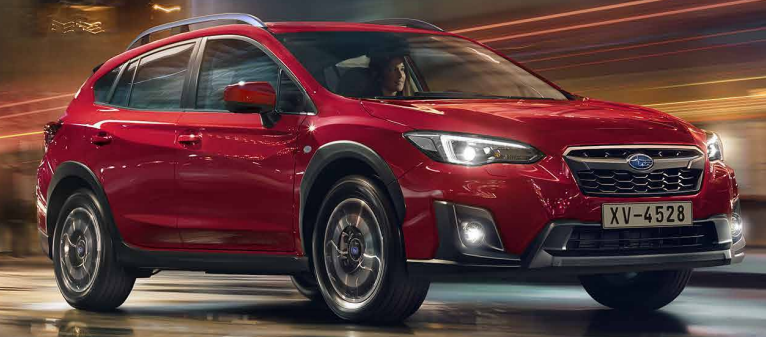
Fuel economy can make or break the ownership experience of a compact SUV. A vehicle might have all-wheel drive, comfortable seats, useful ground clearance, and enough technology to resemble a rolling laptop, but if it drinks fuel like there is a hole in the tank, those strengths quickly lose some shine.
That brings us to Subaru XV fuel consumption.
The Subaru XV—known as the Crosstrek in several markets—has always occupied an interesting position. It combines the footprint of a compact hatchback with permanent all-wheel-drive capability and SUV-like ground clearance. Naturally, that raises an important question: does the additional hardware result in painful fuel bills?
Generally, no.
Official figures from Subaru Australia for later second-generation XV models list combined consumption of 7.0 L/100 km for the 2.0-litre petrol XV and 6.5 L/100 km for the XV Hybrid under the ADR 81/02 testing procedure. Subaru itself stresses that real-world consumption can vary depending on traffic, driving style, climate, vehicle modifications, and fuel quality.
Those figures give us a useful starting point, but official laboratory numbers tell only half the story. Let's dig into what owners should realistically expect.
Content in this publication
- Subaru XV Fuel Consumption at a Glance
- Why Subaru XV Fuel Economy Is Better Than You Might Expect
- First-Generation Subaru XV Fuel Consumption
- Second-Generation Subaru XV Fuel Consumption
- Subaru XV Hybrid Fuel Consumption
- Real-World Subaru XV Fuel Consumption
- Does Subaru AWD Increase Fuel Consumption?
- What Makes Subaru XV Fuel Consumption Increase?
- How Driving Style Changes XV Fuel Economy
- Tyre Pressure and Subaru XV Fuel Consumption
- Do Roof Racks Hurt XV Fuel Economy?
- How Much Does Air Conditioning Affect Fuel Consumption?
- Subaru XV Fuel Tank Capacity and Driving Range
- L/100 km vs MPG: Understanding the Numbers
- Is Subaru XV Fuel Consumption Good for an AWD SUV?
- Subaru XV vs Larger SUVs for Fuel Economy
- Is the Subaru XV Economical Enough for Commuting?
- How to Improve Subaru XV Fuel Consumption
- Why Has My Subaru XV Suddenly Started Using More Fuel?
- Is the XV Hybrid Worth Buying Just to Save Fuel?
- What Subaru XV Fuel Consumption Should We Consider Normal?
- Does Fuel Consumption Make the Subaru XV Expensive to Run?
- Final Verdict: Is Subaru XV Fuel Consumption Good?
- Frequently Asked Questions
Subaru XV Fuel Consumption at a Glance
For many shoppers, the important number is somewhere around 6.5 to 8.0 L/100 km in mixed driving, depending on the XV version, traffic conditions, driving habits, and generation.
Using official Australian second-generation specifications as a reference, the picture looks like this:
| Subaru XV version | Combined | Urban | Extra-urban |
|---|---|---|---|
| 2.0L petrol AWD | 7.0 L/100 km | 8.8 L/100 km | 6.0 L/100 km |
| 2.0L Hybrid AWD | 6.5 L/100 km | 7.5 L/100 km | 5.9 L/100 km |
These are official comparison figures rather than promises of what every owner will achieve.
Converted approximately, 7.0 L/100 km equals around 33.6 mpg US or 40.4 mpg UK, while 6.5 L/100 km works out to roughly 36.2 mpg US or 43.5 mpg UK.
Not bad for an all-wheel-drive crossover.
Why Subaru XV Fuel Economy Is Better Than You Might Expect
At first glance, the XV does not appear to have the ideal recipe for economy.
It carries Subaru's symmetrical all-wheel-drive system rather than being a lightweight front-wheel-drive crossover. It also sits higher than an ordinary hatchback, creating more aerodynamic drag.
Yet Subaru has spent considerable effort squeezing efficiency from the platform.
The Boxer Engine Plays a Role
Most XV models use Subaru's horizontally opposed Boxer engine.
Instead of pistons moving vertically in a conventional inline engine, the cylinders sit opposite one another. The design allows the engine to sit relatively low within the vehicle.
The Boxer layout is not magically more fuel-efficient simply because it is flat, but its compact packaging works nicely with Subaru's drivetrain architecture.
Combined with electronic engine management, variable valve timing, direct injection on later versions, and continuously variable transmission technology, the result is respectable consumption for an AWD crossover.
Lineartronic CVT Helps Keep Revs Under Control
Subaru's Lineartronic continuously variable transmission is another important ingredient.
Rather than jumping between fixed ratios like a traditional automatic transmission, a CVT can continuously adjust its effective gearing.
During relaxed driving, that allows the engine to operate closer to its efficient range.
Press the accelerator hard, however, and the familiar CVT characteristic appears: engine speed rises quickly and can remain elevated while the vehicle accelerates.
That behavior feels unusual to drivers accustomed to conventional automatics, but under gentle conditions it contributes to competitive fuel economy.
First-Generation Subaru XV Fuel Consumption
The first-generation XV arrived in Australia in 2012 and introduced features intended to reduce fuel consumption, including automatic stop-start technology.
Official Australian figures for the original 2012 XV 2.0i were 7.3 L/100 km combined with the six-speed manual transmission and 7.0 L/100 km with Lineartronic CVT. Urban figures were 9.2 and 8.9 L/100 km respectively, while extra-urban consumption was rated at 6.2 and 5.9 L/100 km.
That's interesting because it demonstrates how efficient the XV was by early-2010s AWD standards.
Manual vs CVT Subaru XV Fuel Economy
We often assume a manual transmission automatically saves fuel.
The XV demonstrates why that assumption no longer holds universally.
In Subaru's original Australian figures, the Lineartronic model actually posted slightly lower combined consumption than the six-speed manual.
The reason is relatively straightforward. A CVT can constantly select an efficient ratio without depending on the driver to change gear at precisely the right moment.
Of course, driving style still matters enormously.
A carefully driven manual can perform well. An aggressively driven CVT can consume considerably more than its official rating.
Second-Generation Subaru XV Fuel Consumption
Subaru introduced the second-generation XV in Australia in 2017, moving the crossover onto the Subaru Global Platform.
Later specifications show the 2.0-litre petrol XV achieving an official combined figure of 7.0 L/100 km.
That may not sound dramatically different from the original XV, but improvements went beyond the headline economy number. Refinement, emissions control, structural rigidity, drivetrain management, safety, and overall performance also evolved.
2.0-Litre Petrol XV Economy
For many used-car shoppers, the regular 2.0-litre petrol engine remains the most relevant option.
Its official Australian ADR figures are:
- Combined: 7.0 L/100 km
- Urban: 8.8 L/100 km
- Extra-urban: 6.0 L/100 km
Those numbers provide a useful baseline, although short journeys, steep hills, heavy traffic, cold starts, roof accessories, and aggressive acceleration can push actual consumption higher.
Subaru XV Hybrid Fuel Consumption
Then we reach the XV Hybrid.
Surely hybrid equals dramatically lower fuel consumption, right?
Not necessarily.
The Australian XV Hybrid was officially rated at 6.5 L/100 km combined, compared with 7.0 L/100 km for the conventional 2.0-litre model.
That's an improvement, but not the enormous difference some buyers may expect after seeing the word "Hybrid."
Why Isn't the XV Hybrid Much More Economical?
The XV uses a relatively modest hybrid system rather than the type of high-output full-hybrid architecture found in some competitors.
Its electric motor can assist the petrol engine and contribute to efficiency, particularly in slower driving, but the XV still carries the mechanical complexity and weight associated with its AWD drivetrain.
The hybrid system therefore works more like a helpful teammate than a substitute striker.
It contributes. It doesn't completely transform the game.
Where the Hybrid Makes More Sense
Urban driving gives the hybrid a clearer advantage.
Subaru's Australian specifications list 7.5 L/100 km urban consumption for the Hybrid compared with 8.8 L/100 km for the regular petrol model.
On extra-urban roads, however, the gap is tiny: 5.9 versus 6.0 L/100 km.
That tells us something important.
If most of our driving involves open roads and steady cruising, the fuel-saving benefit of the hybrid may be relatively small. If our routine involves repeated stops, starts, braking, and low-speed traffic, its efficiency advantage becomes more meaningful.
Real-World Subaru XV Fuel Consumption
Laboratory figures are useful for comparing cars tested under identical conditions.
But our commute does not happen inside a laboratory.
Real-world XV consumption depends on where and how we drive.
A reasonable expectation for many petrol XV owners is somewhere around 7 to 9 L/100 km during everyday mixed use, although exceptionally favorable highway driving can produce lower figures and congested urban driving can push consumption considerably higher.
Think of the official figure as a reference point rather than a contract.
City Driving
The city is usually where fuel economy suffers most.
Every time we accelerate from a traffic light, we're asking the engine to move more than a tonne of vehicle from rest. Then we brake, throw away that momentum, stop, and do it again.
Short trips make matters worse because the engine spends a greater proportion of the journey warming up.
Drivers spending most of their week crawling through dense traffic should therefore not be surprised to see numbers above the official combined rating.
Highway Driving
The XV becomes noticeably more efficient once we leave stop-start traffic behind.
At a steady cruising speed, the CVT can settle into an efficient ratio while the engine operates at relatively modest rpm.
Official Australian extra-urban consumption for the later petrol XV is 6.0 L/100 km.
That gives us a good indication of what the vehicle can achieve under favorable conditions.
Yet speed matters.
Cruising at 80–90 km/h and driving at 110–120 km/h are very different situations aerodynamically. Air resistance rises rapidly with speed, so a relatively small increase in cruising speed can create a surprisingly noticeable increase in fuel consumption.
Country Roads Can Be the XV's Sweet Spot
Flowing country roads often suit the XV beautifully.
There are fewer complete stops than in city traffic, but speeds may remain lower than on a motorway. Add smooth throttle inputs and gentle elevation changes, and fuel economy can become impressive.
That's where the XV can feel like it has finally found its natural rhythm.
Does Subaru AWD Increase Fuel Consumption?
Yes, although the size of the penalty deserves context.
All-wheel-drive systems add mechanical components, weight, and friction compared with a basic two-wheel-drive configuration.
Subaru accepts that trade-off because AWD is central to the XV's identity.
The result is a vehicle designed to provide consistent traction rather than chase the lowest possible fuel-consumption figure at any cost.
So comparing an XV solely against lightweight front-wheel-drive crossovers isn't always apples to apples.
The XV is carrying different hardware and offering different capabilities.
What Makes Subaru XV Fuel Consumption Increase?
Two identical XVs can return surprisingly different numbers.
The difference often comes from usage rather than mechanical condition.
Common consumption killers include aggressive acceleration, excessive motorway speed, low tyre pressures, roof racks, roof boxes, heavy cargo, repeated short journeys, extended idling, steep terrain, strong headwinds, cold weather, poorly maintained components, unnecessary use of accessories, and incorrect wheel or tyre combinations.
One factor alone may create only a small penalty. Stack several together and suddenly a 7.0 L/100 km car is showing 9.5.
How Driving Style Changes XV Fuel Economy
Your right foot is effectively an economy selector.
Smooth acceleration allows the CVT and engine-management system to work efficiently. Flooring the accelerator repeatedly forces the drivetrain to prioritize performance instead.
That doesn't mean we need to drive everywhere like there's an uncooked egg beneath the pedal.
Simply looking ahead helps.
If a traffic light 200 metres away is already red, maintaining full throttle until the final moment only converts expensive petrol into brake heat.
Lift earlier and let momentum do some work.
Avoid the Accelerate-Brake-Accelerate Cycle
One of the easiest ways to waste fuel is constantly changing speed.
Drivers sometimes accelerate toward slower traffic, brake, discover another gap, accelerate again, and repeat the process.
Maintaining a larger following distance allows us to smooth those fluctuations.
The car feels calmer.
Passengers feel calmer.
And the fuel gauge moves more slowly.
Tyre Pressure and Subaru XV Fuel Consumption
Tyres deserve more attention than they usually receive.
Underinflation increases rolling resistance, meaning the engine needs more energy to keep the vehicle moving.
The solution isn't to inflate tyres to a random high number. Follow the pressure recommendation specified for your exact XV, wheel size, load, and market.
Checking pressures periodically—especially before long trips—can support economy while also helping tyre wear and handling.
Do Roof Racks Hurt XV Fuel Economy?
Absolutely.
The Subaru XV attracts outdoorsy owners, so roof bars, baskets, kayak carriers, and cargo boxes are common.
Unfortunately, aerodynamic drag doesn't care how adventurous we look.
A permanent roof basket may appear harmless around town, but at motorway speeds it pushes through the air for every kilometre we travel.
Remove unnecessary accessories when they aren't being used and the car has less aerodynamic work to perform.
How Much Does Air Conditioning Affect Fuel Consumption?
Air conditioning requires energy, so using it can increase fuel consumption.
But turning the A/C off at motorway speeds and opening every window is not always the brilliant fuel-saving trick it sounds like.
Open windows create aerodynamic turbulence.
The sensible strategy is simpler: use climate control when needed, avoid extreme cabin temperatures where practical, and don't obsess over tiny efficiency gains that make the journey miserable.
Subaru XV Fuel Tank Capacity and Driving Range
Later Australian petrol XV specifications list a 63-litre fuel tank, while the Hybrid uses a smaller 48-litre tank.
Theoretically, a petrol XV achieving exactly 7.0 L/100 km could cover around 900 km using 63 litres.
Don't plan a 900-km trip expecting to coast into the station on fumes, though.
Real usable range depends on consumption, reserve strategy, terrain, traffic, weather, and how conservative we are about refueling.
A more useful approach is to calculate our personal range from actual fill-to-fill consumption.
How to Calculate Your XV's Real Fuel Consumption
Dashboard computers are convenient, but the traditional fill-to-fill method remains useful.
Fill the tank, reset the trip meter, drive normally, then refill at the next fuel stop.
Divide the litres added by kilometres travelled and multiply by 100.
For example, if we use 42 litres over 560 km:
42 ÷ 560 × 100 = 7.5 L/100 km
Repeat the calculation across several tanks.
One tank can be distorted by traffic, weather, a road trip, refueling technique, or unusual driving. Several tanks create a much better picture of the vehicle's normal appetite.
L/100 km vs MPG: Understanding the Numbers
Fuel-economy terminology gets confusing because different markets describe essentially the same thing differently.
In Australia and much of Europe, we commonly use litres per 100 kilometres.
Lower is better.
In the United States and United Kingdom, fuel economy is commonly expressed in miles per gallon.
Higher is better.
And just to make life more entertaining, a UK imperial gallon is larger than a US gallon, so identical fuel consumption produces different UK and US MPG numbers.
A Subaru XV returning 7.0 L/100 km translates to approximately 33.6 mpg US but 40.4 mpg UK.
Same car. Same fuel consumption. Different gallon.
Is Subaru XV Fuel Consumption Good for an AWD SUV?
Yes, within the right context.
The XV isn't an efficiency champion designed to squeeze every possible kilometre from a litre of fuel.
Instead, it balances economy with standard all-wheel-drive capability, practical ground clearance, everyday comfort, and crossover versatility.
Viewed against small front-wheel-drive hybrids, its consumption can appear ordinary.
Viewed as a permanent-AWD compact crossover capable of tackling poor weather, gravel roads, and slippery surfaces confidently, it looks considerably more respectable.
Context matters.
Subaru XV vs Larger SUVs for Fuel Economy
One of the XV's advantages is that it provides SUV-like capability without the mass and frontal area of a larger SUV.
A larger vehicle generally has more weight to accelerate and more air to move aside.
For drivers who want AWD and ground clearance but rarely need seven seats, a huge boot, or serious towing capacity, the XV can therefore offer a useful middle ground.
We're getting the hiking boots without wearing a mountaineering backpack to the supermarket.
Is the Subaru XV Economical Enough for Commuting?
For many drivers, yes.
Its compact dimensions make it manageable in urban environments, while open-road consumption can be reasonably low.
But commuters covering enormous annual distances should calculate the numbers rather than relying on adjectives like "efficient."
Suppose one vehicle consumes 7.0 L/100 km and another uses 5.0.
Across 20,000 km annually, the XV-style consumption requires approximately 1,400 litres while the 5.0 L/100 km vehicle uses 1,000 litres.
That's a 400-litre annual difference.
Whether the XV's AWD capability, clearance, safety equipment, comfort, and versatility justify that difference depends entirely on what we value.
How to Improve Subaru XV Fuel Consumption
We don't need mechanical modifications or strange hypermiling techniques to reduce fuel use.
The biggest gains usually come from ordinary habits: accelerate progressively, anticipate traffic, maintain sensible cruising speeds, keep tyres correctly inflated, remove unused roof equipment, avoid carrying unnecessary weight, consolidate short journeys where practical, service the vehicle on schedule, and investigate sudden changes in fuel economy rather than ignoring them.
Consistency beats tricks.
Don't Chase Economy at the Expense of Safety
Fuel saving should never mean coasting dangerously, following trucks too closely, driving excessively slowly, using incorrect tyre pressures, or switching the engine off while moving.
Saving a few drops of fuel is irrelevant if the technique creates unnecessary risk.
Smooth, predictable driving is usually efficient driving anyway.
Why Has My Subaru XV Suddenly Started Using More Fuel?
A sudden increase deserves investigation, particularly if your route and driving style haven't changed.
Check the simple explanations first.
Has the weather changed? Are the tyres underinflated? Have you fitted roof bars? Are you doing shorter journeys? Has traffic become worse?
If nothing obvious explains the difference, mechanical factors may be involved.
Issues affecting sensors, ignition, brakes, wheel alignment, tyres, engine temperature management, or emissions systems can influence consumption.
A warning light, rough running, unusual smell, reduced performance, or major economy deterioration deserves proper diagnosis.
Is the XV Hybrid Worth Buying Just to Save Fuel?
Probably not if fuel savings are the only reason.
Official Australian figures show the second-generation Hybrid improving combined consumption from 7.0 to 6.5 L/100 km.
That's useful, but relatively modest.
Its urban advantage is stronger, moving from 8.8 to 7.5 L/100 km in Subaru's official figures.
Therefore, a driver spending most of the week in urban congestion may gain more from the Hybrid than someone covering long stretches of highway.
Purchase price, servicing, battery condition on older vehicles, expected ownership period, fuel prices, and annual kilometres should all enter the calculation.
What Subaru XV Fuel Consumption Should We Consider Normal?
There is no universal number.
A 2.0-litre petrol XV operating around its official combined figure under favorable mixed conditions is doing well.
Seeing something closer to 8 or 9 L/100 km doesn't automatically indicate a problem if the vehicle spends most of its time in traffic, climbs hills, makes short trips, or carries accessories.
Likewise, an open-road journey may produce numbers comfortably below 7 L/100 km.
Instead of comparing one trip against an internet screenshot, establish your own baseline across several tanks.
That's far more informative.
Does Fuel Consumption Make the Subaru XV Expensive to Run?
Fuel is only one element of ownership cost.
We should also consider insurance, servicing, tyres, registration, depreciation, repairs, financing, and resale value.
The cheapest vehicle at the petrol station isn't automatically the cheapest vehicle to own.
For someone who genuinely benefits from all-wheel drive, the XV may provide strong value because that capability comes packaged inside a relatively compact, efficient vehicle.
For someone who drives exclusively through flat urban streets and prioritizes minimum fuel use above everything else, a front-wheel-drive full hybrid may make more economic sense.
Different tools for different jobs.
Final Verdict: Is Subaru XV Fuel Consumption Good?
Subaru XV fuel consumption is respectable rather than revolutionary.
Later Australian second-generation petrol models carry an official combined figure of 7.0 L/100 km, while the XV Hybrid reduces that to 6.5 L/100 km. The regular petrol model is rated at 8.8 L/100 km urban and 6.0 L/100 km extra-urban, while the Hybrid posts 7.5 and 5.9 L/100 km respectively.
The original Australian 2012 XV was already relatively efficient for an AWD crossover, officially using 7.3 L/100 km with the manual gearbox and 7.0 L/100 km with Lineartronic CVT.
What does all of that mean in everyday language?
The XV isn't trying to be the most economical crossover on Earth. It's balancing economy against permanent AWD, useful ground clearance, practicality, and everyday versatility.
Drive smoothly on open roads and it can be pleasantly economical. Spend every day fighting dense stop-start traffic and the numbers will rise. Add roof racks, low tyre pressures, a heavy right foot, and short cold-engine journeys, and consumption climbs further.
For drivers who actually want Subaru's AWD capability, however, the XV's appetite is hardly excessive. It's more like a sensible dinner guest than an all-you-can-eat champion.
And for many owners, that's exactly the balance that makes the XV appealing.
Frequently Asked Questions
1. What is the Subaru XV's average fuel consumption?
Official consumption depends on model year, engine, transmission, market, and testing procedure. As one useful reference, later Australian 2.0-litre petrol XV models were rated at 7.0 L/100 km combined, while the XV Hybrid was rated at 6.5 L/100 km. Real-world results can vary significantly.
2. How many MPG does a Subaru XV get?
A consumption figure of 7.0 L/100 km equals approximately 33.6 mpg US or 40.4 mpg UK. At 6.5 L/100 km, the equivalent is roughly 36.2 mpg US or 43.5 mpg UK. Always check which gallon measurement is being used when comparing MPG figures.
3. Is the Subaru XV Hybrid more fuel-efficient than the petrol XV?
Yes. In Subaru Australia's later XV specifications, the Hybrid was rated at 6.5 L/100 km combined versus 7.0 L/100 km for the standard 2.0-litre petrol model. Its advantage was more noticeable in the urban test, where it achieved 7.5 L/100 km compared with 8.8 L/100 km.
4. Why is my Subaru XV using so much fuel?
Heavy traffic, short journeys, aggressive acceleration, high cruising speeds, low tyre pressure, roof racks, cold weather, heavy loads, and mechanical problems can all increase consumption. Compare results across several full tanks before deciding there is a fault.
5. Is 8 L/100 km good for a Subaru XV?
For many real-world driving situations, 8 L/100 km can be perfectly reasonable, especially if the vehicle regularly operates in urban traffic or hilly terrain. Highway-focused drivers may achieve considerably lower figures, while severe congestion and repeated short trips can push consumption higher.
If you want to know other articles similar to Subaru XV Fuel Consumption: MPG, Real-World Economy, and What to Expect you can visit the category Driving.
Can Nissan Rogue Pull a Boat? Complete Towing Guide
Can Nissan Rogue Be Flat Towed? Complete Towing Guide
Are Nissan Rogue Good on Gas? MPG, Fuel Economy, and Real-World Costs
Can Nissan Rogue Drive in Snow? Complete Winter Driving Guide
Kia Sorento Diesel Fuel Consumption: MPG, Efficiency and Real-World Range
Haval Jolion Hybrid Fuel Consumption: How Efficient Is It Really?
Leave a Reply
More content of your interest