

Subaru XV Engine Oil Capacity: Complete Guide by Engine and Year

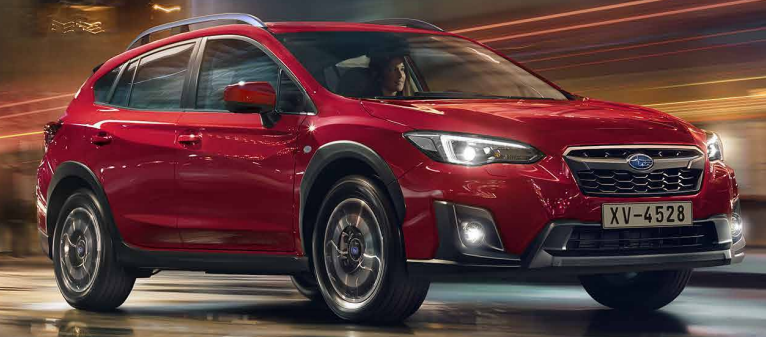
Getting the Subaru XV engine oil capacity right sounds simple until we start looking at different generations, engines, and markets. One Subaru XV may require roughly 4.4 liters during an oil-and-filter change, while an earlier version can need around 4.8 liters. Throw the 1.6-liter petrol and 2.0-liter diesel engines into the mix, and suddenly grabbing a random five-liter bottle without checking the specifications feels a little risky.
That is why we should never treat one oil-capacity figure as universal for every Subaru XV.
The XV—sold as the Subaru Crosstrek in markets such as North America—has used several versions of Subaru's horizontally opposed Boxer engine. Oil capacities have changed as engines, lubrication systems, filters, and generations evolved.
For example, Subaru's 2017 Crosstrek owner's manual lists an oil-and-filter replacement capacity of 5.1 US quarts, or 4.8 liters, while the redesigned 2018 model lists 4.7 US quarts, or 4.4 liters.
So, how much oil does your Subaru XV really need?
Let's sort it out.
Content in this publication
- Quick Subaru XV Engine Oil Capacity Chart
- Subaru XV 2.0 Engine Oil Capacity
- 2023 Subaru XV/Crosstrek Engine Oil Capacity
- Subaru XV 1.6 Engine Oil Capacity
- Subaru XV 2.0 Diesel Oil Capacity
- Subaru XV Hybrid Engine Oil Capacity
- What Oil Does a Subaru XV Use?
- Does the Oil Filter Affect Subaru XV Oil Capacity?
- Never Pour the Entire Capacity in Blindly
- How to Check Subaru XV Engine Oil Correctly
- What Happens If We Overfill a Subaru XV?
- What Happens If We Put Too Little Oil In?
- Why Different Websites Give Different Subaru XV Oil Capacities
- Subaru XV Oil Capacity With and Without Filter
- How Much Oil Should We Buy for a Subaru XV?
- How Often Should Subaru XV Engine Oil Be Changed?
- Can We Mix Different Oil Brands?
- Should We Use Full Synthetic Oil in a Subaru XV?
- Subaru XV Engine Oil Capacity and High-Mileage Cars
- Oil Warning Light Versus Dipstick Level
- Finding the Exact Oil Capacity for Your Subaru XV
- Common Subaru XV Oil-Change Mistakes
- Is the Subaru XV Easy to Service at Home?
- Final Thoughts on Subaru XV Engine Oil Capacity
- Frequently Asked Questions
Quick Subaru XV Engine Oil Capacity Chart
The figures below are useful starting points, but we should always verify the exact owner's manual for our vehicle's model year, engine, and market before filling it.
| Subaru XV / Crosstrek version | Approx. oil capacity | Typical oil |
|---|---|---|
| Early 2.0L FB20 petrol, including many 2012–2017 models | 5.1 US qt / 4.8 L | 0W-20 synthetic |
| 2018+ 2.0L petrol, many markets | 4.7 US qt / 4.4 L | 0W-20 synthetic |
| 2023 Crosstrek 2.0L | 4.7 US qt / 4.4 L | 0W-20 synthetic |
| 2023 Crosstrek 2.5L | 4.4 US qt / 4.2 L | 0W-20 synthetic |
| 1.6L FB16 XV, selected markets | Around 4.8 L | Check local manual |
| 2.0D diesel XV, selected markets | Around 5.9 L | Diesel-spec oil; check manual |
| 2014 XV Crosstrek Hybrid | 5.1 US qt / 4.8 L with filter | 0W-20 |
For an especially clear example of why model year matters, the Subaru documentation for the 2018 Crosstrek specifies 4.7 US quarts (4.4 liters) when changing both engine oil and filter. Subaru's 2017 documentation specified 5.1 US quarts (4.8 liters).
Why Subaru XV Oil Capacity Isn't One Fixed Number
It is tempting to search "Subaru XV oil capacity," see one number, and head straight to the garage.
Unfortunately, cars rarely make life that easy.
The XV has been sold across Europe, Australia, Asia, South America, North America, and numerous other markets. Different countries received different engines, and Subaru revised the Boxer powertrain as the XV moved from one generation to another.
Even two XVs that look nearly identical from ten meters away may not necessarily have the same oil capacity.
Oil quantity can depend on the engine displacement, engine generation, oil filter arrangement, oil pan, model year, hybrid system, and whether we are discussing a routine service fill or the total amount inside a completely dry engine.
Service Fill Versus Total Engine Capacity
This distinction catches plenty of DIY owners.
When we perform a normal oil change, some old oil remains inside galleries and other internal passages. Therefore, the amount needed after draining the sump is not necessarily identical to the engine's theoretical dry capacity after a rebuild.
When someone says an engine "holds" a certain amount, we need to ask: under what conditions?
For routine maintenance, the number that matters most is generally the manufacturer's oil-and-filter replacement capacity.
Subaru XV 2.0 Engine Oil Capacity
The naturally aspirated 2.0-liter Boxer is probably the engine most people associate with the XV.
But even here, capacity changed.
First-Generation Subaru XV 2.0 Oil Capacity
Many early XV models using the FB20 engine have an oil-and-filter change capacity of approximately:
5.1 US quarts / 4.8 liters.
Subaru's 2013 XV Crosstrek quick-reference material, for example, lists 5.1 US quarts (4.8 liters) for engine oil capacity and specifies 0W-20 synthetic oil.
The 2017 Crosstrek owner's manual gives that same 5.1-quart/4.8-liter figure for an oil and filter change.
That gives us a useful rule of thumb for many first-generation 2.0-liter petrol models.
Yet we should not stretch that rule into later generations.
2018 Subaru XV 2.0 Oil Capacity
With the redesigned generation introduced for the 2018 model year in North America, Subaru's published figure changed.
The 2018 Crosstrek manual specifies:
4.7 US quarts / 4.4 liters / 3.9 Imperial quarts
when replacing the engine oil and oil filter.
That difference is significant enough that blindly pouring in the older model's 5.1-quart quantity is not a good practice.
Four-tenths of a quart does not sound dramatic, but engine oil is one area where "close enough" is a poor philosophy.
2023 Subaru XV/Crosstrek Engine Oil Capacity
Later Crosstrek models provide another useful illustration because both 2.0-liter and 2.5-liter engines were available in some markets.
The 2023 owner's manual states that an oil-and-filter replacement requires 4.7 US quarts (4.4 liters) for the 2.0-liter engine and 4.4 US quarts (4.2 liters) for the 2.5-liter engine.
Interesting, isn't it?
The larger engine does not automatically mean a larger service-fill quantity.
That is exactly why guessing from displacement alone can send us in the wrong direction.
2023 2.0L Boxer Oil Capacity
For the 2.0-liter 2023 Crosstrek, Subaru specifies:
4.7 US quarts, equivalent to approximately 4.4 liters.
This figure assumes we replace the oil filter as part of the service.
2023 2.5L Boxer Oil Capacity
The 2.5-liter version uses approximately:
4.4 US quarts, or 4.2 liters, during an oil-and-filter change according to the 2023 owner's manual.
That capacity is slightly lower than the 2.0-liter engine's published service fill despite its greater displacement.
Subaru XV 1.6 Engine Oil Capacity
Outside North America, Subaru offered the XV with a smaller 1.6-liter FB16 petrol Boxer engine.
European maintenance databases commonly put the service quantity around 4.8 liters, although specifications can differ by model year and market.
For that reason, owners of 1.6-liter vehicles should rely on the manual supplied for their particular country rather than copying a North American Crosstrek specification.
The vehicle identification number and engine code can help eliminate doubt when ordering oil or arranging a service.
Subaru XV 2.0 Diesel Oil Capacity
Remember the diesel XV?
It disappeared from some markets years ago, but used examples remain on the road, particularly in Europe.
The 2.0D requires substantially more oil than the petrol 2.0-liter Boxer. European reference data commonly lists approximately 5.9 liters for these diesel versions.
This makes engine identification particularly important.
Putting 4.4 or 4.8 liters into an engine that expects substantially more could leave the lubrication level too low.
The oil specification matters just as much. A diesel fitted with emissions equipment may require oil satisfying particular ACEA or manufacturer requirements, so viscosity alone is not enough to determine compatibility.
Subaru XV Hybrid Engine Oil Capacity
Hybrid branding does not mean the gasoline engine no longer needs conventional lubrication.
The 2014 XV Crosstrek Hybrid service information lists approximately 5.1 US quarts (4.8 liters) when replacing both engine oil and filter. A total engine quantity after overhaul is higher, which again demonstrates the difference between routine service capacity and completely dry-engine capacity.
For routine DIY maintenance, we care about the oil-change figure, not the overhaul figure.
What Oil Does a Subaru XV Use?
Capacity answers how much oil we need.
Viscosity answers a different question: what kind should we pour in?
For numerous petrol Subaru XV and Crosstrek models, Subaru specifies SAE 0W-20 synthetic oil.
The 2018 manual explicitly identifies 0W-20 synthetic as the required viscosity for optimum performance and protection. It also explains that 5W-30 conventional oil can be used temporarily for topping up if the recommended oil is unavailable, with a return to 0W-20 at the next change.
The 2023 manual similarly specifies 0W-20 and lists applicable API and ILSAC categories.
That does not mean 0W-20 is automatically correct for every XV ever sold.
Diesels, regional specifications, extreme operating environments, and particular older versions can have different requirements.
Why 0W-20 Is So Common in the XV
The first number describes oil behavior at lower temperatures, while the second relates to viscosity when the engine is at operating temperature.
Modern low-viscosity synthetic oils can circulate rapidly after startup while maintaining the lubrication characteristics the engine was designed around.
Think of oil as the engine's bloodstream. Thickening it simply because thicker sounds stronger is a little like assuming syrup would flow through our veins better than blood.
The lubrication system was engineered around a specific viscosity range.
Does the Oil Filter Affect Subaru XV Oil Capacity?
Yes.
Some oil remains inside the filter, which is why manufacturers often distinguish between a service performed with a new filter and one where the filter remains installed.
In practice, we should normally replace the oil filter whenever performing a complete oil change unless the service documentation says otherwise.
For the 2018 Crosstrek, Subaru's stated 4.7-quart/4.4-liter capacity specifically applies when changing the oil and filter.
The same principle applies to Subaru's published 2023 figures.
Never Pour the Entire Capacity in Blindly
Here is where good DIY maintenance becomes more than reading numbers from a chart.
Subaru itself describes the listed capacity as a guideline. The actual refill can vary slightly depending on factors such as draining conditions and temperature, which is why Subaru instructs owners to confirm the level with the dipstick after refilling.
A sensible procedure is:
- Park the XV on level ground and bring the engine to appropriate service conditions according to the manual.
- Drain the old oil completely and replace the filter.
- Reinstall the drain plug correctly.
- Add slightly less than the listed service capacity.
- Run the engine briefly so the new oil circulates and the filter fills.
- Switch off the engine and allow the oil to settle.
- Check the dipstick on level ground.
- Add small amounts until the level reaches the proper range without passing the full mark.
That last part matters.
Oil is not a case where extra equals better.
How to Check Subaru XV Engine Oil Correctly
The dipstick settles arguments better than internet comments ever will.
Start with the car sitting on a flat surface. An XV parked nose-up on a steep driveway can produce a misleading reading.
Remove the dipstick, wipe it clean, insert it fully again, and then remove it for the actual measurement.
Subaru states that on the 2023 Crosstrek the difference between the low and full marks corresponds to roughly 1.1 US quarts, or 1.0 liter.
That is a substantial amount.
A reading sitting near the low mark should therefore not be dismissed as "just a little low."
Why Boxer Engines Make Oil Checking Important
Subaru's signature Boxer engine places its cylinders horizontally opposed rather than standing upright in a conventional inline arrangement.
The design brings several packaging and balance advantages, but it does not eliminate the basic requirement to maintain the correct oil level.
We should build dipstick checks into normal ownership rather than waiting until the next scheduled service.
Long motorway journeys, sustained high engine speeds, aging engines, severe heat, and extended service intervals can all make regular checks more valuable.
What Happens If We Overfill a Subaru XV?
An engine needs enough oil to maintain pressure and lubrication, but an excessive amount can create its own problems.
If the oil level rises significantly beyond the recommended maximum, the crankshaft can agitate the oil. Aerated or foamy lubricant cannot perform its job as effectively as a properly controlled oil supply.
Severe overfilling can potentially contribute to increased crankcase pressure, leaks, smoke, emissions-system problems, or lubrication difficulties.
A few drops above an imaginary perfect line are different from dumping an extra liter into the sump. Still, deliberately overfilling is never a good maintenance strategy.
If the dipstick shows a level clearly above the maximum mark after the oil has settled, correct it.
What Happens If We Put Too Little Oil In?
This is the opposite problem and potentially a far more serious one.
Oil forms a protective film between rapidly moving metal components. When the available supply becomes insufficient, oil pressure and lubrication can suffer.
The consequences can move from increased wear to bearing damage or catastrophic engine failure.
That is why the exact quoted capacity should not replace the dipstick check. Even if we pour the number printed in the manual, we should confirm the actual level afterward.
Why Different Websites Give Different Subaru XV Oil Capacities
Anyone researching this subject eventually finds contradictory numbers.
One page says 4.4 liters.
Another says 4.8.
Someone on a forum swears by five liters.
And another chart lists nearly six.
They could all be describing different XV engines.
The first-generation 2.0-liter Crosstrek documentation listed 5.1 US quarts/4.8 liters, whereas the 2018 Crosstrek documentation specifies 4.7 US quarts/4.4 liters.
Meanwhile, diesel XV reference data can be around 5.9 liters.
So the apparent contradiction often comes from missing context.
A useful oil-capacity answer should always include engine + model year + market, not just the name "Subaru XV."
Subaru XV Oil Capacity With and Without Filter
For routine servicing, the figure worth remembering is normally the with-filter capacity.
Why?
Because replacing the filter along with the oil prevents a portion of old contaminated lubricant from remaining in an old filter and gives us a clean starting point for the new service interval.
Some technical sources state separate oil-only and oil-plus-filter fills, but the owner's manual figure for a complete oil-and-filter service is generally the most useful figure for home maintenance.
When in doubt, we should buy enough oil to cover the specified capacity plus a modest amount for topping up rather than trying to calculate the fill down to the last milliliter before checking the dipstick.
How Much Oil Should We Buy for a Subaru XV?
If the XV requires approximately 4.4 or 4.8 liters, buying a 5-liter container is usually convenient in countries where oil is sold by the liter.
For a vehicle requiring 5.9 liters, we will obviously need more.
In markets where bottles are sold in US quarts, a six-quart purchase can make sense for a 5.1-quart service because it leaves a little oil for later level corrections.
Keeping a small amount of the exact oil used during the service is useful. If the engine needs a minor top-up several months later, we know precisely what is already in the sump.
Don't Confuse Oil Capacity With How Much You Should Add
Suppose the engine's service capacity is 4.4 liters.
That does not mean we should add 4.4 liters whenever the dipstick looks low.
If the engine already contains oil, we only add enough to restore the correct level.
As mentioned earlier, Subaru's documentation for recent Crosstrek models indicates roughly one liter between low and full on the dipstick.
Dumping the entire service-fill quantity into an engine that is merely slightly low would be a spectacular overfill.
How Often Should Subaru XV Engine Oil Be Changed?
Oil capacity and oil-change interval are separate specifications.
The correct interval depends on year, country, engine, oil specification, and operating conditions.
Some earlier Subaru documentation for North American vehicles listed intervals such as 6,000 or 7,500 miles depending on model year, while European service schedules may be expressed in kilometers and months. The 2018 Subaru quick guide, for example, refers to 0W-20 synthetic oil and a 6,000-mile normal-driving replacement interval.
Instead of applying one interval to every XV, use the maintenance schedule belonging to the actual vehicle.
Severe operating conditions can justify more frequent maintenance.
Repeated short trips, extensive idling, dusty roads, towing, heavy traffic, and extreme temperatures can be harder on oil than relaxed highway driving.
Can We Mix Different Oil Brands?
If we need an emergency top-up, matching the manufacturer's required viscosity and specification matters more than keeping the logo on the bottle identical.
Still, using one appropriate high-quality oil consistently makes maintenance simpler.
The important details are viscosity, API/ILSAC/ACEA specifications where applicable, and any explicit Subaru requirement in the manual.
Brand loyalty is optional.
Correct specifications are not.
Should We Use Full Synthetic Oil in a Subaru XV?
For the many XV/Crosstrek petrol engines designed around 0W-20, synthetic oil is the straightforward choice.
Subaru's 2018 documentation calls for 0W-20 synthetic for optimum engine performance and protection.
Synthetic oil typically offers strong low-temperature flow, oxidation resistance, and stability across a broad temperature range.
That said, we should follow the manufacturer's specification rather than assuming that merely seeing the words "full synthetic" makes any oil suitable.
A premium bottle with the wrong viscosity or approval is still the wrong oil.
Subaru XV Engine Oil Capacity and High-Mileage Cars
A Subaru XV with 150,000 miles does not automatically gain a different oil capacity.
The sump has not magically grown with age.
However, an older engine may consume or leak more oil than when it was new. That makes checking the level between scheduled changes increasingly important.
If consumption suddenly rises, we should investigate rather than treating constant top-ups as normal.
Potential causes can range from external leaks to internal oil consumption, and diagnosing the source early is generally cheaper than waiting for a warning light.
Oil Warning Light Versus Dipstick Level
We should never use an oil-pressure warning lamp as a substitute for regular dipstick checks.
The warning system is there to alert us to a potentially serious condition, not to function as a friendly "please add half a liter sometime this weekend" reminder.
By the time oil pressure has fallen enough to trigger a warning, the situation can be considerably more urgent than simply being near the lower dipstick mark.
Regular manual checks remain simple insurance.
Finding the Exact Oil Capacity for Your Subaru XV
The fastest path to certainty is identifying three things: the model year, engine, and country specification.
Look at the owner's manual first.
If the vehicle was purchased used and the book has disappeared, check official Subaru documentation using the VIN or exact model designation where possible.
Do not rely solely on a parts-store database if it contradicts the owner's manual.
The manual belongs to the vehicle's engineering specification, and Subaru itself emphasizes that the quoted refill amount remains a guideline that should be verified afterward at the dipstick.
A Simple Example
Imagine we own a 2017 2.0-liter Crosstrek.
The relevant Subaru documentation points us toward approximately 5.1 US quarts/4.8 liters.
Now imagine we replace it with a 2018 model.
The body still says Crosstrek, and there is still a 2.0-liter Boxer under the hood, but the documented service-fill quantity becomes 4.7 US quarts/4.4 liters.
Same family name.
Similar displacement.
Different answer.
That is the central lesson of this entire guide.
Common Subaru XV Oil-Change Mistakes
Most oil-change problems do not come from some mysterious mechanical trick. They come from simple assumptions: copying a capacity from the wrong model year, mixing up liters and US quarts, confusing dry capacity with service-fill capacity, forgetting the filter, filling to a quoted number without checking the dipstick, checking the level while parked on a slope, or assuming every Subaru XV uses the same viscosity.
Avoid those traps and an XV oil change becomes straightforward.
Accuracy beats speed here.
Five extra minutes spent verifying the specification can protect an engine worth thousands.
Is the Subaru XV Easy to Service at Home?
For owners comfortable performing basic automotive maintenance, an engine-oil change is one of the more approachable XV service jobs.
The top-mounted oil filter found on many Subaru engines can make filter replacement pleasantly accessible compared with cars that bury the filter behind covers and exhaust components.
But accessibility should not encourage shortcuts.
We still need the correct filter, oil specification, capacity, drain-plug procedure, safe lifting method where required, and responsible disposal of used oil.
Working under an improperly supported vehicle is never worth the risk.
Final Thoughts on Subaru XV Engine Oil Capacity
There is no single Subaru XV engine oil capacity that covers every XV ever built.
Many early 2.0-liter petrol models take around 5.1 US quarts or 4.8 liters during an oil-and-filter change. The redesigned 2018 Crosstrek specifies approximately 4.7 US quarts or 4.4 liters, while the 2023 owner's manual lists 4.4 liters for its 2.0-liter engine and 4.2 liters for its 2.5-liter engine.
Other international XV versions, particularly the 1.6 petrol and 2.0 diesel, require different quantities.
The smartest approach is therefore wonderfully uncomplicated: identify the exact engine, check the owner's manual, treat the published capacity as the starting point, and finish the job with the dipstick.
Oil is cheap compared with an engine.
A two-minute level check is cheaper still.
Frequently Asked Questions
1. How much engine oil does a Subaru XV take?
Many Subaru XV models require approximately 4.4 to 4.8 liters during a normal oil-and-filter change, but the exact amount depends on engine and model year. Some diesel versions require considerably more. A 2018 2.0-liter Crosstrek, for example, is specified at 4.4 liters, while the 2017 model is listed at 4.8 liters.
2. What is the oil capacity of a 2.0 Subaru XV?
Many first-generation 2.0-liter petrol XV/Crosstrek models use approximately 5.1 US quarts (4.8 liters) with a filter change. Later examples can use approximately 4.7 US quarts (4.4 liters), so model year matters.
3. What engine oil does a Subaru XV use?
Numerous petrol XV/Crosstrek models specify SAE 0W-20 synthetic oil, although the exact API, ILSAC, ACEA, viscosity, or manufacturer requirements depend on year and market. The 2018 and 2023 Crosstrek manuals both specify 0W-20 for the applicable petrol engines.
4. Can I put 5 liters of oil in my Subaru XV?
Only if the engine's specification and measured oil level require it. A vehicle with a 4.4-liter service-fill specification should not automatically receive the full five liters. Add slightly less than the published amount first, circulate the oil, allow it to settle, and verify the level using the dipstick.
5. Is Subaru XV oil capacity measured with the filter changed?
The capacities commonly quoted in Subaru owner's manuals are often specified for an engine oil and oil-filter change. Subaru also describes these figures as guidelines and instructs owners to verify the final level using the dipstick after filling.
If you want to know other articles similar to Subaru XV Engine Oil Capacity: Complete Guide by Engine and Year you can visit the category Service and Parts.
Volvo S90 Engine Oil: Type, Capacity & Change Guide
Volvo S90 Boot Space: Size, Capacity and Practicality
SEO Title: Volvo S90 Oil Capacity: Complete Guide by Engine

Kia Sorento Oil Type: Complete Guide by Year & Engine
Kia Sorento Engine Capacity: Complete Guide by Year

Peugeot 308 Clutch Replacement Cost: Complete UK Guide for 2026
Leave a Reply
More content of your interest