
Subaru XV Fuel Tank Capacity: Size, Range and What to Know

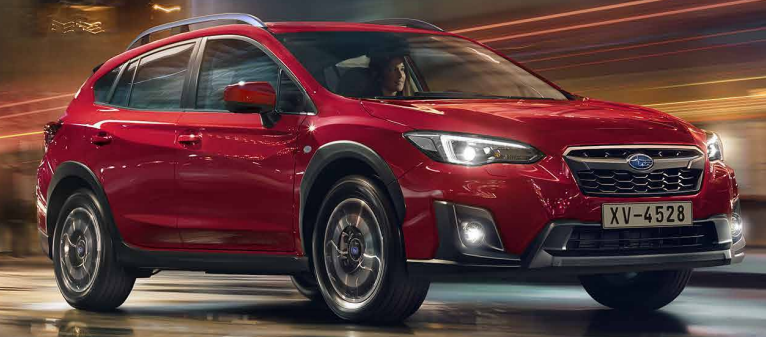
The Subaru XV fuel tank capacity might sound like a small specification buried near the bottom of a brochure, but it matters more than we might think. Tank size affects how often we stop for fuel, how comfortably we can tackle long road trips, and—combined with fuel economy—how far the XV can travel between petrol stations.
So, how big is the Subaru XV fuel tank?
For many later-model petrol Subaru XVs sold in markets such as Australia, the fuel tank holds 63 litres (16.6 US gallons). The XV Hybrid/e-BOXER can have a considerably smaller 48-litre (12.7-US-gallon) tank, depending on the market and model year. Subaru Australia's official XV specifications, for example, list 63 litres for petrol 2.0i models and 48 litres for Hybrid L and Hybrid S versions.
That difference is significant. Fifteen litres is roughly the volume of a large backpack filled with fuel. Yet the smaller hybrid tank doesn't automatically mean dramatically worse driving range because the electric motor assists the petrol engine and reduces fuel use in certain driving conditions.
There is another wrinkle: Subaru XV fuel capacity varies between generations, drivetrains and countries. In North America, the equivalent model has traditionally been called the Subaru Crosstrek rather than XV. For example, Subaru lists the 2024 US Crosstrek at 16.6 US gallons, essentially 62.8 litres.
Let's unpack the numbers properly.
Content in this publication
- What Is the Subaru XV Fuel Tank Capacity?
- Subaru XV Petrol Fuel Tank Capacity
- Subaru XV Hybrid Fuel Tank Capacity
- How Far Can a Subaru XV Travel on a Full Tank?
- Estimated XV Hybrid Range With a 48-Litre Tank
- Subaru XV Versus Crosstrek Fuel Tank Capacity
- Does Subaru XV Engine Size Change Fuel Capacity?
- How Much Does It Cost to Fill a Subaru XV?
- What Happens When the Low-Fuel Light Comes On?
- Why the Distance-to-Empty Reading Changes
- Fuel Tank Capacity and AWD: Is There a Penalty?
- Is the Subaru XV Fuel Tank Large for a Small SUV?
- How to Check Your Exact Subaru XV Tank Size
- How to Get More Range From Every Tank
- Should You Fill the Tank Completely?
- Subaru XV Fuel Capacity: Petrol or Hybrid—Which Is Better?
- A Note About Newer Subaru Crosstrek Models
- Subaru XV Fuel Tank Capacity at a Glance
- Conclusion
- Frequently Asked Questions
What Is the Subaru XV Fuel Tank Capacity?
For anyone looking for the quick answer, these are the most useful figures:
| Subaru XV version | Approximate fuel tank capacity |
|---|---|
| XV 2.0 petrol – selected Australian models | 63 L |
| XV Hybrid/e-BOXER – selected Australian models | 48 L |
| European e-BOXER/Crosstrek specification | 48 L |
| US Crosstrek – 2024 petrol models | 16.6 US gal / 62.8 L |
Subaru Australia's official XV brochure lists 63 litres for the petrol 2.0i-L AWD, 2.0i Premium AWD and 2.0i-S AWD, while the Hybrid L AWD and Hybrid S AWD carry 48 litres.
European electrified models follow a different pattern. Subaru Europe's current Crosstrek e-BOXER specification lists a 48-litre fuel tank.
The lesson is simple: don't assume every XV has the same tank just because the badge on the tailgate looks identical.
Subaru XV Petrol Fuel Tank Capacity
The conventional petrol XV is the one most likely to give us the larger fuel tank.
In Subaru Australia's later XV specification, petrol versions use a 63-litre tank.
That's a generous capacity for a compact crossover. Some small SUVs feel as if they're forever asking us to visit the petrol station. A 63-litre XV is different. When paired with sensible highway fuel consumption, it can cover substantial distances between fill-ups.
And that fits the personality of the XV rather nicely.
This isn't merely a city crossover wearing hiking boots for show. Subaru built the XV around standard or widely available all-wheel-drive capability, decent ground clearance and road-trip practicality. A relatively large petrol tank complements that mission.
63 Litres in Gallons
For readers comparing international specifications:
- 63 litres = approximately 16.6 US gallons
- 63 litres = approximately 13.9 Imperial gallons
- 48 litres = approximately 12.7 US gallons
- 48 litres = approximately 10.6 Imperial gallons
This distinction matters because a website saying the XV holds "16.6 gallons" is almost certainly talking about US gallons, not Imperial gallons.
Mixing the two is an easy way to turn a simple specification into a mathematical pothole.
Subaru XV Hybrid Fuel Tank Capacity
Here's where things get more interesting.
The Subaru XV Hybrid doesn't necessarily retain the petrol XV's 63-litre capacity. Australian specifications list the XV Hybrid L AWD and Hybrid S AWD at 48 litres.
That's 15 litres less than their conventional 2.0-litre petrol counterparts.
Why?
Why Does the Hybrid Have a Smaller Tank?
Hybrid packaging is like trying to fit camping equipment into an already packed suitcase.
A conventional vehicle needs space for components such as:
- the petrol engine,
- transmission,
- exhaust system,
- AWD hardware,
- fuel tank and
- spare-wheel or underfloor storage components.
Add hybrid technology and engineers must also accommodate an electric motor, high-voltage battery and related electrical equipment.
Something has to give.
Consequently, electrified XV models can use a different fuel tank arrangement and reduced capacity.
Subaru's XV Hybrid combines its 2.0-litre horizontally opposed petrol engine with an electric motor integrated into the drivetrain. Subaru Australia specifies a lithium-ion battery and permanent-magnet AC synchronous motor for these models.
Does a Smaller Hybrid Tank Mean Less Range?
Not necessarily.
Fuel capacity tells us how much petrol the car carries. It doesn't tell us how efficiently the car uses it.
Imagine two hikers.
One carries a bigger water bottle but drinks quickly. The other carries less water but sips carefully. The second hiker may travel surprisingly far before running dry.
The same basic principle applies here.
Subaru reported that when the XV Hybrid was introduced in Australia, it offered improved fuel efficiency compared with equivalent petrol variants, particularly in urban driving.
So while the hybrid sacrifices tank volume, part of that disadvantage can be offset by reduced fuel consumption.
How Far Can a Subaru XV Travel on a Full Tank?
This is arguably more useful than capacity alone.
After all, we don't buy litres. We buy kilometres.
Driving range depends on:
Range = fuel tank capacity ÷ fuel consumption × 100
Let's use a simple example.
Suppose our XV holds 63 litres and averages 7.0 L/100 km.
63 ÷ 7 × 100 = 900 km
In theory, that's about 900 kilometres from a completely full tank to completely empty.
Reality is less tidy.
We don't normally use every drop of fuel, and actual consumption changes with traffic, temperature, terrain, tyres, load and driving style.
Estimated Range From a 63-Litre Tank
Here is how dramatically economy changes potential range:
| Average fuel consumption | Theoretical range from 63 L |
|---|---|
| 6.0 L/100 km | 1,050 km |
| 6.5 L/100 km | 969 km |
| 7.0 L/100 km | 900 km |
| 7.5 L/100 km | 840 km |
| 8.0 L/100 km | 788 km |
| 9.0 L/100 km | 700 km |
| 10.0 L/100 km | 630 km |
These are mathematical estimates, not promises.
Real-world usable range should always be treated more conservatively.
Estimated XV Hybrid Range With a 48-Litre Tank
Now let's run the same thought experiment for a 48-litre XV Hybrid.
| Average fuel consumption | Theoretical range from 48 L |
|---|---|
| 5.5 L/100 km | 873 km |
| 6.0 L/100 km | 800 km |
| 6.5 L/100 km | 738 km |
| 7.0 L/100 km | 686 km |
| 7.5 L/100 km | 640 km |
| 8.0 L/100 km | 600 km |
Again, these are theoretical figures.
What's interesting is that the smaller tank doesn't make the hybrid impractical. With efficient driving, it can still offer respectable distances between fuel stops.
City Versus Highway Range
Driving environment makes a massive difference.
A conventional petrol XV will generally consume more fuel in stop-and-go traffic than during steady highway cruising. The hybrid, meanwhile, can benefit more from low-speed motor assistance and regenerative energy recovery.
Long highway journeys reverse some of that advantage.
At constant speeds, there are fewer opportunities for regenerative braking, while aerodynamic drag becomes increasingly important.
So two owners with identical cars could see noticeably different distance-to-empty numbers.
Subaru XV Versus Crosstrek Fuel Tank Capacity
This causes plenty of confusion online.
Depending on where we live, Subaru's compact crossover may be called the XV or the Crosstrek.
The XV name was widely used internationally, including Australia, Europe and other regions. North America primarily used Crosstrek. More recently, Subaru has expanded the Crosstrek name internationally as part of the model's newer generation.
The underlying family relationship means Crosstrek specifications can occasionally help us understand the XV—but we shouldn't blindly transfer every number from one market to another.
US Subaru Crosstrek Capacity
Subaru's official specification for the 2024 Crosstrek lists:
Fuel capacity: 16.6 US gallons.
Converted to metric, that's approximately:
62.8 litres
Essentially 63 litres.
That aligns remarkably closely with the conventional petrol capacity found in Australian XV specifications.
Subaru also advertised up to 500 miles of range on a single tank for the 2024 Crosstrek, depending on configuration and driving conditions.
Does Subaru XV Engine Size Change Fuel Capacity?
Not always.
Engine displacement and fuel-tank capacity are independent specifications.
A bigger engine doesn't automatically receive a bigger tank.
The fuel tank is influenced by factors including:
- platform design,
- drivetrain layout,
- emissions equipment,
- hybrid components,
- crash-protection requirements,
- regional vehicle specification and
- packaging under the rear floor.
That's why drivetrain type can be more important than engine size when we're checking the XV's tank.
Petrol Versus e-BOXER Matters More
This is the distinction worth remembering.
For the later Australian XV specification:
Petrol 2.0 models: 63 litres
Hybrid models: 48 litres
That's a far more useful dividing line than simply asking whether the car has a 2.0-litre engine, because both conventional and hybrid versions can use a 2.0-litre petrol engine.
How Much Does It Cost to Fill a Subaru XV?
Fuel prices constantly change, but the calculation is wonderfully simple.
Take:
Tank capacity × price per litre = theoretical full-tank cost
If petrol costs $2.00 per litre:
For a 63-litre XV:
63 × $2.00 = $126
For a 48-litre Hybrid:
48 × $2.00 = $96
If fuel costs $1.80 per litre:
- 63-litre tank: $113.40
- 48-litre tank: $86.40
Of course, we almost never arrive at the pump with a genuinely empty tank, so actual transactions will normally be smaller.
Why Your Fill-Up Rarely Matches the Published Capacity
Suppose your owner's manual says 63 litres, but the most petrol you've ever added is 51 litres.
Is something wrong?
Usually, no.
Published fuel capacity includes fuel that remains inside the system when the gauge approaches empty.
Manufacturers intentionally leave some breathing room between an "empty" indication and a genuinely bone-dry tank.
That buffer helps prevent drivers from running out unexpectedly.
It also protects the fuel system.
What Happens When the Low-Fuel Light Comes On?
When the Subaru XV's low-fuel warning appears, we shouldn't treat it like the starting pistol for a game called "How Far Can I Push This?"
The car may still have usable fuel, but the remaining range isn't a guaranteed number.
Traffic alone can destroy our calculations.
Imagine the dashboard showing enough estimated range for 60 kilometres. A crash causes an hour-long traffic jam. Then we take a detour. Suddenly the comfortable buffer evaporates like a puddle in midsummer.
Refuelling reasonably soon after the warning appears is the smarter habit.
Don't Deliberately Run the Tank Dry
Regularly driving until there's virtually no fuel remaining isn't good practice.
Modern fuel pumps commonly rely on fuel for cooling and lubrication. Repeatedly operating with extremely low levels can place unnecessary stress on components.
Running out entirely can also leave us stranded somewhere inconvenient—or dangerous.
Fuel gauges and range computers are helpful tools, not invitations to test physics.
Why the Distance-to-Empty Reading Changes
Have you ever filled the tank and seen 750 km of estimated range one week, then 660 km after the next fill?
The tank didn't shrink.
The car is adjusting its estimate according to recent fuel consumption and operating conditions.
If we've recently spent hours cruising smoothly on the motorway, the computer may predict strong range.
Spend the next week crawling through heavy traffic and the estimated distance can fall.
Factors That Reduce Subaru XV Fuel Range
Real-world range can be affected by:
- aggressive acceleration,
- short journeys,
- heavy city traffic,
- cold weather,
- air-conditioning use,
- roof racks or cargo boxes,
- heavy luggage,
- low tyre pressures,
- steep terrain,
- towing where permitted,
- extended idling and
- high highway speeds.
A roof box is especially interesting.
It's useful for luggage, but aerodynamically it's a little like strapping a small wardrobe to the roof. At highway speeds, the extra drag can raise consumption noticeably.
Fuel Tank Capacity and AWD: Is There a Penalty?
The Subaru XV is strongly associated with Subaru's Symmetrical All-Wheel Drive system.
AWD provides useful traction, but driving four wheels through additional mechanical components can introduce weight and drivetrain losses compared with a simpler two-wheel-drive arrangement.
Subaru balances that with relatively efficient Boxer engines, continuously variable transmissions on many versions and increasingly electrified powertrains.
The important point for us is that tank capacity itself isn't fuel economy.
A 63-litre AWD vehicle might travel farther than a 50-litre two-wheel-drive rival simply because the capacity difference outweighs any economy disadvantage—or vice versa.
We need both figures before making a meaningful comparison.
Is the Subaru XV Fuel Tank Large for a Small SUV?
A conventional XV tank of around 63 litres is quite generous for a compact crossover.
That's useful for drivers who regularly:
- cover long motorway distances,
- travel between regional towns,
- drive in rural areas,
- camp or explore remote locations,
- encounter limited petrol-station availability.
The XV's relatively large petrol tank works well with the vehicle's outdoors-oriented identity.
It's one of those specifications nobody gets excited about in a showroom—but we appreciate it enormously on a lonely road when the nearest petrol station is 100 kilometres away.
The Hybrid Takes a Different Approach
The 48-litre hybrid tank appears modest beside the petrol model's 63 litres.
But hybrid ownership is about efficiency rather than simply carrying as much petrol as possible.
The smaller tank can also reduce the weight of a full fuel load.
Petrol weighs roughly three-quarters of a kilogram per litre, so 15 additional litres represents roughly 11 kg of fuel, give or take.
That's not enormous, but every kilogram matters when engineers are balancing efficiency, handling, emissions and packaging.
How to Check Your Exact Subaru XV Tank Size
Because specifications vary, the safest approach is to verify your particular vehicle rather than relying exclusively on generic internet figures.
Check:
- Your owner's manual.
- The official Subaru brochure for your model year.
- Your country's Subaru specification sheet.
- Your vehicle's VIN/model information if multiple drivetrains were offered.
- A Subaru dealer if the documentation remains unclear.
This is particularly important when shopping for a used XV.
A listing saying "2019 Subaru XV 2.0" doesn't always tell us enough. Market, trim, drivetrain and production specification may matter.
Never Judge Capacity From a Single Fill-Up
We also shouldn't estimate tank capacity by driving to "empty" and seeing how many litres the pump accepts.
There are too many variables.
Fuel-gauge calibration, pump shutoff behaviour, vehicle angle and remaining reserve can all affect how much fuel goes in.
Official technical documentation is much more reliable.
How to Get More Range From Every Tank
We don't need to drive like there's an egg balancing under the accelerator, but a handful of habits can stretch every litre.
Smooth acceleration is one of the easiest.
Race away from every traffic light and the fuel gauge starts behaving like a countdown timer. Accelerate progressively and consumption normally improves.
Tyre pressure matters too. Underinflated tyres create extra rolling resistance.
Removing unnecessary roof equipment can help on highway journeys, while maintaining consistent speeds tends to be more efficient than repeatedly accelerating and braking.
And perhaps the simplest trick?
Look farther ahead.
Anticipating red lights and slowing traffic lets us ease off earlier instead of accelerating toward a situation where we'll immediately need to brake.
Keep the XV Properly Maintained
Efficiency and maintenance are close friends.
Dirty filters, incorrect tyre pressure, neglected engine oil and mechanical problems can all influence fuel consumption.
Keeping up with Subaru's scheduled maintenance won't magically transform an XV into an economy car, but it helps the vehicle operate the way its engineers intended.
Should You Fill the Tank Completely?
For everyday use, yes, filling normally until the pump automatically clicks off is perfectly reasonable.
What we shouldn't do is repeatedly force extra fuel into the filler neck after the nozzle stops automatically.
Trying to squeeze in every possible drop can interfere with parts of the evaporative-emissions system on modern vehicles.
There's little benefit anyway.
The difference might buy us only a handful of kilometres while creating unnecessary risk of spills or system problems.
What About Long-Term Storage?
If the XV will sit unused for a long period, fuel-storage considerations become more complicated.
Fuel degrades over time, and storage recommendations vary according to duration, fuel formulation and climate.
For ordinary ownership, though, this isn't something we need to overthink. Drive the car regularly, buy suitable fuel, and follow Subaru's recommendations.
Subaru XV Fuel Capacity: Petrol or Hybrid—Which Is Better?
There's no universal winner.
The 63-litre petrol XV is appealing if our priority is maximum flexibility between fuel stops. It suits highway travel, long-distance touring and areas where stations are scarce.
The 48-litre Hybrid/e-BOXER sacrifices capacity but uses electrification to reduce fuel consumption under suitable conditions.
Think of them as two approaches to the same problem.
One carries a bigger lunchbox.
The other tries to eat less.
For Long-Distance Drivers
The conventional petrol XV's larger tank is attractive.
If we regularly cover hundreds of kilometres through rural areas, fewer fuel stops can make travelling easier.
For Urban Drivers
The hybrid's efficiency advantages become more relevant.
Frequent deceleration and lower-speed operation provide more opportunities for hybrid assistance and energy recovery.
Tank size alone shouldn't dictate which model we buy.
Driving pattern matters much more.
A Note About Newer Subaru Crosstrek Models
The XV name has increasingly given way to Crosstrek in markets where Subaru previously marketed the vehicle as XV.
So owners researching a newer replacement shouldn't assume the XV disappeared entirely—it evolved under the globally familiar Crosstrek name.
Specifications have evolved too.
The European Crosstrek e-BOXER, for instance, is officially listed with a 48-litre tank, while the US 2024 petrol Crosstrek carries 16.6 US gallons, or about 62.8 litres.
That's another reminder that country-specific specifications matter.
Subaru XV Fuel Tank Capacity at a Glance
If there's one section worth bookmarking, it's this one.
For common later Subaru XV specifications:
Petrol XV: around 63 litres
XV Hybrid/e-BOXER: around 48 litres
US petrol Crosstrek equivalent: 16.6 US gallons / approximately 62.8 litres
Exact capacity should always be confirmed against the model year, drivetrain and regional specification.
The XV's petrol tank is one of its underrated strengths. Combine roughly 63 litres with reasonable fuel economy and the vehicle can offer excellent touring range.
Hybrid variants take another route, trading some physical fuel volume for electric assistance and better efficiency in certain conditions.
Either way, tank capacity is only half the story.
The other half is how quickly we empty it.
Conclusion
The Subaru XV fuel tank capacity generally sits around 63 litres for many conventional petrol versions, while Hybrid/e-BOXER models can use a smaller 48-litre tank. Subaru Australia's official specifications clearly show this 63-versus-48-litre distinction, while current European e-BOXER specifications also quote 48 litres.
Across the Atlantic, Subaru's closely related 2024 Crosstrek uses a 16.6-US-gallon tank, equivalent to roughly 62.8 litres.
For us as owners or buyers, however, capacity shouldn't be considered in isolation. Fuel economy, traffic, terrain, climate and driving style all determine how far one tank actually takes us.
A bigger tank means fewer stops. A more efficient engine means fewer litres burned. Get both working in our favour, and the humble XV becomes a surprisingly capable long-distance companion.
Frequently Asked Questions
1. What is the Subaru XV fuel tank capacity?
Many later conventional petrol Subaru XV models have a 63-litre fuel tank, particularly versions sold in Australia. XV Hybrid versions can have a smaller 48-litre tank. Exact specifications vary by market and model year.
2. How many gallons does a Subaru XV hold?
A 63-litre tank equals approximately 16.6 US gallons or 13.9 Imperial gallons. A 48-litre tank equals roughly 12.7 US gallons or 10.6 Imperial gallons.
3. How far can a Subaru XV travel on a full tank?
A 63-litre XV averaging 7.0 L/100 km has a theoretical range of around 900 km. Real-world range will normally be lower and varies according to driving style, speed, traffic, weather, payload and terrain.
4. Why does the Subaru XV Hybrid have a smaller fuel tank?
Hybrid hardware requires additional packaging space, including space for the high-voltage battery, electric motor and associated equipment. In the Australian XV specification, petrol models carry 63 litres while Hybrid L and Hybrid S versions carry 48 litres.
5. Is the Subaru XV the same as the Subaru Crosstrek?
They belong to the same compact-crossover model family, although naming and specifications vary between markets and generations. The model has traditionally been called Crosstrek in North America and XV in many other regions, with the Crosstrek name now used more widely internationally.
If you want to know other articles similar to Subaru XV Fuel Tank Capacity: Size, Range and What to Know you can visit the category Service and Parts.
Volvo S90 Engine Oil: Type, Capacity & Change Guide
Volvo S90 Boot Space: Size, Capacity and Practicality
SEO Title: Volvo S90 Oil Capacity: Complete Guide by Engine

Kia Sorento Oil Type: Complete Guide by Year & Engine
Kia Sorento Engine Capacity: Complete Guide by Year
Peugeot 308 Clutch Replacement Cost: Complete UK Guide for 2026
Leave a Reply
More content of your interest