

Kia Carnival and Toyota Vellfire: Which Premium MPV Is Better?

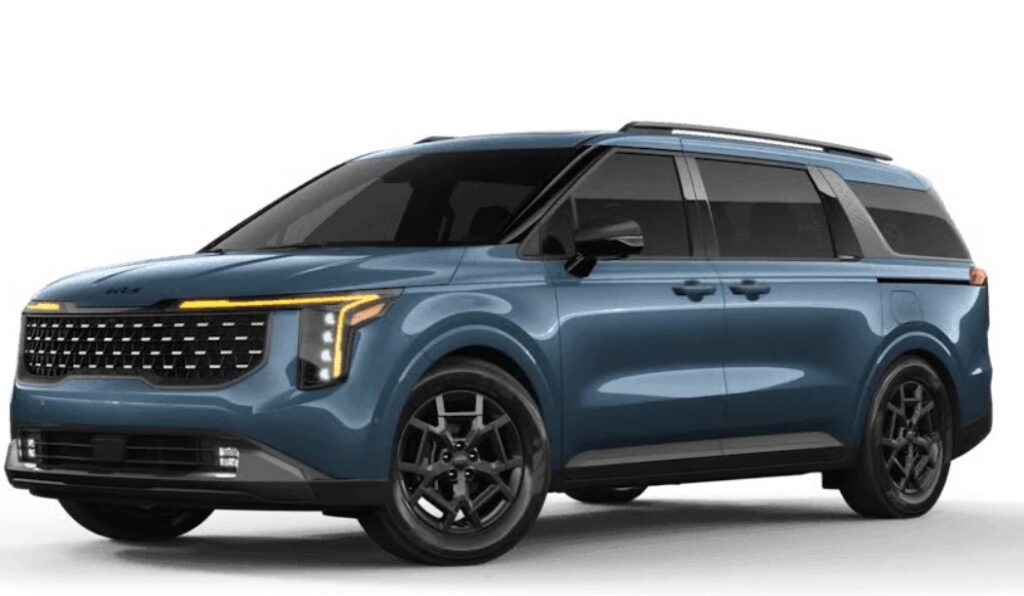
When we compare the Kia Carnival and Toyota Vellfire, we are looking at two vehicles built around the same basic idea but interpreted in dramatically different ways. Both can carry a family in serious comfort. Both have sliding rear doors. Both can make a conventional SUV suddenly seem rather inconvenient. Yet their personalities could hardly be more different.
The Kia Carnival approaches the premium MPV formula with practicality at the center. It is long, wide, spacious, contemporary, and designed to handle everything from school runs to airport transfers and family road trips.
The Toyota Vellfire takes another path. It treats transportation almost like a first-class lounge. It is taller, more dramatic, more obviously luxurious, and particularly focused on second-row passengers.
So which one should we buy?
For most families, the Carnival's combination of space, flexibility, technology, and everyday usability makes enormous sense. For buyers who consider the rear seats the most important seats in the vehicle, however, the Vellfire can feel like something from another league.
Let's break down the Kia Carnival and Toyota Vellfire comparison in detail.
Content in this publication
- Kia Carnival vs Toyota Vellfire at a Glance
- What Is the Kia Carnival?
- What Is the Toyota Vellfire?
- Kia Carnival and Toyota Vellfire Exterior Design
- Which One Is Bigger?
- Kia Carnival vs Toyota Vellfire Interior
- Second-Row Comfort: Where the Vellfire Shines
- Third-Row Seating and Family Practicality
- Cargo Space and Luggage Capacity
- Kia Carnival and Toyota Vellfire Engine Options
- Hybrid vs Hybrid: Which Makes More Sense?
- Driving Experience
- Ride Comfort and Refinement
- Technology and Infotainment
- Safety and Driver Assistance
- Fuel Economy and Running Costs
- Reliability: Toyota Vellfire vs Kia Carnival
- Maintenance and Parts Availability
- Which Is Better for a Large Family?
- Which Is Better for Luxury Travel?
- Which Is Better for Airport Transfers?
- Kia Carnival and Toyota Vellfire Pros and Cons
- Kia Carnival vs Toyota Vellfire: Which Should We Buy?
- Conclusion: Two Excellent MPVs With Different Priorities
- Frequently Asked Questions
Kia Carnival vs Toyota Vellfire at a Glance
Before diving into every detail, here is the simplest way to understand these two MPVs.
| Category | Kia Carnival | Toyota Vellfire |
|---|---|---|
| Main character | Practical premium family MPV | Luxury executive MPV |
| Seating | Market-dependent, commonly 7–11 | Usually 6 or 7 |
| Best feature | Space and versatility | Rear-seat luxury |
| Driving feel | Car-like and approachable | Comfort-oriented and refined |
| Exterior shape | Long and SUV-inspired | Tall and imposing |
| Family usability | Excellent | Very good |
| Executive transport | Very good | Excellent |
| Cargo flexibility | Excellent | More passenger-focused |
| Powertrains | Gasoline, diesel or hybrid depending on market | Hybrid, PHEV or turbo gasoline depending on market |
| Ideal buyer | Families and multipurpose users | Chauffeured and luxury-focused buyers |
Current versions illustrate the size difference clearly. Kia publishes a Carnival length of about 5,155 mm, width of 1,995 mm and wheelbase of 3,090 mm, while Toyota lists the current Japanese-market Vellfire at 4,995 mm long, 1,850 mm wide and 1,945 mm tall with a 3,000 mm wheelbase.
That tells us something important immediately: the Kia occupies more road horizontally, while the Toyota builds upward.
What Is the Kia Carnival?
The Carnival is Kia's large people mover, although Kia has deliberately styled recent generations to look less like traditional minivans.
From several angles, it could almost pass for an oversized SUV.
The long hood, bold grille, squared-off profile, large wheels, and substantial body give it considerably more visual attitude than the rounded minivans many of us grew up with.
Underneath that styling, however, the Carnival remains wonderfully practical.
Why the Carnival Works So Well for Families
Its greatest trick is simple: it gives us a huge passenger compartment without forcing us to sacrifice normal driving manners.
Depending on the market, versions can offer different seating configurations. Kia's global documentation illustrates how dramatically regional specifications can differ, including seven-, eight-, nine-, and even eleven-seat applications in various markets.
That versatility is a massive advantage if we're buying one vehicle to perform several jobs.
The Carnival can be:
- A family car during the week
- A highway cruiser on weekends
- An airport shuttle
- A business transport vehicle
- A road-trip machine
- A practical alternative to a three-row SUV
It is basically the automotive equivalent of a large backpack that somehow manages to look like a tailored jacket.
What Is the Toyota Vellfire?
The Toyota Vellfire lives in a slightly different world.
Toyota developed it as a luxury-oriented MPV closely related to the Alphard. Where the Carnival tries to combine premium touches with practicality, the Vellfire pushes harder toward executive transportation.
Step inside the right specification and the second row becomes the star of the show.
A Luxury Lounge That Happens to Have Wheels
Large individual captain's chairs, generous legroom, elaborate climate controls, soft materials, power adjustment, and luxury equipment can transform the Vellfire into something closer to a mobile business-class cabin.
Current Japanese-market configurations reinforce that philosophy. Toyota offers Vellfire variants including hybrid, plug-in hybrid and turbocharged gasoline powertrains, while current versions focus heavily on six- and seven-seat layouts rather than maximum passenger count.
It's not necessarily trying to fit everyone and everything.
It's trying to make the people it carries feel special.
And that distinction shapes almost every part of this comparison.
Kia Carnival and Toyota Vellfire Exterior Design
Put these vehicles side by side and we immediately understand their different philosophies.
The Carnival stretches out.
The Vellfire stands tall.
Carnival: More SUV Than Traditional Van
Kia has worked hard to hide the Carnival's minivan proportions.
Its front end is wide and assertive, while the relatively long hood creates a more conventional vehicle silhouette. Recent versions add increasingly sophisticated lighting and sharper detailing.
It looks almost rugged by MPV standards.
We wouldn't mistake one for a compact crossover, of course, but we can understand why buyers reluctant to own a traditional minivan often find the Carnival appealing.
Vellfire: Proudly Big, Tall and Luxurious
Toyota makes almost no attempt to hide what the Vellfire is.
Its tall body, huge grille treatment, upright sides, and imposing stance announce its presence from half a street away.
Subtle?
Not particularly.
But subtlety isn't really the assignment.
The Vellfire looks expensive, ceremonial and important. In markets where luxury vans are associated with executives, celebrities and VIP transportation, that visual presence matters.
Which One Is Bigger?
This comparison becomes surprisingly interesting when we take out the measuring tape.
The Carnival is longer and wider. The Vellfire is substantially taller.
Current official figures put the regular Carnival at roughly 5,155 mm long and 1,995 mm wide, compared with around 4,995 mm long and 1,850 mm wide for the current Vellfire. Toyota's approximately 1,945-mm body height, meanwhile, towers over the regular Carnival's roughly 1,775–1,785-mm height depending on configuration.
What Those Dimensions Mean in Real Life
The Carnival's extra length and width benefit cabin flexibility and give passengers a broad interior.
The Vellfire's tall roof contributes to its airy, limousine-like passenger environment.
There is a trade-off.
That towering Toyota can feel wonderfully spacious from inside but may require more attention around height-restricted parking facilities. The wide Kia, meanwhile, requires care in narrow streets and tight parking spaces.
Which Is Easier in a Crowded City?
Neither is what we would call tiny.
But the Vellfire's narrower body can potentially be useful on narrow urban roads, while the Carnival's lower overall height may prove friendlier to certain garages.
Where we live matters just as much as what we drive.
Kia Carnival vs Toyota Vellfire Interior
This is where the comparison really heats up.
If exterior styling gives us clues about their intentions, their cabins confirm everything.
Carnival Interior: Technology Meets Practicality
The modern Carnival cabin feels much closer to a premium SUV than an old-school people mover.
Large digital displays, modern switchgear, available premium audio equipment, wireless smartphone features, multi-zone climate control, cameras, USB ports, and driver-assistance systems help give it a polished feel.
Current 2026 Carnival material also highlights features such as available dual panoramic digital displays, premium seating arrangements, in-cabin passenger-view technology and advanced connectivity, although exact equipment varies by market and trim.
The clever part is that all this technology doesn't destroy the Carnival's practical side.
Storage remains important.
Passenger access remains important.
Cargo space remains important.
The cabin still understands that children come with backpacks, bottles, snacks, tablets, toys and an astonishing ability to occupy every available storage compartment.
Vellfire Interior: Comfort Takes Priority
Enter the Vellfire's passenger compartment and the atmosphere changes.
It isn't merely trying to feel premium.
It's trying to isolate passengers from the outside world.
The best versions are built around elaborate second-row seating. Instead of thinking about how many children we can squeeze inside, we start wondering whether we should remove our shoes before sitting down.
That's the Vellfire effect.
Second-Row Comfort: Where the Vellfire Shines
If we're shopping primarily for passenger comfort, the Toyota has a powerful argument.
The Vellfire's second row is central to its identity.
Captain's Chairs Change the Experience
High-end Vellfire configurations can offer individual chairs that prioritize relaxation, adjustment and personal space.
This works beautifully for:
- Business executives
- VIP transport
- Long-distance passengers
- Hotel transfers
- Luxury chauffeur services
- Families prioritizing comfort over maximum cargo versatility
The Carnival can also offer highly sophisticated second-row seating in certain markets and trims, including premium relaxation-style seats. Kia's 2026 regional specifications show seven-seat configurations with electrically adjustable relaxation seats and leg support.
So the Kia isn't exactly bringing folding garden chairs to a limousine contest.
Still, the Vellfire's entire personality revolves more strongly around luxury passengers.
Third-Row Seating and Family Practicality
Now we turn the tables.
For buyers regularly using three rows, the Carnival starts flexing its muscles.
Its long wheelbase, wide body and family-oriented packaging make it particularly convincing when the vehicle needs to function as an everyday multi-row transporter rather than an executive lounge.
You may be interested in reading Kia Carnival or Toyota Sienna: Which Family Van Is Better?
Who Benefits Most From the Carnival?
Think of households with three or four children.
Or grandparents regularly coming along.
Or sports equipment.
Or luggage.
Or all of the above arriving simultaneously on Sunday morning.
That's exactly where a giant practical MPV becomes priceless.
The Toyota can absolutely carry families, but its luxury-first philosophy means some owners may feel they're using a private jet to deliver football equipment.
Cargo Space and Luggage Capacity
When luggage becomes a priority, the Carnival's utilitarian roots are an advantage.
Large MPVs are often judged unfairly by people who only consider passenger capacity. The real challenge isn't carrying seven people.
It's carrying seven people and their luggage.
Carnival: Better for Flexible Cargo Duty
The Carnival is generally the vehicle we'd choose if cargo flexibility frequently matters.
Depending on configuration, the rear seating arrangement allows us to adapt the cabin around passengers and luggage.
This makes sense for road trips, family vacations, bulky purchases and airport duty.
Vellfire: Passenger Luxury Comes First
The Vellfire can still carry luggage, of course, but its reason for existing isn't to behave like a delivery van on Saturday afternoon.
Its best seats occupy valuable interior real estate because Toyota assumes passengers deserve that space.
That's not a flaw.
It's simply a different priority.
Kia Carnival and Toyota Vellfire Engine Options
This is an area where we need to be careful because specifications vary dramatically by market.
There is no single global Carnival-versus-Vellfire powertrain comparison.
Kia Carnival Powertrains
Depending on country and model year, Carnival buyers may encounter gasoline, diesel and hybrid configurations.
For example, current Korean-market specifications include a 3.5-liter gasoline model and turbo hybrid, while some Asian-market Carnival lineups include a 2.2-liter diesel and 1.6-liter turbo hybrid.
That gives the Carnival unusually broad appeal.
High-mileage markets may value diesel torque and economy.
Other buyers may prefer the smoother gasoline option.
Hybrid versions bring lower fuel consumption into the equation.
Toyota Vellfire Powertrains
The current Japanese Vellfire lineup goes even further into electrification.
Toyota's specifications include a 2.5-liter hybrid, 2.5-liter plug-in hybrid, and a 2.4-liter turbo gasoline version depending on grade.
The current turbocharged Japanese-market Z Premier is particularly interesting, with Toyota listing 279 PS and 430 Nm from its 2,393 cc turbo engine.
That's serious performance for something shaped like an executive lounge.
Hybrid vs Hybrid: Which Makes More Sense?
For many modern buyers, this might be the most relevant comparison.
Hybrid power suits large MPVs beautifully.
Why?
Because these vehicles spend plenty of time in urban traffic, moving considerable weight at relatively low speeds.
Electric assistance can make that experience smoother and more economical.
Carnival Hybrid
The Carnival hybrid focuses on balancing efficiency and family performance.
Kia's U.S.-market 2026 information, for example, quotes an estimated combined figure of 32 mpg for the Carnival HEV, although official ratings and specifications differ between markets.
For families covering significant mileage, that's compelling.
Vellfire Hybrid
The Vellfire hybrid takes Toyota's long experience with electrified powertrains and applies it to a large luxury MPV.
Its appeal isn't simply fuel savings.
Low-speed smoothness and quieter urban operation fit the vehicle's executive personality beautifully.
If someone is working on a laptop behind us, smoothness matters more than exhaust theatrics.
Driving Experience
Nobody buys either vehicle expecting a sports car.
Still, somebody has to sit behind the steering wheel.
Carnival Feels More Conventional
The Carnival's lower stance contributes to a driving experience that generally feels more familiar to drivers migrating from SUVs or crossovers.
Its substantial footprint never disappears, but the driving position and road manners can make the size surprisingly manageable once we acclimatize.
It feels like a big passenger vehicle.
That's a compliment.
Vellfire Prioritizes Isolation
The Toyota feels more deliberately comfort-focused.
Its tall body reminds us that we're controlling a substantial MPV, and we'd expect more noticeable body movement than from something low and sporty.
But that's hardly the point.
The suspension's job is to keep passengers comfortable, not chase lap records.
Driver or Passenger: Who Matters More?
Here's perhaps the most useful question in the whole article:
Where will you spend most of your time?
If we're driving ourselves every day, the Carnival's balanced personality becomes very attractive.
If someone else is driving while we're reclining in row two, the Vellfire starts looking extremely persuasive.
Ride Comfort and Refinement
Both vehicles can be very comfortable, but they express comfort differently.
The Carnival delivers comfort through space, seating, convenience and modern refinement.
The Vellfire goes further toward creating isolation.
Think comfortable hotel versus luxury suite.
Both can be excellent. One is simply more theatrical.
Long-Distance Travel
For a family covering hundreds of highway miles, we'd happily choose the Carnival.
Its spacious cabin, storage flexibility, technology and easier luggage management are exactly what long trips demand.
For chauffeured long-distance transportation, though, we'd lean toward the Vellfire.
The Toyota's passenger-centric character makes endless motorway miles feel less like commuting and more like being transported.
Technology and Infotainment
Neither manufacturer has ignored technology.
Modern Carnival cabins can feature expansive digital displays, smartphone connectivity, navigation, multiple charging options, camera systems and rear-passenger features.
Toyota similarly equips higher Vellfire specifications with sophisticated infotainment, comfort controls and driver-assistance equipment.
Carnival Wins the Family-Tech Argument
We particularly like the logic behind family-specific Carnival technology.
Features designed to help front-seat occupants communicate with or monitor rear passengers sound gimmicky until we actually travel with children.
Then they suddenly seem genius.
Vellfire Focuses More on Passenger Experience
Toyota's approach is more executive.
The cabin technology feels designed to support relaxation, privacy and convenience.
Again, same vehicle category.
Different mission.
You may be interested in readingKia Carnival or Toyota Sienna: Which Family Van Is Better?You may be interested in reading
 Leapmotor C10 Models: Complete Guide to Versions, Trims, Range, and Features
Safety and Driver Assistance
Large family vehicles carry precious cargo, so safety technology matters enormously.
Equipment varies by country, but both manufacturers offer sophisticated driver-assistance packages.
Typical available technology can include adaptive cruise control, lane assistance, pre-collision systems, blind-spot monitoring, parking cameras and cross-traffic functions.
Toyota's current Japanese specification lists Toyota Safety Sense equipment including pre-collision assistance, lane-departure warning and full-speed-range radar cruise control, among other systems.
Kia likewise lists various advanced driver-assistance functions in current Carnival specifications.
Always check the exact trim rather than assuming every advertised feature is standard.
Fuel Economy and Running Costs
If we're purchasing a large MPV, fuel consumption matters.
A tiny difference multiplied across tens of thousands of kilometers can become substantial.
Hybrid Models Are Especially Attractive
For urban users, hybrid versions of either vehicle deserve serious consideration.
They can reduce fuel use where large conventional engines suffer most: stop-and-go traffic.
However, purchase price, servicing, insurance, local fuel costs and resale value all need to enter the equation.
Don't Choose Using Fuel Economy Alone
Saving money at the pump doesn't automatically compensate for paying significantly more upfront.
We should compare total ownership cost, not simply the number printed on the fuel-economy label.
Reliability: Toyota Vellfire vs Kia Carnival
Toyota's reputation for dependable hybrid systems gives the Vellfire an obvious psychological advantage for many buyers.
The brand has spent decades refining hybrid technology across millions of vehicles.
Kia, meanwhile, has made enormous progress in engineering quality, warranty coverage and electrification.
But reliability depends on more than the badge.
Maintenance history, powertrain, model year, climate, usage and local servicing support all matter.
Used Buyers Should Inspect Carefully
A used Vellfire imported from another market can introduce complications around parts, infotainment, documentation and servicing.
A used Carnival that has spent its life as a commercial shuttle may have accumulated enormous wear despite looking tidy.
Service history beats shiny paint.
Every time.
Maintenance and Parts Availability
This category can completely change the winner depending on where we live.
In a market where the Carnival is officially sold and the Vellfire arrives mainly as a private import, the Kia may be dramatically easier to maintain.
Reverse those conditions and Toyota's vast ecosystem may become a significant advantage.
Before buying, we would investigate:
- Dealer availability
- Hybrid-system expertise
- Parts prices
- Body panel availability
- Insurance costs
- Tire sizes
- Electronics support
- Warranty validity
- Import-specific parts
A luxury vehicle becomes considerably less luxurious when it spends six weeks waiting for a replacement sensor.
Which Is Better for a Large Family?
For most large families, our choice is the Kia Carnival.
Why?
Because practicality is woven into its DNA.
We get excellent passenger room, strong seating flexibility, a broad cabin and a vehicle designed to absorb the chaos of everyday family life.
The Vellfire is wonderfully comfortable, but its strongest qualities become harder to justify if our daily routine involves muddy shoes, strollers, schoolbags and supermarket boxes.
Which Is Better for Luxury Travel?
This one goes to the Toyota Vellfire.
The Vellfire doesn't simply transport passengers.
It makes passengers the main event.
If we're choosing a vehicle for executive transfers, hotel transportation, chauffeur service or private luxury travel, the Toyota has enormous appeal.
Its tall cabin and passenger-focused seating create a special atmosphere that conventional SUVs struggle to duplicate.
Which Is Better for Airport Transfers?
This depends on the business model.
Need maximum versatility, frequent luggage loads and mixed passenger groups?
Choose the Carnival.
Need to impress premium clients?
Choose the Vellfire.
A Carnival arrives saying, “We have plenty of room.”
A Vellfire arrives saying, “Your driver is here.”
That's the difference in one sentence.
Kia Carnival and Toyota Vellfire Pros and Cons
Kia Carnival Pros
- Excellent passenger and cargo versatility
- Family-friendly interior
- Large, usable cabin
- Attractive SUV-inspired styling
- Multiple powertrain options across global markets
- Hybrid availability
- Strong technology package
- Excellent everyday usability
- Potentially easier ownership where Kia sells it officially
Kia Carnival Cons
- Very wide body
- Less prestigious than the Vellfire in some markets
- Highest-end rear-seat experience may not equal the Toyota
- Fuel economy can be substantial on large non-hybrid engines
- Equipment varies considerably between countries
Toyota Vellfire Pros
- Exceptional second-row comfort
- Prestigious executive image
- Tall and spacious passenger cabin
- Strong hybrid expertise
- Plug-in hybrid availability in its home market
- Powerful turbo option
- Excellent chauffeur appeal
- Highly distinctive design
Toyota Vellfire Cons
- Luxury-oriented configuration sacrifices some practical flexibility
- Large exterior dimensions remain challenging
- Imported examples may complicate servicing
- Premium trims can be expensive
- Styling may be too dramatic for some buyers
- Maximum seating capacity is not its priority
Kia Carnival vs Toyota Vellfire: Which Should We Buy?
Here is the easiest decision formula.
Choose the Kia Carnival if we prioritize:
- Family practicality
- Cargo versatility
- More conventional driving manners
- Everyday usability
- Value for money
- Large-family transportation
- Road trips
Choose the Toyota Vellfire if we prioritize:
- Rear-passenger luxury
- Executive transportation
- Chauffeured travel
- Prestige
- Second-row comfort
- Hybrid sophistication
- A limousine-like atmosphere
Our Overall Winner: Kia Carnival for Most Buyers
If we could recommend only one to the average buyer, we'd choose the Kia Carnival.
Not because it's more luxurious.
It isn't.
Not because the Vellfire lacks practicality.
It doesn't.
The Carnival wins because it covers more situations convincingly.
It can carry adults comfortably on Monday, swallow family luggage on Friday, take everyone on vacation Saturday and return to the school run Monday morning without ever feeling like the wrong tool for the job.
It's the Swiss Army knife of large premium people movers.
When the Toyota Vellfire Is Clearly Better
There is one major exception.
If the second row matters more than anything else, buy the Vellfire.
No amount of cargo flexibility can replace the experience of sitting in a genuinely luxurious captain's chair while somebody else deals with traffic.
In that scenario, the Vellfire isn't merely an alternative to the Carnival.
It's playing a different game.
Conclusion: Two Excellent MPVs With Different Priorities
The Kia Carnival and Toyota Vellfire prove that buying a large passenger vehicle doesn't have to mean settling for something dull.
The Carnival approaches the problem logically. It gives us enormous flexibility, family-friendly packaging, modern technology, multiple powertrain choices and surprisingly stylish design.
The Vellfire approaches the same problem emotionally. It asks how relaxed, isolated and important passengers can feel while traveling from one place to another.
For families, we'd lean toward the Carnival.
For owner-drivers, we'd lean toward the Carnival.
For buyers frequently combining passengers and luggage, we'd lean toward the Carnival again.
But for executive transport, luxury-focused ownership or anyone planning to spend most journeys sitting behind the driver rather than holding the steering wheel, the Vellfire becomes difficult to beat.
Ultimately, the smartest question isn't “Which vehicle is better?”
It's “Which seat will we spend our time in?”
Answer that, and the choice between the Kia Carnival and Toyota Vellfire becomes surprisingly easy.
Frequently Asked Questions
1. Is the Toyota Vellfire better than the Kia Carnival?
The Toyota Vellfire is generally better if rear-seat luxury and executive transportation are the priorities. The Kia Carnival is usually the stronger all-rounder for families because its cabin emphasizes seating flexibility, cargo practicality and everyday usability. Neither is universally better; they are optimized for different buyers.
2. Which is bigger, the Kia Carnival or Toyota Vellfire?
The current Carnival is longer and wider, while the Vellfire is taller. Kia lists the Carnival at approximately 5,155 mm long and 1,995 mm wide, whereas Toyota lists the current Japanese Vellfire at roughly 4,995 mm long and 1,850 mm wide. The Vellfire stands around 1,945 mm tall, considerably taller than a regular Carnival.
3. Which is more luxurious, Kia Carnival or Toyota Vellfire?
The Toyota Vellfire generally has the advantage in outright passenger luxury, especially in premium versions designed around elaborate second-row captain's chairs. The Carnival can still be impressively luxurious in upper trims and may offer relaxation-style second-row seating, but its broader mission remains family practicality.
You may be interested in readingKia Carnival or Toyota Sienna: Which Family Van Is Better?You may be interested in reading
Leapmotor C10 Models: Complete Guide to Versions, Trims, Range, and FeaturesYou may be interested in reading
 Which Mazda CX-9 Years to Avoid? A Used-Buyer’s Guide
4. Does the Kia Carnival come as a hybrid?
Yes. Hybrid Carnival versions are available in several markets. The exact specifications depend on country, but current versions use a turbocharged gasoline-electric powertrain. Kia's current U.S. literature quotes an estimated 32 mpg combined for the 2026 Carnival HEV.
5. Is the Toyota Vellfire good for families?
Yes. The Vellfire offers excellent passenger comfort, easy access through sliding doors and a spacious cabin. However, families needing maximum seating and cargo versatility may find the Carnival more practical. The Vellfire makes the strongest case for households placing exceptional second-row comfort ahead of maximum flexibility.
If you want to know other articles similar to Kia Carnival and Toyota Vellfire: Which Premium MPV Is Better? you can visit the category Models.
Honda Passport vs Toyota 4Runner: Which SUV Is Better?
Honda Passport vs Ford Bronco: Which SUV Is Better?
Honda Passport vs Ford Explorer: Which SUV Is Better?
Honda Passport or Pilot: Which SUV Is Better?
Honda Passport vs Jeep Grand Cherokee: Which SUV Is Better?
Honda Passport vs Nissan Pathfinder: Which SUV Is Better?
Leave a Reply
More content of your interest