
BMW M2 Tire Size: Complete Guide by Year and Generation

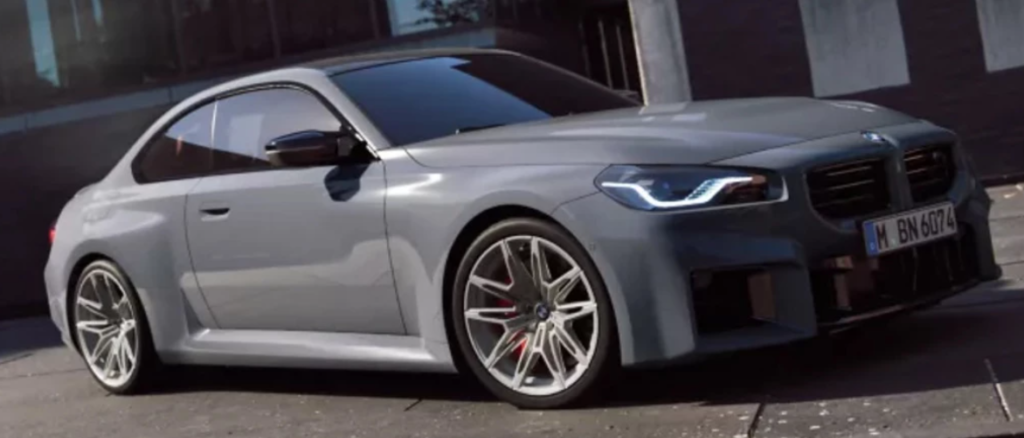
Choosing the correct BMW M2 tire size sounds simple until we start looking at different generations, staggered setups, wheel diameters, performance packages, and aftermarket options. The M2 isn't an ordinary compact coupe where four identical tires are usually enough. BMW engineered this car around serious grip, sharp steering, and a powerful rear axle, so tire dimensions play a major role in how the car feels.
The original F87 BMW M2 generally uses 245/35ZR19 tires at the front and 265/35ZR19 tires at the rear. That sizing also appears on the M2 Competition. Michelin's current vehicle fitment database confirms this arrangement for examples including the 2016 M2 and 2019–2021 M2 Competition.
The newer G87 changed things considerably. A 2023 BMW M2 uses 275/35ZR19 front tires and 285/30ZR20 rear tires in its standard staggered performance fitment, meaning the rear wheels are actually larger in diameter than the fronts. Michelin lists those dimensions as BMW original-equipment fitments.
So, which tire size belongs on your M2? Let's break it down properly.
Content in this publication
- BMW M2 Tire Size at a Glance
- BMW M2 F87 Tire Size
- BMW M2 Competition Tire Size
- BMW M2 G87 Tire Size
- F87 vs G87 BMW M2 Tire Size
- What Is a Staggered Tire Setup on the BMW M2?
- BMW M2 Tire Load and Speed Ratings
- Can You Use the Same Tire Size Front and Rear?
- Can You Put Wider Tires on a BMW M2?
- Best Tire Type for a BMW M2
- BMW M2 Tire Pressure and Tire Size
- Can We Downsize BMW M2 Wheels?
- How BMW M2 Tire Size Affects Speedometer Accuracy
- BMW M2 Tire Size and Wheel Width
- Common BMW M2 Tire Size Mistakes
- How Often Should BMW M2 Tires Be Replaced?
- How Tire Size Changes the BMW M2 Driving Experience
- Should We Buy BMW-Star-Marked Tires?
- BMW M2 Tire Size Buying Checklist
- Which BMW M2 Tire Size Is Best?
- Final Thoughts on BMW M2 Tire Size
- Frequently Asked Questions About BMW M2 Tire Size
BMW M2 Tire Size at a Glance
Here are the major factory-style fitments most owners are likely to encounter:
| BMW M2 version | Front tire size | Rear tire size | Wheel setup |
|---|---|---|---|
| F87 BMW M2 | 245/35ZR19 | 265/35ZR19 | 19-inch front/rear |
| F87 M2 Competition | 245/35ZR19 | 265/35ZR19 | 19-inch front/rear |
| G87 BMW M2 | 275/35ZR19 | 285/30ZR20 | 19-inch front / 20-inch rear |
The difference between the generations is hardly subtle. The G87 wears considerably more rubber, almost like it borrowed shoes from its larger M3 and M4 siblings.
Michelin identifies 245/35ZR19 XL 93(Y) front and 265/35ZR19 XL 98(Y) rear sizing for the older M2 configuration, while its 2023 M2 database lists 275/35ZR19 XL 100(Y) and 285/30ZR20 XL 99(Y) for the newer model.
Before ordering anything, however, we should always check the tire-information label on the vehicle itself because market specification, wheels, options, and modifications can change what is appropriate for an individual car.
BMW M2 F87 Tire Size
The first-generation M2, chassis code F87, arrived with a wonderfully aggressive stance without going overboard on wheel diameter.
Its familiar setup is:
- Front: 245/35ZR19
- Rear: 265/35ZR19
Michelin confirms these dimensions for the 2016 base BMW M2.
That means the rear tire is 20 mm wider than the front. This is called a staggered setup, and it is common on powerful rear-wheel-drive performance cars.
Why stagger them?
Because the rear axle has an enormous job. It must transfer the engine's power to the pavement while helping stabilize the car during acceleration and corner exits.
The slightly narrower front tires, meanwhile, preserve responsive steering and keep the chassis balance BMW intended.
What 245/35ZR19 Actually Means
Those numbers can look like a password until we decode them.
Take 245/35ZR19:
245 represents the nominal section width of the tire in millimeters.
35 is the aspect ratio. The sidewall height equals approximately 35% of the tire's width.
Z indicates a tire designed for high-speed applications.
R means radial construction.
19 represents the wheel diameter in inches.
So this is essentially a 245-mm-wide high-performance radial designed for a 19-inch wheel.
The rear 265/35ZR19 follows exactly the same logic, except its nominal width increases to 265 mm.
Why BMW Used 19-Inch Wheels on the F87
Performance cars always tempt us toward enormous wheels. Bigger must be better, right?
Not necessarily.
A 19-inch wheel gives the F87 a useful compromise between steering response, brake clearance, tire compliance, weight, and visual presence.
Increasing wheel diameter typically requires reducing tire sidewall height if we want to maintain approximately the same overall rolling diameter. That can sharpen response but also make the ride harsher and leave wheels more vulnerable to pothole damage.
The factory 19-inch arrangement gives the F87 enough sidewall to remain usable on ordinary roads while still feeling razor sharp when we push it.
BMW M2 Competition Tire Size
The F87 M2 Competition brought considerably more firepower, but its commonly specified tire dimensions remained familiar:
Front Tire Size
245/35ZR19 XL 93(Y)
Rear Tire Size
265/35ZR19 XL 98(Y)
Michelin lists this combination for the 2019, 2020, and 2021 M2 Competition.
The load index increases from front to rear because the tires have different dimensions and load capabilities. The XL designation means Extra Load, referring to a tire construction designed to operate at higher load capacities when correctly inflated.
Should We Install Wider Tires on an M2 Competition?
We can, but wider doesn't automatically equal faster.
Going wider can potentially provide a larger usable contact patch and improved traction under the right circumstances. But it can also introduce several issues:
- Tire rubbing
- Added steering weight
- Increased rolling resistance
- Greater hydroplaning sensitivity
- Higher tire costs
- Altered chassis balance
- Clearance issues around suspension components
- Incorrect overall rolling diameter
The factory sizing should therefore be our baseline rather than something we casually abandon.
BMW spent enormous amounts of development time tuning steering, suspension, stability control, and differential behavior around a specific tire envelope.
Changing that envelope can change the personality of the car.
Sometimes that's exactly what an enthusiast wants. But we should know why we're doing it.
BMW M2 G87 Tire Size
The second-generation G87 M2 arrived looking like it had spent several years in the gym.
Its tire sizes tell the same story.
For the 2023 M2, Michelin lists:
Front: 275/35ZR19 XL 100(Y)
Rear: 285/30ZR20 XL 99(Y)
Michelin identifies these Pilot Sport 4 S sizes as original-equipment BMW fitments for the vehicle.
Now compare that front 275 tire with the F87's 245.
We're talking about a nominal increase of 30 mm in front tire width.
The rear grows from 265 to 285 mm.
That's significant.
Why Does the G87 Use Different Wheel Diameters Front and Rear?
Perhaps the most interesting detail isn't the width. It's the fact that BMW uses a 19-inch front wheel and a 20-inch rear wheel with this fitment.
That's known as a staggered-diameter setup.
The concept allows BMW to tune tire sidewall, wheel dimensions, axle behavior, grip, brake packaging, and overall stance independently at the front and rear.
Visually, it also gives the G87 a planted appearance.
Functionally, the arrangement supports the substantial performance capability of the newer M2.
Does a 20-Inch Rear Tire Make the Ride Harsh?
Potentially, yes, but wheel diameter isn't the only factor controlling ride comfort.
Tire construction, sidewall dimensions, suspension calibration, tire pressure, wheel weight, and road surface all matter.
The G87 rear tire uses a relatively low 30-profile sidewall, so there isn't much rubber separating the wheel rim from the road.
Hit a sharp pothole and you'll know about it.
That's one reason correct tire pressure matters so much.
F87 vs G87 BMW M2 Tire Size
Put both generations side by side and the evolution becomes obvious.
| Specification | F87 M2 | G87 M2 |
|---|---|---|
| Front width | 245 mm | 275 mm |
| Front aspect ratio | 35 | 35 |
| Front wheel | 19 in | 19 in |
| Rear width | 265 mm | 285 mm |
| Rear aspect ratio | 35 | 30 |
| Rear wheel | 19 in | 20 in |
| Staggered width | Yes | Yes |
| Staggered wheel diameter | No | Yes |
The F87 is comparatively delicate on its feet. The G87 plants more rubber onto the pavement and uses a more aggressive wheel package.
Neither philosophy is necessarily better.
They're simply different.
The F87's lighter, narrower package contributes to its playful character. The G87's broader footprint complements the newer car's additional performance potential and wider chassis.
What Is a Staggered Tire Setup on the BMW M2?
A staggered tire configuration means the rear tires and front tires aren't the same size.
On an F87, for example:
245 mm front
265 mm rear
On the G87:
275 mm front
285 mm rear
The wider rear tires provide additional traction where a rear-wheel-drive M2 needs it most.
Imagine trying to sprint wearing narrow dress shoes. You might manage it, but running shoes give you a better foundation.
That is essentially what BMW is doing with the rear axle.
Can BMW M2 Tires Be Rotated Front to Rear?
Usually not in the conventional sense.
Because front and rear tire dimensions differ, moving a front tire onto a rear wheel isn't normally possible.
That means we lose one of the easiest methods for evening out tire wear.
Depending on tire type, wheel configuration, and directionality, some tires may potentially be moved left to right, but this isn't universal.
Always check whether the tire is:
- Directional
- Asymmetric
- Wheel-specific
- Axle-specific
Improper rotation can cause more problems than it solves.
BMW M2 Tire Load and Speed Ratings
Size isn't the entire story.
Suppose our M2 requires a 275/35ZR19 tire and we find another tire with those exact dimensions.
Are they automatically equivalent?
No.
Load index and speed rating also matter.
For example, Michelin lists the G87 front fitment as 275/35ZR19 XL 100(Y) and the rear as 285/30ZR20 XL 99(Y).
The F87 combination commonly appears as 245/35ZR19 XL 93(Y) and 265/35ZR19 XL 98(Y).
We shouldn't replace tires with lower load or speed capability without confirming compatibility.
This matters particularly on an M car because it can reach speeds and generate cornering forces that ordinary passenger vehicles rarely experience.
What Does XL Mean on BMW M2 Tires?
XL stands for Extra Load.
It doesn't mean the tire is oversized.
Instead, it refers to its ability to support a higher load at specified pressures compared with certain standard-load tires of a comparable size.
Performance cars frequently use XL tires because of their weight, speed capability, and cornering demands.
When replacing BMW M2 tires, matching the appropriate load rating is every bit as important as matching the width and wheel diameter.
Can You Use the Same Tire Size Front and Rear?
Technically, enthusiasts sometimes convert performance cars to a square setup in which all four tires have identical dimensions.
Would we automatically recommend doing it to a road-going BMW M2?
No.
The original chassis was engineered around a staggered layout.
A square arrangement can offer advantages in specialized circumstances, including easier tire rotation and potentially different handling characteristics. Track drivers sometimes explore these setups.
But changing to square tires may influence:
- Understeer
- Oversteer
- Steering feel
- Electronic stability-control behavior
- Wheel clearance
- ABS operation
- Speedometer accuracy
- Differential behavior
For a daily-driven car, remaining close to the manufacturer's specified dimensions is usually the straightforward choice.
Why Track Drivers Experiment With Tire Sizes
Track driving changes priorities.
Comfort matters less.
Noise matters less.
Tire longevity may matter less.
Heat resistance, repeatable grip, turn-in response, and balance become much more important.
An experienced driver may therefore change wheel width, offset, or tire dimensions to achieve a specific handling objective.
But copying someone's track setup from an online forum without understanding the suspension geometry is like borrowing a professional chef's knife and assuming dinner will automatically taste better.
The equipment is only one piece of the equation.
Can You Put Wider Tires on a BMW M2?
Yes, within limits.
A wider tire must still fit:
- The wheel width
- The wheel arch
- The suspension clearance
- The steering range
- The overall rolling-diameter requirements
And remember that the number printed on a sidewall isn't a perfect measurement of physical width.
Two tires labeled 275/35R19 can have slightly different actual dimensions depending on manufacturer, model, wheel width, and construction.
That's why fitment should be evaluated using actual specifications rather than just the nominal numbers.
When Wider Tires Make Sense
A carefully chosen wider setup can make sense when we're:
- Increasing engine output significantly
- Building a track-focused M2
- Fitting wider wheels
- Looking for more mechanical grip
- Adjusting the chassis setup as a complete package
It makes less sense if we're simply chasing appearance.
Poorly planned oversized tires can make an M2 feel worse rather than better.
Best Tire Type for a BMW M2
Tire size tells us whether the shoe fits.
Tire type tells us how that shoe behaves.
Performance summer tires are usually the natural choice for drivers who want the M2 to feel the way BMW intended in warm conditions.
Michelin currently lists products such as Pilot Sport 4 S and track-oriented Pilot Sport Cup variants for M2 fitments. Michelin also identifies BMW-marked Pilot Sport 4 S tires as original equipment in the 2023 M2's 275/35ZR19 and 285/30ZR20 dimensions.
Summer Performance Tires
These offer strong:
- Dry grip
- Wet grip
- Steering response
- High-temperature performance
- Braking performance
But they're not designed for freezing temperatures or snow.
All-Season Tires
All-season performance tires can make more sense for an M2 used year-round in a moderate climate.
They generally trade some ultimate warm-weather grip for greater temperature versatility.
For everyday drivers, that's sometimes an excellent compromise.
Winter Tires
If temperatures regularly become cold enough for winter tires, fitting proper winter rubber is far safer than expecting high-performance summer tires to cope.
Michelin, for example, lists Pilot Alpin winter options for both older and newer M2 fitments, although speed ratings can differ from the original summer tires.
Winter tires aren't merely snow tires.
Their rubber compounds are designed to remain functional at temperatures where summer compounds become much less effective.
BMW M2 Tire Pressure and Tire Size
Correct dimensions alone won't save us from incorrect inflation.
Michelin's BMW M2 fitment overview lists different pressure recommendations depending on the tire configuration; its current database shows 35 psi for the 245/35ZR19 and 265/35ZR19 combination and 32 psi for the listed 275/35ZR19 and 285/30ZR20 combination.
However, we shouldn't treat a generic online database as a substitute for the vehicle label.
The correct pressure for our particular car should come from the tire-pressure placard, normally found around the driver's door opening, or from BMW documentation for that vehicle.
Pressure recommendations can vary according to:
- Vehicle load
- Tire specification
- Speed
- Market
- Wheel option
- Model year
Why Pressure Changes BMW M2 Handling
An M2 responds strongly to tire pressure because the tires are a fundamental part of the suspension system.
Too low and steering can become lazy while heat builds excessively inside the tire.
Too high and grip can decrease as the contact patch changes, while the ride becomes unnecessarily harsh.
Think of tire pressure as seasoning. A little adjustment matters. Pouring in the entire container ruins the meal.
Can We Downsize BMW M2 Wheels?
Wheel downsizing can be attractive for winter use because smaller wheels often allow tires with taller sidewalls.
Potential benefits include:
- Better pothole protection
- Potentially cheaper tires
- Improved cold-weather practicality
- Greater sidewall compliance
The challenge on the M2 is brake clearance.
Large M brake components occupy a considerable amount of space inside the wheel.
We can't simply assume that an 18-inch wheel fits because another BMW uses one.
Wheel barrel design, offset, spoke clearance, width, and brake configuration all matter.
Always verify a specific wheel against the exact M2 generation and brake package.
How BMW M2 Tire Size Affects Speedometer Accuracy
The speedometer depends indirectly on wheel rotation.
Change overall tire circumference substantially and we change the relationship between wheel speed and road speed.
If the new tire's outside diameter is much larger, the vehicle travels farther per revolution.
If it's significantly smaller, it travels less.
Electronic vehicle systems also rely on wheel-speed information.
That's why maintaining a rolling diameter close to the original specification matters.
Why Aspect Ratio Is Easy to Misunderstand
A 35-series tire doesn't have a fixed sidewall height.
The number is a percentage.
For example:
A 245/35 tire has a sidewall based on 35% of 245 mm.
A 275/35 tire uses 35% of 275 mm.
The second tire therefore has a taller calculated sidewall even though both carry the number 35.
That's an important detail whenever we compare potential alternative sizes.
BMW M2 Tire Size and Wheel Width
Tire width must correspond appropriately with wheel width.
A tire that's too narrow for the rim can become excessively stretched.
A tire that's too wide can become overly pinched.
Both situations can change:
- Sidewall support
- Steering response
- Contact-patch behavior
- Bead geometry
- Tire wear
Wheel fitment therefore can't be chosen independently from tire size.
When moving to aftermarket wheels, we should evaluate tire dimensions, wheel width, offset, suspension clearance, brake clearance, and body clearance as one interconnected system.
Common BMW M2 Tire Size Mistakes
The biggest mistake is ordering tires based only on the words "BMW M2."
That's not enough anymore.
The F87 and G87 use dramatically different setups.
Someone searching quickly online could easily see 245/35R19 and assume it applies to every M2.
It doesn't.
Likewise, seeing 285/30R20 on a newer M2 doesn't mean that tire belongs on the rear wheel of an original F87.
Before purchasing tires, verify:
- Model year
- M2 generation
- Front tire dimensions
- Rear tire dimensions
- Wheel diameter
- Load index
- Speed rating
- BMW tire-label information
- Whether the car has aftermarket wheels
- Whether suspension modifications affect clearance
Five minutes of verification can prevent a very expensive mistake.
Don't Assume the Previous Owner Used the Correct Size
This one catches used-car buyers.
We look at the tires currently installed and naturally assume they're correct.
But the previous owner may have modified the wheels, installed cheaper alternative sizes, or simply fitted the wrong tires.
The sidewall tells us what's installed.
It doesn't necessarily tell us what belongs there.
Compare the existing setup against the vehicle label and appropriate BMW specifications before using it as your reference.
How Often Should BMW M2 Tires Be Replaced?
There's no universal mileage figure.
An M2 can consume rear tires surprisingly quickly if driven enthusiastically.
Tire life depends on:
- Tire compound
- Alignment
- Driving style
- Road quality
- Temperature
- Tire pressure
- Track use
- Engine modifications
A gentle highway-driven M2 and an M2 spending weekends drifting through track corners might technically be the same car, but their tires live completely different lives.
Inspect tread depth frequently and also look for:
- Cracking
- Bulges
- Cuts
- Uneven wear
- Exposed cords
- Sidewall damage
Tires should be evaluated based on condition, not merely mileage.
How Tire Size Changes the BMW M2 Driving Experience
The M2's tires are where every horsepower, steering command, and braking input finally meets reality.
The engine can produce incredible power.
The brakes can be enormous.
The suspension can be exquisitely tuned.
But everything ultimately passes through four patches of rubber.
That's why tire choice can transform an M2 more dramatically than many expensive modifications.
A high-quality tire in the correct size usually contributes more to usable performance than a flashy modification that adds horsepower without improving traction.
Steering Feel
Front tire width, sidewall stiffness, wheel width, pressure, and construction all influence steering response.
The 275-section front tires on the G87 contribute to a very different front-end character than the 245-section tires used by the F87.
Rear Traction
Rear width becomes particularly important when accelerating hard.
The M2's rear axle must translate substantial torque into forward motion.
A carefully selected performance tire allows the differential and traction-control systems to work with the pavement rather than constantly fighting it.
Wet Performance
Here's where the "wider is always better" idea starts falling apart.
A wider tire must displace more water from beneath its footprint.
Tread design, compound, temperature, pressure, and depth become crucial.
An excellent correctly sized performance tire may provide far more confidence in heavy rain than an unnecessarily wide tire chosen mainly for appearance.
Should We Buy BMW-Star-Marked Tires?
BMW-approved tires may carry a star marking indicating development or approval associated with BMW applications.
For drivers who want to remain close to the original factory behavior, BMW-homologated tires are worth considering.
Michelin's fitment information specifically identifies BMW-marked versions of several original-equipment M2 tire sizes, including the G87 Pilot Sport 4 S setup.
Does that mean a high-quality non-star tire of the correct specification is automatically wrong?
No.
But homologated tires may have characteristics tailored toward the vehicle manufacturer's requirements.
Drivers seeking maximum consistency with the original setup often prefer them.
BMW M2 Tire Size Buying Checklist
Before clicking that tempting "Buy Now" button, we should confirm:
- Exact BMW M2 model year
- F87 or G87 generation
- Factory or aftermarket wheels
- Front and rear dimensions separately
- Correct load index
- Correct speed rating
- XL specification where required
- Summer, all-season, or winter category
- Manufacturer-approved fitment where desired
- Production date and tire condition
- Appropriate tire pressure after installation
And after installation?
Check TPMS operation and inspect clearance before driving aggressively.
No tire upgrade is worth discovering rubbing at highway speed.
Which BMW M2 Tire Size Is Best?
For most owners, the best size is refreshingly boring:
the correct factory specification for the car.
For the original F87 M2 family, 245/35ZR19 front and 265/35ZR19 rear is the key factory-style configuration to remember. Michelin lists this setup across the original M2 and M2 Competition applications.
For the newer G87, 275/35ZR19 front and 285/30ZR20 rear is the major staggered setup identified for the 2023 vehicle, with BMW original-equipment tire options available in those dimensions.
Modified cars are a different story.
Once we're changing wheel width, offset, suspension height, camber, or track setup, tire selection becomes part of a complete fitment calculation rather than a simple replacement decision.
Final Thoughts on BMW M2 Tire Size
The BMW M2 tire size isn't just a string of numbers printed on the sidewall. Those numbers influence steering, braking, ride comfort, grip, electronic systems, and ultimately how much of the M2's personality reaches us through the steering wheel.
For the F87, the familiar 245/35ZR19 front and 265/35ZR19 rear combination delivers the staggered footprint associated with the original M2 and M2 Competition.
The G87 turns the aggression up several levels with its 275/35ZR19 front and 285/30ZR20 rear arrangement, combining wider rubber with a 19-inch front and 20-inch rear wheel setup.
If we simply need replacement tires, staying with the vehicle's specified dimensions, load rating, and speed capability is the safest path.
If we're modifying an M2 for track driving, wider wheels, or more power, then tire sizing becomes a tuning tool. At that point, every millimeter matters.
The M2 is a precision instrument. Putting random tires underneath it is like fitting hiking boots to a sprinter. They'll technically cover the feet, but they'll change the whole performance.
Frequently Asked Questions About BMW M2 Tire Size
What size tires does a BMW M2 use?
It depends on the generation. The F87 BMW M2 commonly uses 245/35ZR19 tires in front and 265/35ZR19 tires at the rear. The newer G87's major factory configuration uses 275/35ZR19 front and 285/30ZR20 rear tires. Always verify the tire label on your specific vehicle before purchasing replacements.
What is the BMW M2 Competition tire size?
The F87 M2 Competition commonly uses 245/35ZR19 XL 93(Y) front tires and 265/35ZR19 XL 98(Y) rear tires. Michelin lists this combination for the 2019, 2020, and 2021 M2 Competition.
Does the BMW M2 have the same tire size front and rear?
No. The M2 normally uses a staggered setup, meaning the rear tires are wider than the fronts. On the F87, that means 245-mm nominal front width versus 265 mm at the rear. A G87 configuration uses 275 mm at the front and 285 mm at the rear.
Can I put wider tires on my BMW M2?
Potentially, but the new tire must remain compatible with wheel width, suspension clearance, body clearance, steering movement, and appropriate overall diameter. Wider tires shouldn't be installed simply because they'll physically mount onto the wheel.
Does the G87 BMW M2 have 19- or 20-inch tires?
It can use both sizes in the same staggered factory arrangement. Michelin's 2023 BMW M2 fitment lists a 275/35ZR19 front tire and 285/30ZR20 rear tire, meaning a 19-inch front wheel and 20-inch rear wheel.
If you want to know other articles similar to BMW M2 Tire Size: Complete Guide by Year and Generation you can visit the category Service and Parts.
Vauxhall Mokka Tyre Pressure Reset: Complete Guide
How to Reset the Tire Pressure System on Your Hyundai Tucson
Hyundai Kona Tire Pressure: Complete PSI Guide
Vauxhall Corsa Timing Belt Replacement Cost UK 2026
Mazda CX-5 Tire Size Chart: 2013–2026 Guide
How to Reset a Honda Civic: Complete Step-by-Step Guide
Leave a Reply
More content of your interest