

Honda Passport Depreciation: How Well Does It Hold Its Value?

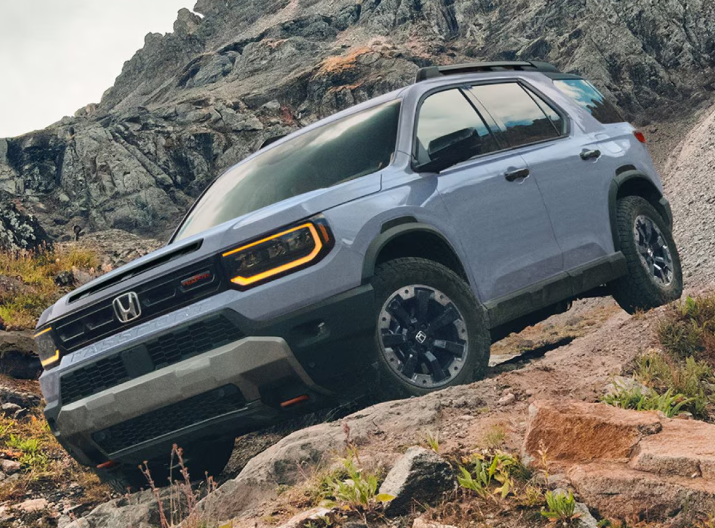
If you are thinking about buying a Honda Passport, depreciation is one of the most important ownership costs to consider. Fuel, insurance, maintenance, and repairs are easy to notice because we pay for them directly. Depreciation is different: it quietly reduces the value of the vehicle every year.
So, how quickly does a Honda Passport depreciate?
Current estimates suggest that a Honda Passport may lose roughly 43% to 45% of its value during the first five years, depending on purchase price, mileage, condition, trim level, market demand, and the valuation method used.
CarEdge estimates that a Honda Passport can depreciate about 45% after five years, leaving approximately 55% of its original value. Its example assumes a new price of $47,535, average condition, and approximately 13,500 miles driven per year.
Kelley Blue Book's current 2026 Honda Passport cost-to-own estimate projects approximately $20,120 of depreciation over five years, with a residual value around $26,325 under its assumptions.
That means the Passport is not immune to depreciation, but buyers can potentially reduce their depreciation cost considerably by choosing the right model year, controlling mileage, maintaining the vehicle properly, and buying at the right point in the depreciation curve.
Content in this publication
- Honda Passport Depreciation at a Glance
- How Much Does a Honda Passport Depreciate After 5 Years?
- Honda Passport Depreciation by Year
- Does the Honda Passport Hold Its Value?
- 2026 Honda Passport Depreciation
- Honda Passport TrailSport Depreciation
- What Causes a Honda Passport to Depreciate?
- How to Calculate Honda Passport Depreciation
- Why Purchase Price Matters So Much
- New vs Used Honda Passport Depreciation
- Is a 2-Year-Old Honda Passport a Good Depreciation Strategy?
- How Mileage Affects Honda Passport Resale Value
- How to Reduce Honda Passport Depreciation
- Trade-In Value vs Private-Party Value
- Honda Passport Depreciation vs Total Cost of Ownership
- When Is the Best Time to Sell a Honda Passport?
- Is Honda Passport Depreciation Good or Bad?
- Honda Passport Depreciation: New or Used?
- Frequently Asked Questions About Honda Passport Depreciation
- Final Thoughts on Honda Passport Depreciation
Honda Passport Depreciation at a Glance
Here is a simple overview of what Passport owners should understand.
| Factor | Honda Passport Depreciation |
|---|---|
| Estimated 5-year depreciation | Around 43%–45% |
| Estimated value retained after 5 years | Around 55% |
| Highest depreciation period | First 1–3 years |
| Major factors | Mileage, age, condition, trim, accidents, demand |
| Best strategy to reduce depreciation | Buy lightly used and maintain it well |
Exact resale values should always be treated as estimates rather than guarantees.
Used-car prices depend heavily on local demand, inventory, interest rates, economic conditions, mileage, vehicle history, and even geographic location.
How Much Does a Honda Passport Depreciate After 5 Years?
A reasonable benchmark for Honda Passport depreciation is approximately 45% over five years.
CarEdge currently estimates a five-year resale value of around $26,120 from an assumed original price of $47,535. Its calculation assumes the SUV remains in good condition while accumulating approximately 13,500 miles annually.
Its projected depreciation curve looks approximately like this:
| Vehicle Age | Estimated Value Retained | Estimated Resale Value* |
|---|---|---|
| 1 year | 79.1% | $37,610 |
| 2 years | 71.8% | $34,121 |
| 3 years | 70.0% | $33,294 |
| 4 years | 60.2% | $28,635 |
| 5 years | 54.9% | $26,120 |
| 6 years | 53.4% | $25,369 |
| 7 years | 49.4% | $23,468 |
| 10 years | 39.1% | $18,572 |
*These are estimates based on CarEdge's assumptions rather than guaranteed future market values.
The important lesson is that depreciation does not occur at the same rate every year.
Honda Passport Depreciation by Year
First-Year Honda Passport Depreciation
The first year can produce one of the biggest drops in value.
Once a brand-new vehicle becomes used, buyers generally are no longer willing to pay the same amount as they would for an equivalent new vehicle from a dealership.
CarEdge's current model projects approximately 79.1% residual value after the first year, based on its standard assumptions.
For buyers, this creates an interesting opportunity.
Instead of purchasing a completely new Passport, we may be able to buy a one- or two-year-old example after the original owner has already absorbed a substantial portion of the initial depreciation.
Honda Passport Depreciation After 3 Years
Around the three-year point, the Passport can become particularly interesting on the used market.
CarEdge estimates approximately 70% residual value after three years under its model.
A three-year-old Passport can therefore provide a useful compromise between:
- Lower purchase price
- Modern safety technology
- Relatively low mileage
- Remaining useful life
- Reduced exposure to initial depreciation
This is one reason lightly used SUVs can sometimes provide stronger value than buying brand new.
Honda Passport Depreciation After 5 Years
Five years is an important benchmark because many people keep their vehicles for approximately this period before replacing them.
CarEdge's projection puts the Passport at approximately 54.9% residual value after five years, representing about 45% depreciation from its assumed original price.
Kelley Blue Book's current estimates also show depreciation representing a substantial portion of the Passport's five-year ownership costs.
The exact dollar amount will depend heavily on what we originally paid.
A buyer who negotiates a strong purchase price may experience a much smaller dollar loss than someone who pays above MSRP or adds thousands of dollars in dealer accessories.
Does the Honda Passport Hold Its Value?
The Honda Passport retains a meaningful portion of its original value, but it should still be expected to lose a substantial amount during the first five years.
A roughly 55% five-year residual value means depreciation needs to be considered when calculating the real cost of ownership.
Several characteristics can support used Passport demand, including its SUV body style, V6 powertrain, available all-wheel-drive capability, cargo practicality, and Honda brand recognition.
However, resale value isn't determined by the badge alone.
A poorly maintained Passport with accident history and unusually high mileage can depreciate much faster than a clean example with complete service records.
2026 Honda Passport Depreciation
The redesigned 2026 Honda Passport has a different starting price and equipment structure from the previous generation, meaning older depreciation estimates should not automatically be applied to it.
Kelley Blue Book currently estimates approximately $20,120 in five-year depreciation for a 2026 Passport in one of its cost-to-own calculations, leaving an estimated residual value of $26,325.
KBB lists 2026 Passport variants ranging from the RTL through several TrailSport configurations, with pricing varying considerably by trim.
That difference matters.
Higher trims typically cost considerably more upfront, but expensive options do not necessarily return their full original cost when the vehicle is sold.
Honda Passport TrailSport Depreciation
The Passport TrailSport deserves separate consideration because its off-road-oriented positioning distinguishes it from regular Passport models.
Kelley Blue Book currently projects about $23,530 in five-year depreciation for the 2026 Passport TrailSport under its published assumptions, with an estimated residual value of $26,615.
TrailSport models can appeal to buyers looking for rugged styling and additional off-road capability, which may help demand in the used market.
However, buyers should avoid assuming that a higher MSRP automatically means a proportionally higher resale value.
The resale market decides what those additional features are worth several years later.
What Causes a Honda Passport to Depreciate?
Several variables influence Honda Passport resale value.
Mileage
Mileage is one of the biggest factors.
Two identical five-year-old Passports can have dramatically different values if one has 40,000 miles and the other has 100,000 miles.
Higher mileage generally means:
- More mechanical wear
- Greater likelihood of future repairs
- Shorter remaining lifespan
- Reduced buyer demand
This is why driving considerably more than the average mileage assumption used by depreciation calculators can result in a lower actual resale value.
Vehicle Condition
Condition matters enormously.
A well-maintained Passport with clean paint, an undamaged interior, good tires, and no warning lights will generally be easier to sell than a neglected vehicle.
Small issues can also accumulate.
Scratched wheels, dents, torn upholstery, cracked windshields, missing accessories, and worn tires can reduce what a dealer or private buyer is willing to pay.
Accident History
Accidents can have a lasting effect on resale value.
Even when repairs were professionally completed, many used-car buyers prefer vehicles with clean histories.
A serious collision can therefore reduce resale value beyond the repair expense itself.
You may be interested in reading Honda Passport Life Expectancy: How Many Miles Can It Last?
Maintenance History
Service documentation becomes increasingly important as a Passport gets older.
Keeping records for oil changes, scheduled maintenance, tires, brakes, fluids, and repairs can reassure future buyers that the vehicle has been properly maintained.
A complete maintenance history can be particularly valuable when selling privately.
Trim Level
Trim influences both purchase price and resale value.
A more expensive trim may command a higher used price, but that doesn't necessarily mean it loses fewer dollars.
Suppose we spend thousands of dollars more for premium equipment.
Five years later, used buyers may pay somewhat more for those features—but rarely the entire original premium.
Therefore, purchasing the most expensive Passport configuration isn't automatically the best strategy for minimizing depreciation.
Exterior Color
Color can influence resale demand more than many owners expect.
Neutral colors such as:
- White
- Black
- Gray
- Silver
typically appeal to a broader audience.
Unusual colors may be highly desirable to certain buyers but can also reduce the number of potential purchasers.
Market Conditions
Used-car values can change dramatically due to conditions unrelated to the individual vehicle.
Factors include:
- New-car inventory
- Used-car supply
- Interest rates
- Fuel prices
- Consumer demand
- Economic conditions
- Manufacturer incentives
- New model introductions
This explains why depreciation projections should never be interpreted as guaranteed future values.
How to Calculate Honda Passport Depreciation
The basic depreciation calculation is simple.
Depreciation = Original Purchase Price − Current Vehicle Value
For example, imagine we purchase a Passport for $48,000.
Five years later, it is worth $27,000.
Our depreciation would be:
$48,000 − $27,000 = $21,000
To calculate the depreciation percentage:
Depreciation Percentage = Depreciation ÷ Original Price × 100
In this example:
$21,000 ÷ $48,000 × 100 = 43.75%
The vehicle therefore lost approximately 43.8% of its original value and retained about 56.2%.
Why Purchase Price Matters So Much
Depreciation discussions often focus entirely on MSRP.
But what we actually pay matters more.
Consider two buyers purchasing identical Honda Passports.
Buyer A pays:
$48,000
Buyer B negotiates:
$45,000
Suppose both vehicles are worth $28,000 five years later.
Buyer A loses:
$20,000
Buyer B loses:
$17,000
The vehicles have the same resale value, but Buyer B experienced $3,000 less depreciation simply because the original purchase price was lower.
This is why discounts, incentives, negotiation, and avoiding excessive dealer add-ons can significantly affect total ownership cost.
New vs Used Honda Passport Depreciation
If reducing depreciation is a priority, buying used deserves serious consideration.
New vehicles tend to experience their sharpest depreciation early in ownership.
By buying a Passport after the first owner has absorbed the initial decline, we can potentially reduce our depreciation expense.
CarEdge's model illustrates this clearly: it estimates residual value at around 79.1% after one year and 71.8% after two years under its assumptions.
That means a two- or three-year-old Passport may offer an attractive balance between price and remaining vehicle life.
Is a 2-Year-Old Honda Passport a Good Depreciation Strategy?
From a depreciation perspective, it can make sense.
A two-year-old Passport has already experienced part of its initial value decline while potentially still offering:
- Modern technology
- Contemporary styling
- Relatively low mileage
- Many years of remaining service life
CarEdge specifically estimates that purchasing a two-year-old Passport could avoid a significant amount of the depreciation associated with buying the vehicle new, based on its historical model.
The actual decision should still depend on the difference between new and used prices.
Sometimes manufacturer financing incentives or dealer discounts make a new vehicle surprisingly competitive.
How Mileage Affects Honda Passport Resale Value
Mileage should be considered relative to the vehicle's age.
Imagine two 2023 Passports available in the same city.
One has:
32,000 miles
The other has:
You may be interested in readingHonda Passport Life Expectancy: How Many Miles Can It Last?You may be interested in reading
Honda Passport Years to Buy: Best Model Years and Which Ones to Avoid75,000 miles
Even if both look excellent, the lower-mileage vehicle will generally command more money.
CarEdge's depreciation calculations use approximately 13,500 miles per year as one of their baseline assumptions.
Driving substantially more than that could cause our Passport to depreciate faster than the published estimate.
How to Reduce Honda Passport Depreciation
We cannot stop depreciation, but we can influence it.
Buy at the Right Time
Buying a one- to three-year-old Passport can allow someone else to absorb some of the steep initial depreciation.
Negotiate the Purchase Price
Every dollar we avoid paying upfront reduces the amount of capital exposed to depreciation.
Keep Mileage Reasonable
We shouldn't avoid using a vehicle simply to protect its resale value, but unnecessary mileage can be costly.
Maintain the Passport Properly
Follow Honda's recommended maintenance schedule and keep records.
Repair Damage
Small dents, damaged wheels, cracked glass, and interior problems can significantly affect a trade-in appraisal.
Avoid Excessive Modifications
Highly personalized modifications may reduce the number of interested buyers.
Off-road modifications, unusual wheels, extreme suspension changes, and aftermarket electronics may appeal to us while making the SUV less attractive to the broader used market.
Keep Everything That Comes With the Vehicle
Keep:
- Both keys
- Owner's manuals
- Cargo accessories
- Factory equipment
- Maintenance records
- Receipts
A complete vehicle is easier to market when resale time arrives.
Trade-In Value vs Private-Party Value
When discussing depreciation, we also need to distinguish between trade-in value and private-party value.
A dealership has to purchase the vehicle cheaply enough to:
- Inspect it.
- Recondition it.
- Advertise it.
- Provide warranties where applicable.
- Make a profit when reselling it.
For that reason, trade-in offers are normally lower than retail asking prices.
Selling a Passport privately may produce a higher selling price, but it also requires more work.
We may need to photograph the SUV, advertise it, answer messages, arrange test drives, negotiate, and handle paperwork.
Convenience has value, which is essentially what we give up when accepting a lower dealership trade-in offer.
Honda Passport Depreciation vs Total Cost of Ownership
Depreciation should never be analyzed in isolation.
Our real ownership cost includes:
- Depreciation
- Fuel
- Insurance
- Financing
- Registration and taxes
- Maintenance
- Repairs
- Tires
Kelley Blue Book currently places the 2026 Passport in the middle portion of midsize SUV/crossover models for its five-year cost-to-own calculations.
CarEdge similarly identifies depreciation as one of the largest components of five-year Passport ownership cost.
This demonstrates why resale value matters.
A vehicle that costs slightly more to maintain but depreciates slowly could ultimately cost less to own than a cheaper vehicle that loses value rapidly.
When Is the Best Time to Sell a Honda Passport?
There isn't one perfect year for every owner.
Selling after only one or two years often means realizing the steepest portion of depreciation without getting many years of use from the vehicle.
Keeping the Passport longer spreads the initial depreciation across more years.
For example, if we lose $20,000 during five years of ownership, depreciation averages $4,000 per year.
If we keep the vehicle considerably longer, annualized depreciation may decline because the vehicle's value eventually decreases more slowly.
However, maintenance and repair costs can rise as the vehicle ages.
The ideal replacement point therefore depends on balancing:
Depreciation + maintenance + repairs + financing + personal needs.
Is Honda Passport Depreciation Good or Bad?
Honda Passport depreciation is significant enough that buyers should include it in their ownership calculations.
Current third-party estimates suggest that retaining somewhere around the mid-50% range of original value after five years can be a reasonable benchmark under typical mileage and condition assumptions.
However, our actual experience can be much better or worse.
A carefully purchased, accident-free Passport with moderate mileage and full maintenance history could perform considerably better than a neglected high-mileage example.
The purchase decision itself is equally important.
Buying after the steep initial depreciation period can dramatically change the economics of ownership.
Honda Passport Depreciation: New or Used?
For buyers who want the latest design, full new-car experience, and maximum control over the vehicle's history, buying new can still make sense.
But if depreciation is our primary concern, a lightly used Passport deserves serious consideration.
A vehicle that is approximately two to three years old may already have passed through much of the steepest initial depreciation while still offering many years of service.
Before buying, compare:
- New transaction price
- Used asking price
- Interest rates
- Warranty coverage
- Mileage
- Maintenance history
- Estimated future resale value
Sometimes the cheaper sticker price isn't actually the cheapest long-term option.
Frequently Asked Questions About Honda Passport Depreciation
How much does a Honda Passport depreciate in 5 years?
Current estimates vary, but roughly 43% to 45% depreciation over five years is a useful general benchmark. CarEdge estimates approximately 45% depreciation and about 54.9% residual value after five years under its standard assumptions.
How much value does a Honda Passport retain after 5 years?
Based on CarEdge's current depreciation model, a Passport may retain approximately 55% of its original value after five years, assuming average condition and around 13,500 miles annually.
Does the Honda Passport have good resale value?
The Passport can retain a meaningful portion of its value, although depreciation remains one of its largest ownership expenses. Actual resale value depends on age, mileage, trim, condition, accident history, maintenance records, and used-car market conditions.
What is the best Honda Passport age to buy used?
From a depreciation perspective, approximately two to three years old can be an attractive range because part of the initial depreciation has already occurred. The best choice ultimately depends on the price difference between new and used examples.
How can I improve my Honda Passport resale value?
Keep mileage reasonable, follow the maintenance schedule, retain service records, avoid accidents when possible, repair cosmetic damage, keep the interior clean, preserve factory equipment, and avoid modifications that significantly reduce the SUV's appeal to mainstream buyers.
Final Thoughts on Honda Passport Depreciation
The Honda Passport depreciation rate is an important part of its overall ownership cost. Current estimates indicate that losing roughly 43% to 45% of the vehicle's value over five years is a reasonable planning range, although real-world results can vary significantly.
The largest depreciation typically occurs early in the vehicle's life. For that reason, buyers focused on minimizing value loss may find that a lightly used Passport offers a compelling balance between price, age, mileage, technology, and remaining useful life.
We can also reduce depreciation by negotiating a strong purchase price, keeping mileage under control, maintaining the SUV correctly, preserving its condition, and keeping complete service records.
Ultimately, depreciation isn't simply about how much a Honda Passport is worth in five years. It is about the difference between what we pay today and what someone is willing to pay us when we sell it.
And controlling that difference can save us thousands of dollars over the life of the vehicle.
You may be interested in readingHonda Passport Life Expectancy: How Many Miles Can It Last?You may be interested in reading
Honda Passport Years to Buy: Best Model Years and Which Ones to AvoidYou may be interested in reading
 Toyota Corolla AE86 Engine Swap – The Ultimate Guide
If you want to know other articles similar to Honda Passport Depreciation: How Well Does It Hold Its Value? you can visit the category Blog.
Honda Passport Life Expectancy: How Many Miles Can It Last?

Nissan Rogue Reliability Rating: How Reliable Is the Rogue?
Nissan Rogue Life Expectancy: How Long Does It Last?
Vauxhall Agila Reliability: Common Problems, Best Engines and What to Check
Vauxhall Agila Insurance Group UK: Complete Guide to Insurance Costs
Is BYD Shark 6 a Good Car? An Honest 2026 Review
Leave a Reply
More content of your interest