

Honda Passport Life Expectancy: How Many Miles Can It Last?

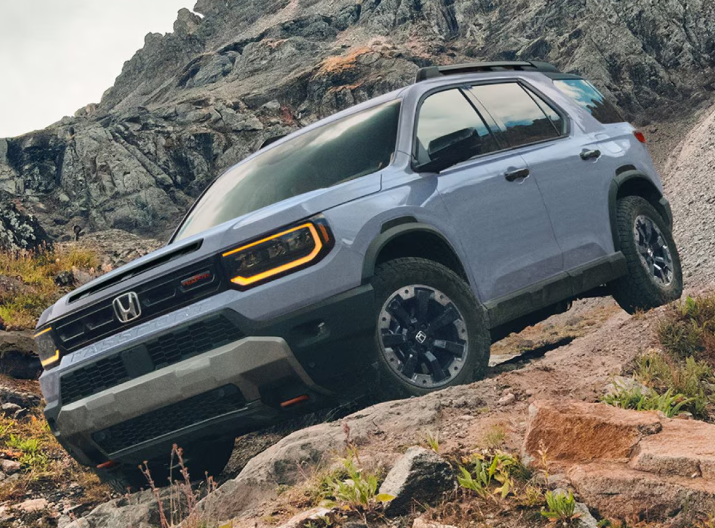
If we are considering buying a Honda Passport—or already own one—one of the biggest questions is simple: how long does a Honda Passport last?
A well-maintained Honda Passport can reasonably be expected to reach around 200,000 miles, while many carefully maintained vehicles may continue toward 250,000 miles or more. Reaching 300,000 miles is possible for individual vehicles, but we should treat that as an exceptional result rather than something every Passport will achieve.
In practical terms, Honda Passport life expectancy is roughly 13 to 17+ years for drivers covering about 12,000 to 15,000 miles annually.
There is one important limitation when discussing the modern Passport. Honda brought the model back for the 2019 model year, and the current generation was completely redesigned for 2026. Therefore, we do not yet have decades of real-world data from modern Passports showing exactly how many will reach 250,000 or 300,000 miles. iSeeCars lists the previous modern generation as 2019–2025 and the redesigned generation beginning in 2026.
Still, the Passport has several characteristics that make high mileage realistic when maintenance is taken seriously.
Content in this publication
- How Long Does a Honda Passport Last?
- How Many Years Can a Honda Passport Last?
- Can a Honda Passport Last 200,000 Miles?
- Can a Honda Passport Last 250,000 Miles?
- Can a Honda Passport Reach 300,000 Miles?
- Honda Passport Engine Life Expectancy
- Honda Passport Transmission Life Expectancy
- Honda Passport AWD System Longevity
- Honda Passport Life Expectancy by Generation
- What Determines Honda Passport Life Expectancy?
- How to Make a Honda Passport Last Longer
- Signs a Honda Passport May Not Reach High Mileage
- Is High Mileage Bad on a Honda Passport?
- Is 100,000 Miles a Lot for a Honda Passport?
- Is 150,000 Miles Too Much for a Used Honda Passport?
- Honda Passport Life Expectancy vs Other SUVs
- When Does a Honda Passport Become Too Expensive to Keep?
- Should We Buy a Honda Passport With Over 100,000 Miles?
- Honda Passport Life Expectancy: Final Verdict
- Frequently Asked Questions
How Long Does a Honda Passport Last?
For most owners, we would use 200,000 miles as a realistic long-term target for a properly maintained Honda Passport.
A reasonable expectation looks like this:
| Condition | Possible Honda Passport Lifespan |
|---|---|
| Poorly maintained | 100,000–150,000 miles |
| Average maintenance | 150,000–200,000 miles |
| Well maintained | 200,000–250,000 miles |
| Exceptional maintenance and favorable use | 250,000–300,000+ miles |
These figures should not be interpreted as guaranteed failure points.
A Passport does not automatically stop working when it reaches 200,000 miles. Instead, maintenance costs and age-related repairs usually become increasingly important as mileage rises.
At some point, the question changes from “Can the Passport keep running?” to “Is it financially sensible to keep repairing it?”
How Many Years Can a Honda Passport Last?
Mileage alone does not tell the entire story.
If we assume a 200,000-mile lifespan, annual mileage makes a major difference.
Driving 10,000 Miles per Year
At 10,000 miles annually:
200,000 miles = approximately 20 years.
Age-related deterioration may become more important than mileage at this point.
Rubber seals, suspension bushings, hoses, electrical components, paint, interior materials, and corrosion can deteriorate even if the vehicle has relatively low mileage.
Driving 12,000 Miles per Year
At approximately 12,000 miles annually:
200,000 miles = roughly 16 to 17 years.
This is probably a more realistic long-term ownership scenario for many drivers.
Driving 15,000 Miles per Year
At 15,000 miles annually:
200,000 miles = approximately 13 years.
A driver reaching 250,000 miles at this rate would have owned the vehicle for around 16 to 17 years.
Interestingly, highway-heavy vehicles can sometimes handle high mileage better than lower-mileage vehicles subjected almost entirely to short urban trips.
Can a Honda Passport Last 200,000 Miles?
Yes, 200,000 miles is a reasonable goal for a Honda Passport that receives consistent maintenance.
However, reaching that figure depends heavily on what happens during the first 100,000 miles.
Skipping maintenance because the vehicle still feels fine can create expensive problems later.
The engine, transmission, cooling system, AWD system, brakes, suspension, and fluids all need attention throughout the vehicle's life.
Honda itself uses its Maintenance Minder system to tell owners when specific services are required rather than relying entirely on a simple fixed-mileage schedule.
For the 2019 Passport, Honda's maintenance information includes engine oil and filter service, tire rotation, transmission fluid, transfer fluid where applicable, spark plugs, timing belt service, water-pump inspection, coolant, brake fluid, and rear differential fluid.
Following those reminders becomes especially important if we want the SUV to reach very high mileage.
Can a Honda Passport Last 250,000 Miles?
A Passport reaching 250,000 miles is certainly possible, although owners should expect more repairs than during the first half of the vehicle's life.
By this mileage, original components may have been replaced.
Potential replacements can include:
- Suspension components
- Wheel bearings
- Engine mounts
- Alternator
- Starter
- A/C components
- Sensors
- Cooling-system parts
- CV joints or axles
- Brake components
- Various seals and gaskets
This does not necessarily mean the vehicle is unreliable.
Many mechanical components are wear items. A vehicle reaching 250,000 miles without replacing anything would actually be unusual.
The key question is whether the expensive core components—the engine, transmission, body structure, and major AWD components—remain healthy.
Can a Honda Passport Reach 300,000 Miles?
A Honda Passport reaching 300,000 miles is possible but should not be considered the normal lifespan.
Vehicles reaching this mileage usually have several things in common.
They tend to have:
- Consistent maintenance histories
- Frequent highway driving
- Regular fluid replacement
- Prompt repairs
- Owners who monitor oil and coolant levels
- Limited corrosion
- Few serious accidents
- Proper transmission maintenance
A 300,000-mile Passport will probably have received thousands of dollars in maintenance and repairs during its lifetime.
Therefore, reaching 300,000 miles is less about finding an indestructible vehicle and more about maintaining a fundamentally solid vehicle for many years.
Honda Passport Engine Life Expectancy
The engine is naturally one of our biggest concerns when considering Honda Passport longevity.
Modern Passports use Honda's naturally aspirated 3.5-liter V6 architecture.
For 2026, Honda lists the Passport with a 3,471 cc V6 producing 285 horsepower and 262 lb-ft of torque.
The absence of a turbocharger may appeal to buyers focused on long-term ownership because there are fewer turbo-specific components involved.
However, that does not make maintenance optional.
Oil Changes Matter More Than Almost Anything Else
Engine oil lubricates internal components while helping control heat and contamination.
Repeatedly stretching oil-change intervals can increase wear.
We should therefore follow the vehicle's Maintenance Minder instead of assuming the same mileage interval applies to every owner.
Driving conditions affect oil life considerably.
Short trips, frequent cold starts, towing, extensive idling, extreme temperatures, and stop-and-go traffic can all create different operating conditions than steady highway driving.
Watch the Cooling System
Overheating can dramatically shorten engine life.
Owners planning to keep their Passport beyond 150,000 miles should pay attention to:
- Coolant condition
- Coolant leaks
- Radiator condition
- Cooling fans
- Hoses
- Thermostat operation
- Water pump condition
Even a durable engine can suffer severe damage if it repeatedly overheats.
Honda Passport Transmission Life Expectancy
Transmission longevity is another major factor determining whether a Passport remains economical beyond 150,000 or 200,000 miles.
The 2019–2025 Passport used a nine-speed automatic transmission.
You may be interested in reading Honda Passport Years to Buy: Best Model Years and Which Ones to Avoid
The redesigned 2026 Passport uses a 10-speed automatic transmission with Honda's second-generation i-VTM4 AWD system.
Because the 2026 model is still relatively new, there simply is not enough long-term real-world evidence to determine its ultimate transmission lifespan.
For older Passports, maintenance remains our best defense against premature transmission problems.
Do Not Ignore Transmission Fluid
Owners sometimes hear that automatic transmission fluid is a "lifetime" fluid.
For Honda Passport ownership, we would follow Honda's Maintenance Minder instead.
Honda specifically lists transmission fluid replacement as a maintenance sub-item on the previous-generation Passport.
Fluid condition becomes particularly important when the vehicle regularly experiences:
- Towing
- Mountain driving
- Heavy traffic
- High temperatures
- Frequent short journeys
- Off-road use
Ignoring transmission maintenance may save money today but could become extremely expensive later.
Honda Passport AWD System Longevity
Many Passport buyers specifically choose the SUV because of its all-wheel-drive capability.
That means differential and transfer-related maintenance should not be forgotten.
The rear differential fluid experiences significant stress, especially when towing or driving slowly through mountainous terrain.
Honda's maintenance information for the 2019 Passport specifically notes that severe towing or mountainous driving can require more frequent differential-fluid changes.
This is particularly relevant for Passport TrailSport owners who actually use their vehicle for adventure travel, trails, towing, or regular mountain driving.
Honda Passport Life Expectancy by Generation
Not every Passport belongs to the same mechanical family.
First and Second Generation Passport
The original Honda Passport existed long before the modern version.
These older vehicles are now old enough that condition matters far more than mileage.
A low-mileage older SUV that has been neglected for decades may be a worse purchase than a higher-mileage example with extensive maintenance records.
When inspecting an older Passport, corrosion can become one of the biggest concerns.
2019–2025 Honda Passport
The 2019 model year marked the return of the Passport as a modern midsize Honda SUV.
This generation is now reaching the stage where higher-mileage examples provide increasingly useful information about long-term ownership.
For buyers planning to keep one past 150,000 miles, we would prioritize maintenance history over cosmetic perfection.
Evidence of timely:
- Oil changes
- Transmission service
- Differential service
- Brake-fluid replacement
- Coolant service
- Timing-belt-related maintenance
can be extremely valuable.
2026 and Newer Honda Passport
Honda completely redesigned the Passport for 2026.
The new version continues with a naturally aspirated 3.5-liter V6 but now pairs it with a 10-speed automatic transmission.
Honda lists a 100,000-mile-plus-or-minus tune-up interval in its current 2026 specifications and identifies the vehicle as having no regularly scheduled traditional tune-ups before that point, although normal Maintenance Minder services still apply throughout ownership.
Because this generation is new, any claim that it will definitely last 250,000 or 300,000 miles would be premature.
We will need many years of ownership data before its true long-term durability becomes clear.
What Determines Honda Passport Life Expectancy?
Two identical Passports can have dramatically different lifespans.
Why?
Because mileage is only one variable.
Maintenance History
Maintenance is probably the biggest controllable factor.
A 150,000-mile Passport with excellent records can be preferable to a 90,000-mile example whose previous owner ignored maintenance.
Driving Style
Aggressive acceleration and braking increase stress on:
- Transmission components
- Engine mounts
- Brakes
- Tires
- Suspension
- CV joints
Smooth driving reduces unnecessary mechanical stress.
Highway vs City Driving
Not all miles are equal.
Highway miles typically involve:
- Fewer gear changes
- Fewer cold starts
- Less braking
- Stable engine temperatures
- Less idling
City driving creates considerably more start-stop operation.
That is why a 150,000-mile highway vehicle can sometimes be mechanically healthier than a 90,000-mile vehicle used exclusively for short urban journeys.
Climate
Extreme heat can accelerate deterioration of fluids, batteries, plastics, seals, and cooling-system components.
Very cold climates introduce different stresses.
Road salt creates another concern: corrosion.
A mechanically excellent Passport can become uneconomical to repair if structural corrosion becomes severe.
How to Make a Honda Passport Last Longer
If our objective is 200,000 miles or beyond, maintenance should begin long before the odometer reaches six figures.
Follow the Maintenance Minder
Honda designed the system to track operating conditions and indicate when maintenance is required.
Do not repeatedly postpone alerts.
Check Engine Oil Between Services
Even vehicles that do not normally consume significant oil can develop consumption as they age.
Checking the dipstick periodically takes only a few minutes.
Running an engine chronically low on oil can dramatically shorten its lifespan.
Service the Transmission
Transmission repairs are among the most expensive repairs an older SUV can face.
Regular fluid maintenance is relatively inexpensive compared with replacement or rebuilding.
Maintain the AWD System
Owners should not forget rear differential and transfer-related fluids simply because the vehicle continues driving normally.
Lubricants deteriorate gradually.
Repair Small Problems Early
A minor coolant leak can become an overheating engine.
A torn CV boot can become a failed CV joint.
A small suspension issue can create abnormal tire wear.
You may be interested in readingHonda Passport Years to Buy: Best Model Years and Which Ones to AvoidYou may be interested in reading
 Toyota Corolla AE86 Engine Swap – The Ultimate Guide
A weak battery can place additional stress on electrical systems.
Addressing problems early usually costs less.
Signs a Honda Passport May Not Reach High Mileage
When buying used, certain warning signs deserve additional investigation.
These include:
- No service records
- Transmission hesitation or harsh shifting
- Engine knocking or persistent ticking
- Visible oil leaks
- Coolant leaks
- Overheating history
- Multiple dashboard warning lights
- Uneven tire wear
- Severe underbody corrosion
- Abnormal drivetrain vibration
- Burning-oil smell
- Poorly repaired accident damage
One warning sign does not automatically make a vehicle bad.
However, several problems appearing together should make us more cautious.
Is High Mileage Bad on a Honda Passport?
High mileage by itself should not automatically eliminate a Passport from consideration.
Maintenance history matters much more.
Consider two SUVs.
The first has 75,000 miles but has incomplete service records, old fluids, cheap mismatched tires, and signs of neglect.
The second has 130,000 miles with extensive service documentation, frequent highway use, fresh fluids, and no major mechanical problems.
We could easily prefer the higher-mileage vehicle.
A well-maintained Honda does not suddenly become unusable because its odometer crosses 100,000 miles.
Is 100,000 Miles a Lot for a Honda Passport?
Not necessarily.
For a well-maintained Passport, 100,000 miles can represent only about half of its potential useful mileage.
However, this is also the point where buyers should examine maintenance history carefully.
Major maintenance becomes increasingly important around six-figure mileage.
Before buying one, we would want documentation showing that previous owners did more than change the engine oil.
Is 150,000 Miles Too Much for a Used Honda Passport?
A Passport with 150,000 miles can still have considerable life remaining.
However, price becomes very important.
At this stage, we should budget for repairs even if the vehicle currently runs perfectly.
Components such as:
- Struts
- Control-arm bushings
- Motor mounts
- Wheel bearings
- Alternator
- Starter
- A/C components
may eventually need attention.
Buying a high-mileage Passport at an attractive price and keeping several thousand dollars available for future repairs can sometimes make more financial sense than financing a much newer SUV.
Honda Passport Life Expectancy vs Other SUVs
The Passport competes in a category containing several vehicles known for potentially long service lives.
Its competitors include vehicles such as the:
- Toyota Highlander
- Jeep Grand Cherokee
- Chevrolet Blazer
- Nissan Murano
- Ford Edge
- Subaru Outback
- Hyundai Santa Fe
Direct longevity comparisons should be treated cautiously because driving patterns, age distributions, powertrains, and available data differ between models.
There is also less long-term data for the modern Passport than vehicles that have remained continuously available for decades.
The revived Passport only entered the market for 2019, while another major redesign arrived for 2026.
Therefore, an exact statistical lifetime for today's Passport is still developing.
When Does a Honda Passport Become Too Expensive to Keep?
Eventually, every vehicle reaches a point where repairs become harder to justify.
Mileage alone should not make that decision.
Instead, compare the vehicle's value with upcoming repairs.
Suppose a 15-year-old Passport needs:
- Transmission replacement
- Major suspension work
- Air-conditioning repair
- New tires
- Several oil leaks repaired
Completing all those jobs simultaneously could cost a substantial percentage of the vehicle's value.
That may be the point when replacing the vehicle makes more sense.
On the other hand, spending $1,500 on maintenance to keep an otherwise healthy paid-off SUV running for another two years may be excellent value.
Should We Buy a Honda Passport With Over 100,000 Miles?
Potentially, yes.
We would focus on condition and maintenance documentation.
Before purchasing, ideally have an independent mechanic perform a pre-purchase inspection.
Important areas include:
- Engine condition
- Transmission behavior
- AWD operation
- Fluid leaks
- Cooling system
- Suspension
- Brakes
- Tires
- Corrosion
- Diagnostic trouble codes
The cheapest Passport is not always the best value.
A slightly more expensive vehicle with complete maintenance records can save us considerably more money later.
Honda Passport Life Expectancy: Final Verdict
So, how long can a Honda Passport last?
For a properly maintained vehicle, around 200,000 miles is a sensible target, while 250,000 miles or more can be achievable with excellent maintenance and favorable driving conditions.
That translates into roughly 13 to 17+ years of service for many drivers, depending on annual mileage.
Some Passports may exceed 300,000 miles, but we should view those vehicles as exceptional examples rather than assume every Passport will reach that figure.
More importantly, longevity depends heavily on ownership.
Regular oil changes alone are not enough.
Transmission fluid, AWD fluids, coolant, brake fluid, timing-related maintenance, suspension repairs, and prompt attention to leaks or warning lights all contribute to the vehicle's ultimate lifespan.
The 2019–2025 Passport has now accumulated enough years on the road for higher-mileage examples to appear, while the redesigned 2026 generation is still far too new for a definitive long-term durability verdict.
If our goal is keeping a Passport for many years, the formula remains relatively simple: buy a well-maintained example, follow Honda's maintenance recommendations, fix problems early, and avoid neglecting drivetrain fluids.
Do those things, and 200,000 miles should be a much more realistic objective than an intimidating number on the odometer.
Frequently Asked Questions
How many miles will a Honda Passport last?
A properly maintained Honda Passport can reasonably target around 200,000 miles, while well-maintained examples may reach 250,000 miles or more. Reaching 300,000 miles is possible but should not be considered guaranteed or typical.
Can a Honda Passport last 20 years?
Yes, it is possible. A Passport driven around 10,000 miles per year would accumulate approximately 200,000 miles after 20 years. However, corrosion, rubber components, electronics, suspension parts, and age-related deterioration become increasingly important on vehicles approaching two decades old.
Is 100,000 miles high mileage for a Honda Passport?
We would consider 100,000 miles the beginning of higher-mileage ownership rather than the end of the vehicle's useful life. A Passport with good maintenance history could potentially have another 100,000 miles or more remaining.
You may be interested in readingHonda Passport Years to Buy: Best Model Years and Which Ones to AvoidYou may be interested in reading
Toyota Corolla AE86 Engine Swap – The Ultimate GuideYou may be interested in reading
 Does the Toyota Camry Have CVT Transmission?
What is the highest mileage a Honda Passport can reach?
There is no official maximum mileage. Individual vehicles can potentially exceed 250,000 or even 300,000 miles, although maintenance history, driving conditions, corrosion, accidents, and major mechanical repairs will determine whether doing so remains practical.
Is the Honda Passport good for long-term ownership?
The Passport can be a strong candidate for long-term ownership, particularly when maintenance is performed consistently. Owners aiming for 200,000 miles or more should pay special attention to engine oil, transmission fluid, AWD-system fluids, coolant, timing-related maintenance, and any developing leaks or drivetrain issues.
If you want to know other articles similar to Honda Passport Life Expectancy: How Many Miles Can It Last? you can visit the category Blog.
Honda Passport Depreciation: How Well Does It Hold Its Value?
Nissan Rogue Reliability Rating: How Reliable Is the Rogue?
Nissan Rogue Life Expectancy: How Long Does It Last?
Vauxhall Agila Reliability: Common Problems, Best Engines and What to Check
Vauxhall Agila Insurance Group UK: Complete Guide to Insurance Costs
Is BYD Shark 6 a Good Car? An Honest 2026 Review
Leave a Reply
More content of your interest