
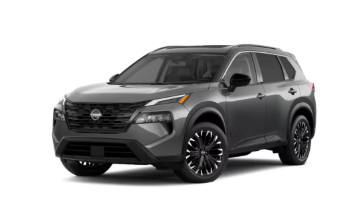
Nissan Rogue vs VW Tiguan: Which SUV Is Better?

Choosing between the Nissan Rogue and Volkswagen Tiguan can be challenging. Both compact SUVs offer comfortable interiors, modern technology, excellent everyday practicality, and available all-wheel drive. However, they appeal to different types of drivers.
The Nissan Rogue focuses on fuel efficiency, affordability, cargo capacity, and comfort. Meanwhile, the Volkswagen Tiguan emphasizes European-inspired styling, advanced technology, refined driving characteristics, and available high-performance engines.
If we're shopping for a compact SUV in 2026, both vehicles deserve serious consideration. But which one offers better value? Is the Volkswagen Tiguan more reliable than the Nissan Rogue? Which SUV has better gas mileage, more interior space, and lower maintenance costs?
In this comprehensive Nissan Rogue vs VW Tiguan comparison, we'll examine performance, fuel economy, interior quality, dimensions, cargo capacity, reliability, safety, technology, and overall ownership costs.
By the end, we'll know which SUV makes the most sense for our budget and driving needs.
Content in this publication
- Nissan Rogue vs VW Tiguan: Quick Comparison
- Nissan Rogue vs VW Tiguan Exterior Design
- Nissan Rogue vs VW Tiguan Engine Performance
- Nissan Rogue vs VW Tiguan Fuel Economy
- Nissan Rogue vs VW Tiguan Interior Quality
- Nissan Rogue vs VW Tiguan Dimensions
- Nissan Rogue vs VW Tiguan Cargo Space
- Nissan Rogue vs VW Tiguan Technology
- Nissan Rogue vs VW Tiguan Safety
- Nissan Rogue vs VW Tiguan Reliability
- Nissan Rogue vs VW Tiguan Driving Experience
- Nissan Rogue vs VW Tiguan AWD Capability
- Nissan Rogue vs VW Tiguan Towing Capacity
- Nissan Rogue vs VW Tiguan Maintenance Costs
- Nissan Rogue vs VW Tiguan Price
- Nissan Rogue Advantages and Disadvantages
- Volkswagen Tiguan Advantages and Disadvantages
- Who Should Buy the Nissan Rogue?
- Who Should Buy the Volkswagen Tiguan?
- Nissan Rogue vs VW Tiguan: Which Is Better for Families?
- Nissan Rogue vs VW Tiguan: Which Is Better for Highway Driving?
- Frequently Asked Questions
- Final Verdict: Nissan Rogue or Volkswagen Tiguan?
Nissan Rogue vs VW Tiguan: Quick Comparison
Before exploring the details, let's compare the main specifications of these two compact SUVs.
| Specification | 2026 Nissan Rogue | 2026 Volkswagen Tiguan |
|---|---|---|
| Starting MSRP | $29,490 | $30,805 |
| Standard engine | 1.5L turbocharged 3-cylinder | 2.0L turbocharged 4-cylinder |
| Standard horsepower | 201 hp | 201 hp |
| Standard torque | 225 lb-ft | 207 lb-ft |
| Maximum available horsepower | 201 hp | 268 hp |
| Transmission | CVT automatic | 8-speed automatic |
| Drivetrain | FWD or AWD | FWD or AWD |
| Best city fuel economy | 29 MPG | 26 MPG |
| Best highway fuel economy | 36 MPG | 34 MPG |
| Seating capacity | 5 | 5 |
| Cargo space behind rear seats | Up to 36.5 cu ft | 33.8 cu ft |
| Maximum cargo capacity | Up to 74.1 cu ft | 69.8 cu ft |
| Basic warranty | 3 years/36,000 miles | 4 years/50,000 miles |
Specifications refer to U.S.-market 2026 gasoline models, including the 2026.5 Rogue where applicable. Prices, equipment, and efficiency ratings vary by trim and drivetrain.
At first glance, the Nissan Rogue offers better fuel economy, slightly more cargo space, and a lower starting price.
However, the Volkswagen Tiguan counters with a conventional automatic transmission, a more upscale interior, longer basic warranty coverage, and a significantly more powerful engine in its SEL R-Line Turbo version.
Ultimately, the better SUV depends on what we value most.
Nissan Rogue vs VW Tiguan Exterior Design
Although both vehicles belong to the compact SUV segment, their exterior styling takes different approaches.
Nissan Rogue Exterior Styling
The Nissan Rogue features a bold, contemporary design with distinctive LED lighting, a prominent front grille, and sculpted body panels.
Its styling emphasizes the rugged appearance many buyers associate with modern SUVs.
Depending on the trim level, available exterior features include:
- LED headlights and daytime running lights.
- 18-inch or 19-inch alloy wheels.
- Available panoramic moonroof.
- Roof rails.
- Sporty exterior accents.
- Distinctive front and rear styling.
- Available two-tone exterior finishes.
The Rogue Rock Creek edition introduces a more adventurous appearance with all-terrain tires, unique exterior details, and additional equipment intended for light off-road driving.
Overall, the Rogue feels sporty and practical without looking excessively aggressive.
Volkswagen Tiguan Exterior Styling
The Volkswagen Tiguan takes a more sophisticated approach.
Its redesigned exterior features smooth surfaces, modern LED lighting, and proportions that create an elegant appearance.
The latest Tiguan looks more refined than previous generations, especially in the higher trim levels.
Available exterior highlights include larger alloy wheels, illuminated Volkswagen logos, distinctive light bars, and R-Line styling elements.
The SEL R-Line Turbo combines sporty exterior detailing with an upscale appearance.
For drivers who prefer understated European styling, the Tiguan has plenty of appeal.
Exterior design verdict: The Nissan Rogue looks more adventurous, while the Volkswagen Tiguan offers a more elegant and premium appearance.
Nissan Rogue vs VW Tiguan Engine Performance
Engine performance is one of the most important differences between these SUVs.
Although their standard engines produce the same horsepower, their transmissions and available performance options create noticeably different driving experiences.
Nissan Rogue Engine Specifications
The 2026 Nissan Rogue features a 1.5-liter turbocharged three-cylinder engine with Nissan's variable-compression technology.
Its main specifications include:
- Engine: 1.5-liter VC-Turbo.
- Horsepower: 201 hp.
- Torque: 225 lb-ft.
- Transmission: Xtronic CVT.
- Drivetrain: Front-wheel drive or available all-wheel drive.
Despite having only three cylinders, this engine provides competitive performance.
Its 225 lb-ft of torque is particularly useful during highway merging, passing, and everyday acceleration.
Nissan's variable-compression technology adjusts the engine's compression ratio according to driving conditions, helping balance power and fuel efficiency.
The Rogue uses a continuously variable transmission rather than a conventional automatic gearbox.
This transmission prioritizes smooth operation and efficiency, although some drivers may dislike how the engine responds during hard acceleration.
For ordinary commuting and family driving, however, the Rogue provides more than enough power.
Volkswagen Tiguan Engine Specifications
The 2026 Volkswagen Tiguan offers a 2.0-liter turbocharged four-cylinder engine in most configurations.
Its specifications include:
- Engine: 2.0-liter turbocharged four-cylinder.
- Horsepower: 201 hp.
- Torque: 207 lb-ft.
- Transmission: Eight-speed automatic.
- Drivetrain: Front-wheel drive or available 4MOTION AWD.
The standard Tiguan delivers competitive acceleration and a refined driving experience.
Although it produces less torque than the Rogue, its conventional eight-speed automatic transmission provides familiar gear changes.
Drivers who prefer traditional automatic transmissions may find the Volkswagen more enjoyable.
Volkswagen Tiguan SEL R-Line Turbo Performance
The major performance difference appears in the Tiguan SEL R-Line Turbo.
This version produces approximately 268 horsepower and 258 lb-ft of torque.
That's 67 more horsepower than the Nissan Rogue.
The additional power makes the Tiguan particularly attractive for drivers who frequently travel on highways, enjoy responsive acceleration, or want stronger passing performance.
However, the extra horsepower comes with higher fuel consumption and a considerably higher purchase price.
Performance winner: Volkswagen Tiguan, especially in the SEL R-Line Turbo configuration.
Nissan Rogue vs VW Tiguan Fuel Economy
Fuel efficiency is an essential consideration when purchasing a compact SUV.
If we drive long distances or commute daily, even small MPG differences can translate into meaningful savings over several years.
Nissan Rogue Gas Mileage
The most fuel-efficient front-wheel-drive Nissan Rogue configurations achieve approximately:
| Driving condition | Fuel economy |
|---|---|
| City | 29 MPG |
| Highway | 36 MPG |
| Combined | 32 MPG |
These figures place the Rogue among the more economical conventional gasoline compact SUVs.
Its small turbocharged engine and CVT help reduce fuel consumption.
All-wheel-drive versions and certain trim levels may return lower figures.
Volkswagen Tiguan Gas Mileage
The standard front-wheel-drive Volkswagen Tiguan achieves approximately:
| Driving condition | Fuel economy |
|---|---|
| City | 26 MPG |
| Highway | 34 MPG |
| Combined | 29 MPG |
The more powerful Tiguan SEL R-Line Turbo delivers lower fuel economy, with approximately 25 MPG combined.
Therefore, drivers selecting the Volkswagen's performance-oriented engine should expect higher gasoline expenses.
Nissan Rogue vs Tiguan Annual Fuel Costs
Let's calculate the approximate annual gasoline expenses for both SUVs.
Assume we drive 12,000 miles annually and gasoline costs $3.50 per gallon.
| Annual fuel costs | Nissan Rogue | VW Tiguan |
|---|---|---|
| Combined MPG | 32 | 29 |
| Annual mileage | 12,000 | 12,000 |
| Fuel consumption | 375 gallons | 414 gallons |
| Estimated annual expense | $1,313 | $1,448 |
Under these conditions, the Nissan Rogue saves approximately $135 annually.
Over five years, that represents roughly $675 in fuel savings, assuming gasoline prices and driving patterns remain unchanged.
The difference becomes greater when comparing the Rogue with the high-performance Tiguan.
Fuel economy winner: Nissan Rogue.
Nissan Rogue vs VW Tiguan Interior Quality
Interior comfort and materials are particularly important because we spend most of our ownership experience inside the vehicle.
Both SUVs provide modern cabins, but their priorities are different.
Nissan Rogue Interior
The Nissan Rogue emphasizes comfort, practicality, and straightforward functionality.
Its dashboard has a clean layout, supportive seats, and useful storage spaces.
Depending on the trim, available equipment includes:
- Quilted leather-appointed seating.
- Heated front seats.
- Heated steering wheel.
- Dual-zone or three-zone climate control.
- Panoramic moonroof.
- Digital instrument display.
- Premium Bose audio system.
One of the Rogue's strengths is its comfortable seating.
The front seats are designed to support passengers during long journeys, making the SUV suitable for commuting and road trips.
Visibility is also good, and the elevated driving position helps provide confidence in traffic.
We particularly appreciate that the Rogue remains relatively easy to operate without requiring extensive interaction with digital menus.
Volkswagen Tiguan Interior
The Volkswagen Tiguan adopts a more contemporary, technology-focused interior design.
Its dashboard features large digital displays, clean surfaces, and modern materials.
Higher trims offer features such as leather upholstery, ventilated front seats, available massage functionality, ambient lighting, and premium audio.
The Tiguan feels particularly sophisticated in SEL R-Line Turbo form.
Its overall presentation can resemble that of a more expensive SUV.
However, Volkswagen relies heavily on digital interfaces.
Some drivers appreciate the minimalist appearance, while others prefer physical buttons for frequently used functions.
Interior winner: Volkswagen Tiguan, particularly when comparing higher trim levels.
Nissan Rogue vs VW Tiguan Dimensions
Although these SUVs compete in the same segment, their exterior and interior dimensions are not identical.
| Dimension | Nissan Rogue | Volkswagen Tiguan |
|---|---|---|
| Length | 183.0 inches | 184.4 inches |
| Width | 72.4 inches | 73.0 inches |
| Height | Approximately 66.5 inches | Approximately 66.5 inches |
| Front legroom | 41.5 inches | 40.2 inches |
| Rear legroom | 38.5 inches | 40.2 inches |
| Seating capacity | 5 | 5 |
The Volkswagen Tiguan is slightly longer and wider.
However, the differences are small enough that both vehicles remain relatively easy to maneuver in urban environments.
The Rogue provides more front legroom, while the Tiguan offers greater rear-seat legroom.
Which SUV Has More Passenger Space?
For drivers and front passengers, the Nissan Rogue provides a spacious environment with supportive seating and plenty of legroom.
The Tiguan also offers comfortable front seats, although its main advantage appears in the second row.
You may be interested in reading Nissan Rogue vs Pathfinder: Which SUV Is Better?
With approximately 40.2 inches of rear legroom, the Volkswagen is particularly appealing for families who frequently carry adult passengers.
The Rogue compensates with its wide-opening rear doors, which can make entering the vehicle and installing child safety seats easier.
Neither U.S.-market 2026 gasoline model offers a third row.
Passenger space winner: Volkswagen Tiguan for rear legroom, although the Rogue remains competitive in overall comfort.
Nissan Rogue vs VW Tiguan Cargo Space
Cargo capacity can make a significant difference when choosing a family SUV.
Whether we're carrying luggage, groceries, sports equipment, or camping supplies, a practical cargo compartment is essential.
Cargo Capacity Comparison
| Cargo configuration | Nissan Rogue | VW Tiguan |
|---|---|---|
| Behind rear seats | Up to 36.5 cu ft | 33.8 cu ft |
| Rear seats folded | Up to 74.1 cu ft | 69.8 cu ft |
The Nissan Rogue offers approximately 2.7 additional cubic feet of cargo space behind the rear seats.
With the rear seats folded, its advantage increases to approximately 4.3 cubic feet.
Nissan Rogue Cargo Practicality
The Rogue's spacious cargo area makes it suitable for family vacations, grocery shopping, and transporting bulky items.
Its folding rear seats allow us to increase loading capacity when needed.
Depending on the version, additional cargo-management features make it easier to organize smaller belongings.
Volkswagen Tiguan Cargo Practicality
The Tiguan's 33.8 cubic feet of cargo space behind the rear seats is still generous.
It can accommodate everyday luggage, shopping bags, strollers, and recreational equipment.
Folding the second-row seats expands the available space to approximately 69.8 cubic feet.
For most families, this is sufficient.
Nevertheless, the Rogue has a measurable advantage for drivers who frequently transport larger objects.
Cargo space winner: Nissan Rogue.
Nissan Rogue vs VW Tiguan Technology
Technology is increasingly important in the compact SUV market.
Both Nissan and Volkswagen equip their vehicles with advanced infotainment systems, smartphone integration, and driver-assistance features.
Nissan Rogue Infotainment System
The Nissan Rogue offers an 8-inch touchscreen in entry-level configurations.
Higher trims feature an available 12.3-inch touchscreen with Google built-in.
Other available technologies include:
- Apple CarPlay and Android Auto.
- Wireless smartphone connectivity on compatible trims.
- Wireless phone charging.
- Digital instrument cluster.
- Google Maps integration.
- Voice commands.
- Bose premium audio.
- Connected vehicle services.
The Rogue's technology is designed to be relatively accessible.
Its infotainment system offers useful features without making ordinary functions excessively complicated.
Volkswagen Tiguan Infotainment System
The Tiguan features a more screen-focused dashboard.
A 12.9-inch infotainment display is standard, while higher trims offer a larger 15-inch touchscreen.
Additional available features include:
- Volkswagen Digital Cockpit.
- Wireless Apple CarPlay and Android Auto.
- Wireless smartphone charging.
- Premium Harman Kardon audio.
- Connected vehicle services.
- Customizable ambient lighting.
- Advanced voice-control functions.
The Tiguan's larger displays contribute to a modern cabin appearance.
However, buyers should test the infotainment interface carefully because certain climate and vehicle settings rely on touchscreen controls.
Technology winner: Volkswagen Tiguan for display size and premium presentation.
Nissan Rogue vs VW Tiguan Safety
Safety should always be a priority when purchasing a family vehicle.
Both models offer comprehensive driver-assistance technologies, although their independent crash-test results differ.
Nissan Rogue Safety Features
The Nissan Rogue comes equipped with Nissan Safety Shield 360.
Depending on the configuration, safety and assistance features include:
- Automatic emergency braking.
- Pedestrian detection.
- Blind-spot warning.
- Rear cross-traffic alert.
- Lane-departure warning.
- Rear automatic braking.
- High-beam assist.
- Available adaptive cruise control.
- Available ProPILOT Assist.
The 2026 Rogue received an IIHS Top Safety Pick award.
Its performance in the updated side-impact and moderate-overlap tests makes it a compelling choice for safety-conscious buyers.
Volkswagen Tiguan Safety Features
The Volkswagen Tiguan includes the IQ.DRIVE driver-assistance suite.
Available technologies include adaptive cruise control, lane-keeping assistance, forward collision warning, automatic emergency braking, and blind-spot monitoring.
The Tiguan also performed well in several independent crash-test categories.
However, in IIHS testing applicable to the 2026 model, it received a Poor rating in the updated moderate-overlap front test, with concerns involving rear-passenger protection.
This result deserves attention, particularly for families who regularly transport passengers in the second row.
Safety winner: Nissan Rogue, based on the applicable 2026 IIHS test results.
Nissan Rogue vs VW Tiguan Reliability
Reliability is one of the most important considerations when comparing these SUVs.
A vehicle that performs well during a test drive may not necessarily provide the lowest repair costs over ten years.
Nissan Rogue Reliability
The Nissan Rogue uses a sophisticated variable-compression turbocharged engine.
This technology provides competitive efficiency and performance, but it also increases mechanical complexity.
The Rogue also features a continuously variable transmission.
Some previous Nissan vehicles developed reputations for CVT-related problems, but those experiences should not automatically be applied to every newer transmission.
For the latest Rogue, long-term reliability will depend on factors including engine durability, transmission performance, maintenance quality, and driving conditions.
Following Nissan's recommended maintenance schedule is particularly important.
Volkswagen Tiguan Reliability
The Volkswagen Tiguan uses a turbocharged four-cylinder engine and a conventional eight-speed automatic transmission.
Volkswagen has extensive experience manufacturing turbocharged engines, but proper maintenance remains essential.
Potential long-term repair expenses may involve cooling-system components, sensors, electronic systems, and other modern engine technologies.
Repair costs can also vary by region and dealership.
A conventional automatic transmission does not automatically guarantee better reliability than a CVT.
Which SUV Is More Reliable?
For the newest 2026 models, insufficient long-term ownership data exists to establish a definitive winner.
The best approach is to consider warranty coverage, maintenance requirements, dealership support, and available reliability information for the specific model year.
If we're buying used, a complete service history and independent mechanical inspection are particularly valuable.
Reliability verdict: No definitive winner yet for the 2026 models.
Nissan Rogue vs VW Tiguan Driving Experience
The Nissan Rogue and Volkswagen Tiguan deliver different driving characteristics.
Both perform well in everyday situations, but they emphasize different strengths.
Nissan Rogue Ride Comfort
The Nissan Rogue focuses on smoothness and comfort.
Its suspension absorbs many ordinary road imperfections, making the SUV suitable for city commuting and highway journeys.
Steering is generally light, helping with parking and maneuvering through traffic.
The turbocharged engine provides enough torque for everyday acceleration.
However, the CVT may feel less engaging during aggressive driving because it does not shift like a conventional automatic transmission.
For most family buyers, the Rogue's comfortable driving characteristics will be more important than sporty handling.
Volkswagen Tiguan Handling
The Volkswagen Tiguan offers a more European-inspired driving experience.
Its steering, suspension tuning, and automatic transmission contribute to a composed feeling on the road.
The standard 201-horsepower engine provides adequate performance for ordinary driving.
However, the 268-horsepower SEL R-Line Turbo delivers a noticeably stronger performance experience.
Drivers who enjoy highway acceleration and responsive handling may find the Tiguan more satisfying.
Driving experience winner: Volkswagen Tiguan.
Nissan Rogue vs VW Tiguan AWD Capability
Both SUVs offer all-wheel-drive systems designed to improve traction in difficult conditions.
Nissan Rogue Intelligent AWD
The Rogue's available Intelligent All-Wheel Drive system distributes engine power between the front and rear wheels when needed.
Depending on the configuration, selectable driving modes help adapt the vehicle to varying conditions.
The Rock Creek edition adds all-terrain tires and equipment intended for light off-road adventures.
However, the Rogue is not designed for serious rock crawling or extreme off-road environments.
Volkswagen Tiguan 4MOTION AWD
Volkswagen's available 4MOTION system also improves traction by distributing power according to driving conditions.
It is particularly useful on wet roads, snowy highways, and slippery surfaces.
The system is standard on the SEL R-Line Turbo.
Both SUVs can perform well in winter conditions when equipped with suitable tires.
You may be interested in readingNissan Rogue vs Pathfinder: Which SUV Is Better?You may be interested in reading
Nissan Rogue vs Kia Sportage: Which SUV Is Better?For snow-covered roads, winter tires often make a greater difference than small variations between AWD systems.
AWD winner: Tie. Both provide useful traction for everyday driving.
Nissan Rogue vs VW Tiguan Towing Capacity
Neither SUV is designed primarily for heavy towing.
However, both can transport certain lightweight trailers when properly equipped.
| Towing specification | Nissan Rogue | VW Tiguan |
|---|---|---|
| Maximum towing capacity | Up to 1,500 lbs | Up to 1,800 lbs on select configurations |
The Rogue offers up to 1,500 pounds of towing capacity.
The Tiguan's standard-engine configurations also have a maximum rating of up to 1,500 pounds, while certain higher-output versions can tow up to 1,800 pounds.
Actual limits depend on the specific vehicle and equipment.
We should always consult the manufacturer's towing guidelines before attaching a trailer.
Towing winner: Volkswagen Tiguan, when comparing its higher-rated configurations.
Nissan Rogue vs VW Tiguan Maintenance Costs
Maintenance expenses are important because they influence the total cost of ownership.
Both SUVs require regular oil changes, tire rotations, brake servicing, and periodic replacement of filters and fluids.
Nissan Rogue Maintenance
The Rogue benefits from strong fuel efficiency and a relatively affordable starting price.
Its routine maintenance requirements are similar to those of other modern turbocharged compact SUVs.
However, the long-term costs associated with its variable-compression engine and CVT should be considered.
We should follow Nissan's service recommendations and avoid postponing necessary maintenance.
Volkswagen Tiguan Maintenance
The Tiguan's turbocharged engine and eight-speed automatic transmission also require appropriate servicing.
Depending on the region and repair facility, certain Volkswagen parts and services may cost more than comparable items for other mainstream brands.
However, this is not universally true.
Volkswagen also includes scheduled maintenance benefits with eligible new vehicles, which can help reduce some early ownership expenses.
Warranty Comparison
| Warranty | Nissan Rogue | VW Tiguan |
|---|---|---|
| Basic coverage | 3 years/36,000 miles | 4 years/50,000 miles |
| Powertrain coverage | 5 years/60,000 miles | Generally included in the 4-year/50,000-mile vehicle warranty |
| Scheduled maintenance | Depends on applicable offers | Eligible complimentary scheduled maintenance |
Volkswagen offers longer basic warranty coverage, while Nissan provides longer standard powertrain protection.
For buyers planning to keep their SUV beyond the warranty period, future repair expenses become especially important.
Nissan Rogue vs VW Tiguan Price
Purchase price is one of the Rogue's strongest advantages.
The 2026 Nissan Rogue starts at approximately $29,490, while the 2026 Volkswagen Tiguan starts around $30,805.
That represents an initial difference of approximately $1,315.
However, actual dealership prices vary according to trim level, options, destination charges, and incentives.
Nissan Rogue Trim Levels
The Rogue lineup includes configurations such as S, SV, Dark Armor, Rock Creek, and Platinum.
The S offers the essential features buyers expect from a modern compact SUV.
The SV adds desirable comfort and convenience equipment, making it attractive for value-conscious buyers.
The Rock Creek emphasizes rugged styling and light off-road capability.
The Platinum offers a more premium interior and additional technology.
Volkswagen Tiguan Trim Levels
The Tiguan lineup includes S, SE, SE R-Line Black, and SEL R-Line Turbo.
The S provides the basic features needed for everyday driving.
The SE adds additional comfort and convenience equipment.
The SE R-Line Black focuses on sporty styling.
Meanwhile, the SEL R-Line Turbo introduces a more powerful engine, additional technology, and upscale equipment.
Which SUV Offers Better Value?
The Nissan Rogue provides excellent value thanks to its lower starting price, generous cargo capacity, and strong fuel economy.
However, the Tiguan's interior quality, rear-seat space, and available performance help justify its higher price for certain buyers.
If we prioritize affordability and practicality, the Rogue is generally the stronger choice.
Nissan Rogue Advantages and Disadvantages
Advantages
- Excellent gasoline fuel economy.
- Lower starting price.
- Generous cargo capacity.
- Comfortable front seats.
- Smooth ride for everyday driving.
- Good 2026 IIHS crash-test results.
- Available Intelligent All-Wheel Drive.
- Practical interior layout.
Disadvantages
- CVT may not appeal to every driver.
- No high-performance gasoline engine option.
- Less rear-seat legroom than the Tiguan.
- Smaller standard infotainment display.
- Shorter basic warranty.
- Complex variable-compression engine technology.
Volkswagen Tiguan Advantages and Disadvantages
Advantages
- Stylish and refined exterior.
- Modern, upscale interior.
- Available 268-horsepower turbocharged engine.
- Conventional eight-speed automatic transmission.
- Generous rear-passenger legroom.
- Large infotainment displays.
- Available 4MOTION all-wheel drive.
- Longer basic warranty.
Disadvantages
- Higher starting price.
- Lower gasoline fuel economy.
- Less maximum cargo capacity.
- Some controls rely heavily on touchscreens.
- High-performance version costs considerably more.
- Disappointing result in one important IIHS crash-test category.
Who Should Buy the Nissan Rogue?
The Nissan Rogue makes sense for drivers who prioritize practicality, comfort, and affordability.
It's especially suitable for families seeking a spacious cargo compartment and good everyday fuel economy.
The Rogue is also an attractive choice for commuters who spend significant time on highways.
Its combination of efficiency and ride comfort helps make longer trips more economical and relaxing.
We would particularly recommend considering the Rogue if:
- We want to minimize gasoline expenses.
- We frequently transport luggage or bulky items.
- We prefer comfortable everyday driving.
- We want a lower initial purchase price.
- We value straightforward technology and practical features.
For these buyers, the Rogue offers a compelling package.
Who Should Buy the Volkswagen Tiguan?
The Volkswagen Tiguan is a strong choice for drivers who want a more premium driving experience without moving into a luxury brand.
Its modern cabin, available large infotainment display, and elegant styling make it particularly appealing.
The Tiguan is also attractive for buyers who regularly carry adults in the second row.
Its additional rear legroom provides a meaningful advantage.
We would consider the Tiguan if:
- We prefer a conventional automatic transmission.
- We want a sophisticated, technology-focused interior.
- We frequently transport adult rear passengers.
- We enjoy responsive handling.
- We want the option of a more powerful engine.
- We appreciate Volkswagen's European-inspired styling.
The SEL R-Line Turbo is especially interesting for drivers who want strong performance from a compact family SUV.
Nissan Rogue vs VW Tiguan: Which Is Better for Families?
For family buyers, the decision involves more than horsepower and styling.
We also need to consider rear-seat comfort, child-seat access, cargo capacity, safety, and daily convenience.
The Nissan Rogue offers several practical advantages.
Its generous cargo area is useful for strollers, shopping bags, luggage, and sports equipment.
Its wide-opening rear doors help when installing child seats or assisting young passengers.
The Rogue also has favorable 2026 IIHS crash-test results.
The Tiguan counters with more rear-seat legroom, which is useful for older children and adults.
Its sophisticated cabin and available comfort features can also improve longer journeys.
Nevertheless, when considering cargo capacity, everyday fuel economy, and the available safety-test evidence, the Nissan Rogue is our preferred choice for most families.
Nissan Rogue vs VW Tiguan: Which Is Better for Highway Driving?
Both SUVs are comfortable enough for long-distance travel.
The Rogue is particularly appealing because of its smooth ride, supportive seating, and impressive fuel economy.
Drivers who cover thousands of highway miles annually may appreciate its lower gasoline consumption.
The Tiguan provides a different advantage.
Its conventional automatic transmission and available high-output engine create a more engaging experience, particularly during acceleration and highway passing.
The Tiguan SEL R-Line Turbo has a clear power advantage over the Rogue.
Therefore, our recommendation depends on priorities.
For relaxed, economical highway driving, we prefer the Nissan Rogue.
For stronger acceleration and a sportier experience, we prefer the Volkswagen Tiguan.
Frequently Asked Questions
1. Is the Nissan Rogue better than the Volkswagen Tiguan?
The Nissan Rogue is better for buyers prioritizing fuel efficiency, cargo capacity, affordability, and everyday practicality. The Volkswagen Tiguan is more attractive for drivers who want a premium-looking interior, greater rear-seat legroom, and available higher performance. Both are competitive compact SUVs, but the Rogue offers stronger value for many family buyers.
2. Which is more reliable, Nissan Rogue or VW Tiguan?
There isn't enough long-term reliability data for the newest 2026 versions to establish a definitive winner. Both SUVs use turbocharged engines that require proper maintenance. The Rogue has a CVT, while the Tiguan features an eight-speed automatic. Warranty coverage, service history, and maintenance costs should influence the decision.
3. Is the Nissan Rogue bigger than the VW Tiguan?
The Volkswagen Tiguan is slightly longer and wider than the Nissan Rogue. However, the Rogue provides more maximum cargo capacity, with up to 74.1 cubic feet compared with approximately 69.8 cubic feet in the Tiguan. The Volkswagen offers more rear-seat legroom.
4. Which gets better gas mileage, Nissan Rogue or VW Tiguan?
The Nissan Rogue has better fuel economy. Its most efficient front-wheel-drive configurations achieve approximately 29 MPG city and 36 MPG highway. The standard front-wheel-drive Volkswagen Tiguan delivers approximately 26 MPG city and 34 MPG highway.
5. Is the Volkswagen Tiguan more expensive than the Nissan Rogue?
Yes. The 2026 Volkswagen Tiguan starts at approximately $30,805, compared with around $29,490 for the Nissan Rogue. Higher Tiguan trims, particularly the SEL R-Line Turbo, cost substantially more because they include additional performance and equipment. Final prices depend on dealership offers, options, and location.
Final Verdict: Nissan Rogue or Volkswagen Tiguan?
After comparing the Nissan Rogue vs VW Tiguan, both SUVs prove to be attractive options in the competitive compact crossover segment.
The Nissan Rogue stands out for its excellent fuel economy, generous cargo space, comfortable ride, and competitive starting price.
It's particularly appealing for commuters, families, and drivers who want practical transportation without unnecessary expenses.
The Volkswagen Tiguan offers a different set of advantages.
Its refined interior, large digital displays, conventional automatic transmission, and available 268-horsepower engine create a more premium driving experience.
The Tiguan also provides additional rear-seat legroom, making it attractive for buyers who regularly carry adults.
However, its higher purchase price and lower fuel economy may discourage budget-conscious shoppers.
If we were choosing between these SUVs primarily for daily transportation and family use, we would recommend the Nissan Rogue. It delivers an excellent balance of comfort, practicality, safety, and operating efficiency.
On the other hand, if we wanted a more sophisticated interior, stronger acceleration, and a sportier driving character, the Volkswagen Tiguan would be our preferred choice.
You may be interested in readingNissan Rogue vs Pathfinder: Which SUV Is Better?You may be interested in reading
Nissan Rogue vs Kia Sportage: Which SUV Is Better?You may be interested in reading
Nissan Rogue vs VW Taos: Which SUV Is Better?Ultimately, both are capable compact SUVs.
The Nissan Rogue is the better choice for value and practicality, while the Volkswagen Tiguan is the better choice for refinement and available performance.
If you want to know other articles similar to Nissan Rogue vs VW Tiguan: Which SUV Is Better? you can visit the category Models.
Nissan Rogue vs Kia Seltos: Which SUV Is Better?
Nissan Rogue or Similar: What SUV Will You Get?
Nissan Rogue vs VW Taos: Which SUV Is Better?
Nissan Rogue vs Kia Sportage: Which SUV Is Better?
Nissan Rogue vs Pathfinder: Which SUV Is Better?
Nissan Rogue vs Subaru Forester: Which SUV Is Better?
Leave a Reply
More content of your interest