
Nissan Rogue vs VW Taos: Which SUV Is Better?

Choosing between the Nissan Rogue vs VW Taos can be surprisingly difficult. Both SUVs offer turbocharged engines, comfortable seating for five, modern technology, and available all-wheel drive. However, they target slightly different buyers.
The Nissan Rogue is a larger compact SUV designed around family comfort, cargo flexibility, and everyday versatility. The Volkswagen Taos is a smaller, more affordable crossover that focuses on practicality, maneuverability, and value.
But does the Rogue's additional space and power justify its higher price? Or does the Taos deliver everything we need for less money?
In this detailed comparison, we'll examine performance, fuel efficiency, interior quality, dimensions, reliability, safety, ownership costs, and overall value to determine which SUV deserves a place in our driveway.
Content in this publication
- Nissan Rogue vs VW Taos: Quick Comparison
- 1. Nissan Rogue vs Volkswagen Taos: Size Differences
- 2. Nissan Rogue vs VW Taos Price Comparison
- 3. Engine and Performance Comparison
- 4. CVT vs Automatic Transmission
- 5. Nissan Rogue vs VW Taos Fuel Economy
- 6. Exterior Design and Styling
- 7. Interior Quality and Cabin Design
- 8. Passenger Space and Rear-Seat Comfort
- 9. Cargo Space: Nissan Rogue vs VW Taos
- 10. Technology and Infotainment
- 11. Safety Features and Driver Assistance
- 12. Ride Comfort and Handling
- 13. All-Wheel Drive and Bad Weather
- 14. Towing Capability
- 15. Nissan Rogue vs VW Taos Reliability
- 16. Maintenance and Ownership Costs
- 17. Warranty Comparison
- 18. Which SUV Is Better for Families?
- 19. Which SUV Is Better for City Driving?
- 20. Which SUV Is Better for Long Road Trips?
- 21. Nissan Rogue Pros and Cons
- 22. Volkswagen Taos Pros and Cons
- 23. Should You Buy the Nissan Rogue or VW Taos?
- 24. Frequently Asked Questions
- 25. Final Verdict: Nissan Rogue vs VW Taos
Nissan Rogue vs VW Taos: Quick Comparison
Before exploring the differences, let's compare the most important specifications.
| Specification | Nissan Rogue | Volkswagen Taos |
|---|---|---|
| Model year | 2026.5 | 2026 |
| SUV category | Compact SUV | Subcompact SUV |
| Starting MSRP | $29,490 | $26,500 |
| Engine | 1.5L turbo 3-cylinder | 1.5L turbo 4-cylinder |
| Horsepower | 201 hp | 174 hp |
| Torque | 225 lb-ft | 184 lb-ft |
| Transmission | CVT automatic | 8-speed automatic |
| Drivetrain | FWD or AWD | FWD or AWD |
| FWD city MPG | 29 | 28 |
| FWD highway MPG | 36 | 36 |
| FWD combined MPG | 32 | 31 |
| Exterior length | 183.0 inches | 175.8 inches |
| Rear legroom | 38.5 inches | 37.9 inches |
| Maximum cargo space | 74.1 cu ft | 65.9 cu ft (FWD) |
| Passenger capacity | 5 | 5 |
Specifications apply to U.S.-market models. Prices exclude destination fees, taxes, and dealer charges. Cargo figures represent maximum configurations, and equipment varies by trim.
Our initial verdict: The Nissan Rogue wins on horsepower, maximum cargo capacity, and fuel economy. The Volkswagen Taos counters with a lower starting price, a conventional automatic transmission, and a more compact footprint.
Neither is automatically the better purchase. The best choice depends on how we plan to use our SUV.
1. Nissan Rogue vs Volkswagen Taos: Size Differences
One of the biggest differences between these SUVs is their overall size.
The Nissan Rogue belongs to the compact SUV segment, competing with models such as the Honda CR-V, Toyota RAV4, and Hyundai Tucson.
The Volkswagen Taos occupies the smaller subcompact SUV category, alongside vehicles such as the Honda HR-V, Kia Seltos, and Chevrolet Trailblazer.
Is the Nissan Rogue Bigger Than the VW Taos?
Yes. At 183 inches long, the Rogue is approximately 7.2 inches longer than the Taos.
That difference becomes noticeable when loading luggage, installing child seats, or transporting bulky items.
However, the Taos makes remarkably good use of its smaller exterior dimensions. Its passenger compartment remains spacious enough for four adults to travel comfortably.
Which SUV Is Easier to Park?
The Volkswagen Taos has an advantage in tight urban environments.
Its shorter body makes it easier to fit into smaller parking spaces and maneuver through crowded streets.
The Rogue is still manageable in the city, especially when equipped with parking cameras and assistance features, but it requires slightly more space.
Winner: Volkswagen Taos for city maneuverability; Nissan Rogue for overall size.
2. Nissan Rogue vs VW Taos Price Comparison
Price is one of the strongest arguments in favor of the Volkswagen Taos.
For the U.S. market, the 2026 Taos starts at approximately $26,500, while the 2026.5 Nissan Rogue starts at $29,490.
That creates an initial difference of nearly $3,000 before additional fees.
Nissan Rogue Pricing
The Rogue lineup includes:
- S: An entry-level model with essential technology and safety features.
- SV: Adds comfort equipment and ProPILOT Assist.
- Dark Armor: Features distinctive styling and additional convenience technology.
- Rock Creek: An adventure-oriented AWD version with all-terrain tires.
- Platinum: Offers premium upholstery and more advanced technology.
The Rogue's starting price rises substantially when choosing its most luxurious versions, with the Platinum AWD listed at $39,390.
Volkswagen Taos Pricing
The Taos range includes S, SE, SE Black, and SEL versions.
The entry-level S offers a relatively affordable way into Volkswagen SUV ownership, while the SE introduces additional convenience equipment.
The SE Black focuses on sportier styling, and the SEL provides a more upscale cabin with premium features.
The Taos SEL AWD has a starting MSRP of approximately $35,900.
Which SUV Offers Better Value?
For buyers prioritizing purchase price, the Taos is the obvious winner.
However, the Rogue provides a larger vehicle, stronger engine performance, and additional cargo flexibility.
We should also compare similarly equipped trims rather than relying exclusively on starting prices.
A well-equipped Taos may cost nearly as much as a midrange Rogue.
Winner: Volkswagen Taos for affordability.
3. Engine and Performance Comparison
Both vehicles feature turbocharged 1.5-liter engines, but their designs are different.
Nissan Rogue Engine
The Rogue uses a 1.5-liter VC-Turbo three-cylinder engine.
Its output is:
201 horsepower and 225 lb-ft of torque.
The engine uses variable-compression technology to adjust its operating characteristics according to driving conditions.
This helps balance power delivery and efficiency.
On the road, the Rogue offers useful acceleration for merging onto highways, passing slower vehicles, and carrying passengers.
The additional torque is particularly beneficial when traveling with luggage.
Volkswagen Taos Engine
The Taos features a turbocharged 1.5-liter four-cylinder engine producing:
174 horsepower and 184 lb-ft of torque.
Although these figures are lower than the Rogue's, the Taos is also a smaller vehicle.
Its engine provides sufficient performance for commuting, highway travel, and ordinary family use.
The turbocharger delivers torque at relatively low engine speeds, helping the Taos feel responsive during everyday acceleration.
Which SUV Has More Power?
The Nissan Rogue produces 27 additional horsepower and 41 additional lb-ft of torque.
That is a meaningful advantage on paper.
Nevertheless, horsepower does not tell the entire story. Vehicle weight, gearing, throttle calibration, and transmission behavior also affect acceleration.
The Taos can feel lively in normal driving, while the Rogue provides a stronger overall engine output.
Winner: Nissan Rogue.
4. CVT vs Automatic Transmission
The transmission is another important distinction.
Nissan Rogue CVT
The Rogue uses Nissan's Xtronic continuously variable transmission.
Unlike a conventional automatic, a CVT adjusts its effective gear ratio continuously.
Its advantages include smooth acceleration, efficient engine operation, and the ability to keep the engine near an appropriate operating speed.
However, some drivers dislike the sensation of a CVT, particularly during hard acceleration.
Engine speed may rise without the familiar sequence of gear changes associated with a traditional automatic.
Volkswagen Taos 8-Speed Automatic
The Taos uses an eight-speed automatic transmission.
This provides conventional gear changes and a familiar driving experience.
Drivers who prefer noticeable shifts may find it more satisfying.
The transmission also allows the turbocharged engine to operate across different driving conditions without the characteristic CVT behavior.
Which Transmission Is Better?
This comes down largely to personal preference.
The Rogue's CVT works well with its efficient engine, while the Taos offers the more traditional automatic transmission experience.
For drivers specifically trying to avoid a CVT, the Volkswagen is the better option.
Winner: Volkswagen Taos for buyers who prefer conventional automatics.
5. Nissan Rogue vs VW Taos Fuel Economy
Fuel economy is particularly important when purchasing an SUV for daily commuting.
Interestingly, the larger Rogue offers slightly better EPA-estimated fuel economy than the smaller Taos.
Fuel Economy Comparison
| Drivetrain | Nissan Rogue | VW Taos |
|---|---|---|
| FWD city | 29 MPG | 28 MPG |
| FWD highway | 36 MPG | 36 MPG |
| FWD combined | 32 MPG | 31 MPG |
| AWD city | 28 MPG | 25 MPG |
| AWD highway | 35 MPG | 33 MPG |
| AWD combined | 31 MPG | 28 MPG |
Rogue AWD figures refer to standard AWD trims; the Rock Creek has different EPA estimates.
Which SUV Uses Less Gas?
The Rogue has a small efficiency advantage in front-wheel-drive configurations.
Both vehicles achieve an estimated 36 MPG on the highway, making them competitive choices for longer trips.
The difference becomes more noticeable when comparing AWD versions.
The Rogue's standard AWD configurations achieve an estimated 31 MPG combined, compared with 28 MPG for the Taos AWD.
Actual fuel consumption will depend on driving habits, weather, traffic, vehicle condition, and road conditions.
Is the VW Taos More Economical?
Not necessarily.
The Taos costs less to purchase, but the Rogue achieves slightly better official fuel economy.
If we're driving thousands of miles each year, this difference can reduce the Rogue's long-term fuel expenses.
However, fuel savings alone are unlikely to offset the entire initial purchase-price difference quickly.
Winner: Nissan Rogue.
6. Exterior Design and Styling
Design is subjective, but these SUVs offer distinct personalities.
Nissan Rogue Exterior
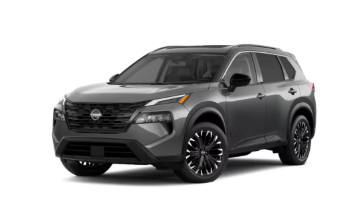
The Rogue features a modern design with a broad grille, sculpted body panels, and a relatively substantial stance.
Its styling emphasizes the appearance of a larger family SUV.
Depending on the trim, the Rogue can include distinctive alloy wheels, a panoramic moonroof, black exterior accents, and premium lighting details.
The Rock Creek version introduces a more adventurous appearance with all-terrain tires and unique exterior elements.
Volkswagen Taos Exterior
The Taos takes a more restrained approach.
Its design incorporates Volkswagen's recognizable grille styling, clean body lines, and understated proportions.
The updated styling gives it a contemporary appearance without becoming excessively aggressive.
SE Black models provide additional dark exterior accents for buyers who prefer a sportier look.
Which Looks Better?
Buyers attracted to a substantial SUV design may prefer the Nissan Rogue.
Those who appreciate understated European-inspired styling may find the Volkswagen Taos more appealing.
Winner: Personal preference.
7. Interior Quality and Cabin Design
The interior is where we spend most of our time, so comfort and usability matter more than exterior styling alone.
Nissan Rogue Interior
The Rogue emphasizes passenger comfort and practicality.
Depending on the trim, we can find features such as premium seat materials, heated front seats, a panoramic moonroof, wireless smartphone connectivity, and a larger infotainment display.
You may be interested in reading Nissan Rogue or Similar: What SUV Will You Get?
The higher-end Platinum model introduces a more luxurious atmosphere, with quilted leather-appointed upholstery and additional technology.
The cabin layout generally prioritizes everyday usability and family convenience.
Volkswagen Taos Interior
The Taos has a clean, modern dashboard design.
Its cabin incorporates a digital instrument cluster and an infotainment display, giving the interior a contemporary appearance.
Higher trims offer upgraded seating surfaces, ambient design details, and additional comfort equipment.
The interior is functional and generally easy to understand, although some buyers may prefer more physical controls for frequently used functions.
At their highest trim levels, the Rogue generally delivers a more luxurious interior environment.
However, the Taos offers an attractive cabin for its price.
The best comparison depends on the versions being evaluated.
Winner: Nissan Rogue for available luxury features.
8. Passenger Space and Rear-Seat Comfort
Both SUVs seat five passengers.
However, dimensions alone do not fully explain how comfortable they feel.
Front-Seat Space
The Rogue provides approximately 41.5 inches of front legroom.
The Taos offers around 40.1 inches.
Both provide sufficient room for many taller drivers, although seating comfort depends on individual body proportions and driving position.
Rear-Seat Legroom
The Rogue offers approximately 38.5 inches of rear legroom, compared with about 37.9 inches in the Taos.
That difference is relatively small.
This is one of the Taos's strongest qualities: despite its smaller exterior dimensions, it provides generous rear passenger accommodation.
Which Is Better for Families?
The Rogue benefits from its larger body, flexible interior, and practical rear doors.
It is particularly attractive for families regularly using child seats or carrying substantial amounts of equipment.
The Taos remains a very reasonable option for smaller families.
Before deciding, we recommend installing the actual child seats you intend to use during a dealership visit.
Winner: Nissan Rogue, although the Taos is impressively spacious.
9. Cargo Space: Nissan Rogue vs VW Taos
Cargo capacity is an important factor for buyers comparing these SUVs.
The Rogue has a clear advantage when transporting large amounts of luggage or bulky equipment.
Nissan Rogue Cargo Capacity
The Rogue offers up to approximately 36.5 cubic feet of cargo space with the second row upright, depending on seating and cargo-floor configuration.
With the rear seats folded, maximum cargo capacity reaches approximately 74.1 cubic feet.
This provides considerable flexibility for shopping, vacations, moving smaller furniture, and transporting sports equipment.
Volkswagen Taos Cargo Capacity
The Taos offers different cargo capacities depending on drivetrain.
| Cargo configuration | VW Taos FWD | VW Taos AWD |
|---|---|---|
| Behind rear seats | 27.9 cu ft | 24.9 cu ft |
| Rear seats folded | 65.9 cu ft | 60.2 cu ft |
These figures are impressive for a subcompact SUV.
Nevertheless, the Rogue offers more maximum cargo room.
Which SUV Has the Bigger Trunk?
The Nissan Rogue wins.
Its additional capacity makes it more suitable for families that frequently travel with strollers, suitcases, sports equipment, or other bulky items.
However, the Taos is spacious enough for many everyday activities.
Winner: Nissan Rogue.
10. Technology and Infotainment
Both vehicles offer modern infotainment systems and smartphone integration.
Nissan Rogue Technology
The Rogue's available technology includes Apple CarPlay, Android Auto, wireless smartphone connectivity on selected trims, a large touchscreen, and available Google built-in functionality.
Certain models also provide a premium Bose audio system, digital driver displays, and an enhanced surround-view camera system.
The availability of larger screens and integrated navigation makes upper Rogue trims particularly attractive.
Volkswagen Taos Technology
The Taos includes a digital cockpit and an approximately eight-inch infotainment touchscreen.
Apple CarPlay and Android Auto compatibility allows drivers to use familiar smartphone applications.
Depending on trim, features may include wireless smartphone connectivity, wireless charging, connected services, and an upgraded sound system.
Which Has Better Technology?
The Taos provides a solid technology package without requiring buyers to enter a much more expensive vehicle category.
However, the Rogue offers a broader range of premium technology on higher trims.
Winner: Nissan Rogue for available features; Volkswagen Taos for affordable technology.
11. Safety Features and Driver Assistance
Safety is essential when choosing a vehicle for commuting or family transportation.
Both manufacturers provide advanced driver-assistance technologies, although feature availability differs by model and trim.
Nissan Rogue Safety
The Rogue offers Nissan Safety Shield 360 technologies, including automatic emergency braking, blind-spot monitoring, lane departure warning, and rear cross-traffic alert.
Additional available systems include ProPILOT Assist and an enhanced Around View Monitor.
ProPILOT Assist combines steering assistance and adaptive cruise functionality in supported driving conditions.
The 2026 Nissan Rogue also earned an IIHS Top Safety Pick award.
Volkswagen Taos Safety
The Taos offers Volkswagen's IQ.DRIVE technology suite.
Depending on its configuration, this includes systems such as forward collision warning, automatic emergency braking, blind-spot monitoring, lane-keeping assistance, adaptive cruise control, and Travel Assist.
These technologies can help reduce driver workload and improve awareness.
However, no driver-assistance system replaces attentive driving.
Which SUV Is Safer?
Both provide a strong selection of modern driver-assistance equipment.
We should compare current crash-test ratings from the same testing organization and verify the exact equipment included in the trims we're considering.
Winner: Both are competitive, with the Rogue holding a confirmed 2026 IIHS Top Safety Pick distinction.
12. Ride Comfort and Handling
Ride quality can be just as important as horsepower or technology.
Nissan Rogue Driving Experience
The Rogue is designed to deliver a comfortable ride for daily transportation and highway trips.
Its larger dimensions and family-oriented suspension tuning help create a relaxed driving experience.
The steering is generally easy to manage, and the cabin emphasizes comfort rather than aggressive handling.
This makes the Rogue appealing for drivers who regularly cover long distances.
Volkswagen Taos Driving Experience
The Taos benefits from its compact size and relatively agile character.
It feels particularly suitable for urban driving, where easy maneuvering and good visibility are important.
The conventional eight-speed automatic also contributes to its familiar driving character.
However, ride comfort can vary depending on wheel size, tire choice, road surface, and trim level.
Which Drives Better?
The Rogue is particularly attractive for relaxed highway driving.
The Taos may appeal more to drivers who prioritize smaller dimensions and easy urban maneuverability.
A back-to-back test drive on similar roads is the best way to judge suspension comfort and cabin noise.
Winner: Rogue for family-oriented comfort; Taos for urban agility.
13. All-Wheel Drive and Bad Weather
Both SUVs offer all-wheel drive for buyers living in areas with snow, heavy rain, or challenging roads.
Nissan Rogue AWD
The Rogue's available AWD system helps manage traction by distributing power according to driving conditions.
The Rock Creek variant also includes all-terrain tires and adventure-oriented equipment.
This makes it an interesting option for drivers who frequently travel on gravel roads or encounter less-than-perfect surfaces.
Volkswagen Taos 4MOTION
The Taos offers Volkswagen's 4MOTION all-wheel-drive system.
It is designed to improve traction and stability in challenging conditions.
This can be particularly useful in snow, rain, and on slippery pavement.
Is the Rogue Better Off-Road?
The Rock Creek offers more specialized equipment for light off-pavement use than a conventional Taos.
However, neither vehicle should be confused with a dedicated off-road SUV.
Both lack the specialized hardware associated with serious rock crawling or demanding off-road expeditions.
For winter driving, appropriate tires remain extremely important regardless of drivetrain.
Winner: Nissan Rogue Rock Creek for light adventure use.
14. Towing Capability
Towing is another area where buyers should examine manufacturer guidance carefully.
The Nissan Rogue has a maximum rated towing capacity of up to 1,500 pounds when properly equipped.
That can accommodate certain lightweight trailers, although actual capability depends on the vehicle's configuration, trailer weight, tongue weight, and other loading factors.
The Volkswagen Taos is primarily designed for passenger and cargo transportation rather than towing. Buyers should consult the applicable owner's manual and manufacturer guidance instead of assuming it has a rated trailer capacity.
If towing is a regular requirement, the Rogue is the more practical choice between these vehicles.
For heavier trailers, we would recommend considering a vehicle with a substantially higher towing rating.
Winner: Nissan Rogue.
15. Nissan Rogue vs VW Taos Reliability
Reliability deserves careful consideration because repairs can become expensive after the warranty expires.
However, predicting long-term dependability from engine specifications alone is difficult.
You may be interested in readingNissan Rogue or Similar: What SUV Will You Get?You may be interested in reading
Nissan Rogue vs Kia Seltos: Which SUV Is Better?Is the Nissan Rogue Reliable?
The Rogue uses a sophisticated variable-compression turbocharged engine and a CVT.
Both technologies require proper maintenance.
Because variable-compression engines have more complex internal mechanisms than many conventional engine designs, buyers should pay attention to maintenance requirements and recall information.
Previous Nissan models have experienced engine or transmission concerns, but those histories do not automatically establish the reliability of every newer Rogue.
We should evaluate the exact model year and powertrain rather than making assumptions about the entire brand.
Is the Volkswagen Taos Reliable?
The Taos uses a turbocharged four-cylinder engine and an eight-speed automatic transmission.
Volkswagen has updated the Taos powertrain over its production history.
Earlier versions generated some owner complaints involving mechanical and electronic issues.
However, problems affecting an earlier model year do not necessarily apply to the updated 2026 vehicle.
Regular oil changes, correct fluids, and attention to maintenance schedules remain important.
Which SUV Will Last Longer?
There is not enough long-term evidence to confidently declare one of these specific 2026 powertrains the more reliable choice over 150,000 or 200,000 miles.
We recommend reviewing current recalls, manufacturer service campaigns, warranty coverage, and ownership reports before purchasing.
When buying used, a documented maintenance history becomes especially valuable.
Winner: No definitive winner based on long-term reliability evidence.
16. Maintenance and Ownership Costs
The purchase price is only one component of vehicle ownership.
Over several years, expenses can include fuel, insurance, tires, maintenance, repairs, registration, and depreciation.
Nissan Rogue Ownership
The Rogue's slightly better EPA fuel economy may help reduce fuel spending.
However, its larger size and potentially higher purchase price can influence insurance premiums and other ownership expenses.
Service costs will depend on local labor rates, maintenance requirements, and the dealership or independent workshop performing the work.
Volkswagen Taos Ownership
The Taos benefits from a lower entry price.
Its smaller dimensions may also appeal to buyers looking for an economical everyday vehicle.
Nevertheless, maintenance costs should not automatically be assumed to be lower simply because the Taos is smaller.
Volkswagen's scheduled service requirements and parts pricing need to be considered.
Which Is Cheaper to Own?
The Volkswagen Taos has a meaningful initial purchase-price advantage.
The Rogue counters with slightly better fuel economy.
Insurance quotes and real maintenance estimates are necessary before reaching a firm conclusion about five-year ownership costs.
Winner: Volkswagen Taos for initial affordability.
17. Warranty Comparison
Warranty coverage can influence the overall value of a new vehicle.
| Warranty | Nissan Rogue | Volkswagen Taos |
|---|---|---|
| Basic new-vehicle warranty | 3 years / 36,000 miles | 4 years / 50,000 miles |
| Separate powertrain warranty | 5 years / 60,000 miles | Covered under 4-year / 50,000-mile new-vehicle warranty |
| Scheduled maintenance benefit | Check current Nissan programs | First two scheduled services under Carefree Maintenance |
Volkswagen provides longer general new-vehicle warranty coverage.
Nissan offers a separate powertrain warranty extending to five years or 60,000 miles.
Which arrangement is more valuable depends on the type of repair and how long we plan to keep the vehicle.
Winner: Volkswagen Taos for general warranty duration; Nissan Rogue for longer stated powertrain coverage.
18. Which SUV Is Better for Families?
For family use, several factors become especially important.
We need comfortable rear seats, convenient child-seat installation, sufficient cargo space, safety equipment, and a smooth driving experience.
The Nissan Rogue has several advantages here.
Its larger body, generous maximum cargo volume, available comfort features, and family-oriented design make it particularly appealing.
The wide-opening rear doors are another helpful detail when securing children in car seats.
However, the Taos should not be overlooked.
It has a remarkably spacious cabin for its segment, and its lower purchase price could make it a sensible choice for a small family.
For buyers regularly traveling with several large suitcases, a stroller, or other equipment, we would lean toward the Rogue.
Winner: Nissan Rogue.
19. Which SUV Is Better for City Driving?
If most of our journeys involve commuting, shopping, and navigating busy streets, the Volkswagen Taos becomes especially attractive.
Its shorter body is easier to position in tight spaces.
The turbocharged engine delivers sufficient power for typical driving situations, and the conventional automatic transmission provides predictable operation.
The Rogue remains efficient and comfortable, but some drivers simply do not need the extra cargo capacity.
Choosing a smaller vehicle can make everyday ownership more convenient.
Winner: Volkswagen Taos.
20. Which SUV Is Better for Long Road Trips?
For longer journeys, the Nissan Rogue holds several advantages.
It provides more maximum luggage capacity, stronger engine output, and slightly better official highway-oriented efficiency in many configurations.
Its family-focused cabin and available comfort equipment also suit extended trips.
The Taos remains capable of highway travel and offers competitive fuel economy.
However, families carrying substantial luggage may appreciate the Rogue's additional cargo flexibility.
Winner: Nissan Rogue.
21. Nissan Rogue Pros and Cons
Advantages
The Nissan Rogue stands out for its powerful turbocharged engine, excellent fuel economy, larger cargo area, comfortable interior, and available premium features.
It also offers a dedicated adventure-oriented Rock Creek model and a rated towing capacity.
Disadvantages
Its higher starting price may be difficult to justify for buyers who primarily drive around town.
The CVT may also be less appealing to drivers who prefer conventional gear changes.
The larger exterior dimensions make it slightly less convenient in tight parking environments.
22. Volkswagen Taos Pros and Cons
Advantages
The Taos offers a lower starting price, a compact exterior, a practical interior, and an eight-speed automatic transmission.
Its rear passenger accommodation is impressive considering its overall size.
It also delivers competitive fuel economy and a longer general new-vehicle warranty.
Disadvantages
The Taos has less horsepower and torque than the Rogue.
Its maximum cargo capacity is smaller, especially in AWD configurations.
It also does not offer the same level of family-oriented cargo flexibility or the Rogue's available adventure-specific Rock Creek equipment.
23. Should You Buy the Nissan Rogue or VW Taos?
The decision becomes easier when we identify our priorities.
Buy the Nissan Rogue If...
We regularly travel with family members, need substantial cargo capacity, prefer stronger engine performance, or want a comfortable SUV for long journeys.
The Rogue is also a compelling choice for buyers interested in premium interior features or a vehicle with a manufacturer-rated light towing capability.
Buy the Volkswagen Taos If...
We want a practical crossover at a lower purchase price.
The Taos is particularly appealing for commuting, navigating crowded cities, and transporting a small family without needing a larger vehicle.
It is also worth considering if we strongly prefer a conventional automatic transmission rather than a CVT.
24. Frequently Asked Questions
1. Is the Nissan Rogue Bigger Than the VW Taos?
Yes. The Nissan Rogue is approximately 7.2 inches longer than the Volkswagen Taos.
It also offers greater maximum cargo capacity and a slightly larger rear-seat legroom measurement.
The Taos, however, remains impressively spacious for a subcompact SUV.
2. Which Is More Reliable, Nissan Rogue or Volkswagen Taos?
There is no definitive long-term reliability winner for the specific 2026 versions.
Both feature modern turbocharged engines and require appropriate maintenance.
We recommend checking the latest recalls, warranty terms, service requirements, and ownership experiences for the exact model year.
3. Is the VW Taos Cheaper Than the Nissan Rogue?
Yes. The 2026 Volkswagen Taos starts at approximately $26,500, while the 2026.5 Nissan Rogue starts at approximately $29,490.
The Taos therefore has an initial price advantage of nearly $3,000.
Actual transaction prices will vary depending on equipment, incentives, and dealer pricing.
4. Which Gets Better Gas Mileage, Nissan Rogue or VW Taos?
The Nissan Rogue offers slightly better EPA-estimated fuel economy.
Front-wheel-drive Rogue models achieve approximately 32 MPG combined, compared with 31 MPG combined for the Taos.
The Rogue's advantage is more noticeable in standard AWD configurations.
5. Which Is Better for a Family, Nissan Rogue or VW Taos?
The Nissan Rogue is generally the better choice for families that need additional cargo space and versatility.
Its larger interior and maximum cargo capacity are useful for vacations, shopping, and transporting children's equipment.
The Volkswagen Taos remains a practical and more affordable alternative for smaller families.
25. Final Verdict: Nissan Rogue vs VW Taos
After comparing performance, practicality, comfort, technology, and pricing, both SUVs emerge as strong choices for different reasons.
The Nissan Rogue is our overall winner for family versatility.
Its more powerful engine, larger cargo area, slightly better fuel economy, and available premium features justify its position as the larger and more expensive vehicle.
The Rogue makes particular sense for drivers who frequently travel long distances, carry luggage, or need extra flexibility.
However, the Volkswagen Taos is our value winner.
It offers a spacious interior, conventional eight-speed automatic, attractive styling, and useful modern technology at a lower starting price.
For commuters and buyers who do not require the Rogue's additional space, the Taos could be the smarter financial decision.
You may be interested in readingNissan Rogue or Similar: What SUV Will You Get?You may be interested in reading
Nissan Rogue vs Kia Seltos: Which SUV Is Better?You may be interested in reading
 Test Drive Review: The Fiat 500 Abarth 0-60 Acceleration
Ultimately, we should choose the Nissan Rogue if maximum practicality and stronger performance matter most. We should choose the Volkswagen Taos if affordability, compact dimensions, and everyday convenience are our main priorities.
Both are worth test-driving, but the best SUV is the one that matches our actual needs rather than simply offering the longest specification sheet.
If you want to know other articles similar to Nissan Rogue vs VW Taos: Which SUV Is Better? you can visit the category Models.
Nissan Rogue vs Kia Seltos: Which SUV Is Better?
Nissan Rogue or Similar: What SUV Will You Get?
Nissan Rogue vs Kia Sportage: Which SUV Is Better?
Nissan Rogue vs Pathfinder: Which SUV Is Better?
Nissan Rogue vs VW Tiguan: Which SUV Is Better?
Nissan Rogue vs Subaru Forester: Which SUV Is Better?
Leave a Reply
More content of your interest