
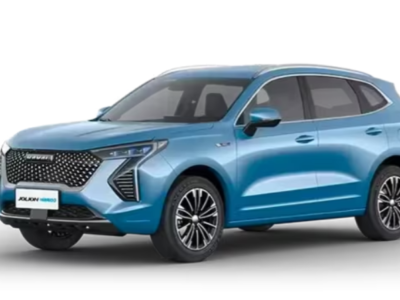
Haval Jolion vs H6: Which SUV Is Better in 2026?

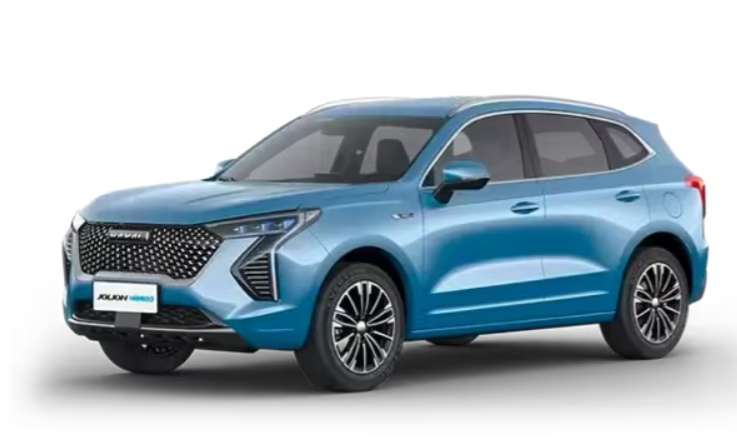
Choosing between the Haval Jolion and Haval H6 can be surprisingly difficult. Both SUVs come from Great Wall Motor (GWM), offer attractive pricing, modern technology, extensive safety equipment, and petrol-electric hybrid options.
However, they are designed for slightly different buyers.
The Haval Jolion is a compact SUV focused on affordability, efficiency, and everyday practicality. Meanwhile, the Haval H6 is a larger family SUV offering more luggage space, stronger engines, and additional powertrain choices.
But is the H6 worth spending more money on? And could the smaller Jolion actually be the better vehicle for everyday driving?
In this comprehensive Haval Jolion vs H6 comparison, we'll examine their dimensions, interior space, engine performance, fuel consumption, technology, safety, ownership costs, and overall value.
We'll primarily use the 2026 Australian specifications as our reference. Equipment, engines, dimensions, and prices may differ in other markets.
Content in this publication
- Haval Jolion vs H6: Quick Comparison
- 1. Haval Jolion vs H6 Exterior Design
- 2. Haval Jolion vs H6 Dimensions
- 3. Haval Jolion vs H6 Interior Space
- 4. Haval Jolion vs H6 Boot Space
- 5. Haval Jolion vs H6 Engine Performance
- 6. Haval Jolion Hybrid vs H6 Hybrid
- 7. Haval Jolion vs H6 Fuel Consumption
- 8. How Much Fuel Could You Save?
- 9. Haval H6 Plug-in Hybrid vs Jolion Hybrid
- 10. Haval Jolion vs H6 Driving Experience
- 11. Haval Jolion vs H6 Interior Technology
- 12. Haval Jolion vs H6 Safety
- 13. Haval Jolion vs H6 Reliability
- 14. Haval Jolion vs H6 Warranty
- 15. Haval Jolion vs H6 Price Comparison
- 16. Haval Jolion vs H6 Resale Value
- 17. Haval Jolion vs H6 for Families
- 18. Haval Jolion vs H6 for Highway Driving
- 19. Haval Jolion vs H6 for City Driving
- 20. Haval Jolion vs H6: Pros and Cons
- 21. Haval Jolion or H6: Which Should You Buy?
- Frequently Asked Questions
- Final Verdict: Haval Jolion vs H6
Haval Jolion vs H6: Quick Comparison
Before examining each SUV in detail, let's compare their main specifications.
| Specification | Haval Jolion | Haval H6 |
|---|---|---|
| Vehicle category | Small SUV | Medium SUV |
| Seating capacity | 5 passengers | 5 passengers |
| Length | 4,470–4,472 mm | 4,703 mm |
| Width | 1,874–1,898 mm | 1,886 mm |
| Wheelbase | 2,700 mm | 2,738 mm |
| Petrol engine | 1.5L turbo | 2.0L turbo |
| Hybrid option | Yes | Yes |
| Plug-in hybrid | No | Yes |
| Petrol power | 105–130 kW | 170 kW |
| Hybrid system power | 140 kW | 179 kW (FWD) |
| AWD availability | No, Australian range | Selected versions |
| Boot capacity | 255–337 litres | 560 litres |
| ANCAP rating | 5 stars (2022) | 5 stars (2022) |
| Australian vehicle warranty | 7 years | 7 years |
Specifications refer to selected 2026 Australian-market variants. Jolion boot capacity varies significantly by body style and powertrain.
The H6 is the larger and generally more powerful SUV. However, the Jolion delivers many of the features buyers expect from a modern family vehicle at a considerably lower starting price.
1. Haval Jolion vs H6 Exterior Design
Haval Jolion: Compact and Contemporary
The Haval Jolion has a relatively youthful appearance, with a distinctive grille, sharp lighting elements, and clean body proportions.
Its compact dimensions make it appealing to drivers who regularly travel through congested city streets.
Depending on the version, exterior equipment can include LED lighting, alloy wheels, dark exterior trim, and a panoramic roof.
The 2026 range also includes Vanta versions featuring black styling accents that create a sportier appearance.
An interesting detail is that Australian Jolion petrol and hybrid versions do not necessarily share identical exterior styling.
The Haval H6 has a more substantial road presence.
Its longer body, taller roofline, and more imposing front design give it the proportions of a traditional family SUV.
The updated H6 features distinctive lighting, a bold front fascia, and a modern silhouette.
Higher-specification versions can include larger alloy wheels, a panoramic sunroof, and additional premium exterior detailing.
Our verdict: The Jolion looks more compact and urban, while the H6 has a more substantial and sophisticated appearance. Design is subjective, but the H6 feels like the more expensive vehicle.
2. Haval Jolion vs H6 Dimensions
One of the most important differences between these SUVs is their size.
| Dimension | Haval Jolion | Haval H6 |
|---|---|---|
| Length | Approximately 4.47 m | 4.70 m |
| Width | Approximately 1.87–1.90 m | 1.89 m |
| Height | Approximately 1.58–1.63 m | 1.73 m |
| Wheelbase | 2.70 m | 2.74 m |
| Seats | 5 | 5 |
How Much Bigger Is the Haval H6?
The H6 is approximately 23 centimetres longer than the Jolion.
That difference affects several aspects of ownership.
The H6 offers more overall body length for accommodating passengers and luggage, while its taller design contributes to a roomier impression.
However, the wheelbase difference is relatively modest at 38 mm.
This helps explain why the Jolion can still offer competitive rear passenger space despite belonging to a smaller category.
Which SUV Is Easier to Park?
The Jolion has the advantage in tight parking spaces because of its shorter body.
It is particularly convenient for:
- City apartments with compact parking bays.
- Shopping centre car parks.
- Urban streets with limited parallel parking.
- Drivers who prefer smaller SUVs.
However, its width is not dramatically smaller than the H6's, and certain Jolion versions are actually slightly wider.
Consequently, buyers should consider their garage width as well as vehicle length.
Winner for urban manoeuvrability: Haval Jolion.
3. Haval Jolion vs H6 Interior Space
Front Passenger Comfort
Both SUVs feature modern dashboards, digital instruments, automatic climate control on selected grades, and centrally mounted infotainment screens.
The Jolion's interior creates a contemporary atmosphere without requiring the budget of a larger SUV.
Meanwhile, the H6 generally provides more generous cabin proportions and additional comfort equipment, particularly in its higher trim levels.
Its larger body also contributes to a more spacious overall impression.
Rear Passenger Space
The Jolion performs surprisingly well for a small SUV.
Its 2,700 mm wheelbase helps provide usable rear legroom, making it a practical option for couples, small families, and occasional adult passengers.
The H6 offers more overall cabin room, especially for families who regularly travel with adults or children in the back seats.
The taller roofline may also make the H6 more comfortable for taller passengers.
Which Is Better for Three Rear Passengers?
Neither vehicle is a seven-seater, and both have a conventional five-seat layout.
For three people sitting in the rear, the H6 is generally the more comfortable option.
However, actual comfort depends on passenger size and how much shoulder space is needed.
We recommend sitting three passengers across the rear bench during a dealership visit rather than relying on exterior dimensions alone.
4. Haval Jolion vs H6 Boot Space
Cargo capacity is one of the clearest reasons to choose the H6.
| Model | Boot Capacity |
|---|---|
| Jolion Premium/Lux petrol | 337 litres |
| Jolion Vanta petrol | 291 litres |
| Jolion Hybrid | 255 litres |
| H6 petrol | 560 litres |
| H6 Hybrid/PHEV | 560 litres |
These figures are based on the stated Australian specifications. The Jolion's different body styles and hybrid packaging affect luggage capacity.
Why Does the Jolion Hybrid Have a Smaller Boot?
Hybrid vehicles need additional components, including a high-voltage battery.
Depending on the design, these components affect the space available beneath the luggage floor.
In the Australian 2026 Jolion, the hybrid's quoted boot capacity is lower than that of the conventional Premium and Lux petrol models.
This is an important detail for buyers who frequently carry large objects.
Is the H6 Better for Family Holidays?
Definitely.
The H6's 560-litre luggage compartment provides substantially more space for suitcases, shopping, sports equipment, and family essentials.
For example, the difference becomes particularly noticeable when carrying a pushchair alongside several travel bags.
If luggage capacity is an important factor in your decision, the H6 is the stronger choice.
Winner for boot space: Haval H6.
5. Haval Jolion vs H6 Engine Performance
The two SUVs offer noticeably different performance levels.
Haval Jolion Petrol Engine
In Australia, the Jolion uses a turbocharged 1.5-litre four-cylinder petrol engine.
Standard Premium and Lux versions produce approximately:
- Power: 105 kW
- Torque: 210 Nm
- Transmission: Seven-speed dual-clutch automatic
- Drivetrain: Front-wheel drive
The Vanta petrol version increases outputs to 130 kW and 270 Nm.
For everyday driving, the standard petrol engine provides sufficient performance for commuting and ordinary suburban trips.
However, when the vehicle is heavily loaded or overtaking at higher speeds, the more powerful alternatives provide additional flexibility.
Haval H6 Petrol Engine
The updated Australian H6 uses a 2.0-litre turbocharged four-cylinder engine.
Its figures are:
- Power: 170 kW
- Torque: 380 Nm
- Transmission: Nine-speed dual-clutch automatic
- Drivetrain: Front-wheel drive
This represents a considerable increase in power compared with the standard Jolion.
The stronger torque output is particularly beneficial during highway overtaking and acceleration when carrying passengers or luggage.
Which SUV Is Faster?
When comparing conventional petrol versions, the H6 has the clear advantage in engine output.
However, performance also depends on vehicle weight, transmission calibration, tyre grip, and driving conditions.
The H6 is heavier than the Jolion, so the difference in acceleration is not simply proportional to the difference in horsepower.
Nevertheless, drivers looking for stronger highway performance should favour the H6.
Winner for petrol engine performance: Haval H6.
6. Haval Jolion Hybrid vs H6 Hybrid
The hybrid comparison is especially interesting because both vehicles combine a petrol engine with electric assistance.
However, their hybrid systems deliver different levels of performance.
Haval Jolion Hybrid Specifications
The Australian Jolion Hybrid features a 1.5-litre petrol engine supported by an electric motor.
Its combined system output is approximately:
- Power: 140 kW
- Torque: 375 Nm
- Transmission: Dedicated Hybrid Transmission
- Drivetrain: Front-wheel drive
The hybrid system is designed to improve fuel efficiency while providing responsive acceleration at lower speeds.
One advantage is its ability to use electric assistance during stop-start urban driving.
Haval H6 Hybrid Specifications
The H6 Hybrid uses a turbocharged 1.5-litre petrol engine and an electric motor.
The front-wheel-drive version produces:
- Combined power: 179 kW
- Combined torque: 530 Nm
- Drivetrain: Front-wheel drive
Selected all-wheel-drive hybrid versions offer even greater output, with a combined 268 kW and 760 Nm.
This makes the H6 Hybrid substantially more powerful than the Jolion Hybrid.
Which Hybrid Is Better?
If fuel efficiency, affordability, and urban use are your priorities, the Jolion Hybrid is an attractive option.
However, the H6 Hybrid offers a more versatile combination of performance and family practicality.
It provides stronger acceleration, greater luggage capacity, and more drivetrain choices.
Winner for hybrid performance: Haval H6.
7. Haval Jolion vs H6 Fuel Consumption
Fuel economy can significantly influence the total cost of vehicle ownership.
Both SUVs offer efficient hybrid versions, but their petrol engines have different characteristics.
Claimed Fuel Consumption Comparison
| Powertrain | Claimed Combined Consumption |
|---|---|
| Jolion standard 1.5T petrol | 8.1 L/100 km |
| Jolion Vanta petrol | 7.5 L/100 km |
| Jolion Hybrid | 5.1 L/100 km |
| H6 2.0T petrol | 7.4 L/100 km |
| H6 Hybrid FWD | 5.2 L/100 km |
| H6 Hybrid AWD | 5.4 L/100 km |
| H6 PHEV | 1.0–1.1 L/100 km |
Figures are Australian claimed combined-cycle values for the specified powertrains. Plug-in hybrid figures assume the prescribed battery-charging test conditions and are not directly comparable with fuel-only driving.
Is the Jolion More Fuel-Efficient Than the H6?
Not necessarily.
The Jolion Hybrid and H6 Hybrid have remarkably similar official fuel consumption figures.
In fact, the H6's newer petrol engine also has a lower published combined consumption figure than the conventional base Jolion engine listed above.
This demonstrates why vehicle size alone does not determine fuel efficiency.
Engine technology, transmission design, vehicle weight, and driving conditions also matter.
Real-World Fuel Economy
Actual consumption may differ from the official figures.
Factors influencing fuel use include:
- Urban congestion.
- Highway speeds.
- Driving style.
- Passenger and luggage weight.
- Air-conditioning use.
- Tyre pressure.
- Road gradients.
- Battery charge in plug-in hybrids.
Hybrid systems generally offer their greatest advantages in urban and mixed driving, where regenerative braking and electric assistance can reduce petrol consumption.
8. How Much Fuel Could You Save?
To illustrate potential ownership costs, let's assume we drive 15,000 kilometres annually and pay AUD $2.00 per litre of petrol.
| Vehicle | Annual Fuel Use | Estimated Annual Cost |
|---|---|---|
| Jolion petrol (8.1 L/100 km) | 1,215 L | $2,430 |
| Jolion Hybrid (5.1 L/100 km) | 765 L | $1,530 |
| H6 petrol (7.4 L/100 km) | 1,110 L | $2,220 |
| H6 Hybrid (5.2 L/100 km) | 780 L | $1,560 |
These are illustrative calculations based on official consumption figures, not guaranteed real-world costs.
What Do These Numbers Tell Us?
Compared with the standard petrol Jolion, the Jolion Hybrid could save approximately $900 in fuel annually under these assumptions.
Meanwhile, the H6 Hybrid could save approximately $660 annually compared with the H6 petrol.
Interestingly, the difference in calculated annual fuel expenditure between the Jolion Hybrid and H6 Hybrid is only around $30.
Therefore, choosing the smaller hybrid does not necessarily result in dramatically lower petrol expenses.
The initial purchase price and other ownership costs may have a much greater financial impact.
9. Haval H6 Plug-in Hybrid vs Jolion Hybrid
One major difference between these vehicles is the availability of plug-in hybrid technology.
The Australian Haval H6 offers plug-in hybrid (PHEV) versions, while the Jolion range consists of petrol and conventional self-charging hybrid models.
What Makes the H6 PHEV Different?
Unlike a conventional hybrid, the H6 PHEV features a larger rechargeable battery.
Depending on the variant, the Australian H6 PHEV offers up to 106 kilometres of claimed electric-only driving range under the specified test cycle.
This means certain daily journeys could potentially be completed without using petrol, assuming sufficient charge.
Advantages of the H6 PHEV
The main benefits include electric driving capability, reduced petrol consumption when regularly charged, and strong acceleration.
The H6 PHEV also allows drivers to continue longer journeys using petrol after the battery's usable electric range has been depleted.
Is the Plug-in Hybrid Worth It?
The H6 PHEV makes the most sense when we can charge it frequently, ideally at home.
Drivers who rarely recharge may not achieve the advertised efficiency benefits.
We should also consider electricity costs, insurance, purchase price, and whether the additional performance is necessary.
For people who cannot conveniently charge, a conventional H6 Hybrid or Jolion Hybrid may be the more practical option.
10. Haval Jolion vs H6 Driving Experience
City Driving
The Jolion is naturally well suited to city use.
Its shorter body makes parking and low-speed manoeuvring easier, while its elevated driving position provides good forward visibility.
The hybrid version also benefits from electric assistance during urban driving.
However, drivers should evaluate the dual-clutch petrol transmission during stop-start traffic, as its responses can feel different from those of a conventional torque-converter automatic.
Highway Driving
The H6 is generally the more appealing option for frequent long-distance journeys.
Its more powerful engines provide additional overtaking flexibility, while the larger cabin can make extended trips more comfortable.
The H6 also offers more luggage capacity, allowing families to travel without compromising rear passenger space.
Ride Comfort
Both SUVs are designed primarily for everyday road use rather than sporty handling.
However, comfort depends on wheel size, tyre choice, road surface, and suspension calibration.
Some road tests have noted that Haval driver-assistance alerts can feel intrusive and that ride quality is not always perfectly controlled.
Consequently, a test drive over familiar roads is worthwhile before purchasing either model.
Our verdict: Choose the Jolion for mostly urban driving and the H6 for greater versatility on longer journeys.
11. Haval Jolion vs H6 Interior Technology
Technology is a major selling point for both vehicles.
Even relatively affordable versions offer equipment that would previously have been associated with more expensive SUVs.
Haval Jolion Technology
Depending on the version, the Jolion can include:
- A 10.25-inch or larger infotainment touchscreen.
- Digital driver instrumentation.
- Apple CarPlay and Android Auto.
- Bluetooth connectivity.
- Adaptive cruise control.
- Reversing camera.
- Surround-view camera on selected grades.
- Keyless entry and push-button start on selected models.
The 2026 Australian range also introduced updated smartphone connectivity in certain variants.
Haval H6 Technology
The updated H6 takes things further with equipment such as:
- A 14.6-inch central infotainment display.
- A 10.25-inch digital instrument display.
- Wireless smartphone integration.
- Wireless phone charging.
- Dual-zone climate control.
- Surround-view camera system.
- Head-up display on selected versions.
- Heated and ventilated front seats on higher trims.
- Panoramic sunroof on selected versions.
In general, yes.
The larger infotainment display, additional seat functions, and available convenience features give the H6 an advantage.
However, the Jolion remains competitive, particularly considering its substantially lower entry price.
One possible disadvantage shared by both models is their reliance on touchscreen menus for certain functions.
Buyers who prefer physical switches should test the infotainment systems carefully.
Winner for technology and comfort equipment: Haval H6.
12. Haval Jolion vs H6 Safety
Both SUVs have received five-star ANCAP safety ratings based on 2022 testing.
However, their individual scores differ.
| ANCAP Assessment | Haval Jolion | Haval H6 |
|---|---|---|
| Adult occupant protection | 90% | 88% |
| Child occupant protection | 84% | 88% |
| Vulnerable road user protection | 64% | 73% |
| Safety assist | 92% | 81% |
| Overall rating | 5 stars | 5 stars |
The published ANCAP ratings cover the specified Australian and New Zealand petrol and hybrid variants, with the H6 rating also extended to plug-in hybrids.
Haval Jolion Safety Features
Depending on the model and market, available safety technology includes autonomous emergency braking, lane-keeping assistance, adaptive cruise control, blind-spot monitoring, and rear cross-traffic alerts.
The Jolion also features multiple airbags, including a front-centre airbag.
Haval H6 Safety Features
The H6 offers many similar systems.
It can also provide front and rear parking sensors, a 360-degree camera system, and additional parking assistance depending on the chosen grade.
Which Haval Is Safer?
Both achieved the maximum five-star overall rating under the applicable 2022 ANCAP criteria.
The Jolion scored higher in adult occupant protection and safety assist, while the H6 scored higher in child occupant protection and vulnerable road user protection.
We would not declare one categorically safer based only on these percentages.
Vehicle size, specific safety features, child-seat installation, and the conditions of an accident also matter.
13. Haval Jolion vs H6 Reliability
Reliability is an important consideration when buying a vehicle from a manufacturer that may have a shorter established ownership record in some markets than brands such as Toyota or Honda.
Both SUVs are manufactured by Great Wall Motor, but they use different engines and powertrains.
Is the Haval Jolion Reliable?
The Jolion uses relatively conventional turbocharged petrol technology in non-hybrid versions.
However, long-term reliability depends on maintenance, transmission durability, component quality, and the availability of replacement parts.
The hybrid introduces additional electrical components but also has the potential to reduce petrol-engine running time in certain driving conditions.
Is the Haval H6 Reliable?
The H6 offers more powertrain choices, including advanced hybrid and plug-in hybrid systems.
These technologies provide meaningful advantages, but their long-term repair costs and durability should be evaluated over time.
The newer H6 powertrains have not all accumulated enough long-term ownership history to establish definitive lifetime reliability results.
What Should Buyers Check?
Before choosing either SUV, we recommend reviewing local dealership service capacity, parts availability, scheduled servicing costs, recall history, and independent owner feedback.
A lengthy warranty is reassuring, but it should not be confused with proof that a vehicle will never experience mechanical or electrical problems.
Reliability verdict: There is insufficient comparable long-term evidence to confidently declare one model more reliable than the other.
14. Haval Jolion vs H6 Warranty
In Australia, GWM supports both vehicles with a seven-year, unlimited-kilometre new-vehicle warranty.
There is also a five-year roadside assistance program, subject to its terms.
Hybrid batteries have separate warranty conditions, which buyers should confirm for their exact vehicle.
Servicing Costs
Both models offer scheduled servicing programs.
The Jolion's published five-year capped-price servicing costs are approximately AUD $1,700–$2,020 depending on the powertrain and grade.
Comparable H6 schedules are approximately AUD $2,110–$2,220 over five years for the referenced Australian variants.
These figures may change over time.
Therefore, buyers should request the latest written servicing schedule before signing a purchase agreement.
Overall, the Jolion may offer slightly lower routine maintenance expenditure, although differences are not enormous.
15. Haval Jolion vs H6 Price Comparison
The Jolion's biggest advantage is affordability.
Using advertised Australian drive-away pricing for October 2026 as a reference:
| Version | Indicative Starting Price (AUD) |
|---|---|
| Haval Jolion petrol | $23,990 |
| Haval Jolion Hybrid | $32,990 |
| Haval H6 petrol | $35,990 |
| Haval H6 Hybrid | $38,990 |
| Haval H6 PHEV | Higher, depending on grade |
Prices reflect selected Australian advertised offers and configurations. They can vary by state, dealer, stock, and promotion.
Is the H6 Worth the Extra Money?
The H6's higher purchase price buys several tangible improvements.
These include considerably more boot space, stronger engine performance, additional comfort equipment, and access to AWD and plug-in hybrid versions.
For larger families, those advantages may justify the additional investment.
However, the Jolion already offers many desirable features at a lower price.
If we rarely travel with heavy luggage or multiple passengers, the H6's extra capacity may not provide much everyday benefit.
Which SUV Offers Better Value?
For buyers seeking the lowest purchase price, the Jolion is difficult to overlook.
On the other hand, the H6 can represent excellent value when compared with similarly sized family SUVs from more expensive brands.
The better deal depends on whether the additional features are useful to us.
16. Haval Jolion vs H6 Resale Value
Resale value is another important factor in the overall cost of ownership.
Historically, established brands with strong buyer demand have often enjoyed advantages in the used-car market.
However, resale values vary significantly depending on the country, model, engine, age, kilometres travelled, and vehicle condition.
We should not assume that the Haval H6 will retain a higher percentage of its value simply because it costs more initially.
Similarly, the Jolion's lower initial purchase price does not automatically guarantee lower depreciation.
A practical approach is to compare current advertised used prices for vehicles of similar age and mileage, while remembering that advertised prices are not necessarily final selling prices.
Buyers planning to keep their SUV for many years may place more importance on running costs, warranty coverage, and repair availability than on short-term resale values.
17. Haval Jolion vs H6 for Families
Best for Small Families
The Jolion is attractive for households with one or two children.
Its five-seat cabin offers useful everyday space, while the lower purchase price can leave more room in the household budget.
However, the boot capacity of the hybrid deserves careful consideration.
Best for Growing Families
The H6 becomes more appealing when families need additional luggage space and regularly take longer journeys.
Its 560-litre boot can accommodate more travel equipment without using the rear seats for storage.
The additional engine performance is also useful when carrying several passengers.
Child Seats and Practicality
Both vehicles can accommodate child restraints using their designated mounting positions.
Before purchasing, confirm the exact seating configuration, ISOFIX availability, top-tether locations, and compatibility with your child seats.
For households using multiple child seats, an in-person fitment test is especially valuable.
Winner for family practicality: Haval H6.
18. Haval Jolion vs H6 for Highway Driving
If we regularly travel long distances, the H6 has several advantages.
Its stronger powertrains provide more flexibility when overtaking, while the larger cabin and boot make it more convenient for extended journeys.
The H6 Hybrid is particularly attractive because it combines relatively low claimed fuel consumption with substantial torque.
However, the Jolion Hybrid remains entirely capable of highway travel.
For two passengers travelling with modest luggage, the smaller SUV may provide everything needed.
The choice becomes less about whether the Jolion can handle highways and more about how much comfort, space, and additional performance we want.
19. Haval Jolion vs H6 for City Driving
In city environments, the Jolion is arguably the more logical vehicle.
Its shorter body helps when navigating parking spaces, and the hybrid version offers efficient stop-start operation.
The lower purchase price is also appealing to commuters who do not need the extra space of a medium SUV.
That said, the H6 is not excessively large by modern family-SUV standards.
With its available cameras and parking sensors, it can still be straightforward to manoeuvre.
Drivers who want one vehicle for urban commuting and frequent family travel may find the H6 a better compromise.
20. Haval Jolion vs H6: Pros and Cons
Haval Jolion Advantages
- Lower starting purchase price.
- Shorter body for easier urban parking.
- Efficient conventional hybrid option.
- Generous technology for its price.
- Five-star ANCAP safety rating.
- Competitive Australian warranty coverage.
- Suitable for everyday commuting.
Haval Jolion Disadvantages
- Smaller luggage compartment.
- Less powerful standard petrol engine.
- No AWD option in the Australian range.
- No plug-in hybrid option.
- Less overall family versatility.
Haval H6 Advantages
- Significantly larger boot.
- Stronger petrol and hybrid engines.
- More advanced powertrain choices.
- Available AWD variants.
- Plug-in hybrid option.
- Larger infotainment screen.
- Additional comfort equipment.
- Better suited to frequent family road trips.
Haval H6 Disadvantages
- Higher purchase price.
- Longer body requires more parking space.
- Higher servicing costs on some variants.
- Advanced variants introduce additional complexity.
- Plug-in hybrid benefits depend heavily on charging habits.
21. Haval Jolion or H6: Which Should You Buy?
We can simplify the decision by considering how the vehicle will be used most frequently.
| Your Main Priority | Better Choice |
|---|---|
| Lowest purchase price | Haval Jolion |
| Everyday city driving | Haval Jolion |
| Compact dimensions | Haval Jolion |
| Maximum boot space | Haval H6 |
| Family road trips | Haval H6 |
| Stronger performance | Haval H6 |
| Plug-in hybrid technology | Haval H6 |
| AWD availability | Haval H6 |
| Affordable hybrid ownership | Haval Jolion |
| Premium convenience features | Haval H6 |
Choose the Haval Jolion If...
We would recommend considering the Jolion if affordability is important and most journeys involve urban or suburban roads.
It is particularly appealing for couples, first-time SUV buyers, and small families who do not require a large luggage compartment.
The hybrid version deserves attention if reducing petrol expenditure is a priority.
Choose the Haval H6 If...
We would favour the H6 if greater interior space, cargo capacity, and stronger performance are necessary.
It is a more versatile vehicle for families who frequently travel long distances or carry substantial luggage.
Its hybrid and plug-in hybrid powertrains also make it attractive to drivers wanting both performance and efficiency.
Frequently Asked Questions
1. Is the Haval H6 better than the Jolion?
The Haval H6 is generally better for families needing more space, stronger performance, and additional equipment. However, the Jolion offers better affordability and is easier to manage in tight urban environments. The best choice depends on your budget and driving needs.
2. Which is bigger, the Haval Jolion or H6?
The Haval H6 is bigger. It measures approximately 4,703 mm long, compared with around 4,470 mm for the Jolion. The H6 also has a taller body and a substantially larger luggage compartment, although their wheelbases are relatively close.
3. Is the Haval Jolion more fuel-efficient than the H6?
The Jolion Hybrid has a claimed combined consumption figure of approximately 5.1 L/100 km in the referenced Australian specification. The H6 Hybrid FWD is rated at approximately 5.2 L/100 km. Therefore, their official hybrid fuel consumption figures are very similar.
4. Which is more reliable, the Haval Jolion or H6?
There is not enough directly comparable long-term reliability evidence to establish a definitive winner. Both are manufactured by GWM and offer extensive warranty coverage in Australia. Reliability may differ by engine, transmission, model year, and maintenance history.
5. Is the Haval H6 worth the extra money?
The H6 can be worth its higher price if you need a larger boot, stronger engines, more family space, or a plug-in hybrid option. However, if you primarily drive around town and rarely require additional cargo capacity, the Jolion may be the better-value purchase.
Final Verdict: Haval Jolion vs H6
After comparing the Haval Jolion vs H6, it is clear that both SUVs offer compelling value, but they serve different priorities.
The Jolion stands out for its affordability, modern equipment, practical compact dimensions, and efficient hybrid option. For drivers who spend most of their time commuting, it provides a sensible balance between comfort and cost.
The H6 offers a more complete family-SUV experience. Its larger luggage compartment, stronger engines, additional technology, and wider selection of electrified powertrains make it the more versatile choice.
Our overall winner is the Haval H6, particularly for families and drivers who regularly travel longer distances. The extra practicality and performance make a meaningful difference.
However, the Haval Jolion is our value-for-money winner. Its lower purchase price, useful cabin space, and available hybrid powertrain make it an attractive alternative for buyers who do not need a larger vehicle.
Ultimately, the best decision is not necessarily to choose the bigger or more expensive SUV. It is to choose the model that matches your real driving habits, passenger requirements, and budget.
If you want to know other articles similar to Haval Jolion vs H6: Which SUV Is Better in 2026? you can visit the category Models.
Haval Jolion vs Omoda C5: Which SUV Is Better?
Haval Jolion vs Chery Tiggo 4 Pro: Full Comparison
Haval Jolion vs Toyota Corolla Cross: Which SUV Is Better?
Haval Jolion vs Jaecoo J5: Which SUV Is Better?
Volkswagen T-Cross vs Volkswagen T-Roc: Which Is Better?
Hyundai Tucson Weight: Complete Guide to Curb, Gross, and Payload Specs
Leave a Reply
More content of your interest