
Ford Fiesta Reliability: Best Years & Common Problems

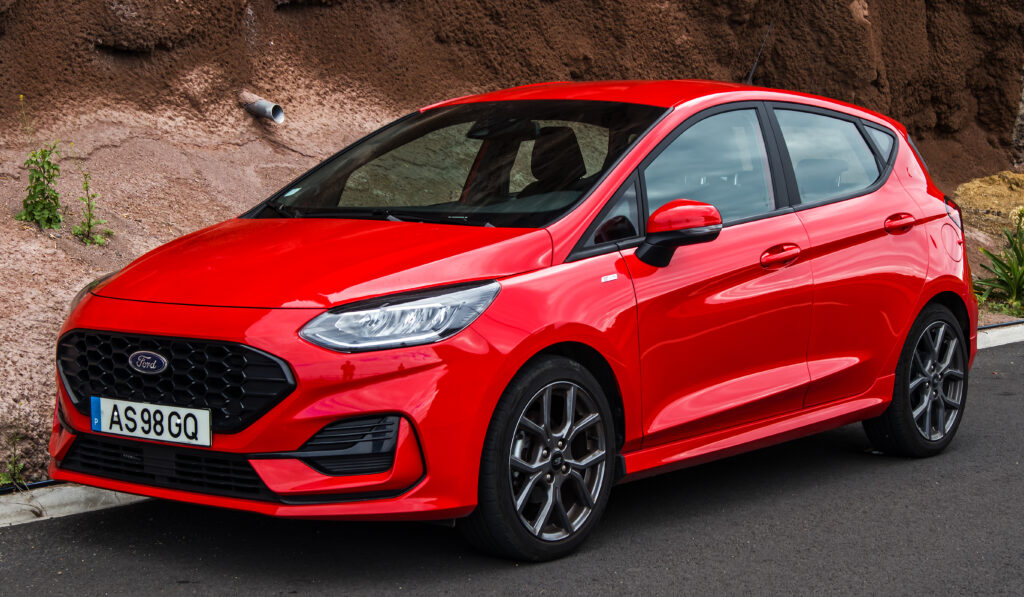
The Ford Fiesta has earned a reputation as one of the most enjoyable small cars to drive. With affordable running costs, responsive handling, and a wide selection of engines, it has been a popular choice for first-time drivers, commuters, and families looking for practical transportation.
But how reliable is the Ford Fiesta, especially now that production has ended?
The answer depends heavily on the model year, engine, transmission, and maintenance history. Some Fiesta versions are dependable, inexpensive cars capable of covering substantial mileage. Others have experienced serious mechanical problems, particularly involving the PowerShift automatic transmission and certain 1.0 EcoBoost engines.
In this Ford Fiesta reliability guide, we'll examine the most common problems, compare different generations, identify the best years to buy, and explain which versions deserve extra caution.
Whether we're considering a second-hand Fiesta or trying to keep an existing one running smoothly, understanding these differences can help us avoid expensive surprises.
Content in this publication
- Is the Ford Fiesta a Reliable Car?
- Ford Fiesta Reliability by Generation
- What Are the Most Common Ford Fiesta Problems?
- Ford Fiesta Engine Reliability: Which Is Best?
- Ford Fiesta Reliability by Year
- What Are the Best Ford Fiesta Years to Buy?
- Ford Fiesta Years to Avoid
- How Many Miles Can a Ford Fiesta Last?
- Is the Ford Fiesta Expensive to Maintain?
- How to Improve Ford Fiesta Reliability
- What to Check Before Buying a Used Ford Fiesta
- Ford Fiesta vs Toyota Yaris Reliability
- Ford Fiesta vs Volkswagen Polo Reliability
- Is the Ford Fiesta Still Worth Buying in 2026?
- Frequently Asked Questions About Ford Fiesta Reliability
- Conclusion: Is the Ford Fiesta Reliable Enough?
Is the Ford Fiesta a Reliable Car?
The Ford Fiesta offers average to good reliability when we choose the right engine and transmission and maintain it properly. However, it is not consistently among the most dependable vehicles in the small-car category.
One major advantage is its relatively straightforward construction, especially in older naturally aspirated petrol versions. Replacement parts are widely available in many markets, and numerous independent mechanics are familiar with the model.
Nevertheless, certain engine and gearbox combinations can substantially increase ownership costs.
Ford Fiesta Reliability at a Glance
| Category | Assessment |
|---|---|
| Overall reliability | Average to good, depending on version |
| Naturally aspirated petrol engines | Generally dependable |
| Early 1.0 EcoBoost engines | Require careful maintenance |
| Manual transmissions | Generally reliable |
| DPS6 PowerShift automatics | Significant reliability concerns |
| Maintenance costs | Usually affordable |
| Replacement parts | Widely available in major markets |
| High-mileage durability | Good with proper maintenance |
| Best ownership characteristic | Low everyday running costs |
| Biggest ownership risk | Expensive engine or gearbox repairs |
These assessments are general buying guidance rather than numerical reliability ratings.
The Fiesta's affordability makes it attractive, but we should avoid assuming that every model offers the same mechanical dependability.
Ford Fiesta Reliability by Generation
The Fiesta has been sold in different configurations across Europe, North America, Australia, and other markets.
Because model generations and naming conventions vary by region, comparing production periods is more useful than relying exclusively on generation labels.
Ford Fiesta 2002–2008 Reliability
Earlier Fiesta models generally feature relatively simple mechanical systems.
Common petrol engine options include 1.25, 1.4, and 1.6-litre units, depending on the market.
Their straightforward designs make them attractive to drivers prioritising inexpensive maintenance.
Typical age-related issues include:
- Suspension bush wear.
- Rust on older examples.
- Electrical connection problems.
- Cooling-system leaks.
- Worn clutches.
- Ageing exhaust components.
Most of these problems are manageable, although corrosion and neglected maintenance can make an inexpensive car uneconomical to repair.
We would prioritise overall condition over mileage when shopping for a Fiesta of this age.
Ford Fiesta 2008–2017 Reliability
This generation introduced significant improvements in handling, safety, comfort, and efficiency.
Many naturally aspirated petrol versions remain sensible used-car options.
However, the arrival of the 1.0 EcoBoost engine and widespread use of the DPS6 PowerShift automatic transmission created additional reliability concerns.
The two most important checks are:
- Whether a 1.0 EcoBoost's timing-belt maintenance has been performed correctly.
- Whether an automatic vehicle has a problematic PowerShift transmission.
A well-maintained manual Fiesta with a conventional petrol engine can be considerably less risky than a neglected automatic from the same period.
Ford Fiesta 2017–2023 Reliability
The final European Fiesta generation offered improved refinement, infotainment, safety technology, and engine efficiency.
It included updated EcoBoost engines, later mild-hybrid versions, and performance-oriented ST models.
Its reliability is mixed rather than uniformly poor.
Some examples experience only routine maintenance requirements, while others develop electrical faults, water leaks, clutch wear, or engine-related problems.
One important distinction is that Ford introduced revised 1.0 EcoBoost designs with chain-driven camshafts in certain later applications.
However, not every engine changed at exactly the same time, and a chain-driven camshaft does not necessarily mean every oil-immersed belt has disappeared from the engine.
We should verify the exact engine code and timing-system configuration before purchasing.
What Are the Most Common Ford Fiesta Problems?
Understanding the Fiesta's common faults helps us distinguish between minor maintenance issues and potentially expensive mechanical failures.
1. Ford Fiesta PowerShift Transmission Problems
The DPS6 PowerShift dual-clutch automatic transmission is one of the most significant reliability concerns associated with the Fiesta.
It was fitted to various models in several markets, with particularly well-documented problems involving certain 2011–2016 US-model-year vehicles.
Reported symptoms include:
- Jerking during acceleration.
- Excessive vibration when pulling away.
- Hesitation when changing gears.
- Unpredictable gear engagement.
- Transmission warning messages.
- Difficulty selecting drive or reverse.
- Intermittent loss of drive.
Problems can involve the clutch assembly, seals, transmission control module, or associated components.
Ford introduced technical updates and customer service programmes for certain affected vehicles.
Nevertheless, replacing transmission components can be expensive, especially when the car's market value is relatively low.
Our recommendation: If reliability is the main priority, we would generally favour a conventional manual Fiesta over an early DPS6 PowerShift automatic.
Not every automatic Fiesta uses the same gearbox, so we must identify the actual transmission rather than judging it by model year alone.
2. Ford Fiesta 1.0 EcoBoost Wet Belt Problems
The 1.0-litre EcoBoost engine is known for combining strong performance with impressive fuel efficiency.
However, certain early versions use an oil-immersed timing belt, commonly called a wet belt.
Unlike a conventional dry timing belt, this component operates inside the engine oil.
Over time, belt material can deteriorate, particularly when oil quality is poor, incorrect oil specifications are used, or servicing is neglected.
Debris from a deteriorating belt may obstruct the oil-pump pickup, restricting oil circulation.
Potential consequences include:
- Low engine oil pressure.
- Accelerated internal engine wear.
- Timing-system failure.
- Severe engine damage.
- Complete engine failure.
Preventive belt replacement can be labour-intensive and expensive.
Important 2026 Timing Belt Update
In August 2026, Ford issued Customer Satisfaction Program 26L02 for certain US-market vehicles with the 1.0L Fox Classic engine, including affected 2014–2017 Fiesta models.
For vehicles covered by that programme, the timing belt and oil-pump belt replacement interval was revised to 100,000 miles or six years, whichever comes first.
This is not automatically the service interval for every Fiesta sold worldwide.
For UK, European, and other market vehicles, we should follow the correct maintenance information for the specific engine and vehicle identification number.
3. Cooling System and Overheating Issues
Some earlier EcoBoost-powered Fiestas experienced cooling-system problems involving hoses and related components.
Coolant loss can cause overheating and, in severe cases, substantial engine damage.
Warning signs include:
- Repeated coolant top-ups.
- Rising engine temperature.
- Steam from the engine compartment.
- Coolant warning messages.
- Unusual engine operation.
- Visible leaks.
If the temperature warning appears, we should stop safely and switch off the engine rather than continuing to drive.
When buying a used EcoBoost Fiesta, checking the coolant level, inspecting hoses, and reviewing any completed service campaigns is particularly important.
4. Clutch Wear and Manual Gearbox Problems
Although manual Fiestas generally have a better reliability reputation than early PowerShift automatics, their clutches are still wear items.
Frequent stop-start driving, aggressive acceleration, and poor clutch control can shorten component life.
Common symptoms include:
- A slipping clutch under acceleration.
- Difficulty selecting gears.
- Judder when moving away.
- Unusual clutch pedal behaviour.
- Rattling or vibration.
Clutch wear does not necessarily indicate a fundamental design defect.
A vehicle that has spent most of its life in heavy urban traffic may need a clutch replacement sooner than one predominantly used on motorways.
5. Electrical and Infotainment Problems
Electrical faults are another area worth checking, especially in higher-specification vehicles with additional equipment.
Potential complaints include:
- Intermittent infotainment problems.
- Bluetooth connection failures.
- Unresponsive displays.
- Central locking faults.
- Battery drain.
- Faulty sensors.
- Dashboard warning messages.
Some issues can be resolved with software updates or inexpensive component replacement.
Others require more detailed electrical diagnosis.
During a test drive, we should check every available electrical feature rather than simply concentrating on how the engine performs.
6. Suspension and Steering Wear
Fiestas are well known for their enjoyable handling, but suspension components naturally deteriorate with age and mileage.
You may be interested in reading Ford Fiesta as a First Car: The Complete Expert Guide for New Drivers
Common wear points include:
- Suspension bushes.
- Coil springs.
- Shock absorbers.
- Drop links.
- Ball joints.
- Steering joints.
Knocking noises over bumps, uneven tyre wear, or vague steering can indicate worn components.
The quality of the roads on which a Fiesta has been driven also affects suspension durability.
A properly maintained suspension is essential for preserving the car's handling and safety.
7. Diesel DPF and EGR Problems
Diesel-powered Fiesta models can be economical for drivers covering long distances.
However, short journeys and frequent urban driving may create problems involving the diesel particulate filter (DPF).
The DPF needs suitable operating conditions to regenerate properly.
Repeated interrupted regenerations may lead to:
- Reduced engine performance.
- Increased fuel consumption.
- Warning lights.
- Restricted exhaust flow.
- Expensive cleaning or replacement.
Exhaust gas recirculation components can also become contaminated with deposits.
For drivers who mostly make short city journeys, a petrol Fiesta is often the more practical choice.
Ford Fiesta Engine Reliability: Which Is Best?
Choosing the correct engine is one of the most important decisions when purchasing a used Fiesta.
Different engine families have different maintenance requirements, repair costs, and long-term reliability characteristics.
1.25-Litre Petrol Engine Reliability
The 1.25-litre naturally aspirated petrol engine is one of the more straightforward choices in older European Fiestas.
Its relatively simple design and lack of turbocharging can make servicing less complicated than on some newer engines.
Advantages include:
- Straightforward maintenance.
- Generally good everyday durability.
- Modest repair costs.
- Predictable performance.
- Suitability for city driving.
It is not especially powerful, particularly on motorways or when carrying several passengers.
However, for buyers who value dependable transportation over acceleration, it is an appealing option.
1.4-Litre and 1.6-Litre Petrol Reliability
Naturally aspirated 1.4 and 1.6-litre petrol engines fitted to various Fiesta generations can also offer good long-term service.
They generally provide stronger performance than smaller non-turbo engines.
Their main advantages include familiar mechanical designs and relatively uncomplicated maintenance.
We should still inspect the cooling system, ignition components, oil leaks, and service records.
Importantly, these engines should not be confused with the 1.6 EcoBoost turbocharged engine used in certain performance models.
1.0 EcoBoost Reliability
The 1.0 EcoBoost is more complex than the older naturally aspirated petrol engines.
Its turbocharger and timing-system design require particular attention to maintenance.
When properly serviced, these engines can deliver strong performance and economical driving.
However, we would never purchase an older wet-belt version without verifying its maintenance history.
Important questions include:
- Has the correct engine oil always been used?
- Were oil changes performed at appropriate intervals?
- Has the timing belt been replaced when required?
- Has the cooling system been inspected?
- Has the vehicle experienced any overheating?
- Are there signs of abnormal oil consumption?
A newer EcoBoost version with a verified timing-system configuration and complete maintenance records may be a better option than an older example with uncertain servicing.
Ford Fiesta Diesel Engine Reliability
The 1.5 and 1.6 TDCi engines can offer excellent fuel efficiency, especially over longer journeys.
However, their long-term reliability depends on factors such as oil changes, fuel-system condition, and emissions-system maintenance.
High-mileage diesel examples may require attention to injectors, turbochargers, EGR components, or DPF systems.
Diesel models are therefore more appealing when we regularly cover substantial motorway mileage.
Ford Fiesta ST Reliability
The Fiesta ST deserves separate consideration because it is designed for performance rather than simply economical commuting.
Earlier ST versions in many markets use a turbocharged 1.6-litre petrol engine, while the later European ST uses a turbocharged 1.5-litre three-cylinder engine.
These cars offer excellent driving enjoyment but may experience greater wear when driven aggressively.
Before buying one, we should inspect:
- The cooling system.
- Turbocharger operation.
- Clutch condition.
- Suspension components.
- Braking system.
- Engine modifications.
- Service history.
A standard, carefully maintained ST is generally a more reassuring purchase than a heavily modified example with questionable maintenance.
Ford Fiesta Reliability by Year
The following table highlights useful buying considerations for some of the most common used Fiesta production periods.
| Model years | Reliability considerations | Buying advice |
|---|---|---|
| 2008–2012 | Generally simple petrol options; age-related wear | Consider well-maintained manuals |
| 2013–2014 | EcoBoost timing-system concerns; PowerShift issues in applicable vehicles | Check engine and gearbox carefully |
| 2015–2016 | Transmission concerns remain relevant to some versions | Prefer verified manual configurations |
| 2017–2018 | Newer European generation introduced; engine variations matter | Verify exact engine design |
| 2019–2020 | Revised engines available in some markets | Check engine code and service history |
| 2021–2023 | Newer technology and lower typical age-related wear | Attractive with full maintenance records |
This table is a practical risk comparison, not a statistical ranking of failure rates. Availability and specifications differ by country.
What Are the Best Ford Fiesta Years to Buy?
There is no single production year that guarantees reliability.
Nevertheless, several configurations stand out as sensible purchases.
2009–2012 Manual Petrol Models
A well-maintained Fiesta from this period with a conventional naturally aspirated petrol engine can be an excellent budget choice.
Its main advantages are mechanical simplicity, accessible spare parts, and modest operating costs.
However, these vehicles are now relatively old, so corrosion, mileage, and maintenance history are major considerations.
The transmission is especially important in markets where early DPS6 automatics were sold.
2020–2023 European Models
Later European Fiestas are attractive because of their improved comfort, safety equipment, and modern technology.
Some also benefit from revised engines.
However, it is essential to confirm the exact timing-system design rather than assuming every newer 1.0 EcoBoost has identical components.
We would favour an unmodified, regularly serviced example with documented maintenance and no unresolved recalls.
Which Ford Fiesta Would We Choose?
For a buyer prioritising straightforward maintenance, we would look at a naturally aspirated petrol Fiesta with a manual gearbox.
For someone seeking a more modern driving experience, a later European model with a verified engine specification and complete service history would also be appealing.
In both situations, vehicle condition is more important than trim level or appearance.
Ford Fiesta Years to Avoid
Some versions require considerably more caution than others.
Early PowerShift Automatic Models
In the United States, certain 2011–2016 Fiesta models equipped with the DPS6 PowerShift transmission became associated with significant transmission complaints and litigation.
Similar gearbox concerns affected vehicles in other markets.
We would be cautious about buying one, even if its asking price appears attractive.
A clean test drive does not guarantee that an intermittent transmission fault will not return.
Poorly Maintained Early EcoBoost Models
Older 1.0 EcoBoost models without evidence of correct oil servicing or timing-belt maintenance also deserve caution.
The concern is not simply that an engine is turbocharged.
The greater issue is the potential cost of an internal timing-system problem after years of inadequate maintenance.
We would rather buy a slightly higher-mileage car with documented servicing than a low-mileage example with missing maintenance records.
How Many Miles Can a Ford Fiesta Last?
A properly maintained Ford Fiesta can potentially cover 150,000–200,000 miles (approximately 240,000–320,000 km), and some examples exceed that range.
However, this is a possible lifespan, not a guarantee or a model-wide statistical average.
Mileage alone does not determine engine condition.
A Fiesta with 120,000 miles and regular maintenance may be a more dependable vehicle than one with 60,000 miles that has repeatedly missed oil changes.
Factors Affecting Ford Fiesta Lifespan
Long-term durability depends on:
You may be interested in readingFord Fiesta as a First Car: The Complete Expert Guide for New DriversYou may be interested in reading
 Audi A1 Reliability: The Complete Guide to Common Problems, Breakdown Statistics & Model-Year Analysis
- Engine and transmission selection.
- Oil quality and replacement intervals.
- Timing-system maintenance.
- Cooling-system condition.
- Driving style.
- Climate and road conditions.
- Previous accident damage.
- Quality of replacement parts.
Cars driven primarily on longer journeys may experience less stop-start wear than those constantly operating in congested traffic, although other factors can offset this advantage.
Is the Ford Fiesta Expensive to Maintain?
Routine Ford Fiesta maintenance is generally affordable compared with larger or more complex vehicles.
Many common parts are widely available, and independent garages are familiar with the model.
However, a major PowerShift transmission repair or EcoBoost timing-system failure can change the financial picture significantly.
Typical Ford Fiesta Maintenance Costs
The following are broad illustrative UK independent-garage estimates, not fixed prices or current quotations for every vehicle.
| Maintenance or repair | Approximate cost |
|---|---|
| Basic oil and filter service | £100–£200 |
| More comprehensive routine service | £180–£350 |
| Brake pads, one axle | £100–£220 |
| Battery replacement | £100–£200 |
| Manual clutch replacement | £400–£800 |
| Suspension component repair | £100–£350+ |
| EcoBoost wet-belt replacement | £800–£1,500+ |
| Major automatic gearbox repair | Potentially £1,000–£3,000+ |
Prices vary according to location, engine, parts, labour rates, and the extent of the work.
Certain repairs may cost significantly more, particularly when internal engine damage has already occurred.
For UK buyers, the Fiesta's large used-vehicle population and extensive parts availability can help keep routine ownership costs manageable.
In North America, repair expenses depend on local parts and labour availability.
How to Improve Ford Fiesta Reliability
Preventive maintenance is essential if we want to maximise the lifespan of a Fiesta.
Follow the Correct Oil Change Schedule
Regular oil changes are particularly important for turbocharged EcoBoost engines.
We should always use engine oil meeting the correct Ford specification.
Oil with an unsuitable specification can contribute to timing-system and lubrication problems in engines designed for a particular lubricant.
Inspect the Cooling System
We should periodically check coolant levels when the engine is cold and inspect the system for leaks.
Any repeated coolant loss deserves investigation.
Overheating can turn a relatively inexpensive hose repair into major engine damage.
Maintain the Timing System
Timing-belt and oil-pump-belt replacement requirements differ by engine.
We should confirm the correct service interval using the vehicle's specific engine code, model year, and market.
On affected engines, postponing the work simply because the car appears to run normally can be a costly mistake.
Avoid Ignoring Warning Lights
Engine oil pressure warnings, overheating messages, and serious transmission faults should never be dismissed.
A red oil-pressure warning generally requires stopping the engine as soon as it is safe to do so.
Continuing to drive can result in additional damage.
Check the Transmission Regularly
Manual gearbox owners should pay attention to clutch behaviour and unusual noises.
Automatic owners should investigate hesitation, persistent shudder, warning messages, or unexpected gear engagement.
Early diagnosis can help prevent additional problems.
What to Check Before Buying a Used Ford Fiesta
A comprehensive inspection is one of the best ways to reduce the risk of purchasing an unreliable car.
We should not rely exclusively on mileage, appearance, or the seller's description.
Used Ford Fiesta Buying Checklist
- Verify the exact engine and transmission.
- Review the complete service history.
- Confirm timing-belt maintenance where applicable.
- Check for outstanding recalls using the VIN.
- Inspect the coolant level and look for leaks.
- Check the engine for unusual noises.
- Examine the oil for obvious contamination.
- Test clutch or automatic transmission operation.
- Check all dashboard warning lights.
- Test air conditioning and infotainment functions.
- Inspect suspension components and tyres.
- Check for rust or previous accident repairs.
- Test drive the vehicle from a cold start.
- Arrange an independent mechanical inspection.
Why a Cold Start Matters
A cold engine can reveal problems that are less noticeable once operating temperatures increase.
During a cold start, we should pay attention to rough idling, persistent smoke, unusual mechanical noises, and warning messages.
A healthy engine should settle into stable operation without excessive vibration or abnormal sounds.
Why Service Records Are Essential
A stamped service book can be useful, but detailed invoices provide stronger evidence of the work performed.
For EcoBoost engines, records showing correct oil specifications and any required timing-system work are especially valuable.
For PowerShift-equipped cars, gearbox repair records can help establish what has already been replaced.
Documentation cannot eliminate every risk, but it can significantly improve our buying decision.
Ford Fiesta vs Toyota Yaris Reliability
The Toyota Yaris is one of the Fiesta's strongest alternatives.
Both vehicles are practical, economical, and suitable for daily commuting.
However, their characteristics differ.
| Category | Ford Fiesta | Toyota Yaris |
|---|---|---|
| Driving enjoyment | Excellent | Good |
| Reliability reputation | Mixed by version | Generally strong |
| Routine maintenance | Usually affordable | Usually affordable |
| Engine-related concerns | Important on some EcoBoost models | Varies by generation |
| Automatic gearbox concerns | Significant on some PowerShift versions | Depends on version |
| Used-car appeal | Wide variety of configurations | Strong reliability-focused appeal |
If we prioritise handling and driving enjoyment, the Fiesta is particularly appealing.
If our main objective is minimising mechanical risk, a well-maintained Yaris may offer greater peace of mind.
However, the condition of the individual vehicle still matters more than a brand's general reputation.
Ford Fiesta vs Volkswagen Polo Reliability
The Volkswagen Polo is another major competitor.
It offers a refined driving experience, good interior quality, and a broad range of engines.
The Fiesta generally stands out for its steering response and enjoyable handling.
Both cars have engine- and transmission-specific reliability considerations.
A Polo is not automatically more reliable simply because it belongs to the Volkswagen brand.
Similarly, a Fiesta is not automatically unreliable because of the problems associated with certain EcoBoost or PowerShift versions.
We should compare the exact engine, transmission, maintenance history, and purchase price.
Is the Ford Fiesta Still Worth Buying in 2026?
Yes, the Ford Fiesta can still be an excellent used-car purchase in 2026.
Although Ford ended Fiesta production in 2023, the model remains widely recognised and well supported in many markets.
Its main advantages include:
- Enjoyable driving dynamics.
- Affordable everyday maintenance.
- Good fuel efficiency.
- Compact dimensions.
- Practical cabin layouts.
- A wide selection of used examples.
Nevertheless, discontinuation means that every available Fiesta is now a used vehicle, making condition and previous ownership particularly important.
We would also consider the availability of model-specific electronic components and body parts, particularly for unusual trims.
For buyers searching for an affordable manual hatchback with good handling, the Fiesta remains appealing.
The most important rule is to choose carefully rather than buying solely on price.
Frequently Asked Questions About Ford Fiesta Reliability
1. Is the Ford Fiesta a reliable car?
Yes, certain Ford Fiesta versions can be reliable, particularly naturally aspirated petrol models with manual transmissions and documented maintenance. However, reliability varies significantly, and some EcoBoost engines and PowerShift automatic transmissions have well-known problems. We should evaluate the specific version rather than the model name alone.
2. What is the most reliable Ford Fiesta engine?
The naturally aspirated 1.25-litre petrol engine is often considered one of the simpler and more dependable choices in older European Fiesta models. Certain naturally aspirated 1.4 and 1.6-litre engines are also appealing. Their lack of turbocharging can reduce mechanical complexity, although proper servicing remains essential.
3. Which Ford Fiesta years should we avoid?
We should be particularly cautious with certain 2011–2016 US-market Fiestas fitted with the DPS6 PowerShift automatic transmission, as well as similarly equipped vehicles in other markets. Older 1.0 EcoBoost models with missing timing-belt or oil-service records also deserve extra attention. Not every car from these years is affected by the same faults.
4. How long does a Ford Fiesta engine last?
A well-maintained Fiesta engine can potentially last 150,000–200,000 miles or more. Actual longevity depends on engine design, maintenance, driving conditions, and previous mechanical problems. Correct oil servicing and timing-system maintenance are particularly important for certain EcoBoost engines.
5. Is a used Ford Fiesta worth buying?
A used Ford Fiesta can offer excellent value, particularly when we choose a reliable engine and transmission combination. We would look for complete service records, evidence of required maintenance, a clean inspection, and a satisfactory test drive. A carefully selected Fiesta can provide affordable, enjoyable daily transportation.
Conclusion: Is the Ford Fiesta Reliable Enough?
The Ford Fiesta remains a compelling small car thanks to its enjoyable handling, economical running costs, and practical design.
However, Ford Fiesta reliability depends much more on the specific engine, transmission, and maintenance history than on the badge or model year alone.
Older naturally aspirated petrol models with manual transmissions are often sensible choices for buyers who value simplicity. Later European Fiestas can also offer a good balance of comfort, efficiency, and reliability when their engine specifications and service records are properly verified.
The biggest risks involve certain DPS6 PowerShift automatic transmissions and oil-immersed timing-belt systems in particular EcoBoost engines.
Our overall verdict is that the Fiesta is worth considering, but it is not a car we would purchase without checking its mechanical configuration and maintenance history.
Choose the right version, inspect it carefully, and maintain it correctly, and a Ford Fiesta can remain an enjoyable and practical vehicle for many years.
You may be interested in readingFord Fiesta as a First Car: The Complete Expert Guide for New DriversYou may be interested in reading
Audi A1 Reliability: The Complete Guide to Common Problems, Breakdown Statistics & Model-Year AnalysisYou may be interested in reading
 Is the Audi A1 a Good First Car? The Complete Expert Guide for New Drivers
If you want to know other articles similar to Ford Fiesta Reliability: Best Years & Common Problems you can visit the category Blog.
Toyota RAV4 Dashboard Warning Lights and Symbols Explained

Toyota RAV4 LE vs XLE: Which Trim Level Is Better?
Kia Sportage Boot Space: Size, Litres and Dimensions
Top 10 Toyota Yaris Cross Alternatives: Best Small SUVs to Consider in 2026

Toyota RAV4 Reliability: Is the RAV4 a Dependable SUV? Common Problems, Best Years, and Lifespan

Does Mercedes A-Class Have a Renault Engine?
Leave a Reply
More content of your interest