
Renault Megane Boot Space: Size, Litres & Dimensions

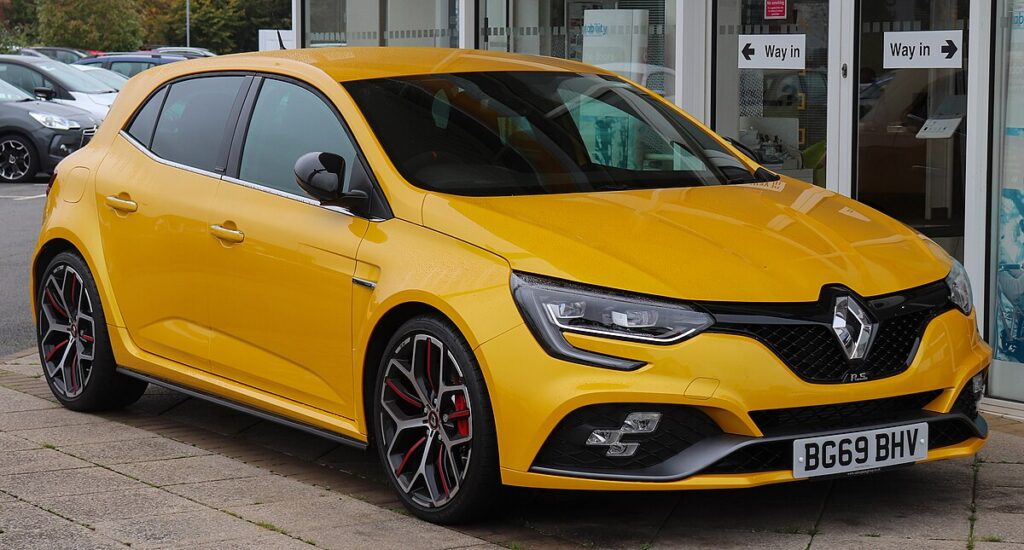
The Renault Megane boot space is one of the most important considerations when choosing this popular family car. Whether we're planning weekend trips, transporting a pushchair, carrying shopping or packing for a family holiday, luggage capacity can make a significant difference to everyday practicality.
However, not every Renault Megane offers the same amount of boot space.
The hatchback, Sport Tourer estate, Grand Coupe saloon, plug-in hybrid and fully electric Megane E-Tech all have different luggage capacities. Even petrol and diesel versions from the same generation can have different published figures.
For example, the Renault Megane E-Tech Electric offers 440 litres of advertised boot space, expanding to 1,332 litres with the rear seats folded. Meanwhile, certain conventional petrol-powered Megane hatchbacks offer a published capacity of 473 litres.
In this guide, we'll explore Renault Megane boot dimensions, capacity in litres, differences between generations, and how practical each version is for everyday use.
Content in this publication
- How Big Is the Renault Megane Boot?
- Why Renault Megane Boot Space Figures Differ
- Renault Megane Hatchback Boot Space
- Renault Megane Sport Tourer Boot Space
- Renault Megane E-Tech Electric Boot Space
- Renault Megane E-Tech Plug-in Hybrid Boot Space
- Renault Megane Grand Coupe Boot Space
- Renault Megane Boot Dimensions in Centimetres
- Can You Fit a Pushchair in a Renault Megane?
- How Many Suitcases Fit in a Renault Megane Boot?
- Can You Fit a Dog in the Renault Megane Boot?
- Renault Megane Boot Space vs Competitors
- Which Renault Megane Has the Biggest Boot?
- How to Make the Most of Renault Megane Boot Space
- Is the Renault Megane Boot Big Enough for a Family?
- Renault Megane Boot Space: Common Problems
- Frequently Asked Questions
- Conclusion: Is Renault Megane Boot Space Good?
How Big Is the Renault Megane Boot?
The Renault Megane's boot capacity depends on its generation, body style and engine.
For conventional fourth-generation hatchbacks, published capacities range from around 384 litres to 473 litres, depending on the model and measurement method. The Sport Tourer estate offers considerably more luggage space.
The electric Megane E-Tech has a different body design and its own storage arrangement.
Renault Megane Boot Space Comparison
| Renault Megane Version | Published Boot Capacity |
|---|---|
| Megane IV Hatchback (2016–2019, VDA) | 384 litres |
| Megane IV Hatchback (2020–2022 petrol example) | 473 litres |
| Megane IV Hatchback (2020–2022 diesel example) | 394 litres |
| Megane Sport Tourer (earlier Mk4, VDA) | 521 litres |
| Megane Sport Tourer (later petrol example) | 563 litres |
| Megane Sport Tourer (later diesel example) | 504 litres |
| Megane E-Tech Plug-in Hybrid Hatchback | 261 litres (VDA) |
| Megane E-Tech Plug-in Hybrid Estate | 389 litres (VDA) |
| Megane Grand Coupe Saloon | 503 litres |
| Megane E-Tech Electric | 440 litres advertised |
Important: These are representative published figures, not directly comparable measurements. Renault has used different capacity calculations and specifications across generations and markets. For example, some earlier Megane hatchback brochures list 434 litres using a non-VDA figure rather than 384 litres using VDA measurement.
The electric Megane's advertised 440-litre capacity also corresponds to approximately 389 litres under the VDA measurement method.
When comparing different cars, we should always check that their luggage capacities were measured using equivalent standards.
Why Renault Megane Boot Space Figures Differ
It is common to find different boot capacity figures for what appears to be the same Renault Megane.
This doesn't necessarily mean one source is incorrect.
Several factors can explain the differences.
Different Boot Measurement Standards
Manufacturers commonly use the VDA method to measure luggage compartments.
This method uses standardised blocks to calculate how much usable volume fits inside the boot.
Other published measurements may reflect the total geometric volume of the luggage compartment.
For example, earlier fourth-generation Megane models were advertised with:
- 384 litres of VDA capacity in the hatchback.
- 434 litres under another published volume measurement.
- 521 litres of VDA capacity in the Sport Tourer.
- 580 litres under the alternative volume measurement.
This explains why two websites may provide different answers for the same vehicle.
Differences Between Generations
Renault has produced several Megane generations, each with its own platform, dimensions and luggage compartment design.
A third-generation Megane does not necessarily have the same boot capacity as a fourth-generation model.
The newer Megane E-Tech Electric is particularly different because it uses a platform developed specifically for electric vehicles.
Petrol, Diesel and Hybrid Versions
Powertrain components also influence luggage space.
Fuel tanks, exhaust systems, batteries and associated equipment can affect the space available beneath the boot floor.
Plug-in hybrid models often sacrifice some luggage capacity to accommodate their high-voltage batteries.
As a result, engine choice can matter almost as much as body style.
Renault Megane Hatchback Boot Space
The Renault Megane hatchback is designed to balance compact exterior dimensions with everyday practicality.
It is particularly suitable for drivers who want a family car without the extra length of an estate.
Renault Megane 2016–2019 Boot Capacity
The fourth-generation Megane hatchback introduced in 2016 has a quoted VDA luggage capacity of approximately 384 litres.
Renault also published a 434-litre figure using a different measurement method.
With the rear seats folded, the VDA capacity increases to approximately 1,247 litres.
For everyday use, this is sufficient for shopping, work equipment, sports bags and several small travel bags.
The hatchback's rear opening makes it relatively convenient to load items that would be difficult to pass through a traditional saloon boot.
However, the loading lip is quite high, which may make lifting heavier suitcases more difficult.
Renault Megane 2020–2022 Boot Capacity
Following the facelift, some petrol-powered Megane hatchbacks were listed with a boot capacity of approximately 473 litres.
Certain diesel versions were listed at 394 litres.
These figures demonstrate why we should always check the exact model year and engine before relying on a quoted boot capacity.
The overall hatchback design remains practical for daily use, although it cannot match the longer luggage compartment of the Sport Tourer estate.
Is the Renault Megane Hatchback Boot Practical?
For most everyday situations, yes.
The hatchback offers enough space for typical household needs, including:
- Weekly supermarket shopping.
- Two or three moderately sized travel bags.
- A compact folded pushchair.
- School bags and sports equipment.
- Everyday luggage for a couple.
However, families regularly travelling with a large pushchair, travel cot and multiple suitcases may find the estate more convenient.
We should also remember that the boot's shape matters.
A narrow or awkwardly shaped item may fit more easily than a wider object, even when both occupy approximately the same volume.
Renault Megane Sport Tourer Boot Space
The Renault Megane Sport Tourer is the estate version of the Megane.
Its longer body provides a larger luggage compartment, making it especially attractive for families, frequent travellers and anyone who regularly carries bulky equipment.
Depending on the model year and engine, published boot capacities vary from approximately 504 litres to 563 litres for conventional diesel and petrol variants.
Earlier fourth-generation estate versions were commonly quoted at 521 litres using the VDA method.
Renault Megane Estate Boot Dimensions
The earlier fourth-generation Megane Sport Tourer measures approximately 4,626 mm in overall length.
For comparison, the hatchback measures approximately 4,359 mm.
This additional body length creates a deeper luggage compartment behind the rear seats.
The Sport Tourer also benefits from a comparatively low loading sill, making it easier to lift heavy objects into the boot.
Its larger tailgate opening is particularly helpful when transporting boxes, pushchairs and suitcases.
Renault Megane Estate Boot Space With Seats Down
Folding the rear seats considerably increases the estate's carrying capacity.
Earlier conventional Sport Tourer versions offer approximately 1,504 litres using the VDA method.
Other published specifications provide higher figures depending on the variant and measurement method.
This makes the Sport Tourer suitable for transporting longer items that would be difficult to accommodate in the hatchback.
For example, we may be able to carry flat-pack furniture, sports equipment or larger luggage without needing a much bigger SUV.
The exact available length depends on the position of the front seats and whether the vehicle has additional folding-seat features.
Is the Megane Sport Tourer Worth Choosing?
If luggage space is our main priority, the Sport Tourer is generally the most practical conventional Megane.
Its advantages include a longer load area, larger luggage capacity, easier access and more flexibility when transporting awkward items.
The main disadvantage is its greater exterior length.
Drivers who frequently park in small spaces may prefer the more compact hatchback.
Nevertheless, for family holidays and everyday versatility, the estate is an excellent option.
Renault Megane E-Tech Electric Boot Space
The fully electric Renault Megane E-Tech has a different platform and luggage compartment design from earlier petrol and diesel models.
Despite its relatively compact exterior, it provides a competitive amount of storage space.
The Renault Megane E-Tech Electric offers:
- 440 litres of advertised boot capacity with the rear seats upright.
- 1,332 litres of advertised capacity with the rear seats folded.
- An underfloor compartment suitable for storing charging cables.
Under the VDA standard, Renault also specifies approximately 389 litres with the seats upright and 1,245 litres with them folded.
This difference is particularly important when comparing the Megane with other electric vehicles.
Is the Megane E-Tech Electric Boot Big Enough?
For most daily activities, the electric Megane offers a practical amount of luggage space.
Its boot is relatively deep, helping accommodate shopping bags, suitcases and other everyday items.
The underfloor cable compartment is another useful feature.
Instead of leaving charging cables loose among luggage, we can keep them stored separately.
However, the boot has some limitations.
The loading lip is relatively high, and the luggage compartment is deep rather than especially long.
This means heavy objects must be lifted over the lip and lowered into the boot.
Renault Megane Electric Boot With Rear Seats Folded
Folding the rear seats increases the published capacity to 1,332 litres.
This provides additional room for larger items and occasional furniture transport.
However, the folded rear seats do not create a completely level loading surface.
There is a noticeable step between the boot floor and the folded seatbacks.
This can make it more difficult to slide long or heavy items directly into the vehicle.
For normal luggage, the arrangement is generally manageable.
For very bulky equipment, a flatter estate-style loading area may be preferable.
Renault Megane E-Tech Plug-in Hybrid Boot Space
The Renault Megane E-Tech Plug-in Hybrid should not be confused with the fully electric Megane E-Tech.
These are different vehicles with different luggage capacities.
The plug-in hybrid versions of the earlier Megane accommodate both combustion-engine components and a high-voltage battery.
This packaging reduces the amount of available boot space.
Megane Plug-in Hybrid Hatchback Boot Capacity
The plug-in hybrid hatchback offers approximately 261 litres under the VDA measurement standard.
Some official material also lists approximately 308 litres using a different published volume figure.
This makes it noticeably less spacious than many conventional petrol-powered Megane hatchbacks.
The reduced capacity can be especially noticeable when carrying a pushchair or several large suitcases.
For drivers who mainly use their car for commuting and shopping, the hybrid hatchback may still offer enough space.
However, it is less suitable for families who regularly transport bulky luggage.
Megane Plug-in Hybrid Estate Boot Capacity
The plug-in hybrid Sport Tourer offers approximately 389 litres using the VDA measurement standard.
Other published figures list approximately 447 litres.
With the rear seats folded, some specifications quote up to 1,408 litres.
Although the hybrid estate loses luggage capacity compared with conventional petrol and diesel estates, its longer body still makes it more versatile than the plug-in hybrid hatchback.
For drivers who want plug-in hybrid technology without sacrificing too much practicality, the Sport Tourer is generally the better choice.
Renault Megane Grand Coupe Boot Space
The Renault Megane Grand Coupe is the saloon version sold in selected markets.
Unlike the hatchback, it has a separate boot compartment with a conventional saloon-style lid.
Renault has quoted approximately 503 litres of luggage capacity for certain Grand Coupe versions.
This is a generous figure for a compact family saloon.
The longer rear body creates a useful compartment for storing suitcases, shopping and other regular luggage.
However, the boot opening is smaller than the large tailgate found on the hatchback and estate.
This difference is important when carrying bulky objects.
A large box might fit inside the Grand Coupe's luggage compartment in terms of volume but still be difficult to pass through the opening.
For regular suitcase transport, the saloon can work very well.
For pushchairs, bicycles and oddly shaped equipment, the hatchback or estate may be more convenient.
Renault Megane Boot Dimensions in Centimetres
Boot capacity in litres tells us how much volume a luggage compartment provides.
However, physical dimensions are often more helpful when deciding whether a particular object will fit.
Measurements such as width, depth, height and loading-sill height determine how easy a boot is to use.
Renault Megane Hatchback vs Estate Dimensions
The following measurements relate to representative 2016 fourth-generation models.
| Boot Measurement | Hatchback | Sport Tourer |
|---|---|---|
| Boot depth | 74–75 cm | 84–92 cm |
| Interior width | 120–137 cm | 106–137 cm |
| Height beneath luggage cover | 52 cm | 43 cm |
| Loading sill height | 73 cm | 61 cm |
| Boot volume (VDA) | 384 L | 521 L |
These measurements are useful reference points, although exact dimensions can vary between specifications and model years.
The estate offers greater loading depth and a lower sill, while the hatchback has a relatively compact overall body.
Why Boot Width Matters
Boot width is particularly important when transporting large suitcases, golf equipment or wide boxes.
We should measure the narrowest usable section, especially between the wheel arches.
A boot may be wide near its upper edges but narrower closer to the floor.
The width of the tailgate opening also matters because an item must pass through it before we can position it inside.
Why Boot Depth Matters
Boot depth is the distance from the rear seatbacks to the inside edge of the luggage compartment.
Greater depth makes it easier to place suitcases horizontally or carry longer objects without folding the rear seats.
This is one of the main advantages of the Megane Sport Tourer.
Why Loading Height Matters
A high loading sill requires us to lift luggage further from the ground.
This can become inconvenient when handling heavy suitcases, pushchairs or pet carriers.
The conventional Megane estate generally has an advantage here, thanks to its lower loading sill.
The electric Megane provides useful luggage volume but has a comparatively deep boot with a pronounced loading lip.
Can You Fit a Pushchair in a Renault Megane?
One of the most common questions from families is whether the Renault Megane boot is big enough for a pushchair.
The answer depends on the pushchair's folded dimensions and the Megane version.
Compact Pushchairs
A compact folding pushchair should fit in many conventional Megane hatchbacks.
However, we should measure its folded height, width and length before purchasing the vehicle.
Some pushchairs fold into relatively small packages, while others remain bulky even when collapsed.
Full-Size Travel Systems
Large travel systems can be more difficult to transport.
A pushchair chassis, carrycot and accessories may occupy a substantial proportion of the boot.
The Megane Sport Tourer is generally better suited to this situation because of its longer luggage compartment.
The plug-in hybrid hatchback is less convenient because of its smaller capacity.
Practical Family Advice
Before buying a Megane, we recommend bringing the actual pushchair to a dealership or testing it in the used car.
Check whether it fits with the parcel shelf in place and whether sufficient room remains for shopping bags.
This practical test is often more valuable than looking at luggage capacity figures alone.
How Many Suitcases Fit in a Renault Megane Boot?
The number of suitcases that fit in a Renault Megane depends on the body style and the dimensions of the luggage.
A typical cabin suitcase measures approximately 55 × 35 × 23 cm, but larger checked suitcases vary considerably.
Renault Megane Hatchback Luggage Capacity
A conventional Megane hatchback can generally accommodate multiple cabin-sized suitcases.
Two medium-sized suitcases may also fit, depending on their shape and how they are arranged.
However, the amount of remaining space for backpacks and smaller bags depends on the particular boot layout.
Renault Megane Estate Luggage Capacity
The Sport Tourer's longer luggage compartment makes it easier to organise multiple suitcases.
This can be especially useful when travelling with children or carrying luggage for several passengers.
We can often position bags more efficiently without immediately needing to remove the parcel shelf.
Renault Megane Electric Luggage Capacity
The electric Megane's deep boot can carry a surprisingly useful quantity of luggage.
Its shape works particularly well for stacking smaller bags and cases.
However, taller or awkwardly shaped suitcases may be less convenient because of the loading lip and compartment proportions.
We should avoid assuming that litres alone determine how many suitcases will fit.
Can You Fit a Dog in the Renault Megane Boot?
For dog owners, the size and shape of the luggage compartment are important considerations.
A Renault Megane hatchback may accommodate a small dog crate, provided the dimensions are suitable.
However, larger dogs may require more headroom and space than the hatchback provides.
The Sport Tourer estate is usually the better option because its rear compartment is longer and has a more convenient loading arrangement.
We should also consider ventilation, temperature, a properly secured crate and whether the dog can comfortably stand, turn around and lie down.
A suitable boot liner can protect the luggage compartment from dirt and moisture.
Remember that the available space beneath the luggage cover is not necessarily the same as the space needed for a safe, correctly sized dog crate.
Renault Megane Boot Space vs Competitors
The Megane competes with several popular hatchbacks and electric family cars.
Boot capacity is one of the factors worth considering when comparing them.
Renault Megane vs Volkswagen Golf
The Volkswagen Golf has traditionally offered around 380 litres of boot space in several conventional hatchback generations.
An earlier fourth-generation Megane hatchback offers a similar 384-litre VDA figure.
However, facelifted Megane versions have been published with higher capacities, depending on the engine and measurement specification.
This means the exact models should be compared rather than assuming every Megane has a larger boot than every Golf.
Renault Megane E-Tech vs Volkswagen ID.3
The electric Megane is commonly advertised with 440 litres of luggage capacity.
The Volkswagen ID.3 is generally quoted at around 385 litres, depending on the version.
These headline figures make the Renault appear more spacious.
However, differing measurement methods and the shape of each boot should be considered.
The ID.3 and Megane also have different loading arrangements, which may influence how easily bulky objects fit.
Renault Megane E-Tech vs MG4
The MG4 Electric has commonly been quoted with approximately 363 litres of luggage capacity in certain versions.
The Megane E-Tech's advertised 440 litres compares favourably as a headline figure.
Nevertheless, the Megane's deep luggage compartment and high loading lip mean that the larger advertised capacity does not automatically make every item easier to transport.
When comparing electric cars, physical boot dimensions are just as important as quoted capacity.
Which Renault Megane Has the Biggest Boot?
For everyday luggage transport, the conventional Sport Tourer estate is generally the strongest option.
Its longer body, generous luggage area and lower loading sill provide useful advantages.
Certain petrol-powered Sport Tourer versions have been advertised with capacities of up to 563 litres.
However, the best choice depends on our priorities.
| Our Main Priority | Recommended Megane Version |
|---|---|
| Maximum conventional luggage space | Sport Tourer petrol |
| Compact exterior dimensions | Hatchback |
| Fully electric driving | Megane E-Tech Electric |
| Plug-in hybrid with more luggage room | Sport Tourer E-Tech Hybrid |
| Large boot for ordinary suitcases | Grand Coupe |
| Frequent transport of bulky items | Sport Tourer |
If we need maximum versatility for family holidays, the estate is usually the safest choice.
If we prioritise electric driving and want a practical everyday car, the fully electric Megane E-Tech is also worth considering.
How to Make the Most of Renault Megane Boot Space
Even a spacious luggage compartment can feel small when items are packed inefficiently.
Fortunately, there are several simple ways to improve storage practicality.
Use Soft Travel Bags
Soft-sided luggage can be easier to fit around wheel arches and irregularly shaped areas.
Unlike rigid suitcases, soft bags can adapt slightly to the available space.
This can make a noticeable difference when packing for a holiday.
Store Small Items Beneath the Boot Floor
Where an underfloor compartment is provided, it can be useful for storing smaller objects.
Items such as emergency equipment, charging cables or cleaning supplies may fit there.
However, we should confirm what storage space is available on the particular Megane version.
Fold the Rear Seats When Necessary
Folding the rear seats is an effective way to transport longer equipment.
We should ensure that the folded seats are correctly positioned and that the load is properly secured.
If the rear seats do not create a flat floor, placing a heavy object directly across the step may be inconvenient or unsafe.
Avoid Overloading the Vehicle
A large boot does not mean unlimited carrying capacity.
The Megane has a maximum permitted vehicle weight and payload that must be respected.
When travelling with several passengers and heavy luggage, we should check the vehicle's permitted load.
Tyre pressures may also need adjustment for a heavily loaded journey, according to the vehicle handbook.
Secure Loose Objects
Loose luggage can move during emergency braking.
Heavy objects should be positioned low and secured where appropriate.
We should avoid placing heavy items on top of the parcel shelf or stacking luggage in a way that compromises visibility and occupant safety.
Is the Renault Megane Boot Big Enough for a Family?
For many families, the Renault Megane provides sufficient luggage space.
The conventional hatchback can handle most everyday requirements, such as school bags, shopping and weekend luggage.
The Sport Tourer is a better option for families who regularly carry larger pushchairs, sports equipment or multiple suitcases.
The Grand Coupe offers generous luggage volume but has a smaller opening than a hatchback or estate.
Meanwhile, the fully electric Megane E-Tech provides practical storage, although its deep boot and high loading lip require consideration.
The plug-in hybrid hatchback has the smallest luggage capacity among the versions discussed.
Ultimately, the best Renault Megane for a family depends on how frequently we need to carry bulky items and how much passenger space must remain available.
Renault Megane Boot Space: Common Problems
Although the Megane is generally practical, several luggage-compartment characteristics are worth understanding.
High Loading Lip
Some hatchback and electric versions have a relatively high loading lip.
This makes lifting heavy objects into the boot more demanding.
Uneven Floor With Seats Folded
Certain versions do not offer a completely flat loading surface when the rear seats are folded.
This can complicate transporting long boxes or furniture.
Limited Space in Plug-in Hybrids
The battery packaging in the plug-in hybrid versions reduces luggage capacity.
This can be particularly restrictive in the hatchback.
Boot Opening Restrictions
The Grand Coupe may have generous overall boot volume, but its traditional saloon opening limits access for bulky items.
Differences Between Advertised Figures
Capacity figures vary according to generation, engine, market and measurement standard.
For this reason, checking the exact vehicle specification is essential before making a purchasing decision.
Frequently Asked Questions
How many litres is the Renault Megane boot?
The Renault Megane boot capacity depends on the version. An earlier fourth-generation hatchback offers approximately 384 litres under VDA measurement, while later petrol versions have been advertised with 473 litres. The Megane E-Tech Electric offers 440 litres of advertised boot capacity, equivalent to approximately 389 litres under VDA measurement.
How big is the Renault Megane boot with the seats down?
An earlier fourth-generation hatchback offers approximately 1,247 litres with the rear seats folded under the VDA standard. The Megane E-Tech Electric has a published expanded capacity of 1,332 litres, or approximately 1,245 litres using VDA measurement. Exact figures vary by version.
Does the Renault Megane Estate have a bigger boot?
Yes. The Renault Megane Sport Tourer generally provides more luggage space than the conventional hatchback. Depending on the engine and model year, published conventional estate capacities include approximately 504, 521 and 563 litres.
Can you fit a pram in a Renault Megane boot?
Many compact prams and folded pushchairs can fit in the Renault Megane hatchback. However, large travel systems may require more space. The Sport Tourer estate is generally the most practical choice for families regularly transporting a pushchair and additional luggage.
Is the Renault Megane E-Tech boot smaller than the petrol Megane?
It depends on the model and the measurement method. The fully electric Megane E-Tech is advertised with 440 litres of luggage capacity. Earlier conventional hatchbacks have a VDA figure of 384 litres, while certain later petrol-powered hatchbacks have been quoted at 473 litres. We should compare equivalent measurement standards and consider the boot's physical dimensions before deciding which is more practical.
Conclusion: Is Renault Megane Boot Space Good?
The Renault Megane boot space is generally competitive for a compact family car, but luggage capacity varies considerably between versions.
The conventional hatchback offers practical everyday storage, while the Sport Tourer estate provides the most flexibility for families, holidays and transporting bulky equipment.
The Renault Megane E-Tech Electric combines a useful advertised 440-litre boot with convenient charging-cable storage, although its deep compartment and high loading lip may make heavier items harder to handle.
Plug-in hybrid versions sacrifice some luggage capacity because of their battery packaging, making the estate a more practical choice than the hybrid hatchback.
For most buyers, we recommend prioritising the shape, loading height and usable dimensions of the boot, rather than concentrating only on its advertised volume.
By checking the exact generation, engine and body style, we can choose the Renault Megane that best meets our everyday storage needs.
If you want to know other articles similar to Renault Megane Boot Space: Size, Litres & Dimensions you can visit the category Service and Parts.
MG HS Tyre Pressure Guide: Correct PSI and TPMS
Toyota Yaris Cross Dashboard Symbols

BMW 3 Series Warning Lights: The Complete Guide to Understanding Every Dashboard Symbol
Nissan Qashqai Fuel Tank Capacity: Complete Guide

Suzuki Swift Fuel Tank Capacity: Complete Guide
Mazda CX-5 Weight (2013–2026): Complete Guide in Pounds and KG
Leave a Reply
More content of your interest