

Are Ford F-150 Reliable? The Real-World Truth We’ve Learned Over Time


If there’s one truck that feels as American as a roadside diner or a long stretch of open highway, it’s the Ford F-150. We see it everywhere—job sites, school drop-offs, weekend camping trips, and cross-country hauls. But the big question keeps popping up, year after year: are Ford F-150 reliable?
We’ve spent time digging into ownership experiences, long-term data, mechanical trends, and real-world use. What we found isn’t a simple yes or no—it’s a layered story, full of nuance, strong years, weak spots, and plenty of lessons for buyers.
Let’s break it all down, honestly and clearly.
Content in this publication
- Why Reliability Matters More in a Pickup Truck
- A Brief Look at the Ford F-150’s Legacy
- Overall Reliability: The Big Picture
- Most Reliable Ford F-150 Model Years
- Ford F-150 Years to Approach with Caution
- Engine Reliability: Which F-150 Engines Last Longest?
- Transmission Reliability: The Good, the Bad, and the Jerky
- Real-World Longevity: How Long Do F-150s Last?
- Maintenance Costs: Are F-150s Expensive to Own?
- Common Ford F-150 Problems (And How Serious They Are)
- Reliability Compared to Other Full-Size Trucks
- Is the Aluminum Body Reliable Long Term?
- Owner Satisfaction and Reliability Perception
- Used Ford F-150 Reliability: What to Check Before Buying
- Best F-150 Configurations for Reliability
- Can a Ford F-150 Be a “Forever Truck”?
- Final Verdict: Are Ford F-150 Reliable?
- Frequently Asked Questions
Why Reliability Matters More in a Pickup Truck
Reliability in a truck isn’t just about getting from point A to point B. It’s about trust.
A Pickup Isn’t a Toy
For many owners, the F-150 is:
- A daily workhorse
- A towing machine
- A family vehicle
- A long-distance traveler
When something breaks, it’s not an inconvenience—it’s downtime, lost money, or canceled plans.
The Cost of Unreliability Adds Up
Repairs on full-size trucks aren’t cheap. Reliability directly affects:
- Ownership costs
- Resale value
- Peace of mind
That’s why the question “are Ford F-150 reliable?” matters so much.
A Brief Look at the Ford F-150’s Legacy
Before judging reliability, we need context.
Decades of Evolution
The F-150 has been around since the late 1970s and has gone through:
- Multiple engine generations
- Transmission redesigns
- New materials like aluminum bodies
- Advanced electronics and infotainment
Each innovation brings progress—but also risk.
High Sales, High Visibility
Because the F-150 sells in massive numbers, problems often feel more common than they actually are. When millions of trucks are on the road, even a small failure rate creates a lot of noise.
Overall Reliability: The Big Picture
So, are Ford F-150 reliable in general?
The Short Answer
Yes—when you choose the right year, engine, and configuration.
The Honest Answer
Reliability varies more by:
- Model year
- Engine choice
- Transmission generation
Than by the F-150 name itself.
Most Reliable Ford F-150 Model Years
Not all years are created equal. Some stand tall. Others stumble.
F-150 Years Known for Strong Reliability
Based on long-term ownership data and repair trends, these years stand out:
- 2011–2014 (especially with naturally aspirated V8s)
- 2015–2017 (solid balance of tech and durability)
- 2020–2022 (improved transmission tuning and electronics)
These years tend to show:
- Fewer major drivetrain failures
- Better long-term engine health
- Lower unexpected repair rates
Ford F-150 Years to Approach with Caution
Every long-running vehicle has rough patches.
Less Reliable F-150 Years
Some model years are known for recurring issues:
You may be interested in reading What Years of Ford F-150 to Avoid (Buyer’s Survival Guide)
- 2004–2006 (spark plug and engine design issues)
- 2010 (early EcoBoost growing pains)
- 2018–2019 (10-speed transmission calibration problems)
That doesn’t mean every truck from these years is bad—but due diligence is critical.
Engine Reliability: Which F-150 Engines Last Longest?
Engines are the heart of reliability. Let’s talk specifics.
5.0L Coyote V8
This engine has built a reputation like a brick wall.
- Strong power delivery
- Simple design compared to turbo engines
- Excellent longevity with maintenance
Verdict: One of the most reliable F-150 engines ever made.
3.5L EcoBoost V6
A fan favorite—but not flawless.
- Excellent towing performance
- Early versions had timing chain and turbo issues
- Later versions improved dramatically
Verdict: Reliable in newer years, risky in early models.
2.7L EcoBoost V6
Often underestimated.
- Smaller but robust
- Fewer reported failures than expected
- Excellent daily-driver reliability
Verdict: One of the most reliable modern F-150 engines.
Naturally Aspirated V6 (3.3L)
Not exciting, but dependable.
- Fewer components to fail
- Lower repair costs
- Slower performance
Verdict: Boring—but reliable.
Transmission Reliability: The Good, the Bad, and the Jerky
Transmission reliability is where opinions get heated.
6-Speed Automatic
- Proven over many years
- Simple and durable
- Smooth shifting
Verdict: Extremely reliable.
10-Speed Automatic
- Developed with GM
- Early versions suffered from rough shifting
- Software updates improved performance
Common complaints include:
- Hard shifts
- Gear hunting
- Hesitation
Verdict: Improved reliability after 2020, but early versions were problematic.
Real-World Longevity: How Long Do F-150s Last?
This is where reliability becomes tangible.
Average Lifespan
With proper care, many Ford F-150s reach:
- 200,000 miles without major engine issues
- 250,000+ miles with excellent maintenance
What Makes the Difference
Longevity depends on:
- Oil change frequency
- Transmission servicing
- Cooling system care
- Driving habits
Maintenance isn’t optional—it’s the secret weapon.
Maintenance Costs: Are F-150s Expensive to Own?
Reliability isn’t just about breakdowns—it’s about cost.
Typical Ownership Costs
On average:
- Routine maintenance is reasonable
- Parts availability is excellent
- Labor costs are competitive
Compared to rivals, the F-150 sits comfortably in the middle.
You may be interested in readingWhat Years of Ford F-150 to Avoid (Buyer’s Survival Guide)You may be interested in reading
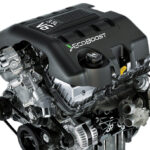 Which Ford F-150 Engine Is Best? A Real-World Buyer’s Guide
Common Ford F-150 Problems (And How Serious They Are)
No truck is perfect. Let’s be realistic.
Frequently Reported Issues
- Spark plug failures (older V8s)
- Timing chain wear (early EcoBoosts)
- Transmission shift complaints
- Electrical sensor glitches
The Good News
Most issues:
- Are well-documented
- Have known fixes
- Improve significantly in later models
Reliability Compared to Other Full-Size Trucks
How does the F-150 stack up?
F-150 vs Chevrolet Silverado
- F-150 has better engine variety
- Silverado has simpler mechanicals
- Reliability is similar overall
F-150 vs RAM 1500
- RAM offers comfort
- F-150 wins in long-term durability
F-150 vs Toyota Tundra
- Tundra is legendary for reliability
- F-150 offers better fuel economy and tech
Is the Aluminum Body Reliable Long Term?
Ford took a gamble—and it paid off.
Benefits of Aluminum Construction
- No rust like steel
- Lighter weight improves efficiency
- Strong crash performance
Concerns
- Higher repair costs after accidents
- Specialized repair shops needed
Verdict: Durable and reliable, with trade-offs.
Owner Satisfaction and Reliability Perception
Sometimes perception matters as much as data.
Why Owners Keep Buying F-150s
- Familiarity
- Strong resale value
- Wide customization options
- Trust built over generations
High repeat ownership is a quiet reliability signal.
Used Ford F-150 Reliability: What to Check Before Buying
Buying used? Pay attention.
Checklist Before Purchase
- Full service records
- Transmission behavior during test drive
- Engine cold-start noise
- Recalls completed
A well-maintained used F-150 can be a gem.
Best F-150 Configurations for Reliability
Some setups simply age better.
Top Picks
- 5.0L V8 + 6-speed automatic
- 2.7L EcoBoost + newer 10-speed
- Lower trim levels with fewer electronics
Simplicity often equals longevity.
Can a Ford F-150 Be a “Forever Truck”?
Honestly? Yes—for the right owner.
If you:
- Maintain it properly
- Choose a reliable year and engine
- Avoid neglect
An F-150 can feel like a trusted companion, not just a vehicle.
Final Verdict: Are Ford F-150 Reliable?
So, after all this—what’s the truth?
Our Honest Conclusion
Yes, Ford F-150s are reliable, especially:
- When properly maintained
- When choosing proven engines
- When avoiding known problem years
They’re not perfect. No truck is. But the F-150 has earned its reputation through decades of real-world performance.
It’s less like a flashy sports car and more like a dependable old friend—one that shows up, does the work, and keeps going.
Frequently Asked Questions
Are Ford F-150 reliable after 100,000 miles?
Yes. Many exceed 200,000 miles with proper maintenance and timely repairs.
Which Ford F-150 engine is the most reliable?
The 5.0L V8 and the 2.7L EcoBoost consistently rank at the top.
Are newer F-150s more reliable than older ones?
In general, yes—especially models from 2020 onward with improved transmissions.
You may be interested in readingWhat Years of Ford F-150 to Avoid (Buyer’s Survival Guide)You may be interested in reading
Which Ford F-150 Engine Is Best? A Real-World Buyer’s GuideYou may be interested in reading
 What Is the Best Month to Buy a Ford F-150?
Is the Ford F-150 expensive to repair?
Costs are moderate compared to competitors, thanks to widespread parts availability.
Should I buy a used Ford F-150?
Absolutely—just research the model year, engine, and service history carefully.
If you want to know other articles similar to Are Ford F-150 Reliable? The Real-World Truth We’ve Learned Over Time you can visit the category Blog.
Vauxhall Meriva Insurance Group UK: Costs, Ratings and Savings

Is Hyundai i40 a Good Car? An Honest Used-Car Review
Hyundai i40 Years to Avoid: The Complete Used-Car Guide
Hyundai i40 Reliability: Common Problems, Lifespan, and Buying Advice

Which Kia Rio Engine Is Best? A Smart Buyer’s Guide
Kia Rio Reliability: A Real-World Guide for Smart Buyers
Leave a Reply
More content of your interest