
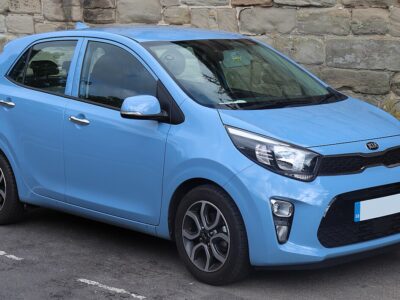
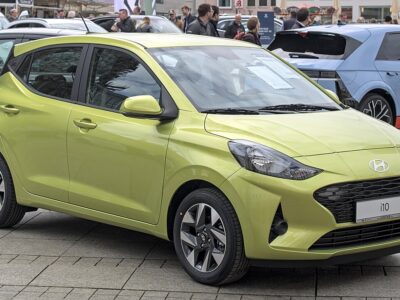
Hyundai i10 Fuel Tank Capacity: Complete Guide by Model Year, Engine and Fuel Range


The Hyundai i10 fuel tank capacity ranges from 35 to 40 litres, depending on the model year and generation. The latest Hyundai i10 models have a 36-litre fuel tank, while the second-generation i10 features a larger 40-litre tank.
Understanding how much fuel your Hyundai i10 can hold is important for estimating driving range, calculating refuelling costs and planning longer journeys. Although the i10 is a compact city car, its efficient petrol engines allow it to cover considerable distances between fill-ups.
In this guide, we explain the Hyundai i10 fuel tank size across different generations, compare the 1.0-litre and 1.2-litre petrol engines, calculate how far you can travel on a full tank and answer common questions about refuelling.
Content in this publication
- Hyundai i10 Fuel Tank Capacity by Year
- Hyundai i10 Fuel Tank Capacity by Engine
- How Far Can a Hyundai i10 Travel on a Full Tank?
- Hyundai i10 Fuel Tank Capacity in Gallons
- Hyundai i10 Fuel Consumption and Efficiency
- How Much Does It Cost to Fill a Hyundai i10?
- Hyundai i10 Fuel Warning Light: How Much Petrol Is Left?
- How to Check the Hyundai i10 Fuel Level
- Hyundai i10 Fuel Tank Capacity vs Other City Cars
- How to Maximise Your Hyundai i10 Fuel Range
- Frequently Asked Questions About Hyundai i10 Fuel Tank Capacity
- How Many Litres Is the Hyundai i10 Fuel Tank?
- Does the Hyundai i10 1.0 Have a 36-Litre Fuel Tank?
- What Is the Fuel Tank Capacity of a 2018 Hyundai i10?
- What Is the Hyundai i10 2025 Fuel Tank Capacity?
- How Many Miles Can a Hyundai i10 Do on a Full Tank?
- Is the Hyundai i10 Fuel Efficient?
- Is the Hyundai i10 Petrol or Diesel?
- Is the Hyundai i10 Grand Fuel Tank the Same Size?
- Why Does My Hyundai i10 Take Less Than 36 Litres When Refuelling?
- Final Verdict: Is the Hyundai i10 Fuel Tank Big Enough?
Hyundai i10 Fuel Tank Capacity by Year
The Hyundai i10 has been produced across three main generations, each offering slightly different fuel tank capacities.
| Hyundai i10 Model Years | Fuel Tank Capacity |
|---|---|
| 2008–2013 | 35 litres |
| 2014–2019 | 40 litres |
| 2020–2022 | 36 litres |
| 2023–2024 | 36 litres |
| 2025 | 36 litres |
| 2026 | 36 litres |
These figures apply to the standard European-market Hyundai i10. Specifications may differ for certain international models, including the Hyundai Grand i10.
Interestingly, the second-generation Hyundai i10 has the largest fuel tank of the three generations. Hyundai reduced the capacity from 40 litres to 36 litres when introducing the third-generation model.
However, improvements in engine efficiency mean that the newer i10 can still deliver a competitive driving range.
Hyundai i10 Fuel Tank Capacity by Engine
The Hyundai i10 has been offered with several petrol engines, including the popular 1.0 MPI, 1.2 MPI and turbocharged 1.0 T-GDi.
Although these engines differ in performance and fuel consumption, the fuel tank capacity is generally shared across engine options within the same generation.
Hyundai i10 1.0 Petrol Fuel Tank Capacity
The Hyundai i10 1.0 MPI is one of the most popular engines in the range, particularly among drivers looking for low running costs.
For models manufactured from 2020 onwards, the Hyundai i10 1.0 petrol has a 36-litre fuel tank.
This three-cylinder engine is designed primarily for economical urban driving, although it is also suitable for motorway journeys.
Depending on the model year, transmission and equipment specification, official combined fuel consumption is approximately 5.1–5.4 litres per 100 kilometres.
With a full tank, the theoretical driving range can exceed 650 kilometres under favourable conditions.
Earlier 1.0-litre models from the second generation generally use a 40-litre fuel tank.
Hyundai i10 1.2 Petrol Fuel Tank Capacity
The Hyundai i10 1.2 MPI also has a 36-litre fuel tank in third-generation models.
This four-cylinder engine offers additional power compared with the naturally aspirated 1.0-litre version, making it particularly attractive for drivers who regularly travel with passengers or use faster roads.
However, its slightly higher fuel consumption can result in a shorter driving range.
Typical official combined consumption figures for recent models are approximately 5.3–5.6 litres per 100 kilometres.
The 2014–2019 Hyundai i10 1.2 petrol has a larger 40-litre tank.
Hyundai i10 N Line Fuel Tank Capacity
The Hyundai i10 N Line combines sportier styling with a more powerful engine in versions equipped with the 1.0 T-GDi turbocharged petrol unit.
Despite its performance-oriented design, the modern Hyundai i10 N Line retains the same 36-litre fuel tank as the standard model.
The 90 PS turbocharged engine offers stronger acceleration, but fuel consumption depends heavily on driving style.
Drivers who frequently accelerate hard or maintain high motorway speeds may notice a shorter distance between refuelling stops.
How Far Can a Hyundai i10 Travel on a Full Tank?
One of the most important questions for Hyundai i10 owners is how many miles or kilometres they can drive before needing to refuel.
The answer depends on the vehicle's fuel consumption, tank capacity and driving conditions.
For the modern Hyundai i10 with a 36-litre fuel tank, the theoretical maximum range can be calculated using the following formula:
Driving range = Fuel tank capacity ÷ Fuel consumption × 100
The table below shows the theoretical range at different average consumption levels.
| Fuel Consumption | Range With 36 Litres |
|---|---|
| 4.5 L/100 km | 800 km |
| 5.0 L/100 km | 720 km |
| 5.5 L/100 km | 655 km |
| 6.0 L/100 km | 600 km |
| 6.5 L/100 km | 554 km |
| 7.0 L/100 km | 514 km |
These calculations assume the full nominal tank capacity is consumed. They are mathematical estimates rather than recommended distances between fuel stops.
In everyday conditions, many Hyundai i10 drivers can expect approximately 450–600 kilometres (280–373 miles) between refuelling stops, although the result varies considerably.
Hyundai i10 Range in City Driving
The Hyundai i10 is particularly well suited to urban environments thanks to its compact dimensions, relatively low weight and economical engines.
However, city driving does not always produce the best fuel consumption.
Frequent stops, traffic congestion and short journeys can increase petrol usage.
When driving mainly in heavy traffic, fuel consumption might reach 6.0–7.0 litres per 100 kilometres or more.
Consequently, you may need to refuel more frequently than someone who regularly drives on open roads.
Hyundai i10 Range on the Motorway
On longer journeys at steady, moderate speeds, the Hyundai i10 can achieve good fuel economy.
A 1.0-litre petrol version may consume less fuel on a relaxed journey than during repeated stop-start driving.
However, high motorway speeds can increase consumption because the engine must work harder to overcome aerodynamic resistance.
Maintaining a consistent speed and avoiding unnecessary acceleration can help maximise the distance travelled on each tank.
Hyundai i10 Fuel Tank Capacity in Gallons
While litres are the standard measurement in most European countries, many drivers in the United Kingdom and United States prefer to understand fuel capacity in gallons.
The modern Hyundai i10's 36-litre tank is equivalent to approximately:
- 7.9 UK imperial gallons
- 9.5 US gallons
The difference matters because UK and US gallons are not the same size.
For older Hyundai i10 models, the conversions are:
| Fuel Tank Size | UK Gallons | US Gallons |
|---|---|---|
| 35 litres | 7.7 | 9.2 |
| 36 litres | 7.9 | 9.5 |
| 40 litres | 8.8 | 10.6 |
These figures are useful when comparing fuel economy statistics across different countries.
For example, miles per gallon figures published in the United Kingdom are based on imperial gallons, while American MPG measurements use smaller US gallons.
Hyundai i10 Fuel Consumption and Efficiency
Fuel tank capacity alone does not determine how economical a vehicle is.
A smaller tank combined with an efficient engine may deliver a similar driving range to a larger tank fitted to a less efficient car.
For recent UK Hyundai i10 models, representative official combined fuel consumption figures are:
| Hyundai i10 Engine | Approximate Combined Consumption |
|---|---|
| 1.0 MPI manual | 5.1–5.3 L/100 km |
| 1.0 MPI automated manual | 5.3–5.4 L/100 km |
| 1.2 MPI manual | 5.3–5.4 L/100 km |
| 1.2 MPI automated manual | 5.5–5.6 L/100 km |
| 1.0 T-GDi N Line | 5.4 L/100 km |
These figures are based on representative recent UK specifications. Consumption changes with the model year, wheels, transmission and equipment.
Real-world figures may be higher or lower depending on road conditions and driving habits.
What Affects Hyundai i10 Fuel Economy?
Several factors influence how quickly the i10 uses its fuel:
- Driving style: Sudden acceleration and aggressive braking increase consumption.
- Traffic conditions: Stop-start driving can significantly reduce efficiency.
- Tyre pressure: Underinflated tyres increase rolling resistance.
- Air conditioning: Frequent use can slightly increase fuel consumption.
- Vehicle weight: Additional passengers and luggage require more energy.
- Road conditions: Hills and rough surfaces can increase consumption.
- Maintenance: Worn spark plugs, dirty filters or mechanical issues may affect efficiency.
Keeping the vehicle properly maintained can make a noticeable difference over time.
How Much Does It Cost to Fill a Hyundai i10?
The cost of filling a Hyundai i10 depends on the local petrol price and how much fuel remains in the tank.
For the modern 36-litre Hyundai i10, the calculation is straightforward:
Refuelling cost = Litres added × Petrol price per litre
For illustration, the following table shows the cost of filling an empty 36-litre tank at different petrol prices.
| Petrol Price Per Litre | Full Tank Cost |
|---|---|
| £1.30 | £46.80 |
| £1.40 | £50.40 |
| £1.50 | £54.00 |
| £1.60 | £57.60 |
| £1.70 | £61.20 |
These are illustrative prices, not current pump-price quotations.
In practice, you will normally pay less because most drivers refuel before the tank is completely empty.
For example, if your Hyundai i10 has approximately 8 litres remaining, adding 28 litres at £1.50 per litre would cost £42.
The older 40-litre i10 will naturally cost slightly more to fill from empty at the same petrol price.
Hyundai i10 Fuel Warning Light: How Much Petrol Is Left?
The Hyundai i10 features a low-fuel warning light that alerts the driver when the fuel level approaches the reserve range.
The warning typically appears as an illuminated petrol pump symbol on the dashboard.
When this warning appears, the vehicle still has some fuel remaining, but the exact amount depends on the generation and operating conditions.
It is important not to assume that the warning light always comes on with a fixed number of litres remaining.
Fuel level readings can be influenced by factors such as vehicle inclination, road conditions and sensor behaviour.
How Far Can You Drive After the Fuel Light Comes On?
There is no single guaranteed distance that applies to every Hyundai i10.
The remaining range depends on how much fuel is left and how quickly the engine consumes it.
Although the car may continue operating for some distance after the warning appears, drivers should not rely on an assumed reserve range.
We recommend refuelling at the next convenient opportunity rather than deliberately driving until the tank is almost empty.
Frequently operating with very little fuel can increase the risk of running out unexpectedly, particularly during long journeys or in heavy traffic.
How to Check the Hyundai i10 Fuel Level
Most Hyundai i10 models have a fuel gauge integrated into the instrument cluster.
Depending on the generation, the display may be analogue or digital.
The gauge indicates the approximate amount of petrol remaining in the tank.
Many newer versions also provide a distance-to-empty display, which estimates how far the vehicle can travel before requiring fuel.
However, the distance-to-empty reading is not a precise measurement.
It is calculated using information such as recent fuel consumption and the estimated remaining fuel quantity.
As a result, the displayed range can change significantly when driving conditions change.
For example, a long period of economical driving may increase the estimated range, while heavy traffic or sustained acceleration may reduce it.
Hyundai i10 Fuel Tank Capacity vs Other City Cars
The Hyundai i10 competes with several popular small cars, including the Kia Picanto, Toyota Aygo X and Fiat Panda.
Their fuel tank sizes are relatively similar, although exact capacities depend on the model year and powertrain.
| City Car | Typical Fuel Tank Capacity |
|---|---|
| Hyundai i10 (2020 onwards) | 36 litres |
| Kia Picanto | 35 litres |
| Toyota Aygo X petrol | 35 litres |
| Fiat Panda petrol | 37 litres |
| Volkswagen up! petrol | 35 litres |
The Hyundai i10 therefore offers a slightly larger tank than some of its direct competitors.
However, this does not automatically mean it provides a longer driving range.
Engine efficiency, vehicle weight and driving conditions are equally important.
For buyers who regularly make longer journeys, comparing real-world fuel economy is often more useful than focusing exclusively on tank capacity.
How to Maximise Your Hyundai i10 Fuel Range
The Hyundai i10 is already an economical vehicle, but a few simple driving habits can help you cover more distance between visits to the petrol station.
Maintain the Correct Tyre Pressure
Incorrect tyre pressure can increase rolling resistance and fuel consumption.
Check your tyres regularly and inflate them according to the manufacturer's recommendations for your specific model and load.
Avoid Aggressive Acceleration
Smooth acceleration is one of the easiest ways to improve efficiency.
Avoid unnecessarily high engine speeds, particularly when driving around town.
Reduce Unnecessary Weight
Carrying heavy objects that you do not need increases vehicle weight.
Removing unnecessary luggage can help improve fuel economy, particularly during frequent acceleration.
Plan Your Journeys
Combining several short trips into one longer journey can reduce the amount of fuel used during repeated cold starts.
Route planning can also help avoid heavy traffic and unnecessary detours.
Keep Up With Regular Servicing
Routine maintenance helps ensure that the engine operates efficiently.
Follow the recommended maintenance schedule and address any warning lights or unusual performance issues promptly.
Refuel Sensibly
When filling your Hyundai i10, stop when the fuel pump automatically shuts off.
Repeatedly attempting to add more petrol after the nozzle clicks off is not recommended.
Overfilling can interfere with the fuel system's vapour-management components.
Frequently Asked Questions About Hyundai i10 Fuel Tank Capacity
How Many Litres Is the Hyundai i10 Fuel Tank?
The latest Hyundai i10 has a 36-litre fuel tank. First-generation models generally have a 35-litre tank, while second-generation models have a 40-litre tank.
Does the Hyundai i10 1.0 Have a 36-Litre Fuel Tank?
Yes. The third-generation Hyundai i10 1.0 MPI petrol, introduced in 2020, has a 36-litre fuel tank in European specifications. Earlier 1.0-litre models may have a different capacity.
What Is the Fuel Tank Capacity of a 2018 Hyundai i10?
The 2018 Hyundai i10 has a 40-litre fuel tank in standard European specifications. This applies to both the 1.0-litre and 1.2-litre petrol versions.
What Is the Hyundai i10 2025 Fuel Tank Capacity?
The 2025 Hyundai i10 has a 36-litre fuel tank across the main UK petrol engine configurations, including the 1.0 MPI, 1.2 MPI and 1.0 T-GDi N Line.
How Many Miles Can a Hyundai i10 Do on a Full Tank?
A modern Hyundai i10 may cover approximately 280–373 miles between refuelling stops in ordinary conditions. Actual range varies depending on fuel consumption, driving style and when you choose to refuel.
Is the Hyundai i10 Fuel Efficient?
Yes. The Hyundai i10 is designed to deliver economical fuel consumption, particularly in urban and suburban driving. Recent petrol models offer official combined figures of approximately 5.1–5.6 litres per 100 kilometres, depending on the engine and specification.
Is the Hyundai i10 Petrol or Diesel?
Current European-market Hyundai i10 models are petrol-powered. Some older Hyundai i10 models were available with diesel engines in certain markets, so buyers should check the specifications of the individual vehicle.
Is the Hyundai i10 Grand Fuel Tank the Same Size?
Not necessarily. The Hyundai Grand i10 and Grand i10 Nios sold in markets such as India are different vehicles from the European Hyundai i10. For example, certain Grand i10 Nios petrol models have a specified 37-litre fuel filling capacity.
Always check the owner's manual for the correct market-specific capacity.
Why Does My Hyundai i10 Take Less Than 36 Litres When Refuelling?
The 36-litre figure represents the nominal capacity of the fuel tank, not the amount you should expect to add every time.
If there is still petrol remaining when you arrive at the filling station, the amount required will naturally be lower.
Fuel pump automatic shut-off behaviour and the vehicle's position can also affect the amount added.
Final Verdict: Is the Hyundai i10 Fuel Tank Big Enough?
The Hyundai i10 offers a practical balance between fuel tank capacity, economy and everyday usability.
Although its 36-litre fuel tank is relatively small compared with larger hatchbacks and SUVs, it is well matched to the car's efficient petrol engines.
For everyday commuting, school runs, shopping and occasional longer journeys, the capacity should be sufficient for most drivers.
The second-generation i10 offers a slightly larger 40-litre tank, while the newer third-generation model compensates with improved powertrain efficiency.
Overall, the Hyundai i10 fuel tank capacity is 36 litres for modern models, 40 litres for most 2014–2019 versions and 35 litres for first-generation vehicles.
For the most accurate information, always confirm the fuel tank specification in your vehicle's owner's manual, particularly if you own an imported model or a Hyundai Grand i10.
If you want to know other articles similar to Hyundai i10 Fuel Tank Capacity: Complete Guide by Model Year, Engine and Fuel Range you can visit the category Service and Parts.
Kia Picanto Dashboard Warning Lights & Symbols: Complete Guide

Hyundai i20 Dashboard Warning Lights Guide

Vauxhall Antara Dashboard Lights: Complete Warning Symbol Guide
Hyundai i10 Dashboard Warning Lights and Their Meanings: Complete Guide
Peugeot 308 Dashboard Symbols, Warning Lights & Fault Guide

Hyundai Kona Dashboard Warning Lights
Leave a Reply
More content of your interest