
Toyota Prius Boot Space: Capacity, Dimensions and Practicality Guide

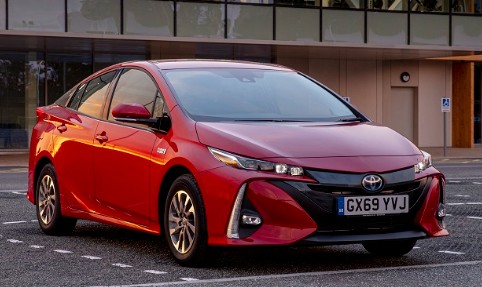
The Toyota Prius boot space is an important consideration for anyone looking for a fuel-efficient hybrid that can also handle everyday luggage, shopping, family trips and occasional bulky items. Although the Prius is best known for its excellent fuel economy and advanced hybrid technology, its practicality has always been a major part of its appeal.
However, not every Toyota Prius offers the same luggage capacity. Boot space varies significantly depending on the model year, generation and whether you choose the conventional hybrid or the plug-in hybrid version.
The latest Toyota Prius Plug-in Hybrid sold in the UK offers 284 litres of boot space, while older conventional hybrid models can provide up to 502 litres, depending on their configuration.
In this guide, we'll explore Toyota Prius boot capacity across different generations, examine how practical the luggage compartment is, explain what happens when you fold the rear seats and help you decide whether the Prius offers enough room for your needs.
Content in this publication
- How Big Is the Toyota Prius Boot?
- Toyota Prius Boot Space by Generation
- Toyota Prius Boot Space With Rear Seats Down
- Toyota Prius Boot Dimensions
- Is the Toyota Prius Boot Big Enough for Suitcases?
- Can You Fit a Pushchair in a Toyota Prius?
- Toyota Prius Hybrid vs Plug-in Hybrid Boot Space
- Toyota Prius Boot Space Compared With Other Toyota Models
- Is the Toyota Prius Practical for Families?
- How to Make the Most of Toyota Prius Boot Space
- Toyota Prius Boot Space: Advantages and Disadvantages
- Frequently Asked Questions About Toyota Prius Boot Space
- How many litres is the Toyota Prius boot?
- Which Toyota Prius has the biggest boot?
- Does the Toyota Prius have a flat boot floor?
- Is the Toyota Prius boot bigger than the Toyota Corolla?
- Can you fit golf clubs in a Toyota Prius?
- Can you fit a bicycle in a Toyota Prius?
- Does the Toyota Prius Plug-in have less boot space?
- Is the Toyota Prius boot suitable for a family holiday?
- Do the rear seats fold down in a Toyota Prius?
- Is the Toyota Prius a good car for carrying luggage?
- Final Verdict: Is the Toyota Prius Boot Space Good?
How Big Is the Toyota Prius Boot?
The Toyota Prius boot size depends primarily on the generation and hybrid system.
For buyers considering the latest UK-specification Prius Plug-in Hybrid, the official luggage capacity is 284 litres with the rear seats upright.
Older Prius models generally provide more luggage room, particularly the fourth-generation conventional hybrid produced between 2016 and 2022.
Here is a comparison of Toyota Prius boot space across different versions.
| Toyota Prius Model | Boot Capacity |
|---|---|
| Prius third generation (2009–2015) | 445 litres |
| Prius fourth generation (2016–2022) | 457–502 litres |
| Prius Plug-in Hybrid (2017–2022) | 360 litres |
| Latest Prius Plug-in Hybrid (UK) | 284 litres |
| Latest Prius Hybrid LE (USA) | 23.8 cubic feet |
| Latest Prius Hybrid XLE/Limited (USA) | 20.3 cubic feet |
Important: These figures use different measurement methods. Older European figures may measure luggage volume up to the roof, while the latest UK Prius uses a VDA measurement to the luggage cover. American EPA cargo measurements are also calculated differently. Consequently, the numbers should not be treated as directly equivalent.
The key takeaway is that older conventional hybrid versions of the Prius are generally the better option if maximum luggage capacity is your priority.
Toyota Prius Boot Space by Generation
Toyota has continuously redesigned the Prius to improve efficiency, aerodynamics, comfort and performance. These changes have also affected the size and shape of the luggage compartment.
Toyota Prius Third Generation (2009–2015)
The third-generation Toyota Prius offers approximately 445 litres of boot space with the rear seats upright.
This makes it a practical choice for drivers who need a reasonably spacious family hatchback without sacrificing fuel efficiency.
The boot has a wide opening, and the hatchback design makes loading luggage relatively straightforward.
With the rear seats folded down, luggage capacity increases to approximately 1,120 litres, based on Toyota's original specification.
This additional room is particularly useful when transporting larger shopping purchases, flat-pack furniture or holiday equipment.
One advantage of this generation is its relatively practical shape. Although the rear window slopes downwards, the luggage compartment provides useful depth and a reasonably accessible floor.
For buyers searching for an affordable used hybrid, the third-generation Prius remains an interesting choice.
Toyota Prius Fourth Generation (2016–2022)
The fourth-generation Prius is one of the most practical versions when it comes to luggage capacity.
Depending on the specification, it offers between 457 and 502 litres of boot space when measured to the roof.
The difference is partly related to the equipment stored beneath the boot floor.
Models equipped with a full-size spare wheel have less available luggage space than versions supplied with a tyre repair kit.
When measured only to the parcel shelf, the corresponding capacities are approximately 297 and 343 litres.
This distinction matters because luggage measurements can appear very different depending on whether the available space above the parcel shelf is included.
The fourth-generation Prius also benefits from a relatively long load area and folding rear seats.
For families regularly transporting pushchairs, suitcases or weekly shopping, this generation can be more convenient than the latest Prius Plug-in Hybrid.
It is particularly appealing to drivers who want the efficiency of a hybrid without moving to a larger SUV.
Toyota Prius Plug-in Hybrid (2017–2022)
The previous-generation Toyota Prius Plug-in Hybrid offers approximately 360 litres of luggage capacity when loaded above the parcel shelf.
However, the boot space below the luggage cover is considerably smaller, at approximately 191 litres.
The main reason for the reduction is the larger battery system used by the plug-in hybrid.
Toyota positioned additional battery components beneath the rear luggage area, raising the boot floor and reducing the usable storage depth.
Despite the smaller boot, the plug-in model remains suitable for everyday commuting, shopping and light luggage.
Nevertheless, buyers who frequently transport large suitcases or bulky items may find the conventional hybrid more convenient.
Latest Toyota Prius Plug-in Hybrid (2023 Onwards)
The fifth-generation Toyota Prius introduces a much sportier design, improved powertrain technology and a redesigned interior.
In the UK, the latest Prius is offered as a plug-in hybrid with an official boot capacity of 284 litres.
Its luggage compartment is practical for everyday essentials, but it is not particularly large compared with many conventional family hatchbacks.
The lower roofline and aerodynamic rear design also affect the available space for taller luggage.
Although the boot remains accessible through a hatchback tailgate, buyers should consider how frequently they need to carry large objects.
For someone who mainly travels alone or with one passenger, the available space will generally be sufficient.
For families taking extended holidays or regularly carrying bulky equipment, it may feel restrictive.
Toyota Prius Boot Space With Rear Seats Down
One of the most useful features of the Toyota Prius is its folding rear-seat arrangement.
Most modern Prius hatchback models use a 60/40 split-folding rear bench, allowing drivers to increase the available luggage area without necessarily sacrificing every rear passenger seat.
This flexibility makes the Prius more versatile than its boot capacity alone might suggest.
How Much Space Is Available With the Seats Folded?
The additional luggage volume depends on the generation.
The third-generation Prius offers approximately 1,120 litres with its rear seats folded.
Some fourth-generation conventional hybrid configurations provide more than 1,500 litres when measured using the relevant full-load method.
The latest Prius also has folding rear seats, although a directly comparable UK figure for the maximum folded-seat volume is not always published.
With the rear seats lowered, the available load length increases considerably.
This can make it possible to transport items such as:
- Large suitcases and travel bags
- Flat-pack furniture
- Camping equipment
- Sports equipment
- Smaller bicycles with suitable disassembly
- Boxes and household purchases
However, the sloping roofline and interior width can limit what fits through the tailgate.
For particularly large objects, measuring the item and the actual boot opening is more reliable than relying on luggage capacity alone.
Toyota Prius Boot Dimensions
Boot dimensions are just as important as total luggage volume.
A car may have a relatively generous capacity in litres but still struggle to accommodate a large suitcase because of the shape of its luggage compartment.
The Toyota Prius has a distinctive aerodynamic design, and this influences the available storage space.
Boot Width
The Prius generally provides a useful amount of width across the luggage compartment.
Older fourth-generation versions have a maximum quoted boot width of approximately 1,392–1,410 mm, depending on specification.
However, the usable width between the wheel arches is narrower.
This is important when transporting rectangular boxes, pushchairs or other bulky objects.
Boot Length
The boot floor provides enough length for typical shopping bags and travel luggage.
Folding the rear seats creates a longer load area, making the car more suitable for transporting equipment that would otherwise be difficult to accommodate.
The exact floor length varies between generations.
Boot Height
Boot height is one of the more noticeable limitations of the Prius.
The rear roofline slopes towards the tailgate, which helps improve aerodynamics but reduces the space available for tall objects.
The latest model has a particularly low and sporty profile.
As a result, soft travel bags may be easier to accommodate than rigid, oversized suitcases.
Loading Lip and Boot Floor
The loading lip and floor height can influence how easy the Prius is to use.
A relatively high boot floor may require heavier objects to be lifted farther from the ground.
The plug-in hybrid versions can have different floor arrangements because of their battery systems.
For buyers who regularly load heavy shopping, mobility equipment or a pushchair, checking the physical loading height is worthwhile.
Is the Toyota Prius Boot Big Enough for Suitcases?
Yes, the Toyota Prius can accommodate suitcases, but the number depends on their dimensions and the particular model.
In older conventional hybrid versions, the luggage compartment is generally spacious enough for several travel bags when packed efficiently.
The latest Prius Plug-in Hybrid has a smaller official boot capacity, so packing requires more planning.
For example, two medium-sized suitcases may be easier to accommodate than two particularly large rigid cases.
Soft-sided luggage is often more practical because it can be arranged around the shape of the boot.
If you're planning an airport transfer or a holiday involving several passengers, it is important to remember that the rear seats may need to remain upright.
This limits the possibility of extending luggage space.
For frequent airport journeys, a fourth-generation conventional Prius may be the more practical choice.
Can You Fit a Pushchair in a Toyota Prius?
A Toyota Prius can accommodate many compact and folding pushchairs, although compatibility depends on the exact dimensions.
Older conventional hybrid models provide a useful combination of boot depth and luggage capacity.
The latest Prius Plug-in Hybrid offers less room, particularly for large travel systems.
A compact umbrella-style pushchair is generally easier to transport than a full-size pram with a separate carrycot.
Before purchasing a Prius for family use, we recommend checking three things:
- The folded dimensions of your pushchair.
- The width and height of the boot opening.
- The remaining luggage space after the pushchair is loaded.
A pushchair may fit inside the boot but leave relatively little room for shopping or other family essentials.
For households with young children, this practical test is more useful than comparing published luggage capacities alone.
Toyota Prius Hybrid vs Plug-in Hybrid Boot Space
One of the biggest differences between Toyota Prius versions is the amount of space occupied by the hybrid battery system.
The conventional Prius hybrid uses a smaller battery because it does not need to store enough energy for extended electric-only driving.
The plug-in hybrid has a larger battery that can be charged from an external electricity supply.
Although this provides additional electric driving capability, battery packaging can affect cargo space.
This is particularly noticeable when comparing fourth-generation conventional and plug-in models.
The conventional hybrid offers a larger and deeper luggage area, while the plug-in version has a higher boot floor.
For the latest generation, the difference between regular hybrid and plug-in configurations also needs to be considered alongside regional specifications and measurement standards.
If boot space is your primary concern, the conventional hybrid version of an older Prius is often the more practical option.
If electric driving capability matters more, the plug-in hybrid may still provide enough luggage room for your everyday requirements.
Toyota Prius Boot Space Compared With Other Toyota Models
The Toyota Prius competes with several other vehicles in Toyota's hybrid range.
However, not all these models prioritise the same characteristics.
Toyota Prius vs Toyota Corolla
The Toyota Corolla is available in different body styles, including hatchback and estate versions in some markets.
The Corolla hatchback offers a relatively compact luggage compartment, while the Corolla Touring Sports provides significantly more space.
For families needing room for pushchairs, large suitcases and holiday equipment, the Corolla Touring Sports is generally the more practical choice.
The Prius, meanwhile, places greater emphasis on aerodynamic efficiency and its distinctive hybrid design.
Toyota Prius vs Toyota Yaris Cross
The Toyota Yaris Cross is a compact SUV with a taller body and more upright luggage area.
Its shape can make loading tall or bulky objects easier than in the Prius.
Although exact luggage capacities vary depending on the version, the Yaris Cross may appeal to drivers who prefer a higher loading area and a more conventional SUV-style boot.
The Prius offers a lower driving position and a more streamlined exterior.
Toyota Prius vs Toyota RAV4
The Toyota RAV4 is a larger SUV designed with greater passenger and luggage practicality in mind.
It offers considerably more room for large family loads in many configurations.
A RAV4 may be the better option if you frequently transport camping equipment, sports gear or several large suitcases.
However, it is also a larger vehicle, which can make parking and manoeuvring in tight spaces less convenient.
For drivers prioritising fuel efficiency and everyday urban travel, the Prius remains an attractive alternative.
Is the Toyota Prius Practical for Families?
The Toyota Prius can be a practical family car, particularly in its older conventional hybrid versions.
Its five-door hatchback layout provides convenient access to the passenger compartment and luggage area.
Most versions also offer five seats, although some earlier plug-in models were configured with only four.
For everyday activities such as school runs, commuting and supermarket visits, the Prius generally performs well.
However, the latest model's smaller boot and sloping rear roofline make it less versatile than some larger hatchbacks, estates and SUVs.
Families with small children should pay particular attention to pushchair storage and the space available when a rear-facing child seat is installed.
For a family of three, the Prius may provide sufficient practicality.
For larger families regularly travelling with extensive luggage, an estate or SUV could be a better fit.
How to Make the Most of Toyota Prius Boot Space
Even if your Prius has a relatively small boot, there are several ways to improve its everyday practicality.
Use soft-sided luggage: Flexible bags can fit into corners and irregular spaces more easily than rigid suitcases.
Fold the rear seats when necessary: If you are not carrying rear passengers, folding the seats creates a much larger loading area.
Remove the luggage cover when appropriate: This can create more room for taller items, although luggage should not obstruct visibility or become unsecured.
Use organisers: Storage organisers help prevent shopping and smaller objects from moving around while driving.
Choose compact equipment: Folding pushchairs, collapsible storage boxes and compact travel bags can make a noticeable difference.
Keep heavy items low: Position heavier luggage close to the floor and secure it properly to reduce movement during braking.
You should also avoid blocking the rear window or carrying unsecured objects that could become dangerous during sudden stops.
Toyota Prius Boot Space: Advantages and Disadvantages
The Prius offers several practical benefits, but there are also limitations worth considering.
Advantages
- Convenient hatchback tailgate for loading everyday luggage.
- Folding rear seats increase cargo flexibility.
- Older conventional hybrid versions offer generous luggage capacity.
- Suitable for shopping, commuting and occasional holidays.
- Practical five-door design on modern models.
- Compact exterior proportions compared with many family SUVs.
Disadvantages
- Latest UK Prius Plug-in Hybrid has a relatively small 284-litre boot.
- Sloping roofline restricts space for tall luggage.
- Plug-in hybrid battery packaging can reduce storage depth.
- Large pushchairs and bulky equipment may be difficult to accommodate.
- Cargo capacity varies considerably between model years and specifications.
Overall, the Prius remains practical for everyday use, but its suitability depends on the version and the type of luggage you regularly carry.
Frequently Asked Questions About Toyota Prius Boot Space
How many litres is the Toyota Prius boot?
The latest UK Toyota Prius Plug-in Hybrid has a boot capacity of 284 litres. Older fourth-generation conventional hybrid models offer between 457 and 502 litres when measured to the roof, depending on specification.
Which Toyota Prius has the biggest boot?
The fourth-generation conventional Toyota Prius is one of the roomiest versions, offering up to 502 litres of luggage capacity with the rear seats upright under Toyota's roof-height measurement.
Does the Toyota Prius have a flat boot floor?
Some Prius generations offer a relatively flat loading area when the rear seats are folded. However, the exact arrangement varies by model, and there may be a slight change in height between the boot floor and folded seatbacks.
Is the Toyota Prius boot bigger than the Toyota Corolla?
It depends on the model year and the Corolla body style. Some older Prius models have more luggage space than certain Corolla hatchbacks, but the Corolla Touring Sports estate is generally more spacious.
Can you fit golf clubs in a Toyota Prius?
Golf clubs can fit in many Prius models, particularly older conventional hybrids. Longer golf bags may need to be positioned diagonally or carried with part of the rear seat folded down.
Can you fit a bicycle in a Toyota Prius?
A bicycle may fit inside the Prius with the rear seats folded, especially if the front wheel is removed. Compatibility depends on the bicycle's frame size and the vehicle's interior dimensions.
Does the Toyota Prius Plug-in have less boot space?
In the fourth generation, the plug-in model has less luggage capacity than the conventional hybrid because of its larger battery system and higher boot floor.
Is the Toyota Prius boot suitable for a family holiday?
The Prius can be suitable for a family holiday, especially if you use compact luggage. Older conventional hybrid models are generally better suited to carrying several suitcases, while the latest plug-in version requires more careful packing.
Do the rear seats fold down in a Toyota Prius?
Yes. Modern Prius hatchbacks generally feature split-folding rear seats, allowing you to expand the luggage area when needed.
Is the Toyota Prius a good car for carrying luggage?
The Prius is suitable for everyday luggage and occasional trips. However, buyers who regularly carry very large or bulky items may prefer an estate car or SUV.
Final Verdict: Is the Toyota Prius Boot Space Good?
The Toyota Prius boot space is practical for everyday driving, but the amount of available luggage room varies significantly between generations.
If maximum cargo capacity is your priority, an older fourth-generation conventional Prius is one of the strongest choices. With up to 502 litres available under its roof-height measurement, it offers considerable flexibility for shopping, holidays and family activities.
The latest Toyota Prius Plug-in Hybrid takes a different approach. Its 284-litre UK boot is smaller, but it combines useful everyday storage with modern technology, improved performance and plug-in hybrid capability.
For couples, commuters and drivers who mainly carry modest amounts of luggage, the latest Prius should provide sufficient space.
For families with large pushchairs, frequent holiday luggage or bulky equipment, we would recommend looking closely at an older conventional hybrid Prius or considering a more spacious Toyota model.
Ultimately, the Toyota Prius remains a versatile and efficient car, but choosing the right generation is essential if boot capacity is an important part of your buying decision.
If you want to know other articles similar to Toyota Prius Boot Space: Capacity, Dimensions and Practicality Guide you can visit the category Service and Parts.
Kia Picanto Dashboard Warning Lights & Symbols: Complete Guide

Hyundai i20 Dashboard Warning Lights Guide
Vauxhall Antara Dashboard Lights: Complete Warning Symbol Guide
Hyundai i10 Dashboard Warning Lights and Their Meanings: Complete Guide
Peugeot 308 Dashboard Symbols, Warning Lights & Fault Guide

Hyundai Kona Dashboard Warning Lights
Leave a Reply
More content of your interest