

Weight of Jeep Grand Cherokee: Everything We Need to Know Before Buying

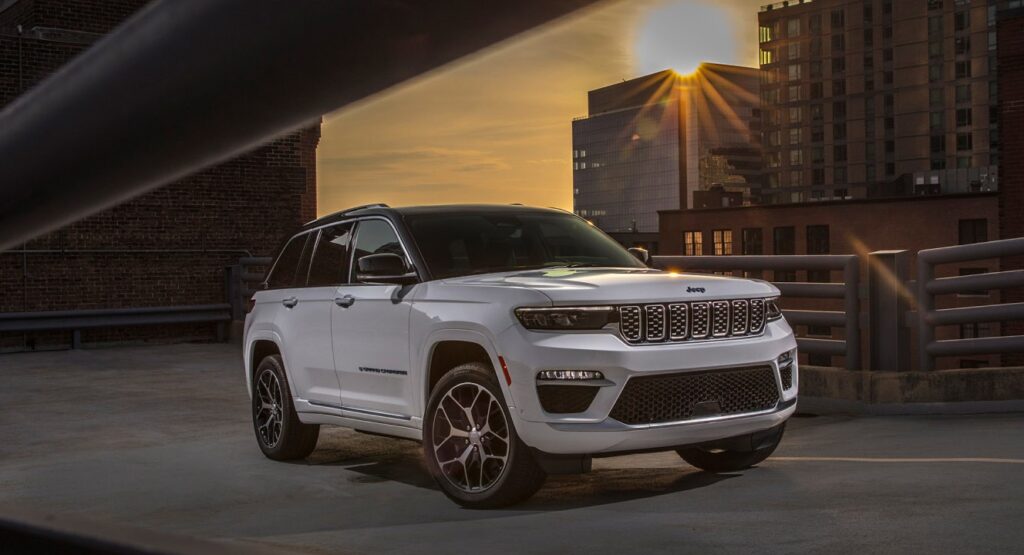
The Jeep Grand Cherokee has always walked a fascinating line between rugged off-road warrior and refined family SUV. It can crawl over rocks one weekend and glide through city streets the next. But beneath the leather seats, chrome accents, and muscular stance lies one critical detail many buyers overlook: weight.
And honestly? Weight changes everything.
It affects towing, fuel economy, acceleration, braking distance, off-road performance, tire wear, suspension feel, and even insurance costs. The weight of a Jeep Grand Cherokee is not just a number hidden inside a brochure. It is the invisible force shaping how this SUV behaves every single day.
So let’s unpack the real story behind the weight of the Jeep Grand Cherokee, why it matters, how it varies between trims and generations, and what drivers should truly expect when living with this heavyweight SUV.
Content in this publication
- Why Vehicle Weight Matters More Than Most Drivers Realize
- Average Weight of a Jeep Grand Cherokee
- Understanding Gross Vehicle Weight vs Curb Weight
- How Much Does the Jeep Grand Cherokee L Weigh?
- Why the 4xe Plug-In Hybrid Is So Heavy
- Weight Differences Between Jeep Grand Cherokee Generations
- How Weight Affects Fuel Economy
- Does the Jeep Grand Cherokee Feel Heavy While Driving?
- How Weight Helps Towing Performance
- Off-Road Performance and Weight
- Which Jeep Grand Cherokee Trim Is the Lightest?
- Which Jeep Grand Cherokee Is the Heaviest?
- How Weight Impacts Braking
- Wheel Size and Weight Relationship
- Payload Capacity Explained
- Is the Jeep Grand Cherokee Too Heavy?
- Comparing Grand Cherokee Weight to Competitors
- How Weight Influences Tire Wear
- Can We Reduce the Weight of a Grand Cherokee?
- Why Jeep Accepts the Weight Trade-Off
- Should Weight Affect Our Buying Decision?
- Final Thoughts on the Weight of the Jeep Grand Cherokee
- FAQs
Why Vehicle Weight Matters More Than Most Drivers Realize
When we talk about vehicle weight, we are really talking about character. A lighter SUV feels nimble and energetic. A heavier SUV often feels planted, stable, and secure.
The Grand Cherokee leans toward the second category.
Its weight contributes to:
- Strong highway stability
- Better towing confidence
- A smoother ride over rough roads
- Increased safety perception
- Greater off-road durability
But there are trade-offs too.
More weight can mean:
- Reduced fuel economy
- Slower acceleration
- Longer braking distances
- Higher tire wear
- Increased maintenance strain
It’s a bit like carrying a hiking backpack. A small bag feels effortless, but a heavy expedition pack changes how we move, climb, and react. SUVs work the same way.
Average Weight of a Jeep Grand Cherokee
The average weight of a modern Jeep Grand Cherokee ranges between:
| Model Type | Approximate Weight |
|---|---|
| Base trims | 4,200–4,500 lbs |
| Mid-level trims | 4,500–4,900 lbs |
| Plug-in hybrid 4xe | 5,300–5,700 lbs |
| Grand Cherokee L | 4,700–5,200 lbs |
That means the Grand Cherokee is significantly heavier than many midsize SUVs.
Some versions weigh nearly as much as full-size trucks.
Understanding Gross Vehicle Weight vs Curb Weight
This is where many buyers get confused.
Curb Weight
Curb weight refers to the SUV’s weight with:
- Fluids included
- Standard equipment installed
- Full fuel tank
- No passengers or cargo
Think of it as the vehicle standing alone in a parking lot.
Gross Vehicle Weight Rating (GVWR)
GVWR is the maximum allowable weight including:
- Passengers
- Cargo
- Towing tongue weight
- Accessories
The Grand Cherokee’s GVWR can exceed 6,500 pounds depending on configuration.
That’s substantial.
How Much Does the Jeep Grand Cherokee L Weigh?
The Jeep Grand Cherokee L is heavier than the standard model because of its:
- Longer wheelbase
- Third-row seating
- Additional structural reinforcement
- Larger dimensions
Typical weight ranges:
| Trim | Approximate Weight |
|---|---|
| Laredo L | ~4,700 lbs |
| Limited L | ~4,900 lbs |
| Summit Reserve L | ~5,200 lbs |
The added size transforms the Grand Cherokee into more of a luxury family hauler than a traditional midsize SUV.
It feels broader, calmer, and more substantial on the road.
Why the 4xe Plug-In Hybrid Is So Heavy
The Jeep Grand Cherokee 4xe introduces one major weight contributor: batteries.
Large battery packs are incredibly dense.
The 4xe often weighs:
- Over 5,300 pounds
- Nearly 1,000 pounds more than some base trims
That extra mass changes the SUV’s personality.
What We Notice in the 4xe
Positive Effects
- Extremely smooth ride
- Quiet operation
- Better low-speed traction
- Strong electric torque
Negative Effects
- Reduced agility
- Increased tire wear
- Slightly heavier steering feel
- Lower payload capacity
It’s like turning a hiking boot into a steel-toe work boot. More capable in some areas, heavier in others.
Weight Differences Between Jeep Grand Cherokee Generations
The Grand Cherokee has gained weight over time.
That is not surprising.
Modern SUVs now include:
- Advanced safety systems
- Larger infotainment screens
- More insulation
- Heavier crash structures
- Hybrid systems
- Air suspension technology
Here’s how the evolution roughly looks.
| Generation | Approximate Weight Range |
|---|---|
| ZJ (1993–1998) | 3,400–3,800 lbs |
| WJ (1999–2004) | 3,700–4,100 lbs |
| WK (2005–2010) | 4,000–4,600 lbs |
| WK2 (2011–2021) | 4,500–5,400 lbs |
| WL (2022+) | 4,200–5,700 lbs |
The modern Grand Cherokee has become significantly heavier than its ancestors.
But it has also become far more luxurious.
How Weight Affects Fuel Economy
Physics never negotiates.
A heavier SUV requires more energy to move.
That is why Grand Cherokee fuel economy varies dramatically.
Lighter Models
- Better MPG
- Faster acceleration
- Less drivetrain strain
Heavier Models
- More fuel consumption
- Slower city efficiency
- Increased braking load
For example:
| Engine | Approximate MPG |
|---|---|
| V6 gasoline | 19–26 MPG |
| V8 HEMI | 14–22 MPG |
| 4xe hybrid | 23–56 MPGe |
The hybrid offsets its heavy weight with electrification.
Without electric assistance, fuel economy would suffer heavily.
Does the Jeep Grand Cherokee Feel Heavy While Driving?
Yes — but not in a bad way.
The Grand Cherokee feels planted.
Instead of darting around corners like a compact crossover, it moves with confidence and composure. The steering is deliberate rather than twitchy.
Many drivers actually prefer this.
The Driving Feel Can Be Described As:
- Stable on highways
- Comfortable over potholes
- Relaxed at cruising speeds
- Confident during towing
It behaves more like a luxury SUV than a sporty crossover.
How Weight Helps Towing Performance
One reason the Grand Cherokee remains popular is towing capability.
Weight improves towing stability.
A heavier SUV resists trailer sway more effectively.
Typical Towing Capacities
| Engine | Towing Capacity |
|---|---|
| V6 | Up to 6,200 lbs |
| V8 HEMI | Up to 7,200 lbs |
| 4xe | Around 6,000 lbs |
That makes the Grand Cherokee capable of hauling:
- Boats
- Small campers
- Utility trailers
- Jet skis
- ATVs
Weight acts like an anchor when towing. It keeps the SUV composed when the trailer tries to shift momentum.
Off-Road Performance and Weight
At first glance, heavy SUVs seem bad for off-roading.
But the story is more nuanced.
Advantages of Weight Off-Road
- Better traction
- Improved tire grip
- More stable climbing
Disadvantages
- Easier to sink in mud
- Harder to recover when stuck
- Increased suspension stress
The Grand Cherokee balances this surprisingly well.
Especially trims equipped with:
- Quadra-Lift suspension
- Selec-Terrain system
- Skid plates
- Off-road tires
The SUV feels like a mountain goat wearing a tailored suit.
Which Jeep Grand Cherokee Trim Is the Lightest?
The lightest versions are typically:
- Two-row configurations
- V6 models
- Rear-wheel-drive trims
- Lower trim levels
Examples include:
- Laredo
- Altitude
- Basic Limited trims
These models often sit closer to 4,200 pounds.
They also tend to:
- Deliver better MPG
- Feel quicker
- Cost less to maintain
Which Jeep Grand Cherokee Is the Heaviest?
The heaviest configurations usually combine:
- 4xe hybrid system
- Four-wheel drive
- Luxury trims
- Air suspension
- Panoramic roofs
- Large wheels
Fully loaded Summit Reserve 4xe models can exceed 5,600 pounds.
That’s massive for a midsize SUV.
How Weight Impacts Braking
Heavy SUVs require stronger braking systems.
The Grand Cherokee compensates with:
- Large brake rotors
- Advanced ABS systems
- Electronic brake force distribution
Still, weight influences stopping distance.
Factors That Increase Braking Distance
- Cargo load
- Passengers
- Trailer towing
- Wet roads
- Oversized wheels
Drivers should always remember that a loaded Grand Cherokee behaves differently than an empty one.
Momentum becomes much harder to control.
Wheel Size and Weight Relationship
Bigger wheels increase unsprung weight.
Many Grand Cherokee trims feature:
- 18-inch wheels
- 20-inch wheels
- 21-inch wheels
Larger wheels:
- Improve aesthetics
- Increase road presence
- Enhance cornering feel
But they also:
- Add rotational mass
- Hurt efficiency
- Increase tire costs
Sometimes the flashy wheel upgrade comes with hidden compromises.
Payload Capacity Explained
Payload is different from towing.
Payload refers to:
- People
- Cargo
- Roof loads
- Hitch weight
Typical payload capacity ranges:
- 1,100–1,400 pounds
Interestingly, heavier trims sometimes have lower payload limits because the SUV itself already consumes more of the allowed weight threshold.
Is the Jeep Grand Cherokee Too Heavy?
That depends entirely on expectations.
If We Want:
- Sporty handling
- Lightweight agility
- Compact maneuverability
Then yes, it may feel heavy.
But if we want:
- Comfort
- Stability
- Luxury
- Towing confidence
- Off-road strength
Then the weight becomes an advantage.
The Grand Cherokee is not trying to be a featherweight athlete.
It is more like a heavyweight boxer: powerful, composed, and intimidating.
Comparing Grand Cherokee Weight to Competitors
Here’s how the Grand Cherokee stacks up against rivals.
| SUV | Approximate Weight |
|---|---|
| Toyota 4Runner | 4,400–4,800 lbs |
| Ford Explorer | 4,300–4,900 lbs |
| Honda Passport | 4,000–4,300 lbs |
| BMW X5 | 4,700–5,500 lbs |
| Land Rover Defender | 4,500–5,800 lbs |
The Grand Cherokee sits firmly in the heavier end of the segment.
That aligns it more closely with premium SUVs than lightweight family crossovers.
How Weight Influences Tire Wear
Heavier SUVs place greater pressure on tires.
This can lead to:
- Faster tread wear
- Increased heat buildup
- More sidewall strain
Especially on:
- Large wheels
- Aggressive driving
- Heavy towing
Regular tire rotations become crucial.
Skipping maintenance on a heavy SUV is like running a marathon in worn-out shoes. Problems multiply quickly.
Can We Reduce the Weight of a Grand Cherokee?
Not dramatically, but small changes help.
Ways to Reduce Effective Weight
- Remove unnecessary cargo
- Avoid oversized aftermarket wheels
- Use lightweight roof racks
- Empty unused towing equipment
Every pound matters.
Even removing 100 pounds can slightly improve:
- MPG
- Acceleration
- Braking feel
Why Jeep Accepts the Weight Trade-Off
Jeep engineers know exactly what they are doing.
The Grand Cherokee prioritizes:
- Comfort
- Capability
- Luxury
- Structural rigidity
- Towing strength
Those features require material.
And material means weight.
Modern buyers expect SUVs to feel like rolling living rooms. Soft leather, thick glass, insulated cabins, giant touchscreens, and safety systems all add pounds.
The Grand Cherokee embraces that reality instead of fighting it.
Should Weight Affect Our Buying Decision?
Absolutely.
Before buying, we should ask ourselves:
Do We Prioritize
- Fuel efficiency?
- Towing?
- Off-road use?
- Luxury comfort?
- Family road trips?
Because weight shapes every one of those experiences.
A lighter SUV may save fuel.
But the Grand Cherokee offers something harder to quantify: presence.
It feels substantial. Secure. Confident.
And sometimes that feeling matters more than shaving a few pounds.
Final Thoughts on the Weight of the Jeep Grand Cherokee
The weight of the Jeep Grand Cherokee tells the story of what this SUV has become over the decades.
It is no longer just a rugged off-roader. It has evolved into a sophisticated multipurpose machine capable of luxury cruising, towing heavy loads, conquering trails, and carrying families in comfort.
Yes, it is heavy.
But that weight contributes to:
- Stability
- Safety feel
- Towing confidence
- Ride quality
- Road presence
The Grand Cherokee does not try to float like a feather.
Instead, it plants itself on the road like an anchor in a storm — calm, capable, and unapologetically substantial.
And for many drivers, that is exactly the point.
FAQs
How much does a Jeep Grand Cherokee weigh in kilograms?
Most models weigh between 1,900 kg and 2,600 kg depending on trim, drivetrain, and hybrid components.
Which Jeep Grand Cherokee is the heaviest?
The heaviest versions are typically the 4xe Summit Reserve models, which can exceed 5,600 pounds.
Does vehicle weight affect towing capacity?
Yes. A heavier SUV generally improves towing stability and control.
Is the Jeep Grand Cherokee heavier than competitors?
In many cases, yes. It is heavier than several midsize SUVs because of its luxury features and capability-focused design.
Does the Grand Cherokee’s weight hurt fuel economy?
Weight does impact MPG, although hybrid 4xe models help offset fuel consumption through electric assistance.
If you want to know other articles similar to Weight of Jeep Grand Cherokee: Everything We Need to Know Before Buying you can visit the category Service and Parts.
Land Rover Defender 90 Tyre Pressure: Complete Guide
Land Rover Defender 90 Weight: Kerb Weight, GVW and Payload Explained
Land Rover Defender 90 Towing Capacity: Complete Guide
Land Rover Defender 90 Boot Space: Size, Dimensions and Practicality
Toyota Hilux Key Battery Replacement: Complete DIY Guide
Toyota Hilux Windscreen Replacement Cost: Prices, Factors, and Money-Saving Tips
Leave a Reply
More content of your interest