Kia Niro dashboard warning lights tell us when a system needs attention, when a safety feature is working and when the car is ready to move. The right response depends on the symbol, its colour and the message beside it. A green READY indicator is normally reassuring; a brake warning that stays on after releasing the parking brake needs immediate attention.
In this guide, we explain the main Kia Niro warning lights and symbols with an image, their meaning and practical next steps. We cover the Niro Hybrid, Plug-in Hybrid and Niro EV, including the earlier e-Niro name used in some markets.
Equipment, graphics and warning messages vary by model year and country. These are representative illustrations, including Kia’s general indicator artwork, rather than an exact reproduction of every Niro instrument cluster. Engine-related entries apply to HEV and PHEV versions; electric-only warnings are labelled separately. Always match the message to the handbook supplied with your vehicle.
An urgent fault or safety reminder. Read the message and stop safely when it concerns oil pressure, overheating or braking. A red parking-brake indicator can simply mean the brake is applied.
Amber or yellow
A fault, limited function or condition needing attention. Reduce demands on the vehicle and arrange the appropriate check.
Green, white or blue
Usually an operating or standby indicator. Blue commonly identifies high beam; green READY means the drive system is active.
Flashing
The meaning depends on the system. Flashing ESC can show traction intervention, whereas a flashing engine warning needs urgent assessment.
Several lights appear briefly when we switch the car on. This is a normal system check if they extinguish as described in the handbook. We should assess persistent warnings after the vehicle has reached READY, rather than treating every lamp in accessory mode as a fault.
Red warning lights and urgent safety reminders
Engine oil pressure warning
Red — Hybrid and Plug-in Hybrid onlyThe oil-can symbol warns that the petrol engine may not have adequate oil pressure. It is not a routine oil-change reminder, and a normal oil level does not prove that pressure is safe.Pull over safely, switch the vehicle off and check the oil level using the handbook procedure. If the level is correct, the warning persists or there is unusual engine noise, arrange recovery. Continuing to run the engine can cause serious damage.
Engine coolant temperature warning
Red temperature warning or overheating message — HEV/PHEVA thermometer above waves, a high temperature gauge or an overheating message means we need to reduce the risk of engine damage. Stop safely and follow the overheating procedure for the exact model.Do not open a hot coolant cap. Steam, escaping coolant or a persistent warning calls for assistance. The Niro EV also has cooling circuits, but an electric-drive temperature warning should be interpreted through its own message rather than this petrol-engine entry.
Parking brake and brake fluid warning
Red — all powertrainsThis symbol can remain on while the parking brake is applied. If it stays on after the brake is fully released, there may be low brake fluid or a braking-system problem.Stop at a safe location. If the pedal feels abnormal, fluid is leaking or the warning remains on, do not continue driving: arrange recovery. Simply adding fluid without finding why it is low can leave a serious fault unresolved.
12-volt battery and charging system warning
Red — all powertrainsThe battery-shaped light concerns the low-voltage electrical supply. On a Niro EV, it does not mean that the large traction battery merely needs plugging in. A fault in the low-voltage charging system can leave the vehicle unable to operate normally.Move to a safe place and follow the displayed instructions. Arrange an inspection if the warning appears while driving, even if it later clears. Do not assume that replacing the 12-volt battery alone will fix the cause.
Electric power steering warning
Steering-wheel warning — colour varies by displayThis light indicates a problem with steering assistance. We may notice a much heavier steering wheel, particularly while parking or manoeuvring slowly. It does not identify a specific failed component by itself.Hold the wheel securely and move to a safe stopping place. If steering control is difficult, arrange recovery. A persistent warning needs diagnosis even if the steering still feels normal; the system should not be assumed reliable because assistance briefly returns.
Airbag and restraint system warning
Red — all powertrainsA seated person with a circle represents the supplemental restraint system. A light that stays on beyond its start-up check can indicate a fault affecting airbags or related restraint components.Arrange a prompt inspection. This symbol is different from the passenger-airbag OFF status indicator, which may be normal in particular circumstances. We should not probe airbag connectors or fit devices intended to hide the warning.
Seat belt reminder
Red — all powertrainsThe belt symbol reminds us that an occupied seat may not have its belt fastened. Some Niro displays show individual seating positions and sound a warning while the vehicle is moving.Before setting off, check everyone is correctly restrained and child seats are properly fitted. An object on a passenger seat may trigger an occupancy sensor. If the warning continues with the seat empty or the belt securely fastened, have the buckle and sensing system checked.
Door or tailgate open warning
Red symbol or vehicle graphic — all powertrainsAn open-door graphic shows that a door or the tailgate is not fully latched. The display may identify the opening, and some versions also provide a separate bonnet message.Stop before trying to close anything. Check the latch area for obstructions, then close the opening securely. If the warning remains despite a properly closed panel, a latch or switch may need attention. Do not dismiss it as a sensor problem without checking the panel first.
Hybrid and electric vehicle warning symbols
READY indicator
Green — all powertrainsREADY means the propulsion system is active and the car can move. A Niro Hybrid can be ready with its petrol engine silent, so engine noise is not a reliable guide to whether the vehicle is switched on.A READY indicator that flashes or disappears unexpectedly during operation needs attention, especially with a drive-system message. When parking, select Park, apply the parking brake and switch the vehicle off before leaving it.
EV mode indicator
Green — Hybrid and Plug-in HybridThe EV symbol indicates electric driving operation in the hybrid system. It can come and go as the car switches between electric propulsion and petrol-engine operation. This normally reflects how the system is managing energy.On a PHEV, the engine can still start when operating conditions require it. We should read the selected driving mode and any message together rather than interpreting every engine start, or every disappearance of EV, as a fault.
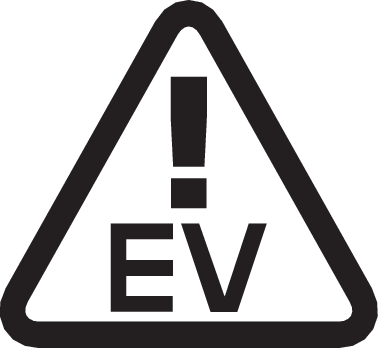
Electric vehicle service warning
Amber vehicle/exclamation symbol — Niro EVThis warning relates to the electric vehicle control system. If it remains after starting or appears while driving, the vehicle needs professional diagnosis. It is not simply a calendar-based service reminder.Read the accompanying message and check whether power is restricted. If the display instructs us to stop, or the car behaves abnormally, stop safely and seek assistance. Do not touch orange high-voltage cables or attempt to open traction-battery components.
Power down warning: the turtle symbol
Amber — Niro EVThe turtle means available propulsion power is restricted. Possible operating conditions include a very low traction-battery charge, an excessively hot or cold battery, or a hot motor. It does not always indicate a failed component.Avoid demanding acceleration and situations requiring full power. Follow the displayed charging or temperature instructions. If the service warning also appears, treat the combination as a possible fault. Arrange assistance if the car cannot maintain a safe speed or climb safely.
High-voltage battery low-charge warning
Amber — Niro EVThis symbol indicates that the driving battery has a low state of charge. Check the remaining range, charge percentage and navigation to a suitable charger. It is separate from the red 12-volt battery warning.Charge as soon as practical and avoid assuming the displayed range is guaranteed: weather, gradients and speed affect consumption. If the battery is too depleted to reach a charger safely, stop somewhere secure and request assistance rather than pushing on until propulsion is lost.
Charging connector indicator
Connection status — Plug-in Hybrid and EV, where fittedA plug or connector symbol indicates that a charging cable is connected. It does not, on its own, prove that charging is progressing: a schedule, completed charge or charging interruption may explain why energy is not flowing.Check the charging display, target level and charger status. Disconnect using the vehicle’s normal unlocking procedure before driving. Never force a locked connector or continue using equipment that is damaged, overheated or displaying an electrical fault.
Regenerative braking warning
Red brake warning together with an amber brake warning — representative red component shownA regenerative-braking fault can bring on red and amber brake warnings together. Braking performance may change, pedal effort may increase and stopping distances may become longer. This combination needs urgent attention.Slow carefully and stop in a safe location. Arrange professional assistance, particularly if the pedal feels different. Reduced energy recovery with a full or cold battery is not automatically the same condition: a persistent brake warning or stop message must take priority.
Amber warning lights: engine, brakes and tyres
Check engine light
Amber — Hybrid and Plug-in Hybrid onlyThe engine-shaped malfunction indicator concerns the petrol-engine management or emissions system. Many different faults can trigger it, so the symbol alone cannot tell us which part needs replacing.For a steady light with normal operation, arrange diagnosis promptly and avoid heavy engine loads. If it flashes, the engine runs roughly or power falls sharply, stop safely and seek advice. A Niro EV has no combustion engine, so this entry does not apply to the electric-only model.
ABS warning light
Amber — all powertrainsABS helps prevent wheel lock during hard braking. With an ABS fault alone, conventional braking may remain available, but anti-lock assistance may not work. We should allow more room and avoid abrupt braking.Have the system checked promptly. If the red brake warning appears at the same time, the concern is more serious and can involve brake-force distribution. Stop safely and arrange assistance rather than treating the combination as an isolated ABS fault.
Electronic parking brake warning
Amber EPB — where fittedAn amber EPB warning is different from the red lamp confirming that the parking brake is engaged. It can indicate a parking-brake system problem; related stability-control faults can also cause it to appear.Check that the vehicle is secure before leaving it and read any release or application message. Do not force the car to move if the brake will not release. Have a persistent warning investigated, particularly when it appears with other brake warnings.
Low tyre pressure and TPMS warning
Amber — all powertrains where fittedThe horseshoe-shaped symbol with an exclamation mark usually means one or more tyres are significantly underinflated. Stop safely, inspect for damage and check pressures with a gauge against the vehicle’s cold-pressure label.A warning that flashes before remaining on can indicate a monitoring-system fault. Correct pressures still matter even if the sensors have a problem. Do not drive on a visibly flat tyre, and do not inflate to the tyre sidewall’s maximum figure instead of Kia’s specified pressure.
Electronic stability control indicator
Amber slipping-car symbol — all powertrainsA flashing ESC symbol generally means the system is intervening to help manage wheel slip or stability. Ease off the accelerator and adapt to the available grip. The light does not mean the road is safe at the current speed.A lamp that remains steadily illuminated after start-up can indicate a system fault. Arrange diagnosis and drive cautiously, recognising that stability assistance may be unavailable. A tyre or wheel-speed-related problem can affect several linked systems.
ESC OFF indicator
Amber — all powertrainsESC OFF indicates that stability or traction assistance has been switched off or reduced, depending on the setting. It is distinct from a steady ESC malfunction warning.For normal road driving, restore the usual assistance setting using the handbook instructions. If the indicator cannot be cleared or appeared without a deliberate selection, have the system checked. We should not disable assistance to conceal another warning or use it as a substitute for investigating a recurring fault.
Master warning triangle
Amber — all powertrainsThe triangle with an exclamation mark directs us to another warning message. It is a general attention signal, not a diagnosis of the engine, battery or brakes by itself.Read the information display when safely stopped. Depending on equipment, the cause can involve blocked driver-assistance sensors, lighting or another monitored function. Record the actual wording before contacting a workshop. The appropriate response follows that message, not the triangle alone.
Immobiliser or smart key indicator
Amber key/vehicle symbol — behaviour variesThis indicator relates to key recognition and starting authorisation. Some illumination during normal key detection is expected; persistent flashing or a no-start condition may mean that the key is not recognised.Check that the correct key is inside the vehicle and read any key-battery message. Use the emergency starting method in the exact handbook if needed. Avoid repeatedly attempting to start the vehicle without addressing the displayed instruction, especially if the low-voltage battery seems weak.
Low fuel warning
Amber — Hybrid and Plug-in Hybrid onlyThe fuel-pump symbol means the petrol level is low. Refill soon, even if a plug-in hybrid still shows usable electric range, because the engine may be needed during the journey.We should not intentionally run the tank dry. The distance-to-empty estimate changes with conditions and cannot guarantee how far the car will travel. On a Niro EV, use the traction-battery charge display instead; there is no petrol tank to refill.
Driver-assistance and lighting indicators
Forward Safety or collision-assistance warning
Amber fault/off status; red intervention warning on applicable displaysA persistent amber collision-assistance warning can mean the function is switched off, temporarily unavailable or faulty. Read the message before deciding which explanation applies. Dirt, snow or obstruction around a sensor can affect operation.Clean accessible sensor areas as instructed and keep control of speed and braking yourself. A red collision alert while driving requires immediate attention to traffic. If an unavailable or fault warning persists in clear conditions, arrange inspection.
Lane Keeping Assist indicator
White/green status or amber warning — equipment dependentLane indicators show whether lane assistance is selected, able to recognise markings or actively assisting. Colours and graphics differ between generations, so an unlit or white symbol is not automatically a failure.Keep your hands on the wheel and follow the message. Poor markings, weather or a blocked camera can limit operation. A persistent amber malfunction warning needs diagnosis; lane assistance should never replace our own steering or observation of road boundaries.
AUTO HOLD indicator
White standby, green holding, amber fault — where fittedAUTO HOLD can keep the vehicle stationary after we stop without continually pressing the brake pedal. The indicator colour shows whether the function is waiting, holding or reporting a problem.Confirm that the car is held before lifting your foot. If an amber warning appears, use the brake pedal and have the system checked. AUTO HOLD is not a reason to leave a powered-on vehicle unattended; use Park and the parking brake when parking.
LED headlamp warning
Amber — where fittedThis warning indicates a problem with an LED headlamp or a related component. Illumination or flashing after start-up should be investigated rather than confused with the ordinary lights-on indicator.Check whether the road is being lit adequately before continuing after dark. A lamp that appears to work does not rule out a control fault. Arrange repair and avoid driving in conditions where reduced lighting would prevent us from seeing or being seen safely.
High beam indicator
Blue — normal lighting statusThe blue headlamp symbol means high beam is on. It normally indicates a selected lighting function rather than a defect.Dip the lights when needed to avoid dazzling other road users. If automatic high beam is enabled, we still need to supervise it and intervene when appropriate. A separate high-beam-assist symbol can show that automatic control is selected without proving that the main beams are currently illuminated.
High Beam Assist indicator
Usually green headlamp with A — where fittedThis symbol identifies the automatic high-beam function. Actual switching depends on the conditions and the system’s ability to detect lighting and other vehicles.We should still watch the blue high-beam indicator and control the lights manually when required. Camera obstruction, poor visibility or unusual road lighting can limit performance. If the display reports an assistance fault, read that message separately from the normal function-selected symbol.
Dipped beam indicator
Green — where displayedThe dipped-headlamp symbol indicates that low beams are selected or operating. It is a normal status light, not a low-power or battery warning.Check the lighting setting when visibility drops. Daytime running lights are not a substitute for the correct night-time lighting arrangement, and a bright dashboard does not prove all required exterior lamps are on. We should select the appropriate lights for darkness, rain and other reduced-visibility conditions.
Rear fog light indicator
Amber — where fittedThe rear fog symbol shows that the bright rear fog lamp is switched on. Its amber colour does not, by itself, indicate a fault.Use it only when visibility and local rules justify it, then switch it off when conditions improve. Leaving it on in clear conditions can dazzle following drivers and make brake lights less obvious. The front-fog indicator, where fitted, uses a different symbol and usually a green colour.
Turn signal and hazard indicators
Green flashing arrows — all powertrainsOne flashing arrow normally identifies the selected turn signal; both flash when the hazard warning lights are operating. These are routine indications that help us confirm the selected function.An unexpectedly fast flash or a missing indication can suggest a lamp or circuit problem. Check the exterior indicators from a safe location and arrange repair if they are not working correctly. Cancel a turn signal after the manoeuvre if it has not cancelled automatically.
HEV, PHEV and EV: which warnings apply to your Niro?
The Niro Hybrid combines a petrol engine and electric motor. The Plug-in Hybrid adds external charging capability, while the Niro EV uses electric propulsion without a petrol engine. This is why a generic dashboard list can be misleading: an oil-pressure warning belongs to the combustion-engine versions, while the EV’s turtle warning concerns restricted electric propulsion.
On a hybrid, a changing battery gauge is part of normal energy management. A PHEV moving from electric operation into hybrid operation is also different from an electric-drive failure. We need to read the actual warning text, especially messages asking us to check the hybrid system, stop safely or switch the vehicle off. Do not substitute charging or refuelling for investigating a system fault.
What should we do when several warning lights appear together?
First, assess how the vehicle behaves. Changed braking, heavy steering, loss of propulsion or a stop instruction takes priority over identifying every symbol. Move to safety without sudden inputs and seek assistance if the car cannot be controlled normally.
Several warnings do not necessarily mean several independent components have failed. Linked systems can share information, and a low-voltage supply problem can affect multiple functions. Nevertheless, we should not assume that every cluster of warnings is “just the battery”. Photograph the display only after stopping, note when the warnings appeared and ask for a diagnostic check covering the relevant control modules.
Can we reset Kia Niro warning lights ourselves?
Some warnings clear when we correct their cause, such as fastening a belt, closing a door or restoring tyre pressures. The time or driving conditions needed for a tyre-pressure update vary, so use the model-specific handbook instead of a universal reset sequence.
For fault warnings, clearing diagnostic codes does not repair the vehicle. Disconnecting a battery can erase useful information and may create additional setup work. We should have the fault identified and repaired before clearing stored warnings. A maintenance reminder is a separate function and should only be reset after the required service has been completed.
Conclusion
Understanding Kia Niro dashboard warning lights starts with matching the symbol to the powertrain, colour and accompanying message. READY, EV mode and lighting indicators are often normal. Persistent oil-pressure, brake, overheating or drive-system warnings deserve a much faster response. By stopping when required and investigating the cause, we can avoid turning a manageable warning into a more serious problem.
1. What does the triangle with an exclamation mark mean on a Kia Niro?
It is the master warning light. We need to read the accompanying dashboard message to find the cause. Depending on the vehicle’s equipment, it can relate to driver assistance, lighting or another monitored condition. The triangle alone does not identify a failed component.
2. Can I drive my Kia Niro with the check engine light on?
A steady light with otherwise normal operation calls for prompt diagnosis and gentle driving. A flashing light, rough running or significant power loss means we should stop safely and seek assistance. This warning applies to the Hybrid and Plug-in Hybrid, which have petrol engines.
3. Why is the green READY light on when the engine is silent?
READY confirms that the drive system is active. A hybrid can move electrically without its petrol engine running, and an EV is normally quiet when stationary. Treat the vehicle as capable of moving whenever READY is displayed, and switch it off properly before leaving.
4. What does the turtle warning mean on a Niro EV?
It means propulsion power is limited. Low battery charge or unsuitable component temperatures can cause it, while an accompanying service warning may indicate a fault. Follow the display’s instructions, avoid demanding acceleration and seek assistance if safe progress is no longer possible.
5. Is the red battery light the same as a low EV charge warning?
No. The red battery-shaped warning concerns the 12-volt electrical supply or its charging system. The high-voltage battery’s low-charge indication concerns driving energy. Plugging in to charge is not a diagnosis or guaranteed repair for a persistent red 12-volt warning.
If you want to know other articles similar to Kia Niro Dashboard Warning Lights & Symbols you can visit the category Service and Parts.
Auto Guide
I show you the best reviews of all car brands, the information we collect and show is verified by our mechanics, we hope that everything you read here is useful to buy the car of your dreams










More content of your interest