

Fiat Punto Engine Size: The Complete Guide to Every Engine Option

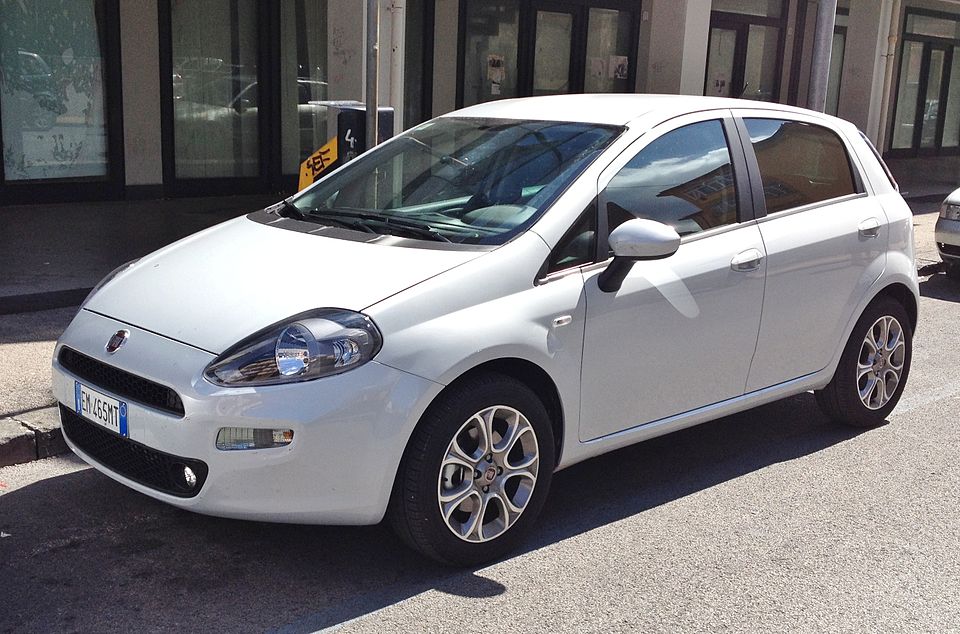
The Fiat Punto has earned its place as one of Europe's most successful small cars. Affordable, practical, and surprisingly versatile, it has served millions of drivers for decades. Yet one of the most important aspects of buying or owning a Punto is understanding its engine options.
Unlike many vehicles that offer only a handful of powertrains, the Fiat Punto was available with a remarkably wide range of petrol and diesel engines. From economical city-focused units to turbocharged performance models, there was an engine size for almost every type of driver.
In this comprehensive guide, we explore the Fiat Punto engine size range, compare petrol and diesel options, examine performance and fuel economy, discuss reliability, and help determine which engine best suits your needs.
Content in this publication
- Understanding Fiat Punto Engine Size
- The Evolution of Fiat Punto Engines
- Petrol Engine Sizes Available in the Fiat Punto
- Diesel Engine Sizes Available in the Fiat Punto
- Comparing Small and Large Fiat Punto Engines
- Petrol Versus Diesel: Which Is Better?
- The Most Reliable Fiat Punto Engine Size
- Best Fiat Punto Engine Size for Fuel Economy
- Best Fiat Punto Engine Size for Performance
- How Engine Size Affects Insurance Costs
- Engine Size and Resale Value
- Common Issues Associated with Fiat Punto Engines
- Choosing the Right Fiat Punto Engine Size
- Why Fiat Punto Engine Size Still Matters Today
- Conclusion
- Frequently Asked Questions
Understanding Fiat Punto Engine Size
Engine size, often called engine displacement, refers to the total volume swept by all cylinders inside the engine. It is usually measured in liters or cubic centimeters (cc).
For example:
- 1.1-liter engine = approximately 1,108cc
- 1.2-liter engine = approximately 1,242cc
- 1.3-liter diesel = approximately 1,248cc
- 1.4-liter engine = approximately 1,368cc
- 1.9-liter diesel = approximately 1,910cc
Traditionally, larger engines produced more power while smaller engines prioritized fuel efficiency. However, advances such as turbocharging and direct injection changed the landscape significantly, allowing smaller engines to deliver impressive performance.
The Fiat Punto is an excellent example of this evolution.
The Evolution of Fiat Punto Engines
Throughout its production life, the Punto underwent several transformations, and each generation introduced new engine technologies.
First Generation Punto
The original Punto arrived in the early 1990s with simple and efficient petrol engines designed primarily for urban transportation.
These engines focused on affordability and reliability rather than outright performance.
Second Generation Punto
The second-generation model expanded the engine lineup considerably.
Fiat introduced improved petrol units and more sophisticated diesel engines that offered better efficiency and lower emissions.
Grande Punto Era
The Grande Punto marked a major leap forward.
Larger dimensions, improved comfort, and modern engine technology helped the Punto compete against increasingly advanced rivals.
Turbocharged engines also became more prominent during this period.
Punto Evo and Later Models
The final Punto models emphasized efficiency, reduced emissions, and lower ownership costs while maintaining respectable performance levels.
Petrol Engine Sizes Available in the Fiat Punto
Petrol engines represented the backbone of the Punto lineup and remain popular among used-car buyers today.
1.1-Liter Petrol Engine
The 1.1-liter engine served as an entry-level option.
Its strengths included:
- Low purchase price
- Excellent fuel efficiency
- Cheap insurance
- Simple maintenance
While performance was modest, it fulfilled its role perfectly as a city commuter.
For drivers who spent most of their time navigating urban streets, the 1.1-liter engine was more than adequate.
1.2-Liter Petrol Engine
The 1.2-liter engine became one of the most iconic Punto powerplants.
Many enthusiasts and mechanics consider it the ideal balance between economy, reliability, and usability.
Benefits include:
- Proven reliability
- Affordable servicing
- Strong fuel economy
- Sufficient everyday performance
The 1.2-liter engine may not set your pulse racing, but it performs consistently year after year.
For countless owners, it remains the best all-around Fiat Punto engine size.
1.2 16V Engine
The 16-valve version of the 1.2-liter engine delivered improved performance compared to the standard unit.
Key advantages included:
- Increased horsepower
- Better throttle response
- Smoother acceleration
- Enhanced motorway capability
This engine offered a more engaging driving experience without significantly increasing running costs.
1.4-Liter Petrol Engine
The 1.4-liter engine catered to drivers who wanted additional power.
Compared with the smaller 1.2-liter option, it provided:
- Faster acceleration
- Improved overtaking ability
- More relaxed cruising
- Better performance when fully loaded
For drivers frequently traveling on motorways, the extra power was immediately noticeable.
1.4 16V Engine
The 16-valve version took performance a step further.
Its characteristics included:
- Higher revving nature
- Increased horsepower
- Sportier personality
- Greater flexibility across the rev range
This engine transformed the Punto into a surprisingly enjoyable hatchback.
1.4 T-Jet Turbo Engine
The T-Jet remains one of the most celebrated engines ever fitted to a Fiat Punto.
Turbocharging dramatically increased performance while maintaining a relatively small displacement.
Advantages include:
- Strong torque delivery
- Quick acceleration
- Excellent driving dynamics
- Enthusiast appeal
Many Punto fans view the T-Jet as the ultimate petrol engine in the lineup.
Diesel Engine Sizes Available in the Fiat Punto
Diesel engines became increasingly popular across Europe, particularly among high-mileage drivers.
Fiat's MultiJet technology played a major role in the Punto's success.
1.3 MultiJet Diesel
The 1.3 MultiJet is arguably one of Fiat's greatest engineering achievements.
Despite its small size, it delivers impressive efficiency and torque.
Its strengths include:
- Outstanding fuel economy
- Low running costs
- Strong reliability
- Excellent motorway efficiency
Many drivers routinely achieved fuel consumption figures that seemed impossible for larger vehicles.
The 1.3 MultiJet remains a favorite among commuters.
1.6 MultiJet Diesel
In selected markets, Fiat offered a 1.6-liter MultiJet diesel.
This engine struck a balance between economy and performance.
Drivers appreciated:
- Additional power
- Improved torque
- Comfortable long-distance driving
- Strong fuel efficiency
It occupied the middle ground between the smaller 1.3 and larger 1.9 diesel engines.
1.9 MultiJet Diesel
The 1.9-liter MultiJet focused more heavily on performance.
Its characteristics included:
- Substantial torque
- Strong acceleration
- Excellent motorway cruising
- Better towing capability
This engine gave the Punto a surprisingly muscular personality.
Comparing Small and Large Fiat Punto Engines
Choosing an engine size often comes down to understanding priorities.
Benefits of Smaller Engines
Smaller engines generally provide:
- Better fuel economy
- Lower insurance costs
- Reduced maintenance expenses
- Lower emissions
These advantages make them ideal for urban drivers and budget-conscious owners.
Benefits of Larger Engines
Larger engines offer:
- Greater power
- Improved acceleration
- Better overtaking capability
- Enhanced motorway comfort
Drivers who regularly travel long distances often appreciate these qualities.
Petrol Versus Diesel: Which Is Better?
The answer depends entirely on driving habits.
When Petrol Makes More Sense
Petrol engines are often preferable if you:
- Primarily drive in cities
- Cover fewer annual miles
- Prefer quieter operation
- Want simpler maintenance
When Diesel Is the Better Choice
Diesel engines shine if you:
- Travel long distances regularly
- Spend significant time on motorways
- Prioritize fuel economy
- Need strong low-end torque
The right choice depends on how the vehicle will be used.
The Most Reliable Fiat Punto Engine Size
Reliability is often a deciding factor when purchasing a used vehicle.
1.2 Petrol Reliability
The 1.2-liter petrol engine enjoys an excellent reputation.
Owners value it because it is:
- Mechanically simple
- Inexpensive to repair
- Durable over high mileage
- Easy to maintain
Properly serviced examples frequently exceed 150,000 miles.
1.3 MultiJet Reliability
The 1.3 MultiJet also performs exceptionally well.
Its reputation is built on:
- Robust engineering
- Efficient operation
- Long service life
- Proven dependability
Many examples remain on the road after years of intensive use.
Best Fiat Punto Engine Size for Fuel Economy
Fuel economy remains one of the Punto's strongest selling points.
Most Economical Petrol Engine
The 1.2-liter petrol engine delivers excellent efficiency without sacrificing usability.
Its balance of affordability and practicality makes it a standout option.
Most Economical Diesel Engine
The 1.3 MultiJet is the clear winner.
Its combination of low fuel consumption and impressive range makes it one of the most efficient engines ever fitted to a Punto.
Best Fiat Punto Engine Size for Performance
Not every Punto owner prioritizes economy.
Some drivers want excitement.
Top Petrol Performance Choice
The 1.4 T-Jet offers:
- Turbocharged power
- Strong acceleration
- Engaging driving characteristics
- Excellent responsiveness
It transforms the Punto into a genuinely entertaining car.
Top Diesel Performance Choice
The 1.9 MultiJet provides:
- Massive torque
- Strong mid-range acceleration
- Relaxed motorway cruising
Its performance often surprises first-time drivers.
How Engine Size Affects Insurance Costs
Insurance companies consider engine size when calculating premiums.
Generally speaking:
Lower Insurance Engines
- 1.1 petrol
- 1.2 petrol
These are often the cheapest options to insure.
Higher Insurance Engines
- 1.4 T-Jet
- Sporting variants
- Larger diesel engines
More performance usually results in higher premiums.
Engine Size and Resale Value
Certain Punto engines maintain stronger resale values than others.
The most desirable options often include:
- 1.2 petrol
- 1.3 MultiJet diesel
Their popularity creates consistent demand in the used-car market.
Performance-oriented T-Jet models also attract enthusiasts and can command higher prices.
Common Issues Associated with Fiat Punto Engines
Every engine has potential weaknesses.
1.2 Petrol Issues
Common concerns include:
- Ignition coil failures
- Sensor faults
- Timing belt maintenance requirements
Fortunately, repairs are typically affordable.
1.3 MultiJet Issues
Possible issues include:
- EGR valve deposits
- Diesel particulate filter problems
- Injector wear
Most problems can be minimized through proper maintenance.
1.4 T-Jet Issues
Owners should monitor:
- Turbocharger condition
- Boost leaks
- Service intervals
Regular maintenance is essential.
Choosing the Right Fiat Punto Engine Size
The best engine depends on your lifestyle.
Best for City Driving
The 1.2-liter petrol remains the ideal choice.
It offers:
- Excellent reliability
- Low running costs
- Easy maintenance
- Strong urban efficiency
Best for Long-Distance Drivers
The 1.3 MultiJet excels here.
Benefits include:
- Outstanding fuel economy
- Excellent range
- Strong motorway performance
Best for Enthusiasts
The 1.4 T-Jet stands out.
Its turbocharged nature creates a much more engaging driving experience.
Best Overall Choice
For most buyers, the 1.2-liter petrol represents the best combination of:
- Reliability
- Affordability
- Efficiency
- Practicality
It remains the benchmark Punto engine.
Why Fiat Punto Engine Size Still Matters Today
Although production has ended, the Fiat Punto remains a popular used vehicle.
Its broad engine range means buyers can find a model tailored to their specific needs.
Whether seeking economy, reliability, or performance, there is a Punto engine capable of delivering the desired experience.
Understanding the differences between engine sizes helps owners make smarter purchasing decisions and enjoy lower long-term ownership costs.
Conclusion
The Fiat Punto's engine lineup is one of its greatest strengths. From the economical 1.1-liter petrol engine to the powerful 1.4 T-Jet and highly efficient MultiJet diesels, the Punto offered something for every driver.
The 1.2-liter petrol remains the safest all-around choice thanks to its balance of reliability, affordability, and efficiency. Drivers covering significant mileage will appreciate the exceptional economy of the 1.3 MultiJet diesel, while enthusiasts will gravitate toward the exciting 1.4 T-Jet.
Ultimately, the best Fiat Punto engine size depends on how you drive. Choose the engine that matches your lifestyle, and the Punto can provide years of dependable and enjoyable motoring.
Frequently Asked Questions
What is the most common Fiat Punto engine size?
The 1.2-liter petrol engine is the most common and widely recommended Fiat Punto engine.
Which Fiat Punto engine is best for fuel economy?
The 1.3 MultiJet diesel offers the best fuel efficiency in the Punto range.
Is the Fiat Punto 1.2 engine reliable?
Yes. It is widely regarded as one of the most reliable engines ever fitted to the Punto.
What is the fastest Fiat Punto engine?
The 1.4 T-Jet turbocharged engine is among the fastest and most performance-focused Punto engines.
Should I choose a petrol or diesel Fiat Punto?
Petrol is ideal for lower annual mileage and city driving, while diesel suits long-distance commuting and motorway use.
If you want to know other articles similar to Fiat Punto Engine Size: The Complete Guide to Every Engine Option you can visit the category Service and Parts.
Nissan Rogue Oil Change Cost: Prices, Service Options, and What to Expect
Nissan Rogue Key Battery Replacement: Easy Step-by-Step Guide
Nissan Rogue Oil Change Interval: Complete Guide by Model Year
Nissan Rogue Brake Pads and Rotors Cost: Complete 2026 Guide

Kia Sorento Service Reset: How to Reset the Service Light
Kia Sorento Fuel Tank Capacity: Gallons, Litres and Model Differences
Leave a Reply
More content of your interest