
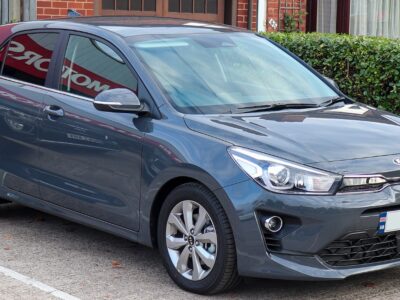
Hyundai i40 MPG: Real-World Fuel Economy Guide


The Hyundai i40 has always been something of a quiet achiever. It does not shout for attention like a sports saloon, nor does it wear a premium badge on its nose. Instead, it offers comfort, generous interior space, a large boot, and potentially excellent fuel economy—especially when fitted with one of Hyundai’s diesel engines.
But what Hyundai i40 MPG can we realistically expect?
Official figures can make the i40 look as though it runs on little more than fresh air. Real roads tell a more complicated story. Traffic, temperature, transmission type, driving style, maintenance, and even tyre pressure can knock several miles per gallon from the dashboard reading.
In this guide, we will examine official and real-world Hyundai i40 fuel economy, compare petrol and diesel engines, explain how the saloon differs from the Tourer, and show how we can squeeze more miles from every tank.
Content in this publication
- Hyundai i40 MPG at a Glance
- What Does MPG Mean?
- Official Hyundai i40 MPG Figures
- Real-World Hyundai i40 MPG
- Hyundai i40 1.7 CRDi MPG
- Hyundai i40 1.6 CRDi MPG
- Hyundai i40 Petrol MPG
- Hyundai i40 Saloon MPG Versus Tourer MPG
- Motorway Hyundai i40 MPG
- Hyundai i40 MPG Around Town
- How the DPF Affects Hyundai i40 MPG
- Manual Versus Automatic Hyundai i40 MPG
- What Is Good MPG for a Hyundai i40?
- Why Is My Hyundai i40 Using Too Much Fuel?
- How to Improve Hyundai i40 MPG
- How to Calculate Hyundai i40 MPG Accurately
- How Far Can a Hyundai i40 Travel on One Tank?
- Does Air Conditioning Reduce Hyundai i40 MPG?
- Does Eco Mode Improve Hyundai i40 MPG?
- Hyundai i40 MPG in Winter
- Hyundai i40 MPG When Towing
- Is the Hyundai i40 Economical Compared With Rivals?
- Is a Diesel or Petrol Hyundai i40 Better for MPG?
- Should You Buy a Hyundai i40 for Fuel Economy?
- Final Thoughts on Hyundai i40 MPG
- Frequently Asked Questions
Hyundai i40 MPG at a Glance
For most drivers, a healthy Hyundai i40 will generally return somewhere between 35 and 55 UK MPG, depending on the engine, gearbox, journey type, and condition of the car.
A sensible real-world overview looks like this:
| Hyundai i40 version | Typical real-world UK MPG |
|---|---|
| 1.6 GDi petrol manual | 35–43 MPG |
| 2.0 GDi petrol | 30–40 MPG |
| 1.7 CRDi diesel manual | 45–55 MPG |
| 1.7 CRDi diesel automatic | 40–50 MPG |
| 1.6 CRDi diesel | 45–55 MPG |
| Diesel on a long motorway journey | 50–60 MPG |
| Diesel in heavy urban traffic | 35–45 MPG |
These are broad working ranges rather than guarantees. A carefully driven diesel i40 can exceed them, while a neglected example used for short journeys may fall well below them.
Owner-submitted figures collected by Honest John place the average real-world economy of the i40 Tourer at roughly 47 MPG, although individual results range considerably.
What Does MPG Mean?
MPG means miles per gallon. It tells us how far a vehicle can travel using one gallon of fuel.
A car achieving 50 MPG can theoretically travel 50 miles on one imperial gallon. In the United Kingdom, fuel economy figures normally use imperial gallons, which are larger than US gallons.
That distinction matters. A Hyundai i40 advertised at 50 UK MPG would return approximately 41.6 US MPG when expressed using American gallons.
UK MPG Versus US MPG
We should never compare UK and US figures without converting them first.
As a rough guide:
- 40 UK MPG equals about 33.3 US MPG.
- 50 UK MPG equals about 41.6 US MPG.
- 60 UK MPG equals about 50 US MPG.
This explains why specifications from different countries sometimes appear to disagree even when they describe the same vehicle.
MPG Versus Litres per 100 Kilometres
Many countries express fuel consumption in litres per 100 kilometres rather than MPG.
Unlike MPG, a lower L/100 km number is better:
- 4.5 L/100 km is approximately 62.8 UK MPG.
- 5.0 L/100 km is approximately 56.5 UK MPG.
- 6.0 L/100 km is approximately 47.1 UK MPG.
- 7.0 L/100 km is approximately 40.4 UK MPG.
- 8.0 L/100 km is approximately 35.3 UK MPG.
Think of MPG as a distance score and L/100 km as a fuel-use score. One climbs as efficiency improves; the other falls.
Official Hyundai i40 MPG Figures
Official Hyundai i40 MPG varies according to the model year, engine, body style, trim, wheel size, and transmission.
Many i40 models were originally tested under the older NEDC laboratory system. NEDC figures were useful for comparing cars under controlled conditions, but they often painted a rosier picture than drivers experienced on the road.
Some diesel versions were officially rated at more than 60 MPG, particularly efficient manual Blue Drive models. However, achieving that figure consistently requires favourable conditions.
For example, published technical data for the facelifted 1.7 CRDi saloon lists combined consumption of approximately 57.6–61.4 UK MPG, depending on its exact specification.
That does not mean every owner will see 60 MPG while commuting through winter traffic. Laboratory figures are more like a car’s best résumé than a diary of its normal working week.
Real-World Hyundai i40 MPG
In everyday driving, the i40 diesel usually performs well for a large family car. Around 45–52 MPG is a realistic target for a properly maintained 1.7 CRDi used on mixed roads.
Drivers covering long, steady motorway journeys may see 55 MPG or more. Some can approach 60 MPG when travelling lightly loaded at moderate speeds in warm weather.
Urban use changes the picture. A cold diesel crawling through congested streets may return only 35–42 MPG. Frequent regeneration of the diesel particulate filter can push consumption even higher.
Real-world data for the i40 saloon’s 1.6 GDi petrol engine suggests an average close to its official figure, at roughly 42 MPG in some owner reports.
Why Official and Real MPG Differ
The difference between brochure economy and real MPG is not unique to Hyundai. Laboratory testing cannot perfectly recreate hills, headwinds, school traffic, wet roads, passengers, roof boxes, worn tyres, or a driver running late for work.
Official tests also use controlled temperatures and carefully defined driving cycles. Real life is untidy.
Our i40 may spend Monday creeping through traffic, Tuesday carrying luggage, Wednesday idling while the windscreen clears, and Thursday fighting a strong motorway headwind. The average MPG becomes a mixture of all those conditions.
Hyundai i40 1.7 CRDi MPG
The 1.7 CRDi is the engine most commonly associated with the Hyundai i40 in the UK and many European markets. It was offered in several power outputs, including versions producing approximately 115, 136, and 141 horsepower.
This engine suits the i40’s personality. It produces useful low-speed torque, feels relaxed on motorways, and can deliver strong fuel economy when given regular longer journeys.
1.7 CRDi Manual MPG
The manual 1.7 CRDi is generally the most economical all-round choice.
A reasonable real-world expectation is:
- Urban driving: 38–46 MPG
- Mixed driving: 45–54 MPG
- Motorway driving: 50–60 MPG
An early 136 hp saloon was listed with combined consumption of approximately 55.4 UK MPG, while extra-urban consumption was rated at around 61.4 UK MPG.
Owners with gentle driving habits may match or occasionally beat the combined official figure on a long run. Yet over a full year, including winter starts and local trips, an average in the high 40s is more believable.
1.7 CRDi Automatic MPG
The automatic i40 is convenient, but convenience usually carries a small fuel penalty.
Earlier six-speed automatic versions tend to consume more fuel than equivalent manuals, particularly around town. A factory figure for one 136 hp automatic model listed combined consumption at approximately 47.1 UK MPG.
In everyday use, we might see:
- Urban driving: 33–41 MPG
- Mixed driving: 40–48 MPG
- Motorway driving: 46–54 MPG
Later dual-clutch versions can be more efficient in the right conditions, although stop-start traffic, clutch wear, driving style, and software behaviour all influence the result.
Does the Automatic Gearbox Use Much More Fuel?
Not always.
At a steady cruising speed, the difference may be modest because the automatic can hold a high gear efficiently. In town, however, its extra weight and operating behaviour may widen the gap.
A manual gearbox gives the driver more control, but that does not automatically make it economical. Holding lower gears, accelerating hard, or using too much throttle can erase the manual’s advantage.
Hyundai i40 1.6 CRDi MPG
The later 1.6 CRDi replaced the familiar 1.7-litre diesel in some markets. Despite its smaller capacity, it offered competitive performance and lower official emissions.
The 1.6 CRDi can produce impressive motorway economy, with many drivers likely to achieve figures in the upper 40s or low 50s during normal mixed use.
Owner-submitted figures for the 136 hp version show a real-world average of approximately 51 MPG, representing about 83% of its official NEDC rating.
A realistic range is:
- Urban driving: 38–46 MPG
- Mixed driving: 46–54 MPG
- Motorway driving: 52–60 MPG
The engine is economical, but its emissions equipment still prefers proper journeys. Buying one for repeated two-mile trips is like purchasing hiking boots to walk around the kitchen: technically possible, but not what the equipment was designed to do.
Hyundai i40 Petrol MPG
Petrol i40 models are less common in the UK used-car market, but they make sense for certain drivers. They warm up more quickly, are usually better suited to short journeys, and avoid some diesel-specific concerns.
Their disadvantage is higher fuel consumption during long-distance use.
Hyundai i40 1.6 GDi MPG
The naturally aspirated 1.6 GDi petrol engine is not especially powerful for a car of the i40’s size, so drivers may need to work it harder when joining motorways or climbing hills.
Typical real-world economy is approximately:
- Urban driving: 30–37 MPG
- Mixed driving: 36–43 MPG
- Motorway driving: 42–48 MPG
A patient driver can achieve good results. Someone who regularly carries five adults and a full boot may find the engine needs more revs, pulling fuel economy downward.
Is the 1.6 GDi Too Slow to Be Economical?
An underpowered engine can sometimes use more fuel than expected because the driver presses the accelerator harder and remains in lower gears.
The 1.6 GDi can be economical on open roads, but it responds best to smooth momentum. If we treat every slip road like a qualifying lap, the fuel gauge will fall quickly.
Hyundai i40 2.0 GDi MPG
The 2.0 GDi offers stronger performance but normally consumes more fuel than the 1.6 petrol and considerably more than the diesel versions.
Published data for the 177 hp 2.0 GDi saloon lists combined fuel consumption of approximately 41.5 UK MPG.
In practice, drivers might experience:
- Urban driving: 25–33 MPG
- Mixed driving: 31–39 MPG
- Motorway driving: 39–46 MPG
The 2.0 GDi is best viewed as the smoother, stronger petrol choice rather than the economy champion.
Hyundai i40 Saloon MPG Versus Tourer MPG
The Hyundai i40 was sold as both a saloon and a Tourer estate. Mechanically, the two versions are closely related, so their fuel economy is similar.
You may be interested in reading What to Expect When Driving a Fiat 500: Owner's Perspective
The Tourer is slightly heavier and has a different rear body shape. As a result, it may use marginally more fuel than an equivalent saloon, particularly when fully loaded.
The difference is often small enough to disappear beneath normal variables such as traffic, weather, and tyre condition.
A careful Tourer driver may easily outperform an aggressive saloon driver. The person behind the wheel often matters more than the shape behind the rear seats.
Does a Full Boot Reduce MPG?
Yes, although a few shopping bags will not transform the car into a fuel tanker.
Carrying unnecessary weight means the engine must work harder during acceleration and on hills. The effect is most noticeable in stop-start driving.
A full family holiday load, roof box, passengers, and bicycles can reduce economy noticeably. The roof box may be the biggest culprit because it increases aerodynamic drag at speed.
Motorway Hyundai i40 MPG
The motorway is where the diesel i40 feels most at home. Its long gearing, stable chassis, comfortable seats, and torquey engine make it an effective long-distance cruiser.
At a steady 60–65 mph, a 1.7 CRDi manual may display figures approaching or exceeding 60 MPG under favourable conditions.
At 70 mph, the result may settle closer to 50–57 MPG. Push beyond normal motorway speeds and aerodynamic drag begins to bite like an invisible hand pulling the car backwards.
Why Speed Has Such a Large Effect
Air resistance rises sharply as speed increases. The difference between 60 and 70 mph is not merely ten extra units on the speedometer. The engine must work disproportionately harder to push the i40 through the air.
That means reducing motorway speed slightly can produce one of the easiest MPG improvements available.
We do not need to crawl behind lorries. Simply driving smoothly, leaving enough following distance, and avoiding repeated surges can make a measurable difference.
Hyundai i40 MPG Around Town
Urban economy is shaped by cold starts, traffic lights, braking, short distances, and idling.
A diesel engine may spend much of a short trip below its ideal operating temperature. Stop-start systems can help, but they cannot recover all the energy lost during repeated acceleration.
Expect a diesel i40 to return roughly 35–45 MPG in ordinary town use. Heavy congestion may pull the figure into the low 30s.
Petrol versions may return approximately 27–37 MPG in similar conditions.
Cold Starts and Short Trips
Fuel economy is normally worst during the first few miles after starting.
The engine uses additional fuel while warming up. Oil is thicker, the cabin heater may demand energy, and the battery may need recharging after starting the engine.
A five-mile trip can therefore produce much worse average MPG than a 50-mile journey, even when both are driven at similar speeds.
How the DPF Affects Hyundai i40 MPG
Diesel i40 models use a diesel particulate filter, commonly called a DPF. It traps soot from the exhaust and periodically burns that soot away through regeneration.
During an active regeneration, the engine may inject additional fuel to raise exhaust temperature. Instant fuel economy can fall, the cooling fan may run, and the idle speed may sit slightly higher than normal.
If the journey ends before regeneration finishes, the car may attempt the process again later. Repeated interruptions can increase fuel use and eventually contribute to a blocked DPF.
Signs of an Active DPF Regeneration
Possible signs include:
- Higher idle speed
- Cooling fans running
- Reduced instant MPG
- A hotter exhaust smell
- Stop-start temporarily unavailable
- Slightly different engine sound
- Increased fuel consumption
We should not assume every change means regeneration, but noticing a pattern can help us understand sudden dips in MPG.
Can a Blocked DPF Lower Fuel Economy?
Yes. A heavily restricted filter increases exhaust back pressure and can affect engine performance.
However, poor MPG alone does not prove the DPF is blocked. Faulty thermostats, dragging brakes, incorrect tyre pressure, air-flow sensor problems, injectors, driving conditions, and frequent short trips can produce similar symptoms.
A proper diagnostic check is better than replacing parts based on guesswork.
Manual Versus Automatic Hyundai i40 MPG
The manual transmission generally offers the highest official economy, particularly on older i40 models.
The automatic provides an easier driving experience, especially in traffic, but may sacrifice several MPG.
In real life, the difference depends on how we drive:
| Situation | Likely economy winner |
| Steady motorway cruising | Nearly equal |
| Open rural roads | Manual |
| Heavy stop-start traffic | Depends on gearbox and driver |
| Aggressive driving | Neither |
| Gentle mixed driving | Usually manual |
| Driver frequently uses wrong gears | Automatic |
Modern automatic gearboxes can change gear more consistently than a distracted driver. Yet an older torque-converter automatic often loses efficiency through additional weight and hydraulic losses.
What Is Good MPG for a Hyundai i40?
Good MPG depends on the engine and journey.
For a diesel manual:
- Below 38 MPG may indicate harsh use, short trips, heavy traffic, or a possible fault.
- 42–48 MPG is acceptable for mixed everyday use.
- 49–55 MPG is good.
- More than 55 MPG is excellent over a meaningful distance.
For a petrol i40:
- Below 28 MPG is poor unless the car is used in severe congestion.
- 32–38 MPG is normal.
- 39–44 MPG is good.
- More than 44 MPG is excellent.
We should judge fuel economy over several tanks rather than a single journey. One windy afternoon can distort the result like a fun-house mirror.
Why Is My Hyundai i40 Using Too Much Fuel?
A sudden or persistent drop in fuel economy deserves investigation. Sometimes the cause is simple. Sometimes several small issues combine.
Common possibilities include:
- Low tyre pressure
- Winter temperatures
- Frequent short journeys
- Heavy traffic
- DPF regeneration
- Roof bars or roof boxes
- Excess weight in the car
- Aggressive acceleration
- High motorway speeds
- Incorrect wheel alignment
- Binding brakes
- Dirty air filter
- Faulty thermostat
- Worn injectors
- Air-flow sensor problems
- Incorrect engine oil
- Automatic gearbox issues
A Faulty Thermostat
A thermostat stuck open can prevent the engine from reaching its proper operating temperature.
The temperature gauge may rise slowly or fall during faster driving. Because the engine remains too cool, the management system may use more fuel.
Diesel heaters may also feel weaker during winter.
Dragging Brakes
A sticking brake caliper forces the engine to fight against continuous resistance.
After a drive, one wheel may feel noticeably hotter than the others. The car may pull slightly to one side, smell hot, or feel reluctant to coast.
Dragging brakes can reduce MPG and create a safety issue, so they should be inspected promptly.
Incorrect Tyre Pressure
Soft tyres create additional rolling resistance. The car feels as though it is walking through wet sand rather than rolling freely.
Check the pressure when the tyres are cold and use the figures shown on the vehicle’s pressure label or in the owner’s manual. The correct setting can vary with wheel size and load.
Fuel Injector Problems
Poorly performing injectors may cause rough running, smoke, difficult starting, or reduced economy.
Diesel injectors operate under enormous pressure. Diagnosis should involve leak-off testing, scan data, and other appropriate checks rather than automatically pouring additives into the tank.
How to Improve Hyundai i40 MPG
Better fuel economy does not require driving painfully slowly. It mainly requires anticipation and consistency.
Use Smooth Acceleration
Press the accelerator progressively rather than stamping on it. Building speed smoothly reduces unnecessary fuel enrichment and prevents the gearbox from dropping to a lower ratio.
Read the Road Ahead
Lift off early when approaching traffic lights, junctions, or slower vehicles.
Every time we brake heavily, we discard energy that fuel created seconds earlier. Anticipation turns that wasted energy into useful coasting distance.
Use the Highest Sensible Gear
In a manual, change up early without making the engine struggle.
A very high gear at extremely low revs can cause vibration and place unnecessary strain on the drivetrain. Efficient driving means using a suitable gear, not simply selecting sixth at every opportunity.
Reduce Unnecessary Weight
Remove tools, boxes, sports equipment, and forgotten luggage that live permanently in the boot.
The savings from one lightweight item are tiny. The effect of carrying a collection of unnecessary objects every day gradually adds up.
Remove Roof Bars When Not Needed
Roof bars disturb airflow even when they are not carrying anything. A roof box creates an even larger aerodynamic penalty.
At urban speeds the difference may be small. On a motorway, the extra drag can noticeably reduce economy.
Keep the Car Serviced
A well-maintained engine breathes, lubricates, and burns fuel more effectively.
Follow the correct maintenance schedule and use oil meeting Hyundai’s specified grade and approval. The cheapest oil is not a bargain if it interferes with lubrication or emissions-system performance.
You may be interested in readingWhat to Expect When Driving a Fiat 500: Owner's PerspectiveYou may be interested in reading
 Comparing the Fiat 500e to the Traditional Fiat 500: Pros and Cons
Check Tyres Regularly
Inspect pressure at least monthly and before long trips.
Also examine tread wear. Uneven wear may suggest alignment or suspension problems, both of which can create resistance and reduce stability.
Avoid Excessive Idling
A stationary car achieves zero MPG.
During a brief pause, restarting the engine may not be worthwhile. During a long wait, idling simply burns fuel without moving us any closer to the destination.
How to Calculate Hyundai i40 MPG Accurately
The dashboard computer is convenient, but it is not always perfectly accurate.
The most reliable everyday method is the brim-to-brim calculation:
- Fill the fuel tank completely.
- Reset the trip counter.
- Drive normally.
- Refill the tank to the same level.
- Record the distance travelled.
- Record the litres required.
- Convert litres into imperial gallons.
- Divide the miles by the gallons used.
The formula is:
MPG = miles travelled ÷ litres used × 4.546
For example, suppose we travel 500 miles and refill with 45 litres:
500 ÷ 45 × 4.546 = 50.5 MPG
Repeat the process over several tanks for a more reliable average.
Why the Dashboard MPG May Be Wrong
The trip computer estimates consumption from engine-management data. It does not physically measure every drop entering the tank.
Tyre sizes, sensor tolerances, software calculations, and driving patterns can affect the reading. Some dashboards are optimistic by a few MPG, while others are surprisingly accurate.
Use the dashboard for observing trends and manual calculations for confirming the true figure.
How Far Can a Hyundai i40 Travel on One Tank?
Range depends on tank capacity, engine, fuel economy, and how much reserve remains.
A diesel i40 averaging 50 MPG can potentially travel a considerable distance before refuelling. Under ideal conditions, a range approaching or exceeding 700 miles may be possible, although we should not plan to use every last drop.
One long-term test of a 136 hp diesel Tourer recorded consumption around 5.7 L/100 km and reported a range exceeding 1,000 kilometres.
Real range is often lower during winter, city use, towing, or heavily loaded travel.
Should We Trust the Remaining-Range Display?
Treat it as an estimate, not a promise.
The vehicle calculates remaining range from recent consumption. After efficient motorway driving, it may appear generous. Enter heavy traffic or begin climbing hills, and the estimate can fall rapidly.
Refuelling before the range reaches zero also protects against disruption and avoids repeatedly running the fuel system extremely low.
Does Air Conditioning Reduce Hyundai i40 MPG?
Air conditioning places an additional load on the engine, so it can increase fuel consumption.
The effect is usually greatest at low speeds and during very hot weather, when the system works hardest.
However, opening all the windows at motorway speeds also creates aerodynamic drag. At higher speeds, moderate air-conditioning use may be more efficient and certainly more comfortable than driving with the windows wide open.
We do not need to choose between comfort and economy every minute. Sensible temperature settings and recirculation during initial cooling can reduce the workload.
Does Eco Mode Improve Hyundai i40 MPG?
Where fitted, Eco mode may soften throttle response, adjust automatic gearbox behaviour, and reduce aggressive power delivery.
It can help drivers maintain a smoother style, particularly in town.
Eco mode cannot defeat physics. If we press the accelerator fully, carry excessive weight, or travel at high speed, the engine still needs fuel.
Think of it as a quiet coach sitting beside us, not a magician hidden beneath the dashboard.
Hyundai i40 MPG in Winter
Fuel economy often drops during colder months.
Reasons include:
- Longer engine warm-up times
- Denser cold air
- Increased electrical demand
- Heated screens and seats
- Wet or snowy roads
- Winter tyres
- Lower tyre pressure
- More idling
- Frequent short journeys
- DPF regeneration patterns
A winter reduction of several MPG is not unusual. If consumption falls dramatically and remains poor after the engine warms up, inspect the thermostat, tyre pressure, brakes, and fault-code history.
Hyundai i40 MPG When Towing
Towing increases weight and aerodynamic drag, so fuel consumption may rise substantially.
The exact penalty depends on the trailer’s mass and shape, road gradient, speed, wind direction, and driving technique.
A diesel i40 that normally returns 50 MPG might fall into the 30s while towing a large caravan. A smaller, streamlined trailer may have a milder effect.
Smooth acceleration and moderate speed matter even more when towing. The engine is already working harder, so aggressive inputs quickly amplify fuel use.
Is the Hyundai i40 Economical Compared With Rivals?
The diesel i40 remains competitive with many similarly sized family cars of its era.
Its main rivals include:
- Ford Mondeo
- Vauxhall Insignia
- Volkswagen Passat
- Mazda6
- Toyota Avensis
- Kia Optima
- Skoda Superb
The i40 may not always deliver the very highest laboratory MPG, but it combines reasonable economy with generous equipment and strong long-distance comfort.
Its value depends heavily on condition. An inexpensive i40 with a healthy engine, clean service history, and functioning emissions system can be cheaper to own than a supposedly more economical rival requiring major repairs.
Is a Diesel or Petrol Hyundai i40 Better for MPG?
For high annual mileage and regular motorway journeys, the diesel is the obvious MPG winner.
For short urban trips, petrol may be the more suitable ownership choice despite using more fuel. It warms up faster and does not rely on diesel particulate-filter regeneration in the same way.
Choose diesel when:
- Annual mileage is high
- Journeys are regularly longer
- Motorway use is common
- Towing or heavy loads are frequent
- Maximum cruising economy matters
Choose petrol when:
- Most trips are short
- Annual mileage is low
- Urban driving dominates
- Diesel emissions-system concerns outweigh fuel savings
- Simpler usage suits the household better
The most economical engine on paper is not always the cheapest engine to own.
Should You Buy a Hyundai i40 for Fuel Economy?
The Hyundai i40 is a strong choice for drivers seeking an affordable, spacious long-distance car.
The 1.7 CRDi manual is particularly appealing when it has a complete service history and has not spent its life making tiny urban journeys. Around 45–55 MPG is realistic, while careful motorway driving can produce even better results.
The automatic is less economical but easier to drive. Petrol models consume more fuel yet may suit low-mileage owners better.
Before buying, check:
- Cold-start behaviour
- Service records
- DPF warning lights
- Engine temperature
- Clutch operation
- Automatic gearbox behaviour
- Tyre wear
- Brake condition
- Evidence of injector problems
- Recent fuel-economy history
A test drive should be long enough for the engine to warm fully. A five-minute loop around a dealership reveals very little about economy or diesel health.
Final Thoughts on Hyundai i40 MPG
The Hyundai i40 can be impressively economical, especially with a diesel engine beneath the bonnet and an open road ahead.
A well-maintained manual diesel should comfortably return MPG in the high 40s during mixed use, with low-to-mid 50s achievable on longer journeys. Petrol models are less frugal but remain reasonable for a large, comfortable family car.
The secret is to look beyond one headline figure. Engine choice, gearbox, temperature, journey length, maintenance, load, and driving style all shape the final result.
Official MPG tells us what the car achieved in a controlled test. Real-world MPG tells us how the car fits into our life. That second figure is the one that matters when we stand at the fuel pump.
Frequently Asked Questions
1. What MPG does a Hyundai i40 1.7 diesel achieve?
A 1.7 CRDi diesel commonly returns around 45–55 UK MPG in mixed real-world driving. Motorway journeys may produce 50–60 MPG, while short urban trips can reduce economy to around 35–45 MPG.
2. Why is my Hyundai i40 MPG so low?
Low tyre pressure, short journeys, cold weather, DPF regeneration, a faulty thermostat, dragging brakes, injector problems, heavy traffic, or aggressive driving can all reduce MPG. Compare results over several tanks before assuming the car has a fault.
3. Is the Hyundai i40 automatic economical?
The automatic diesel can still be economical, typically returning around 40–50 MPG in mixed use. It usually consumes slightly more fuel than the manual, especially in urban traffic.
4. Can a Hyundai i40 achieve 60 MPG?
Yes, some diesel versions can reach or exceed 60 MPG during steady, favourable motorway driving. Maintaining 60 MPG across mixed everyday use is more difficult.
5. Which Hyundai i40 engine gives the best MPG?
Efficient manual diesel models generally provide the best fuel economy. The 1.7 CRDi Blue Drive and later 1.6 CRDi are among the strongest choices, although condition and journey type remain more important than small differences in official figures.
You may be interested in readingWhat to Expect When Driving a Fiat 500: Owner's PerspectiveYou may be interested in reading
Comparing the Fiat 500e to the Traditional Fiat 500: Pros and ConsYou may be interested in reading
 Understanding the Fiat 500's Infotainment System and Common Issues
If you want to know other articles similar to Hyundai i40 MPG: Real-World Fuel Economy Guide you can visit the category Driving.
Kia Rio Fuel Consumption: Real-World Efficiency, MPG Insights & Smart Driving Tips
Kia Rio Miles Per Gallon: Real MPG, Efficiency Tips & What to Expect

Citroen C1 Fuel Consumption: The Real-World Guide to MPG, Costs, and Smarter Driving
Vauxhall Insignia Top Speed: How Fast Can This Smart Executive Car Really Go?
Vauxhall Insignia MPG: Real Fuel Economy, Running Costs, and Tips to Maximize Efficiency
Mitsubishi Colt Fuel Consumption: The Complete Guide to Real-World MPG, Efficiency, and Running Costs
Leave a Reply
More content of your interest