

Hyundai i40 Fuel Tank Capacity: Complete Size and Range Guide

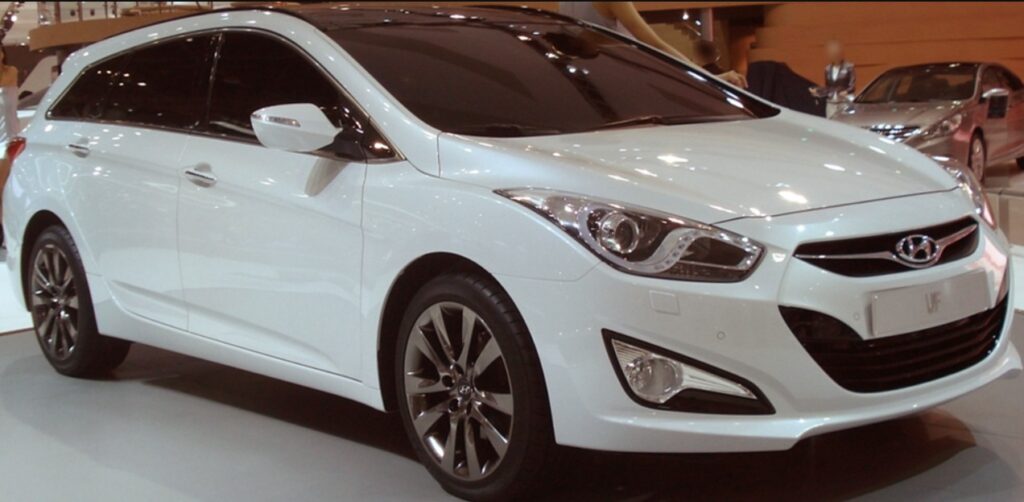
The Hyundai i40 fuel tank capacity is 70 litres, equivalent to approximately 18.5 US gallons or 15.4 imperial gallons. That is the headline figure most owners and used-car buyers need, and it generally applies across the Hyundai i40 saloon and Tourer range, including many petrol and diesel configurations.
A 70-litre tank is fairly generous for a family car. It gives the i40 enough fuel storage for long motorway journeys without making every petrol station feel like an urgent appointment. Pair that large tank with one of the economical diesel engines, and the i40 can cover an impressive distance between refuelling stops.
However, knowing the tank size is only the beginning. How far can an i40 actually travel on a full tank? Does the diesel hold more fuel than the petrol version? How much remains when the warning light appears? And why might a supposedly empty tank accept fewer than 70 litres?
We will answer those questions while looking at body styles, engines, realistic driving ranges, refuelling habits, fuel-gauge behaviour, and the factors that influence everyday consumption.
Content in this publication
- What Is the Hyundai i40 Fuel Tank Capacity?
- Hyundai i40 Fuel Capacity at a Glance
- Does Every Hyundai i40 Have a 70-Litre Tank?
- Hyundai i40 Saloon Fuel Tank Capacity
- Hyundai i40 Tourer Fuel Tank Capacity
- Hyundai i40 Diesel Fuel Tank Capacity
- Hyundai i40 Petrol Fuel Tank Capacity
- How Far Can a Hyundai i40 Travel on a Full Tank?
- How Much Fuel Is Left When the Warning Light Comes On?
- Why a 70-Litre Tank May Accept Less Fuel
- How Much Does It Cost to Fill a Hyundai i40?
- How to Improve Hyundai i40 Range
- Does Fuel Tank Capacity Affect Performance?
- Is It Harmful to Run the Hyundai i40 Nearly Empty?
- What Fuel Should a Hyundai i40 Use?
- How the Hyundai i40 Fuel Gauge Works
- Hyundai i40 Tank Capacity Compared With Rivals
- Tips for Checking an i40 Before a Long Journey
- How to Calculate Real Hyundai i40 Fuel Economy
- Conclusion: Is the Hyundai i40 Tank Large Enough?
- Frequently Asked Questions
What Is the Hyundai i40 Fuel Tank Capacity?
The standard Hyundai i40 fuel tank holds 70 litres. Hyundai’s official i40 documentation lists a 70-litre tank, while Hyundai brochures for individual markets also show the same capacity for relevant saloon and Tourer specifications.
Here are the equivalent measurements:
- 70 litres
- 18.49 US gallons
- 15.40 UK imperial gallons
- Approximately 0.07 cubic metres
These conversions matter because fuel-economy figures are presented differently around the world. British drivers typically use miles per imperial gallon, continental European drivers often use litres per 100 kilometres, and drivers in some other markets may calculate kilometres per litre.
Although those measurements can make comparisons look confusing, the physical fuel tank remains the same size.
Hyundai i40 Fuel Capacity at a Glance
| Specification | Capacity |
|---|---|
| Fuel tank volume | 70 litres |
| US gallon equivalent | 18.5 gallons |
| UK gallon equivalent | 15.4 gallons |
| Typical usable range | Approximately 450–800 miles |
| Common body styles | Saloon and Tourer |
| Main fuel types | Petrol and diesel |
The realistic driving range varies significantly. An efficient diesel cruising steadily on a motorway may travel much farther than a petrol model making short urban journeys.
Think of the fuel tank as the size of a water bottle and the engine as the person drinking from it. The bottle may remain identical, but the drinking speed changes everything.
Does Every Hyundai i40 Have a 70-Litre Tank?
Most mainstream Hyundai i40 specifications use a 70-litre fuel tank. This includes commonly encountered European models with 1.6-litre petrol, 2.0-litre petrol, 1.6 CRDi diesel, and 1.7 CRDi diesel engines.
Both the saloon and estate-style Tourer are widely listed with the same fuel capacity. Independent specification databases also report 70 litres for the i40 saloon and wagon, supporting Hyundai’s published figure.
Even so, owners should confirm the specification for their exact vehicle. Cars can differ according to:
- Production year
- Destination market
- Engine version
- Emissions equipment
- Regional homologation requirements
- Special fleet or commercial configuration
The safest reference is the owner’s manual supplied with the car. The vehicle identification number can also help a Hyundai dealer confirm the original factory specification.
Why Online Figures Sometimes Disagree
Specification websites occasionally show conflicting capacities because they may:
- Mix the Hyundai i40 with the related Sonata
- Confuse litres with imperial or US gallons
- Copy data from another trim level
- Round the original figure
- List usable capacity instead of total capacity
- Publish information from a different market
A listing that says 69, 70, or 71 litres may simply reflect rounding or the way the source defines total and usable volume. Hyundai’s published i40 brochures provide the clearest baseline: 70 litres.
Hyundai i40 Saloon Fuel Tank Capacity
The Hyundai i40 Saloon has a fuel tank capacity of approximately 70 litres. The saloon was designed as a comfortable family and business car, so a relatively large tank suits its long-distance character.
Its capacity compares favourably with many conventional family cars. A larger tank does not automatically make a vehicle more economical, of course, but it reduces the frequency of fuel stops.
That can be particularly helpful for:
- Motorway commuters
- Taxi and private-hire drivers
- Sales representatives
- Families taking long road trips
- Drivers living in rural areas
- Owners travelling through regions with fewer filling stations
The saloon’s lower and more streamlined body may also offer a slight efficiency advantage over the Tourer under certain conditions, although engine choice, tyres, traffic, and driving style usually have a greater effect.
Hyundai i40 Tourer Fuel Tank Capacity
The Hyundai i40 Tourer also generally carries 70 litres of fuel. Hyundai’s Tourer brochure lists this capacity for the 1.7 CRDi manual and automatic specifications.
This is useful because the Tourer is frequently chosen for luggage-heavy journeys. A family heading away with suitcases, passengers, and a roof box does not want to stop every few hours simply because the fuel tank is undersized.
However, extra weight increases consumption. Although the Tourer and saloon may share the same tank capacity, a heavily loaded Tourer will often cover fewer miles per tank.
Does the Tourer Have a Larger Tank Than the Saloon?
Usually, no. The Tourer’s larger cargo area might make us assume it receives a larger fuel tank, but both body styles normally use the same 70-litre capacity.
The difference appears in how quickly the fuel is consumed rather than how much can be stored. With identical engines and similar driving conditions, the Tourer’s added weight and slightly different aerodynamics may marginally affect fuel economy.
How Roof Boxes Affect Driving Range
A roof box adds frontal area and disrupts airflow. At motorway speeds, that aerodynamic penalty can become surprisingly noticeable.
A Tourer that normally feels frugal may begin drinking fuel like a thirsty runner when it carries:
- A large roof box
- Roof-mounted bicycles
- Heavy camping equipment
- Five passengers and luggage
- A trailer or caravan
Removing unused roof equipment can therefore improve range without changing anything under the bonnet.
Hyundai i40 Diesel Fuel Tank Capacity
Diesel Hyundai i40 models normally have a 70-litre fuel tank. This includes the widely sold 1.7 CRDi, available in different power outputs and with manual, automatic, or dual-clutch transmissions depending on model year.
The 1.7 CRDi is particularly well suited to the tank size because diesel versions generally deliver stronger long-distance fuel economy than petrol alternatives.
An i40 diesel can feel like a long-distance train: steady, relaxed, and happiest once it settles into a motorway rhythm.
Hyundai i40 1.7 CRDi Fuel Tank Capacity
The Hyundai i40 1.7 CRDi has a fuel capacity of approximately 70 litres, whether fitted to the saloon or Tourer in the principal European configurations.
A specification listing for the 1.7 CRDi saloon confirms 70 litres, while data for the i40 CW or Tourer gives the same figure.
Depending on the exact version, road conditions, and driving style, a full tank may provide a realistic range of roughly:
- 650–800 miles during efficient motorway use
- 550–700 miles in mixed driving
- 450–600 miles during frequent urban journeys
These are practical estimates rather than guarantees. Cold starts, traffic, regeneration of the diesel particulate filter, tyre pressure, and short journeys can all reduce the final figure.
Hyundai i40 1.6 CRDi Fuel Capacity
Later i40 models offered a 1.6 CRDi diesel in some European markets. These vehicles are also generally associated with the 70-litre tank.
Because the newer 1.6 diesel can be efficient under suitable conditions, it may offer excellent range. Nevertheless, a modern emissions-controlled diesel performs best when it regularly completes longer journeys and reaches its proper operating temperature.
A driver completing only short, cold urban trips should not assume that the smaller engine will automatically achieve spectacular fuel economy.
Hyundai i40 Petrol Fuel Tank Capacity
Petrol-powered Hyundai i40 models generally use the same 70-litre tank as their diesel counterparts.
Common petrol engines offered during the i40’s production included:
- 1.6 GDi
- 2.0 MPi
- 2.0 GDi
The tank does not normally shrink because the engine uses petrol. The main difference is range. Petrol engines generally consume more fuel than the diesel versions, particularly during motorway travel or when carrying heavy loads.
Hyundai i40 1.6 GDi Tank Size
The 1.6 GDi normally has a 70-litre fuel capacity. Its actual range depends heavily on where and how it is driven.
A lightly loaded car travelling smoothly on open roads may return respectable economy. In dense traffic, however, frequent acceleration and low-speed operation can cut the range dramatically.
A realistic full-tank distance might fall between approximately 500 and 650 miles, although individual results will vary.
Hyundai i40 2.0 Petrol Tank Size
The 2.0-litre petrol i40 generally also stores 70 litres. It offers stronger performance than some smaller-engine variants but may use fuel more rapidly, especially with an automatic transmission or enthusiastic driving.
Depending on conditions, owners may see a range closer to:
- 400–500 miles in urban or demanding use
- 500–600 miles in balanced mixed driving
- Potentially more during gentle, uninterrupted cruising
The important lesson is simple: identical tank capacity does not mean identical range.
How Far Can a Hyundai i40 Travel on a Full Tank?
To estimate range, we multiply fuel capacity by average efficiency.
The basic calculation in metric form is:
Estimated range = tank capacity ÷ consumption × 100
Suppose an i40 uses 5.5 litres per 100 kilometres:
70 ÷ 5.5 × 100 = 1,273 kilometres
That equals approximately 791 miles in ideal mathematical terms.
Real-world range should be lower because drivers rarely use every drop. The tank contains a reserve, fuel economy fluctuates, and stopping before the gauge reaches absolute zero protects the fuel system.
Example Range Calculations
| Average consumption | Mathematical range from 70 litres |
| 4.5 L/100 km | 1,556 km or 967 miles |
| 5.0 L/100 km | 1,400 km or 870 miles |
| 5.5 L/100 km | 1,273 km or 791 miles |
| 6.0 L/100 km | 1,167 km or 725 miles |
| 7.0 L/100 km | 1,000 km or 621 miles |
| 8.0 L/100 km | 875 km or 544 miles |
| 9.0 L/100 km | 778 km or 483 miles |
| 10.0 L/100 km | 700 km or 435 miles |
These numbers represent theoretical maximums using the entire 70 litres. A sensible working calculation should reserve several litres rather than treating the tank like a tube of toothpaste that must be squeezed completely empty.
Diesel Versus Petrol Range
A diesel i40 typically travels farther per tank because it uses fewer litres over the same distance. Its advantage becomes most obvious during steady, longer journeys.
Petrol models may be smoother and better suited to certain low-mileage routines, but they usually visit the filling station more often.
We should therefore avoid judging an engine solely by tank range. Purchase price, maintenance needs, annual mileage, urban restrictions, and driving patterns also matter.
How Much Fuel Is Left When the Warning Light Comes On?
Hyundai does not encourage drivers to treat the low-fuel warning light as a precision measuring instrument. The exact remaining quantity can vary with the road angle, vehicle movement, sensor tolerance, and the way fuel shifts inside the tank.
In many cars of this size, the light may appear with roughly 7–10 litres remaining, but owners should not rely on a fixed number unless the manual for their exact i40 provides one.
Once the warning light illuminates, refuel promptly.
Estimated Range After the Warning Light
Depending on consumption, the remaining range might be somewhere around 40–80 miles. Yet that estimate can quickly collapse when the car is:
- Stuck in stop-start traffic
- Climbing steep roads
- Towing a trailer
- Carrying heavy cargo
- Driving into strong winds
- Running the heater or air conditioning heavily
- Completing repeated cold starts
The dashboard’s distance-to-empty display is an estimate based partly on recent consumption. After several economical motorway miles, it may appear optimistic when the vehicle suddenly enters city traffic.
Why the Remaining Range Can Drop Quickly
The trip computer continuously recalculates. If driving conditions deteriorate, the predicted range may fall faster than the actual distance travelled.
That does not necessarily mean fuel is leaking or disappearing. The car is simply revising its forecast, rather like a navigation app changing the arrival time after discovering congestion.
Why a 70-Litre Tank May Accept Less Fuel
Owners sometimes arrive at a filling station with the gauge near empty and manage to add only 55 or 60 litres. This does not prove the published capacity is wrong.
Several litres may still remain in the tank. In addition, the pump nozzle can shut off before the tank reaches its absolute maximum volume.
Possible explanations include:
- The warning light activated early
- The gauge was not at true zero
- The car was parked on an incline
- Fuel moved away from the level sensor
- The pump nozzle clicked off prematurely
- The distance-to-empty display retained a safety margin
- Expansion space remained in the tank
Fuel tanks require vapour space. We should not repeatedly force extra fuel into the filler neck after the nozzle automatically stops.
Should We Top Off the Hyundai i40 Tank?
No. Once the pump clicks off normally, stop filling.
Repeatedly squeezing in more fuel can saturate parts of the evaporative-emissions system on petrol vehicles. It can also cause spills when fuel expands in warm weather.
A few extra drops will not transform the journey. They may simply turn a routine refuelling stop into a mess.
How Much Does It Cost to Fill a Hyundai i40?
The calculation is straightforward:
Tank capacity × fuel price per litre = total cost
For example:
| Fuel price | Cost for 70 litres |
| £1.35 per litre | £94.50 |
| £1.45 per litre | £101.50 |
| £1.55 per litre | £108.50 |
| €1.60 per litre | €112.00 |
| €1.80 per litre | €126.00 |
| €2.00 per litre | €140.00 |
An almost empty tank will usually require less than the complete 70 litres because some usable fuel remains.
Although seeing a three-figure total on the pump can sting, a large tank does not inherently increase running costs. It merely lets us buy more fuel at once. Consumption per mile or kilometre determines the real expense.
How to Improve Hyundai i40 Range
The i40’s large tank already provides a solid foundation for long-distance driving. A few sensible habits can stretch each fill further.
Maintain Correct Tyre Pressure
Underinflated tyres create additional rolling resistance. The engine must work harder, fuel consumption rises, and tyre wear accelerates.
Check pressures when the tyres are cold and follow the label on the door frame or the owner’s manual. Do not simply inflate every tyre to the maximum figure printed on its sidewall.
Drive Smoothly
Rapid acceleration followed by hard braking wastes energy. Looking ahead and maintaining momentum usually improves economy.
Useful habits include:
- Accelerating progressively
- Changing gear at sensible engine speeds
- Avoiding unnecessary overtaking bursts
- Leaving enough space to slow gradually
- Using cruise control where conditions allow
- Reducing speed moderately on motorways
Air resistance rises sharply as speed increases. Driving slightly slower can produce a surprisingly large improvement, especially on a long trip.
Remove Unnecessary Weight
A forgotten box of tools, sports equipment, or bags in the boot may seem harmless. Over thousands of miles, the engine repeatedly spends energy moving that weight.
The effect of one small item is modest, but several unnecessary objects can add up.
Remove Roof Equipment
Roof bars and boxes disturb airflow even when they are empty. Remove them when they are not needed.
At urban speeds, the difference may be small. On a motorway, the car has to push through the air continuously, so poor aerodynamics become much more costly.
Keep the Engine Properly Serviced
Dirty filters, unsuitable oil, worn components, dragging brakes, and unresolved warning lights can all increase consumption.
Regular maintenance should include attention to:
- Engine oil and filter
- Air filter
- Fuel filter on diesel models
- Correct wheel alignment
- Brake condition
- Emissions-system health
- Thermostat operation
- Injector performance
A diesel engine that fails to reach normal operating temperature may run less efficiently. Likewise, frequent interrupted diesel particulate filter regeneration can increase fuel use.
Does Fuel Tank Capacity Affect Performance?
The capacity itself does not change engine power, but the quantity of fuel adds weight.
Petrol weighs roughly 0.74 kilograms per litre, while diesel is commonly around 0.83–0.85 kilograms per litre. Therefore, 70 litres can add approximately:
- 52 kilograms of petrol
- 58–60 kilograms of diesel
A full tank may slightly affect acceleration, braking, and economy compared with a nearly empty tank. In everyday driving, however, the difference is minor.
There is no need to drive around permanently half empty to save weight. The inconvenience and risk of running low usually outweigh any tiny efficiency benefit.
Is It Harmful to Run the Hyundai i40 Nearly Empty?
Regularly running the tank extremely low is not a good habit.
Fuel helps cool and lubricate certain components, including the in-tank fuel pump. A very low level may also allow air to enter the system during steep cornering or climbing.
Diesel vehicles can be especially troublesome if they run completely dry. Air may enter the fuel lines, and restarting can require priming or professional assistance.
Keeping at least a quarter of a tank is sensible when:
- Travelling during winter
- Driving in remote areas
- Expecting heavy congestion
- Crossing mountainous regions
- Towing
- Preparing for severe weather
- Relying on the car for emergency travel
A quarter tank in the i40 represents about 17.5 litres, providing a useful buffer.
What Fuel Should a Hyundai i40 Use?
The correct fuel depends on the engine.
A CRDi badge indicates a diesel engine, while GDi and MPi models use petrol. Never rely solely on the colour of a pump nozzle because colour conventions vary between countries and filling-station brands.
Before refuelling, check:
- The label inside the fuel flap
- The owner’s manual
- The engine designation
- The registration documentation
- The fuel cap markings
Putting petrol into a diesel i40 can damage the high-pressure fuel system if the engine is started. Diesel fuel has lubricating properties that petrol lacks.
If the wrong fuel enters the tank, do not switch on the ignition. Contact a professional fuel-drain service or roadside-assistance provider.
How the Hyundai i40 Fuel Gauge Works
The fuel gauge uses a level sensor located in the tank. Because the tank is not a perfectly upright rectangular container, gauge movement is not always linear.
The first half may appear to last longer than the second half, or the needle may remain near full for many miles before dropping faster.
That behaviour can result from:
- Tank shape
- Sensor positioning
- Dashboard calibration
- Fuel movement
- Road gradient
- Software smoothing
The gauge is designed to give a practical indication rather than laboratory-grade measurement.
Signs of a Faulty Fuel-Level Reading
Investigate the system when:
- The gauge remains permanently full or empty
- The reading changes violently on level roads
- The warning light stays on after refuelling
- Distance-to-empty disappears unexpectedly
- The car runs out while the gauge shows substantial fuel
- The reading differs significantly after every restart
A diagnostic scan may reveal an electrical issue, while physical inspection may be needed to check the sender unit, wiring, connectors, or instrument cluster.
Hyundai i40 Tank Capacity Compared With Rivals
A 70-litre tank is relatively generous for a mainstream family car. Many modern vehicles use smaller tanks to reduce weight, free packaging space, or suit improved fuel efficiency.
The i40’s capacity supports its identity as a relaxed long-distance vehicle. It is particularly attractive to drivers who value fewer motorway stops rather than compact-city-car dimensions.
However, a larger tank creates trade-offs:
Advantages
- Longer potential driving range
- Fewer fuel stops
- Greater flexibility in remote areas
- Convenient for motorway commuting
- Helpful when towing or touring
- Allows drivers to choose where they refuel
Disadvantages
- Higher cost when filling from near empty
- More fuel weight when completely full
- Greater financial loss if fuel is stolen or contaminated
- Drivers may postpone refuelling too long because the range seems generous
Overall, the advantages outweigh the disadvantages for the i40’s intended role.
Tips for Checking an i40 Before a Long Journey
A 70-litre tank can carry us far, but fuel capacity alone cannot guarantee a trouble-free trip.
Before travelling, check:
- Fuel level and correct fuel type
- Engine-oil level
- Coolant level when the engine is cold
- Tyre pressures and tread
- Windscreen-washer fluid
- Exterior lights
- AdBlue level, where applicable
- Warning lights
- Spare wheel or puncture-repair kit
- Breakdown-cover details
Resetting the trip computer after refuelling can help monitor real consumption. Dividing the distance travelled by the fuel added at the next stop usually gives a more meaningful result than trusting a single dashboard reading.
How to Calculate Real Hyundai i40 Fuel Economy
Fill the tank until the pump clicks off, reset the trip meter, and drive normally. At the next refuelling stop, fill to the same point and record the amount added.
Use this metric formula:
Litres used ÷ kilometres travelled × 100 = L/100 km
For example:
- Fuel added: 52 litres
- Distance travelled: 850 kilometres
- Calculation: 52 ÷ 850 × 100
- Result: 6.12 L/100 km
For UK mpg:
Miles travelled ÷ imperial gallons used = mpg
Remember that one imperial gallon equals approximately 4.546 litres. US gallons are smaller, so UK and US mpg figures are not directly interchangeable.
Conclusion: Is the Hyundai i40 Tank Large Enough?
Yes. The Hyundai i40 fuel tank capacity of 70 litres is more than adequate for a family saloon or estate. It gives petrol versions respectable touring ability and helps efficient diesel models deliver excellent long-distance range.
Both the saloon and Tourer generally share the same capacity, as do the principal petrol and diesel engine configurations. What changes most dramatically is not the tank itself but the speed at which each engine uses its contents.
A carefully driven diesel i40 may cover hundreds of motorway miles with the fuel needle moving at a sleepy pace. A heavily loaded petrol version in city traffic will empty the same tank much faster.
For the best results, maintain the vehicle properly, keep the tyres inflated correctly, remove unnecessary weight, and refuel before the level becomes critically low. The i40’s tank is a sizeable reservoir, but even a deep well eventually runs dry.
Frequently Asked Questions
1. How many litres does a Hyundai i40 fuel tank hold?
Most Hyundai i40 models hold 70 litres of fuel. This applies broadly to the saloon and Tourer body styles and to the principal petrol and diesel engines.
2. How many gallons is a Hyundai i40 fuel tank?
A 70-litre tank equals approximately 18.5 US gallons or 15.4 UK imperial gallons. The difference exists because a US gallon is smaller than an imperial gallon.
3. How far can a Hyundai i40 travel on a full tank?
Depending on the engine and driving conditions, a Hyundai i40 may travel approximately 450–800 miles on a full tank. Efficient diesel motorway driving produces the longest range, while urban petrol use normally produces the shortest.
4. Does the Hyundai i40 Tourer have a bigger fuel tank?
No. The Hyundai i40 Tourer normally has the same 70-litre fuel capacity as the saloon. Its real range may differ because of weight, aerodynamics, cargo, and driving conditions.
5. Why can I not put 70 litres into my empty Hyundai i40?
The tank probably still contains reserve fuel, even when the gauge appears empty. Pump cut-off sensitivity, vehicle angle, fuel expansion space, and gauge calibration can also reduce the quantity accepted.
If you want to know other articles similar to Hyundai i40 Fuel Tank Capacity: Complete Size and Range Guide you can visit the category Service and Parts.
Kia Sorento Service Reset: How to Reset the Service Light
Kia Sorento Fuel Tank Capacity: Gallons, Litres and Model Differences
Kia Sorento Tyre Pressure: Recommended PSI, Bar and Complete Guide
Kia Sorento Boot Space: How Much Luggage Space Does It Really Have?
Kia Sorento Towing Capacity: How Much Can a Sorento Tow?

Honda Passport Payload Capacity: How Much Weight Can It Carry?
Leave a Reply
More content of your interest