

Peugeot 206 Insurance Group: Costs, Ratings and Ways to Save

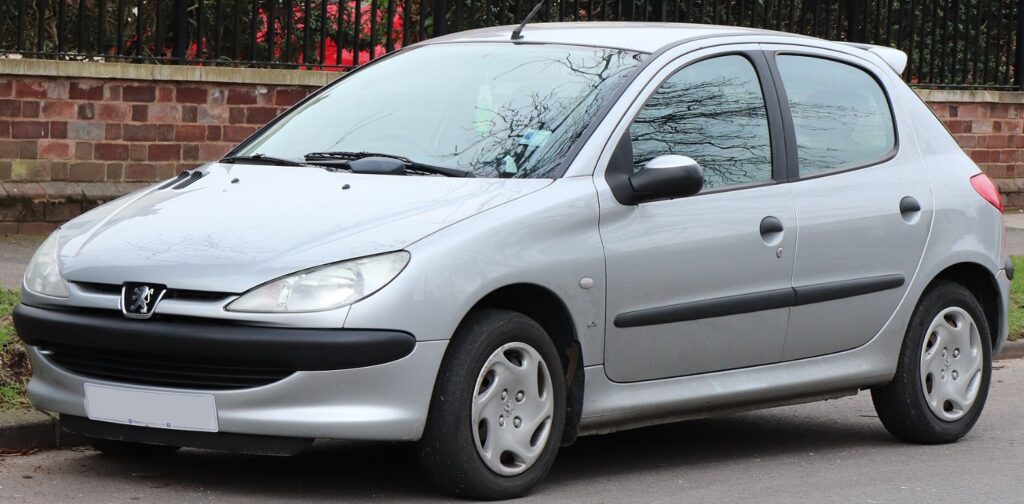
The Peugeot 206 insurance group is usually one of the first details we investigate when considering this cheerful French supermini. After all, buying an affordable used car is only half the story. The real question is whether we can insure it without watching our bank balance disappear like fuel from a leaking tank.
Fortunately, many ordinary Peugeot 206 models sit toward the more affordable end of the UK insurance scale. Depending on the engine, trim, body style and production year, Peugeot 206 variants generally range from insurance group 5 to group 30. Entry-level hatchbacks tend to occupy the lower groups, while sporty GTi, RC and convertible versions climb considerably higher.
That wide range means there is no single insurance group for every Peugeot 206. A modest 1.1-litre three-door and a lively 206 RC may share the same badge, but insurers see them as completely different animals.
In this guide, we will explain how Peugeot 206 insurance groups work, which versions are normally cheapest, why similar cars can receive very different quotations and what we can do to reduce the final premium.
Content in this publication
- What Insurance Group Is a Peugeot 206?
- How UK Car Insurance Groups Work
- Why Peugeot 206 Insurance Groups Vary So Much
- Which Peugeot 206 Is Cheapest to Insure?
- Peugeot 206 GTi Insurance Group
- Peugeot 206 CC Insurance Group
- Is a Peugeot 206 Cheap to Insure Overall?
- How Much Does Peugeot 206 Insurance Cost?
- Is the Peugeot 206 Good for a First-Time Driver?
- How to Find the Exact Peugeot 206 Insurance Group
- Can Two Insurers Quote Completely Different Prices?
- How Modifications Affect Peugeot 206 Insurance
- Ways to Reduce Peugeot 206 Insurance Costs
- Third-Party or Comprehensive Cover?
- Classic-Car Insurance for a Peugeot 206
- Peugeot 206 Insurance Versus Newer Small Cars
- Common Peugeot 206 Insurance Mistakes
- Should We Buy a Peugeot 206 for Low Insurance?
- Conclusion
- Frequently Asked Questions
What Insurance Group Is a Peugeot 206?
Most Peugeot 206 models fall somewhere between group 5 and group 30 under the traditional UK insurance-group system.
However, the exact rating depends on the complete vehicle specification, not simply the words “Peugeot 206.” Insurers and comparison websites may distinguish between:
- Engine capacity and power output
- Petrol or diesel engines
- Three-door and five-door bodies
- Standard hatchbacks and convertibles
- Manual and automatic transmissions
- Trim levels and special editions
- Factory-fitted security equipment
- Performance-oriented variants
Consequently, a basic 1.1-litre Peugeot 206 may sit within a relatively low group, while a GTi, GT, RC or 206 CC can be significantly more expensive to cover.
The safest approach is to check the registration number of the exact car rather than relying on a broad model description. Even two Peugeot 206s parked side by side may belong to different groups.
How UK Car Insurance Groups Work
The traditional UK Group Rating System places vehicles into groups numbered from 1 to 50. Cars in group 1 are generally among the least expensive to insure, while models in group 50 tend to present the greatest insurance risk.
The system is administered by Thatcham Research on behalf of the Association of British Insurers. The rating helps insurers estimate the vehicle-related portion of their risk, although each insurer remains free to calculate premiums using its own data and pricing formula.
A lower group is helpful, but it is not a magical discount button. Our age, postcode, occupation, claims history and driving experience can matter just as much—or sometimes more.
What Determines an Insurance Group?
The rating process considers factors such as:
- Vehicle performance
- Replacement-part prices
- Typical repair costs
- Repair time and complexity
- New-car value
- Security and theft resistance
- Damage susceptibility
- Safety-related characteristics
Thatcham states that its established Group Rating assessment uses numerous vehicle attributes to help insurers quantify risk. The industry is also moving toward a more dynamic Vehicle Risk Rating system for newer cars, although the familiar 1-to-50 groups remain especially relevant when discussing an older model such as the Peugeot 206.
The Meaning of Group-Rating Letters
Some group ratings include a letter after the number. These letters indicate how the vehicle’s security equipment compares with the required standard for its group.
A suitable factory immobiliser and effective locking system may support a better rating, while weaker security can work in the opposite direction. We should not panic when we see a letter, but we should confirm what it means before purchasing a particular car.
Why Peugeot 206 Insurance Groups Vary So Much
The Peugeot 206 was produced in numerous versions, from humble city cars to hot hatchbacks and folding-roof convertibles. Expecting every version to share an insurance group would be like expecting every pair of shoes to fit simply because they carry the same logo.
The main causes of variation are engine performance, vehicle value, body design and repair risk.
Engine Size and Power
Smaller engines normally place less financial pressure on insurers because they typically offer lower performance and appeal to drivers seeking economical transport.
A 1.1-litre Peugeot 206 is not built to chase sports cars down a motorway. That modest character often makes it attractive to first-time drivers and cost-conscious motorists.
Move up to a 1.4 or 1.6, however, and the picture changes. More power can mean faster acceleration and a higher perceived claims risk. Performance versions raise the stakes further.
Trim Level
Trim affects more than seat fabric and alloy-wheel design. Higher specifications may include equipment that costs more to replace after theft, vandalism or collision damage.
A Peugeot 206 with basic steel wheels and simple interior equipment will usually be cheaper to repair than a heavily equipped special edition with distinctive bodywork, upgraded wheels and additional electronic features.
Body Style
The standard hatchback is generally the simplest Peugeot 206 to insure. The 206 CC introduces a folding metal roof, extra mechanical components and body panels that may be more expensive to repair.
That does not automatically make every 206 CC prohibitively expensive, but convertible ownership often carries a higher premium than an equivalent hatchback.
Performance Models
The Peugeot 206 GTi and RC—or GTi 180 in some markets—sit at the exciting end of the range. These cars offer stronger acceleration, more power and a sportier image.
Insurers know that performance cars can produce more expensive claims. They may also be more appealing to thieves or more likely to be modified. As a result, their group ratings and real-world premiums tend to be noticeably higher.
Which Peugeot 206 Is Cheapest to Insure?
The cheapest Peugeot 206 to insure will usually be a low-powered, standard hatchback with a small petrol engine and no modifications.
In practical terms, we would normally begin our search with:
- A 1.1-litre petrol engine
- A basic or mid-range trim
- A standard three-door or five-door hatchback
- Factory wheels and suspension
- No engine modifications
- A working factory immobiliser
- A clean ownership and registration history
Low-group versions can make the 206 an appealing inexpensive used car, but quotations must still be checked individually.
Is the 1.1-Litre Peugeot 206 Cheap to Insure?
In general, the 1.1-litre model is the most insurance-friendly member of the family. Its performance is modest, parts are widely available and the vehicle’s value is usually low.
This combination can help younger drivers, although it does not guarantee a cheap policy. A 17-year-old living in a high-risk postcode may still receive an expensive quotation, even when the vehicle belongs to a low insurance group.
The car is only one ingredient in the insurer’s recipe.
Is the 1.4-Litre Peugeot 206 Expensive to Cover?
The 1.4-litre version often represents a sensible middle ground. It normally provides more relaxed everyday performance than the 1.1 without moving fully into hot-hatch territory.
For many motorists, the 1.4 can be the sweet spot: lively enough for regular travel but still relatively economical to own. Nevertheless, group ratings vary by trim, fuel type and model year, so we should compare the exact registration.
How Does the 1.6-Litre Model Compare?
A 1.6-litre Peugeot 206 will generally cost more to insure than an entry-level 1.1 version. Greater engine performance can lift the insurance group, and many 1.6-litre cars came with sportier specifications.
For an experienced driver with a clean record, the difference may be manageable. For a young or newly qualified motorist, however, the premium gap can be dramatic.
Peugeot 206 GTi Insurance Group
The Peugeot 206 GTi is one of the more expensive mainstream 206 versions to insure. It combines stronger performance with sport-oriented styling and equipment, so insurers do not treat it like a basic city hatchback.
A GTi can still be inexpensive compared with newer performance cars, especially because its market value has historically been modest. Yet value is not the only issue. Claim frequency, driver profile, performance and parts availability also influence pricing.
Before buying one, we should request quotations from several insurers using the exact number plate. A tempting purchase price can quickly lose its shine when the annual premium arrives.
Peugeot 206 GTi 180 or RC Insurance
The GTi 180, also known as the Peugeot 206 RC in various markets, belongs near the upper end of the model’s insurance range. Its more powerful engine and performance-focused character make it substantially different from an ordinary 206.
This is not usually the best version for a new driver working with a tight budget. It may suit an enthusiast with experience, secure parking and a strong no-claims record, but even then, shopping around is essential.
Peugeot 206 CC Insurance Group
The Peugeot 206 CC is the coupé-cabriolet version with a retractable hardtop. It offers plenty of personality for relatively little money, but its insurance can be higher than that of a conventional hatchback.
You may be interested in reading GMC Sierra Smells Like Gas: Causes, Risks, and Fixes
Why? The folding roof creates extra repair complexity. Rear-quarter damage, roof-mechanism problems and specialised body components can turn a seemingly simple claim into an expensive operation.
The 206 CC was offered with different engines, including relatively powerful options, so its insurance group varies considerably. We should never assume that all convertibles occupy the same rating.
Is a Peugeot 206 CC Suitable for Young Drivers?
It can be, but it may not be the cheapest choice.
A young driver might be attracted by the low purchase price and the novelty of open-top motoring. Yet insurance costs, water leaks, roof repairs and ageing seals can make ownership less carefree than the advertisement suggests.
A standard 1.1 or 1.4 hatchback will normally be the safer financial bet. The CC is more of a heart-led purchase—and hearts are not known for reading insurance quotations carefully.
Is a Peugeot 206 Cheap to Insure Overall?
Many versions are relatively cheap to insure, particularly when compared with modern performance cars, luxury models and high-value SUVs. Recent Go.Compare research even placed the Peugeot 206 among the cheapest vehicle models in its quotation data, with an indicated average annual figure of £226 across the policies analysed. That is a broad dataset rather than a guaranteed price for an individual driver, but it shows why the 206 retains a reputation for accessible insurance.
We must treat averages with caution. The premium quoted to one driver tells us very little about what another driver will pay.
A low-risk, experienced owner may receive an attractive figure. A newly qualified driver could face a quotation several times higher for the same car.
How Much Does Peugeot 206 Insurance Cost?
There is no reliable universal price because insurance premiums are personalised. Even published manufacturer-wide averages can be misleading when applied to a specific older car.
Insurers usually consider:
- Driver age
- Driving experience
- Claims and conviction history
- Postcode
- Occupation
- Annual mileage
- Overnight parking location
- Policy type
- Voluntary excess
- Additional drivers
- Previous insurance history
- Vehicle modifications
- Exact model and insurance group
This explains why one person may call the Peugeot 206 wonderfully cheap to insure while another describes the quotation as daylight robbery wearing a tie.
Does the Car’s Low Value Guarantee Cheap Insurance?
No. Market value affects the possible cost of replacing the vehicle, but comprehensive claims involve much more than replacing our own car.
A collision may damage another vehicle, injure road users, destroy property or create legal expenses. An old Peugeot worth £1,500 can still be involved in a claim costing many times that amount.
Low value helps, but it does not control the entire premium.
Is the Peugeot 206 Good for a First-Time Driver?
The Peugeot 206 can be a good first car when chosen carefully. Small-engine hatchbacks are compact, easy to park and commonly available at affordable prices.
However, age matters. Even the newest examples are now older vehicles, so condition is more important than glossy photographs or low mileage alone.
Before purchasing, we should inspect:
- Tyres and brakes
- Suspension condition
- Warning lights
- Electrical equipment
- Clutch operation
- Service history
- Timing-belt replacement records
- Evidence of accident repairs
- Corrosion and water ingress
- Central locking and immobiliser operation
A mechanically neglected low-group car can cost more than a well-maintained example in a slightly higher group.
Why Young Drivers May Still Pay More
Young and inexperienced motorists statistically represent greater claims risk, so insurers often charge them more regardless of the car’s low group.
A modest Peugeot 206 can reduce the vehicle-related risk, but it cannot erase the influence of age, postcode and driving experience.
This is why checking quotations before buying is crucial. We should never purchase a car first and ask about insurance later. That approach is rather like ordering dinner before checking whether we brought a wallet.
How to Find the Exact Peugeot 206 Insurance Group
The easiest method is to use an insurance-group checker or quotation service with the vehicle registration.
The number plate allows the system to identify the precise version, including:
- Engine
- Transmission
- Body style
- Trim
- Registration year
- Factory specification
We can also check the V5C registration document and compare its model description with online databases.
Why Registration-Based Checks Matter
Used-car advertisements are not always accurate. A seller may describe a vehicle simply as a “Peugeot 206 1.4,” leaving out the trim, power output or special-edition name.
Those details can affect the insurance group.
Registration-based quotations also reveal whether insurers recognise any unusual history or specification. Entering approximate information may produce an attractive figure that disappears when the policy is finalised.
Can Two Insurers Quote Completely Different Prices?
Absolutely. Insurance groups provide a reference point, not a fixed retail price.
Every insurer analyses risk differently. One company may have favourable claims experience with small French hatchbacks, while another may see frequent claims among similar drivers and charge more.
An insurer may also target a particular customer profile. A company seeking experienced low-mileage drivers could offer one person an excellent deal and another person a spectacularly poor one.
This is why comparing multiple quotations matters more than obsessing over a single group number.
How Modifications Affect Peugeot 206 Insurance
Modifications can increase the premium and reduce the number of insurers willing to offer cover.
Common Peugeot 206 modifications include:
- Aftermarket alloy wheels
- Lowered suspension
- Performance exhaust systems
- Engine remapping
- Induction kits
- Body kits
- Tinted windows
- Upgraded brakes
- Audio systems
- Non-standard lighting
Some changes are harmless from a performance perspective but still affect replacement cost or theft appeal.
Every modification should be declared. Failure to disclose changes can lead to claim problems, reduced payments or policy cancellation.
Do Cosmetic Changes Count?
Often, yes.
Drivers sometimes assume that only engine tuning matters. Insurers may also want to know about non-standard wheels, spoilers, wraps, paint changes and suspension alterations.
A previous owner may have modified the car before we bought it, so it is worth comparing the vehicle carefully with factory specifications.
Ways to Reduce Peugeot 206 Insurance Costs
We cannot control every pricing factor, but we can improve several of them.
Choose the Right Version
A small-engine hatchback will usually be easier to insure than a GTi or convertible. Before purchasing, obtain quotations for several actual cars rather than comparing generic model names.
Compare More Than One Provider
Pricing varies widely. Comparison services are useful, but some insurers may sell directly and not appear on every platform.
We should compare like for like, making sure the excess, mileage, legal cover and breakdown options are consistent.
You may be interested in readingGMC Sierra Smells Like Gas: Causes, Risks, and FixesYou may be interested in reading
 Mitsubishi Outlander Sport Reliability: Is It a Dependable SUV?
Consider Telematics Insurance
A black-box policy can sometimes help young drivers by recording information such as speed, braking, mileage, journey timing and driving style.
It is not automatically the cheapest solution, and restrictions vary. We should understand how the scoring works before accepting the policy.
Adjust the Voluntary Excess Carefully
Choosing a higher voluntary excess may reduce the premium, but only if we could genuinely afford the combined compulsory and voluntary excess after an accident.
Setting an unrealistic excess merely makes the policy look cheaper on paper.
Pay Annually When Practical
Monthly payment plans commonly involve credit charges or interest. Paying the full annual premium can reduce the overall cost when our budget allows.
Use an Accurate Mileage Estimate
Lower annual mileage may reduce the quotation, but the figure must be honest and realistic.
Underestimating mileage to obtain a cheaper premium can cause complications during a claim.
Improve Vehicle Security
An approved steering lock, secure garage or safer overnight parking arrangement may help with some insurers.
The Peugeot 206 is an older car, so visible physical security can also serve as a useful deterrent even when it does not dramatically alter the premium.
Add an Experienced Driver Properly
Adding a responsible, experienced driver may reduce the price for some younger motorists.
However, the person who drives the car most must be declared as the main driver. Listing somebody else as the main user to obtain cheaper insurance is known as fronting and can invalidate the policy.
Third-Party or Comprehensive Cover?
Many people assume third-party-only insurance must be cheaper because it provides less cover. In practice, comprehensive insurance can sometimes produce a lower quotation.
Insurers price policies according to claim patterns, not merely the number of benefits included. Drivers selecting third-party cover may sometimes be associated with higher claims risk.
We should therefore compare:
- Third-party only
- Third-party, fire and theft
- Comprehensive insurance
The most complete option may also be the best value.
Classic-Car Insurance for a Peugeot 206
As the Peugeot 206 ages, certain well-preserved or specialist versions may qualify for classic-car policies with selected providers.
Eligibility varies. Insurers may require:
- Limited annual mileage
- A minimum vehicle age
- Secure storage
- Another car for daily use
- A minimum driver age
- Restricted modifications
- Membership of a recognised owners’ club
A rare GTi, RC or exceptionally original early model may fit a specialist policy better than an ordinary mainstream insurer’s product.
Classic insurance is not automatically suitable for a Peugeot 206 used every day for commuting.
Peugeot 206 Insurance Versus Newer Small Cars
A newer supermini may occupy a similar or lower insurance group while offering more modern crash-avoidance technology. However, its higher value and more expensive sensors can increase repair costs.
The Peugeot 206 follows a simpler formula. Parts are often inexpensive, the car’s value is modest and many independent garages understand it well.
That simplicity can work in its favour. On the other hand, newer vehicles may offer stronger security and safety systems.
The cheapest car to insure is not always the cheapest car to own. We need to compare insurance, maintenance, fuel, tax and expected repairs together.
Common Peugeot 206 Insurance Mistakes
A few avoidable errors can turn an affordable policy into an expensive headache.
Buying Before Checking Quotes
Never assume the 1.4-litre car will cost roughly the same as the 1.1. Run quotations on each registration first.
Ignoring Modifications
An aftermarket exhaust or set of alloy wheels still needs to be declared, even when the previous owner installed it.
Choosing the Cheapest Policy Blindly
A low price can come with a high excess, limited courtesy-car cover or restrictive terms. Read the policy summary.
Entering an Inaccurate Occupation
Our job title can affect pricing, but it must accurately describe what we do. Choosing a misleading title merely because it produces a lower price is risky.
Allowing Automatic Renewal Without Comparing
Renewal quotations are not always competitive. Compare prices in advance and review the cover, not just the premium.
Should We Buy a Peugeot 206 for Low Insurance?
A basic Peugeot 206 can be a sensible low-cost insurance choice, especially for drivers who want a compact used hatchback without performance-car running costs.
The strongest candidates are usually unmodified 1.1 and 1.4 models with sound maintenance histories, functioning security systems and no suspicious accident repairs.
The higher-performance and convertible models require more thought. They may still offer enjoyable, affordable ownership, but their insurance groups and repair risks are less friendly.
Ultimately, we should choose the car using real quotations rather than group numbers alone. The insurance group is a compass, not a final destination.
Conclusion
The Peugeot 206 insurance group generally ranges from approximately group 5 to group 30, reflecting the enormous difference between a basic hatchback and a performance or convertible model.
Small-engine Peugeot 206 hatchbacks are normally the cheapest versions to cover. The 1.1-litre model is particularly attractive to budget-conscious and first-time drivers, while the 1.4 can provide a useful balance between performance and affordability.
At the opposite end, GTi, RC and 206 CC versions tend to attract higher ratings because of their power, equipment or repair complexity.
Still, the group number never tells the complete story. Our age, address, occupation, mileage, driving history, parking arrangements and choice of insurer all shape the real premium.
The smart strategy is simple: identify several suitable cars, request registration-specific quotations and compare the total cost of ownership. Do that, and the little Peugeot can remain what it was always meant to be—an inexpensive, characterful car rather than a financial gremlin hiding in the driveway.
Frequently Asked Questions
1. What insurance group is a Peugeot 206 1.1?
The 1.1-litre Peugeot 206 generally sits near the lower end of the model’s insurance range. The exact group depends on the year, trim and body style, so check the registration number before buying.
2. Is a Peugeot 206 cheap to insure for a 17-year-old?
It can be cheaper than many more powerful cars, particularly in 1.1-litre form. However, 17-year-old drivers may still face high premiums because age, postcode and lack of driving experience heavily influence insurance pricing.
3. Is the Peugeot 206 GTi expensive to insure?
It is usually considerably more expensive than an ordinary Peugeot 206 hatchback. Its additional performance and sportier profile place it higher in the insurance range.
4. Does the Peugeot 206 CC cost more to insure?
The 206 CC can cost more than an equivalent hatchback because it has a retractable roof, more complex body components and, in many versions, a larger engine.
You may be interested in readingGMC Sierra Smells Like Gas: Causes, Risks, and FixesYou may be interested in reading
Mitsubishi Outlander Sport Reliability: Is It a Dependable SUV?You may be interested in reading
Is the Mitsubishi Outlander a Good Car? An Honest Buyer’s Guide5. Can modifying a Peugeot 206 increase insurance costs?
Yes. Engine tuning, lowered suspension, aftermarket wheels, body kits, exhaust changes and even certain cosmetic modifications can increase the premium. All changes should be declared to the insurer.
If you want to know other articles similar to Peugeot 206 Insurance Group: Costs, Ratings and Ways to Save you can visit the category Blog.
Is Nissan Rogue a Good Car? Reliability, Pros, Cons & What to Know
Nissan Rogue Not Starting? Common Causes and How to Fix It
Is Vauxhall Agila a Good Car? Reliability, Problems and Buying Guide
Honda Passport Life Expectancy: How Many Miles Can It Last?
Honda Passport Depreciation: How Well Does It Hold Its Value?
Nissan Rogue Reliability Rating: How Reliable Is the Rogue?
Leave a Reply
More content of your interest