
Peugeot 206 Engine Size: Complete Petrol and Diesel Guide

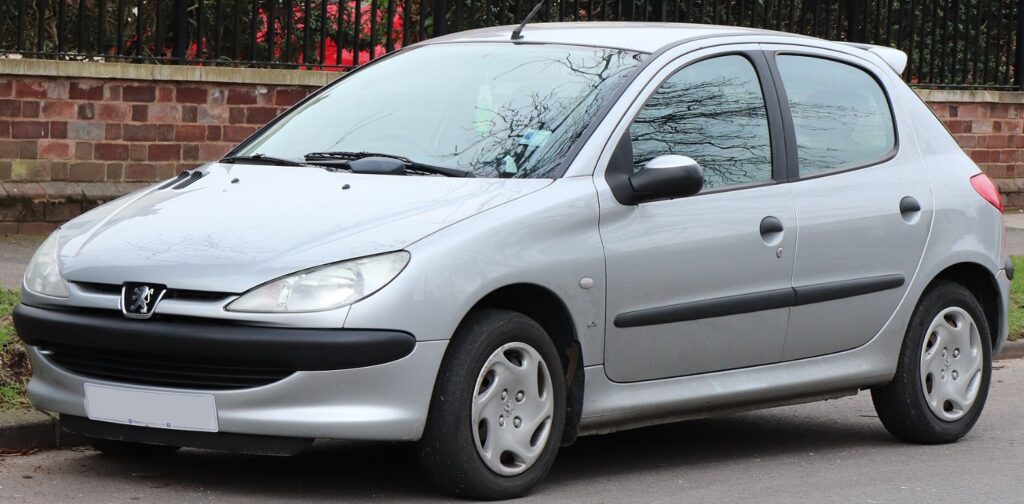
The Peugeot 206 engine size range is surprisingly broad for such a small, lightweight car. Depending on the model year, body style, trim level, and country, buyers may encounter everything from a modest 1.0-liter petrol engine to a lively 2.0-liter performance unit.
That variety is part of the 206’s charm. Some versions were designed to crawl through congested city streets while barely sipping fuel. Others were built to attack a winding road with the enthusiasm of a terrier chasing a tennis ball.
In broad terms, Peugeot 206 engines range from approximately 1.0 to 2.0 liters, although the core European lineup is better known for its 1.1, 1.4, 1.6, 1.9, and 2.0-liter options. Across its long international production life, the model used petrol, naturally aspirated diesel, turbo-diesel, and regional flex-fuel engines. Published specification catalogs place the overall displacement range at approximately 1,124 to 1,997 cc for many mainstream versions, while certain regional models used a 1.0-liter engine.
So, which Peugeot 206 engine size is best? There is no single winner. The right answer depends on how we drive, how much performance we expect, and whether low running costs matter more than acceleration.
Content in this publication
- What Engine Size Does a Peugeot 206 Have?
- Peugeot 206 Engine Size Chart
- Understanding Engine Size in Liters and Cubic Centimeters
- Peugeot 206 1.0-Liter Petrol Engine
- Peugeot 206 1.1-Liter Petrol Engine
- Peugeot 206 1.4-Liter Petrol Engine
- Peugeot 206 1.4 HDi Engine Size
- Peugeot 206 1.6-Liter Petrol Engine
- Peugeot 206 1.6 HDi Diesel Engine
- Peugeot 206 1.9-Liter Diesel Engine
- Peugeot 206 2.0 HDi Engine Size
- Peugeot 206 2.0-Liter Petrol Engine
- Peugeot 206 CC Engine Sizes
- Peugeot 206 SW Engine Sizes
- Which Peugeot 206 Engine Size Is Best?
- Petrol Versus Diesel Peugeot 206 Engines
- Does Engine Size Affect Peugeot 206 Reliability?
- How to Find Your Peugeot 206 Engine Size
- Does Peugeot 206 Engine Size Affect Fuel Economy?
- Does Engine Size Change Insurance and Tax Costs?
- Can We Swap a Different Engine Into a Peugeot 206?
- Final Verdict on Peugeot 206 Engine Sizes
- Frequently Asked Questions
What Engine Size Does a Peugeot 206 Have?
The Peugeot 206 was sold with several engine capacities rather than one universal engine. The most commonly encountered sizes include:
- 1.0-liter petrol
- 1.1-liter petrol
- 1.4-liter petrol
- 1.4-liter HDi diesel
- 1.6-liter petrol
- 1.6-liter HDi diesel
- 1.9-liter naturally aspirated diesel
- 2.0-liter petrol
- 2.0-liter HDi diesel
The original European hatchback arrived with 1.1, 1.4, and 1.6-liter petrol choices, alongside a 1.9-liter diesel. Peugeot later expanded the family with HDi common-rail diesels and hotter 2.0-liter petrol variants, including the GTi and RC—or GTi 180 in the United Kingdom.
This means that simply asking, “What size engine is in a Peugeot 206?” is a little like asking what filling comes inside a sandwich. We need to know which version we are looking at.
Peugeot 206 Engine Size Chart
The following table summarizes the major engine sizes associated with the 206. Exact power outputs vary by year, market, emissions standard, and engine calibration.
| Engine size | Fuel type | Typical role | General character |
|---|---|---|---|
| 1.0 liter | Petrol/flex fuel | Regional entry model | Economical but slow |
| 1.1 liter | Petrol | Entry-level European model | Simple and city-friendly |
| 1.4 liter | Petrol | Mainstream everyday model | Balanced and affordable |
| 1.4 HDi | Diesel | Economy-focused model | Efficient with useful torque |
| 1.6 liter | Petrol | Midrange or sporty model | Noticeably stronger |
| 1.6 HDi | Diesel | Later high-torque diesel | Quick, economical cruiser |
| 1.9 liter | Diesel | Early basic diesel | Durable but old-fashioned |
| 2.0 HDi | Diesel | Stronger early turbo-diesel | Relaxed and torquey |
| 2.0 liter | Petrol | GTi, RC and performance models | Fast and engaging |
Not every engine was available with every body shape. The hatchback offered the widest selection, while the 206 CC, SW, sedan, and regional derivatives had narrower or market-specific ranges.
Understanding Engine Size in Liters and Cubic Centimeters
Engine size refers to the total swept volume of all the engine’s cylinders. It is normally expressed in liters or cubic centimeters.
For example:
- A 1.1-liter engine may have a displacement close to 1,124 cc.
- A 1.4-liter engine may actually measure 1,360, 1,398, or 1,399 cc.
- A 1.6-liter engine may measure around 1,560 or 1,587 cc.
- A 2.0-liter engine may measure approximately 1,997 cc.
Manufacturers round these figures to make model names easier to understand. Nobody wants to tell their neighbor they have just bought the thrilling new Peugeot 206 1.360.
Does a Bigger Engine Always Mean More Power?
Not necessarily.
A larger engine generally has the potential to burn more fuel and produce more power, but technology matters just as much as capacity. A turbocharged 1.6-liter diesel can deliver substantially more torque than an older naturally aspirated 1.9-liter diesel.
Valve count, fuel injection, compression, turbocharging, engine management, gearing, and vehicle weight all influence how fast an engine feels.
That is why a modern 1.4 HDi can be more satisfying in ordinary traffic than its modest size suggests. It produces its pulling power low in the rev range, where we actually use it.
Peugeot 206 1.0-Liter Petrol Engine
The 1.0-liter Peugeot 206 was primarily a regional model rather than a central part of the Western European range. It was notably produced in Brazil, where some 206 models used a Renault-sourced 1.0-liter 16-valve engine before that version was discontinued.
What Is the 1.0-Liter 206 Like to Drive?
The smallest engine suits:
- Dense urban traffic
- Short daily journeys
- Drivers prioritizing fuel economy
- Markets where taxes are linked to displacement
- Buyers who rarely carry heavy loads
Performance is not its main attraction. With passengers, luggage, air conditioning, and a steep hill all joining the party, the engine may feel as though it has been handed a difficult exam without enough preparation.
Still, for basic urban mobility, it can make sense. The 206 itself is compact and relatively light, so it does not require enormous power to move around town.
Who Should Avoid the 1.0-Liter Engine?
We would look elsewhere if we regularly drive on fast highways, climb mountain roads, carry several passengers, or expect brisk overtaking performance.
A small engine working hard can sometimes consume more fuel than expected. Engine size alone does not guarantee economy if the accelerator is permanently pressed into the carpet.
Peugeot 206 1.1-Liter Petrol Engine
The 1.1-liter petrol engine is one of the classic entry-level Peugeot 206 powerplants. It is commonly associated with a displacement of approximately 1,124 cc.
This engine was built for affordability rather than excitement. It generally offers straightforward mechanical construction, manageable servicing costs, and sufficient performance for light urban use.
Advantages of the 1.1-Liter Engine
The main benefits include:
- Usually lower purchase prices
- Potentially inexpensive insurance
- Reasonable fuel consumption
- Simple naturally aspirated design
- Easy maneuverability in town
- Adequate performance for one or two occupants
Its gentle character works well in crowded cities. The engine does not shove us into the seat, but it gets on with the job without demanding applause.
Disadvantages of the 1.1-Liter Engine
The limitations become clearer outside town:
- Slow acceleration
- Limited overtaking ability
- Noticeable effort on hills
- More engine noise at highway speeds
- Reduced performance with passengers
- Frequent gear changes on demanding roads
The 1.1 is not inherently a bad engine. It simply needs to be judged according to its purpose. Expecting sports-car acceleration from it would be like asking a household fan to power a wind farm.
Peugeot 206 1.4-Liter Petrol Engine
For many drivers, the 1.4-liter petrol is the sweet spot in the Peugeot 206 range. It offers more usable performance than the 1.1 without bringing the thirst or insurance costs commonly associated with the sportier models.
Different 1.4-liter petrol engines appeared during the 206’s life, including 8-valve and 16-valve versions. A 2004 owner’s manual specification section lists 1.4-liter manual, automatic, and 16-valve petrol configurations, confirming that the label covered several distinct setups.
Why Is the 1.4-Liter Peugeot 206 Popular?
It strikes a practical balance between:
- Urban fuel economy
- Acceptable highway performance
- Affordable maintenance
- Reasonable insurance
- Broad parts availability
- Everyday usability
The 1.4-liter car feels less strained than the 1.1 when joining faster traffic. It still rewards sensible expectations, but we do not need to plan every overtaking maneuver as though coordinating an airport landing.
8-Valve Versus 16-Valve 1.4 Engines
The 8-valve version generally emphasizes simplicity and low-to-midrange drivability. The 16-valve version can feel more energetic at higher engine speeds and may produce additional power.
However, the badge alone should not determine our choice. On an older used car, condition is far more important than valve count. A carefully maintained 8-valve engine is usually a safer purchase than a neglected 16-valve example with missing records and mysterious noises.
Peugeot 206 1.4 HDi Engine Size
The Peugeot 206 1.4 HDi uses a turbocharged common-rail diesel engine of approximately 1,399 cc. Published specifications identify it as part of PSA’s DV4 engine family, producing around 68 PS in common versions and approximately 160 Nm of torque.
Why the 1.4 HDi Feels Bigger Than It Is
Diesel torque changes the way the car behaves. Instead of requiring high revs, the engine delivers useful pulling power lower in the range.
That makes it well suited to:
- Commuting
- Longer journeys
- Moderate highway driving
- Drivers seeking low fuel consumption
- Owners covering high annual mileage
The engine’s modest displacement also helps keep the nose of the car relatively light compared with some larger diesel alternatives.
Is the 1.4 HDi the Most Economical 206 Engine?
It is frequently among the most economical options, especially during steady longer-distance driving. Nevertheless, actual consumption depends on maintenance, tires, traffic, journey length, driving style, and vehicle load.
Frequent short journeys may not be ideal for any diesel. A petrol 1.1 or 1.4 can be more suitable when the car spends its life making cold, two-mile trips between home, school, and the supermarket.
Peugeot 206 1.6-Liter Petrol Engine
The 1.6-liter petrol engine gives the Peugeot 206 a more confident personality. Common versions include 8-valve and 16-valve configurations, although availability varies by market and year.
The 1.6 16V was fitted to models such as the XSi and certain 206 CC versions. Contemporary brochure information identifies the XSi with a 1.6-liter 16-valve petrol engine, paired with manual or, in some versions, automatic transmission.
How Does the 1.6-Liter 206 Perform?
Compared with the smaller petrol engines, it generally provides:
- Faster acceleration
- Easier overtaking
- Better hill-climbing ability
- More relaxed performance with passengers
- A sportier response at higher revs
Because the 206 is not a large car, the 1.6 does not need enormous output to feel lively. It gives the chassis enough energy to become entertaining without turning every drive into a fuel-budget emergency.
Is the 1.6 Better Than the 1.4?
The 1.6 is usually better for performance, while the 1.4 may be better for minimizing everyday costs.
Choose the 1.6 when we value:
- Stronger acceleration
- Frequent highway use
- Country-road driving
- A convertible body with extra weight
- More flexible performance
Choose the 1.4 when lower insurance, lower fuel use, and uncomplicated commuting matter more.
Peugeot 206 1.6 HDi Diesel Engine
The later 1.6 HDi is one of the most capable diesel engines offered in the 206. A typical European version uses a 1,560 cc turbo-diesel engine producing around 109 PS and 240 Nm, although specifications differ by trim and emissions equipment.
What Makes the 1.6 HDi Special?
This engine combines:
- Strong low-speed torque
- Good highway flexibility
- Competitive fuel economy
- More performance than the 1.4 HDi
- Relaxed overtaking ability
In a light car, 240 Nm is meaningful. The engine can make the 206 feel unexpectedly muscular, particularly when accelerating through the middle of the rev range.
Potential Drawbacks of the 1.6 HDi
The additional technology means we should inspect used examples carefully. Depending on specification, maintenance concerns may involve turbo lubrication, injectors, emissions equipment, oil quality, and service history.
A bargain-priced diesel with no maintenance evidence can quickly become expensive. Saving money at purchase time is not useful if the engine later sends us an invoice thick enough to use as a doorstop.
Peugeot 206 1.9-Liter Diesel Engine
The 1.9-liter naturally aspirated diesel belongs to the earlier, simpler side of the 206 family. It was part of the original range before common-rail HDi technology became widely established.
Is the 1.9 Diesel Turbocharged?
Many 1.9-liter 206 diesel versions are naturally aspirated, meaning they do not use a turbocharger. This creates a very different driving experience from the later HDi engines.
Expect:
- Gradual acceleration
- Limited high-speed performance
- Old-school diesel noise
- Straightforward mechanical character
- Modest power
- Reasonable low-speed usability
Its simplicity can be appealing, but age now matters greatly. Rubber components, cooling systems, fuel systems, seals, wiring, and neglected servicing can cause more trouble than the basic engine design itself.
Peugeot 206 2.0 HDi Engine Size
The 2.0 HDi uses a turbocharged common-rail diesel engine of roughly two liters. In many European-market 206 models, it produced around 90 horsepower.
Period brochures offered the 2.0 HDi in versions such as the Dturbo and XSi, positioning it as a stronger, more flexible diesel than the basic naturally aspirated option.
How Does the 2.0 HDi Compare With the 1.4 HDi?
The 2.0 HDi generally offers:
- Stronger low-speed pull
- More relaxed motorway performance
- Better load-carrying ability
- Less need for frequent downshifts
The smaller 1.4 HDi generally offers:
- Lower engine weight
- Better potential fuel economy
- A lighter feel at the front
- Lower capacity-related taxes in some countries
The 2.0 HDi feels steady and substantial rather than genuinely sporty. Its torque suits everyday driving, but the larger engine adds weight over the front axle.
Peugeot 206 2.0-Liter Petrol Engine
The 2.0-liter petrol engine sits at the exciting end of the Peugeot 206 range. It powered versions such as the GTi and the more focused RC, known as the GTi 180 in the United Kingdom.
The regular 2.0 GTi produced roughly 138 PS in many markets, while the RC was tuned to approximately 177 PS. Published specifications list the RC with a 1,997 cc naturally aspirated four-cylinder engine, 202 Nm of torque, and a claimed 0–100 km/h time of around 7.4 seconds.
Peugeot 206 GTi Engine Size
The standard Peugeot 206 GTi uses a 2.0-liter 16-valve petrol engine. It delivers a meaningful jump in performance over the 1.4 and 1.6 models.
Its strengths include:
- Stronger acceleration
- A more engaging exhaust note
- Better high-rev performance
- Sportier suspension and trim
- Greater enthusiasm on twisting roads
The GTi is not only about numbers. Its appeal comes from combining a compact body, responsive chassis, manual transmission, and eager naturally aspirated engine.
Peugeot 206 RC and GTi 180 Engine Size
The 206 RC and GTi 180 also use a 2.0-liter engine, but with more aggressive tuning. The result is a small hatchback with serious performance.
Is the RC Engine Larger Than the GTi Engine?
No. Both are nominally 2.0 liters.
The difference comes from engineering rather than displacement. Revised intake, exhaust, cylinder-head work, engine management, and other performance-focused changes allow the RC to produce more power from a similar basic capacity.
That is a useful reminder: two engines can be the same size on paper yet feel completely different on the road.
Peugeot 206 CC Engine Sizes
The Peugeot 206 CC is the folding-hardtop convertible version. Depending on the country and model year, it was commonly offered with 1.6 and 2.0-liter petrol engines.
Because the retractable roof mechanism adds weight, the 1.6-liter engine is generally a more natural fit than the smallest hatchback engines. The 2.0-liter version provides stronger acceleration and better suits drivers who want the CC to feel genuinely sporty.
Which Engine Is Best for the 206 CC?
The 1.6 petrol is often the sensible all-round choice. It offers reasonable performance without the higher consumption and ownership costs associated with the 2.0.
The 2.0 petrol is the enthusiast’s choice. It is better when acceleration and character matter more than squeezing the maximum distance from every liter of fuel.
Peugeot 206 SW Engine Sizes
The 206 SW estate or station wagon was offered with several petrol and diesel engines. The added cargo capacity makes torque more valuable, especially when the car is fully loaded.
For that reason, a 1.4 HDi, 1.6 petrol, 1.6 HDi, or 2.0 HDi can feel better suited to the SW than the smallest petrol engine.
A lightly loaded 1.1 or 1.4 petrol may be perfectly acceptable around town. Add four passengers, luggage, and a steep motorway entrance, however, and the stronger engines begin to justify themselves.
Which Peugeot 206 Engine Size Is Best?
For most buyers, the best options are the 1.4-liter petrol, 1.4 HDi, and 1.6-liter petrol.
Best for City Driving: 1.1 or 1.4 Petrol
The 1.1 works for basic urban use, but the 1.4 offers a more useful performance reserve. It is less likely to feel overwhelmed when the road opens up.
Best for Low Fuel Consumption: 1.4 HDi
The 1.4 HDi is an excellent choice for drivers covering regular medium or long distances. Its combination of light weight, diesel torque, and modest displacement makes it one of the most economy-focused versions.
Best All-Rounder: 1.4 Petrol
The 1.4 petrol avoids much of the additional complexity of a diesel while providing enough power for normal driving. For mixed use and moderate annual mileage, it is arguably the safest general recommendation.
Best for Performance: 2.0 RC or GTi 180
Nothing else in the factory range matches the RC for outright excitement. It is faster, sharper, and more desirable, although purchase prices, insurance, fuel use, and maintenance demands may also be higher.
Best Balance of Speed and Cost: 1.6 Petrol
The 1.6 petrol gives us a generous portion of the GTi’s liveliness without fully entering performance-car territory. It is particularly suitable for drivers who use highways or enjoy spirited country-road driving.
Petrol Versus Diesel Peugeot 206 Engines
Choosing between petrol and diesel requires more thought than simply comparing fuel economy.
Choose a Petrol Engine When We:
- Drive mostly short distances
- Cover relatively low annual mileage
- Want simpler emissions equipment
- Prefer quieter cold starts
- Value smoother high-rev performance
- Want a lighter-feeling front end
Choose a Diesel Engine When We:
- Travel longer distances regularly
- Cover substantial annual mileage
- Value low-speed torque
- Carry passengers or cargo
- Spend considerable time on highways
- Prioritize cruising economy
An older diesel is not automatically cheaper to run. Repairs involving injectors, turbochargers, fuel pumps, emissions components, or neglected servicing can erase years of fuel savings.
Does Engine Size Affect Peugeot 206 Reliability?
Engine size alone does not determine reliability.
A well-serviced 2.0-liter engine can be a far better purchase than an abused 1.1. Service history, oil quality, coolant changes, timing-belt replacement, overheating history, and previous repairs matter far more than the number printed on the badge.
What Should We Check Before Buying?
Before purchasing a used Peugeot 206, we should inspect:
- Timing-belt history: Confirm the replacement date and mileage.
- Oil condition: Thick sludge or a very low level may indicate neglect.
- Coolant condition: Look for contamination, leaks, or signs of overheating.
- Cold-start behavior: Listen for rattles, misfires, or excessive smoke.
- Warning lights: Confirm they illuminate and then switch off correctly.
- Clutch operation: Check for slipping, juddering, or a high biting point.
- Exhaust smoke: Blue, white, or heavy black smoke deserves investigation.
- Service records: Receipts are more valuable than verbal promises.
- Engine code: Verify that replacement parts match the exact unit.
- Vehicle identification number: Use it to confirm the original specification.
A clean engine bay is not always proof of good maintenance. Sometimes it simply means someone washed away the evidence.
How to Find Your Peugeot 206 Engine Size
The easiest places to identify the engine include:
- Vehicle registration documents
- Owner’s manual
- Service booklet
- VIN-based parts catalog
- Engine identification label
- Original sales invoice
- Insurance documentation
The badge on the tailgate may help, but badges can be removed or replaced. For ordering timing belts, filters, sensors, ignition components, or internal engine parts, we should confirm the engine code rather than relying only on the advertised capacity.
Does Peugeot 206 Engine Size Affect Fuel Economy?
Generally, smaller engines consume less fuel under light loads, but real-world driving is more complicated.
A small engine may need high revs and wide throttle openings on hills or highways. A larger engine may move the same car with less effort. Gearbox ratios, body style, traffic, tire pressure, mechanical condition, and driving habits can be just as influential as displacement.
The 1.4 HDi is often the economy champion for longer journeys. The 1.1 and 1.4 petrol engines can be practical for low-mileage urban driving. The 2.0 petrol models naturally prioritize performance over maximum economy.
Does Engine Size Change Insurance and Tax Costs?
In many markets, larger or more powerful engines cost more to insure. Performance versions such as the GTi and RC may attract higher premiums because of their power, repair costs, theft risk, and driver profile.
Vehicle taxation varies by country. Some systems use engine capacity, while others use emissions, vehicle age, fuel type, value, or a combination of factors.
We should therefore check local rates using the exact registration number rather than assuming every 1.4 or 2.0-liter 206 costs the same.
Can We Swap a Different Engine Into a Peugeot 206?
Engine swaps are technically possible, especially because several PSA engines share related architecture. However, changing engine size is rarely as simple as dropping a new block into the bay.
A proper conversion may require:
- Engine and gearbox
- Wiring harness
- Engine control unit
- Immobilizer programming
- Driveshafts
- Cooling components
- Exhaust system
- Fuel-system changes
- Stronger brakes
- Suspension changes
- Updated registration and insurance
A cheap donor engine can become an expensive project once electronics and legal requirements enter the room. Unless we are building a specialist car, buying a factory version with the desired engine is often easier.
Final Verdict on Peugeot 206 Engine Sizes
The Peugeot 206 engine range stretches from tiny regional 1.0-liter units to the energetic 2.0-liter RC engine. That breadth helped the model appeal to first-time drivers, commuters, families, diesel-mileage enthusiasts, convertible buyers, and hot-hatch fans.
For uncomplicated urban use, the 1.1 petrol can work, although its performance is limited. The 1.4 petrol is the strongest general-purpose recommendation, combining manageable costs with enough power for mixed driving. The 1.4 HDi suits economy-minded drivers who cover longer distances, while the 1.6 petrol adds welcome flexibility without becoming excessively thirsty.
At the top of the range, the 2.0 GTi and RC models transform the 206 from a friendly hatchback into something far more mischievous.
Ultimately, engine condition matters more than engine size. A documented service history, healthy cooling system, correct timing-belt maintenance, and clean cold start should guide our decision. The number on the badge tells us what the engine was designed to do; its maintenance history tells us whether it can still do it.
Frequently Asked Questions
1. What is the smallest Peugeot 206 engine size?
The smallest widely documented European engine is the 1.1-liter petrol, with approximately 1,124 cc. However, certain regional markets, particularly Brazil, also received a 1.0-liter 16-valve petrol version.
2. What is the largest Peugeot 206 engine?
The largest mainstream factory engine is the 2.0-liter unit. It was offered in petrol performance models such as the GTi and RC, as well as in 2.0 HDi diesel versions.
3. What engine size is the Peugeot 206 GTi?
The Peugeot 206 GTi uses a 2.0-liter 16-valve petrol engine. The higher-performance RC, or GTi 180, also uses a 2.0-liter engine but produces substantially more power through additional tuning.
4. Is the Peugeot 206 1.4 engine good?
Yes, the 1.4 petrol is generally a strong all-round choice. It offers a useful balance of fuel economy, maintenance cost, insurance affordability, and everyday performance. Its condition and service history remain more important than capacity alone.
5. Which Peugeot 206 engine is most economical?
The 1.4 HDi diesel is commonly one of the most economical options for regular medium- and long-distance use. For drivers making short urban journeys, a 1.1 or 1.4 petrol may be more appropriate despite potentially higher fuel consumption.
If you want to know other articles similar to Peugeot 206 Engine Size: Complete Petrol and Diesel Guide you can visit the category Service and Parts.
Vauxhall Mokka Tyre Pressure Reset: Complete Guide
How to Reset the Tire Pressure System on Your Hyundai Tucson
Hyundai Kona Tire Pressure: Complete PSI Guide
Vauxhall Corsa Timing Belt Replacement Cost UK 2026
Mazda CX-5 Tire Size Chart: 2013–2026 Guide
How to Reset a Honda Civic: Complete Step-by-Step Guide
Leave a Reply
More content of your interest