

Peugeot 206 Warning Lights: Complete Dashboard Guide

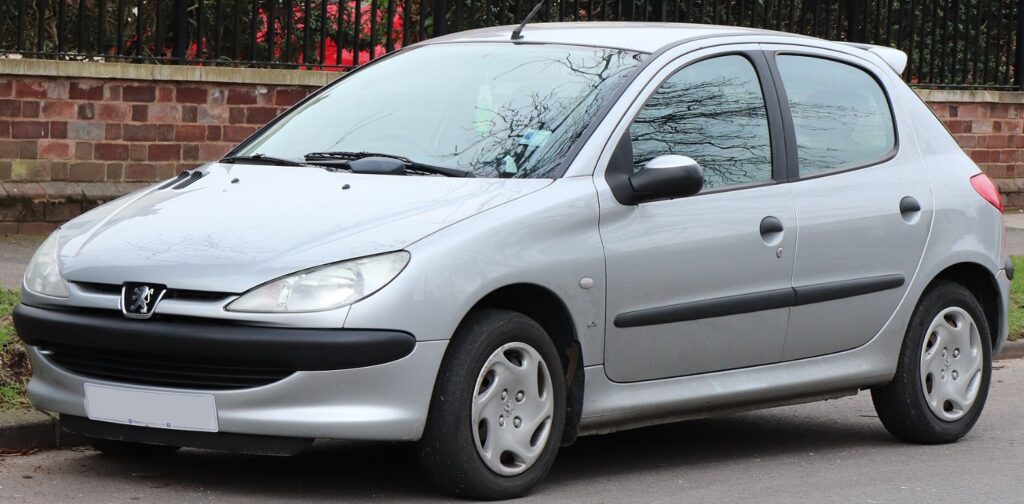
The Peugeot 206 warning lights are the car’s way of starting a conversation with us. Some simply whisper, “Your headlights are on.” Others practically shout, “Stop the engine before something expensive happens.”
The trouble is that a dashboard full of glowing symbols can resemble a Christmas tree at precisely the wrong moment. A red circle appears, an amber engine icon begins flashing, and suddenly we are wondering whether we can continue driving or should pull over immediately.
This guide explains the most common Peugeot 206 dashboard lights, what their colours mean, why they appear, and what we should do next. Because equipment varies by model year, engine and trim level, not every Peugeot 206 displays exactly the same collection of symbols. The owner’s handbook for the specific vehicle should always remain the final reference.
Content in this publication
- Understanding the Peugeot 206 Dashboard
- What the Warning-Light Colours Mean
- Peugeot 206 Central STOP Warning Light
- Engine Oil Pressure and Temperature Warning Light
- Coolant Temperature Warning Light
- Handbrake and Brake-System Warning Light
- ABS Warning Light
- Peugeot 206 Engine Management Warning Light
- Battery and Charging-System Warning Light
- Airbag Warning Light
- Power-Steering Warning Light
- Diesel Preheating Warning Light
- Low-Fuel Warning Light
- Service Indicator and Spanner Symbol
- Seat-Belt Warning Light
- Door-Open Warning Light
- Indicator and Hazard Warning Lights
- Headlight and Main-Beam Indicators
- Front and Rear Fog-Light Indicators
- Peugeot 206 Warning Lights All Coming On
- Why Warning Lights Stay On After Repairs
- How to Diagnose Peugeot 206 Warning Lights
- Which Peugeot 206 Warning Lights Mean Stop Immediately?
- Which Warning Lights Allow Cautious Driving?
- Mistakes to Avoid When a Warning Light Appears
- Conclusion: Listen Before the Peugeot 206 Shouts
- Frequently Asked Questions
Understanding the Peugeot 206 Dashboard
When we turn the ignition key, several dashboard lights illuminate briefly. That is normally a self-check rather than a sign that the car has developed ten faults overnight.
Once the engine starts, most of those lights should disappear. A light that remains illuminated, begins flashing or appears while driving deserves attention. Peugeot’s 206 handbook warns that a permanently illuminated or flashing lamp with the engine running indicates a fault in the corresponding system and may be accompanied by an audible warning or dashboard message.
The key is not to panic. Instead, we should look at:
- The colour of the warning light
- Whether it is solid or flashing
- Whether another symbol appears with it
- Whether the car feels or sounds different
- Whether the central STOP warning is illuminated
Those clues help separate a minor reminder from an urgent mechanical problem.
What the Warning-Light Colours Mean
Dashboard colours generally follow a traffic-light system. They are not perfect indicators of severity in every situation, but they give us a useful starting point.
Red Warning Lights
A red warning generally signals a serious fault, a safety issue or a condition requiring immediate action. Examples include low engine-oil pressure, overheating, a braking-system fault and the central STOP lamp.
When a red mechanical warning appears while driving, we should safely reduce speed, leave the road and switch off the engine when appropriate. Continuing to drive could create a dangerous situation or turn a repairable fault into major engine damage.
A red light does not always indicate a mechanical failure. The seat-belt reminder, open-door warning and parking-brake light can also appear red. We therefore need to identify the symbol rather than reacting to colour alone.
Amber or Orange Warning Lights
Amber lights usually mean that a system has detected a fault or requires attention soon. The car may still drive normally, but we should not ignore the warning indefinitely.
Common amber lights include:
- Engine-management warning
- ABS warning
- Airbag warning
- Diesel preheating indicator
- Low-fuel warning
- Service indicator
A steady amber engine light may allow cautious driving to a workshop. A flashing engine light, however, can indicate a more serious combustion or misfire problem that may damage the catalytic converter.
Green, Blue and White Lights
Green and blue symbols normally confirm that a feature is operating. They are indicators rather than fault warnings.
For example:
- Green arrows show that the indicators are working.
- A green lamp symbol may indicate dipped-beam headlights.
- A blue headlamp symbol shows that the main beams are active.
- A green fog-light symbol identifies the front fog lamps.
These lights usually require no corrective action. We simply need to ensure that the selected feature is appropriate for the driving conditions.
Peugeot 206 Central STOP Warning Light
The red STOP light is one of the most important Peugeot 206 warning lights. It is commonly linked to another serious warning involving the engine-oil system, coolant temperature or braking system.
If the central STOP lamp appears while driving, Peugeot’s guidance is to stop the vehicle immediately once it is safe to do so.
We should:
- Stay calm and avoid sudden steering or braking.
- Reduce speed gradually.
- Pull over somewhere safe.
- Switch on the hazard lights.
- Turn off the engine.
- Identify the second warning light.
- Arrange inspection or recovery if the cause is unclear.
Can We Drive With the STOP Light On?
We should not continue a normal journey with the STOP warning illuminated. Even when the engine appears to run smoothly, the problem could involve oil pressure, excessive temperature or insufficient brake fluid.
Restarting the engine may make the light disappear temporarily, but that does not prove the underlying fault has been fixed. Warning systems sometimes react to intermittent pressure, temperature or electrical signals. Treating the light as a harmless glitch could be a costly gamble.
Engine Oil Pressure and Temperature Warning Light
The oil warning typically resembles an old-fashioned oil can. It may appear alongside the STOP lamp.
It does not merely mean that the next oil service is due. While servicing reminders concern maintenance intervals, the red oil-can symbol can indicate insufficient oil pressure or excessive oil temperature.
Without proper pressure, engine oil cannot protect bearings, camshafts and other moving parts. Continuing to drive would be like running in shoes with no soles: friction quickly becomes the enemy.
What to Do When the Oil Light Appears
Pull over and switch off the engine as soon as it is safe. Wait several minutes on level ground, then check the dipstick.
If the oil level is below the minimum mark, add the correct oil gradually. Do not overfill it. If the level is normal, or if the warning remains after topping up, do not continue driving. Possible causes include:
- A failing oil pump
- A blocked oil pickup
- A faulty pressure sensor
- Damaged wiring
- Internal engine wear
- Oil that is badly degraded or incorrect
Oil level and oil pressure are not the same thing. A full sump cannot protect an engine if the pump is not circulating the oil.
Coolant Temperature Warning Light
The coolant-temperature warning may resemble a thermometer above wavy lines. Depending on the instrument cluster, the driver may also see the temperature gauge entering the red zone.
This indicates that the engine is overheating or that the cooling system has detected an abnormal temperature.
Safe Response to an Overheating Warning
We should stop somewhere safe and turn off the engine. Never immediately remove the coolant cap from a hot engine. The cooling system may be pressurised, and escaping steam or boiling coolant can cause severe burns.
Allow the car to cool fully before checking the expansion tank. Common causes of overheating include:
- Low coolant
- A coolant leak
- A stuck thermostat
- A failed radiator fan
- A damaged water pump
- A blocked radiator
- A blown head gasket
- A faulty temperature sensor
A brief temperature increase in traffic is not something to shrug off. The Peugeot 206 is an older vehicle now, and ageing hoses, electrical connectors and cooling components deserve close attention.
Can We Add Water to an Overheating Peugeot 206?
Clean water may be used only as a temporary emergency measure after the engine has cooled, provided there is no major leak. The system should later be filled with the correct coolant mixture.
Do not pour cold water into a very hot engine. Sudden temperature changes can damage components, and opening a hot cooling system is hazardous.
Handbrake and Brake-System Warning Light
The red brake warning generally resembles a circle containing an exclamation mark, surrounded by curved brackets.
It can illuminate because:
- The handbrake is applied.
- The handbrake switch is sticking.
- The brake-fluid level is low.
- A hydraulic braking fault is present.
- The electronic brake-force distribution system has detected a fault.
First, make sure the handbrake is fully released. If the light remains on, pull over safely and check the brake-fluid reservoir where practical.
A low fluid level may result from worn brake pads or a leak. Simply adding fluid without finding the cause can hide a serious problem.
Brake Light With the STOP Warning
When the brake warning and STOP light appear together, we should treat the situation as urgent. Avoid driving the car until the braking system has been inspected.
If the pedal feels unusually soft, sinks toward the floor or requires extra pressure, stop immediately. Brake faults rarely improve through optimism.
ABS Warning Light
The amber ABS symbol indicates a fault in the anti-lock braking system.
Normal hydraulic braking may remain available, but the anti-lock function may not operate during hard braking. The wheels could therefore lock on slippery roads or during an emergency stop.
Common Peugeot 206 ABS problems can involve:
- Dirty or damaged wheel-speed sensors
- Cracked sensor rings
- Corroded wiring
- Poor electrical connections
- A blown fuse
- Low battery voltage
- An ABS control-unit fault
If the ABS and red brake warnings illuminate together, the fault may also affect electronic brake-force distribution. We should stop and arrange professional diagnosis rather than continuing the journey.
Why the ABS Light May Appear After Battery Trouble
The ABS system depends on stable voltage. A weak battery, poor earth connection or charging-system fault can trigger warning lights even when the wheel sensors are healthy.
A diagnostic scan should be performed before parts are replaced. Otherwise, we may spend money chasing a sensor when the real culprit is unstable electrical power.
Peugeot 206 Engine Management Warning Light
The engine-management light resembles an engine outline. It is sometimes called the check-engine light, injection warning or emissions-control warning.
It means that the engine control unit has recorded a fault involving the injection, ignition or emissions system. Peugeot 206 owner information warns that an illuminated engine-diagnostics lamp can indicate incorrect operation of these systems and a risk of damage.
Steady Engine Warning Light
A steady amber light may indicate a fault that does not require an immediate stop, particularly when the car runs normally.
Potential causes include:
- A faulty oxygen sensor
- An ignition-coil problem
- Worn spark plugs
- A manifold pressure sensor fault
- A throttle-position problem
- An emissions-system fault
- A loose or damaged fuel cap on applicable versions
- Damaged wiring or connectors
Drive gently and arrange a diagnostic scan soon. Avoid hard acceleration, high engine speeds and long journeys until the cause is known.
Flashing Engine Warning Light
A flashing engine light is more urgent. It often accompanies a misfire, rough running, reduced power or vibration.
Unburned fuel can enter the exhaust and overheat the catalytic converter. A relatively modest ignition repair can then become an expensive exhaust-system replacement.
If the light flashes:
- Reduce speed and engine load.
- Avoid heavy acceleration.
- Pull over if the engine is shaking or losing power.
- Switch off the engine.
- Arrange diagnosis before continuing.
Why the Peugeot 206 Engine Light Comes and Goes
An intermittent warning can result from loose connectors, moisture, temperature-related sensor faults or a problem that occurs only under specific engine loads.
The stored diagnostic code may remain in the ECU even after the light disappears. Reading the codes is therefore more useful than guessing based on the fact that the dashboard currently looks normal.
Battery and Charging-System Warning Light
The battery symbol should illuminate when the ignition is switched on and disappear after the engine starts.
If it remains on while the engine is running, the charging system may not be replenishing the battery. The vehicle might continue for a short period using stored battery energy, but it could eventually stall.
Possible causes include:
- Alternator failure
- A loose or broken auxiliary belt
- A failing voltage regulator
- Corroded battery terminals
- Damaged charging cables
- Poor engine or chassis earth connections
- A weak battery
Electrical equipment should be reduced where safe. Turn off unnecessary heating, audio and accessories, then arrange inspection. If the drive belt also operates essential components on the particular engine, continuing to drive could create additional problems.
Airbag Warning Light
The airbag warning depicts a seated person with a circular airbag in front. It may remain illuminated or flash when the supplemental restraint system detects a fault.
Possible causes include:
- Loose wiring beneath a front seat
- A faulty seat-belt pretensioner
- A damaged clock spring
- Low battery voltage
- An airbag control-module fault
- A disconnected component
- Previous accident damage
The car may still drive normally, but one or more airbags or pretensioners may not operate correctly during a collision. The system should be diagnosed promptly.
Never test airbag wiring with ordinary electrical equipment unless properly trained. Airbag circuits contain pyrotechnic components and require specific safety procedures.
Passenger Airbag Deactivation Light
Some Peugeot 206 versions have a passenger-airbag deactivation system. When the airbag is deliberately switched off, its indicator may remain illuminated as confirmation.
This is different from a flashing or unexpected airbag-system warning. Check the passenger-airbag switch position and consult the relevant handbook before assuming there is a fault.
Power-Steering Warning Light
Certain Peugeot 206 versions may display a steering-system warning when the power assistance has failed or the system detects an electrical problem.
The steering wheel will still mechanically turn, but it may feel much heavier, particularly during parking and low-speed manoeuvres.
Potential causes include:
- Low power-steering fluid on hydraulic systems
- A leaking hose or pump
- An electric pump fault
- Low battery voltage
- A blown fuse
- Damaged wiring
- A steering control-unit problem
If the steering suddenly becomes heavy, reduce speed and avoid sharp manoeuvres. Pull over safely and inspect the car before continuing.
Diesel Preheating Warning Light
Diesel Peugeot 206 models use a glow-plug or preheating symbol that resembles a small coil.
When the ignition is switched on, wait for the lamp to go out before starting the engine. The handbook specifically instructs drivers to wait until the diesel preheat warning has extinguished before cranking.
In warm weather, the light may disappear almost immediately. In colder conditions, it may remain illuminated longer.
If the light flashes, stays on after starting or never appears, the cause might be:
- Failed glow plugs
- A glow-plug relay problem
- Faulty wiring
- A temperature-sensor fault
- An engine-management problem
Poor cold starting, white smoke and uneven running immediately after startup can support the diagnosis, but testing is still necessary.
Low-Fuel Warning Light
The amber fuel-pump symbol indicates that the remaining fuel level is low.
Some Peugeot 206 handbooks state that when the warning first appears, approximately 50 kilometres or 30 miles of driving may remain. However, this should be treated as an estimate rather than a promise.
Actual range depends on:
- Engine type
- Driving speed
- Traffic
- Road gradient
- Vehicle load
- Fuel-gauge accuracy
- The condition of the fuel-level sender
Repeatedly driving with very little fuel is not ideal, especially in diesel models. Refuel soon rather than testing how accurately the needle predicts an empty tank.
Service Indicator and Spanner Symbol
The spanner or service display normally reminds us that scheduled maintenance is due or approaching. It is not necessarily evidence of a mechanical failure.
Depending on the version, the display may show the remaining distance before the next service or indicate that the service interval has passed.
The reminder should only be reset after the maintenance work has been completed. Resetting it without changing the oil, filters or other required items merely silences the messenger.
Typical Peugeot 206 Service Reset Procedure
Procedures vary slightly, but many Peugeot 206 models use the following sequence:
- Switch off the ignition.
- Press and hold the trip-reset button.
- Switch the ignition on without starting the engine.
- Continue holding the button while the display counts down.
- Release the button when the display reaches zero.
- Switch the ignition off and back on to confirm the reset.
Use the procedure applicable to the exact model year. More importantly, record the date and mileage of the service so the maintenance history remains meaningful.
Seat-Belt Warning Light
The seat-belt symbol reminds the driver or passenger to fasten the belt. It may be accompanied by an audible alert.
If it remains on after the belt is fastened, inspect whether:
- The buckle is fully engaged.
- An object is resting on a seat with an occupancy sensor.
- The buckle switch is damaged.
- Wiring beneath the seat has become loose.
- The seat-belt pretensioner system has recorded a fault.
Seat belts and airbags work as a coordinated safety system. A persistent seat-belt warning therefore deserves more attention than simply muting the chime.
Door-Open Warning Light
The door-open symbol means that a door, the tailgate or sometimes the bonnet is not properly closed.
If every opening appears secure but the light remains on, a door-latch microswitch may be dirty, worn or damaged. Wiring faults are also possible.
Do not ignore the warning before driving. Reopen and firmly close each door and the boot. A tailgate that looks closed may still be resting on the first latch rather than locking completely.
Indicator and Hazard Warning Lights
The green dashboard arrows flash when the direction indicators or hazard lights are active.
A rapidly flashing arrow often suggests that an exterior indicator bulb has failed or that the circuit has abnormal resistance. Walk around the vehicle and inspect the lamps.
If both arrows flash simultaneously without the hazard switch being pressed, inspect the switch and associated wiring. The Peugeot 206 hazard system can operate with the ignition switched off.
Headlight and Main-Beam Indicators
The dipped-beam indicator confirms that the normal headlights are switched on. The blue headlamp icon identifies the main beams.
The blue light is not a fault warning, but it reminds us to dip the beams when approaching other vehicles. Driving around with main beams active can dazzle other road users.
If the dashboard indicator works but an exterior lamp does not, inspect:
- The bulb
- The fuse
- The bulb holder
- The earth connection
- The headlight wiring
- The lighting stalk or relay
Front and Rear Fog-Light Indicators
The front fog-light symbol is normally green, while the rear fog-light indicator is commonly amber.
Rear fog lights are extremely bright and should only be used when visibility is seriously reduced. Leaving them on in ordinary rain can dazzle drivers behind us and make brake lights harder to distinguish.
A dashboard symbol that remains illuminated after the switch is turned off may point to a faulty switch, relay or electrical connection.
Peugeot 206 Warning Lights All Coming On
When several unrelated lights illuminate together, the car has not necessarily developed multiple independent failures.
The shared cause may be electrical.
Common possibilities include:
- A weak battery
- Alternator trouble
- Loose battery terminals
- Corroded earth straps
- Water entering electrical connectors
- A failing ignition switch
- Instrument-cluster problems
- Communication faults between control modules
Start with battery voltage and charging-system tests. Modern warning modules can behave unpredictably when voltage drops below their expected operating range.
Dashboard Lights Flickering or Flashing
Flickering lights, moving gauge needles and random warning messages often indicate unstable electrical power or a poor ground connection.
Check the battery terminals for looseness and corrosion. Inspect major earth connections between the battery, body and engine. If the fault persists, the instrument cluster and ignition circuitry may require specialist testing.
Replacing sensors one after another is rarely the smartest first move when the entire dashboard is behaving strangely.
Why Warning Lights Stay On After Repairs
A warning can remain illuminated even after the defective part has been repaired.
This may happen because:
- The diagnostic code has not been cleared.
- The vehicle has not completed the required drive cycle.
- A second fault remains.
- The replacement part is incorrect or defective.
- Wiring damage was not repaired.
- The original diagnosis was wrong.
Clearing a code is not the same as repairing a fault. Likewise, disconnecting the battery may erase some information, but it cannot mend a broken sensor or leaking cooling system.
A proper repair should include testing, correction of the cause, code clearing where required and confirmation that the warning does not return.
How to Diagnose Peugeot 206 Warning Lights
A sensible diagnostic process saves time and avoids unnecessary parts replacement.
Step 1: Identify the Exact Symbol
Take a clear photograph while safely parked. Note its colour and whether it is steady or flashing.
Step 2: Observe Other Symptoms
Record anything unusual, including:
- Rough idling
- Loss of power
- Heavy steering
- High temperature
- Strange noises
- Smoke
- Fluid leaks
- Poor braking
- Difficult starting
Step 3: Check Basic Fluid Levels
When it is safe and the engine is cool, check the oil, coolant and brake fluid. Look beneath the vehicle for obvious leaks.
Step 4: Test the Battery and Charging System
Voltage problems can create several misleading warnings. A healthy resting battery commonly measures around 12.6 volts, while the voltage should generally rise with the engine running when the alternator is charging. Exact acceptable values depend on conditions and equipment.
Step 5: Read the Diagnostic Codes
An OBD scanner can retrieve engine-related fault codes, but some inexpensive readers cannot access ABS, airbag or body-control systems.
Use equipment capable of communicating with the affected Peugeot module. Record the codes before clearing anything.
Step 6: Test Before Replacing Parts
A fault code identifies the circuit or condition detected; it does not always name the failed component.
For example, an oxygen-sensor code may result from an air leak, wiring damage, a misfire or an exhaust leak rather than a defective oxygen sensor.
Which Peugeot 206 Warning Lights Mean Stop Immediately?
Stop as soon as it is safe when we see:
- The central red STOP warning
- Red oil-pressure warning
- Coolant-temperature warning or an overheating gauge
- Brake warning with poor braking performance
- Brake and ABS warnings together
- Battery warning accompanied by overheating, belt noise or loss of assistance
- A flashing engine light with severe misfiring
- Any warning accompanied by smoke, burning smells or loud mechanical noises
We should also stop when the car feels unsafe, even if no warning light appears. The dashboard is a useful guard dog, but it cannot detect every mechanical problem.
Which Warning Lights Allow Cautious Driving?
A short, careful journey to a workshop may be reasonable when:
- The amber engine light is steady and the engine runs normally.
- The ABS warning is on by itself and normal braking remains available.
- The airbag warning is illuminated without other symptoms.
- The service reminder has appeared.
- A nonessential exterior bulb has failed.
- The low-fuel warning has just illuminated.
This is not permission to postpone repairs indefinitely. Drive gently, avoid unnecessary journeys and arrange diagnosis promptly.
Mistakes to Avoid When a Warning Light Appears
We can make the situation worse by responding in the wrong way.
Avoid:
- Covering the light with tape
- Clearing codes before recording them
- Disconnecting the battery as the only “repair”
- Opening a hot coolant cap
- Driving with the oil-pressure warning
- Assuming every red light has the same meaning
- Replacing parts based only on an internet guess
- Resetting the service reminder without servicing the car
- Ignoring a warning because it later disappears
- Buying the cheapest scanner and expecting it to access every system
Dashboard warnings are clues. Good diagnosis combines those clues with symptoms, test results and the vehicle’s repair history.
Conclusion: Listen Before the Peugeot 206 Shouts
The Peugeot 206 warning lights are not there to ruin our morning. They are there to give us a chance to act before a small problem becomes a breakdown—or before a serious problem threatens the engine, braking system or occupants.
Red oil, temperature, brake and STOP warnings require immediate respect. Amber lights usually allow more breathing room, but they still need timely diagnosis. Green and blue symbols generally confirm that a feature is active.
The best response is simple: identify the symbol, consider the colour, observe how the car behaves and avoid guessing. When the dashboard speaks, we do not need to panic—but we should certainly listen.
Frequently Asked Questions
1. What does the STOP warning light mean on a Peugeot 206?
The red STOP light indicates a potentially serious fault, usually associated with another warning such as low oil pressure, excessive coolant temperature or a braking-system problem. Pull over safely, switch off the engine and identify the accompanying warning before driving again.
2. Can I drive my Peugeot 206 with the engine light on?
A short, cautious journey may be possible when the amber engine light is steady and the car runs normally. If the light flashes, the engine misfires, power drops or the car shakes, stop driving and arrange diagnosis to prevent further damage.
3. Why are all my Peugeot 206 dashboard lights flashing?
Multiple flashing or random warning lights can result from a weak battery, alternator fault, loose terminal, damaged earth connection, ignition-switch issue or instrument-cluster fault. Begin with battery, charging-voltage and connection tests.
4. Why does the airbag light stay on in my Peugeot 206?
Common causes include loose under-seat wiring, a defective seat-belt pretensioner, a clock-spring fault, low voltage or an airbag control-module problem. The restraint system may not function correctly in a collision, so it should be scanned and repaired promptly.
5. How do I reset a Peugeot 206 warning light?
The correct method depends on the light. A service reminder may be reset through the trip button after servicing, while engine, ABS and airbag warnings normally require fault diagnosis and code clearing. A warning should never be erased until its cause has been repaired.
If you want to know other articles similar to Peugeot 206 Warning Lights: Complete Dashboard Guide you can visit the category Service and Parts.
Nissan Qashqai Fuel Tank Capacity: Complete Guide

Suzuki Swift Fuel Tank Capacity: Complete Guide

Mazda CX-5 Weight (2013–2026): Complete Guide in Pounds and KG

Kia Sportage Dashboard Symbols and Warning Lights

MINI Cooper Weight (2002–2027): Complete Weight Chart & Guide

Toyota RAV4 Engine Sizes: Complete Guide (1994–2026)
Leave a Reply
More content of your interest