
Peugeot 206 Tire Pressure: The Complete Everyday Guide

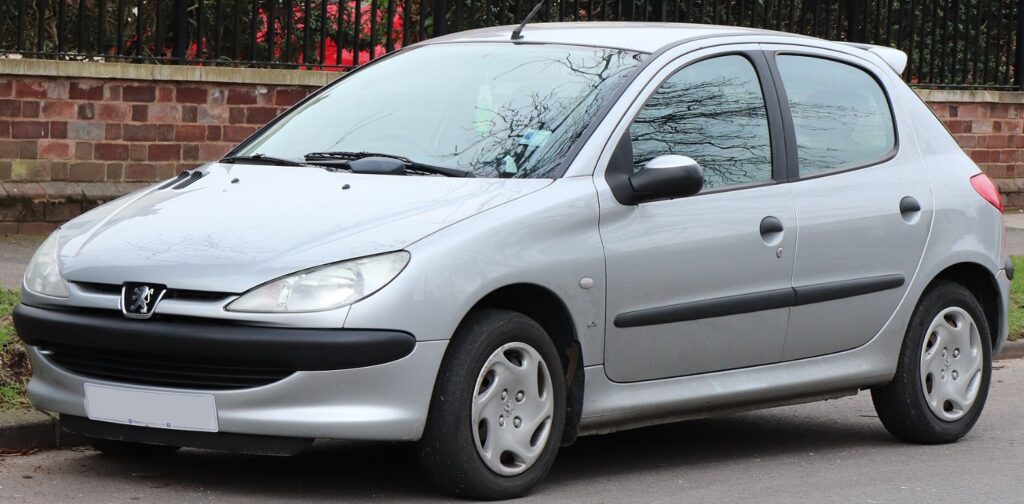
Getting the Peugeot 206 tire pressure right may seem like a tiny maintenance task, but it has a surprisingly big effect on how the car drives, brakes, consumes fuel, and wears its tires. Those four small patches of rubber connecting our Peugeot to the road carry the entire weight of the vehicle, so a few missing PSI can make a noticeable difference.
The Peugeot 206 was produced with several engines, body styles, trim levels, wheel sizes, and tire combinations. For that reason, there is no single pressure figure that applies perfectly to every version. Many models use pressures around 30 to 35 PSI, or approximately 2.1 to 2.4 bar, but we should always treat these numbers as a general reference rather than a universal specification.
The correct figure for our particular car is normally printed on the tire-pressure label, found inside the driver’s door opening, on the door pillar, or near the fuel filler flap. The owner’s manual may also list recommended pressures for different loads and tire sizes.
Content in this publication
- What Is the Recommended Peugeot 206 Tire Pressure?
- Why Peugeot 206 Tire Pressure Varies
- Where to Find the Correct Pressure
- PSI and Bar Explained
- When Should We Check the Tires?
- Always Measure Pressure When the Tires Are Cold
- How to Check Peugeot 206 Tire Pressure
- Normal Load Versus Full Load
- Effects of Low Tire Pressure
- Effects of Excessive Tire Pressure
- Peugeot 206 Tire Pressure in Winter
- Pressure for Motorway Driving
- What About Replacement Tires?
- Uneven Tire Wear and Pressure Clues
- Does the Peugeot 206 Have TPMS?
- Common Tire Pressure Mistakes
- Choosing a Reliable Pressure Gauge
- Final Thoughts
- Frequently Asked Questions
What Is the Recommended Peugeot 206 Tire Pressure?
For many standard Peugeot 206 versions, the recommended cold tire pressure is commonly within the following range:
- Front tires: approximately 30–35 PSI
- Rear tires: approximately 30–35 PSI
- In bar: roughly 2.1–2.4 bar
- Fully loaded vehicle: the rear tires may require additional pressure
However, the exact pressure depends on factors such as:
- Engine size
- Hatchback, estate, sedan, or convertible body style
- Wheel diameter
- Tire dimensions
- Passenger and luggage load
- Normal or motorway driving
Think of these general values as a map rather than a precise destination. The vehicle label remains the final authority.
Why Peugeot 206 Tire Pressure Varies
It is tempting to believe that every Peugeot 206 should use the same pressure. After all, the vehicles share the same name. Yet a lightweight 1.1-litre hatchback does not place exactly the same demands on its tires as a diesel model, a 206 SW estate, or a sporty 206 GTi.
Different versions may have 13-, 14-, 15-, or larger-inch wheels. Tire widths and sidewall heights also vary. A narrow tire with a tall sidewall behaves differently from a wide, low-profile tire.
Pressure recommendations are calculated to balance:
- Ride comfort
- Steering response
- Braking performance
- Tire durability
- Fuel consumption
- Vehicle stability
This explains why copying the pressure from another Peugeot 206 is not always sensible, even when the two cars look nearly identical.
Where to Find the Correct Pressure
Check the Vehicle Information Label
The most reliable source is the manufacturer’s pressure label. We should inspect:
- The driver’s door frame
- The B-pillar beside the driver’s seat
- The inside of the fuel filler flap
- The glove compartment area on some versions
The label may show separate figures for the front and rear tires. It may also distinguish between normal driving and a fully loaded car.
Read the Owner’s Manual
The Peugeot 206 owner’s manual can provide additional guidance, particularly when several approved tire sizes were available. It may also explain how pressure should be adjusted before carrying several passengers, heavy luggage, or towing a small trailer.
Do Not Use the Sidewall Maximum
The number printed on the tire sidewall is usually the tire manufacturer’s maximum permitted pressure, not the normal pressure recommended by Peugeot.
Inflating every tire to the sidewall maximum would be like wearing shoes two sizes too tight because the box says they can handle it. The tire may tolerate that pressure, but it does not mean the vehicle will handle or ride correctly.
PSI and Bar Explained
Tire-pressure information may be displayed in PSI, bar, or sometimes kPa.
Common conversions include:
- 30 PSI = approximately 2.1 bar
- 32 PSI = approximately 2.2 bar
- 33 PSI = approximately 2.3 bar
- 35 PSI = approximately 2.4 bar
- 36 PSI = approximately 2.5 bar
Most service-station inflators allow us to select either PSI or bar. Before adding air, it is worth checking which unit is displayed. Confusing 2.3 bar with 23 PSI would leave the tire seriously underinflated.
When Should We Check the Tires?
We should inspect the pressure at least every two weeks and before a long journey. Monthly checks are better than nothing, but smaller tires can lose enough air between inspections to affect handling and wear.
Pressure should also be checked:
- Before motorway travel
- Before carrying heavy luggage
- After a sudden temperature change
- When steering feels unusually heavy
- When fuel consumption increases
- When one tire appears lower than the others
- After hitting a pothole or curb
A slow puncture may not flatten the tire overnight. Instead, it can quietly remove one or two PSI every few days.
Always Measure Pressure When the Tires Are Cold
“Cold” does not necessarily mean early in the morning. It means the vehicle has been parked for several hours or driven only a short distance at low speed.
As tires roll, their rubber flexes and produces heat. The air inside expands, causing the gauge reading to rise. Checking immediately after a long drive may show a pressure several PSI higher than the true cold figure.
We should not normally release air from a warm tire simply because the reading exceeds the cold recommendation. Once the tire cools, its pressure will fall again.
How to Check Peugeot 206 Tire Pressure
Step 1: Find the Correct Specification
Read the vehicle label and note the front and rear values. They may not be identical.
Step 2: Remove the Valve Cap
Unscrew the small cap from the tire valve and keep it somewhere safe. Valve caps help prevent dirt and moisture from entering the valve.
Step 3: Attach the Gauge Firmly
Press the pressure gauge straight onto the valve. A brief hiss is normal, but continuous escaping air means the gauge is not seated correctly.
Step 4: Compare the Reading
If the reading is below the recommended figure, add air in short bursts. When it is too high, release a small amount and measure again.
Step 5: Check All Four Tires
Do not assume the opposite tire has the same pressure. Each one should be measured individually.
Step 6: Inspect the Spare Tire
When the car has a full-size or temporary spare, inspect it periodically. A spare tire that has been ignored for years may be useless when we finally need it.
Normal Load Versus Full Load
The pressure label may show two sets of figures. The first usually applies to everyday driving with one or two occupants and limited luggage. The second applies when the car carries several passengers or a heavily loaded boot.
Additional weight compresses the rear tires more strongly. Increasing the rear pressure helps the tires maintain their shape, control heat, and support the load.
After the trip, we should return the tires to the normal-load setting once the extra passengers and luggage are removed. Leaving the rear tires at an unnecessarily high pressure can make the ride harsher and reduce grip on uneven roads.
Effects of Low Tire Pressure
Underinflation is one of the most common tire problems. A tire can be significantly low without appearing completely flat.
Low pressure may cause:
- Heavy or vague steering
- Increased fuel consumption
- Excessive heat buildup
- Faster wear on both outer shoulders
- Reduced stability during cornering
- Longer braking distances
- Greater risk of tire damage
An underinflated tire bends more as it rotates. That repeated flexing creates heat, much like bending a paper clip back and forth. During high-speed driving, excessive heat can damage the internal structure.
Effects of Excessive Tire Pressure
More pressure is not automatically better. Overinflated tires can produce:
- A hard, uncomfortable ride
- Reduced grip on rough surfaces
- Faster wear in the center of the tread
- Increased sensitivity to potholes
- Less predictable wet-road performance
- Reduced contact between the tire and road
The car may feel sharp at first, but that sensation can be deceptive. A tire that is too firm cannot adapt to the road surface as effectively.
Peugeot 206 Tire Pressure in Winter
Cold weather reduces tire pressure because air contracts as temperature falls. A tire that was correctly inflated during warm weather may become several PSI low after a significant temperature drop.
We should not automatically add a large arbitrary winter adjustment. Instead, check the tires cold and restore them to the manufacturer’s recommended figure.
In areas with large seasonal temperature changes, more frequent inspections are sensible. The tire is not necessarily leaking; the air inside is simply responding to the weather.
Pressure for Motorway Driving
Some Peugeot pressure labels include a separate motorway or high-speed recommendation. Where Peugeot provides such a figure, we should follow it.
Correct inflation becomes especially important at sustained speed because tire temperatures rise. Before a long motorway journey, we should check pressure, tread depth, sidewall condition, and load distribution.
Do not inflate beyond the official recommendation merely because the trip involves fast roads. Extra pressure should only be added when the manufacturer’s label specifically instructs us to do so.
What About Replacement Tires?
When replacement tires have the same approved size, load rating, and type, the vehicle’s original pressure recommendation normally remains the correct starting point.
Changing brands does not usually mean inventing a new pressure. However, pressure advice may need professional review when fitting:
- Non-standard wheel sizes
- Extra-load tires
- Significantly wider tires
- Low-profile conversions
- Reinforced commercial-style tires
Poorly planned wheel modifications can affect speedometer accuracy, ride comfort, clearance, and handling. Appearance should never overrule safety.
Uneven Tire Wear and Pressure Clues
The tread can tell a story about how the tire has been used.
Wear on Both Outer Edges
This often suggests prolonged underinflation, although worn suspension components or aggressive cornering may also contribute.
Wear Through the Center
This may indicate excessive pressure, particularly when the center wears considerably faster than the shoulders.
Wear on One Side
One-sided wear is more commonly associated with wheel alignment, suspension, or steering geometry than pressure alone.
Patchy or Cupped Wear
Irregular patches may point to worn shock absorbers, wheel imbalance, or suspension issues.
Pressure correction cannot restore damaged tread, so badly or unevenly worn tires should be inspected by a qualified technician.
Does the Peugeot 206 Have TPMS?
Many earlier Peugeot 206 models do not use the modern tire-pressure monitoring systems found in newer vehicles. Equipment varies by year, specification, and market, so we should confirm what is fitted to our particular car.
Even when a vehicle has a warning system, it should not replace manual checks. TPMS is a safety net, not a maintenance routine. Some systems only warn us after pressure has already dropped substantially.
Common Tire Pressure Mistakes
We can avoid many problems by steering clear of these habits:
- Using the sidewall maximum as the normal pressure
- Checking immediately after a long drive
- Inflating every tire identically without reading the label
- Forgetting the rear-pressure adjustment when fully loaded
- Trusting appearance instead of using a gauge
- Ignoring the spare tire
- Assuming new tires cannot lose air
- Failing to investigate repeated pressure loss
When one tire consistently loses air, topping it up every week is not a real solution. The tire may have a puncture, damaged valve, corroded wheel rim, or sealing problem.
Choosing a Reliable Pressure Gauge
Service-station gauges are convenient, but frequent use can make them inaccurate. Keeping a personal digital or mechanical gauge in the glove compartment allows us to compare readings consistently.
A useful gauge should:
- Display the preferred measurement unit
- Be easy to read
- Seal firmly against the valve
- Cover normal passenger-car pressure ranges
- Produce repeatable results
Consistency matters more than decorative features. A simple, dependable gauge is worth far more than a complicated one we never use.
Final Thoughts
Correct Peugeot 206 tire pressure helps the car feel safer, lighter, and more predictable. It also supports even tire wear and sensible fuel consumption. While many 206 models operate somewhere around 30 to 35 PSI, the precise value must come from the pressure label or owner’s manual for the specific tire size and load.
Checking the tires takes only a few minutes, yet those minutes can prevent premature wear, poor handling, wasted fuel, and avoidable roadside trouble. Tire pressure is a small detail with a long shadow. Keep it right, and the Peugeot 206 will roll with far less drama.
Frequently Asked Questions
1. What PSI should Peugeot 206 tires use?
Many versions use approximately 30 to 35 PSI, but the exact front and rear figures depend on the engine, tire size, body style, and load. Always follow the vehicle’s pressure label.
2. Should front and rear tires have the same pressure?
Not necessarily. Some Peugeot 206 versions specify different pressures, especially when the vehicle is fully loaded. Read both values carefully.
3. Can we check the pressure after driving?
A reading can be taken, but it will usually be higher because the tires are warm. The most accurate comparison with the manufacturer’s recommendation is obtained when the tires are cold.
4. Why does one tire keep losing pressure?
Possible causes include a puncture, leaking valve, damaged rim, corrosion, or poor sealing between the tire and wheel. Repeated pressure loss should be professionally inspected.
5. How often should Peugeot 206 tire pressure be checked?
Check it approximately every two weeks, before long trips, and whenever the weather changes significantly or the vehicle carries a heavier load.
If you want to know other articles similar to Peugeot 206 Tire Pressure: The Complete Everyday Guide you can visit the category Service and Parts.
Renault Megane Boot Space: Size, Litres & Dimensions
Vauxhall Mokka Tyre Pressure Reset: Complete Guide
How to Reset the Tire Pressure System on Your Hyundai Tucson
Hyundai Kona Tire Pressure: Complete PSI Guide
Vauxhall Corsa Timing Belt Replacement Cost UK 2026
Mazda CX-5 Tire Size Chart: 2013–2026 Guide
Leave a Reply
More content of your interest