

Vauxhall Meriva Tyre Size: Complete Fitment Guide

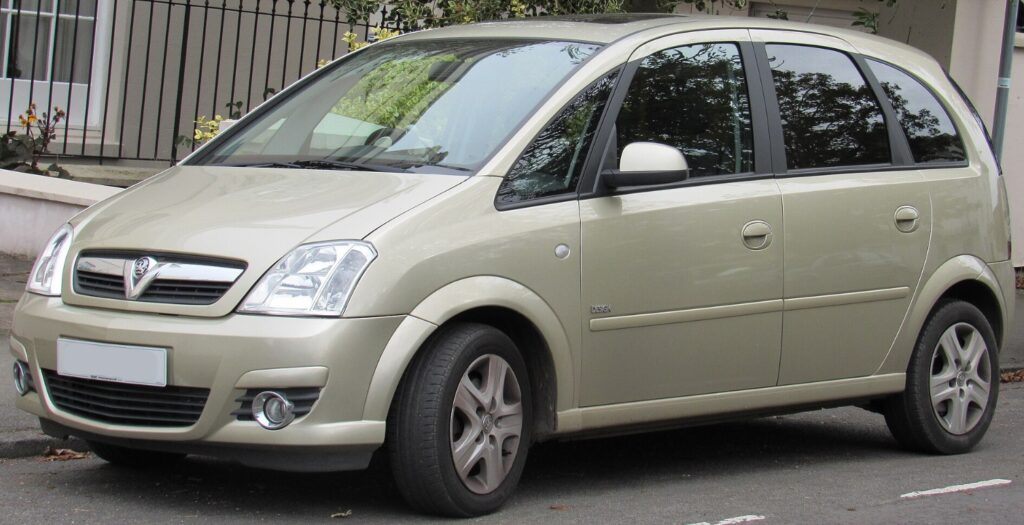
Finding the correct Vauxhall Meriva tyre size sounds simple until we start comparing generations, trim levels, engines, and wheel options. One Meriva may leave the factory on modest 15-inch wheels, while another wears broad 18-inch alloys. Both can be perfectly correct, but they are not necessarily interchangeable.
That distinction matters. Tyres influence braking, steering, comfort, fuel consumption, road noise, speedometer accuracy, and the behaviour of electronic safety systems. They are the only parts of the car that remain in direct contact with the road, usually through a footprint no larger than the palm of a hand. Choosing them by appearance alone is rather like buying shoes without checking the size: they may look brilliant, but the journey could become uncomfortable very quickly.
The Meriva was sold in two main generations. The Meriva A, produced during the 2000s, commonly used 14-, 15-, 16-, and 17-inch tyre combinations. The later Meriva B, introduced in 2010, generally came with 15-, 16-, 17-, or optional 18-inch wheels. However, the exact approved size depends on the model, engine, production year, equipment package, and market.
In this guide, we will explain the common factory sizes, show how tyre markings work, compare wheel diameters, discuss replacement options, and help owners avoid expensive fitment mistakes.
Content in this publication
- What Is the Standard Vauxhall Meriva Tyre Size?
- Vauxhall Meriva Tyre Size by Generation
- How to Read a Vauxhall Meriva Tyre Marking
- Where to Find the Correct Tyre Size
- Vauxhall Meriva 15-Inch Tyre Sizes
- Vauxhall Meriva 16-Inch Tyre Sizes
- Vauxhall Meriva 17-Inch Tyre Sizes
- Vauxhall Meriva 18-Inch Tyre Size
- Can We Change the Vauxhall Meriva Tyre Size?
- Can We Fit Smaller Wheels to a Meriva?
- Can We Fit Wider Tyres?
- Tyre Pressure and Tyre Size Are Different
- What Tyre Load Index Does a Meriva Need?
- Summer, Winter, or All-Season Tyres?
- Should All Four Tyres Match?
- Common Vauxhall Meriva Tyre Problems
- How Often Should Meriva Tyres Be Replaced?
- How to Choose the Best Tyres for a Vauxhall Meriva
- What to Check Before Buying Meriva Tyres
- Avoid These Vauxhall Meriva Tyre Mistakes
- Vauxhall Meriva Tyre Size Quick Reference
- Conclusion
- Frequently Asked Questions
What Is the Standard Vauxhall Meriva Tyre Size?
There is no single tyre size for every Vauxhall Meriva. Several sizes were approved throughout the model’s production run.
Common original-equipment sizes include:
- 175/70 R14
- 185/60 R15
- 195/65 R15
- 205/50 R16
- 205/55 R16
- 205/45 R17
- 225/45 R17
- 225/40 R18
These sizes should not be treated as universally interchangeable. For example, 185/60 R15 is strongly associated with versions of the first-generation Meriva, while 195/65 R15 and 205/55 R16 are common on the second-generation model.
Official Vauxhall literature for the 2008 Meriva A lists 185/60 R15, 205/50 R16, and 205/45 R17 combinations. Later Meriva B specification documents list 195/65 R15, 205/55 R16, 225/45 R17, and 225/40 R18 tyres.
That is why we should always confirm the specification on the individual car rather than ordering tyres solely from a generic online list.
Vauxhall Meriva Tyre Size by Generation
The fastest way to narrow the search is to identify whether we own a Meriva A or Meriva B.
Vauxhall Meriva A Tyre Sizes
The Meriva A was the original generation. It has conventional rear doors and a more compact, upright body than its successor.
Typical Meriva A tyre sizes include:
| Wheel diameter | Common tyre size | Typical application |
|---|---|---|
| 14 inches | 175/70 R14 | Selected entry-level versions |
| 15 inches | 185/60 R15 | Common standard fitment |
| 16 inches | 205/50 R16 | Higher trims and alloy-wheel packages |
| 17 inches | 205/45 R17 | Sportier models and selected option packs |
The 2008 Vauxhall brochure identifies 185/60 R15 as a standard fitment on several Meriva A versions, with 205/50 R16 and 205/45 R17 available on selected specifications.
Some early models and market-specific versions may use different combinations, including 14-inch wheels. Michelin’s Meriva fitment information includes 175/70 R14 and several load- and speed-rating variations of 185/60 R15.
Meriva A Sport and VXR Considerations
Sport-oriented versions can have wider tyres and larger alloys than ordinary Life, Club, or Design models. We should not assume that a tyre from a standard 1.4-litre Meriva will be suitable for a higher-performance variant.
The Meriva VXR, for example, was fitted with 17-inch wheels. Its braking, suspension, and performance characteristics differ from those of the everyday family versions. A replacement tyre must therefore match not only the nominal dimensions but also the required load and speed ratings.
Vauxhall Meriva B Tyre Sizes
The Meriva B arrived in 2010 and is easy to recognise by its rear-hinged back doors, marketed as FlexDoors.
Common Meriva B sizes are:
| Wheel diameter | Common tyre size | General character |
| 15 inches | 195/65 R15 | Comfort-focused and economical |
| 16 inches | 205/55 R16 | Balanced everyday option |
| 17 inches | 225/45 R17 | Wider, sportier fitment |
| 18 inches | 225/40 R18 | Low-profile optional fitment |
Vauxhall’s 2015 Meriva specification guide lists all four of these tyre sizes. It pairs 17-inch wheels with 225/45 R17 tyres and optional 18-inch wheels with 225/40 R18 tyres.
These combinations maintain a broadly similar overall rolling diameter. As the wheel becomes larger, the tyre’s sidewall becomes shallower. That helps preserve gearing and speedometer accuracy while changing the way the car feels on the road.
Facelifted Meriva B Models
The facelifted Meriva B was offered from the 2014 model year and continued until the model was discontinued. Its wheel choices remained broadly similar, although standard equipment depended on trim.
Later specification guides show 16-inch alloys on some versions and 17-inch wheels on higher trims. Nevertheless, equipment changed across model years, so trim names alone are not enough to identify the tyres fitted to a particular car.
How to Read a Vauxhall Meriva Tyre Marking
A tyre marking such as 205/55 R16 91H may resemble an encrypted message, but every part tells us something useful.
205: Tyre Width
The first number is the nominal width in millimetres.
A 205/55 R16 tyre is approximately 205 millimetres wide from sidewall to sidewall when mounted on an appropriate wheel.
Wider tyres can provide a larger contact area and sharper steering response, but they can also:
- Cost more to replace
- Create additional road noise
- Increase the risk of aquaplaning when badly worn
- Offer less protection against kerb damage
- Slightly increase rolling resistance
Wider does not automatically mean safer. Tyre design, tread depth, compound, weather, and pressure are often more important than width alone.
55: Aspect Ratio
The second number represents the height of the sidewall as a percentage of the tyre’s width.
On a 205/55 R16 tyre, the sidewall height is approximately 55% of 205 mm, or about 113 mm.
A lower number produces a shallower sidewall. This usually makes steering feel more immediate, but it can also transmit more pothole impacts into the cabin.
R: Radial Construction
The letter R means the tyre uses radial construction. Almost every modern passenger-car tyre is radial, so this is not a special performance designation.
16: Wheel Diameter
The number following R gives the wheel diameter in inches.
A 205/55 R16 tyre must be fitted to a 16-inch wheel. It cannot be stretched onto a 17-inch rim or safely fitted to a 15-inch one.
91: Load Index
The load index indicates the maximum weight the tyre can support at its rated pressure.
A load index of 91 corresponds to a maximum load of 615 kg per tyre. We must use a load rating that meets or exceeds the requirement specified for the vehicle.
Using a lower rating can cause excessive heat, instability, premature failure, and legal or insurance problems.
H: Speed Rating
The final letter identifies the tyre’s approved maximum speed under specified test conditions.
Common passenger-car ratings include:
- T: up to 190 km/h or 118 mph
- H: up to 210 km/h or 130 mph
- V: up to 240 km/h or 149 mph
- W: up to 270 km/h or 168 mph
We should not fit a speed rating lower than the vehicle manufacturer’s requirement unless a specific legal exception applies, such as approved winter-tyre regulations in certain countries.
Where to Find the Correct Tyre Size
The sidewall of the tyre is useful, but it only tells us what is fitted now. It does not prove that the tyre is correct.
A previous owner may have changed the wheels or installed an unsuitable size. For a reliable answer, we should compare several sources.
Check the Tyre-Pressure Label
The vehicle’s tyre-pressure label may be located:
- Inside the driver’s door opening
- On the door pillar
- Inside the fuel-filler flap
- On another body panel specified in the handbook
The label normally shows approved tyre sizes and recommended pressures for different passenger loads.
Read the Owner’s Manual
The owner’s manual explains tyre designations, pressure recommendations, winter-tyre requirements, chains, and the consequences of changing wheel size.
Vauxhall warns that changing to a different tyre size may require the speedometer, nominal tyre-pressure settings, or other vehicle systems to be adjusted. The manufacturer also advises replacing the tyre-pressure label after an approved conversion.
Use the Registration or VIN
A tyre retailer or Vauxhall parts department can often identify the original specification using:
- Vehicle registration
- Vehicle identification number
- Production date
- Engine code
- Trim and option codes
The VIN is especially valuable when the car was built with optional wheels.
Inspect All Four Tyres
All four tyres should normally have the same size unless the manufacturer designed the vehicle with staggered fitment. The Meriva generally uses matching front and rear dimensions.
We should compare:
- Width
- Aspect ratio
- Wheel diameter
- Load index
- Speed rating
- Construction type
A mismatched pair can change grip levels from one axle to the other, particularly in rain or during emergency braking.
Vauxhall Meriva 15-Inch Tyre Sizes
Fifteen-inch wheels usually deliver the softest and most forgiving ride.
185/60 R15 on the Meriva A
The 185/60 R15 size is common on the first-generation Meriva. Its relatively generous sidewall suits the car’s practical family role.
Advantages include:
- Good pothole protection
- Lower replacement cost
- Comfortable ride quality
- Modest road noise
- Reduced risk of alloy-wheel damage
The narrower tread can also work well in heavy rain because it has less water to displace than a much wider tyre.
195/65 R15 on the Meriva B
The later Meriva B commonly uses 195/65 R15 tyres on standard 15-inch wheels.
This is a widely available size, which normally gives us a broad choice of:
- Premium tyres
- Mid-range tyres
- Budget tyres
- All-season tyres
- Winter tyres
- Low-rolling-resistance models
Its tall sidewall absorbs broken surfaces like a cushion. The steering may feel less razor-sharp than it does on 17- or 18-inch wheels, but most Meriva owners will find the trade-off sensible.
Vauxhall Meriva 16-Inch Tyre Sizes
Sixteen-inch wheels often represent the sweet spot.
205/50 R16 on the Meriva A
Selected Meriva A models use 205/50 R16 tyres. They are wider and lower-profile than the usual 185/60 R15 setup.
This can produce:
- More immediate steering response
- A firmer ride
- Greater alloy-wheel exposure
- Higher tyre prices
- A more purposeful appearance
Because the tyre is wider, maintaining correct pressure becomes particularly important. Underinflation can wear both shoulders, increase fuel use, and make the steering feel heavy.
205/55 R16 on the Meriva B
The 205/55 R16 is one of the most common Meriva B tyre sizes. It balances comfort, grip, availability, and price remarkably well.
For many owners, this is the Goldilocks choice: neither too soft nor too harsh, neither unusually narrow nor excessively wide.
It is also a popular size across many European family cars, which means manufacturers offer an extensive range of products. We can prioritise wet braking, efficiency, noise, longevity, or all-season capability without being trapped in a tiny market.
Vauxhall Meriva 17-Inch Tyre Sizes
Seventeen-inch wheels give the Meriva a stronger visual presence, but appearance is only part of the story.
205/45 R17 on the Meriva A
The Meriva A may use 205/45 R17 tyres on sportier versions and selected wheel packages.
The shallow sidewall can improve turn-in response, yet it leaves less rubber between the wheel and the road. Potholes that feel like a dull thump on 15-inch wheels can feel like a hammer strike on low-profile tyres.
225/45 R17 on the Meriva B
The Meriva B’s typical 17-inch fitment is 225/45 R17.
This tyre is substantially wider than the 195/65 R15 alternative. It can make the car feel more planted in dry corners, but it also creates several practical considerations:
- Replacement tyres are usually more expensive
- Steering may feel heavier
- Road noise may increase
- Fuel efficiency can be slightly lower
- Kerb damage becomes more likely
- Ride quality may feel firmer
Official Vauxhall manuals state that tyre chains are permitted on 225/45 R17 tyres, provided the chains comply with the specified fine-mesh limitations and are fitted to the front wheels. Requirements can vary by handbook edition, so owners should check the instructions for their exact model.
Vauxhall Meriva 18-Inch Tyre Size
The largest commonly listed factory combination for the Meriva B is 225/40 R18.
It looks striking. The wheel fills the arch, the sidewall appears slim, and the family MPV gains a surprisingly sporty stance. Yet beauty sometimes sends us the bill later.
Benefits of 225/40 R18 Tyres
Potential advantages include:
- Sharper initial steering response
- Reduced sidewall flex
- Sportier appearance
- Strong dry-road feel
- Greater visual presence
Disadvantages of 225/40 R18 Tyres
The compromises can include:
- Firmer ride quality
- Higher purchase prices
- Greater pothole vulnerability
- Increased alloy-wheel damage risk
- More noticeable road noise
- Fewer low-cost tyre choices
The Vauxhall manual information available for the Meriva B states that conventional tyre chains are not permitted with 225/40 R18 tyres.
For drivers regularly encountering snow, rough roads, or deep potholes, smaller approved wheels may be the more practical solution.
Can We Change the Vauxhall Meriva Tyre Size?
A size change is possible, but it should be treated as an engineering decision rather than a cosmetic experiment.
The replacement combination must provide:
- Adequate brake clearance
- Correct wheel width
- Suitable offset
- Sufficient suspension clearance
- Proper bodywork clearance
- An appropriate load index
- A suitable speed rating
- A rolling diameter close to the approved specification
- Compatibility with tyre-pressure monitoring systems
Vauxhall specifically warns that non-standard tyre sizes may require speedometer reprogramming, revised pressure settings, and other vehicle modifications. Unsuitable tyres or wheels can affect safety and vehicle approval.
Understanding Rolling Diameter
Changing wheel diameter does not necessarily mean changing the tyre’s total height dramatically.
Consider these Meriva B sizes:
- 195/65 R15
- 205/55 R16
- 225/45 R17
- 225/40 R18
As the wheel diameter rises, the sidewall becomes lower. This keeps the complete wheel-and-tyre assembly within a similar overall diameter.
If the total diameter changes too much:
- The speedometer may become inaccurate
- Acceleration can feel different
- Gear ratios are effectively altered
- Tyres may rub against the body or suspension
- Electronic stability systems may behave incorrectly
- Insurance approval may be affected
As a general workshop guideline, conversions are often kept within a small percentage of the original rolling circumference. However, we should use a professionally approved fitment rather than relying on an online calculator alone.
Can We Fit Smaller Wheels to a Meriva?
Downsizing can be worthwhile when comfort and cost matter more than appearance.
For example, an owner with approved 18-inch equipment may investigate an approved 16- or 17-inch package. The smaller wheel would require a tyre with a taller sidewall to preserve the overall diameter.
Potential benefits include:
- Softer ride quality
- Cheaper replacement tyres
- Better pothole protection
- Easier winter-tyre availability
- Lower alloy-repair risk
However, the wheel must clear the brakes. This is particularly important on high-output versions or vehicles equipped with larger brake components.
Wheel offset, width, bolt pattern, and centre-bore dimensions must also be correct. A wheel that bolts onto the hub is not automatically suitable.
Can We Fit Wider Tyres?
Wider tyres are often assumed to provide more grip, but reality is more nuanced.
A quality tyre in the correct standard size may outperform a cheap, oversized tyre in almost every meaningful test. Compound technology and tread design matter enormously.
Excessive width can create:
- Tyre rubbing
- Tramlining on worn roads
- Heavier steering
- Greater aquaplaning sensitivity
- Increased rolling resistance
- Incorrect wheel fitment
- Extra stress on steering and suspension parts
We should choose the width approved for the wheel and vehicle rather than chasing the widest tyre that physically fits.
Tyre Pressure and Tyre Size Are Different
Tyre size and tyre pressure are connected, but they are not the same measurement.
A 195/65 R15 tyre may require a different pressure from a 225/40 R18 tyre. Pressure can also change according to:
- Engine
- Vehicle load
- Driving speed
- Front or rear axle
- Wheel package
- Trailer use
- Tyre specification
We should use the pressure label attached to the car, not a universal figure found in a forum.
Some reference data, for example, lists 33 psi at the front and 30 psi at the rear for a 2015 Meriva using 205/55 R16 tyres, but even that source advises owners to consult the handbook for the exact specification.
Why Correct Pressure Matters
Underinflated tyres can cause:
- Sluggish steering
- Increased fuel consumption
- Excessive shoulder wear
- Heat buildup
- Longer braking distances
- Premature tyre failure
Overinflated tyres can cause:
- Reduced ride comfort
- Greater sensitivity to impacts
- Uneven central wear
- Reduced contact on rough surfaces
- Nervous steering behaviour
Pressure should normally be checked when the tyres are cold.
What Tyre Load Index Does a Meriva Need?
The correct load index appears after the diameter in the tyre marking.
Examples might include:
- 185/60 R15 84H
- 195/65 R15 91H
- 205/55 R16 91H
- 225/45 R17 94V XL
These are examples of how markings may appear, not a universal specification for every Meriva.
We must never reduce the load index below the approved value. The Meriva is designed to carry passengers and luggage, so its tyres need enough capacity for a fully laden vehicle.
What Does XL Mean?
XL means Extra Load. It indicates that the tyre is reinforced to carry a higher load at an appropriate pressure.
An XL tyre is not necessarily physically larger than a standard tyre with the same dimensions. The difference lies in its construction and load capability.
When the original tyre is marked XL, we should replace it with another tyre that meets the same load requirement.
Summer, Winter, or All-Season Tyres?
The right category depends on climate and driving conditions.
Summer Tyres
Summer tyres generally provide their strongest performance in mild and warm conditions.
They are a good choice when we want:
- Precise dry handling
- Strong wet braking
- Lower warm-weather wear
- Reduced rolling resistance
- Predictable motorway performance
Winter Tyres
Winter tyres use compounds and tread patterns designed to remain effective in low temperatures.
They can improve:
- Snow traction
- Cold-weather braking
- Slush clearance
- Control on icy surfaces
Not every wheel size is approved for winter use. An older Meriva manual, for example, notes restrictions affecting certain low-profile sizes, including 205/45 R17, and specific conditions for 205/50 R16.
All-Season Tyres
All-season tyres are attractive for drivers who experience occasional snow but do not want to maintain two sets.
A good all-season tyre can deliver:
- Convenient year-round use
- Reasonable cold-weather traction
- Strong wet-road performance
- Reduced storage requirements
- Lower seasonal fitting costs
They remain a compromise. They will not usually match the best summer tyre in hot conditions or a dedicated winter tyre in severe snow.
Should All Four Tyres Match?
Ideally, all four tyres should match in size, model, construction, and performance category.
At the very least, tyres on the same axle should match closely. Mixing a summer tyre with an all-season tyre on one axle can create unpredictable grip differences.
When replacing only two tyres, many tyre professionals recommend fitting the new pair to the rear axle. Better rear grip helps reduce the risk of sudden oversteer, particularly on wet roads.
The Meriva is front-wheel drive, but that does not mean the best tyres automatically belong on the front. Rear-end stability remains essential.
Common Vauxhall Meriva Tyre Problems
Uneven Shoulder Wear
Wear on both outer shoulders often indicates prolonged underinflation. Wear on only one edge may point toward alignment or suspension problems.
Central Tread Wear
Excessive wear through the middle can be associated with overinflation, although tyre construction and usage patterns should also be considered.
Inner-Edge Wear
Hidden inner-edge wear can become severe before the driver notices it. Misalignment, worn bushes, or suspension geometry can contribute.
We should turn the steering and inspect the inner tread where possible, but a professional lift inspection is safer and more complete.
Cracked Sidewalls
Age, sunlight, contamination, and low use can all contribute to cracking.
A tyre can retain plenty of tread yet still be unsafe because its rubber has hardened or deteriorated. Vauxhall manuals recommend tyre replacement after approximately six years, even when tyres have not been heavily used.
Bulges and Impact Damage
A sidewall bulge usually indicates damaged internal cords. It often appears after hitting a pothole or kerb.
A bulging tyre should not be treated as a cosmetic flaw. It may fail without warning and usually requires replacement.
Tyre-Pressure Warning After Replacement
A pressure-monitoring warning may appear if:
- The tyre pressure is incorrect
- A valve sensor was damaged
- A sensor was not programmed
- Wheels were moved between positions
- A non-compatible wheel was installed
- The system requires relearning
The correct reset procedure depends on the model year and monitoring system.
How Often Should Meriva Tyres Be Replaced?
There is no fixed mileage because tyre life depends on:
- Compound
- Driving style
- Road quality
- Alignment
- Pressure maintenance
- Vehicle load
- Climate
- Storage
- Front-to-rear rotation practices
Some tyres may wear out after relatively modest mileage, while others last far longer.
The legal tread-depth limit in the UK is 1.6 mm across the central three-quarters of the tread and around the entire circumference. However, wet-weather capability can deteriorate before the tyre reaches the legal minimum.
Many owners choose to replace tyres earlier when wet grip becomes noticeably weaker or the tread approaches roughly 3 mm.
How to Choose the Best Tyres for a Vauxhall Meriva
The “best” tyre is not always the most expensive one. It is the tyre that matches our driving conditions and priorities.
For Urban Driving
Look for:
- Strong wet braking
- Good kerb protection
- Low road noise
- Predictable low-speed steering
- Resistance to stop-start wear
For Motorway Driving
Prioritise:
- High-speed stability
- Low rolling resistance
- Quiet operation
- Strong wet-weather performance
- Good wear life
For Rural Roads
Consider:
- Robust sidewalls
- Effective standing-water clearance
- Progressive handling
- Strong wet grip
- Protection against rough surfaces
For Low Annual Mileage
Tyre age may become more important than tread wear. Choose a trusted model, maintain the pressure, and inspect for cracking or flat spotting.
For Maximum Comfort
Smaller approved wheels with taller-sidewall tyres are usually preferable. A 15- or 16-inch combination will normally absorb sharp impacts better than an 18-inch package.
What to Check Before Buying Meriva Tyres
Before placing an order, confirm the following:
- Exact tyre width
- Aspect ratio
- Wheel diameter
- Load index
- Speed rating
- XL or reinforced marking
- Seasonal category
- Manufacturer approval requirements
- Tyre-pressure monitoring compatibility
- Whether the front and rear sizes match
We should also inspect the opposite tyre on the same axle. If it is significantly worn, cracked, or a different model, replacing the pair may produce more consistent handling.
Avoid These Vauxhall Meriva Tyre Mistakes
Ordering by Model Name Alone
“Vauxhall Meriva tyre” is not enough information. The generation, year, trim, engine, and wheel diameter all matter.
Copying the Current Sidewall Without Verification
The current tyre could be wrong. Compare it with the pressure label, handbook, registration data, or VIN record.
Choosing a Lower Load Index
A lower rating can compromise safety when the car carries passengers and luggage.
Mixing Radically Different Tyres
Different tread patterns and compounds can behave differently during braking and cornering.
Ignoring Wheel Condition
A new tyre cannot repair a cracked, buckled, or badly corroded wheel.
Fitting Cheap Tyres Based Only on Price
Price matters, but so do wet braking, noise, longevity, and resistance to aquaplaning. Saving a little at purchase can feel less attractive during a rain-soaked emergency stop.
Vauxhall Meriva Tyre Size Quick Reference
For convenient reference, the most frequently encountered sizes are:
Meriva A
- 175/70 R14
- 185/60 R15
- 205/50 R16
- 205/45 R17
Meriva B
- 195/65 R15
- 205/55 R16
- 225/45 R17
- 225/40 R18
This list is a guide, not a substitute for checking the vehicle-specific information. Production changes, optional wheels, imported vehicles, performance versions, and previous conversions can all affect the correct fitment.
Conclusion
The correct Vauxhall Meriva tyre size depends primarily on the vehicle’s generation and wheel specification.
First-generation Meriva A models commonly use sizes such as 185/60 R15, 205/50 R16, and 205/45 R17. Second-generation Meriva B models are often fitted with 195/65 R15, 205/55 R16, 225/45 R17, or 225/40 R18 tyres.
Smaller wheels generally offer better comfort, lower replacement costs, and greater resistance to pothole damage. Larger wheels can sharpen steering response and improve appearance, but they usually bring firmer ride quality and higher running costs.
Before purchasing anything, we should check the pressure label, owner’s manual, current wheel diameter, load index, and speed rating. When uncertainty remains, the registration number or VIN can help a professional tyre supplier identify the original factory equipment.
Tyres are not glamorous mechanical components, yet they quietly control almost everything the car does. They steer, brake, support, cushion, and grip. Getting the size right gives the Meriva the solid, reassuring road manners its designers intended.
Frequently Asked Questions
What is the most common Vauxhall Meriva tyre size?
For the Meriva A, 185/60 R15 is one of the most common sizes. For the Meriva B, 195/65 R15 and 205/55 R16 are widely used. The correct size still depends on the exact wheel and vehicle specification.
Can I put 16-inch wheels on my Vauxhall Meriva?
Yes, many Meriva versions were factory-approved with 16-inch wheels. Common combinations include 205/50 R16 on the Meriva A and 205/55 R16 on the Meriva B. The wheels must have the correct width, offset, bolt pattern, centre bore, load capacity, and brake clearance.
Are 225/40 R18 tyres suitable for every Meriva B?
No. Although 225/40 R18 was an official option on selected Meriva B specifications, it is not automatically appropriate for every version. We should verify compatibility using the handbook, VIN, and approved wheel information.
Can I use a different tyre brand on the same axle?
It may be legally possible in some circumstances, but matching tyres on the same axle is preferable. Different models can have different grip, braking, and water-clearing characteristics, even when their dimensions are identical.
Where is the Vauxhall Meriva tyre-size label?
It may be located inside a door opening, on a door pillar, or around the fuel-filler area, depending on the model. The owner’s manual will identify the precise location and explain the listed pressure values.
If you want to know other articles similar to Vauxhall Meriva Tyre Size: Complete Fitment Guide you can visit the category Service and Parts.
Land Rover Defender 90 Tyre Pressure: Complete Guide
Land Rover Defender 90 Weight: Kerb Weight, GVW and Payload Explained
Land Rover Defender 90 Towing Capacity: Complete Guide
Land Rover Defender 90 Boot Space: Size, Dimensions and Practicality
Toyota Hilux Key Battery Replacement: Complete DIY Guide
Toyota Hilux Windscreen Replacement Cost: Prices, Factors, and Money-Saving Tips
Leave a Reply
More content of your interest