

Vauxhall Meriva MPG: Real-World Fuel Economy Guide

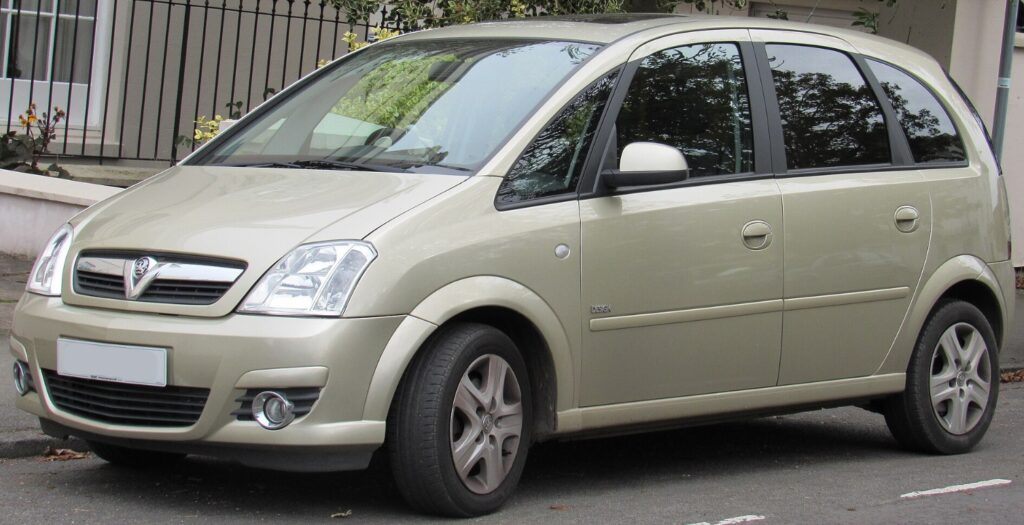
The Vauxhall Meriva was never designed to glide through the air like a low-slung sports car. It is tall, practical, spacious and shaped around family life. Yet despite carrying the proportions of a compact MPV, many versions can deliver respectable fuel economy—particularly the later diesel models.
So, what Vauxhall Meriva MPG should we realistically expect?
Depending on the generation, engine, gearbox, journey type and condition of the car, a Meriva may return anything from the low 30s to more than 60 mpg in everyday use. Official combined figures stretch even further, ranging from below 40 mpg for certain petrol automatics to more than 80 mpg for the most economical diesel variants.
Those numbers need context. An official laboratory figure is not a promise stamped in steel. Vauxhall itself explains that test results are intended primarily for comparison and that actual consumption depends on driving style, road conditions, vehicle equipment and other factors.
In this guide, we will explore petrol and diesel economy, compare both Meriva generations, explain why dashboard readings can mislead us and show how to squeeze more miles from every tank.
Content in this publication
- What Is the Average Vauxhall Meriva MPG?
- Understanding Official and Real-World MPG
- Vauxhall Meriva A MPG
- Vauxhall Meriva B MPG
- Vauxhall Meriva Diesel MPG
- Petrol vs Diesel Vauxhall Meriva MPG
- How Far Can a Vauxhall Meriva Travel on One Tank?
- Why Is My Vauxhall Meriva Using Too Much Fuel?
- How to Improve Vauxhall Meriva MPG
- Does Motorway Speed Affect Meriva MPG?
- Does Cold Weather Reduce Vauxhall Meriva MPG?
- Is the Vauxhall Meriva Economical for a Family Car?
- Which Vauxhall Meriva Has the Best MPG?
- What MPG Is Considered Bad for a Vauxhall Meriva?
- Should We Trust Online MPG Reports?
- Buying a Used Meriva: MPG Checks During a Test Drive
- Conclusion
- Frequently Asked Questions
What Is the Average Vauxhall Meriva MPG?
A sensible real-world expectation for a properly maintained Vauxhall Meriva is:
- Petrol manual: approximately 35–45 mpg
- Petrol automatic: approximately 30–40 mpg
- Older diesel: approximately 45–55 mpg
- Later 1.6 CDTi diesel: approximately 50–65 mpg
- Short urban journeys: often 5–15 mpg below mixed-driving results
- Steady motorway journeys: sometimes 5–10 mpg above the normal average
These are broad working ranges rather than guarantees. Two apparently identical Merivas may return noticeably different figures because one spends its life cruising along open roads while the other crawls through cold morning traffic.
The engine matters, but the journey matters just as much.
A diesel Meriva completing a relaxed 50-mile commute may sip fuel like tea from a small cup. The same vehicle used only for two-mile school runs can become surprisingly thirsty, especially when the engine rarely reaches full operating temperature.
Understanding Official and Real-World MPG
Before comparing engines, we need to separate three different kinds of fuel-economy figures.
Official MPG
Official MPG is measured under a standardised test procedure. It allows us to compare one engine with another under controlled conditions.
For example, Vauxhall’s 2014 specification guide listed combined figures of:
- 47.1 mpg for the 1.4-litre 100 PS petrol manual
- 47.9 mpg for the 1.4-litre 120 PS turbo manual
- 44.8 mpg for the 1.4-litre 140 PS turbo manual
- 60.1 mpg for the 1.3 CDTi diesel
- 70.6 mpg for the 95 PS 1.6 CDTi
- 74.3 mpg for the 110 PS 1.6 CDTi
- 64.2 mpg for the 136 PS 1.6 CDTi
- 39.8 mpg for the 1.4 turbo automatic
- 46.3 mpg for the 1.7 CDTi automatic
These manufacturer figures came from the older EU-regulated testing system and were intended mainly for comparison.
Dashboard MPG
The trip computer estimates consumption using information from the engine-management system. It is convenient, but it may not be perfectly accurate.
Some displays are optimistic by several mpg. Others become less reliable after tyre-size changes, battery disconnection or irregular resetting.
Treat the dashboard number as a useful guide—not a courtroom witness.
Calculated MPG
The most dependable home method is the full-tank calculation:
- Fill the tank completely.
- Reset the trip counter.
- Drive normally.
- Refill the tank to the same level.
- Record the litres added and miles travelled.
- Convert litres into UK gallons by dividing by 4.546.
- Divide miles travelled by gallons used.
For example, suppose we travel 420 miles and refill with 40 litres:
- 40 ÷ 4.546 = 8.8 UK gallons
- 420 ÷ 8.8 = approximately 47.7 mpg
One tank can be distorted by pump angle, weather or an incomplete fill. Averaging three or four tanks gives us a much clearer picture.
Vauxhall Meriva A MPG
The first-generation Vauxhall Meriva, commonly called the Meriva A, was sold in the UK from the early 2000s until 2010. It offered a broad range of naturally aspirated petrol engines and compact diesels.
These cars are now older, so mechanical condition often influences fuel economy more than the original brochure figure.
Vauxhall Meriva 1.4 Petrol MPG
The 1.4-litre petrol is one of the simplest Meriva engines. It lacks the low-end pull of a diesel or turbocharged petrol, so drivers may need to use more revs when joining fast roads or climbing hills.
Vauxhall quoted a combined figure of 44.1 mpg for the 1.4i 16v manual in its 2007 brochure. The urban figure was 34.0 mpg, while extra-urban consumption was listed at 53.3 mpg.
In modern real-world use, we would broadly expect:
- Town driving: 30–36 mpg
- Mixed driving: 36–43 mpg
- Longer open-road trips: 43–50 mpg
A healthy 1.4 can be economical when driven gently, but loading the car with passengers and luggage changes the story. With modest torque available, the driver must push harder, and the fuel figure can tumble.
Who Is the 1.4 Petrol Best For?
The 1.4 petrol makes sense for motorists covering relatively low annual mileage, especially when journeys include frequent short trips.
Unlike an older diesel, it does not depend on long journeys to manage a diesel particulate filter. It is also mechanically straightforward by modern standards.
However, it is not the ideal Meriva for frequent towing, steep terrain or fully loaded motorway travel.
Vauxhall Meriva 1.6 Petrol MPG
The original Meriva’s 1.6-litre petrol engine offers slightly stronger performance than the 1.4, although fuel consumption is broadly similar.
The 2007 manual version carried an official combined figure of 42.2 mpg, with 32.1 mpg for urban driving and 51.4 mpg on the extra-urban cycle. Interestingly, the Easytronic version was also listed at 42.2 mpg combined, although individual driving conditions could produce a different result.
Typical real-world expectations are:
- Town: 28–35 mpg
- Mixed routes: 35–42 mpg
- Steady longer trips: 42–48 mpg
The 1.6 can feel more relaxed than the 1.4, which means we may not need to work it as hard. Nevertheless, aggressive acceleration quickly exposes its age and weight.
Vauxhall Meriva 1.8 Petrol MPG
The 1.8 petrol provides better performance, but economy is not its strongest card.
Vauxhall’s 2007 figures placed the manual at 35.8 mpg combined, while the Easytronic was quoted at 36.2 mpg. Urban economy was only around 26 mpg.
A realistic range today might be:
- Urban use: 23–30 mpg
- Mixed driving: 30–37 mpg
- Motorway cruising: 37–43 mpg
The 1.8 is the engine for buyers who value easier acceleration over minimum fuel bills. In town, it can drink with the enthusiasm of someone arriving late to an open bar.
That does not make it a bad engine. It simply means we should buy it with open eyes.
Vauxhall Meriva 1.3 CDTi MPG
The 1.3 CDTi was the economy specialist of the early Meriva range.
Vauxhall quoted:
- 45.6 mpg urban
- 65.7 mpg extra-urban
- 56.5 mpg combined
Those figures were impressive for a practical compact MPV of the period.
Today, a well-maintained example might produce:
- Town: 40–48 mpg
- Mixed driving: 47–57 mpg
- Long-distance use: 55–65 mpg
The trade-off is performance. The 1.3 diesel can feel sluggish when the Meriva is full, and drivers may use more throttle than expected.
Because most examples are now well into their second decade, factors such as injector condition, turbo health, intake contamination and thermostat operation can pull economy downward.
Vauxhall Meriva 1.7 CDTi MPG
The 1.7 CDTi generally gives us a better balance of torque and usable performance.
The 2007 brochure listed the manual at 54.3 mpg combined, including 42.8 mpg in urban driving and 64.2 mpg extra-urban.
Realistically, owners may see:
- Town: 38–47 mpg
- Mixed driving: 45–55 mpg
- Motorway: 52–62 mpg
Because the engine does not need to work as hard as the 1.3, it may match or beat the smaller diesel in demanding conditions. A small engine is not automatically the most economical engine when the vehicle is heavily loaded.
Vauxhall Meriva B MPG
The second-generation Meriva arrived in 2010 with rear-hinged back doors, a more substantial body and a more modern engine range.
It is more refined than the original, although also relatively heavy. Petrol engines suit lower-mileage use, while the later 1.6 CDTi models deliver the strongest official economy.
Vauxhall Meriva 1.4 Petrol MPG
The non-turbo 1.4-litre petrol produced 100 PS and was normally paired with a five-speed manual gearbox.
Vauxhall’s 2014 figures showed:
- 37.2 mpg urban
- 56.5 mpg extra-urban
- 47.1 mpg combined
That looks respectable on paper. In practice, the engine must move a fairly heavy car without turbocharged assistance.
A realistic expectation is:
- Town: 30–37 mpg
- Mixed driving: 36–44 mpg
- Motorway: 42–50 mpg
At a steady speed, it can be surprisingly frugal. Around hills, junctions and busy urban routes, it may feel strained.
Why Can the 1.4 Non-Turbo Use More Fuel Than Expected?
A lightly powered engine can encourage us to accelerate harder and remain in lower gears for longer. The throttle opens wider, revs rise and the apparent advantage of a smaller engine begins to evaporate.
It is a little like asking a small person to carry a large suitcase upstairs. They may complete the job, but not effortlessly.
Vauxhall Meriva 1.4 Turbo MPG
The turbocharged 1.4 was available in different power outputs, including 120 PS and 140 PS.
In the 2014 guide, the official combined figures were:
- 47.9 mpg for the 120 PS manual
- 44.8 mpg for the 140 PS manual
- 39.8 mpg for the 120 PS automatic
The manual 120 PS version is often the petrol sweet spot. It offers enough torque to move the Meriva comfortably without the thirst of the automatic.
Real-world averages may sit around:
- 120 PS manual: 34–43 mpg
- 140 PS manual: 32–40 mpg
- 120 PS automatic: 28–37 mpg
Drivers who use the turbo gently may achieve impressive results. Drivers who frequently demand boost will see fuel economy sink. A turbocharger is not a magic economy button; it is more like an extra tap. Open it fully and more fuel flows.
Vauxhall Meriva Automatic MPG
Automatic Merivas tend to consume more fuel than equivalent manuals, especially in urban traffic.
The torque-converter automatic fitted to some Meriva B versions provides smoother progress than older automated-manual systems, but it introduces additional mechanical losses.
Official 2014 combined figures were:
- 39.8 mpg for the 1.4 turbo petrol automatic
- 46.3 mpg for the 1.7 CDTi automatic
Real-world use can reduce those figures further.
A petrol automatic used mainly in town may drop into the high 20s. On a steady journey, the same car could move into the upper 30s or low 40s.
Automatic economy depends heavily on driving rhythm. Sharp throttle inputs trigger downshifts, raise engine speed and consume more fuel. Smooth acceleration encourages the gearbox to shift earlier and remain in a taller ratio.
Vauxhall Meriva Diesel MPG
Diesel Merivas usually return the highest MPG, but not every driver should buy one.
They work best when:
- Annual mileage is reasonably high.
- Journeys regularly exceed 20–30 minutes.
- The car reaches full operating temperature.
- Much of the driving takes place on open roads.
- The diesel particulate filter can regenerate properly.
A diesel used exclusively for short trips may develop DPF, EGR or intake problems. Any savings at the pump can then disappear into repair bills.
Vauxhall Meriva 1.3 CDTi MPG
In the 2014 Meriva B, the 75 PS 1.3 CDTi carried an official combined figure of 60.1 mpg.
Real-world economy commonly sits below that level, but around 48–58 mpg is a reasonable target for mixed use.
Its strengths include low fuel consumption and modest running costs. Its weaknesses include leisurely performance and the need to plan overtaking carefully.
When fully loaded, the engine may spend more time under heavy throttle, narrowing the gap between it and the larger 1.6 diesel.
Vauxhall Meriva 1.6 CDTi MPG
The 1.6 CDTi is the fuel-economy star of the later range.
Vauxhall listed the following combined figures in 2014:
| 1.6 CDTi version | Official combined MPG |
|---|---|
| 95 PS ecoFLEX | 70.6 mpg |
| 110 PS ecoFLEX | 74.3 mpg |
| 136 PS ecoFLEX | 64.2 mpg |
Later literature promoted certain 1.6 CDTi versions with combined economy reaching 85.6 mpg under the applicable official test conditions.
Those numbers sound almost magical, but real roads are not laboratories. Owners should generally consider the following more realistic targets:
- Urban driving: 45–55 mpg
- Mixed driving: 52–63 mpg
- Long motorway runs: 60–70 mpg
- Very careful rural driving: potentially higher
The 110 PS version is arguably the strongest all-round choice. It has enough torque for everyday use while retaining excellent official economy.
Vauxhall Meriva 1.7 CDTi MPG
The 1.7 CDTi appeared in several forms, including an automatic.
A manual version may return around 45–57 mpg in mixed driving. The automatic generally falls into the low-to-mid 40s.
The engine is stronger than the 1.3 and often feels durable, but age-related issues can affect consumption. A sticking thermostat, tired mass-airflow sensor or partially blocked EGR valve may reduce MPG without immediately producing dramatic symptoms.
Petrol vs Diesel Vauxhall Meriva MPG
Which fuel type makes the most sense?
Choose Petrol When:
- We cover fewer than roughly 8,000–10,000 miles per year.
- Most journeys are short.
- We frequently drive in urban areas.
- We want to avoid diesel emissions-system concerns.
- Purchase price and mechanical simplicity matter.
Choose Diesel When:
- We cover substantial annual mileage.
- Regular journeys include A-roads or motorways.
- We often travel with passengers or luggage.
- Strong low-speed torque is useful.
- We can give the DPF enough time to regenerate.
The diesel normally wins the MPG contest. The petrol may win the broader ownership-cost contest for a low-mileage driver.
Fuel economy should never be judged in isolation. A 60-mpg diesel that develops a four-figure emissions-system fault may cost more overall than a reliable petrol returning 40 mpg.
How Far Can a Vauxhall Meriva Travel on One Tank?
Many Meriva B variants use a 54-litre fuel tank, equivalent to approximately 11.9 UK gallons.
Theoretical range can be estimated by multiplying tank capacity in gallons by MPG:
| Average MPG | Theoretical range |
|---|---|
| 30 mpg | 357 miles |
| 35 mpg | 417 miles |
| 40 mpg | 476 miles |
| 45 mpg | 536 miles |
| 50 mpg | 595 miles |
| 55 mpg | 655 miles |
| 60 mpg | 714 miles |
We should not expect to use every drop. Fuel gauges contain a safety margin, and regularly running the tank nearly dry is not wise.
A practical petrol range may be around 350–480 miles. A diesel could cover approximately 500–650 miles, with exceptional long-distance conditions stretching beyond that.
Why Is My Vauxhall Meriva Using Too Much Fuel?
Poor MPG does not automatically mean the engine is failing. Start with simple causes before expecting expensive trouble.
Low Tyre Pressure
Soft tyres increase rolling resistance. The engine must work harder every time the car moves.
Check pressures when the tyres are cold and use the values specified for the exact wheel size and vehicle load.
Frequent Short Journeys
Cold engines use more fuel. Oil is thicker, combustion is less efficient and the heater or demister may place extra demand on the system.
A five-minute journey can produce dramatically worse MPG than a 30-minute drive.
Thermostat Problems
A thermostat stuck open may prevent the engine from reaching its normal operating temperature. The engine-management system can then maintain a richer running strategy.
A temperature gauge that rises very slowly or drops at motorway speed deserves investigation.
Dirty Air Filter
A severely restricted air filter can reduce engine efficiency. Replacing it is relatively inexpensive and should form part of normal servicing.
Worn Spark Plugs
On petrol models, worn or incorrectly gapped plugs may weaken combustion. Symptoms can include hesitation, rough idle and falling economy.
DPF Regeneration
During active diesel particulate filter regeneration, the engine injects additional fuel to raise exhaust temperature. Instant MPG may fall and the cooling fan may continue running after the engine is switched off.
Occasional regeneration is normal. Constant regeneration suggests an underlying problem or unsuitable journey pattern.
EGR or Intake Contamination
Carbon deposits can interfere with airflow and exhaust-gas recirculation. Affected diesel engines may feel flat, smoke more or consume extra fuel.
Brake Drag
A sticking caliper acts like a weak handbrake that never fully releases. After a drive, one wheel may feel noticeably hotter than the others.
Do not touch a brake disc directly. It may be hot enough to cause injury.
Air-Conditioning and Electrical Loads
Air conditioning, heated screens, heated seats and powerful blowers all consume energy.
The effect is usually modest on longer journeys but more visible during short urban trips.
Roof Boxes and Exterior Accessories
A roof box turns the Meriva’s airflow into something closer to a garden shed in a headwind. At motorway speeds, aerodynamic drag rises sharply.
Remove roof bars and boxes when they are not needed.
How to Improve Vauxhall Meriva MPG
We do not need to drive painfully slowly or coast dangerously. Consistency brings the largest gains.
Accelerate Smoothly
Use enough throttle to build speed confidently, then shift into a suitable higher gear. Crawling through every gear is not always efficient, but full-throttle acceleration rarely is either.
Look Further Ahead
Reading traffic early reduces unnecessary braking and acceleration.
Every time we brake, we discard energy that fuel has already created.
Maintain a Stable Speed
Frequent speed changes consume more fuel than steady progress. Cruise control can help on flat roads, although a careful driver may outperform it on rolling terrain.
Use the Highest Suitable Gear
A higher gear generally reduces engine speed, but labouring the engine is counterproductive. If the Meriva vibrates or struggles, select a lower gear.
Reduce Unnecessary Weight
A few small items make little difference. A boot permanently filled with tools, boxes and unused equipment adds a burden on every journey.
Service the Car Properly
Fresh oil of the correct specification, clean filters and properly maintained ignition or injection components support efficient running.
Delayed servicing is false economy. The car cannot perform at its best while breathing through dirty filters and operating with neglected fluids.
Plan Journeys
Combining several short errands into one longer trip allows the engine to remain warm and efficient.
It also reduces cold starts, which are among the thirstiest moments in normal driving.
A Simple Weekly MPG Routine
Once a week, we can:
- Check tyre condition and pressure.
- Remove unnecessary boot weight.
- Look for dashboard warning lights.
- Record the trip-computer average.
- Compare it with recent journeys.
- Investigate any sudden, unexplained decline.
A gradual MPG fall is easy to ignore. Recording the number turns guesswork into evidence.
Does Motorway Speed Affect Meriva MPG?
Absolutely.
The Meriva has a tall body, so aerodynamic drag becomes increasingly important as speed rises. A journey at 60–65 mph can use noticeably less fuel than the same journey at 70 mph.
At higher speeds, the engine is not only overcoming rolling resistance. It is pushing a large pocket of air out of the way every second.
A diesel Meriva capable of around 60 mpg at a gentle motorway speed may fall into the low 50s—or lower—when driven faster, heavily loaded or into a strong headwind.
The legal limit is not an efficiency target. Slowing slightly, where safe and appropriate, can produce a meaningful saving without adding much journey time.
Does Cold Weather Reduce Vauxhall Meriva MPG?
Winter economy is often lower because:
- Engines take longer to warm.
- Cold oil creates more resistance.
- Tyre pressures fall with temperature.
- Heaters, lights and demisters run more frequently.
- Wet roads increase rolling resistance.
- Winter fuel formulations may differ.
- Drivers spend more time idling while clearing windows.
A seasonal decline of several MPG is normal. A dramatic reduction accompanied by poor heater performance may point toward a thermostat issue.
Is the Vauxhall Meriva Economical for a Family Car?
Yes—when we choose the engine that matches our driving.
The Meriva’s tall, spacious design prevents it from matching a smaller hatchback under identical conditions. However, it offers more cabin flexibility, easier access and practical family features.
A petrol model returning around 38–43 mpg is reasonable for a compact MPV. A diesel achieving 50–60 mpg remains impressive.
The real attraction is balance. The Meriva combines useful interior space with fuel costs that need not become excessive.
Which Vauxhall Meriva Has the Best MPG?
On official figures, later ecoFLEX versions of the 1.6 CDTi diesel are the strongest performers.
The 110 PS version is particularly appealing because it combines good torque with excellent fuel economy. Certain later specifications advertised official combined results above 80 mpg, although everyday results will usually be lower.
For mainly short trips, the best theoretical MPG engine may not be the wisest ownership choice. A 1.4 petrol manual could prove cheaper and less troublesome over several years, despite using more fuel.
The best Meriva is not necessarily the one with the largest brochure number. It is the one suited to our actual roads.
What MPG Is Considered Bad for a Vauxhall Meriva?
The answer depends on engine type and journey conditions.
As a rough guide, investigate when a warmed-up, correctly driven Meriva repeatedly returns less than:
- 25–28 mpg from a petrol manual in mixed use
- 23–26 mpg from a petrol automatic in mixed use
- 35–40 mpg from a diesel in mixed use
- 45 mpg from a later 1.6 CDTi on long journeys
Heavy traffic, winter weather and short journeys may temporarily produce figures below these levels.
A sudden decline matters more than an isolated low number. If the car previously achieved 45 mpg and now returns 34 mpg on the same route, something has changed.
Should We Trust Online MPG Reports?
Owner-reported MPG is valuable, but it should be interpreted carefully.
One person may reset the display before a gentle motorway journey. Another may calculate fuel use over an entire winter. A third may quote the optimistic dashboard figure.
Look for patterns across many owners rather than treating a single number as universal truth.
Also confirm:
- Engine size
- Power output
- Gearbox
- Model year
- Wheel size
- Journey type
- Calculation method
“Meriva 1.4 MPG” is not specific enough. A naturally aspirated manual and a turbo automatic are very different machines.
Buying a Used Meriva: MPG Checks During a Test Drive
Before buying, reset the trip computer and complete a varied test drive once the engine is warm.
Pay attention to:
- Engine temperature reaching and holding its normal level
- Smooth acceleration
- Stable idle
- Correct automatic gear changes
- Excessive exhaust smoke
- Warning lights
- Unusual brake resistance
- Instant MPG behaving logically
- Evidence of regular servicing
Do not judge economy from a five-minute test. The engine may be cold, the car may have been idling and the previous average may reflect dealership movements.
Ask the seller how the vehicle has been used. A diesel with low mileage is not automatically attractive if every journey has been short.
Conclusion
Vauxhall Meriva MPG varies enormously across the range. Early petrol models may return roughly 30–45 mpg in normal use, while older diesels commonly achieve 45–55 mpg. Later 1.6 CDTi versions can move into the 50–65 mpg region and sometimes higher on gentle long-distance journeys.
The headline number only tells half the story.
Engine condition, gearbox type, traffic, weather, tyre pressure, journey length and driving style all shape the final result. Official figures help us compare versions, but careful full-tank calculations reveal what our own Meriva is actually doing.
For short urban journeys, a petrol manual is often the sensible choice. For regular motorway use, the 1.6 CDTi delivers the strongest economy. Whatever engine sits under the bonnet, smooth driving and good maintenance can turn a thirsty Meriva into a much leaner travelling companion.
Frequently Asked Questions
1. What is a good MPG for a Vauxhall Meriva?
Around 38–45 mpg is good for a petrol manual in mixed driving. For a diesel, approximately 50–60 mpg is a healthy result, especially on longer journeys. Automatics usually return slightly lower figures.
2. Which Vauxhall Meriva engine is most economical?
The later 1.6 CDTi ecoFLEX diesel generally has the best official fuel economy. The 110 PS version offers a strong balance between performance and MPG, although it is best suited to drivers completing regular longer journeys.
3. Why is my Vauxhall Meriva MPG suddenly low?
Common causes include low tyre pressure, cold weather, short journeys, a faulty thermostat, brake drag, DPF regeneration, worn spark plugs, dirty filters or changes in driving conditions. A diagnostic inspection is sensible when consumption drops suddenly and remains low.
4. How accurate is the Vauxhall Meriva MPG display?
The dashboard display is an estimate and may be several MPG higher or lower than the true result. A full-tank calculation completed across several refills gives a more reliable average.
5. Can a Vauxhall Meriva achieve 60 mpg?
Yes. Many diesel versions can reach or exceed 60 mpg during steady long-distance driving. A petrol Meriva is unlikely to average 60 mpg in normal use, even though an instantaneous display may briefly show much higher numbers while coasting.
If you want to know other articles similar to Vauxhall Meriva MPG: Real-World Fuel Economy Guide you can visit the category Driving.
Kia Sorento Fuel Economy: MPG, Hybrid, and Plug-In Hybrid Explained
BYD Shark 6 Fuel Consumption: Real-World Economy, Range and What to Expect
Vauxhall Agila MPG: Real-World Fuel Economy and Engine Guide

Honda Passport MPG: Real-World Fuel Economy, Ratings, and What to Expect

Nissan Rogue Fuel Economy: MPG, Range, Costs, and Real-World Efficiency
BYD Shark 6 Long Range Fuel Tank: Is the 120L Upgrade Worth It?
Leave a Reply
More content of your interest