

Vauxhall Meriva Engine Oil: Complete Selection and Maintenance Guide

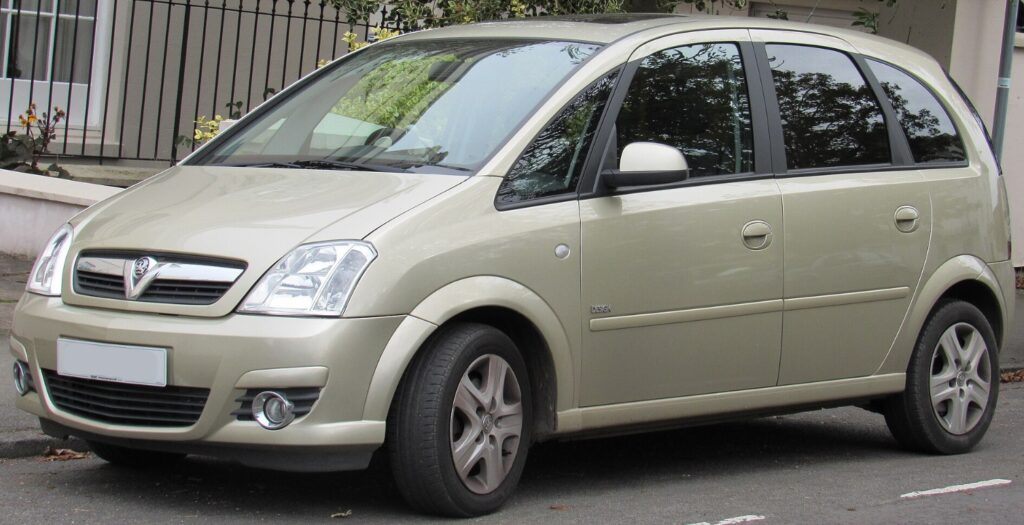
Choosing the correct Vauxhall Meriva engine oil might sound like a simple job. Walk into a motor factors shop, grab a bottle marked 5W-30, pour it in, and drive away—right?
Not quite.
Engine oil is the lifeblood of the Meriva. It lubricates rapidly moving components, controls heat, collects contaminants, protects against corrosion, and helps turbochargers and emissions systems survive. Using the wrong product is rather like wearing trainers in the correct size but with cardboard soles: everything appears fine until pressure is applied.
The challenge is that “Vauxhall Meriva” describes several petrol and diesel engines produced across two generations. Oil capacity, required approval, viscosity, filter type, and service schedule can therefore vary.
In this guide, we will explain how to choose the right oil, check the dipstick, top up safely, recognise oil-related warning signs, and avoid the mistakes that shorten engine life.
Content in this publication
- Which Engine Oil Does a Vauxhall Meriva Need?
- Understanding the Two Vauxhall Meriva Generations
- What Does 5W-30 Mean?
- What Is GM dexos2 Oil?
- Vauxhall Meriva Petrol Engine Oil
- Vauxhall Meriva Diesel Engine Oil
- How Much Engine Oil Does a Vauxhall Meriva Take?
- How to Check Vauxhall Meriva Engine Oil
- How to Top Up Vauxhall Meriva Engine Oil
- Vauxhall Meriva Oil Change Intervals
- How to Reset the Meriva Oil-Life Display
- Engine Oil Warning Lights Explained
- Signs the Meriva May Be Burning Oil
- Common Vauxhall Meriva Oil Leaks
- What Happens When the Wrong Oil Is Used?
- Synthetic, Semi-Synthetic or Mineral Oil?
- DIY Vauxhall Meriva Oil Change Checklist
- Dispose of Used Engine Oil Responsibly
- Mistakes to Avoid When Buying Meriva Oil
- How to Find Your Exact Meriva Engine Code
- A Practical Meriva Engine Oil Buying Formula
- Final Thoughts on Vauxhall Meriva Engine Oil
- Frequently Asked Questions
Which Engine Oil Does a Vauxhall Meriva Need?
Many later Vauxhall Meriva models commonly use a 5W-30 engine oil carrying the correct manufacturer approval, often GM dexos2. However, that should be treated as a starting point rather than a universal answer.
Meriva B owner documentation lists approved oil quality as the priority and includes common viscosity grades such as:
- SAE 5W-30
- SAE 5W-40
- SAE 0W-30
- SAE 0W-40
The appropriate viscosity can depend on the ambient temperature, engine and applicable service schedule. Official Meriva B documentation commonly specifies 5W-30 or 5W-40 for temperatures below 25°C and permits 0W-30 or 0W-40 for particularly cold conditions.
The safest rule is simple:
Choose oil by engine code and manufacturer approval—not merely by the viscosity printed in large letters on the bottle.
A 5W-30 oil without the required approval is not automatically equivalent to an approved 5W-30 product.
Understanding the Two Vauxhall Meriva Generations
Before buying oil, identify which Meriva you own.
Vauxhall Meriva A
The first-generation Meriva, commonly called the Meriva A, covers the earlier rounded-body model. Depending on its age and engine, its manual may refer to older GM oil specifications such as GM-LL-A-025 for petrol engines or GM-LL-B-025 for diesels.
Older vehicles can also have service histories involving several different oil brands and viscosities. That does not mean we should continue guessing. The engine code, handbook and reliable parts catalogue should guide the decision.
Vauxhall Meriva B
The second-generation Meriva B is easy to recognise by its rear-hinged back doors. Its engine range included naturally aspirated petrol units, turbocharged petrol engines and several CDTi diesels.
Meriva B manuals commonly refer to dexos2-quality oil, with ACEA C3 appearing as an accepted alternative in particular topping-up circumstances. One manual notes that up to one litre of ACEA C3 oil may be used once between oil changes when the specified quality is unavailable.
That wording matters. An emergency top-up allowance is not necessarily a recommendation to fill the entire engine with any random ACEA C3 oil.
What Does 5W-30 Mean?
Oil grades look technical, but their basic meaning is straightforward.
The first number and the letter “W” describe how the oil behaves at low temperatures. The second number describes its viscosity at normal high operating temperatures.
With 5W-30:
- The “5W” indicates its cold-temperature performance.
- The “30” indicates its viscosity when the engine is hot.
A lower winter number normally means the oil circulates more easily during a cold start. That is valuable because much engine wear occurs before oil has fully travelled around the engine.
Think of refrigerated honey and warm cooking oil. One moves reluctantly; the other flows immediately. Engine oil must remain fluid enough to circulate when cold while retaining a protective film after the engine becomes hot.
Is 5W-40 Better Than 5W-30?
Not automatically.
A 5W-40 oil remains somewhat thicker at high operating temperatures than a 5W-30. That characteristic can be useful in an application designed to accept it, but “thicker” does not mean “more protective” in every engine.
An unnecessarily thick oil may:
- Circulate more slowly during certain conditions
- Affect fuel economy
- Alter hydraulic component operation
- Fall outside the manufacturer’s intended specification
- Provide unsuitable performance for an emissions-equipped diesel
If the handbook permits both 5W-30 and 5W-40, either may be technically acceptable when it also meets the correct approval. We should still consider climate, engine condition, usage and professional advice before changing viscosity.
Never Choose Oil by Thickness Alone
A bottle’s viscosity tells only part of the story. Its additive package and manufacturer approval determine how it handles deposits, wear, oxidation, soot and exhaust after-treatment systems.
Two oils can both be marked 5W-30 yet behave differently inside the same engine.
What Is GM dexos2 Oil?
Dexos2 is a General Motors engine-oil specification used by many Vauxhall and Opel vehicles of the Meriva B era. It combines requirements involving wear protection, cleanliness, oxidation control and compatibility with certain emissions systems.
A genuine approval is more meaningful than marketing phrases such as:
- “Suitable for modern engines”
- “Recommended for European cars”
- “Long-life technology”
- “Advanced synthetic protection”
Look for an explicit dexos2 approval or a clearly stated manufacturer specification appropriate to the car.
Vauxhall’s Meriva documentation identifies the required oil quality before viscosity, reinforcing the fact that approval is the more important shopping criterion.
Is dexos1 the Same as dexos2?
No. They are distinct specifications.
We should not assume that a product carrying one automatically replaces the other. Oil standards also evolve, so the bottle must be checked carefully against the vehicle’s handbook and engine requirements.
Can We Use ACEA C3 Oil?
Many dexos2 oils also carry an ACEA C3 designation, but ACEA C3 alone should not be treated as proof that every Meriva engine will accept the product for a complete oil change.
For a Meriva B, an oil explicitly approved to the required Vauxhall or GM standard is the clearer choice. Where the handbook allows ACEA C3 as a limited top-up alternative, follow the conditions and quantity stated in that manual.
Vauxhall Meriva Petrol Engine Oil
Petrol Merivas came with several engine sizes and configurations, including naturally aspirated and turbocharged units.
A commonly suitable choice for many Meriva B petrol engines is a quality 5W-30 oil with the appropriate dexos2 approval. Some manuals also permit 5W-40, 0W-30 or 0W-40 depending on temperature and specification.
Nevertheless, we should verify the exact engine because the needs of a small naturally aspirated petrol engine are not necessarily identical to those of a turbocharged version.
Oil for the Vauxhall Meriva 1.4 Petrol
The 1.4-litre Meriva B was offered in more than one form, including turbocharged versions. Many applications use approved 5W-30 oil, although certain approved 5W-40 products may also be compatible.
Do not order oil solely by entering “Meriva 1.4” into a search box. Confirm:
- The registration year
- Whether the engine is turbocharged
- The engine code
- The required manufacturer approval
- The quantity needed with a filter change
Retail catalogues commonly associate the A14NET Meriva B engine with 5W-30 dexos2 products, but the owner’s documentation or a vehicle-specific database should remain the final reference.
Why Turbocharged Petrol Engines Need Good Oil
A turbocharger operates at extreme speed and temperature. Its bearings depend on a clean, uninterrupted oil supply.
Old, incorrect or heavily contaminated oil can contribute to:
- Carbon deposits in oil passages
- Restricted turbo lubrication
- Bearing wear
- Increased oil consumption
- Turbocharger noise
- Premature turbo failure
After a hard drive, we should avoid repeatedly switching off the engine the instant the vehicle stops. A short period of gentler driving before arrival helps temperatures settle naturally.
Vauxhall Meriva Diesel Engine Oil
Diesel Merivas demand particular care because many have a diesel particulate filter, commonly abbreviated to DPF.
An oil designed for DPF-equipped engines limits certain ash-forming components. When unsuitable oil burns, its ash can accumulate in the filter. Unlike soot, this ash cannot simply be removed through normal regeneration.
Oil for the 1.3 CDTi
The 1.3 CDTi is a compact diesel engine that can deliver impressive economy, but it depends on disciplined maintenance.
Many versions use a low-SAPS 5W-30 oil meeting the appropriate dexos2 specification. Low-SAPS refers to reduced levels of sulphated ash, phosphorus and sulphur.
This type of oil supports the emissions system while still protecting the engine.
Oil for the 1.6 CDTi
Later Meriva B models were available with the 1.6 CDTi diesel. Approved 5W-30 low-SAPS oil is commonly listed for these engines, but the precise specification should be checked against the engine code.
Current parts listings frequently pair Meriva 1.6 CDTi applications with 5W-30 ACEA C3 products carrying dexos2 or related manufacturer approvals.
That does not mean every oil displayed by a retailer is correct. Product pages can mix compatible products, alternatives and broadly related specifications. Read the label, not just the search-result headline.
Oil for the 1.7 CDTi
The 1.7 CDTi may require a larger oil quantity than some smaller engines, but capacity varies by version. Online catalogues frequently list around 5.4 litres for certain 1.7 CDTi applications, illustrating why a single five-litre container may not always be enough.
Never pour in the advertised capacity all at once. Add most of the expected amount, allow the oil to settle, check the dipstick, and finish gradually.
Why Diesel Oil Turns Black Quickly
Fresh diesel engine oil can become dark shortly after an oil change. This is not automatically evidence that the garage failed to replace it.
Diesel combustion produces soot, and modern oil holds fine contamination in suspension so it does not settle into thick sludge. Dark oil can therefore be doing exactly what it was designed to do.
Texture, smell, contamination, mileage and service history tell us more than colour alone.
How Much Engine Oil Does a Vauxhall Meriva Take?
There is no single Meriva oil capacity.
The correct quantity depends on:
- Generation
- Engine displacement
- Petrol or diesel configuration
- Engine code
- Whether the oil filter is replaced
- How completely the old oil drains
- Vehicle angle during draining
Some smaller engines need considerably less oil than certain 1.7-litre diesels. Even two engines with a similar badge can have different capacities.
Why Published Capacities Can Differ
One source may state a dry capacity, another a service refill quantity and another an approximate amount including the filter. Residual oil remains inside galleries, the oil cooler and other components after a routine drain.
That is why the dipstick wins the argument.
Use the published quantity as a guide, not an instruction to empty the entire container into the filler neck.
How to Check Vauxhall Meriva Engine Oil
Checking the oil takes only a few minutes and can prevent an expensive engine repair.
Step-by-Step Dipstick Check
- Park the Meriva on level ground.
- Switch off the engine.
- Wait several minutes for the oil to drain into the sump.
- Open the bonnet securely.
- Locate and remove the dipstick.
- Wipe it with a clean, lint-free cloth.
- Insert it fully.
- Remove it again and read the level.
- Confirm that the oil sits between MIN and MAX.
Official Meriva manuals state that oil should be topped up when the level reaches the MIN mark and warn that it must not exceed MAX. They also note that dipstick designs differ between engine variants.
Should We Check the Oil Hot or Cold?
Follow the handbook procedure. A common method is to check after the engine has been switched off for several minutes while the car stands level.
Checking immediately after shutdown can produce an artificially low reading because oil remains distributed around the engine. Checking on a steep driveway can also distort the result.
How Often Should We Check It?
A sensible routine is:
- Every few weeks
- Before a long motorway journey
- After noticing an oil stain
- After an oil-pressure or level warning
- More frequently on an engine known to consume oil
- After recent engine repairs
A dipstick check is cheap insurance. Engines rarely send a polite letter before running short of lubrication.
How to Top Up Vauxhall Meriva Engine Oil
Top up with oil matching the required specification and, ideally, the same viscosity and product already in the engine.
Remove the filler cap and add a small quantity—roughly 100 to 250 millilitres at a time. Wait for it to reach the sump, then recheck the dipstick.
Avoid Filling Directly to MAX
Aim for a safe point within the marked range rather than chasing the MAX line as though it were a target score.
Overfilling can be harmful. Excess oil may become aerated by rotating engine components, raise crankcase pressure, enter the intake system or damage emissions equipment.
If the level goes significantly above MAX, do not assume the engine will “use the extra.” Have the excess drained or extracted.
Can Different Oil Brands Be Mixed?
For an urgent top-up, mixing compatible oils is generally less dangerous than driving with an oil level below MIN. However, both oils should meet the required specification.
For routine maintenance, using one known, approved product makes record-keeping easier and reduces uncertainty about the final mixture.
Never mix engine oil with transmission fluid, power-steering fluid, brake fluid or coolant. Their bottles may all contain slippery-looking liquids, but their chemical roles are completely different.
Vauxhall Meriva Oil Change Intervals
The appropriate interval depends on the model year, engine, service programme and driving conditions. Some Merivas use an oil-life monitoring system rather than relying only on a fixed mileage figure.
Frequent short journeys can age the oil faster because the engine may not remain hot long enough to evaporate moisture and fuel contamination.
Severe Driving Conditions Include
- Repeated journeys of only a few miles
- Heavy stop-and-start traffic
- Extensive idling
- Frequent cold starts
- Towing or carrying heavy loads
- Dusty environments
- Repeated DPF regeneration
- Long periods between journeys
Under these conditions, an earlier oil change can be a sensible preventive measure even when the theoretical maximum interval has not arrived.
Replace the Filter With the Oil
An old filter can hold contaminated oil and accumulated debris. Installing fresh oil while retaining a tired filter is like taking a shower and putting the same muddy shirt back on.
Vauxhall recommends replacing the oil filter with every oil change.
How to Reset the Meriva Oil-Life Display
The reset method varies by model year and dashboard configuration. On many Meriva B models, the oil-life menu is accessed through the indicator-stalk controls or driver-information display, after which the reset control is held while the ignition is on.
However, we should not reset the indicator merely to remove a message. Reset it only after the oil and filter have actually been changed.
An oil-life reset does not inspect the oil. It simply restarts a calculated service counter. Resetting old oil makes the display optimistic, not the lubricant young.
Engine Oil Warning Lights Explained
Oil warnings deserve immediate attention because lubrication failure can damage an engine within moments.
Red Oil-Pressure Warning Light
A red oil-can symbol normally relates to oil pressure rather than merely the service interval.
When it remains illuminated with the engine running:
- Stop safely as soon as possible.
- Switch off the engine.
- Check the oil level.
- Do not continue driving if the level is normal but the warning remains.
- Arrange professional diagnosis or recovery.
Low pressure can result from insufficient oil, a failing pump, a blocked pickup, internal wear, wiring problems or a faulty sensor.
Adding oil will not repair a pressure problem when the sump already contains the correct amount.
Low Oil-Level Message
A level warning may mean the sump needs topping up, although a sensor fault is also possible. Confirm the actual level with the dipstick before adding anything.
Oil-Life or Service Message
An oil-life message usually indicates maintenance is due. It is not necessarily an emergency pressure warning, but it should not be ignored indefinitely.
Learn the difference between a maintenance reminder and a red pressure light. One asks for an appointment; the other may be shouting for the engine to stop.
Signs the Meriva May Be Burning Oil
A small degree of oil consumption can occur, especially with mileage and age. Rapid consumption needs investigation.
Possible signs include:
- A falling dipstick level without visible leaks
- Blue-grey exhaust smoke
- Oily spark plugs
- Carbon deposits
- An oily smell from the exhaust
- Turbocharger noise or smoke
- Repeated low-level warnings
- Oil inside intake pipework
Potential causes range from external leaks and crankcase-ventilation faults to worn valve seals, piston rings or turbocharger components.
Do not keep topping up indefinitely without finding the reason. Oil consumption is a symptom, not a maintenance plan.
Common Vauxhall Meriva Oil Leaks
Oil can escape from several areas as seals age.
Typical leak locations may include:
- Rocker or cam-cover gasket
- Oil-filter housing
- Sump seal or gasket
- Drain plug and sealing washer
- Crankshaft seals
- Oil-pressure switch
- Turbocharger oil pipes
- Vacuum-pump sealing area on applicable engines
A small leak can spread across the undertray and make its source difficult to identify. Cleaning the affected area and inspecting it again after a short drive can help pinpoint the highest fresh wet spot.
Oil on a hot exhaust component may create smoke or a burning smell, so even a modest leak deserves attention.
What Happens When the Wrong Oil Is Used?
One accidental top-up with a slightly different but compatible grade does not guarantee immediate engine failure. Repeated use of an unsuitable specification, however, can create long-term problems.
Possible consequences include:
- Poor cold-start lubrication
- Increased deposits
- Turbocharger wear
- Timing-system contamination
- Hydraulic tappet noise
- Greater oil consumption
- Reduced fuel economy
- DPF ash accumulation
- Accelerated internal wear
The risk depends on what was used, how much, how long it remained in the engine and which Meriva engine is involved.
If clearly incorrect oil has been used for a full refill, an early oil-and-filter change is usually wiser than waiting to see what happens.
Synthetic, Semi-Synthetic or Mineral Oil?
The approval matters more than the marketing category.
Most suitable oils for later Merivas are synthetic-technology or fully synthetic products because modern engines need strong low-temperature flow, thermal stability and deposit control.
A bottle labelled “fully synthetic” is not automatically suitable. It must still have the required viscosity and approval.
Does Expensive Oil Always Protect Better?
Not necessarily.
Premium oils may offer excellent performance, but an appropriately approved mid-priced product changed on time can be a better choice than a costly oil left in the engine too long.
We should spend money on the correct specification, a quality filter and sensible intervals—not on the most dramatic label.
DIY Vauxhall Meriva Oil Change Checklist
A home oil change is manageable for an experienced DIY owner with safe equipment.
You may need:
- Correct approved engine oil
- New oil filter
- New drain-plug washer or approved replacement plug
- Filter-removal tool
- Correct sockets
- Torque wrench
- Drain pan
- Funnel
- Gloves and eye protection
- Axle stands or suitable ramps
- A container for transporting used oil
Never work beneath a vehicle supported only by a jack.
Basic Oil-Change Procedure
- Warm the engine slightly.
- Park on secure, level ground.
- Raise and support the vehicle safely if required.
- Remove the lower shield where applicable.
- Position the drain pan.
- Remove the sump plug carefully.
- Allow the old oil to drain.
- Replace the filter and its seals correctly.
- Refit the drain plug using the correct torque.
- Add most of the expected oil quantity.
- Start the engine briefly and check for leaks.
- Switch off and allow the oil to settle.
- Recheck and adjust the level.
- Refit the undertray.
- Reset the oil-life display when applicable.
The exact filter arrangement, torque setting and capacity depend on the engine. A model-specific workshop procedure should be used rather than copying figures from another Meriva.
Dispose of Used Engine Oil Responsibly
Used engine oil contains contaminants and must not be poured onto the ground, into drains or into household waste.
Transfer it into a secure, labelled container and take it to an authorised recycling or household-waste facility that accepts automotive oil.
Keep the drained oil away from children, animals and open containers. A small spill can spread farther than expected—oil behaves like gossip in a quiet village.
Mistakes to Avoid When Buying Meriva Oil
The most common purchasing errors are surprisingly easy to prevent.
Avoid:
- Selecting oil only because it is 5W-30
- Assuming every Meriva has the same capacity
- Ignoring petrol-versus-diesel requirements
- Using non-low-SAPS oil in a DPF-equipped diesel
- Trusting a marketplace title without reading the bottle
- Buying exactly five litres without checking capacity
- Treating “recommended for” as equal to formal approval
- Mixing several leftovers for a complete refill
- Filling past the MAX mark
- Resetting the service display without changing the oil
A few minutes spent checking the specification can save hundreds—or even thousands—of pounds later.
How to Find Your Exact Meriva Engine Code
The engine code may appear in vehicle documentation, service records, parts invoices or identification data associated with the registration.
A Vauxhall specialist or reputable parts supplier can often identify it from the registration or VIN. Confirm the result if the vehicle has had an engine replacement.
Once we know the engine code, we can accurately match:
- Oil approval
- Viscosity range
- Refill capacity
- Filter design
- Drain-plug specification
- Service interval
That is far safer than ordering for “a 2012 Meriva diesel” and hoping for the best.
A Practical Meriva Engine Oil Buying Formula
When standing in front of a shelf full of similar bottles, use this order:
1. Identify the Exact Engine
Check the engine code, model year and fuel type.
2. Match the Manufacturer Approval
Look for the required GM, Vauxhall, Opel, dexos or legacy specification.
3. Choose an Approved Viscosity
Use a viscosity listed for the engine and expected climate.
4. Buy Enough Oil
Allow for the filter change and keep a sealed litre for future top-ups where practical.
5. Record the Service
Write down the mileage, date, oil brand, specification, viscosity and filter used.
This record becomes particularly useful when diagnosing consumption, selling the car or planning the next service.
Final Thoughts on Vauxhall Meriva Engine Oil
The best Vauxhall Meriva engine oil is not simply the bottle with the most impressive branding. It is the oil that matches the exact engine, required manufacturer approval, suitable viscosity and operating conditions.
For many Meriva B models, an approved dexos2 5W-30 oil is a common answer. Yet “common” is not the same as universal. Older Meriva A engines, turbo petrol models, CDTi diesels and DPF-equipped vehicles may have specific requirements that deserve confirmation.
Check the dipstick regularly, never overfill, replace the filter during every oil service and investigate sudden consumption or warning lights promptly.
Engine oil works silently, hidden beneath the bonnet. We notice it only when something goes wrong. Give it the same attention we give tyres, brakes and fuel, and the Meriva has a much better chance of delivering dependable service for years.
Frequently Asked Questions
1. What engine oil is best for a Vauxhall Meriva?
Many Meriva B engines commonly use approved 5W-30 dexos2 oil, but the correct product depends on the engine code, model year and fuel type. Check the owner’s handbook before purchasing.
2. Can I use 5W-40 instead of 5W-30 in a Meriva?
Some Meriva manuals permit both viscosities when the oil meets the required quality standard. Do not switch solely because the engine is old or because 5W-40 appears thicker. Confirm compatibility first.
3. How much oil does a Vauxhall Meriva take?
Capacity varies significantly by engine. Some versions require less than a full five-litre container, while certain diesels may need more. Use the engine-specific refill figure and finish the fill using the dipstick.
4. Why is my Meriva losing engine oil?
Possible causes include external leaks, crankcase-ventilation faults, worn valve seals, piston-ring wear or a turbocharger problem. Monitor the level closely and arrange diagnosis if consumption rises suddenly.
5. Can I drive with the red oil warning light on?
No. Stop safely and switch off the engine. Check the oil level, but do not continue driving when the level is correct and the pressure warning remains illuminated. The engine may have a serious lubrication fault.
If you want to know other articles similar to Vauxhall Meriva Engine Oil: Complete Selection and Maintenance Guide you can visit the category Service and Parts.
Vauxhall Mokka Tyre Pressure Reset: Complete Guide

How to Reset the Tire Pressure System on Your Hyundai Tucson

Hyundai Kona Tire Pressure: Complete PSI Guide

Vauxhall Corsa Timing Belt Replacement Cost UK 2026

Mazda CX-5 Tire Size Chart: 2013–2026 Guide

How to Reset a Honda Civic: Complete Step-by-Step Guide
Leave a Reply
More content of your interest