
Vauxhall Antara Fuel Tank Capacity: Complete Guide

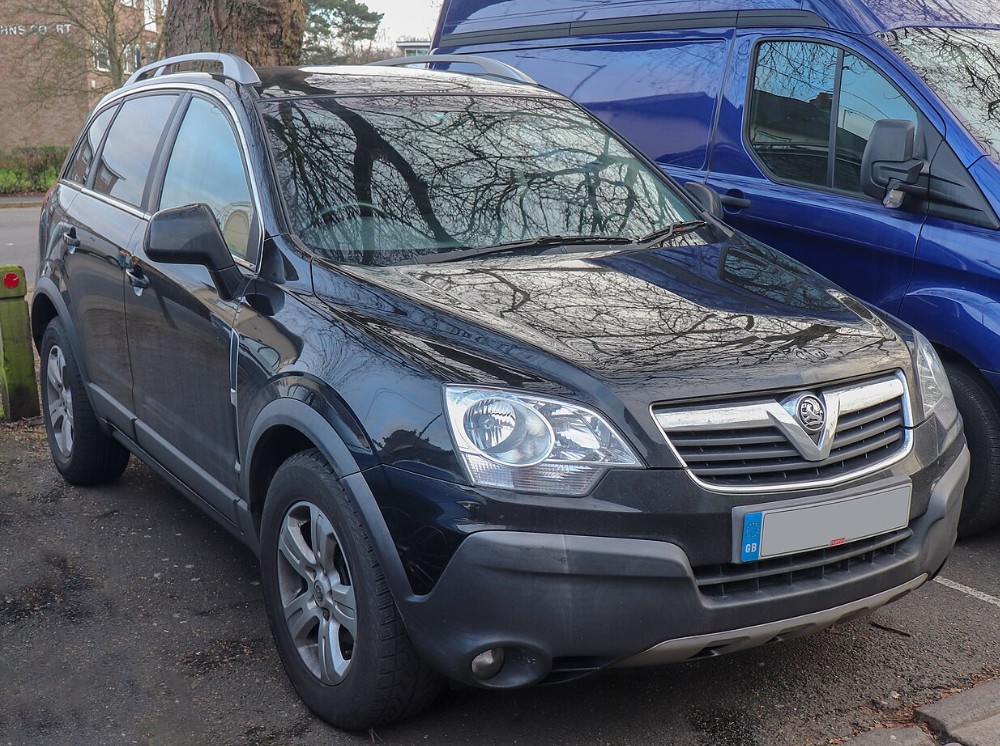
The Vauxhall Antara fuel tank capacity is 65 litres, equivalent to approximately 14.3 UK gallons or 17.2 US gallons. This figure applies to the petrol and diesel versions covered by official Vauxhall brochures and owner’s manuals, including pre-facelift and facelift models.
That sounds like a simple answer, doesn’t it? Yet tank capacity is only the beginning of the story.
When we own, buy, or research a used SUV, we usually want to know how that capacity translates into real life. How much does it cost to fill? How far can we travel? Why might the pump stop before 65 litres go in? Does the diesel model offer a better driving range than the petrol version?
In this guide, we’ll answer all those questions without drowning ourselves in technical jargon. We’ll look at the official figure, realistic driving range, refuelling costs, fuel-gauge behaviour, common filling problems, and practical ways to squeeze more distance from every tank.
Content in this publication
- What Is the Vauxhall Antara Fuel Tank Capacity?
- Does Every Vauxhall Antara Have a 65-Litre Tank?
- Why Can’t We Put 65 Litres in an Empty-Looking Tank?
- How Far Can a Vauxhall Antara Travel on a Full Tank?
- Diesel Vauxhall Antara Full-Tank Range
- Petrol Vauxhall Antara Full-Tank Range
- How Much Does It Cost to Fill a Vauxhall Antara?
- How Many Litres Remain When the Fuel Light Comes On?
- Should We Run the Antara Fuel Tank Nearly Empty?
- Why Does the Fuel Gauge Drop Unevenly?
- Why Does the Pump Keep Clicking Off Early?
- How to Measure Real Vauxhall Antara Fuel Economy
- How to Get More Miles from the 65-Litre Tank
- Does Air Conditioning Reduce Fuel Range?
- Does Towing Affect Antara Fuel-Tank Range?
- Is a 65-Litre Tank Large for an SUV?
- Should We Fill the Antara Completely Every Time?
- Common Vauxhall Antara Fuel-Tank Myths
- What to Check When Buying a Used Antara
- Vauxhall Antara Fuel Tank Capacity: Final Thoughts
- Frequently Asked Questions
- 1. What is the exact Vauxhall Antara fuel tank capacity?
- 2. How much does it cost to fill a Vauxhall Antara?
- 3. How many miles can an Antara travel on a full tank?
- 4. Why does my Antara take less than 65 litres when the gauge says empty?
- 5. Do petrol and diesel Vauxhall Antara models have the same tank size?
What Is the Vauxhall Antara Fuel Tank Capacity?
The official Vauxhall Antara fuel tank capacity is 65 litres for both petrol and diesel models.
Official Vauxhall documentation lists the capacity as:
- 65 litres
- 14.3 UK gallons
- Approximately 17.2 US gallons
The owner’s manual describes this as the vehicle’s nominal capacity, which is an important detail. A nominal figure is the manufacturer’s stated usable design capacity, but the exact quantity we can add at a filling station may vary slightly.
Official Vauxhall literature from different stages of the Antara’s production consistently states the same 65-litre figure. A 2007 brochure, a 2012 specification guide, a 2014 owner’s manual and a 2016 specification guide all give the same capacity.
Vauxhall Antara Fuel Capacity at a Glance
| Measurement | Capacity |
|---|---|
| Litres | 65 litres |
| UK gallons | 14.3 gallons |
| US gallons | Approximately 17.2 gallons |
| Petrol models | 65 litres |
| Diesel models | 65 litres |
This consistency makes the Antara refreshingly straightforward. We do not normally need to search through a maze of engine sizes, trim levels, or gearbox combinations to identify a different tank.
Does Every Vauxhall Antara Have a 65-Litre Tank?
Official UK documentation indicates that the mainstream Vauxhall Antara range uses a 65-litre fuel tank, whether the vehicle has a petrol or diesel engine.
That includes commonly encountered versions such as:
- 2.0 CDTi diesel
- 2.2 CDTi diesel
- 2.4-litre petrol
- 3.0-litre V6 petrol
- 3.2-litre V6 petrol
- Manual models
- Automatic models
- Front-wheel-drive versions
- All-wheel-drive versions
The engine determines how quickly the fuel disappears, but it does not generally change the stated UK tank capacity.
Still, we should remain careful when dealing with imported vehicles. The Antara platform was sold under different names in several markets, and regional specifications can occasionally differ. A vehicle imported into the UK may not perfectly match a British-market brochure.
How to Confirm the Capacity of a Specific Antara
For complete certainty, we can check:
- The owner’s manual supplied with the vehicle.
- The specification linked to the VIN.
- The original Vauxhall sales brochure for the model year.
- A Vauxhall dealer or knowledgeable parts specialist.
- The technical data section of the handbook.
This is especially worthwhile when the vehicle has an unusual engine, was privately imported, or has undergone major fuel-system repairs.
Why Can’t We Put 65 Litres in an Empty-Looking Tank?
This is one of the most common sources of confusion.
The low-fuel warning appears, we drive to a station, and the pump stops after perhaps 52, 55, or 58 litres. We then wonder whether the tank is smaller than advertised.
Usually, nothing is wrong.
The fuel gauge does not wait until the tank is completely dry before warning us. Manufacturers deliberately leave a reserve because running out of fuel can create safety and mechanical problems.
Imagine the gauge as a cautious friend. It starts tapping us on the shoulder before the party is truly over.
The Tank Is Rarely Completely Empty
Even when the needle appears to be sitting on empty, several litres may remain. The precise reserve is not always easy to calculate because it can be influenced by:
- Vehicle angle
- Fuel movement inside the tank
- Sender-unit accuracy
- Dashboard calibration
- Driving conditions
- Temperature
- Fuel foaming
- Pump cut-off sensitivity
If we add 56 litres to a nominally 65-litre tank, roughly nine litres may still have been present. That does not automatically indicate a fault.
The Fuel Filler Neck Can Affect the Reading
A small amount of fuel may sit in the filler pipe rather than the main tank. However, we should not repeatedly force extra fuel into the filler neck after the pump has automatically clicked off.
The first click is normally the point at which we should stop.
Why Topping Off Is a Bad Habit
Continuing to squeeze fuel into the vehicle can:
- Cause fuel to spill
- Create strong fuel vapours
- Interfere with petrol vapour-control components
- Leave insufficient expansion space
- Waste money
- Damage paintwork
- Make consumption calculations less consistent
Fuel expands as it warms. The air space inside the tank is not wasted room; it is part of the system’s safe operation.
How Far Can a Vauxhall Antara Travel on a Full Tank?
A full-tank range depends on fuel economy rather than capacity alone.
Two Antaras can leave the same pump with 65 litres, yet one may travel significantly farther. A diesel driven gently on the motorway might stretch its legs like a long-distance runner, while a petrol automatic used in city traffic may drink with considerably more enthusiasm.
We can estimate range with a simple formula:
Range in miles = UK gallons × actual mpg
Since 65 litres equals approximately 14.3 UK gallons, estimated ranges look like this:
| Real-world economy | Approximate theoretical range |
| 20 mpg | 286 miles |
| 25 mpg | 358 miles |
| 30 mpg | 429 miles |
| 35 mpg | 501 miles |
| 40 mpg | 572 miles |
| 45 mpg | 644 miles |
These figures are mathematical estimates using the full nominal capacity. They are not recommended distances between refuelling stops.
In practice, we should subtract a sensible safety margin. We are unlikely to use every last drop, and real driving rarely behaves as neatly as a calculator.
A More Realistic Usable Range
If we plan around roughly 58 to 60 litres instead of the complete 65-litre nominal capacity, we create space for the reserve and normal variation.
Using 60 litres, or approximately 13.2 UK gallons:
| Real-world economy | Practical planning range |
| 20 mpg | About 264 miles |
| 25 mpg | About 330 miles |
| 30 mpg | About 396 miles |
| 35 mpg | About 462 miles |
| 40 mpg | About 528 miles |
For many diesel Antara owners, somewhere around 400 to 500 miles per tank may be achievable under favourable mixed or long-distance conditions. Petrol versions, heavy urban use, automatic gearboxes, winter journeys, or frequent short trips can bring the figure down substantially.
Diesel Vauxhall Antara Full-Tank Range
The diesel Antara is generally the more natural choice for drivers concerned about range. The 65-litre tank works well with the diesel engine’s stronger fuel economy, particularly during steady motorway travel.
A diesel model returning 35 mpg could theoretically travel around 500 miles on the complete nominal tank. At 40 mpg, the calculation rises to roughly 572 miles.
Real life may be less generous.
What Reduces Diesel Range?
Diesel consumption can worsen because of:
- Repeated short journeys
- Stop-start traffic
- Cold weather
- Diesel particulate filter regeneration
- Low tyre pressure
- Roof boxes
- Towing
- Heavy loads
- Aggressive acceleration
- Mechanical faults
- Automatic transmission losses
A diesel particulate filter regeneration can temporarily increase fuel use. If the Antara repeatedly begins regenerations but cannot finish them because journeys are too short, economy may suffer and warning lights may eventually appear.
Motorway Range Versus Town Range
On a steady motorway journey, the engine can settle into an efficient rhythm. In town, the Antara must repeatedly move its considerable weight from a standstill.
That is the difference between pushing a supermarket trolley once and stopping it every five metres. The same mass suddenly feels much more demanding.
A driver who mainly covers long journeys may see impressive range from the 65-litre tank. A driver who spends all week in congested streets may see the fuel gauge drop much faster.
Petrol Vauxhall Antara Full-Tank Range
Petrol models share the same nominal 65-litre fuel capacity, but they commonly consume fuel more quickly than comparable diesel versions.
If a petrol Antara returns:
- 20 mpg, theoretical range is around 286 miles.
- 25 mpg, theoretical range is around 358 miles.
- 30 mpg, theoretical range is around 429 miles.
We should treat those numbers as upper mathematical limits rather than promises. A realistic fill-to-fill range might be 250 to 380 miles, depending on engine, transmission, traffic, journey length, terrain, and driving style.
Why Petrol Antaras Can Feel Thirsty
The Antara is not a lightweight hatchback. It is a substantial SUV with a tall body, broad tyres, and, on many versions, an all-wheel-drive system.
Moving that package requires energy.
Factors that can make a petrol Antara particularly thirsty include:
- Large-displacement engines
- Automatic transmission
- All-wheel drive
- Urban driving
- Fast motorway speeds
- Cold starts
- Heavy acceleration
- Underinflated tyres
We should not assume a large fuel tank automatically creates a long range. Tank capacity tells us how much fuel the vehicle can carry. Economy tells us how intelligently it uses that fuel.
How Much Does It Cost to Fill a Vauxhall Antara?
The calculation is simple:
You may be interested in reading Vauxhall Antara Clutch Replacement Cost UK: Complete Price Guide
Fuel price per litre × 65 litres = cost of a completely nominal fill
Here are several examples:
| Fuel price | Cost for 65 litres |
| £1.30 per litre | £84.50 |
| £1.40 per litre | £91.00 |
| £1.50 per litre | £97.50 |
| £1.60 per litre | £104.00 |
| £1.70 per litre | £110.50 |
Most visits will cost less because the tank will still contain reserve fuel.
For example, adding 55 litres at £1.50 per litre costs:
55 × £1.50 = £82.50
How to Calculate the Cost Before Refuelling
We can estimate the bill in three quick steps:
- Note the current price per litre.
- Estimate how many litres the vehicle will accept.
- Multiply the two figures.
Suppose the warning light has appeared and we expect to add 55 litres:
55 litres × £1.45 = £79.75
This simple habit is useful when comparing stations or budgeting for a long journey.
How Many Litres Remain When the Fuel Light Comes On?
Vauxhall warns drivers to refuel when the low-fuel indicator illuminates and advises against allowing the tank to run dry. The owner’s manual does not provide a universal promise that the light always activates with one exact quantity remaining.
That matters because many drivers want a precise answer such as “the light means seven litres remain.” Real fuel systems are not always that exact.
The warning point can vary with:
- Vehicle position
- Fuel sloshing
- Sender wear
- Gauge calibration
- Electrical condition
- Driving gradient
Rather than treating the warning light as a second fuel tank, we should treat it as an instruction to refuel soon.
How Far Can We Drive After the Warning Light?
There is no guaranteed distance.
Even if several litres remain, range depends heavily on consumption. A vehicle using fuel at 20 mpg will cover much less distance than one returning 40 mpg.
Road conditions matter too. Climbing hills, towing, crawling in traffic, or carrying a heavy load can consume the reserve surprisingly quickly.
The Safest Rule
When the low-fuel warning appears:
- Avoid unnecessary detours.
- Drive smoothly.
- Locate a suitable station.
- Do not rely blindly on the estimated range display.
- Refuel as soon as reasonably practical.
The distance-to-empty figure is an estimate based partly on recent consumption. Change the driving conditions and the prediction can tumble like a stone down a staircase.
Should We Run the Antara Fuel Tank Nearly Empty?
Regularly driving with very little fuel is not a great habit, especially in a diesel model.
The official manual warns that if a diesel tank is run dry, the fuel system may need to be bled.
That turns a simple fuel stop into a potentially inconvenient recovery or workshop visit.
Possible Problems Caused by Running Out of Diesel
A diesel fuel system can draw air when the tank empties. Depending on the circumstances, the vehicle may:
- Crank without starting
- Require priming or bleeding
- Need professional assistance
- Store fault codes
- Place additional strain on fuel-system components
Modern high-pressure diesel systems are precise. Air inside them is about as welcome as sand inside a watch.
Why Keeping Some Fuel Helps
Maintaining a sensible fuel level can:
- Reduce the chance of running out unexpectedly
- Support fuel-pump cooling
- Make journey planning easier
- Prevent air entering a diesel system
- Provide a margin during traffic delays
- Reduce range anxiety
We do not need to keep the tank full every day, but repeatedly driving below the warning level adds risk without delivering a meaningful advantage.
Why Does the Fuel Gauge Drop Unevenly?
An Antara’s fuel gauge may not descend in a perfectly linear way. The first quarter can seem to last forever, while the final half disappears as though somebody has pulled a plug.
This does not necessarily mean the vehicle has suddenly developed terrible fuel economy.
Fuel Tanks Are Not Perfect Rectangles
The tank must fit around vehicle structures, suspension components, exhaust parts, and safety zones. Its shape can therefore be irregular.
The relationship between fuel height and fuel volume may not be linear. A small movement of the float in one section of the tank may represent more or less fuel than the same movement elsewhere.
The Gauge Is a Guide, Not Laboratory Equipment
Fuel-level systems are designed to give drivers useful information, not to function as calibrated measuring cylinders.
Gauge behaviour can be affected by:
- Parking on a slope
- Cornering
- Acceleration
- Braking
- Fuel movement
- Sender wear
- Wiring resistance
- Instrument-cluster calibration
If the gauge repeatedly behaves erratically, remains stuck, falls suddenly, or shows empty immediately after refuelling, the system deserves inspection.
Why Does the Pump Keep Clicking Off Early?
A pump that stops repeatedly before the tank is full can be maddening. We squeeze the trigger, hear a click, try again, and the nozzle behaves like a stubborn door refusing to stay open.
Sometimes the cause is harmless.
Possible Reasons for Early Pump Cut-Off
- The nozzle is inserted too deeply.
- The nozzle angle is unsuitable.
- Fuel is flowing too quickly.
- The fuel is foaming.
- The station nozzle is unusually sensitive.
- The vehicle is parked at an angle.
- The filler neck is restricted.
- The tank-venting system has a fault.
Diesel can foam more than petrol, especially at high flow rates. Slowing the pump may allow the tank to fill more smoothly.
Simple Things to Try
We can:
- Reduce the flow rate.
- Pull the nozzle back slightly.
- Change the nozzle angle.
- Try a different pump.
- Park on level ground.
- Stop at the first normal automatic cut-off.
If the problem occurs at every station and the tank accepts far less fuel than expected, a filler-neck or venting-system issue may be present.
When Professional Inspection Makes Sense
Arrange an inspection when:
- Filling has become consistently difficult.
- Fuel spits back from the filler.
- Strong vapours are present.
- The tank appears full after only a small amount.
- Warning lights accompany the problem.
- Fuel leaks or damp patches are visible.
- The gauge does not respond correctly after filling.
Fuel leaks require immediate attention. We should not drive a vehicle that is visibly losing fuel.
How to Measure Real Vauxhall Antara Fuel Economy
The trip computer is convenient, but a fill-to-fill calculation often gives us a clearer long-term picture.
The Fill-to-Fill Method
Follow these steps:
- Fill the tank until the pump clicks off.
- Reset the trip counter.
- Drive normally.
- Refill at the same point.
- Record the litres added.
- Record the miles travelled.
- Calculate the economy.
For UK mpg:
Miles driven ÷ litres added × 4.546 = UK mpg
For litres per 100 kilometres:
Litres added ÷ kilometres driven × 100 = L/100 km
Worked Example
Suppose we drive 410 miles and add 57 litres.
First convert the fuel to UK gallons:
57 ÷ 4.546 = 12.54 UK gallons
Then divide the mileage by the gallons:
410 ÷ 12.54 = 32.7 mpg
That gives us a real-world result of approximately 32.7 UK mpg.
Tracking several tanks is better than judging the vehicle from one fill. Weather, traffic, regeneration cycles, and journey type can distort a single result.
You may be interested in readingVauxhall Antara Clutch Replacement Cost UK: Complete Price GuideYou may be interested in reading
Vauxhall Antara Tyre Size: Complete UK Fitment GuideHow to Get More Miles from the 65-Litre Tank
We cannot make the physical tank larger, but we can make each litre work harder.
Maintain Correct Tyre Pressure
Underinflated tyres increase rolling resistance. The engine must work harder just to keep the vehicle moving.
Check tyre pressures when the tyres are cold and use the pressure specification appropriate for the tyre size, load, and towing conditions.
Drive Smoothly
Hard acceleration turns fuel into noise and heat with impressive speed.
Better habits include:
- Accelerating progressively
- Looking ahead
- Avoiding unnecessary braking
- Maintaining a steady speed
- Using the appropriate gear
- Leaving space in traffic
Smooth driving is not painfully slow driving. It is simply removing waste.
Reduce Unnecessary Weight
Do we really need to carry old tools, boxes, sports equipment, and half the contents of the garage every day?
Extra weight has the greatest effect during repeated acceleration. Clear out items that no longer need to live in the boot.
Remove Roof Accessories When Unused
Roof bars and boxes disturb airflow. At motorway speeds, aerodynamic drag can become a major source of fuel consumption.
A roof box may be useful on holiday and pointless during the remaining 50 weeks of the year.
Keep the Vehicle Properly Serviced
Poor economy can result from:
- Dirty air filters
- Incorrect oil
- Binding brakes
- Faulty thermostats
- Sensor problems
- DPF issues
- Injector faults
- Wheel-alignment problems
- Engine-management faults
A sudden decline in range deserves investigation, particularly when accompanied by warning lights, rough running, smoke, unusual smells, or reduced performance.
Combine Short Journeys
Cold engines use more fuel. Combining several errands into one journey reduces the number of cold starts and may help diesel models complete longer operating cycles.
Control Motorway Speed
Aerodynamic resistance rises sharply as speed increases. A modest reduction in cruising speed can noticeably improve fuel economy, especially in a tall SUV.
The Antara pushes a broad face through the air. At higher speeds, the atmosphere starts behaving less like empty space and more like invisible treacle.
Does Air Conditioning Reduce Fuel Range?
Yes, air conditioning can increase fuel consumption because the compressor places an additional load on the engine.
However, the effect varies. During slow urban driving, air-conditioning use may be more noticeable. At higher speeds, driving with the windows wide open can also increase aerodynamic drag.
The practical answer is not to suffer inside a boiling cabin. Use climate control sensibly:
- Avoid setting an unnecessarily extreme temperature.
- Use recirculation when appropriate.
- Vent very hot air before demanding maximum cooling.
- Keep the system maintained.
- Turn off heated screens once they have done their job.
Comfort and efficiency do not need to be enemies.
Does Towing Affect Antara Fuel-Tank Range?
Absolutely.
A caravan or trailer adds weight and aerodynamic drag. The engine must work harder during acceleration, climbing, and high-speed travel.
Fuel consumption while towing can worsen considerably, so the 65-litre tank may cover far fewer miles than it does during solo driving.
Planning Fuel Stops While Towing
When towing, we should:
- Refuel earlier than usual.
- Avoid relying on optimistic range estimates.
- Plan stations with enough space.
- Account for hills and headwinds.
- Check tyre pressures.
- Keep within legal load and towing limits.
A station that is easy to enter in the Antara alone may become awkward with a caravan attached. Route planning is therefore about access as well as distance.
Is a 65-Litre Tank Large for an SUV?
For a compact or medium-sized SUV of the Antara’s era, 65 litres is a useful, reasonably generous capacity.
It strikes a balance between:
- Driving range
- Vehicle packaging
- Added fuel weight
- Refuelling cost
- Ground clearance
- Passenger and luggage space
A full 65-litre load of fuel also carries significant mass. Petrol and diesel have different densities, but either way, a full tank adds dozens of kilograms.
That extra weight is unavoidable if we need the range. For daily local driving, though, constantly filling to the brim is not essential.
Should We Fill the Antara Completely Every Time?
There is no universal rule.
A full tank is useful when:
- Beginning a long journey
- Travelling through remote areas
- Towing
- Expecting poor weather
- Fuel availability may be limited
- We want fewer station visits
A partial fill may suit drivers who:
- Cover very low mileage
- Have predictable local routes
- Prefer smaller individual payments
- Do not want to carry a full fuel load unnecessarily
However, repeatedly adding tiny amounts can make budgeting and fuel-economy tracking harder. It also increases the number of station visits.
For most owners, filling the tank when it becomes reasonably low is the simplest approach.
Common Vauxhall Antara Fuel-Tank Myths
Myth 1: Empty Means No Fuel Remains
Usually false. The gauge and warning system are designed to alert us before the vehicle uses every drop.
Myth 2: The Pump Must Accept Exactly 65 Litres
False. The amount added depends on how much fuel was already in the tank and when the nozzle cuts off.
Myth 3: Petrol and Diesel Antaras Have Different UK Tank Sizes
Official UK documentation lists a nominal capacity of 65 litres for petrol and diesel models.
Myth 4: Topping Off Gives Us Much More Range
Usually false. The extra amount is small, while the risk of spills or overfilling increases.
Myth 5: Distance-to-Empty Is Guaranteed
False. It is an estimate that changes according to recent fuel consumption and current conditions.
What to Check When Buying a Used Antara
Fuel-tank capacity itself rarely determines whether an Antara is a good purchase, but the fuel system can reveal useful clues about the vehicle’s condition.
During an inspection, check:
- Whether the fuel door opens and closes correctly
- Whether the cap seals properly
- Whether the filler area smells strongly of fuel
- Whether warning lights remain illuminated
- Whether the gauge responds after refuelling
- Whether the vehicle starts easily
- Whether there are leaks underneath
- Whether fuel-economy figures seem reasonable
- Whether the service history mentions tank or pump repairs
Signs That Deserve Further Investigation
Be cautious when:
- The gauge remains permanently full or empty.
- The range display changes wildly.
- The vehicle repeatedly struggles to start.
- Fuel is visible near the tank or filler.
- The pump constantly cuts off during filling.
- The seller reports unusually poor range.
- A diesel model has recently been run completely dry.
A professional pre-purchase inspection can be money well spent. A cheap SUV with a neglected fuel system can become expensive surprisingly quickly.
Vauxhall Antara Fuel Tank Capacity: Final Thoughts
The answer is reassuringly clear: the Vauxhall Antara fuel tank capacity is 65 litres, or 14.3 UK gallons, across the mainstream petrol and diesel models documented by Vauxhall.
What that capacity delivers on the road depends on the engine, transmission, driving environment, vehicle condition, and the person behind the wheel.
A diesel Antara driven smoothly on longer routes can turn the tank into a useful long-distance companion. A petrol model used for short urban journeys may visit the filling station much more frequently. Neither outcome changes the physical tank size; it simply shows how dramatically operating conditions influence range.
The smartest approach is to monitor actual fill-to-fill economy, keep the vehicle maintained, check tyre pressures, refuel before the tank becomes critically low, and treat the distance-to-empty display as guidance rather than gospel.
After all, a fuel tank is like a wallet. Its size matters, but what truly counts is how quickly we spend what is inside.
Frequently Asked Questions
1. What is the exact Vauxhall Antara fuel tank capacity?
The official nominal capacity is 65 litres, equal to approximately 14.3 UK gallons or 17.2 US gallons. This figure is listed for petrol and diesel models in official Vauxhall documentation.
2. How much does it cost to fill a Vauxhall Antara?
Multiply the fuel price per litre by 65. At £1.50 per litre, a complete nominal fill would cost £97.50. The actual amount paid will normally be lower because some fuel usually remains in the tank.
3. How many miles can an Antara travel on a full tank?
The range depends on real fuel economy. At 30 mpg, the theoretical full-tank range is about 429 miles. At 40 mpg, it is approximately 572 miles. We should plan for less because using the entire nominal capacity is neither practical nor advisable.
4. Why does my Antara take less than 65 litres when the gauge says empty?
The tank normally still contains reserve fuel when the gauge reaches empty or the warning light appears. Gauge calibration, vehicle angle, tank shape, and automatic pump cut-off can also affect the amount added.
5. Do petrol and diesel Vauxhall Antara models have the same tank size?
Yes. Official UK Vauxhall specifications list a 65-litre nominal fuel tank for both petrol and diesel versions.
You may be interested in readingVauxhall Antara Clutch Replacement Cost UK: Complete Price GuideYou may be interested in reading
Vauxhall Antara Tyre Size: Complete UK Fitment GuideYou may be interested in reading
Vauxhall Antara Kerb Weight: Complete UK GuideIf you want to know other articles similar to Vauxhall Antara Fuel Tank Capacity: Complete Guide you can visit the category Service and Parts.
Vauxhall Antara TPMS Reset: Complete Step-by-Step Guide
Vauxhall Antara Gearbox Oil Capacity: Complete Guide
Vauxhall Antara Kerb Weight: Complete UK Guide
Vauxhall Antara Tyre Size: Complete UK Fitment Guide
Vauxhall Antara Clutch Replacement Cost UK: Complete Price Guide
Vauxhall Antara DPF Light: Meaning, Causes, and Fixes
Leave a Reply
More content of your interest