

Vauxhall Adam Engine Size: Complete Petrol Engine Guide

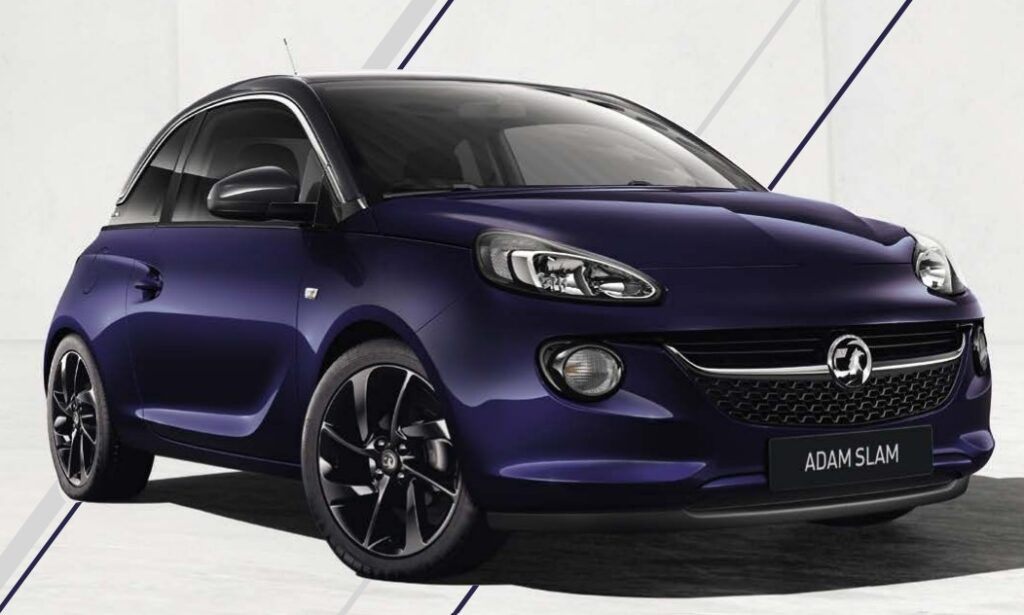
The Vauxhall Adam may be small enough to slip into tight city parking spaces, but its engine range is more varied than its compact dimensions suggest. Depending on the model year and trim, buyers can encounter everything from a straightforward 1.2-litre petrol engine to the lively 1.4-litre turbocharged unit fitted to the Adam S.
So, which Vauxhall Adam engine size is right for us?
That depends on how we intend to use the car. Someone travelling a few miles through town each day will have different priorities from a driver regularly joining fast-moving motorways. Fuel economy, acceleration, gearbox choice, insurance, maintenance and purchase price all enter the equation.
In this guide, we will explain every major Vauxhall Adam engine size, compare their strengths and weaknesses, and help used-car buyers identify the version that makes the most sense. We will also clear up a common source of confusion: a larger engine does not automatically produce the most enjoyable or economical driving experience.
Content in this publication
- What Engine Size Does the Vauxhall Adam Have?
- Vauxhall Adam Engine Sizes at a Glance
- What Does Engine Size Actually Mean?
- The 1.2-Litre Vauxhall Adam Engine
- The 1.4-Litre 87PS Vauxhall Adam Engine
- The 1.4-Litre 100PS Vauxhall Adam Engine
- The 1.0-Litre Turbo Vauxhall Adam Engine
- The 1.4-Litre Turbo Adam S Engine
- Which Vauxhall Adam Engine Is Best for City Driving?
- Which Engine Is Best for Motorway Driving?
- Which Vauxhall Adam Engine Is Most Economical?
- Does a Bigger Adam Engine Last Longer?
- How to Identify Your Vauxhall Adam Engine Size
- Vauxhall Adam Engine Size and Trim Levels
- Which Vauxhall Adam Engine Should We Buy?
- Used Vauxhall Adam Engine Inspection Checklist
- Final Thoughts on Vauxhall Adam Engine Size
- Frequently Asked Questions
What Engine Size Does the Vauxhall Adam Have?
The Vauxhall Adam was offered in the UK with petrol engines ranging from 998cc to 1,398cc, usually advertised as 1.0, 1.2 and 1.4 litres.
The main engine options found across the Adam range include:
- 1.0-litre turbo petrol, producing up to 115PS
- 1.2-litre naturally aspirated petrol, producing 70PS
- 1.4-litre naturally aspirated petrol, producing 87PS
- 1.4-litre naturally aspirated petrol, producing 100PS
- 1.4-litre turbo petrol, producing 150PS in the Adam S
Not every engine was available during every production year or with every trim. Vauxhall adjusted the range over time, meaning two visually similar Adam models can have noticeably different performance.
For example, Vauxhall’s 2018 specification material listed the regular Adam with 1.2-litre 70PS, 1.4-litre 87PS and 1.4-litre 100PS engines, while the performance-focused Adam S used a 1.4-litre turbo producing 150PS. Earlier versions of the range also included a 998cc 1.0-litre turbo with 115PS.
Vauxhall Adam Engine Sizes at a Glance
| Engine | Capacity | Power | Aspiration | Typical Character |
|---|---|---|---|---|
| 1.0 Turbo | 998cc | 115PS | Turbocharged | Flexible, modern and lively |
| 1.2 Petrol | 1,229cc | 70PS | Naturally aspirated | Simple and city-focused |
| 1.4 Petrol | 1,398cc | 87PS | Naturally aspirated | Relaxed everyday option |
| 1.4 Petrol | 1,398cc | 100PS | Naturally aspirated | Better all-round performance |
| 1.4 Turbo | 1,364cc | 150PS | Turbocharged | Fast and performance-oriented |
These figures reveal something interesting. The smallest engine is not the weakest. The 1.0-litre turbo produces considerably more power than the 1.2-litre engine and both naturally aspirated 1.4-litre versions.
Turbocharging changes the picture. It forces more air into the engine, allowing a smaller unit to deliver performance that would traditionally require greater displacement.
What Does Engine Size Actually Mean?
Engine size refers to the combined internal capacity of the engine’s cylinders. It is usually expressed in cubic centimetres or litres.
A 998cc engine is therefore marketed as a 1.0-litre engine, while a 1,398cc unit is rounded and sold as a 1.4-litre.
Engine capacity can influence:
- Power and torque
- Fuel consumption
- Acceleration
- Insurance costs
- Emissions
- Engine weight
- Driving character
However, capacity tells us only part of the story. Turbocharging, gearing, vehicle weight, engine design and electronic management can matter just as much.
Think of engine size as the size of a person’s lungs. Larger lungs may move more air, but fitness, technique and efficiency still determine the final performance. In the same way, a clever turbocharged 1.0-litre engine can outperform an older, naturally aspirated 1.4.
The 1.2-Litre Vauxhall Adam Engine
The 1.2-litre petrol is the entry-level engine many used-car buyers will encounter. It has a capacity of approximately 1,229cc and produces 70PS.
This is a conventional, naturally aspirated engine. There is no turbocharger pushing extra air into it, so power delivery is predictable and fairly gentle.
How Does the 1.2-Litre Adam Drive?
Around town, the 1.2 feels perfectly usable. Its modest power is not a major obstacle when we are moving between traffic lights, navigating residential streets or searching for parking.
The controls are light, the car is compact and the engine responds progressively. For short urban journeys, it does what it needs to do without unnecessary drama.
The limitations become clearer outside town.
With 70PS, the 1.2 must work harder when:
- Accelerating onto a motorway
- Climbing steep hills
- Carrying several passengers
- Overtaking slower traffic
- Maintaining speed with a fully loaded boot
Drivers may find themselves changing down more frequently and using higher engine speeds. It is not dangerously slow when driven appropriately, but it rarely feels effortless.
Vauxhall’s published data for one pre-current version gave the 1.2-litre Adam a 0–60mph time of around 14.9 seconds, illustrating its focus on economy and urban use rather than rapid acceleration.
Who Should Choose the 1.2-Litre Engine?
The 1.2 makes sense for:
- New or inexperienced drivers
- Low-mileage owners
- Urban commuters
- Buyers prioritising simplicity
- Drivers who rarely carry heavy loads
- Households using the Adam as a second car
It can also be appealing to someone who prefers a conventional engine without the added components of a turbocharged system.
Main Advantages of the 1.2
The 1.2-litre engine is relatively simple, widely available and usually attached to affordable versions of the Adam. Its power delivery is smooth, and it suits relaxed city driving.
Insurance groups may also be favourable. Vauxhall’s Model Year 2019 guide placed the 1.2-litre 70PS version in insurance group 3E, below the more powerful alternatives listed in the same brochure. Actual premiums still depend on the driver, location, insurer and vehicle history.
Main Disadvantages of the 1.2
The biggest weakness is performance. The engine can feel strained during faster journeys, particularly when the car is loaded.
A lower-powered engine does not always mean dramatically lower real-world fuel consumption either. If we constantly press the accelerator hard to maintain speed, the engine may consume more fuel than expected.
The 1.4-Litre 87PS Vauxhall Adam Engine
The 87PS 1.4-litre engine represents a modest step up from the 1.2. It remains naturally aspirated, but the extra displacement and power make everyday driving slightly easier.
It is not a hot hatch engine hiding beneath a fashionable body. Instead, it offers a calmer middle ground.
Performance of the 1.4-Litre 87PS Engine
Compared with the 1.2, the 87PS engine handles faster roads with a little more confidence. It still needs revs for brisk acceleration, but joining a dual carriageway feels less like asking a small dog to pull a caravan.
The improvement is noticeable rather than transformative.
Official figures published for a pre-current model listed a 0–60mph time of approximately 12.5 seconds with the manual gearbox. That is meaningfully quicker than the 70PS version, although still relaxed by modern performance standards.
Manual and Easytronic Versions
Some 1.4-litre 87PS Adam models were available with Vauxhall’s Easytronic transmission.
Easytronic is not a traditional torque-converter automatic. It is essentially an automated manual gearbox that operates the clutch and gear changes electronically. Vauxhall described it as a five-speed manual transmission with automatic and sequential shift modes.
This distinction matters because its behaviour can feel different from a smooth conventional automatic. Gear changes may be more noticeable, particularly at low speeds.
Anyone considering an Easytronic Adam should test-drive it carefully. Some drivers adapt quickly, while others dislike the pause between shifts.
The 1.4-Litre 100PS Vauxhall Adam Engine
The naturally aspirated 100PS version is arguably one of the easiest Adam engines to understand. It takes the familiar 1.4-litre format and gives it enough power to feel more comfortable beyond city limits.
It is not as sophisticated as the 1.0 turbo or as quick as the Adam S, but it offers a useful balance.
Is the 1.4-Litre 100PS Engine Fast?
Fast is not the right word. Adequately energetic is closer.
Vauxhall listed a 0–60mph time of approximately 11.5 seconds for the 100PS version. That places it ahead of the 1.2 and 87PS 1.4, while keeping its character accessible and predictable.
It feels more suitable for mixed driving, including:
- Urban commuting
- A-road journeys
- Occasional motorway travel
- Weekend trips
- Journeys with passengers
The absence of a turbo means acceleration builds progressively. We need to use the rev range to extract the engine’s performance, but there is a certain charm in that honesty. Press the accelerator, let the engine breathe and it responds without a sudden surge.
Is the 100PS Engine the Best All-Round Choice?
For many used buyers, it could be.
It avoids the sluggishness of the 70PS version without introducing the performance focus and potentially higher running expenses of the Adam S. It also offers more breathing room on faster roads than the 87PS model.
However, availability, condition and maintenance history matter more than finding the theoretically perfect specification. A well-maintained 87PS Adam is usually a wiser purchase than a neglected 100PS example.
The 1.0-Litre Turbo Vauxhall Adam Engine
The 1.0-litre turbo is one of the most interesting engines in the range.
With a capacity of just 998cc, it is physically the smallest Adam engine. Yet in its 115PS form, it produces more power than either naturally aspirated 1.4-litre engine.
Earlier Vauxhall specifications listed the 1.0 Turbo ecoTEC at 998cc and 115PS, paired with a six-speed manual gearbox.
Why Can a 1.0-Litre Engine Produce 115PS?
The answer is turbocharging.
A turbo uses exhaust gases to drive a turbine, which compresses incoming air. More air allows the engine to burn more fuel efficiently and create more power.
It is a little like blowing on a campfire. The fire itself has not become larger, but the extra air makes it burn with far greater intensity.
The result is a compact engine with surprisingly strong performance.
Driving the 1.0 Turbo Adam
The 1.0 turbo feels livelier than its capacity suggests. It offers stronger mid-range response than the naturally aspirated engines, making overtaking and joining faster traffic easier.
Vauxhall published a 0–60mph time of approximately 9.9 seconds for the 115PS version. That makes it considerably quicker than the regular 1.2 and 1.4 models, although still behind the Adam S.
Its six-speed manual gearbox is another advantage. The extra ratio can help the engine settle at cruising speeds, whereas the less powerful regular engines commonly use five-speed manuals.
Potential Trade-Offs of the 1.0 Turbo
The 1.0 turbo may provide an attractive combination of performance and economy, but it is mechanically more complicated than the naturally aspirated engines.
Turbocharged engines depend heavily on:
- Correct oil specification
- Regular oil changes
- Proper warming and cooling habits
- Healthy cooling systems
- Sound ignition components
- Unrestricted air and oil circulation
This does not automatically make the engine unreliable. It simply means neglect can become expensive more quickly.
When shopping for a used example, we should look for documented servicing rather than trusting a freshly polished dashboard and a cheerful sales pitch.
The 1.4-Litre Turbo Adam S Engine
At the top of the range sits the Adam S.
Its 1.4-litre turbo engine has a capacity of 1,364cc and produces 150PS with 220Nm of torque. Vauxhall paired it with a six-speed manual gearbox and described it as the most powerful engine offered in the Adam range.
This is not simply a regular Adam with a more ambitious badge. The Adam S received mechanical changes to support the additional performance.
Vauxhall’s specifications show larger brakes than those fitted to the lower-powered cars. The Adam S used 308mm front ventilated discs and 264mm rear discs, while the 1.2 and 87PS 1.4 versions used smaller front discs and rear drums.
How Fast Is the Vauxhall Adam S?
Vauxhall quoted:
- 150PS
- 220Nm of torque
- 0–60mph in approximately 8.5 seconds
- Maximum speed of around 130mph
Those numbers may not challenge modern supercars, but they transform the Adam’s personality. The ordinary model is a stylish city car. The Adam S is the same city car after three cups of coffee and an argument.
Acceleration is stronger, motorway performance is easier and overtaking requires less planning.
Is the Adam S a True Hot Hatch?
That depends on our definition.
It has the power, styling and sharper equipment expected from a small performance hatchback. However, its character is not identical to harder-edged rivals designed primarily around outright handling.
The Adam S mixes speed with customisation and urban style. It is less of a stripped-back track toy and more of a fashionable pocket rocket.
For buyers who love the Adam’s appearance but find the ordinary engines too restrained, the S is the natural answer.
Adam S Running Costs
The extra performance brings predictable compromises.
We should expect:
- Higher insurance
- More expensive tyres
- Greater fuel consumption under enthusiastic driving
- Potentially higher brake costs
- More strain on suspension and drivetrain components
- A higher purchase price for good examples
Vauxhall’s Model Year 2019 guide placed the Adam S in insurance group 15E, compared with 3E for the 1.2, 6E for the 87PS 1.4 and 9E for the 100PS 1.4.
Which Vauxhall Adam Engine Is Best for City Driving?
The 1.2-litre 70PS engine is sufficient for predominantly urban driving. It is easy to control, straightforward and commonly available.
However, sufficient does not necessarily mean best.
The 1.4-litre 87PS version offers a little more flexibility without feeling excessive. It can be the better choice when city journeys occasionally expand into faster roads.
The 1.0 turbo is even more capable, although buyers should be comfortable with its greater mechanical complexity.
Our practical city ranking would be:
- 1.4 87PS for balanced everyday usability
- 1.2 70PS for low-cost, low-mileage driving
- 1.0 Turbo 115PS for drivers wanting more energy
- 1.4 100PS for mixed urban and faster-road use
- 1.4 Turbo 150PS for performance enthusiasts
That ranking is not a judgement of quality. It reflects what most urban drivers actually need.
Which Engine Is Best for Motorway Driving?
The 1.0 turbo, 1.4 100PS and 1.4 turbo are the strongest motorway options.
The 115PS 1.0 turbo offers a particularly appealing blend. It has enough performance for joining traffic, a six-speed manual gearbox and more flexibility than the naturally aspirated engines.
The Adam S is more powerful, but buying it only for relaxed motorway commuting is like hiring a drummer to operate a doorbell. It will do the job, yet its talents are being wasted.
The 100PS 1.4 is suitable for occasional motorway journeys, although its five-speed gearbox can make the driving experience feel busier than a six-speed alternative.
The 1.2 can travel at motorway speeds, but acceleration and hills require more planning. Drivers who spend several hours each week on fast roads will probably appreciate a stronger engine.
Which Vauxhall Adam Engine Is Most Economical?
Official laboratory figures varied according to model year, trim, wheel size, emissions rules and testing method.
In one pre-current specification, Vauxhall published combined figures of approximately:
- 53.3mpg for the 1.2 70PS
- 52.3mpg for the manual 1.4 87PS
- 52.3mpg for the 1.4 100PS
- 57.6mpg for the 1.0 Turbo 115PS
- 47.9mpg for the 1.4 Turbo 150PS
These figures were produced under the official test procedures used at the time and should be treated as comparison tools rather than promises. Vauxhall itself noted that actual consumption depends on driving style, road conditions and other factors.
In normal use, the most economical engine depends partly on the journey.
The 1.2 may be efficient around town, but it can work hard on fast roads. The 1.0 turbo may perform better during mixed journeys, but frequent boost and aggressive acceleration will quickly increase consumption.
The Adam S is naturally the least economy-focused. Drive it gently and it can be reasonable; use all 150PS regularly and the fuel gauge will descend like a lift with a broken cable.
Does a Bigger Adam Engine Last Longer?
Not necessarily.
Engine longevity depends more heavily on maintenance, heat management, driving style and previous ownership than on capacity alone.
A carefully maintained 1.0 turbo can outlast an abused 1.4. Equally, a simple naturally aspirated engine may tolerate years of ordinary use when serviced correctly.
Important longevity factors include:
- Regular oil and filter changes
- Correct engine oil
- Maintaining coolant levels
- Responding quickly to warning lights
- Avoiding repeated high revs when cold
- Replacing spark plugs at suitable intervals
- Investigating rattles, smoke or misfires
- Keeping service records
Mileage should not be considered in isolation. A 70,000-mile Adam with annual servicing may be healthier than a 35,000-mile example that has received one oil change in six years.
How to Identify Your Vauxhall Adam Engine Size
We can identify an Adam’s engine in several ways.
Check the Registration Document
The V5C registration certificate normally lists engine capacity in cubic centimetres.
Examples may appear as:
- 998cc
- 1,229cc
- 1,364cc
- 1,398cc
Use the Vehicle Identification Number
A Vauxhall dealer or reliable vehicle-data service can use the VIN to identify the original engine and factory specification.
The VIN is commonly visible:
- At the base of the windscreen
- On the door frame
- On registration documents
- In the service book
Check Service and MOT Records
Invoices and digital service records may include the engine code, capacity or model derivative.
Do Not Rely Only on the Badge
Badges can be removed, replaced or added. Trim names such as Jam, Glam and Slam do not always indicate one specific engine.
An Adam Slam, for example, may not have the same engine as every other Adam Slam advertised online. Always confirm the complete specification.
Vauxhall Adam Engine Size and Trim Levels
Engine availability varied according to trim and year.
Common trim names included:
- Adam Jam
- Adam Glam
- Adam Slam
- Adam Rocks
- Adam Rocks Air
- Adam Energised
- Adam S
The regular 1.2 and 1.4 engines appeared across several mainstream trims. The 1.0 turbo was available in selected versions during parts of the production run, while the 150PS turbo was associated with the Adam S and Rocks S.
This is why used-car advertisements can become confusing. Sellers sometimes highlight the trim but omit the engine output.
“Vauxhall Adam 1.4” is not enough information. That description could refer to an 87PS, 100PS or 150PS turbocharged car.
We should ask for:
- Exact power output
- Engine capacity
- Turbo or non-turbo configuration
- Gearbox type
- Model year
- Registration number
- VIN when necessary
Which Vauxhall Adam Engine Should We Buy?
There is no single answer for every buyer, but the following recommendations offer a useful starting point.
Choose the 1.2 70PS When:
We mostly drive around town, cover limited annual mileage and value straightforward ownership over acceleration.
Choose the 1.4 87PS When:
We want an affordable everyday Adam with slightly more flexibility than the entry-level model.
Choose the 1.4 100PS When:
We regularly combine city streets with A-roads and occasional motorway travel.
Choose the 1.0 Turbo 115PS When:
We want strong performance from a small engine, appreciate a six-speed gearbox and can find an example with convincing service history.
Choose the 1.4 Turbo 150PS When:
We genuinely want the quickest Adam and accept the associated insurance, tyre, brake and fuel costs.
Used Vauxhall Adam Engine Inspection Checklist
Before buying, we should inspect more than the engine size printed in the advert.
Start the Engine From Cold
A cold start can reveal noises that disappear after the seller has warmed the car.
Listen for:
- Persistent rattling
- Heavy tapping
- Squealing
- Uneven idle
- Misfiring
- Excessive exhaust noise
Look for Warning Lights
The engine-management light should illuminate when the ignition is switched on and then go out after the engine starts.
A light that never appears may have been disabled. A light that remains illuminated requires diagnosis.
Check for Smoke
A brief puff during a cold start may not always indicate catastrophe, but continuous blue, white or black smoke deserves investigation.
- Blue smoke may indicate oil burning.
- Persistent thick white smoke can suggest coolant entering the combustion process.
- Black smoke may indicate an overly rich fuel mixture.
Inspect the Service History
We should look for consistent servicing rather than a stamp book filled in all at once.
Invoices are particularly useful because they show:
- Dates
- Mileages
- Oil specifications
- Parts replaced
- Repair patterns
- The garage responsible
Drive the Car Properly
The engine should pull smoothly without hesitation. Test it at low and moderate speeds, and use a faster road where legally and safely possible.
On turbo models, power should build cleanly. Whistling, smoke, severe hesitation or loss of power should not be dismissed as “normal for these cars.”
Final Thoughts on Vauxhall Adam Engine Size
The Vauxhall Adam engine range stretches from a modest 1.2-litre city engine to a lively 150PS turbocharged unit. That variety is one reason the car appeals to such different buyers.
For simple urban transport, the 1.2-litre engine remains adequate. The naturally aspirated 1.4-litre versions offer a little more confidence, with the 100PS model emerging as a sensible all-rounder.
The 1.0 turbo is the clever option. Despite being the smallest engine, it delivers strong performance and benefits from a six-speed gearbox. The Adam S stands at the opposite end of the emotional scale, turning the fashionable city car into a compact performance machine.
Yet engine size should never distract us from condition. When buying used, a complete service history, smooth cold start and clean inspection matter more than chasing a particular badge.
Choose according to the journeys we actually make—not the journeys we imagine making once a year. The right Adam should feel like a well-fitted shoe: comfortable in everyday life, capable when needed and never unnecessarily difficult to live with.
Frequently Asked Questions
1. What is the smallest Vauxhall Adam engine size?
The smallest engine offered in the Vauxhall Adam was the 998cc 1.0-litre turbo petrol. Despite its small capacity, the 115PS version was more powerful than the naturally aspirated 1.2-litre and 1.4-litre engines.
2. Is the Vauxhall Adam 1.2 underpowered?
The 1.2-litre 70PS engine can feel underpowered on motorways, steep hills or when carrying several passengers. It remains suitable for city driving, short commutes and owners who prioritise simple, relaxed motoring.
3. What engine is fitted to the Vauxhall Adam S?
The Vauxhall Adam S uses a 1,364cc 1.4-litre turbocharged petrol engine producing 150PS and 220Nm of torque. It is paired with a six-speed manual gearbox.
4. Is the 1.0 or 1.4 Vauxhall Adam better?
The 1.0 turbo is better for drivers seeking strong performance and a six-speed gearbox. A naturally aspirated 1.4 may suit buyers who prefer more conventional power delivery. Condition and service history should ultimately guide the decision.
5. Does the Vauxhall Adam have a diesel engine?
The UK Vauxhall Adam range was focused on petrol engines. Buyers will generally encounter 1.0, 1.2 and 1.4-litre petrol versions rather than diesel models.
If you want to know other articles similar to Vauxhall Adam Engine Size: Complete Petrol Engine Guide you can visit the category Service and Parts.
Land Rover Defender 90 Tyre Pressure: Complete Guide
Land Rover Defender 90 Weight: Kerb Weight, GVW and Payload Explained
Land Rover Defender 90 Towing Capacity: Complete Guide
Land Rover Defender 90 Boot Space: Size, Dimensions and Practicality
Toyota Hilux Key Battery Replacement: Complete DIY Guide
Toyota Hilux Windscreen Replacement Cost: Prices, Factors, and Money-Saving Tips
Leave a Reply
More content of your interest