
Nissan Note Boot Space: Complete New Zealand Guide

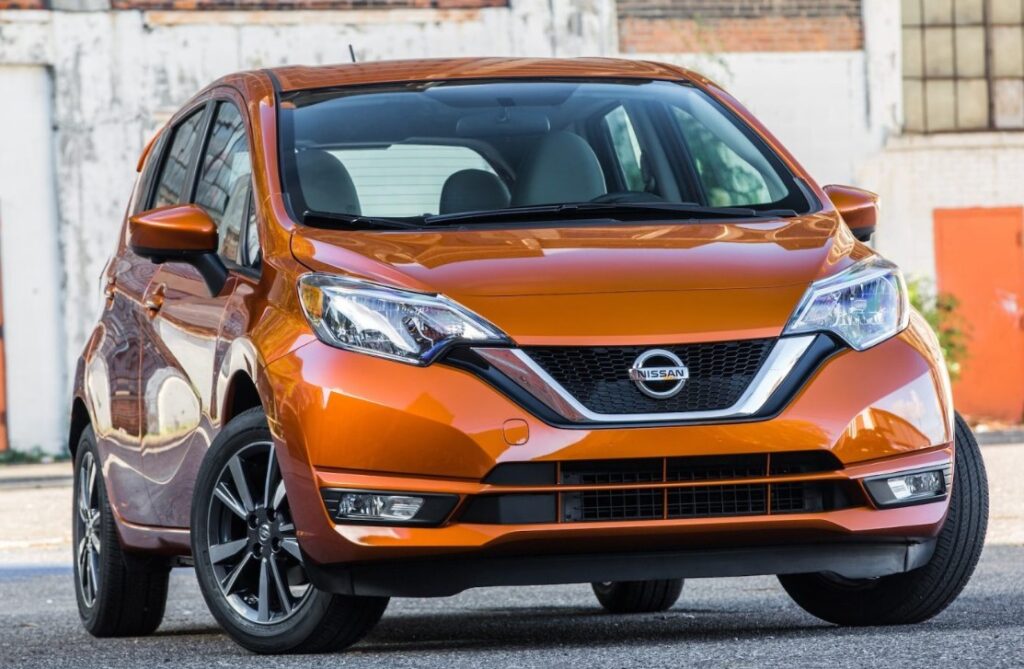
The Nissan Note boot space is one of the main reasons this compact hatchback has become such a familiar sight on New Zealand roads. At first glance, the Note looks like a modest city car. Open the tailgate, move the rear seats and start arranging your luggage, however, and it behaves more like a small van wearing a hatchback costume.
That clever packaging matters in New Zealand. We need cars that can cope with supermarket runs, school bags, airport pickups, sports gear and the occasional road trip without becoming cumbersome around Auckland, Wellington or Christchurch. The Nissan Note fits that brief rather neatly.
Boot capacity varies considerably between generations, though. The first-generation E11 offers approximately 280 litres in its standard configuration, but its sliding rear bench can expand the usable area to around 437 litres. The second-generation E12 provides roughly 325 litres, while the newer E13 Note e-POWER offers an official 340-litre luggage compartment.
Those numbers give us a starting point, but litres do not tell the whole story. The shape of the opening, floor height, rear-seat design and presence of an adjustable luggage board can make one boot considerably more useful than another with a similar official capacity.
Let us unpack the details.
Content in this publication
- Nissan Note Boot Space at a Glance
- Why the Nissan Note Is So Practical for Its Size
- First-Generation Nissan Note E11 Boot Space
- Second-Generation Nissan Note E12 Boot Space
- Third-Generation Nissan Note E13 Boot Space
- Which Nissan Note Generation Has the Biggest Boot?
- What Can Fit in a Nissan Note Boot?
- Is the Nissan Note Boot Good for Families?
- How the Nissan Note Compares With Other Small Cars
- Boot-Space Differences Between Japanese Imports
- How to Measure the Boot Before Buying
- Common Nissan Note Boot Problems
- How to Get More From Nissan Note Boot Space
- Is the Nissan Note Boot Large Enough for Road Trips?
- Which Nissan Note Should New Zealand Buyers Choose?
- Final Thoughts on Nissan Note Boot Space
- Frequently Asked Questions
Nissan Note Boot Space at a Glance
The following figures provide a practical comparison of the three main Nissan Note generations encountered in New Zealand.
| Nissan Note generation | Approximate years | Seats upright | Seats folded or maximum configuration |
|---|---|---|---|
| E11 first generation | 2005–2013 | 280 litres | Up to 1,332 litres |
| E11 with rear bench moved forward | 2005–2013 | Up to 437 litres | Up to 1,332 litres |
| E12 second generation | 2012–2020 | Around 325 litres | Up to approximately 1,495 litres |
| E13 third generation | 2020 onward | 340 litres | Around 670 litres under Nissan’s published method |
The E11’s official specifications list 280 litres in one seating position, as much as 437 litres when its adjustable rear seat is moved forward, and up to 1,332 litres with the rear seats folded. The E12 is commonly listed at 325 litres with the seats upright and approximately 1,495 litres at maximum capacity. Nissan publishes 340 litres for the E13 and 670 litres with the rear seatbacks folded.
These measurements should not always be compared as though they were produced with an identical ruler. Manufacturers and specification databases may measure cargo capacity to different heights or according to different standards. Some calculate space beneath the parcel shelf, while others include more of the area toward the roof.
For buyers, the safest approach is to use the figures as a guide and inspect the physical boot before committing to a vehicle.
Why the Nissan Note Is So Practical for Its Size
The Note’s secret is not simply a large box behind the rear seats. Its usefulness comes from the way Nissan distributes space throughout the vehicle.
Rather than giving the Note the low roofline of a sporty hatchback, Nissan uses a taller body with relatively upright seating. Passengers sit more vertically, consuming less horizontal cabin length. That leaves useful room for luggage without requiring the exterior dimensions of a large SUV.
The Note is therefore a little like a well-packed suitcase. Nothing appears enormous on its own, yet almost every centimetre has a job.
Its practical characteristics generally include:
- A tall and wide-opening rear hatch
- A relatively square luggage compartment
- Folding rear seatbacks
- Good vertical loading height
- A compact exterior footprint
- Useful underfloor storage on some versions
- A sliding rear bench on selected E11 models
- Split-folding seats on many trim levels
These features help explain why the Nissan Note can feel more versatile than some lower, wider-looking hatchbacks.
First-Generation Nissan Note E11 Boot Space
The E11 was the original Nissan Note and remains common in the New Zealand used-car market. Most examples arrived as Japanese imports, although specifications from other markets are also helpful when understanding the basic body and luggage arrangement.
How Big Is the E11 Nissan Note Boot?
The E11 provides approximately 280 litres of boot capacity in its more passenger-friendly rear-seat position. With the sliding rear bench moved forward, selected versions can provide as much as 437 litres. Fold the rear seats and total capacity rises to approximately 1,332 litres under the VDA measurement method.
That adjustable capacity is the E11’s party trick.
Need more rear legroom? Slide the bench backwards.
Need room for groceries, suitcases or a folded pushchair? Move it forwards.
It is a simple mechanical solution, yet it gives the Note a flexibility that many modern small cars still lack.
Understanding the 280-Litre and 437-Litre Figures
Seeing two different boot figures for the same Nissan Note can be confusing. Neither number is necessarily wrong.
The difference usually reflects the position of the sliding rear bench:
- Around 280 litres: Rear seat positioned farther back for better passenger legroom
- Up to 437 litres: Rear bench moved forward to prioritise luggage
- Around 1,332 litres: Rear seats folded and the larger cargo area used
This arrangement lets us balance passenger comfort against boot capacity. It is especially useful when children occupy the back seats because they may not require as much legroom as adults.
The system does have a compromise. Moving the bench forward reduces rear passenger space, so the full 437 litres may not be practical when tall adults are sitting in the back.
E11 Boot Shape and Loading Access
The first-generation Note has a tall, fairly upright tailgate. That is good news for bulky items because the opening is less restrictive than the narrow letterbox-style boot found in some compact cars.
Published measurements for an E11 variant indicate a boot-floor length of approximately 552 mm with the rear seats upright, around 1,476 mm with them folded and just over 1,000 mm of width at the narrowest part of the floor.
That shape works well for:
- Weekly grocery shopping
- Several school bags
- A compact pushchair
- Small suitcases
- Sports equipment
- Boxes and household items
- Pet carriers
The width between the wheel arches is particularly valuable. A broad but shallow boot can be awkward, whereas the Note’s more rectangular space is relatively easy to organise.
The E11 Flexi-Board System
Some E11 models include a movable luggage floor often described as a Flexi-Board system. It can create a flatter floor, divide the luggage area or conceal smaller items beneath it.
This is more useful than it sounds.
Without a raised floor, there may be a drop between the loading lip and the bottom of the boot. Raising the board reduces that step and can make it easier to slide heavier objects inside. Lowering or rearranging it creates additional depth when maximum volume matters.
Before buying an imported E11, check whether all floor panels are present. Removable boards occasionally disappear during the vehicle’s life, and replacing an original part can be inconvenient.
Second-Generation Nissan Note E12 Boot Space
The E12 changed the Note’s character. It became sleeker and more conventional in appearance, but Nissan retained much of the practicality that made the first generation popular.
This generation is especially important in New Zealand because it includes the widely imported Nissan Note e-POWER.
How Big Is the E12 Nissan Note Boot?
The second-generation Nissan Note is generally listed with approximately 325 litres of boot space behind the rear seats. With the rear seats folded, maximum cargo volume is commonly quoted at approximately 1,495 litres.
Some publications quote figures closer to 330 or 381 litres. That variation can result from differences in trim, floor position, regional specification or measurement method. One source, for example, describes a 330-litre compartment, while another uses 381 litres for a particular European-market configuration.
For a Japanese-import E12 in New Zealand, it is sensible to treat roughly 325 to 330 litres as a realistic baseline rather than assuming every version has the largest published European figure.
Is the E12 Boot Bigger Than the E11 Boot?
In its normal seating configuration, yes.
The E12’s approximate 325-litre capacity exceeds the E11’s basic 280-litre figure. However, the E11 can expand to around 437 litres by moving its rear bench forward, so the older car may provide more flexibility while keeping the rear seatbacks upright.
The comparison therefore looks like this:
- The E11 offers greater adjustment between passenger and luggage space.
- The E12 provides a larger conventional boot in its normal configuration.
- The E12 generally offers the larger maximum volume when its rear seats are folded.
- The E11 may feel boxier and easier to load with tall items.
Choosing between them depends on how we use the vehicle. Families who frequently carry rear passengers may prefer the E12’s larger default compartment. Drivers who enjoy rearranging the cabin around different jobs may appreciate the E11’s sliding bench.
Nissan Note e-POWER E12 Boot Space
The e-POWER version uses a petrol engine to generate electricity for an electric drive motor. This arrangement requires additional electrical components, leading some shoppers to assume that its boot must be tiny.
Fortunately, the E12 e-POWER remains a practical hatchback. Its battery and power electronics are packaged so that the car retains a usable rear luggage compartment.
However, specifications can vary between the standard E12 petrol model, e-POWER versions, four-wheel-drive variants and different Japanese trim levels. The boot floor or underfloor storage may not be identical in every vehicle.
For that reason, we should inspect the actual car rather than relying entirely on a generic online specification.
What to Check Beneath the E12 Boot Floor
Lift the luggage board and look for:
- Signs of water entry
- Damp carpet or mould
- Missing foam organisers
- Loose tools
- Corrosion around the spare-wheel well
- An emergency puncture-repair kit
- Aftermarket wiring
- Previous accident repairs
- Damage to hybrid-related covers or warning labels
Many Japanese-market cars use a tyre-repair kit rather than a full-size spare wheel. Buyers who regularly travel through remote areas may want to investigate compatible spare-wheel options, but any installation must be secure and must not interfere with electrical components.
Third-Generation Nissan Note E13 Boot Space
Introduced in 2020, the E13 represents the most modern interpretation of the Nissan Note. It has a cleaner interior, a more advanced e-POWER system and a less van-like shape than the original model.
Despite the sharper styling, it remains impressively practical.
How Big Is the E13 Nissan Note Boot?
Nissan lists the E13 Note e-POWER with 340 litres of trunk capacity. With the rear seatbacks folded, Nissan’s published material for one market states that the space expands to approximately 670 litres.
The 340-litre figure makes the E13 the largest of the three generations when comparing their normal seats-up capacities:
- E11: approximately 280 litres in its standard passenger-focused position
- E12: approximately 325 litres
- E13: approximately 340 litres
The E13’s improvement is not dramatic on paper, but an extra 15 litres can still make the difference between placing a small bag in the cabin and fitting everything behind the rear seats.
Why the Folded E13 Figure Looks Smaller
At first glance, the E13’s quoted 670-litre folded-seat capacity seems much smaller than the E12’s approximately 1,495 litres. That does not necessarily mean the E13 has less than half the usable space.
The figures may have been measured under different standards or to different heights. A measurement taken only to the top of the seatbacks or window line will be much lower than one calculated all the way to the roof.
This is why maximum-capacity numbers from unrelated sources can mislead us. For everyday buying decisions, floor length, width, height and seat-folding arrangement are often more revealing than one headline figure.
E13 Rear-Seat Versatility
The E13’s rear seatbacks fold to accommodate longer items such as flat-pack furniture, golf clubs, suitcases or a bicycle with a wheel removed. Nissan also highlights the ability to fold seating surfaces to create different loading configurations.
The result is a cabin that can switch roles quickly. One moment it is carrying passengers; the next it becomes a compact cargo hauler.
That adaptability suits New Zealand drivers who want one car to handle commuting during the week and recreational trips at the weekend.
Which Nissan Note Generation Has the Biggest Boot?
The answer depends on how we define “biggest.”
Largest Standard Boot
The E13 wins with approximately 340 litres behind the rear seats.
Largest Adjustable Seats-Up Boot
The E11 can reach approximately 437 litres by moving the rear bench forward, although rear legroom decreases.
Largest Commonly Quoted Maximum Capacity
The E12 is often listed with approximately 1,495 litres when the rear seats are folded.
Most Flexible Layout
The E11 deserves special recognition because of its sliding rear seat and configurable luggage floor.
In simple terms, the E13 provides the strongest normal boot capacity, the E12 is excellent when converted for maximum cargo, and the E11 gives us the widest range of seating-versus-luggage choices.
What Can Fit in a Nissan Note Boot?
Official litres can feel abstract. Most of us do not pack our belongings into one-litre cartons before driving away.
In everyday use, a Nissan Note can generally accommodate several of the following, depending on the generation and exact model:
- A normal weekly grocery shop
- Two medium suitcases
- Several soft travel bags
- A compact folding pushchair
- School backpacks and sports bags
- A small dog crate
- Camping equipment for two people
- A set of golf clubs with careful positioning
- A folded wheelchair, depending on dimensions
- Small pieces of flat-pack furniture with the seats down
Soft luggage works better than rigid suitcases because it can be squeezed around wheel arches and seatbacks. Packing cubes can also turn an awkward pile into an orderly stack.
Will a Pushchair Fit?
Many compact pushchairs will fit with the rear seats upright, particularly in the E12 and E13. Larger travel systems may need the parcel shelf removed or one rear seat folded.
Always test the actual pushchair before buying the car. A manufacturer’s capacity figure cannot tell us whether the boot opening is wide enough for a specific frame.
Can a Bicycle Fit?
A full-size adult bicycle may fit with the rear seats folded and the front wheel removed. The E12’s large maximum cargo area makes it especially capable for this task.
Use a protective sheet to prevent chain oil from staining the upholstery, and secure the bicycle so it cannot slide forward during heavy braking.
Is the Nissan Note Boot Good for Families?
For a small hatchback, yes.
The Note works particularly well for small families that value interior space but do not want the size, fuel use or purchase cost of a larger SUV.
A child seat can remain installed on one side while the split rear seatback on the other side is folded for a longer object. Exact functionality varies by trim, so check the seat split and child-restraint layout in the vehicle being considered.
The main limitation appears when carrying a bulky pushchair, a full weekly shop and luggage at the same time. No compact hatchback can bend the laws of physics. At that point, a roof box or larger vehicle may be more suitable.
Nevertheless, the Note uses its footprint efficiently. It is a small car that rarely feels small until we ask it to move an entire household.
How the Nissan Note Compares With Other Small Cars
The Note’s main advantage is its tall, practical body. Some conventional hatchbacks may offer similar headline capacity, but their sloping tailgates reduce the height available near the rear glass.
The Note often feels more spacious than sporty alternatives because:
- The roof remains relatively high
- The tailgate is upright
- The rear opening is generous
- The seating position is efficient
- The cabin can be rearranged easily
- The luggage bay is usefully square
Its boot is not always class-leading by raw volume, but it is usually more usable than its exterior dimensions suggest.
Boot-Space Differences Between Japanese Imports
Most Nissan Notes for sale in New Zealand are used Japanese imports. That creates a wider variety of specifications than we would encounter with a single official New Zealand-new model range.
Two Notes of the same year may have different:
- Luggage-floor panels
- Spare-wheel arrangements
- Seat-folding mechanisms
- Audio equipment
- Underfloor storage
- Hybrid or four-wheel-drive hardware
- Parcel shelves
- Cargo hooks
- Upholstery
- Optional accessories
This is why photographs and a physical inspection matter. A listing that simply says “large boot” tells us very little.
Ask the dealer to demonstrate every seat and floor adjustment. Make sure the rear seat locks securely after being moved or folded.
How to Measure the Boot Before Buying
Bring a tape measure and record the dimensions that matter to your lifestyle.
Measure:
- The width between the wheel arches
- The maximum internal width
- The floor length with the seats upright
- The floor length with one or both seatbacks folded
- The height beneath the parcel shelf
- The height of the tailgate opening
- The loading-lip height
- The depth of any underfloor compartment
Then compare those measurements with the pushchair, wheelchair, dog crate, suitcase or sports equipment you intend to carry.
This takes five minutes and can prevent years of frustration.
Common Nissan Note Boot Problems
The Note’s luggage area is fundamentally simple, but age and regular use can create a few issues.
Water Leaks
Check the spare-wheel well and side carpets for dampness. Water can enter through damaged seals, body vents, tail-light areas or accident repairs.
A musty smell is a warning sign. Do not assume dampness came from a recently cleaned carpet.
Weak Tailgate Struts
A tailgate that slowly falls or refuses to stay open probably has worn gas struts. Replacements are usually straightforward, but a dropping hatch can cause injury.
Missing Parcel Shelf
Imported used cars sometimes arrive without a parcel shelf. The vehicle remains usable, but luggage is more visible from outside and cabin noise may increase.
Damaged Luggage Boards
Adjustable floor panels can crack when overloaded. Lift them and inspect both surfaces, hinges and support points.
Rear Seats That Do Not Lock Properly
Fold and return each seatback several times. Listen for a positive click and pull the seat to confirm it is locked.
A loose seatback is not merely annoying; it can become a safety risk in a collision.
How to Get More From Nissan Note Boot Space
A few inexpensive habits can make the luggage compartment considerably more effective.
Use Soft-Sided Bags
Duffel bags fit irregular spaces better than hard-shell cases.
Remove the Parcel Shelf When Necessary
This creates more vertical room, but luggage should never obstruct rear visibility or remain unsecured above the seatback height.
Use the Split-Folding Seat
Fold only one section when carrying a long item so that a rear passenger can still travel on the other side.
Store Small Items Under the Floor
Where an underfloor compartment is provided, use it for charging cables, cleaning supplies, a tyre inflator or emergency equipment.
Add a Non-Slip Boot Mat
A fitted mat protects the carpet and stops shopping bags from skating around the boot like loose ice cubes.
Secure Heavy Items
Place heavy objects low and close to the rear seatbacks. Use tie-down points where provided and avoid carrying unsecured cargo in the passenger compartment.
Is the Nissan Note Boot Large Enough for Road Trips?
For two adults, easily.
For a couple with one child, it is normally sufficient with sensible packing.
For four or five people carrying large rigid suitcases, space becomes tighter. Soft bags, a roof box or a larger rental vehicle may be needed for extended trips.
The E12 and E13 are generally the easiest options for passengers and luggage at the same time. The E11 can also work well, but moving its rear bench forward to enlarge the boot may compromise rear legroom.
For a typical weekend between Auckland and Rotorua, Wellington and Hawke’s Bay, or Christchurch and Tekapo, the Note should cope comfortably with compact luggage.
Which Nissan Note Should New Zealand Buyers Choose?
Choose the E11 when affordability, cabin flexibility and the sliding rear bench matter most.
Choose the E12 when you want a larger standard boot, excellent maximum cargo volume and access to the popular e-POWER drivetrain.
Choose the E13 when you want the biggest normal seats-up boot, newer technology and a more modern cabin.
Boot space should not be the only consideration. Also assess battery condition on e-POWER models, servicing history, tyre condition, underbody corrosion, accident repairs and the operation of imported infotainment equipment.
The best Note is not automatically the newest or the one with the largest advertised capacity. It is the example whose layout, mechanical condition and price make sense for your needs.
Final Thoughts on Nissan Note Boot Space
The Nissan Note boot space is impressive because it does more with less. This is not a huge vehicle pretending to be practical. It is a genuinely compact car designed like a clever apartment, where folding, sliding and hidden spaces make every corner count.
The E11 starts at around 280 litres but can reach approximately 437 litres with its rear bench moved forward. The E12 normally offers about 325 litres and can provide an expansive cargo area with its seats folded. The E13 raises standard boot capacity to an official 340 litres.
For most New Zealand households, that is enough for everyday errands, school equipment, a compact pushchair and weekend luggage. Better still, the Note remains easy to park and economical to run.
Do not buy by litres alone, though. Open the hatch, adjust the seats, lift the floor and bring along the largest item you regularly carry. The right boot is not simply the one with the biggest number. It is the one that makes your normal life easier.
Frequently Asked Questions
1. How big is the Nissan Note boot?
Boot capacity depends on the generation. The E11 provides approximately 280 litres in its normal configuration and up to around 437 litres with the sliding rear bench moved forward. The E12 offers roughly 325 litres, while the E13 has an official 340-litre boot.
2. Which Nissan Note has the largest boot?
The E13 has the largest standard seats-up capacity at approximately 340 litres. However, the E11 can offer up to around 437 litres while its seatbacks remain upright if the sliding rear bench is moved forward. The E12 has one of the largest commonly quoted maximum capacities with its seats folded.
3. Can a pushchair fit in a Nissan Note?
A compact folded pushchair will fit in many Nissan Note versions. Large travel systems may require removal of the parcel shelf or folding part of the rear seat. Testing the specific pushchair in the car is the most reliable approach.
4. Do the Nissan Note rear seats fold flat?
The rear seatbacks fold in all major generations, but the resulting floor may not be perfectly level in every trim. Some versions include an adjustable luggage board that reduces the step between the boot and folded seatbacks.
5. Is the Nissan Note boot suitable for a family?
Yes. Its square shape, tall opening and folding rear seats make it practical for small families. It can usually carry groceries, school bags and a compact pushchair, although luggage space becomes limited when five people bring large bags.
If you want to know other articles similar to Nissan Note Boot Space: Complete New Zealand Guide you can visit the category Service and Parts.
Land Rover Defender 90 Tyre Pressure: Complete Guide
Land Rover Defender 90 Weight: Kerb Weight, GVW and Payload Explained
Land Rover Defender 90 Towing Capacity: Complete Guide
Land Rover Defender 90 Boot Space: Size, Dimensions and Practicality
Toyota Hilux Key Battery Replacement: Complete DIY Guide
Toyota Hilux Windscreen Replacement Cost: Prices, Factors, and Money-Saving Tips
Leave a Reply
More content of your interest