
Land Rover Defender 90 Boot Space: Size, Dimensions and Practicality

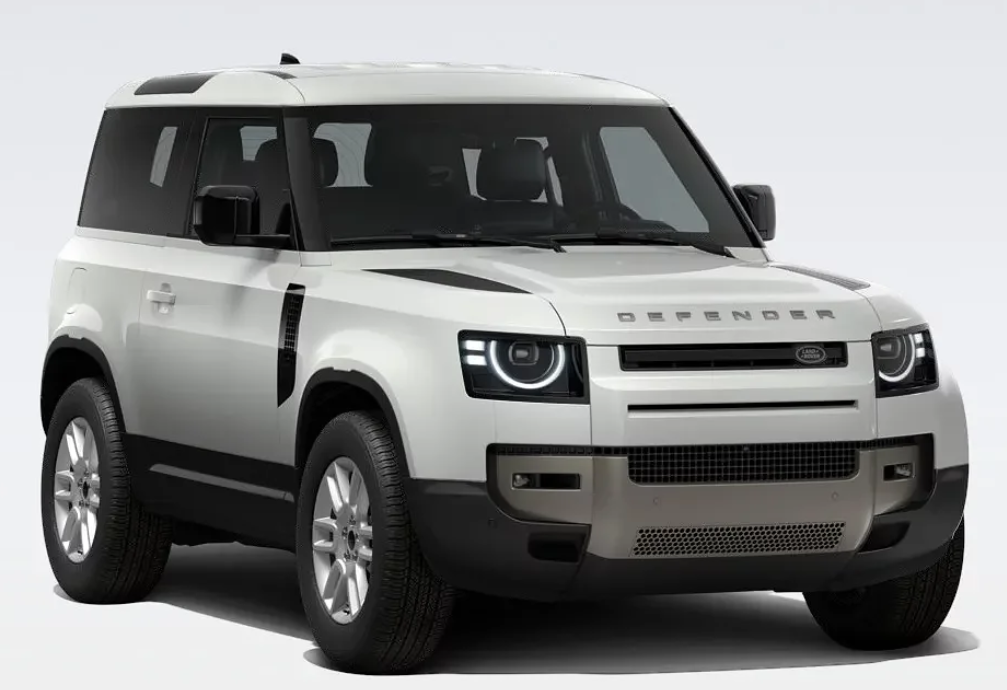
The Land Rover Defender 90 boot space is one of those specifications that can surprise buyers. From the outside, the Defender 90 looks substantial: wide shoulders, an upright body, a full-size spare wheel hanging off the rear door, and the sort of stance that suggests we could pack half the garage into it.
Open the rear door, though, and the story changes.
The Defender 90 is deliberately short. That compact footprint is part of its charm, particularly if we want genuine off-road ability without driving something the length of a small boat. The compromise is that luggage capacity behind the rear seats isn't enormous.
According to Land Rover's published specifications, the Defender 90 provides 297 litres of dry boot capacity behind the second row, increasing to 1,263 litres with the rear seats folded. Using Land Rover's alternative "wet" measurement method, those figures rise to 397 litres and 1,563 litres respectively.
Those numbers only tell half the story, though.
Boot shape, rear-door design, seat configuration, height and the way we actually pack a vehicle can matter every bit as much as litres. So let's climb into the Defender 90 and find out how useful its cargo area really is.
Content in this publication
- How Big Is the Land Rover Defender 90 Boot?
- Defender 90 Boot Dimensions
- What Fits in a Defender 90 Boot?
- Is the Defender 90 Boot Big Enough for a Family?
- Defender 90 Boot Space With the Seats Down
- The Side-Hinged Rear Door Changes Everything
- How Practical Is the Defender 90 Boot Shape?
- Defender 90 Boot Space vs Defender 110
- Defender 90 Hard Top Loadspace
- Can You Sleep in the Back of a Defender 90?
- Is the Defender 90 Good for Dogs?
- How to Get More Out of the Defender 90 Boot
- Does the Small Boot Ruin the Defender 90?
- Living With the Defender 90 Boot Every Day
- Land Rover Defender 90 Boot Space: Our Verdict
- Frequently Asked Questions
How Big Is the Land Rover Defender 90 Boot?
Let's start with the headline numbers.
| Configuration | Dry Capacity | Wet Capacity |
|---|---|---|
| Rear seats in position | 297 litres | 397 litres |
| Rear seats folded | 1,263 litres | 1,563 litres |
Land Rover lists approximately 460 mm of loadspace length behind the second row. Fold the second row and the usable load length grows to approximately 1,313 mm. The cargo compartment is around 1,183 mm wide, with approximately 1,124 mm between the wheel arches, while its published loadspace height is about 904 mm.
Immediately, we can see what sort of SUV we're dealing with.
With all passenger seats available, cargo space is relatively shallow. The boot isn't useless by any stretch, but anyone coming from a larger five-door family SUV may wonder where the rest of it went.
Fold those seats, however, and the Defender transforms.
Suddenly we're dealing with considerably more usable volume, making the 90 far better suited to bulky equipment than its small conventional boot figure suggests.
Why Are There Two Different Defender 90 Boot Capacity Figures?
This causes plenty of confusion.
Search for Defender 90 luggage capacity online and we may encounter 297 litres, 397 litres, 1,263 litres, or 1,563 litres. They can all be correct.
The difference comes down to measurement methodology.
Land Rover publishes both "dry" and "wet" figures. The wet method effectively measures the theoretical volume of the entire luggage area rather than simply calculating the amount of usable rectangular cargo space. Land Rover specifically describes the larger 1,563-litre figure as a wet measurement taken behind the first row with the rear seats folded.
For everyday comparisons between cars, we find the 297-litre dry figure particularly useful when discussing the standard five-seat luggage compartment.
Which Boot-Space Number Should We Use?
For real-world shopping, start with 297 litres behind the rear seats.
Think of 397 litres as a measurement of the total available cavity rather than a guarantee that we can neatly stack 397 one-litre boxes into the back.
Likewise, when the rear seats are folded, 1,263 litres dry is the more conservative figure, while 1,563 litres wet represents the maximum measured volume.
The important thing isn't declaring one method right and the other wrong. We simply need to compare like with like.
Defender 90 Boot Dimensions
Capacity measurements are useful, but dimensions often tell us more.
Land Rover's published dimensions give the Defender 90 cargo compartment approximately 904 mm of height and 1,183 mm of overall width, narrowing only slightly to 1,124 mm between the wheel arches.
That considerable width is valuable.
We don't have an enormous amount of floor length when the rear seats are upright, but the luggage compartment doesn't feel like a tiny slot squeezed between huge wheel wells.
The upright body also gives us plenty of vertical room.
Boot Length With Rear Seats Up
With the rear seats being used, Land Rover quotes approximately 460 mm behind the second row.
That's the Defender 90's biggest limitation.
Imagine a broad storage box rather than a long conventional wagon boot. Grocery bags? Easy. A couple of overnight bags? No drama. Several large suitcases for a family airport run? That's where our packing skills start earning their keep.
The Defender 110 is the obvious answer for owners who regularly travel with passengers and substantial luggage.
Boot Length With Rear Seats Folded
Folding the rear seats extends the available cargo length to roughly 1,313 mm according to Land Rover's specifications.
That dramatically changes the usefulness of the vehicle.
Instead of working around a short luggage compartment, we now have something closer to a compact cargo van.
Mountain-bike equipment, camping gear, hardware-store purchases, large boxes and pet equipment become much easier to accommodate.
Width Between the Wheel Arches
Land Rover quotes approximately 1,124 mm between the wheel arches.
That's one of the Defender 90's stronger practicality figures because the available width isn't dramatically compromised by suspension towers intruding deep into the luggage compartment.
When we're loading broad rectangular objects, width can occasionally matter more than headline capacity.
What Fits in a Defender 90 Boot?
Measurements are one thing. Packing the vehicle on Friday afternoon before a weekend away is another.
With all seats occupied, we'd describe the Defender 90 as suitable for light to moderate luggage rather than family-expedition quantities.
Realistically, the boot works particularly well for:
- everyday groceries and shopping bags;
- backpacks and soft weekend luggage;
- smaller suitcases packed carefully;
- sports bags and gym equipment;
- dog equipment or a compact pet crate;
- photography, hiking and outdoor gear;
- bulky items when the second-row seats can be folded.
Soft bags make far better companions than rigid suitcases.
Why?
Because the Defender 90's short load floor rewards flexible packing. A soft duffel can be squeezed, rotated or stacked. A giant hard-shell suitcase has all the negotiating skills of a concrete block.
Is the Defender 90 Boot Big Enough for a Family?
This depends heavily on what "family use" means.
For two adults and one or two children running around town, the Defender 90 can absolutely work.
For four people embarking on a two-week holiday with large suitcases, pushchairs, toys and enough clothing to survive three different climates? Things become more interesting.
The vehicle's passenger compartment takes priority over its luggage area.
That isn't a design mistake. It's the inevitable consequence of fitting two proper seating rows inside a body measuring roughly 4.3 metres long. Land Rover itself categorises the Defender 90 as its shorter Defender body style, with the larger 110 and 130 models positioned above it when more passenger and cargo room are needed.
Can a Pushchair Fit in the Defender 90?
Many compact pushchairs should fit, although their shape becomes critical.
A long folded stroller can consume a substantial percentage of the available floor depth. Larger travel systems may need to sit diagonally or vertically depending on their dimensions.
If a pushchair is part of our daily routine, this is one of those vehicles where bringing it to the dealership is genuinely worthwhile.
Forget guessing.
Put the pushchair in the boot.
Five minutes of real-world testing can tell us more than 30 minutes staring at a specifications brochure.
Can the Defender 90 Carry Holiday Luggage?
Yes, provided we pack intelligently.
Two adults can make excellent use of the Defender 90 because unused rear seats can effectively become additional storage territory.
Four or five occupants change the equation dramatically.
With every passenger seat required, we'd prioritise smaller cases and soft luggage. Roof-mounted storage can also become useful for longer adventures, provided all relevant roof-load limits and equipment instructions are followed.
Defender 90 Boot Space With the Seats Down
This is where the Defender 90 gets its revenge.
The modest 297-litre conventional luggage compartment expands to as much as 1,263 litres dry once the second-row seats are folded. Land Rover's wet measurement reaches 1,563 litres.
That's more than four times the dry luggage capacity available with the rear seats upright.
Suddenly, the Defender starts behaving less like a compact luxury SUV and more like a miniature expedition vehicle.
Is the Load Floor Completely Flat?
The exact shape can vary with specification and seating arrangement, so buyers carrying especially long or delicate items should inspect their chosen vehicle rather than relying purely on capacity figures.
What matters more in day-to-day ownership is that folding the second row creates a much larger continuous loading area.
The Defender's square architecture helps here.
Curving coupe-style rooflines might look sleek outside a restaurant, but cardboard boxes rarely appreciate automotive fashion. The Defender's upright sides and high roof make the available volume relatively easy to exploit.
The Side-Hinged Rear Door Changes Everything
The Defender doesn't have the conventional top-hinged tailgate used by most SUVs.
Instead, its rear door swings sideways and carries the spare wheel.
We love the visual drama. It's pure Defender.
Practicality is more complicated.
Advantages of the Side-Opening Tailgate
Because the tailgate doesn't swing upward, we don't need overhead clearance.
That can be useful beneath low ceilings, branches or certain parking structures.
The large door also creates a broad opening once fully opened, giving excellent access to the cargo compartment.
The Parking-Space Problem
Now imagine parallel parking with another car sitting close behind us.
Suddenly the huge side-hinged door is less entertaining.
A conventional hatch can often rise without requiring much longitudinal space behind the vehicle. The Defender door needs room to swing outward.
That's worth remembering if we live in a dense city or frequently load luggage in tight parking spaces.
The spare wheel also adds considerable visual bulk to the door.
We wouldn't call the design impractical; we'd call it context-dependent.
On an empty trail, it's brilliant.
Inside a cramped underground parking garage, it can feel like trying to open the door of a medieval castle.
How Practical Is the Defender 90 Boot Shape?
Surprisingly practical—within the limits imposed by its depth.
The cargo area is upright, wide and reasonably square. Unlike heavily styled SUVs with sloping rear windows, the Defender doesn't sacrifice as much upper-body volume in the pursuit of a sporty silhouette.
That means we can stack bags higher.
And when we're dealing with relatively little floor length, vertical space becomes important.
A Tall Boot Can Beat a Long Boot
Imagine two 300-litre luggage compartments.
One is broad, upright and square.
The other has a heavily sloping tailgate, narrow opening and awkward wheel-arch intrusions.
The numbers say they're equal.
Our suitcases may strongly disagree.
This is why we wouldn't judge the Defender 90 exclusively from its 297-litre dry measurement. Its geometry makes the space more useful than the number initially suggests.
Defender 90 Boot Space vs Defender 110
Anyone seriously concerned about boot capacity will inevitably reach this question.
Should we simply buy the Defender 110?
For many families, yes.
The Defender 90 is the model we choose because we actively want the shorter Defender experience: easier manoeuvrability, distinctive three-door proportions, a more compact footprint and a personality closer to traditional short-wheelbase Defenders.
The 110 is the rational luggage decision.
The 90 is the emotional one.
When the Defender 90 Makes More Sense
The 90 becomes particularly appealing for couples, solo adventurers and owners who rarely use every seat simultaneously.
If the rear seats spend much of their lives folded, the difference between a "small boot" and a "large boot" becomes almost philosophical.
We have up to 1,263 litres of dry cargo volume available.
That's hardly tiny.
When We Would Choose the Defender 110 Instead
Regularly transporting four or five people with luggage changes the recommendation.
If our typical Saturday involves two children, a pushchair, shopping bags, sports equipment and a dog, buying the larger body style may save us years of luggage Tetris.
There's something wonderfully satisfying about owning the smallest Defender.
There's considerably less satisfaction in discovering that someone's suitcase has to sit on their lap.
Defender 90 Hard Top Loadspace
There's another version worth mentioning: the Defender 90 Hard Top.
This is the commercial-oriented model, designed around cargo rather than conventional rear passenger seating.
Land Rover currently quotes approximately 1,355 litres of loadspace for the Defender Hard Top 90, with around 1,037 mm of load length, 1,326 mm of width and 947 mm of height.
That's a very different proposition.
Instead of trying to balance rear-seat accommodation against luggage, the Hard Top turns the back of the Defender into a dedicated working environment.
Who Is the Defender 90 Hard Top For?
Think trades, specialist equipment, rural businesses, field work and owners who simply need protected cargo space.
The regular Defender 90 is an adventure SUV that can haul plenty when required.
The Hard Top is closer to a stylish commercial tool that happens to possess serious off-road credentials.
Can You Sleep in the Back of a Defender 90?
Technically, some people can make it work with a suitable camping setup, particularly if they sleep diagonally or use specialist platforms.
But the Defender 90 isn't naturally enormous inside.
With approximately 1,313 mm of official floor length behind the first row, a fully stretched adult obviously requires considerably more than the bare floor dimension alone.
Any sleeping arrangement therefore depends on how far forward seats can be positioned, whether a platform bridges gaps, the sleeper's height and how the interior is configured.
If sleeping inside the vehicle is central to our camping plans, the longer Defender variants are the more straightforward choice.
Is the Defender 90 Good for Dogs?
It can be, especially for smaller and medium-sized dogs.
The broad opening and relatively tall cargo area are useful, although the raised floor height deserves consideration.
Larger or older dogs may appreciate a portable ramp.
Again, the Defender 90's shallow loadspace behind the second row becomes relevant. A very large dog can consume most of the conventional luggage compartment, leaving limited room for bags.
Owners travelling with both pets and people should test their actual crate or dog-bed dimensions before purchasing.
How to Get More Out of the Defender 90 Boot
The Defender 90 rewards intelligent packing more than brute-force loading.
Start by abandoning the assumption that every piece of luggage must be a rectangular hard-shell suitcase.
Soft luggage conforms to awkward gaps. Packing cubes help control smaller items. Frequently used equipment should remain near the rear opening rather than disappearing beneath everything else.
If we're travelling with fewer passengers, folding one or more rear-seat sections can transform the available carrying capacity.
It's a vehicle that encourages modular thinking.
Rather than asking, "How big is my boot?" we start asking, "How much passenger space do I actually need today?"
That flexibility is one of the Defender's greatest strengths.
Does the Small Boot Ruin the Defender 90?
Not at all.
But pretending the limitation doesn't exist doesn't help anyone.
The Defender 90 isn't the version we'd recommend to a family whose number-one criterion is maximum luggage capacity.
That's like buying hiking boots and complaining they aren't ideal for running a marathon.
The Defender 90 is engineered around a different set of priorities.
It's short, distinctive, capable and surprisingly manoeuvrable for something this wide and imposing. Its compact proportions help off-road, help in town and give it the classic short-wheelbase Defender character that longer versions can't completely replicate.
The price we pay is a small luggage compartment when every seat is occupied.
Whether that's a bad deal depends entirely on our life.
Living With the Defender 90 Boot Every Day
Daily usability can actually be excellent.
A 297-litre boot easily handles ordinary supermarket trips, work bags and typical day-to-day errands.
Most of us aren't transporting five giant suitcases every morning.
Problems arise during those occasional moments when passenger demand and luggage demand peak simultaneously: airport trips, Christmas travel, long family holidays and camping expeditions.
That is when the Defender 90 reminds us how short it really is.
Urban Owners May Appreciate the Trade-Off
The same compact length responsible for the limited cargo compartment makes the vehicle easier to accommodate in cities than a Defender 110 or 130.
We gain something every time we sacrifice something.
Cars are compromise machines.
The Defender 90 simply wears its compromise openly.
Adventure Owners Have Other Storage Options
Owners using the Defender for outdoor pursuits aren't necessarily restricted to the conventional luggage compartment.
Depending on specification and approved accessories, external storage solutions, roof systems and specialised equipment can broaden its carrying ability considerably.
Naturally, we should always observe Land Rover's specified load limits and installation requirements rather than treating the roof like an attic.
Land Rover Defender 90 Boot Space: Our Verdict
So, is the Land Rover Defender 90 boot space good?
The fairest answer is: good for the vehicle's size and mission, but small when all passenger seats are needed.
Behind the second row, Land Rover quotes 297 litres dry or 397 litres wet. Fold the seats and the situation changes dramatically, delivering 1,263 litres dry or up to 1,563 litres wet.
The cargo area's square shape, useful width and generous height help compensate for its limited depth.
If we're a couple, solo adventurer or someone who rarely needs every passenger seat, the Defender 90 can be surprisingly practical.
If we routinely carry four or five people plus holiday luggage, dogs, pushchairs or camping gear, the larger Defender 110 deserves serious consideration.
Ultimately, that's what makes the 90 interesting.
It isn't trying to win a spreadsheet contest.
It's the compact Defender—the one we buy because its dimensions, personality and capability appeal to us enough that we're willing to pack slightly smarter.
And somehow, that feels very Defender.
Frequently Asked Questions
1. How many litres is the Land Rover Defender 90 boot?
Land Rover quotes 297 litres of dry loadspace behind the second row and 397 litres using its wet measurement method. Folding the second-row seats increases capacity to approximately 1,263 litres dry or 1,563 litres wet.
2. Is the Defender 90 boot big enough for suitcases?
Yes, although the short 460 mm load length behind the rear seats means large rigid suitcases can quickly consume the available space. Soft weekend bags and smaller cases are considerably easier to arrange. For four or five occupants carrying substantial holiday luggage, the Defender 110 is more practical.
3. What are the Defender 90 boot dimensions?
Land Rover lists a loadspace height of approximately 904 mm, overall width of 1,183 mm, width between the wheel arches of 1,124 mm, and approximately 460 mm of length behind the second row. Folding the seats extends load length to approximately 1,313 mm.
4. Does the Defender 90 have more boot space with the seats folded?
Considerably more. Dry capacity increases from 297 litres to 1,263 litres after folding the rear seats. Using Land Rover's wet measurement, maximum capacity rises from 397 litres to 1,563 litres.
5. Is a Defender 90 or Defender 110 better for luggage?
The Defender 110 is the stronger choice when luggage capacity is a priority, especially when several passengers travel regularly. The Defender 90 makes more sense if we value its compact dimensions and only occasionally need maximum cargo space.
If you want to know other articles similar to Land Rover Defender 90 Boot Space: Size, Dimensions and Practicality you can visit the category Service and Parts.
Volvo S90 Engine Oil: Type, Capacity & Change Guide
Volvo S90 Boot Space: Size, Capacity and Practicality
SEO Title: Volvo S90 Oil Capacity: Complete Guide by Engine

Kia Sorento Oil Type: Complete Guide by Year & Engine
Kia Sorento Engine Capacity: Complete Guide by Year
Peugeot 308 Clutch Replacement Cost: Complete UK Guide for 2026
Leave a Reply
More content of your interest