

Toyota Hilux Windscreen Replacement Cost: Prices, Factors, and Money-Saving Tips

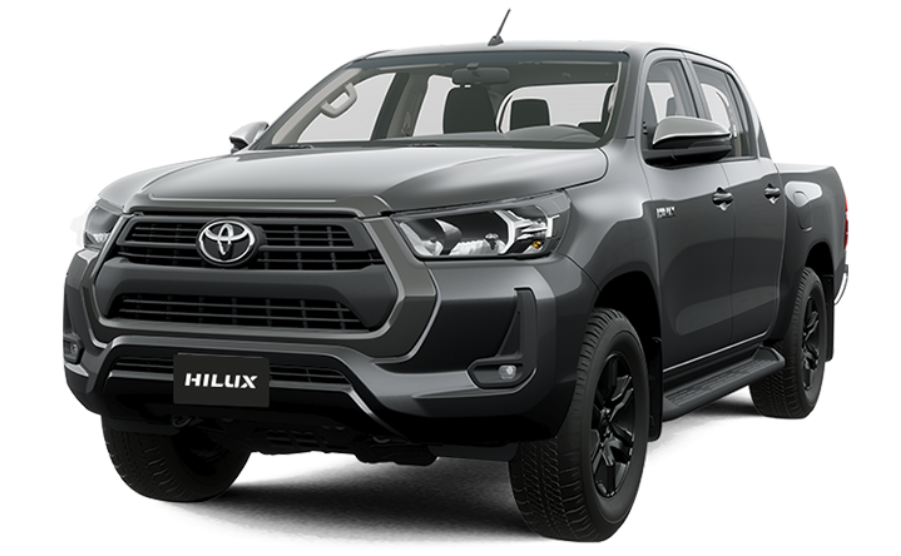
A cracked windscreen can turn a perfectly ordinary Toyota HiLux drive into an expensive headache surprisingly quickly. One moment, we hear a tiny tick from a stone hitting the glass. A few days later, that harmless-looking chip has grown into a crack stretching across the driver's field of vision.
Naturally, the first question is: what is the Toyota Hilux windscreen replacement cost?
For Australian owners, a straightforward replacement on an older HiLux can commonly fall around AUD $400–$600, while a newer model fitted with a forward-facing camera or Toyota Safety Sense may cost approximately $700–$1,100 or more once the appropriate glass and calibration are included. Current Australian market guides place standard windscreen replacements for mainstream vehicles broadly around $300–$600, with ADAS-equipped replacements potentially reaching $900–$2,000 depending on the vehicle and calibration requirements.
That is quite a range.
The windscreen itself is only part of the equation. Model year, sensors, camera brackets, genuine versus aftermarket glass, calibration, labour, insurance and even where we live can shift the final invoice substantially.
So, rather than throwing out one misleading price, let's break down what a HiLux owner is genuinely likely to pay and why.
Content in this publication
- How Much Does a Toyota Hilux Windscreen Replacement Cost?
- Toyota Hilux Windscreen Replacement Cost by Type
- Why Does Toyota Hilux Windscreen Replacement Cost Vary So Much?
- What Is Included in a Toyota Hilux Windscreen Replacement Quote?
- How Much Does Toyota Hilux ADAS Calibration Add?
- Can a Toyota Hilux Windscreen Be Repaired Instead of Replaced?
- Toyota Hilux Windscreen Replacement Cost With Insurance
- Does Genuine Toyota Glass Cost More?
- How Long Does Toyota Hilux Windscreen Replacement Take?
- Mobile vs Workshop Hilux Windscreen Replacement
- Toyota Hilux Windscreen Replacement Cost by Generation
- How Much Does Hilux Windscreen Replacement Cost in the UK?
- What Can Make a Hilux Windscreen Quote More Expensive?
- How to Save Money on Toyota Hilux Windscreen Replacement
- How to Choose a Toyota Hilux Windscreen Replacement Company
- Is It Safe to Drive a Hilux With a Cracked Windscreen?
- Should We Replace a Cracked Hilux Windscreen Immediately?
- Toyota Hilux Windscreen Replacement Cost: Our Practical Budget
- Conclusion: What Should a Hilux Windscreen Replacement Really Cost?
- Frequently Asked Questions
- 1. How much does it cost to replace a Toyota Hilux windscreen?
- 2. Does a Toyota Hilux windscreen need calibration after replacement?
- 3. Can a cracked Toyota Hilux windscreen be repaired instead of replaced?
- 4. Is aftermarket glass okay for a Toyota Hilux?
- 5. Does insurance cover Toyota Hilux windscreen replacement?
How Much Does a Toyota Hilux Windscreen Replacement Cost?
For most Toyota HiLux models in Australia, we can use the following figures as a practical starting point:
| Toyota HiLux windscreen job | Approximate cost (AUD) |
|---|---|
| Small chip repair | $60–$150 |
| Older HiLux standard windscreen | $400–$600 |
| Standard aftermarket glass replacement | $300–$600 |
| Windscreen with sensors/special features | $500–$900 |
| Recent HiLux with camera equipment | $700–$1,000+ |
| ADAS-equipped replacement and calibration | $900–$2,000 in the broader market |
| ADAS calibration alone | Roughly $250–$700 |
These numbers should be treated as guidelines rather than fixed Toyota prices.
One Adelaide replacement specialist, for example, lists older HiLux vehicles around $400–$600 and recent HiLux/LandCruiser models with cameras around $700–$1,000. Meanwhile, wider Australian 2026 pricing data places ordinary windscreens around $300–$600 and camera-equipped installations substantially higher once calibration is involved.
In other words, asking how much a HiLux windscreen costs is a little like asking how much a set of tyres costs. We need to know exactly which HiLux we're talking about.
Toyota Hilux Windscreen Replacement Cost by Type
The easiest way to understand the price difference is to separate HiLux windscreens into a few broad categories.
Older Toyota Hilux Without Driver-Assistance Cameras
Older HiLux models tend to be the least complicated.
If there is no camera mounted near the rear-view mirror, no rain sensor and no special acoustic or solar-control glass, replacement is generally straightforward.
The technician removes the damaged windscreen, prepares the frame, applies the appropriate adhesive and installs the replacement glass.
There is usually no electronic calibration afterward.
For many older Australian HiLux models, roughly $400–$600 fitted is a sensible budget.
A documented 2016 Toyota HiLux front windscreen replacement listed through AutoGuru was priced at $429 including GST, illustrating what a comparatively simple replacement can cost in the real world.
Of course, location and glass availability still matter.
Newer Toyota Hilux With Safety Technology
This is where things become more interesting—and more expensive.
Newer HiLux variants may have camera-based safety systems operating through the windscreen area. Depending on the exact model and specification, those systems can support features such as:
- Pre-collision assistance
- Lane departure warning
- Road-sign assistance
- Automatic high beam
- Other Toyota Safety Sense functions
Once a camera is involved, replacing the glass is no longer simply a matter of taking one sheet of laminated glass out and sticking another one in.
The camera needs to see through precisely the right optical area, and calibration may be necessary after the windscreen is installed.
That can push the complete job substantially higher.
Hilux With Rain Sensors or Special Glass
Even if a HiLux does not require full ADAS camera calibration, features integrated around the windscreen can increase the cost.
Examples include:
- Rain sensors
- Antenna components
- Solar-control glass
- Acoustic layers
- Special tint bands
- Mirror mounting systems
- Camera brackets
The difference may seem minor when looking at the windscreen from outside, yet the glass specifications can be completely different.
That is why two apparently identical HiLux utes can receive very different quotes.
Why Does Toyota Hilux Windscreen Replacement Cost Vary So Much?
The price is built from several pieces rather than one.
Think of the final bill like a toolbox. The glass is one tool inside it, but labour, mouldings, adhesive, electronics and calibration are sitting beside it.
1. Model Year
Model year is one of the biggest variables.
A basic older work ute usually has fewer electronic systems integrated around its windscreen than a modern upper-spec HiLux.
Consequently, older models are often cheaper to repair.
However, we should never assume based solely on age. Specifications vary across markets, trim levels and option packages.
2. Hilux Variant and Trim Level
A fleet-oriented single cab and a highly equipped dual cab may share the HiLux badge but not necessarily the same windscreen.
Features differ between:
- WorkMate
- SR
- SR5
- Rogue
- GR Sport
- Other regional or historical variants
Even within one model year, the correct glass may differ.
This is why reputable glass companies usually ask for the registration, VIN or exact model specification before providing a firm quote.
3. OEM Versus Aftermarket Glass
Another big question is whether we choose genuine Toyota/OEM-branded glass or a compatible aftermarket alternative.
OEM Glass
OEM generally refers to glass supplied to the manufacturer's required specification, often carrying Toyota branding when purchased through the genuine parts channel.
Potential advantages include:
- Exact factory specification
- Correct brackets and fittings
- Familiar manufacturer branding
- Greater reassurance for owners who want everything factory-original
The obvious disadvantage is price.
Aftermarket Glass
A reputable aftermarket windscreen can cost considerably less.
Australian parts listings demonstrate just how much glass pricing can vary depending on specification. For certain 2015-on HiLux applications, bare replacement windscreen listings have appeared around the low-$100 to low-$200 range before installation and associated services, illustrating that the actual glass is only one component of the complete fitted price.
The important word is reputable.
Cheap glass that does not correctly match the vehicle's optical requirements, tint, sensor areas or camera configuration may create far more trouble than the saving is worth.
4. ADAS Camera Calibration
This is increasingly one of the largest additional expenses.
ADAS stands for Advanced Driver Assistance Systems.
When a forward-facing camera looks through the windscreen, its position relative to the road must be extremely precise.
Replacing the windscreen can alter that relationship.
A specialist may therefore need to recalibrate the camera.
Australian market estimates currently put standalone ADAS recalibration broadly around $250–$700, although another national pricing guide places many calibration jobs around $150–$400. The variation reflects different systems, procedures and providers.
Why Calibration Matters
Imagine adjusting binoculars by only a fraction of a degree.
Up close, the difference looks insignificant.
Far away, the target can move dramatically.
A driver-assistance camera works on a similar principle. Tiny alignment errors can affect how the system interprets road markings, vehicles and objects.
So calibration should not be treated as an unnecessary luxury when the manufacturer's procedure calls for it.
What Is Included in a Toyota Hilux Windscreen Replacement Quote?
Never compare two windscreen quotes using the headline number alone.
One quote might include everything.
Another might include only the glass and installation.
A complete quote may cover:
- Replacement windscreen
- Removal of damaged glass
- Windscreen adhesive
- Primer
- Mouldings or trims
- Sensor transfer
- Camera bracket requirements
- Labour
- Disposal of the old windscreen
- Mobile fitting
- GST
- ADAS calibration
Before booking, ask: Is this the complete drive-away price?
That simple question can prevent a cheap-looking $500 quote from becoming an $850 invoice.
How Much Does Toyota Hilux ADAS Calibration Add?
If the HiLux has a forward-facing camera, we should budget separately for calibration unless the replacement company explicitly includes it.
A typical Australian calibration can add several hundred dollars.
There are generally two broad methods.
Static Calibration
Static calibration normally takes place in a controlled workshop environment.
Special targets are placed at carefully measured positions relative to the vehicle while diagnostic equipment guides the technician through the calibration procedure.
The floor, distance, tyre pressures and vehicle positioning may all matter.
Dynamic Calibration
Dynamic calibration involves driving the vehicle under specified conditions while diagnostic equipment allows the camera or control system to relearn its reference points.
Static and Dynamic Calibration
Some systems may require a combination of procedures.
When additional equipment, technician time or subcontracting is required, the overall windscreen replacement cost naturally increases.
Can a Toyota Hilux Windscreen Be Repaired Instead of Replaced?
Sometimes, absolutely.
And when repair is possible, it can save hundreds of dollars.
A professional chip repair often costs around $60–$150 in the Australian market, making it dramatically cheaper than replacing the entire windscreen.
The technician typically injects clear resin into the damaged area before curing and polishing it.
The primary purpose isn't to make the chip magically disappear.
It's to restore strength and prevent the damage from spreading.
When a Chip May Be Repairable
Repair may be possible when:
- The chip is relatively small
- The crack has not spread extensively
- Damage is away from vulnerable windscreen edges
- The driver's critical vision area is not badly compromised
- The laminated layers remain structurally suitable
- There is no major contamination inside the damage
When Replacement Makes More Sense
Replacement may be needed if:
- The crack is long
- Damage reaches the edge
- Several cracks are spreading
- The glass has significant structural damage
- Damage interferes heavily with visibility
- The windscreen has already been repaired unsuccessfully
- A technician determines repair cannot restore adequate integrity
Every case is different, so a professional assessment matters.
Why Small Chips Shouldn't Be Ignored
A tiny chip looks harmless.
Then the HiLux hits a pothole.
Or the temperature drops overnight.
Or the cabin suddenly heats up under the Australian sun.
Stress moves through the glass and—like a zip being pulled—the crack can suddenly travel.
Repairing early is usually the cheapest option.
Toyota Hilux Windscreen Replacement Cost With Insurance
Insurance can completely change what we actually pay.
Some comprehensive motor insurance policies offer windscreen coverage with:
- No excess
- A reduced excess
- One free replacement per policy period
- Free chip repairs
- Optional glass cover
Other policies simply apply the normal vehicle excess.
That distinction matters enormously.
Imagine our replacement costs $900 but the normal excess is $800. Making a claim may provide little financial benefit.
By contrast, if we selected optional windscreen cover with a $0 glass excess, the same replacement could potentially cost us nothing directly beyond the insurance premium and applicable policy conditions.
Always check the policy wording before authorising work.
Questions to Ask Your Insurer
Before filing a claim, we should ask:
- Do I have windscreen cover?
- What excess applies?
- Is there a claim limit?
- Does the policy cover ADAS calibration?
- Can I choose my own glass repairer?
- Is genuine Toyota glass covered?
- Would aftermarket glass be required?
- Does a glass claim affect my no-claim discount?
Policies vary widely, so the answer should come from the insurer rather than assumptions.
Does Genuine Toyota Glass Cost More?
Usually, yes.
Genuine manufacturer-branded glass often commands a premium over quality aftermarket alternatives.
How much more?
There is no universal markup because pricing depends on the exact part number, supply chain and local availability.
On some vehicles, the difference can be modest.
On others, genuine glass can dramatically increase the quote.
Is OEM Glass Worth Paying For?
It depends on what we value.
OEM or genuine glass may appeal if:
- The HiLux is nearly new
- We want factory branding
- It is under a lease arrangement
- Insurance covers the genuine part
- The vehicle has complex cameras or sensors
- We want to preserve factory specification as closely as possible
A quality aftermarket windscreen, however, can be entirely sensible for many owners.
The priority is correct specification and proper installation—not simply the logo printed in the corner.
How Long Does Toyota Hilux Windscreen Replacement Take?
Actual glass installation may take roughly an hour or two on a straightforward vehicle, although the complete process can take longer when calibration is required.
But fitting time is not the whole story.
Fresh windscreen adhesive needs sufficient curing time before the vehicle is safely driven.
The exact safe drive-away time depends on the adhesive system, temperature, humidity and installation process.
We should follow the installer's instructions rather than simply watching the clock.
Why Safe Drive-Away Time Matters
The windscreen contributes to the structural system around the cabin.
Driving too early can disturb the bond.
So when a technician says the HiLux should remain parked for a certain period, that's not an invitation to test our luck.
A few extra minutes are much cheaper than installing the windscreen twice.
Mobile vs Workshop Hilux Windscreen Replacement
Mobile replacement is incredibly convenient.
The technician comes to our house, jobsite or workplace and replaces the windscreen while we carry on with our day.
But workshop replacement has advantages too.
Mobile Installation Advantages
Mobile fitting can offer:
- Greater convenience
- Less travel
- Easy scheduling
- Less downtime
- No need to drive with badly cracked glass
Some providers include mobile service in their standard price, while others charge a call-out fee.
A 2026 Australian pricing guide estimates metro mobile surcharges around $0–$80, although individual businesses set their own policies.
Workshop Installation Advantages
A workshop provides:
- Controlled environmental conditions
- Easier access to specialist equipment
- Better conditions for some calibration procedures
- Protection from wind, rain and dust
For a modern HiLux requiring static ADAS calibration, workshop installation may be preferable or necessary.
Toyota Hilux Windscreen Replacement Cost by Generation
We can broadly divide HiLux ownership into two pricing worlds.
Older Hilux Models
Earlier generations with simpler glass tend to sit at the affordable end.
Typical characteristics include:
- No forward camera
- Fewer sensors
- Simpler mouldings
- Widely available aftermarket windscreens
A budget around $400–$600 fitted is often reasonable in Australia, although individual quotes vary.
2015-On Eighth-Generation Hilux
The eighth-generation HiLux arrived with considerably more technology over its lifecycle.
Basic versions may still have relatively straightforward glass, while later or better-equipped models can involve camera hardware and advanced safety systems.
As a result, prices can range from conventional replacement territory to four figures.
Recent Hilux Models With Toyota Safety Systems
Once ADAS enters the picture, we should stop comparing prices against an old work ute.
The correct windscreen may require:
- A specific camera aperture
- Correct optical properties
- Precise mounting hardware
- Sensor compatibility
- Calibration afterward
That complexity is why newer HiLux windscreen replacement can be substantially more expensive.
How Much Does Hilux Windscreen Replacement Cost in the UK?
The HiLux is also popular in Britain, and UK prices demonstrate the same pattern.
One current UK specialist advertises HiLux replacement pricing from approximately £276 to £983, with many 2016–2026 variants listed in the broader £292–£983 range depending on specification. Older, simpler versions are generally cheaper, while newer equipment increases the potential cost.
Again, the lesson isn't that every UK owner will pay those exact amounts.
It's that model specification matters more than the HiLux badge by itself.
What Can Make a Hilux Windscreen Quote More Expensive?
Several extras can quietly push the price upward.
Watch for:
- Genuine Toyota glass
- ADAS camera calibration
- Rain sensors
- Specialist mouldings
- Difficult glass availability
- Remote-area call-out fees
- After-hours installation
- Rust around the windscreen frame
- Previous poor-quality installations
- Damaged clips or trim
- Extra adhesive preparation
- Camera or sensor faults discovered during the job
Windscreen-Frame Rust
This deserves particular attention on older vehicles.
Once the glass is removed, the technician may discover corrosion underneath the seal or adhesive.
Installing a new windscreen directly over significant rust is a poor solution.
Rust may need treatment first, increasing both cost and downtime.
That isn't the glass technician inventing work; it's fixing the foundation before putting a new roof on the house.
How to Save Money on Toyota Hilux Windscreen Replacement
Nobody wants to spend more than necessary, but choosing the cheapest possible installation can be false economy.
Instead, focus on smart savings.
Compare Like-for-Like Quotes
Get two or three quotes and ask each supplier to specify:
- Glass brand
- OEM or aftermarket
- Labour
- Mobile fitting
- Mouldings
- GST
- Calibration
- Warranty
Only then can we make a fair comparison.
Repair Chips Early
This is probably the easiest saving of all.
Spending $100-ish on a repair today can prevent a $500–$1,000+ replacement tomorrow.
Check Your Insurance First
If glass cover already exists, use it.
We would be surprised how many owners pay cash before discovering that their policy included a much lower windscreen excess.
Ask Whether Aftermarket Glass Is Appropriate
Genuine glass isn't automatically necessary for every HiLux.
A suitable, high-quality aftermarket replacement may reduce costs substantially.
Just ensure it matches all vehicle systems.
Don't Skip Required Calibration
Saving money by ignoring calibration isn't really saving.
If a safety camera requires recalibration, include it in the repair.
The windscreen's purpose is not simply to keep rain out. On a modern vehicle, it can also serve as the viewing platform for important safety technology.
How to Choose a Toyota Hilux Windscreen Replacement Company
Price matters, but installation quality matters more.
A badly installed windscreen can produce:
- Water leaks
- Wind noise
- Loose trims
- Corrosion
- Adhesive failure
- Sensor problems
- Camera calibration issues
A reputable installer should be willing to explain exactly what glass is being fitted.
Questions Worth Asking Before Booking
Ask the installer:
- Have you replaced windscreens on this HiLux generation before?
- Does my vehicle need ADAS calibration?
- Is calibration included?
- What glass brand are you using?
- Is the glass OEM, OEE or aftermarket?
- Are new mouldings included?
- Is there a workmanship warranty?
- What is the safe drive-away time?
- Will my rain sensor or camera be tested afterward?
Clear answers are a good sign.
Vague answers are not.
Don't Shop on Price Alone
Suppose one company quotes $520 and another quotes $750.
The cheaper option seems obvious.
But what if the $520 quote excludes a $300 calibration?
Suddenly the "cheap" quote costs $820.
Always compare the finished job.
Is It Safe to Drive a Hilux With a Cracked Windscreen?
That depends on the location, severity and progression of the damage.
A tiny stable chip is very different from a long crack crossing the driver's field of view.
Large cracks can:
- Reduce visibility
- Create glare
- Continue spreading
- Weaken the windscreen
- Potentially cause roadworthiness issues
If damage is spreading rapidly or significantly affects vision, arranging repair promptly is the sensible approach.
A windscreen isn't decorative glass. It's safety equipment.
Should We Replace a Cracked Hilux Windscreen Immediately?
If replacement has already been recommended, postponing it rarely improves anything.
Cracks don't heal.
They usually stay the same or become worse.
Temperature changes, vibration and rough roads can all encourage damage to spread—which is hardly ideal for a vehicle designed to spend its life bouncing over worksites, gravel and imperfect roads.
For a HiLux especially, a damaged windscreen can have a tough life.
Toyota Hilux Windscreen Replacement Cost: Our Practical Budget
If we wanted a simple budgeting rule, we'd use this:
For an older HiLux without camera technology, keep around $400–$600 AUD in mind.
For a newer HiLux with additional sensors or specialised glass, consider roughly $600–$900+.
For a camera-equipped HiLux requiring calibration, budgeting around $800–$1,200 or more gives us greater breathing room, although broader Australian ADAS-equipped replacement pricing can extend toward $2,000 in complex cases.
Then confirm the exact cost using the vehicle's registration or VIN.
That's much safer than relying on one generic online number.
Conclusion: What Should a Hilux Windscreen Replacement Really Cost?
The Toyota Hilux windscreen replacement cost can range from a few hundred dollars for a straightforward older vehicle to $1,000 or more for modern versions requiring specialised glass and camera calibration.
The biggest cost factors are relatively predictable: model year, trim level, OEM versus aftermarket glass, sensors, Toyota Safety Sense equipment, calibration and labour.
For many older Australian HiLux models, approximately $400–$600 is a reasonable starting point. Newer camera-equipped versions can easily move toward $700–$1,000+, while particularly complex ADAS installations may cost more.
But our best money-saving trick isn't chasing the cheapest replacement company.
It's catching chips before they become cracks.
A $100 repair can look pretty attractive when the alternative involves replacing an entire windscreen and recalibrating a camera.
And if replacement is unavoidable? Get an itemised quote, check the insurance policy, make sure the correct glass is being installed and never skip required calibration simply to shave a few dollars off the invoice.
Do that, and the process becomes much less painful—even if our wallet still feels the stone chip too.
Frequently Asked Questions
1. How much does it cost to replace a Toyota Hilux windscreen?
In Australia, an older Toyota HiLux without driver-assistance cameras may cost around $400–$600 to replace. Newer models with sensors, special glass or forward-facing cameras may cost $700–$1,000 or more, particularly when ADAS calibration is necessary. Exact pricing depends on the model year, specification, glass type and location.
2. Does a Toyota Hilux windscreen need calibration after replacement?
Some modern HiLux models do. If the vehicle uses a forward-facing camera mounted around the windscreen for driver-assistance features, calibration may be required after replacement. Always ask the installer to identify whether the exact vehicle requires static, dynamic or another manufacturer-specified calibration procedure.
3. Can a cracked Toyota Hilux windscreen be repaired instead of replaced?
Small chips and limited damage can sometimes be repaired using resin, potentially costing around $60–$150 rather than several hundred dollars for a new windscreen. Long cracks, edge damage or damage affecting critical visibility often require full replacement.
4. Is aftermarket glass okay for a Toyota Hilux?
A high-quality aftermarket windscreen can be a reasonable choice if it is correctly specified for the vehicle and compatible with any cameras, sensors, antennas or other equipment. Owners who prefer factory-branded parts can request genuine Toyota glass, although it may cost more.
5. Does insurance cover Toyota Hilux windscreen replacement?
Many comprehensive policies provide windscreen cover, but the conditions vary. Some policies include a $0 or reduced glass excess, while others apply the normal vehicle excess. Check whether calibration, genuine glass and mobile fitting are covered before approving the replacement.
If you want to know other articles similar to Toyota Hilux Windscreen Replacement Cost: Prices, Factors, and Money-Saving Tips you can visit the category Service and Parts.
Volvo S90 Engine Oil: Type, Capacity & Change Guide
Volvo S90 Boot Space: Size, Capacity and Practicality
SEO Title: Volvo S90 Oil Capacity: Complete Guide by Engine

Kia Sorento Oil Type: Complete Guide by Year & Engine
Kia Sorento Engine Capacity: Complete Guide by Year
Peugeot 308 Clutch Replacement Cost: Complete UK Guide for 2026
Leave a Reply
More content of your interest