
Toyota Hilux GVM Upgrade Cost: Prices, Payload and What to Expect

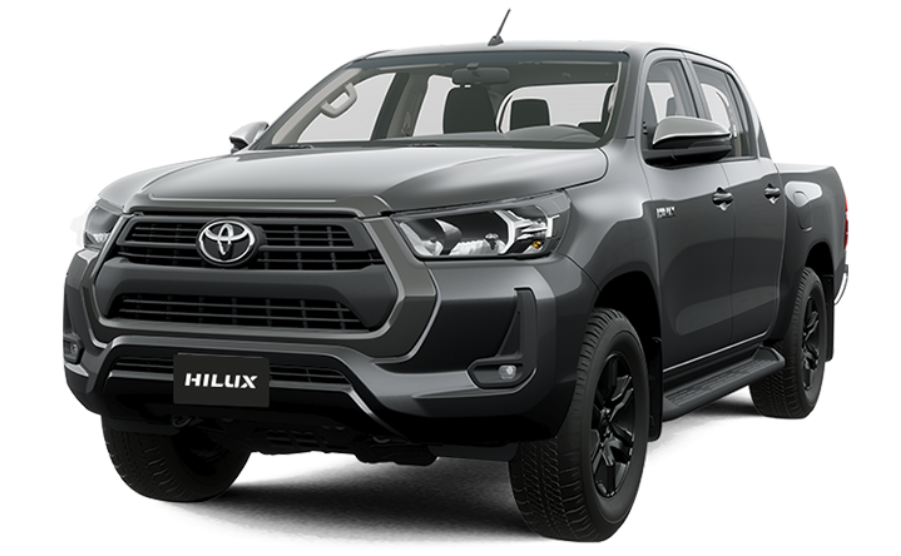
The Toyota Hilux has earned its reputation by doing the jobs ordinary vehicles would rather avoid. Load the tray with tools, attach a caravan, head toward a rough track, and the Hilux usually feels right at home. Yet there is one number that can quickly spoil the fun: GVM.
For owners who regularly carry heavy equipment, touring accessories, canopies, bull bars, extra fuel, passengers, or towing gear, the standard Gross Vehicle Mass can become surprisingly restrictive. That is exactly where a Toyota Hilux GVM upgrade enters the picture.
So, how much does a Toyota Hilux GVM upgrade cost?
As a practical Australian-market guide, we should generally budget roughly AUD $3,000 to $8,000 for many complete GVM upgrade installations, although straightforward suspension-based packages may fall below that range and more elaborate builds can easily exceed it. Costs depend heavily on the Hilux generation, desired GVM, suspension system, engineering requirements, whether the vehicle is registered, and how much additional work the vehicle needs.
And price is only half the story.
A GVM upgrade affects payload, suspension, compliance and potentially the way our Hilux behaves on the road. Let's break it down properly.
Content in this publication
- What Does GVM Mean on a Toyota Hilux?
- What Is a Toyota Hilux GVM Upgrade?
- How Much Does a Toyota Hilux GVM Upgrade Cost?
- What Determines Toyota Hilux GVM Upgrade Cost?
- Pre-Registration vs Post-Registration GVM Upgrades
- How Much Extra Payload Does a GVM Upgrade Give a Hilux?
- A Higher GVM Does Not Make Every Weight Limit Disappear
- Does a GVM Upgrade Increase Towing Capacity?
- Why Hilux Owners Need GVM Upgrades
- Should We Weigh the Hilux Before Upgrading It?
- Toyota Hilux GVM Upgrade Cost for Touring Builds
- Are Cheap Hilux GVM Upgrades Worth It?
- How Does a GVM Upgrade Affect Ride Quality?
- Will a GVM Upgrade Raise the Hilux?
- What About Tyres and Wheels?
- Does a Toyota Hilux GVM Upgrade Affect Insurance?
- Can a GVM Upgrade Affect Warranty?
- Toyota Hilux GVM Upgrade Cost vs Removing Weight
- Pre-Purchase GVM Planning for a New Hilux
- Is a Toyota Hilux GVM Upgrade Worth the Cost?
- How to Choose a Hilux GVM Upgrade Package
- Common GVM Upgrade Mistakes
- How Much Should We Budget Overall?
- Final Thoughts on Toyota Hilux GVM Upgrade Cost
- Frequently Asked Questions
What Does GVM Mean on a Toyota Hilux?
GVM stands for Gross Vehicle Mass.
Put simply, it is the maximum permitted operating mass of the vehicle. That includes the vehicle itself plus practically everything we put in or on it.
Think of GVM as the ceiling above our Hilux. We can rearrange everything underneath it, but unless the vehicle has an approved upgrade, we cannot legally push through that ceiling.
Our operating mass can include:
- Driver and passengers
- Fuel
- Bull bar
- Winch
- Canopy
- Roof rack
- Drawers
- Tools
- Camping equipment
- Auxiliary batteries
- Recovery equipment
- Cargo
- Tow-ball download
That final point is easy to underestimate. A trailer or caravan may be rolling on its own wheels, but the downward load it places on the Hilux still contributes to the vehicle's load.
What Is a Toyota Hilux GVM Upgrade?
A GVM upgrade is an approved modification designed to increase the maximum permissible operating mass of the Hilux.
Depending on the approved system, this commonly involves upgraded suspension components and associated certification or compliance work.
It is not simply a case of fitting heavier springs and deciding that our ute can now carry another 500 kg.
The legal component matters.
A suspension modification may improve how a heavily loaded Hilux sits and drives without necessarily increasing the vehicle's legally recognised GVM. An actual GVM upgrade needs to comply with the applicable Australian approval and registration requirements.
Typical Components in a GVM Upgrade
The exact kit varies, but we commonly see combinations of:
- Heavy-duty front springs
- Upgraded rear leaf springs
- Replacement shock absorbers
- Bushes and associated hardware
- U-bolts
- Suspension components
- Compliance documentation
- Certification or engineering work
Higher-end packages can go considerably further.
Suspension Upgrade vs GVM Upgrade
These terms are often treated as interchangeable. They aren't.
A suspension upgrade changes physical components.
A GVM upgrade changes the legally recognised maximum vehicle mass when completed under the appropriate approval process.
We could therefore install excellent heavy-duty suspension and still retain the original GVM if the modification has not been approved as a GVM increase.
That distinction is crucial when comparing quotes.
How Much Does a Toyota Hilux GVM Upgrade Cost?
There is no universal price because we are not buying a single standard component.
For a useful budgeting framework, we can think in approximate Australian-dollar ranges:
| Upgrade level | Approximate installed budget |
|---|---|
| Basic suspension-focused setup | $2,000–$4,000 |
| Typical certified GVM package | $3,000–$6,000 |
| Premium suspension/GVM package | $5,000–$8,000+ |
| Extensive engineered build | $8,000–$12,000+ |
These figures should be treated as planning estimates rather than fixed quotes. Prices vary by state, workshop, Hilux variant, parts, labour, certification and the approval pathway used.
A $3,500 package and a $7,000 package may also be solving very different problems.
We should compare what is included rather than staring only at the number at the bottom of the invoice.
What Determines Toyota Hilux GVM Upgrade Cost?
Several variables can move the price substantially.
1. Hilux Model and Generation
A current-generation dual-cab Hilux may have different approved upgrade options from an older model.
The exact variant also matters.
A 4x2 work ute and a heavily accessorised 4x4 touring Hilux are not necessarily going to require the same hardware or engineering solution.
2. Target GVM
Not every upgrade targets the same final GVM.
A relatively modest increase may require a simpler package, whereas chasing the maximum available certified GVM can demand additional components.
This is where we should resist the temptation to automatically choose the biggest number.
More capacity is useful, but suspension should still suit the vehicle's real-world load.
3. Suspension Quality
Springs and dampers sit at the heart of many GVM packages, and there is a huge range of suspension equipment available.
Entry-level equipment can reduce the initial bill. Premium dampers, carefully selected spring rates and more sophisticated suspension systems push prices upward.
For a Hilux that spends thousands of kilometres touring corrugated roads, better damping may be money well spent.
Why Shock Absorbers Matter
Springs carry the load, but dampers control suspension movement.
A heavily loaded vehicle bouncing over undulations can quickly expose mediocre shock absorbers. Better dampers can improve body control and help manage repeated suspension movement.
The goal should not simply be making the Hilux "harder."
We want suspension matched to its actual job.
4. Labour Charges
Installation is another significant component.
A proper job can involve removing factory suspension parts, installing the replacement system, checking clearances, torquing components correctly and completing an alignment or associated inspections.
Workshop labour rates vary, so two otherwise similar packages can have noticeably different installed prices.
5. Certification and Engineering
Certification costs can be one of the biggest variables.
The process depends on factors including whether the vehicle is new or already registered and the rules applicable in the state or territory where it will be operated and registered.
This is why online kit prices can be misleading.
A kit advertised for $2,500 does not necessarily mean we will drive away with a legally upgraded Hilux for $2,500.
Pre-Registration vs Post-Registration GVM Upgrades
This is one of the most important distinctions for Australian buyers.
GVM Upgrade Before First Registration
Some approved upgrade pathways allow eligible vehicles to be modified before their first registration under applicable federal vehicle-approval arrangements.
For somebody ordering a new Hilux specifically to build a touring or work vehicle, dealing with GVM before registration can be worth investigating.
The important word is before.
Once registration has occurred, the pathway can change.
GVM Upgrade After Registration
Already own the Hilux?
That does not automatically prevent an upgrade, but state or territory modification rules generally become particularly important.
Engineering inspection, certification, documentation and registration-record changes may be necessary depending on the jurisdiction and modification.
Before buying anything, we should confirm:
- Whether the proposed kit is approved for our exact Hilux.
- What upgraded GVM it permits.
- Whether approval applies to an already-registered vehicle.
- What engineering or inspection is required locally.
- What documentation will be supplied.
- What needs to be updated with the registration authority.
Paperwork might be boring, but in this case it is part of the product.
How Much Extra Payload Does a GVM Upgrade Give a Hilux?
Here is where the upgrade starts making sense.
Payload is essentially the difference between the permitted GVM and the vehicle's actual operating or unladen mass, depending on exactly what calculation we are making.
Imagine, purely as an example, that a particular Hilux has an original GVM of 3,050 kg and our completed vehicle weighs 2,550 kg before passengers and remaining cargo.
That leaves:
3,050 - 2,550 = 500 kg
Now imagine an approved GVM increase takes the permissible GVM to 3,500 kg.
At the same vehicle mass:
3,500 - 2,550 = 950 kg
On paper, that creates another 450 kg of potential capacity.
But there is a catch.
A Higher GVM Does Not Make Every Weight Limit Disappear
This deserves its own section because it is probably the most important misconception around GVM upgrades.
Raising GVM does not automatically increase every other manufacturer or regulatory limit affecting the vehicle.
We still need to consider applicable limits such as:
- Front axle capacity
- Rear axle capacity
- Gross Combination Mass (GCM)
- Towing capacity
- Tow-bar rating
- Tyre load ratings
- Wheel load ratings
- Individual component limits
So we cannot simply look at the new GVM number and assume the Hilux is free to carry anything we can physically squeeze onto it.
Imagine our upgraded Hilux is below its new GVM but the rear axle is overloaded.
We still have a problem.
This happens easily with touring builds because heavy accessories tend to accumulate toward the back:
- Steel tray
- Canopy
- Drawers
- Spare wheels
- Fridge
- Water tanks
- Recovery gear
- Tools
- Caravan ball weight
It is like packing a suitcase by putting every heavy item into one corner. The total might look acceptable, but the distribution is terrible.
Does a GVM Upgrade Increase Towing Capacity?
Not automatically.
This is perhaps the most common assumption we encounter.
GVM concerns the maximum mass of the vehicle itself. Braked towing capacity is a separate limit, while GCM concerns the permitted combined mass of vehicle and trailer where applicable.
Changing one number does not automatically rewrite the others.
GVM and GCM Are Not the Same Thing
Suppose we increase the Hilux's GVM but its applicable GCM remains unchanged.
Using more of that increased vehicle capacity could reduce the mass available within the combination limit when towing.
That is why anyone upgrading a Hilux specifically because of a heavy caravan should look at the entire weight equation, not just GVM.
Why Hilux Owners Need GVM Upgrades
The standard vehicle can be surprisingly easy to load once accessories start multiplying.
A touring build might include:
| Accessory/load | Example added mass |
|---|---|
| Bull bar | 50–80 kg |
| Winch | 25–40 kg |
| Canopy | 70–200+ kg |
| Drawers | 40–100 kg |
| Second battery | 20–35 kg |
| Roof rack | 20–50 kg |
| Water | 1 kg per litre |
| Recovery equipment | 20–50 kg |
These are illustrative figures, but they show how quickly payload disappears.
Add two adults, luggage, food and 80 litres of water and suddenly our apparently tough Hilux is carrying the automotive equivalent of a packed moving van.
Tradies Face the Same Problem
This isn't only a touring issue.
A work Hilux can carry:
- Toolboxes
- Compressors
- Generators
- Spare parts
- Ladders
- Fuel
- Construction equipment
- Crew
- Tow equipment
Permanent accessories consume payload every day, even when the tray looks empty.
Should We Weigh the Hilux Before Upgrading It?
Absolutely.
In fact, we would put weighing the vehicle ahead of shopping for suspension.
Take the Hilux to a reputable weighbridge in the condition in which it is normally used.
For touring vehicles, that ideally means:
- Full fuel
- Water aboard
- Driver
- Regular passengers where practical
- Camping equipment
- Recovery gear
- Fridge
- Tools
- Caravan or trailer attached if relevant
Individual axle weights are particularly valuable.
Calculate the Problem Before Buying the Solution
Once we know the real numbers, we can ask much better questions.
Are we 80 kg short of payload?
Or 500 kg?
Is total GVM actually the problem, or is the rear axle already close to its permitted limit?
Do we need a GVM upgrade at all, or could removing unnecessary equipment solve the problem more cheaply?
Numbers turn guesswork into a plan.
Toyota Hilux GVM Upgrade Cost for Touring Builds
For a serious touring Hilux, budgeting only for the basic GVM kit can be shortsighted.
A more realistic project budget might need to account for:
- GVM-approved suspension
- Installation
- Wheel alignment
- Engineering/certification
- Weighbridge tickets
- Appropriate tyres
- Wheel upgrades if required
- Brake or handling-related upgrades where applicable
- Follow-up suspension inspection
Consequently, a package advertised at around $4,000 could become a considerably larger project once everything required for the specific vehicle is included.
That does not mean the upgrade is poor value.
It simply means we should compare drive-away compliant cost, not box price.
Are Cheap Hilux GVM Upgrades Worth It?
Sometimes.
Price alone does not determine quality.
A relatively inexpensive package from a reputable supplier that suits our constant load can be far better than an expensive suspension system selected primarily because it looks impressive.
The questions we should ask are more useful:
- Is the package approved for our exact Hilux variant?
- What GVM does it provide?
- Is certification included?
- Is installation included?
- What constant load is the rear spring designed for?
- Are the dampers appropriate for our driving?
- Does the quote include wheel alignment?
- What warranty applies?
- Does the price include local engineering requirements?
A cheap quote with half the necessary items missing is not actually cheap.
How Does a GVM Upgrade Affect Ride Quality?
Potentially a lot.
Heavy-duty suspension is normally designed around carrying additional weight. If we install springs intended for a permanently heavy canopy setup and then drive the Hilux empty most of the time, the rear can feel stiff and unsettled.
It is the same principle as wearing hiking boots to walk around the living room. They work, but they are designed for a different environment.
Constant Load Matters
Tell the suspension specialist what the vehicle actually carries permanently.
For example:
Permanent weight:
- Tray
- Canopy
- Drawers
- Auxiliary battery
- Bull bar
Variable weight:
- Passengers
- Water
- Camping gear
- Tools
- Trailer ball load
This lets the installer choose a setup closer to the Hilux's genuine operating conditions.
Don't Build Suspension Around the Heaviest Day of the Year
If we tow a heavy caravan twice annually but drive an unloaded ute for the other 360 days, selecting extremely stiff springs solely around those two trips could compromise everyday comfort.
Balance matters.
Will a GVM Upgrade Raise the Hilux?
Many suspension-based packages also increase ride height, but the amount depends on the specific kit and vehicle configuration.
We should not assume a GVM upgrade and a suspension lift are identical modifications.
A lift focuses on ride height.
A GVM upgrade focuses on certified carrying capacity.
A particular package may achieve both, but approval details still matter.
What About Tyres and Wheels?
Once load capacity increases, tyres become especially important.
The tyres need suitable load ratings for the loads they are expected to carry. Wheels also need to be appropriate for the vehicle and modification.
This is not the place to select components purely because they look aggressive.
A Hilux carrying several tonnes depends on four relatively small contact patches.
Those tyres are the vehicle's handshake with the road.
Does a Toyota Hilux GVM Upgrade Affect Insurance?
A GVM modification should be disclosed to the insurer.
Do not assume the insurer automatically knows about modifications because they have been legally certified.
Provide details of the upgrade and keep documentation.
Depending on the insurer, modifications can affect:
- Policy acceptance
- Premium
- Agreed value
- Modification coverage
- Claims assessment
The safest approach is simple: tell the insurer what has changed and obtain confirmation that the modified vehicle remains covered under the policy.
Can a GVM Upgrade Affect Warranty?
This depends on the modification, component involved, installer, vehicle age and warranty circumstances.
An aftermarket modification does not necessarily mean every part of a vehicle suddenly loses warranty coverage. At the same time, we should not assume modifications can never affect a future claim.
Before modifying a new Hilux, ask the supplier:
- What warranty covers the GVM kit?
- Who covers installation?
- What happens if a suspension component fails?
- How could the modification interact with Toyota warranty claims?
- Is supporting documentation provided?
Keep every invoice and certificate.
Toyota Hilux GVM Upgrade Cost vs Removing Weight
Here's a question worth asking before spending thousands:
Do we actually need more capacity?
Sometimes the cheapest GVM upgrade is a diet.
We might remove:
- Unused roof accessories
- Oversized steel storage systems
- Duplicate recovery equipment
- Unnecessary tools
- Heavy drawer systems
- Extra spare parts
- Excess water
- Accessories that seemed useful but never get used
Removing 100 kg costs very little and can improve braking, acceleration, fuel consumption and handling simultaneously.
Of course, a work vehicle or permanent touring build may genuinely need the extra capacity. In that case, an approved GVM upgrade can make much more sense.
Pre-Purchase GVM Planning for a New Hilux
If we have not bought the Hilux yet, this is the ideal moment to calculate weight.
Start with the vehicle specification, then create a weight budget for every major accessory.
For example:
- Base vehicle
- Bull bar
- Winch
- Underbody protection
- Tray
- Canopy
- Drawers
- Battery system
- Fuel
- Water
- Passengers
- Cargo
- Tow-ball download
Then leave a safety margin.
A build designed to finish exactly one kilogram below a limit is not much of a plan.
Is a Toyota Hilux GVM Upgrade Worth the Cost?
For the right owner, yes.
A compliant GVM upgrade can be worthwhile when our Hilux consistently operates near its original maximum mass and removing enough equipment is unrealistic.
It makes particular sense for:
- Touring builds
- Caravan tow vehicles
- Heavy canopies
- Service bodies
- Mining and remote-area vehicles
- Tradie setups
- Fleet applications
But we would not recommend upgrading merely because a higher number sounds better.
Suspension should solve an actual problem.
How to Choose a Hilux GVM Upgrade Package
Before handing over several thousand dollars, get the vehicle weighed and speak with an experienced installer or engineer familiar with the applicable regulations.
A sensible process looks like this:
- Weigh the Hilux.
- Record front and rear axle loads.
- Calculate permanent and variable payload.
- Include expected tow-ball download.
- Confirm original vehicle limits.
- Decide how much extra capacity is genuinely required.
- Compare approved packages.
- Check state or territory certification requirements.
- Request a complete installed and certified quote.
- Notify the insurer after modification.
- Reweigh the completed vehicle.
That final step is often forgotten.
Once the Hilux is finished, put it back on the scales. The actual measured vehicle matters more than the spreadsheet we created months earlier.
Common GVM Upgrade Mistakes
We can avoid a lot of frustration by steering clear of a few recurring mistakes.
Choosing the Stiffest Springs Available
More stiffness is not automatically better.
Suspension should match load.
Ignoring Rear Axle Weight
A higher overall GVM does not give us permission to ignore axle limits.
Assuming GCM Automatically Increases
It may not.
Always verify the exact approval and applicable limits.
Buying Parts Before Checking Certification
A suspension kit and a legally recognised GVM upgrade are not necessarily the same product.
Forgetting Tow-Ball Download
Caravan ball load contributes to what the tow vehicle carries and can heavily influence rear axle loading.
Building First and Weighing Later
This is backwards.
Weigh, calculate, build, and weigh again.
How Much Should We Budget Overall?
If we simply want a planning figure for Toyota Hilux GVM upgrade cost, allocating around AUD $3,000–$8,000 gives us a useful starting window for many professionally installed systems.
For more sophisticated builds, the total can exceed $10,000 once premium suspension, engineering, tyres, wheels or related modifications enter the equation.
Instead of asking only:
"How much is the GVM kit?"
Ask:
"How much will my Hilux cost to have the required GVM capacity, correctly installed, certified and ready for its intended load?"
That question produces a far more useful answer.
Final Thoughts on Toyota Hilux GVM Upgrade Cost
The Toyota Hilux is built to work, but even a tough ute has limits.
Bull bars, canopies, drawers, water, fuel, passengers, tools and caravan ball weight can eat through payload like termites through timber. Before long, a vehicle that looks perfectly normal can be operating surprisingly close to its permitted mass.
A Toyota Hilux GVM upgrade can cost roughly AUD $3,000 to $8,000 for many installed setups, while premium or highly engineered solutions can climb beyond that range.
Still, cost should not be the only consideration.
We need to understand GVM, axle loads, towing limits, GCM, tyre capacity and local compliance requirements as one interconnected system. The best upgrade is not necessarily the package promising the largest number. It is the one properly matched to how our Hilux is actually used.
Start with a weighbridge ticket. Work out where the weight sits. Decide how much capacity we genuinely need. Then choose an approved solution that fits the vehicle rather than forcing the vehicle to fit the suspension.
That approach may not sound as exciting as ordering shiny new components, but it is the difference between simply modifying a Hilux and building one intelligently.
Frequently Asked Questions
1. How much does a Toyota Hilux GVM upgrade cost?
For budgeting purposes in Australia, many professionally installed Toyota Hilux GVM upgrades can fall around AUD $3,000–$8,000. Simpler packages may cost less, while premium suspension, engineering and additional components can push a complete build beyond $10,000. Always obtain a quote for your exact Hilux and registration jurisdiction.
2. Can I upgrade the GVM of an already registered Toyota Hilux?
Potentially, yes. However, post-registration modifications are subject to the relevant state or territory rules and may require an approved modification pathway, engineering inspection, certification and changes to registration records. Confirm the requirements before purchasing a kit.
3. Does a Hilux GVM upgrade increase towing capacity?
Not automatically. GVM, towing capacity, axle limits and GCM are separate specifications. Increasing the Hilux's GVM does not necessarily increase its permitted trailer mass or combined vehicle-and-trailer limit.
4. Do I need a GVM upgrade for a caravan?
Not necessarily. The correct approach is to weigh the loaded Hilux and caravan and check the applicable vehicle, axle, towing and combination limits. If caravan ball load and touring equipment cause the Hilux to approach or exceed its permitted GVM, an approved upgrade may be worth investigating.
5. Is a Hilux GVM upgrade worth it?
It can be highly worthwhile for heavily accessorised touring vehicles, work utes and tow vehicles that genuinely need additional payload. If the Hilux is only slightly overweight, removing unnecessary equipment may be cheaper and can improve overall vehicle dynamics.
If you want to know other articles similar to Toyota Hilux GVM Upgrade Cost: Prices, Payload and What to Expect you can visit the category Service and Parts.
Vauxhall Mokka Tyre Pressure Reset: Complete Guide
How to Reset the Tire Pressure System on Your Hyundai Tucson
Hyundai Kona Tire Pressure: Complete PSI Guide
Vauxhall Corsa Timing Belt Replacement Cost UK 2026
Mazda CX-5 Tire Size Chart: 2013–2026 Guide
How to Reset a Honda Civic: Complete Step-by-Step Guide
Leave a Reply
More content of your interest