

Toyota Hilux Generations: Complete History, Evolution, and Key Differences

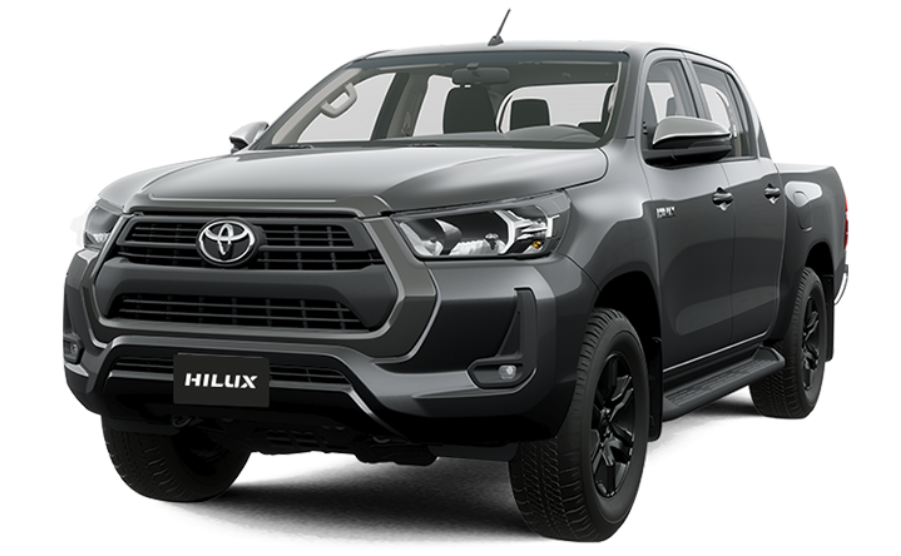
Few pickup trucks have built a reputation quite like the Toyota Hilux. Mention the name in Australia, Africa, South America, Southeast Asia, or the Middle East, and chances are someone nearby has a story about one. Maybe it belonged to a farmer. Maybe it crossed terrain that looked more suitable for a mountain goat. Or perhaps it simply spent twenty years doing ordinary daily work without creating much drama.
That reputation did not appear overnight.
The Toyota Hilux generations stretch across more than half a century, and the truck we know today is dramatically different from the compact workhorse Toyota introduced in the late 1960s. What started as a relatively simple rear-wheel-drive pickup gradually developed into a powerful, comfortable, technologically sophisticated global vehicle available with diesel engines, automatic transmissions, sophisticated four-wheel-drive systems, advanced safety technology, and increasingly luxurious interiors.
Yet the philosophy underneath has remained surprisingly consistent: build a pickup that can work hard, survive difficult conditions, and keep doing its job year after year.
So, how many Toyota Hilux generations are there? Which generation introduced four-wheel drive? When did the Hilux become the muscular pickup we recognize today? And which generation makes the most sense if we're shopping used?
Let's travel through the entire Hilux family tree.
Content in this publication
- Toyota Hilux Generations at a Glance
- Why Toyota Hilux Generations Matter
- First Generation Toyota Hilux: 1968–1972
- Second Generation Toyota Hilux: 1972–1978
- Third Generation Toyota Hilux: 1978–1983
- Fourth Generation Toyota Hilux: 1983–1988
- Fifth Generation Toyota Hilux: 1988–1997
- Sixth Generation Toyota Hilux: 1997–2005
- Seventh Generation Toyota Hilux: 2004/2005–2015
- Eighth Generation Toyota Hilux: 2015–Present
- Toyota Hilux Facelifts Within the Eighth Generation
- How Toyota Hilux Design Changed Through the Generations
- How Toyota Hilux Engines Evolved
- How Hilux Safety Improved Across Generations
- Which Toyota Hilux Generation Is the Most Reliable?
- Which Toyota Hilux Generation Is Best for Off-Roading?
- Which Hilux Generation Is Best as a Daily Driver?
- Old Toyota Hilux vs New Toyota Hilux
- How to Identify Your Toyota Hilux Generation
- Which Toyota Hilux Generation Should We Buy Used?
- What to Check When Buying Any Hilux Generation
- Why the Toyota Hilux Has Lasted for Eight Generations
- The Evolution From Workhorse to Lifestyle Pickup
- Conclusion: Toyota Hilux Generations Tell a Story of Constant Evolution
- Frequently Asked Questions About Toyota Hilux Generations
Toyota Hilux Generations at a Glance
Toyota's Hilux history is generally divided into eight major generations, beginning in 1968.
| Generation | Approximate Years | Major Development |
|---|---|---|
| First generation | 1968–1972 | Hilux introduced |
| Second generation | 1972–1978 | Larger and more comfortable |
| Third generation | 1978–1983 | 4WD introduced |
| Fourth generation | 1983–1988 | Wider global expansion |
| Fifth generation | 1988–1997 | More refinement and body choices |
| Sixth generation | 1997–2005 | Improved comfort and diesel options |
| Seventh generation | 2004/2005–2015 | Major increase in size and capability |
| Eighth generation | 2015–present | Modern safety, technology, and refinement |
Exact production years can vary slightly depending on market. Toyota frequently introduced models in Japan or Asia before launching them elsewhere, while certain countries continued producing older generations after successors had appeared.
That's worth remembering whenever we're decoding a used Hilux by model year alone.
Why Toyota Hilux Generations Matter
At first glance, dividing a pickup into generations might sound like something mainly for enthusiasts.
It isn't.
Understanding Hilux generations helps us identify major differences in:
- Engine families
- Diesel technology
- Payload and towing capability
- Suspension design
- Safety equipment
- Cabin space
- Fuel efficiency
- Transmission options
- Four-wheel-drive systems
- Replacement-part availability
- Electronic complexity
- Used-market value
A 1995 Hilux and a 2025 Hilux may wear the same badge, but mechanically and technologically they're worlds apart.
The older truck resembles a hammer: basic, tough, and straightforward.
The modern Hilux is more like a toolbox filled with both heavy-duty equipment and electronics.
First Generation Toyota Hilux: 1968–1972
The Hilux story began in 1968.
Toyota developed the original Hilux as a compact commercial pickup positioned below larger trucks in the company's lineup. Early models were fairly small compared with modern pickups, and simplicity dominated the design.
There were no giant touchscreen displays, selectable drive modes, advanced driver-assistance systems, or luxury leather packages.
The formula was much simpler:
engine + chassis + cargo bed + durability.
And that formula worked.
What Was the First Toyota Hilux Like?
The first-generation Hilux primarily targeted businesses, tradespeople, farmers, and customers who needed practical transport rather than lifestyle appeal.
Early models generally featured relatively small petrol engines paired with manual transmissions.
Compared with today's Hilux, dimensions were modest. Even so, Toyota gradually expanded engine capacity and capability as demand grew.
Why the First Hilux Was Important
This generation established the basic identity that would follow the Hilux for decades.
Toyota wasn't trying to build a luxury truck.
It was trying to build a dependable tool.
That distinction matters because reliability eventually became one of the strongest selling points associated with the Hilux name.
Second Generation Toyota Hilux: 1972–1978
Toyota introduced the second generation during the early 1970s.
The overall concept remained familiar, but the Hilux became larger and more refined. Toyota recognized that pickup owners didn't necessarily want to sacrifice comfort simply because they needed a work vehicle.
That sounds obvious today, but pickups of the period were primarily utilitarian machines.
More Comfort Without Losing Simplicity
Cabin improvements made the second-generation Hilux easier to live with.
Depending on market and specification, changes included improved seating, additional equipment, and more capable engines.
The vehicle was still unmistakably a working pickup, though.
Think of this generation as Toyota sanding down some of the rough edges without turning the truck into something fundamentally different.
Growing International Appeal
The Hilux increasingly became an export vehicle during this era.
Toyota's reputation for durable, economical vehicles was expanding worldwide, and a small dependable pickup fit naturally into markets where operating costs mattered enormously.
This global expansion would later become one of the defining features of the Hilux.
Third Generation Toyota Hilux: 1978–1983
Now we reach one of the genuinely transformative periods in Hilux history.
The third generation arrived around 1978 with updated styling, a broader model range, and—most importantly—the arrival of four-wheel drive.
That changed everything.
The Introduction of the 4WD Toyota Hilux
Before four-wheel drive, the Hilux was mainly a practical light commercial vehicle.
After it?
The truck suddenly became far more attractive to farmers, construction workers, mining operations, off-road users, adventurers, and drivers living in regions with poor road infrastructure.
The Hilux wasn't merely carrying tools anymore.
It could carry those tools deep into difficult terrain.
Why 4WD Changed the Hilux Forever
Four-wheel drive helped create the image we now associate with the model.
A 4WD Hilux could tackle:
- Mud
- Sand
- Steep tracks
- Rough rural roads
- Construction sites
- Snow
- Rocky surfaces
This generation helped move the Hilux from simple commercial transport toward genuine off-road utility.
Diesel Engines Gain Importance
Diesel power also became increasingly important to the Hilux story.
Diesels made enormous sense for commercial buyers because they could provide useful low-end torque and economical operation.
Over subsequent generations, diesel engines would become almost synonymous with the Hilux in many international markets.
Fourth Generation Toyota Hilux: 1983–1988
The fourth-generation Hilux continued building on the successful 4WD formula.
By the mid-1980s, Toyota had a clearer idea of what customers wanted: durability remained essential, but buyers increasingly expected greater comfort, more configurations, and better road manners.
A More Mature Hilux
This generation looked and felt more substantial.
Toyota continued offering different drivetrain and body configurations depending on the market, allowing customers to choose between straightforward commercial versions and more recreationally oriented trucks.
Single-cab and extended-cab arrangements expanded the Hilux's usefulness.
The Hilux Becomes More Than a Farm Truck
Something interesting happened during this period.
Pickups increasingly started attracting people who didn't exclusively need them for work.
A four-wheel-drive Hilux could serve during the week and head into the countryside on weekends.
That dual-purpose identity would eventually reshape the global pickup market.
Mechanical Simplicity Became a Strength
Many older Hilux enthusiasts appreciate vehicles from this general era precisely because they predate much of the electronic complexity found in modern trucks.
Mechanical systems can still fail, of course, and age introduces its own problems.
But an old Hilux often feels refreshingly understandable.
Open the bonnet and you see machinery rather than an electronic puzzle.
Fifth Generation Toyota Hilux: 1988–1997
The fifth generation arrived near the end of the 1980s and carried the Hilux through much of the 1990s.
This is where the model begins looking much more familiar to drivers who grew up around older Japanese pickups.
Bodywork became smoother and cabin comfort improved.
Yet underneath, toughness remained central.
A Major Era for Hilux Durability
The fifth-generation Hilux earned an especially strong reputation in demanding markets.
Many examples spent their lives:
- Carrying heavy loads
- Working agricultural land
- Travelling remote roads
- Operating on construction sites
- Driving through extreme climates
- Serving commercial fleets
And plenty survived.
That longevity became powerful advertising without Toyota needing to say much at all.
When people repeatedly see old trucks continuing to work, reputation builds naturally.
More Cab Configurations
Double-cab pickups became increasingly significant because they allowed the Hilux to combine passenger and cargo duties.
Suddenly we weren't choosing exclusively between a family vehicle and a work truck.
The Hilux could attempt both.
Petrol Versus Diesel
Engine offerings varied enormously between regions, but petrol and diesel Hilux models were available across different markets.
Diesels became particularly desirable in regions where fuel economy, torque, and longevity mattered more than outright acceleration.
Older naturally aspirated diesels may feel painfully slow by modern standards.
But speed wasn't really the point.
They were built to keep pulling.
You may be interested in reading Land Rover Defender 90 Models: Complete Guide to Trims, Engines and Versions
Sixth Generation Toyota Hilux: 1997–2005
The sixth generation marked another step toward the modern pickup.
Toyota continued improving ride quality, interior design, ergonomics, and everyday usability while retaining the ladder-frame construction and rugged character buyers expected.
The Hilux Starts Feeling More Like a Daily Driver
Earlier Hilux models could be agricultural in the literal and figurative sense.
By the sixth generation, Toyota clearly understood that many owners were spending significant time inside their trucks.
Cabins became friendlier.
Controls became more intuitive.
Seats improved.
Double-cab models became increasingly credible as family transportation.
Diesel Technology Evolves
Diesel technology was changing quickly around this period.
Turbocharging became increasingly important, improving performance and making diesel Hilux models substantially easier to drive.
Instead of merely producing dependable low-speed pulling power, newer diesel engines could offer stronger real-world acceleration.
That mattered enormously as Hilux customers began expecting their trucks to handle highways as comfortably as job sites.
Why Sixth-Generation Hilux Models Remain Popular
In some used markets, vehicles from this era occupy an appealing middle ground.
They're newer and more comfortable than classic Hilux models but still relatively simple compared with today's electronically complex pickups.
For buyers who prioritize mechanical straightforwardness, that can be attractive.
Age, however, now matters considerably.
A supposedly legendary Toyota can still become expensive if it has been abused for decades.
Seventh Generation Toyota Hilux: 2004/2005–2015
The seventh generation represented one of the biggest leaps in Hilux development.
Toyota moved the model into a new era with greater size, more powerful engines, increased cabin space, stronger road presence, and improved refinement.
If earlier Hilux models were compact pickups, the seventh generation felt noticeably more substantial.
The Hilux Goes Global in a Big Way
Toyota developed this era of Hilux around a global strategy, with production spread across major manufacturing hubs serving different regions.
The truck became tremendously important across:
- Australia
- Thailand
- South Africa
- Latin America
- The Middle East
- Southeast Asia
- Numerous African markets
In many places, the Hilux became almost a default answer to the question, "Which pickup should we buy?"
Bigger Engines and Better Performance
Engine options differed by region, but modern common-rail turbo-diesel power became a defining characteristic of this generation.
Popular diesel families offered a much better combination of torque, performance, and efficiency than earlier engines.
The Hilux still wasn't trying to behave like a sports car.
But overtaking traffic no longer required a calendar.
Improved Double-Cab Practicality
Double-cab versions became increasingly important.
People were no longer buying pickups exclusively because they hauled tools.
They were buying them because one vehicle could potentially handle:
- School runs
- Long-distance travel
- Towing
- Work
- Camping
- Off-road adventures
- Family holidays
That versatility pushed the Hilux further into mainstream passenger-vehicle territory.
The Famous Hilux Toughness Image Grows
By this generation, the Hilux durability reputation had become deeply embedded in popular culture.
The truck's perceived ability to withstand extreme abuse became almost mythical.
We should keep some perspective: no vehicle is indestructible.
Poor maintenance can destroy a Hilux just as surely as it can destroy anything else.
But the underlying reputation wasn't created from thin air.
Eighth Generation Toyota Hilux: 2015–Present
The eighth-generation Hilux arrived in 2015 and transformed the truck again.
Toyota faced a changing pickup market.
Rivals were becoming more comfortable, powerful, stylish, and technologically advanced. Buyers expected their trucks to tow serious loads on Saturday and behave almost like SUVs on Monday.
Toyota responded accordingly.
A More Sophisticated Exterior
The eighth generation introduced more sculpted bodywork, sharper front-end designs, modern lighting, and increasingly premium variants.
Over subsequent updates and facelifts, the Hilux became even more aggressive.
Modern versions look less like anonymous commercial vehicles and more like deliberate lifestyle machines.
Modern Turbo-Diesel Engines
One of the major developments was Toyota's newer-generation diesel engine family, including widely used 2.4- and 2.8-liter turbo-diesel configurations in many markets.
These engines improved torque delivery, drivability, emissions performance, and efficiency.
The 2.8-liter diesel became particularly important for drivers towing trailers or frequently carrying substantial loads.
Automatic Transmissions Become More Important
Manual Hilux models remain available in certain markets and configurations, but automatic transmissions have become increasingly popular.
That's another sign of the Hilux's changing role.
Modern customers aren't always buying a pickup because they want a bare-bones work tool.
Many want a vehicle that can function as their only car.
Toyota Hilux Facelifts Within the Eighth Generation
A generation can last many years, so Toyota doesn't simply release one version and leave it unchanged.
The eighth-generation Hilux has received significant updates.
Mid-Cycle Styling and Technology Changes
Facelifts brought revisions to:
- Front styling
- Infotainment
- Suspension tuning
- Engine performance
- Safety systems
- Trim levels
- Interior equipment
Some markets also received sportier and more premium variants designed to compete with the growing number of lifestyle-oriented pickups.
Why Facelift Year Matters When Buying Used
Two vehicles from the same Hilux generation can feel surprisingly different.
A late-generation facelift may feature stronger performance, newer infotainment, additional safety technology, and revised suspension compared with the earliest version.
That's why saying "eighth-generation Hilux" only tells part of the story.
Model year and specification matter too.
How Toyota Hilux Design Changed Through the Generations
Put an original 1968 Hilux next to a modern model and the family resemblance isn't immediately obvious.
The transformation is enormous.
Size Increased Dramatically
Early Hilux pickups were genuinely compact.
Modern versions are much wider, taller, heavier, and more substantial.
Why?
Customer demands changed.
Modern trucks need to carry passengers comfortably, pass increasingly strict safety requirements, tow heavier loads, accommodate larger engines and emissions equipment, and provide the crash protection expected from contemporary vehicles.
The Cabin Became More Important
The earliest Hilux interior essentially said:
"Here's a steering wheel. Get to work."
Today's cabin may include features such as:
- Touchscreen infotainment
- Smartphone integration
- Automatic climate control
- Multi-information displays
- Premium upholstery
- Keyless entry
- Push-button start
- Driver-assistance technology
- Multiple USB connections
- Advanced audio systems
Obviously equipment varies by country and trim.
But the direction is unmistakable.
The Hilux has moved steadily upward.
How Toyota Hilux Engines Evolved
Hilux engine development mirrors the wider evolution of automotive technology.
Early Petrol Engines
The earliest generations relied heavily on relatively simple petrol engines.
Power outputs were modest, but the vehicles themselves were lighter.
Naturally Aspirated Diesel Era
Simple diesel engines became extremely valuable in markets where durability and economy mattered most.
They weren't fast.
Some would struggle to outrun an enthusiastic cyclist up a hill.
But their straightforward construction contributed heavily to the Hilux reliability legend.
Turbo-Diesel Revolution
Turbocharging dramatically improved diesel performance.
Suddenly the Hilux could produce serious low-end torque without feeling hopeless at highway speeds.
Modern Common-Rail Diesels
Electronic injection, common-rail systems, emissions controls, variable turbocharging, and sophisticated engine management transformed performance and efficiency.
The trade-off?
You may be interested in readingLand Rover Defender 90 Models: Complete Guide to Trims, Engines and VersionsYou may be interested in reading
Land Rover Defender 90 Alternative: The Best Rivals Worth ConsideringComplexity.
Modern diesel systems need correct maintenance and good-quality fluids and fuel. Ignoring servicing can become expensive.
How Hilux Safety Improved Across Generations
Perhaps no part of Hilux development has changed more dramatically than safety.
Early generations offered little compared with today's standards.
Modern Hilux models may include systems such as:
- Anti-lock brakes
- Electronic stability control
- Traction control
- Multiple airbags
- Autonomous emergency braking
- Lane-departure warning
- Road-sign recognition
- Trailer stability assistance
- Reversing cameras
- Parking sensors
Availability varies by country, model year, and trim.
This matters when comparing older and newer Hilux generations.
Classic simplicity is attractive, but modern crash safety has enormous value.
Which Toyota Hilux Generation Is the Most Reliable?
There's no universal answer.
A carefully maintained newer Hilux can be vastly more reliable than an abused older truck, while a well-preserved older Hilux may run beautifully despite its age.
Still, older generations often enjoy legendary reliability because they use comparatively simple mechanical systems.
Fewer sensors and electronics can mean fewer complicated failure points.
But simplicity has another side.
An older Hilux may have:
- Rust
- Worn suspension bushes
- Oil leaks
- Cooling-system deterioration
- Aging seals
- Steering wear
- Previous accident damage
- Poor aftermarket modifications
- Hundreds of thousands of kilometers of hard use
So we'd rather buy a well-maintained Hilux from a supposedly less desirable generation than a neglected example from a generation famous for reliability.
Condition wins.
Which Toyota Hilux Generation Is Best for Off-Roading?
This depends on what kind of off-roading we're discussing.
Older 4WD Hilux models have advantages:
- Lower weight
- Simpler mechanics
- Easier field repair
- Fewer vulnerable electronics
- Huge aftermarket support
Newer models counter with:
- Stronger engines
- Better traction electronics
- More advanced stability systems
- Greater comfort
- Improved automatic transmissions
- Better safety
- Factory off-road assistance features on certain trims
For extreme remote-area travel, some drivers prefer simplicity.
For daily driving plus weekend adventures, newer Hilux models often make more sense.
Which Hilux Generation Is Best as a Daily Driver?
This one's easier.
Generally, seventh- and eighth-generation Hilux models are far more suitable for everyday driving than much older generations.
The eighth generation offers the strongest combination of:
- Refinement
- Safety
- Performance
- Comfort
- Technology
- Towing capability
The seventh generation can be an attractive used alternative if purchase price matters.
Older generations have undeniable charm, but charm doesn't soften a rough ride during a two-hour traffic jam.
Old Toyota Hilux vs New Toyota Hilux
This comparison ultimately comes down to simplicity versus sophistication.
Why We Might Prefer an Older Hilux
Older models can offer:
- Mechanical simplicity
- Easier repairs
- Lower purchase prices in some regions
- Classic styling
- Excellent aftermarket support
- Less electronic complexity
Why We Might Prefer a Newer Hilux
Newer models typically deliver:
- Better crash protection
- More power
- Improved fuel efficiency
- Better towing performance
- Superior cabin comfort
- Modern infotainment
- Better highway behavior
- Advanced safety technology
Neither philosophy is automatically better.
The right answer depends on how we'll actually use the truck.
How to Identify Your Toyota Hilux Generation
Model year provides a good starting point, but it isn't always enough because generation transitions vary between countries.
For a more reliable identification, check:
- VIN
- Chassis or model code
- Manufacturing date
- Engine code
- Body style
- Front-end design
- Owner's manual or registration information
VIN and model-code information is particularly useful when ordering parts.
Don't rely purely on visual appearance.
Facelifts can make vehicles within one generation look surprisingly different.
Which Toyota Hilux Generation Should We Buy Used?
There's no single winner, but we can simplify the decision.
Choose an Older Generation If…
Consider older models if we prioritize:
- Mechanical simplicity
- DIY maintenance
- Farm or work use
- Off-road modification
- Classic truck character
Choose the Seventh Generation If…
It makes sense when we want:
- A more modern driving experience
- Strong diesel performance
- Better cabin space
- Good used availability
- Less purchase cost than newer trucks
Choose the Eighth Generation If…
It's the obvious candidate when we want:
- Modern safety
- Better refinement
- Newer technology
- Strong towing ability
- Greater everyday usability
- More powerful contemporary diesel options
Budget, service history, local fuel quality, emissions rules, and parts availability should all influence the decision.
What to Check When Buying Any Hilux Generation
The Hilux badge isn't a force field.
Before buying, inspect the truck carefully.
Pay particular attention to:
- Full service history
- Engine oil condition
- Cooling system
- Transmission operation
- Clutch condition on manuals
- Four-wheel-drive engagement
- Differential noises
- Suspension wear
- Chassis corrosion
- Accident repairs
- Diesel injector behavior
- Turbocharger condition
- Exhaust smoke
- Warning lights
- Aftermarket modifications
Look for Signs of Hard Commercial Use
A beautifully polished body can hide a hard life.
Check:
- Towbar wear
- Cargo-bed damage
- Underbody impacts
- Worn pedals
- Sagging suspension
- Damaged seat bolsters
- Mismatched tires
These clues can tell us far more than shiny paint.
Service History Matters More Than Mileage Alone
A high-mileage Hilux maintained meticulously may be safer to buy than a low-mileage example that skipped servicing.
Maintenance records tell a story.
Read them.
Why the Toyota Hilux Has Lasted for Eight Generations
Plenty of vehicle nameplates disappear after one or two generations.
The Hilux hasn't.
Why?
Because Toyota repeatedly adapted the truck without completely abandoning the characteristics that made people trust it.
Each generation became:
- More capable
- More comfortable
- More powerful
- Safer
- Better equipped
Yet durability remained central to the product's identity.
That's harder to achieve than it sounds.
Change too little and the competition leaves you behind.
Change too much and loyal buyers wonder what happened to the truck they loved.
Toyota has spent decades walking between those two cliffs.
The Evolution From Workhorse to Lifestyle Pickup
Perhaps the clearest way to understand the Toyota Hilux generations is to look at what buyers expected from each era.
Originally, a Hilux was primarily a tool.
Today, it can simultaneously be:
- A family vehicle
- A work truck
- A towing vehicle
- An off-road machine
- An adventure vehicle
- A fleet vehicle
- A lifestyle statement
That's an astonishing transformation.
Yet put mud on a modern Hilux, throw equipment into the bed, and send it down a rough track, and the original idea suddenly becomes visible again.
Under all the technology, it's still supposed to work.
Conclusion: Toyota Hilux Generations Tell a Story of Constant Evolution
The history of Toyota Hilux generations is really the history of the modern pickup in miniature.
The first generation arrived in 1968 as a straightforward compact commercial vehicle. The second generation added refinement. The third brought four-wheel drive and helped unlock the truck's off-road identity. The fourth and fifth expanded its global popularity, while the sixth increasingly blurred the boundary between work vehicle and everyday transportation.
Then came the seventh generation, bringing a major increase in size, power, and refinement.
Finally, the eighth generation pushed the Hilux firmly into the modern era with stronger turbo-diesel engines, advanced safety equipment, sophisticated infotainment, improved comfort, and increasingly premium versions.
Which Hilux generation is best?
For us, that's the wrong question.
The better question is: Which generation best fits the job?
If we want old-school simplicity, an earlier Hilux has enormous appeal. If we need a balance of value and modern ability, seventh-generation trucks deserve attention. If comfort, performance, safety, towing, and daily usability matter most, the eighth generation is the natural choice.
Through every transformation, however, one idea has survived.
A Hilux should be ready to work when we turn the key.
That expectation, more than any styling feature or engine specification, explains why the name has lasted for generations.
Frequently Asked Questions About Toyota Hilux Generations
1. How many generations of Toyota Hilux are there?
The Toyota Hilux is generally considered to have eight major generations, beginning with the original model introduced in 1968. The eighth generation debuted in 2015 and has received several updates and facelifts since then. Exact production and launch years can differ slightly between countries.
2. What year did the Toyota Hilux first come out?
The first Toyota Hilux was introduced in 1968. It began as a relatively compact rear-wheel-drive commercial pickup before gradually evolving into the larger and considerably more sophisticated global truck we know today.
3. Which Toyota Hilux generation introduced 4WD?
Four-wheel drive became a major part of the Hilux lineup during the third generation, which arrived around 1978. The introduction of 4WD helped establish the Hilux's enduring reputation as a capable truck for rural work, difficult terrain, and off-road travel.
4. Which Toyota Hilux generation is best?
The best generation depends on our priorities. Older Hilux models appeal to drivers who value simplicity and easy mechanical repair. Seventh-generation trucks combine relatively modern performance with attractive used prices, while eighth-generation models generally offer the best comfort, technology, safety, power, and everyday drivability.
5. Are older Toyota Hilux generations more reliable?
Not automatically. Older Hilux models usually have simpler mechanical systems, which can make them easier to maintain and repair. However, age introduces problems such as corrosion, worn suspension, deteriorated seals, and years of possible abuse. A complete service history and good condition are usually more important than generation alone.
You may be interested in readingLand Rover Defender 90 Models: Complete Guide to Trims, Engines and VersionsYou may be interested in reading
Land Rover Defender 90 Alternative: The Best Rivals Worth ConsideringYou may be interested in reading
 Infiniti QX60 Years to Avoid: A Complete Used-Buyer Guide
If you want to know other articles similar to Toyota Hilux Generations: Complete History, Evolution, and Key Differences you can visit the category Models.
Honda Passport vs Toyota 4Runner: Which SUV Is Better?
Honda Passport vs Ford Bronco: Which SUV Is Better?
Honda Passport vs Ford Explorer: Which SUV Is Better?
Honda Passport or Pilot: Which SUV Is Better?
Honda Passport vs Jeep Grand Cherokee: Which SUV Is Better?
Honda Passport vs Nissan Pathfinder: Which SUV Is Better?
Leave a Reply
More content of your interest