

Infiniti QX60 Years to Avoid: A Complete Used-Buyer Guide

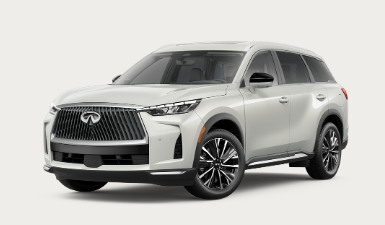
Shopping for a used luxury SUV can feel a little like walking through a minefield wearing expensive shoes. The vehicle may look gorgeous, smell like leather, and have every gadget we could possibly want—but what matters most is what happens after we drive it home.
That brings us to the Infiniti QX60 years to avoid.
The QX60 has plenty going for it. We get three-row seating, a comfortable ride, upscale materials, useful family-friendly space, and prices that can look surprisingly attractive on the used market. Unfortunately, not every QX60 model year carries the same mechanical reputation.
The biggest dividing line involves the transmission.
Earlier QX60 models relied on a continuously variable transmission, or CVT, while the redesigned QX60 switched to a conventional nine-speed automatic for 2022. Infiniti documentation confirms that 2019 models still used a CVT, while the all-new 2022 QX60 adopted a nine-speed automatic.
That distinction matters enormously when we're comparing used examples.
If we want the short answer before diving into the details, 2014 through 2018 are the QX60 years we would approach with the greatest caution, particularly vehicles without excellent transmission service records. Among those, 2014, 2015, and 2016 deserve especially careful inspection.
That doesn't mean every one of these SUVs is destined for trouble. Maintenance history, mileage, previous repairs, driving conditions, and individual vehicle condition matter enormously.
Let's separate reputation from reality and figure out which QX60 makes the smartest used purchase.
Content in this publication
- What Are the Infiniti QX60 Years to Avoid?
- Why the First-Generation QX60 Requires More Research
- 2014 Infiniti QX60: The Year We'd Be Most Careful With
- 2015 Infiniti QX60: Attractive Price, Important CVT Question
- 2016 Infiniti QX60: Another Year to Approach Carefully
- 2017 Infiniti QX60: Improved, but Not Free of Concerns
- 2018 Infiniti QX60: Better Than Early Cars, Yet Still a Caution Year
- Is the 2019 Infiniti QX60 a Year to Avoid?
- 2020 Infiniti QX60: Possibly the Sweet Spot of the First Generation
- What Happened to the 2021 Infiniti QX60?
- 2022 Infiniti QX60: Should We Avoid the First Redesign Year?
- 2023 and 2024 QX60: Among the More Appealing Used Choices
- 2025 and 2026 QX60: Too New to Call “Best”
- The Real Problem: Buying the Wrong Individual QX60
- How to Test-Drive a Used QX60 Properly
- Is High Mileage a Deal Breaker?
- What Is the Best Used Infiniti QX60 Year?
- Which Infiniti QX60 Years Would We Personally Skip?
- Can a Previously Replaced CVT Actually Be a Positive?
- Should You Buy an Infiniti QX60 at All?
- Final Verdict on Infiniti QX60 Years to Avoid
- Frequently Asked Questions About Infiniti QX60 Years to Avoid
What Are the Infiniti QX60 Years to Avoid?
For used buyers, we would divide the QX60 lineup roughly like this:
| Model Year | Our Verdict | Main Reason |
|---|---|---|
| 2014 | Avoid or inspect very carefully | Early CVT concerns and service campaign |
| 2015 | High caution | Included in later CVT warranty extension |
| 2016 | High caution | CVT remains the biggest concern |
| 2017 | Caution | CVT coverage plus ABS recall history |
| 2018 | Caution | CVT coverage, ABS and software-related recalls |
| 2019 | Better first-gen choice | Mature model, although still CVT-equipped |
| 2020 | One of the better first-gen choices | Final and most mature first-generation year |
| 2022 | Moderate caution | First year of major redesign |
| 2023–2024 | Generally stronger choices | Nine-speed automatic, redesign more established |
| 2025–2026 | Too new for a long-term verdict | Newer 2.0L VC-Turbo powertrain |
This ranking isn't based simply on the number of complaints floating around online. Manufacturer campaigns and warranty actions give us something much more meaningful to examine.
Infiniti issued a voluntary service campaign for certain 2014 QX60 models involving CVT control-module reprogramming. Later, Infiniti extended CVT warranty coverage for 2015–2018 QX60 models as part of a class-action settlement, expanding coverage from 72 months/70,000 miles to 96 months/94,000 miles.
That's why transmission history should sit at the top of our inspection checklist when considering an older QX60.
Why the First-Generation QX60 Requires More Research
The first-generation QX60 isn't fundamentally a terrible SUV. In fact, that's part of what makes this discussion tricky.
A well-maintained example can be comfortable, practical, and considerably cheaper than comparable luxury three-row SUVs from Lexus, Acura, Volvo, or Audi.
The problem is that a bargain stops being a bargain pretty quickly if an expensive drivetrain component fails.
The first-generation QX60 spans the era when the model depended heavily on Nissan and Infiniti CVT technology. A 2019 factory brochure, for example, lists the 3.5-liter V6 paired with a continuously variable transmission.
With these vehicles, condition matters more than the badge on the tailgate.
The 2013 JX35 Connection
Here's a detail that causes plenty of confusion.
The QX60 effectively began life as the Infiniti JX35. Infiniti subsequently renamed the vehicle as part of its revised model-naming strategy, and the 2014 model carried the QX60 name.
Infiniti itself describes the JX35 as the predecessor that passed the torch to the QX60.
Why should we care?
Because some mechanical history involving the 2013 JX35 overlaps directly with the earliest QX60. Manufacturer documentation for a CVT service campaign specifically covered certain 2013 JX35 and 2014 QX60 vehicles.
So when researching an early QX60, looking only for information containing the "QX60" badge can cause us to miss part of the story.
2014 Infiniti QX60: The Year We'd Be Most Careful With
If someone asked us to name one QX60 model year that deserves the closest examination, we'd start with 2014.
It was the first QX60-branded model year, but mechanically it remained closely connected to the JX35 that preceded it.
Infiniti conducted a voluntary service campaign involving specific 2014 QX60 vehicles to reprogram the transmission control module. The company also previously advised that certain 2014 QX60 non-hybrid vehicles were eligible for a TCM software update intended to improve CVT service diagnostics.
Does a software campaign prove that every 2014 transmission is defective?
No.
But when we're spending our own money on a decade-old luxury SUV, we don't need courtroom-level proof before exercising caution. We need to understand where financial risk may be concentrated.
What Makes a 2014 QX60 Riskier Today?
Age compounds everything.
Even a transmission that behaved perfectly when new has now lived through years of heat cycles, traffic, acceleration, fluid degradation, and possibly inconsistent maintenance.
A 2014 example with 120,000 miles and vague service history can therefore carry two layers of risk: the weaknesses associated with an early version of the platform and ordinary high-mileage wear.
That's why a suspiciously cheap 2014 QX60 shouldn't automatically make us feel clever.
Sometimes the cheapest luxury SUV in the classifieds is simply an expensive repair wearing a discount sticker.
2015 Infiniti QX60: Attractive Price, Important CVT Question
The 2015 model may look tempting because depreciation has done much of its work.
However, this is where documentation becomes particularly important.
Infiniti later extended CVT warranty coverage on 2015–2018 QX60 vehicles under a class-action settlement. The extension covered the CVT assembly and specified related components such as the control valve body and torque converter under the settlement's terms.
That doesn't mean we should run away from every 2015 QX60 we see.
It means we should stop treating transmission history as optional information.
When Could a 2015 QX60 Still Make Sense?
Imagine two vehicles.
One has 80,000 miles, complete maintenance documentation, evidence of appropriate CVT care, a clean diagnostic scan, smooth operation during a long test drive, and an independent inspection.
The other has 65,000 miles, no transmission records, four previous owners, and a seller saying, "They all make that noise."
Which one would we choose?
Exactly.
Mileage alone rarely tells the whole story.
2016 Infiniti QX60: Another Year to Approach Carefully
The 2016 model falls into much the same category.
By this point the QX60 itself wasn't brand new, but the CVT remained part of the equation. More importantly for used shoppers, 2016 vehicles were also included in the CVT warranty extension covering the 2015–2018 QX60.
We therefore wouldn't buy one purely because it looks newer than a 2014.
A few years on the registration card don't erase drivetrain risk.
Why Service Records Matter More Than Appearance
Luxury vehicles age strangely.
The cabin can look immaculate while neglected fluids quietly tell another story beneath the bodywork.
Leather can be cleaned. Paint can be polished. Wheels can be refurbished.
A neglected transmission cannot be detailed back into good health.
That's why we'd rather buy a cosmetically average QX60 with excellent mechanical documentation than a gleaming example whose maintenance history has mysteriously vanished.
2017 Infiniti QX60: Improved, but Not Free of Concerns
The 2017 QX60 presents a more complicated decision.
We wouldn't automatically blacklist it, but it remains inside the 2015–2018 range covered by the CVT warranty extension.
There is another piece of history worth knowing.
Certain 2017 QX60 vehicles were included in an ABS actuator safety recall. Later documentation expanded an ABS actuator recall population across certain 2017–2019 QX60 models because brake-fluid leakage could affect the actuator circuit and, in rare cases, create a fire risk.
You may be interested in reading Infiniti QX60 Trim Levels: Complete Guide to Every Version
A completed recall isn't necessarily a reason to reject a vehicle.
An uncompleted recall is a different matter.
Before buying, we would run the VIN through NHTSA's recall database rather than relying on the seller's memory. NHTSA specifically provides VIN-based checking for unrepaired safety recalls.
2018 Infiniti QX60: Better Than Early Cars, Yet Still a Caution Year
The 2018 model benefits from several years of production experience, which is usually a good thing.
Unfortunately, it still sits within the 2015–2018 group affected by the CVT warranty extension.
Certain 2018–2019 QX60 vehicles were also included in a recall involving the rear visibility system and display-control software.
Again, recalls themselves don't automatically make a vehicle unreliable. Almost every major manufacturer issues recalls.
The more meaningful concern is how several layers of history stack together.
When a used 2018 QX60 is priced close to a 2019 or 2020 model, we'd generally lean toward the later vehicle if mileage, condition, and maintenance are comparable.
Is the 2019 Infiniti QX60 a Year to Avoid?
Not necessarily.
The 2019 QX60 still uses the CVT—Infiniti's own brochure confirms that—but it falls outside the 2015–2018 CVT warranty-extension group.
That makes it interesting.
We wouldn't say the transmission suddenly became indestructible on January 1, 2019. Mechanical development doesn't work like flipping a light switch.
But if we're determined to buy a first-generation QX60, later production gives us a more appealing starting point.
The 2019 ABS Recall Still Matters
Certain 2019 vehicles were included in the ABS actuator recall described earlier, while some were also subject to rear-view display software action.
So we'd still confirm recall completion before purchase.
A 2019 with complete records and a clean pre-purchase inspection could nevertheless be much more attractive than a cheaper early-production example with unknown history.
2020 Infiniti QX60: Possibly the Sweet Spot of the First Generation
The 2020 QX60 may be one of the most interesting choices for buyers wanting the older body style.
Why?
Because it sits at the very end of the first-generation production cycle.
Manufacturers typically have years to refine assembly procedures, software, components, and smaller production issues by the end of a generation.
The 2020 still uses the older platform philosophy and therefore shouldn't be treated like the mechanically different 2022 redesign. However, it is not part of the 2015–2018 CVT warranty-extension group.
There was a recall affecting a relatively limited number of 2020 QX60 vehicles concerning certain front steering knuckles and/or rear axle housings. Infiniti campaign information identified 643 affected QX60s in that action.
That's another reminder to check individual VIN history rather than judging solely by model year.
Would We Buy a 2020 QX60?
Yes—with the right records.
For someone who specifically wants the naturally aspirated V6 character of the older QX60 and doesn't mind the dated infotainment experience, a carefully maintained 2020 can be compelling.
We'd simply want proof that the drivetrain hasn't been neglected.
Infiniti's current maintenance information for the 2019 QX60 emphasizes inspection of CVT fluid and replacement under specified severe-use intervals, illustrating why fluid condition and service history matter on these vehicles.
What Happened to the 2021 Infiniti QX60?
Here's where used-car searches can get confusing.
The second-generation QX60 arrived as an all-new 2022 model, and Infiniti's 2022 literature explicitly describes it that way.
In practical U.S.-market shopping terms, we move from the outgoing 2020 model to the redesigned 2022 QX60 rather than having a normal 2021 QX60 model-year run between them.
That redesign matters because it changed one of our biggest concerns.
The CVT was gone.
2022 Infiniti QX60: Should We Avoid the First Redesign Year?
Normally, we're cautious about first-year redesigns.
They introduce new electronics, new manufacturing processes, new software, different components, and plenty of things that haven't yet experienced several years of real-world ownership.
So yes, we'd inspect a 2022 QX60 somewhat more carefully than a comparable 2023 or 2024.
But we would not place the 2022 model in the same category as the early first-generation years.
The Biggest Improvement: No More CVT
This is the critical change.
The 2022 QX60 retained a 3.5-liter V6 producing 295 horsepower, but Infiniti paired it with a nine-speed automatic transmission instead of the previous CVT.
For shoppers worried specifically about the first generation's CVT history, that's a major dividing line.
It's like crossing a bridge and realizing the road surface has changed completely.
The second-generation transmission has its own maintenance requirements, of course. Infiniti lists automatic-transmission fluid service information specifically for the redesigned 2022 model.
What About 2022 QX60 Recalls?
Certain 2022–2024 QX60s were included in a recall involving the Intelligent Power Distribution Module configuration for the Adaptive Front-Light System. NHTSA documentation lists 20,051 potentially involved 2022–2024 QX60 vehicles.
That's worth checking by VIN.
It isn't, however, enough evidence by itself to declare 2022 a bad QX60 year.
Our verdict would be caution rather than avoidance.
2023 and 2024 QX60: Among the More Appealing Used Choices
If our budget allows us to move into the second generation, 2023 and 2024 models are arguably where the QX60 becomes especially interesting.
We get the redesigned interior, modern connectivity, better technology, the conventional nine-speed automatic, and enough time after the initial redesign for at least some first-year wrinkles to have emerged.
These models also retain the 3.5-liter V6/9-speed combination introduced with the 2022 redesign.
They aren't guaranteed to be problem-free. No vehicle is.
But when we're comparing a 2015 QX60 with unknown CVT history against a clean 2023 with proper records, the newer model presents a fundamentally different ownership proposition.
2025 and 2026 QX60: Too New to Call “Best”
There's another important change starting with the 2025 model.
Infiniti moved the QX60 to its 2.0-liter VC-Turbo four-cylinder, rated at 268 horsepower and 286 lb-ft of torque, paired with the nine-speed automatic. The same basic engine-and-transmission specification continues for 2026.
Should we avoid them?
There isn't enough long-term QX60-specific history to make that statement responsibly.
This is where some "years to avoid" articles make a mistake: they assign reliability winners and losers to vehicles that simply haven't been on the road long enough.
A 2025 model hasn't accumulated the decade-plus of real-world aging that a 2014 has.
We can assess recalls, early complaints, service bulletins, and short-term behavior. We cannot magically manufacture twelve years of ownership evidence.
Newer Doesn't Automatically Mean Proven
That's worth remembering.
You may be interested in readingInfiniti QX60 Trim Levels: Complete Guide to Every VersionYou may be interested in reading
Infiniti QX60 vs QX65 Comparison: Which One Should You Buy?A new powertrain can be excellent and still have less long-term evidence behind it.
If maximum predictability is our goal, a well-documented 2023 or 2024 V6 model may therefore appeal more than an early example of the newer VC-Turbo configuration.
If efficiency, newer technology, warranty coverage, and updated performance characteristics matter more, the 2025-and-newer models deserve consideration.
The Real Problem: Buying the Wrong Individual QX60
Model-year rankings are useful, but they can also create false confidence.
A neglected "good year" can be a much worse purchase than a meticulously maintained "caution year."
Before buying any used QX60, we would check:
- The VIN for open recalls through NHTSA.
- Complete maintenance records rather than verbal promises.
- CVT service history on first-generation models.
- Whether transmission work or replacement has already occurred.
- Cold-start behavior before the seller warms up the vehicle.
- Acceleration from low speeds and highway merging behavior.
- Shuddering, hesitation, surging, whining, or abnormal transmission noises.
- Fluid leaks around the engine, transmission, transfer case, and AWD hardware.
- ABS, airbag, check-engine, or drivetrain warning lights.
- Infotainment, cameras, parking sensors, power liftgate, seats, climate control, and driver-assistance features.
- Tire condition and matching tire sizes, especially on AWD models.
- Suspension noise over rough pavement.
- Evidence of collision repair or flood exposure.
- Diagnostic trouble codes using a proper scan tool.
- A pre-purchase inspection performed by an independent mechanic familiar with Nissan/Infiniti vehicles.
NHTSA's recall system is especially valuable because a VIN search can identify unrepaired recalls associated with a specific vehicle.
How to Test-Drive a Used QX60 Properly
A five-minute spin around the dealership isn't enough.
We want the vehicle cold when we arrive.
Drive slowly first. Pay attention to how smoothly it pulls away. Then expose the drivetrain to several conditions: parking-lot maneuvering, moderate acceleration, hills if available, highway merging, steady cruising, and deceleration.
With an older CVT-equipped model, consistency matters.
The vehicle shouldn't feel as though the transmission is arguing with the engine about what happens next.
Listen as much as you feel.
Then park, leave it running, look underneath it, and test every expensive electronic feature we can find.
Luxury SUVs are wonderful partly because they contain so many toys.
Unfortunately, every toy eventually becomes another component that can break.
Is High Mileage a Deal Breaker?
Not automatically.
We'd rather buy a 100,000-mile QX60 with meticulous records than a 65,000-mile example that has spent its life surviving on missed maintenance and optimism.
Mileage matters, but maintenance quality and operating history matter more than most buyers realize.
Highway mileage is generally easier on many components than endless stop-and-go traffic. Frequent towing, extreme heat, neglected fluid changes, and short-trip driving can change the equation considerably.
That's why the odometer should start the conversation rather than finish it.
What Is the Best Used Infiniti QX60 Year?
For buyers on a lower budget who want the first generation, we'd look closely at 2019 and especially 2020, provided the vehicle passes a thorough inspection.
For shoppers who can afford the redesigned generation, 2023 and 2024 strike an attractive balance.
They avoid the first-generation CVT architecture, retain the naturally aspirated 3.5-liter V6, use the conventional nine-speed automatic, and aren't the introductory 2022 redesign year.
Meanwhile, 2025 and newer models introduce the VC-Turbo four-cylinder, making them interesting but harder to judge from a long-term reliability standpoint.
Which Infiniti QX60 Years Would We Personally Skip?
If two otherwise comparable vehicles were sitting beside each other, we'd generally pay more for a later model rather than chase the lowest possible price among 2014–2016 QX60s.
Those years are old enough that ordinary wear has become significant, while their place in the QX60's early CVT era adds another reason for caution.
We'd also scrutinize 2017 and 2018 carefully because they remain covered by the historical CVT warranty-extension population and overlap with other recall activity.
That doesn't mean these vehicles belong in a scrapyard.
It means the purchase price should compensate us for the extra uncertainty.
Can a Previously Replaced CVT Actually Be a Positive?
Potentially, yes.
People sometimes panic when they see a transmission replacement on a vehicle history report.
Context matters.
A documented professional replacement using the correct parts, followed by trouble-free miles and proper maintenance, can sometimes be more reassuring than an original high-mileage transmission whose owner proudly says, "Never touched it."
We need to know what was replaced, when it happened, why it failed, who performed the work, and whether supporting documentation exists.
Paperwork transforms a story into evidence.
Without receipts, we're buying the story.
Should You Buy an Infiniti QX60 at All?
Absolutely—provided we choose carefully.
The QX60 offers something genuinely appealing in the used luxury market. It combines three rows, comfortable road manners, respectable power, premium equipment, and substantial depreciation.
That depreciation can work beautifully in our favor.
A vehicle that once carried luxury-SUV pricing may now cost far less than a newer mainstream crossover.
But depreciation doesn't reduce repair costs at the same speed.
That's the catch.
A $15,000 used luxury SUV is still built from parts belonging to a luxury vehicle. Buying wisely means leaving room in the budget for maintenance rather than spending every dollar on the purchase itself.
Final Verdict on Infiniti QX60 Years to Avoid
So, which Infiniti QX60 years should we avoid?
Our strongest caution goes to 2014, 2015, and 2016, mainly because they combine age with the first generation's CVT history. The 2014 model had an Infiniti CVT service campaign, while 2015–2018 vehicles were later included in extended CVT warranty coverage associated with a class-action settlement.
We would classify 2017 and 2018 as caution years rather than automatic rejects. Excellent maintenance records and documented transmission history can completely change the calculation.
The 2019 and 2020 models are more appealing if we want the first-generation SUV, although they still deserve careful drivetrain inspection.
The big turning point arrives in 2022, when the redesigned QX60 replaces the CVT with a conventional nine-speed automatic.
If our budget stretches further, we'd particularly consider 2023 or 2024 models for their combination of the redesigned platform, V6 engine, and nine-speed transmission.
Ultimately, the badge on the model-year sticker gives us clues—not guarantees.
The smartest QX60 purchase isn't simply the "best year."
It's the best-maintained vehicle from one of the stronger years, verified by service records, recall history, a careful test drive, diagnostic scanning, and an independent inspection.
That's how we turn a tempting used luxury SUV into a genuinely smart purchase instead of an expensive lesson.
Frequently Asked Questions About Infiniti QX60 Years to Avoid
1. What is the worst Infiniti QX60 year to buy?
We would be most cautious with the 2014 QX60 because it represents an early version of the platform and certain vehicles were included in a CVT-related service campaign. Today, its age also increases ordinary wear-related risk. A well-maintained example can still be usable, but we'd demand strong service records and an independent inspection before buying.
2. Which Infiniti QX60 years have CVT concerns?
The first-generation QX60 used a CVT, and Infiniti extended CVT warranty coverage for 2015–2018 QX60 models under a class-action settlement. Certain 2014 QX60s were also involved in an earlier CVT control-module service campaign. Those facts make transmission condition especially important on earlier used examples.
3. What year did the Infiniti QX60 stop using a CVT?
The major change came with the all-new 2022 Infiniti QX60. Infiniti replaced the previous CVT with a conventional nine-speed automatic transmission while initially retaining the 3.5-liter V6 engine.
4. Is the 2020 Infiniti QX60 a good used SUV?
It can be one of the more attractive first-generation choices because it comes from the end of that generation. We would still inspect the drivetrain carefully and verify recall history. Certain 2020 QX60 vehicles were included in a steering-knuckle/rear-axle-housing recall, so checking the VIN remains essential.
5. What is the best Infiniti QX60 year to buy used?
For value-oriented shoppers wanting the first generation, 2019–2020 models deserve consideration. If the budget permits a newer SUV, we'd generally favor 2023–2024 because they use the redesigned platform and conventional nine-speed automatic while retaining the 3.5-liter V6. Buyers considering 2025-and-newer vehicles should know that Infiniti switched the QX60 to a 268-hp 2.0-liter VC-Turbo four-cylinder, so long-term QX60-specific reliability evidence for that configuration is naturally less mature.
You may be interested in readingInfiniti QX60 Trim Levels: Complete Guide to Every VersionYou may be interested in reading
Infiniti QX60 vs QX65 Comparison: Which One Should You Buy?You may be interested in reading
 BMW i7 Models: Complete Guide to the Electric 7 Series Lineup
If you want to know other articles similar to Infiniti QX60 Years to Avoid: A Complete Used-Buyer Guide you can visit the category Models.
Honda Passport vs Toyota 4Runner: Which SUV Is Better?
Honda Passport vs Ford Bronco: Which SUV Is Better?
Honda Passport vs Ford Explorer: Which SUV Is Better?
Honda Passport or Pilot: Which SUV Is Better?
Honda Passport vs Jeep Grand Cherokee: Which SUV Is Better?
Honda Passport vs Nissan Pathfinder: Which SUV Is Better?
Leave a Reply
More content of your interest