Toyota Hilux dashboard symbols show us when a system needs attention, when a driving mode is engaged and when a normal function is operating. The most useful clues are the icon, its colour, whether it flashes and any accompanying message. A red oil-pressure light requires a very different response from a red differential-lock indicator.
This illustrated guide explains the main Hilux warning lights with each symbol beside its meaning and recommended action. We cover engine and brake warnings, diesel fuel-filter and DPF alerts, 4WD and 4LO indicators, the rear differential lock and everyday lighting.
Applicability: this guide covers selected conventional petrol and diesel Hilux models using Toyota’s European 2014 and Australian August 2021-on handbooks. Equipment varies by year, market, engine and trim. Images are representative and may differ from your instrument cluster. Newer powertrains can have additional warnings; always match the procedure to the handbook for your vehicle.
An urgent condition or safety reminder. Oil pressure, charging and brake faults need immediate attention. An applied parking brake, seat belt reminder or selected differential lock can also use red.
Amber or orange
A fault, maintenance requirement, disabled feature or selected drivetrain mode. Read the message rather than judging by colour alone.
Green or blue
Usually normal lighting or operating status.
Flashing
May indicate active intervention, a mode change in progress or a fault. The symbol and flashing pattern matter.
Brief illumination at ignition-on is often part of the normal self-check. A lamp that stays on after starting or appears during driving needs a different interpretation. We should stop safely before reading messages, especially when braking, steering, engine performance or temperature changes.
Red warning lights that need immediate attention
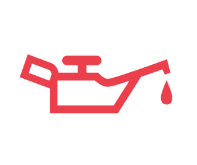
Low engine oil pressure warning
Red — oil canThis symbol means engine oil pressure may be too low. It is not an oil-change reminder, and it is different from the amber oil-level symbol. An engine can have the correct quantity of oil but still suffer a pressure problem.What to do: stop safely and switch off the engine. Contact a Toyota dealer or qualified repairer. Check the level only when safe and according to the handbook; do not keep the engine running or restart repeatedly to see whether the light disappears.
Brake system and parking brake warning
Red — exclamation mark inside a circleOn relevant versions, the light comes on with the parking brake applied. If it stays on after release, it can indicate low brake fluid, a brake-system fault or inadequate brake vacuum on certain diesel models.What to do: check that the parking brake is fully released. If the warning remains, stop safely and obtain assistance. Do not continue with reduced braking or an abnormal pedal. When both ABS and the red brake warning remain on, Toyota also instructs us to stop immediately in a safe place.
Charging system warning
Red — battery symbolThe battery-shaped lamp indicates a fault in the charging system when it appears during driving. It does not prove that the battery itself needs replacing. Some versions show a charging-system message instead of relying solely on a lamp.What to do: stop safely and contact a repairer. Follow any instruction to stop the engine. Continuing until the vehicle loses electrical power can leave us stranded or affect vehicle operation. Diagnose the charging circuit before assuming a new battery will solve the problem.
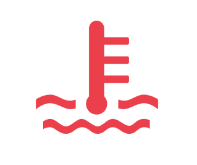
High engine coolant temperature warning
Red — thermometer above waves; display variesA red temperature warning or a high-coolant-temperature message indicates possible overheating. Some Hilux models use a gauge and message rather than this exact lamp. Temperature rising into the hot range needs prompt attention.What to do: stop safely, reduce the load and follow the overheating procedure in the correct handbook. Switch off if steam, coolant leakage or other serious symptoms are present. Let the system cool before inspection, and never remove a hot radiator or coolant cap.
SRS airbag warning
Red — seated person and airbagThis warning concerns the supplemental restraint system. Depending on the version, the affected system may include airbags, seat-belt pretensioners or passenger-occupant classification. A persistent light should not be treated as a routine service reminder.What to do: arrange prompt professional inspection. We cannot assume the relevant restraints will operate as intended until the cause is resolved. Avoid probing airbag wiring, unplugging connectors or using a generic reset sequence to hide the warning.
Seat belt reminder
Red — belt reminderThe seat-belt lamp and chime remind monitored occupants to fasten their belts. Equipment can include front-seat and rear-seat reminders. Luggage on a passenger seat can sometimes trigger an occupancy-related alert.What to do: make sure every occupant is correctly restrained before setting off. If the warning seems wrong, stop and check the relevant buckle and seat. Have persistent false warnings investigated instead of fitting a buckle bypass or disabling the reminder.
Engine, oil, braking and general warning symbols
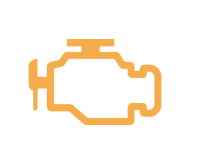
Check engine light: malfunction indicator
Amber — engine-shaped symbolThe check engine lamp can report a fault in engine control, electronic throttle control, emissions equipment or, on applicable versions, automatic transmission control. Diesel causes can also involve turbocharging or the DPF system. The icon alone does not identify the failed part.What to do: arrange prompt diagnosis and avoid heavy loading or high engine speeds. Stop safely if the engine runs severely roughly, loses substantial power or another urgent warning appears. Do not assume a flashing or persistent warning is simply an overdue service.
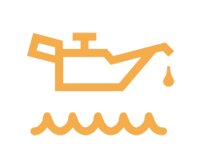
Low engine oil level warning
Amber — oil can above waves; equipped versionsThis warning concerns oil quantity rather than pressure. Later vehicles may display a message requesting oil addition or replacement. A slope can influence the reading on some models, which is why the prescribed level-ground check matters.What to do: park safely on level ground and check the dipstick using the handbook’s procedure. Add the correct oil only if required, without overfilling. If the red oil-pressure warning appears, follow its immediate stop instruction instead of treating it as an amber-level alert.
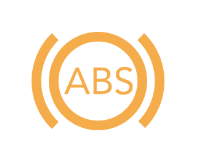
ABS warning light
Amber — anti-lock braking systemAn ABS warning can indicate a fault in anti-lock braking or brake assistance. Conventional braking may remain, but emergency braking behaviour can change. The meaning becomes more serious if the red brake-system light is illuminated as well.What to do: arrange immediate inspection and allow extra stopping distance if moving the vehicle is appropriate. If both brake and ABS warnings remain on, stop safely and obtain assistance. We should not rely on advice for an isolated amber ABS light when several brake warnings are present.
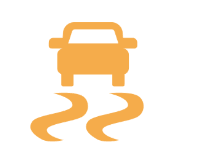
Slip, traction control and VSC indicator
Amber — vehicle with skid marksFlashing during loss of grip can mean traction or stability control is intervening normally. A steady warning can indicate a fault in VSC, traction control or another associated driving-support function. The exact systems connected to this indicator vary by model.What to do: ease off and adapt speed when it flashes during intervention. If it stays on, read the message and arrange inspection. Tyres, load and surface conditions still determine available grip; the indicator is not permission to keep accelerating on a slippery surface.
VSC OFF and traction-control status
Amber — stability control switched off or reduced; equipment varies.The VSC OFF indication can reflect a selected driving-support mode rather than a failed component. On relevant Hilux versions, switching functions off can also disable parts of the Pre-Collision System and bring on additional messages. The representative skidding-car image identifies the stability-control function.For ordinary driving, restore the normal settings. A “TRC turned off” message that appears without a deliberate selection can also reflect temporary deactivation, including system temperature conditions. If the indication persists or a malfunction is reported, arrange inspection rather than assuming the button is the only cause.
Master warning light
Amber — triangle with an exclamation markThe master warning directs us to a message on the information display. It can accompany a malfunction, an operating instruction or a condition needing correction. The triangle does not identify a particular component.What to do: read the complete message once safely stationary. Follow the most urgent instruction, such as stopping for low braking power or a charging-system fault. Note the wording for the workshop rather than reporting only that a yellow triangle appeared.
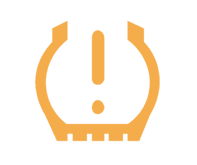
Tyre pressure warning
Amber — equipped markets and versions onlyOn a Hilux fitted with tyre-pressure monitoring, this symbol relates to tyre pressure or a monitoring-system problem. A warning does not replace measuring the actual pressures, and not every Hilux has the same monitoring equipment.What to do: reduce speed smoothly and inspect the tyres safely. Set cold pressures to the vehicle label for the appropriate load and investigate leaks. Use the reset or relearn procedure only when the correct handbook requires it, after pressures and tyre condition are checked.
Brake override warning
Amber — pedal-related symbol; equipped versionsThis warning or an accompanying message can relate to the accelerator and brake pedals being pressed together. Depending on the vehicle, a fault message may instead identify a problem in the brake override or related control system.What to do: release the accelerator and use the brake normally. Once safely stopped, check for a misplaced floor mat or another pedal obstruction. If the warning remains with correct pedal operation or the display reports a malfunction, arrange inspection rather than trying to defeat the system.
Hilux 4WD, 4LO and differential-lock indicators
These symbols are especially important because they can show normal drivetrain selections as well as faults. We need to know whether the vehicle is changing modes, has completed the change or is reporting a malfunction. A flashing lamp is not proof that the requested mode is already engaged.
Four-wheel-drive indicator
Drivetrain symbol — selected mode or warning, depending on behaviourA steady four-wheel-drive indication can confirm that the applicable 4WD mode is engaged. Flashing may occur during a change; persistent abnormal flashing or a warning message needs the procedure for the exact transfer system.What to do: follow the handbook’s speed, gear and clutch or transmission requirements. Do not force a shift or assume engagement is complete while the lamp continues to flash. On part-time 4WD versions, avoid using locked four-wheel drive on dry, high-grip roads where the handbook prohibits it.
4LO low-range indicator
4LO — low-speed four-wheel drive; equipped modelsThe 4LO lamp normally relates to low-range operation. The referenced Australian manual identifies rapid flashing as a possible four-wheel-drive malfunction. Normal changeover indications and fault flashing should therefore not be treated as identical.What to do: follow the exact low-range selection procedure and wait for confirmation. Low range is intended for suitable low-speed conditions, not ordinary high-speed road use. If rapid flashing or a fault message persists, have the system checked rather than repeatedly forcing the selector.
Rear differential lock indicator
Usually red — rear differential lock; equipped modelsThis symbol can show that the rear differential lock is selected or engaged. Flashing can occur during engagement, while rapid flashing is identified as a fault condition in the referenced later handbook. The colour alone does not mean an engine emergency.What to do: confirm the lock’s status before relying on it. Use it only in the conditions and at the speeds permitted by the handbook, and disengage it when no longer needed. Avoid locked-differential driving on high-grip roads and obtain help for an unresolved fault.
Automatic transmission fluid temperature warning
Transmission temperature alert — equipped automatic modelsAn A/T OIL TEMP indication or equivalent message means the transmission fluid is too hot. It may appear under heavy load, towing or demanding low-speed driving, but we should not assume that load alone explains a persistent warning. The illustration is a representative transmission-temperature symbol.What to do: stop safely and follow the handbook’s cooling procedure, typically selecting P and waiting for the warning to clear. If it does not clear, contact a repairer. Do not apply an idling procedure when another warning requires engine shutdown.
Downhill assist control indicator
Vehicle descending a slope — DAC status on equipped models.Downhill assist control helps manage speed on suitable steep descents. Its indicator can flash for several reasons, including a transition out of operation or operating conditions not being met. We should not interpret every flash as either active braking or a fault.Check the transfer mode, gear selection and other requirements in the handbook before relying on DAC. On the referenced Australian version, rear differential locking prevents DAC operation. If the system becomes unavailable, control the vehicle manually and avoid proceeding onto a slope that cannot be negotiated safely without assistance.
Diesel fuel-system and maintenance warnings
Water in fuel filter warning
Amber — filter and water droplet; diesel onlyThis symbol concerns water collected in the diesel fuel-filter system. On some versions, flashing identifies accumulated water; other versions use a separate message. It is not the engine-coolant warning and should not be treated as a low-fuel reminder.What to do: arrange prompt draining or servicing using the correct procedure. Continued operation with water contamination can damage fuel-system components. Do not open an unidentified fuel line or drain plug as a generic reset; filter designs and priming requirements vary.
Fuel filter restriction or replacement warning
Amber — alternative fuel-system symbol; diesel onlyCertain Hilux warning arrangements distinguish water accumulation from a filter requiring replacement. For example, the referenced older manual describes flashing for water accumulation and steady illumination when the fuel filter needs replacement. Your vehicle may use a different symbol or message.What to do: identify the exact warning and arrange the indicated filter service. Do not assume the remedy is always draining water or always replacing the filter. The display behaviour and handbook determine which condition has been detected.
T-BELT timing belt reminder
Amber — older belt-equipped diesel versionsT-BELT is a timing-belt replacement reminder on applicable older diesel Hilux engines. It does not mean every Hilux engine has the same belt arrangement or replacement interval, and it is not a generic check-engine symbol.What to do: check the exact engine, service schedule and maintenance history. Arrange the required belt work if due. Resetting the reminder does not replace the belt. We should never transfer an interval from an older belt-equipped engine to a different Hilux powertrain.
Diesel preheating indicator
Amber — glow plug coil; diesel onlyThe coil-shaped light normally indicates that the diesel preheating system is working before starting. Its brief appearance is an operating status rather than proof of a failed glow plug.What to do: follow the starting procedure for the vehicle and wait as instructed. If starting becomes difficult or the indicator behaves abnormally with another fault message, arrange diagnosis. Do not confuse the preheat coil with the fuel-filter or DPF symbols, which refer to different systems.
Diesel particulate filter warning
Amber — DPF/filter indication; equipped dieselsA DPF warning can request regeneration or indicate a fault. Hilux procedures vary with production date, software and whether a manual regeneration switch is fitted. Later models may display a written regeneration request instead of a dedicated lamp.What to do: follow the exact handbook and message. A dealer-visit message, rapid flashing with the engine lamp or serious symptoms requires inspection. Do not attempt a universal high-speed drive or forced regeneration. Exhaust temperatures can become very high during regeneration, so follow the prescribed location and clearance precautions.
Safety assistance, fuel and normal lighting indicators
Pre-Collision System warning
Amber — PCS/OFF symbol; equipped modelsThe PCS indication can mean the system is disabled, temporarily unavailable or faulty. In the referenced later manual, a warning accompanied by a buzzer can indicate a malfunction. Disabling VSC can also make PCS unavailable on relevant versions.What to do: read the message and keep full control of braking. Check an indicated camera or radar obstruction only when parked safely. Persistent fault warnings need inspection. Do not test the function by deliberately approaching another vehicle or obstacle.
Low fuel warning
Amber — fuel pumpThis indicator means the remaining fuel has reached the warning threshold. The threshold and remaining driving distance vary by tank specification, model and operating conditions. A reserve-range estimate should not be treated as a guarantee.What to do: refuel promptly, especially before remote travel, towing or off-road driving. Running a diesel out of fuel can require a specific restart or priming procedure. We should not rely on the last displayed kilometres of range to plan the next fuel stop.
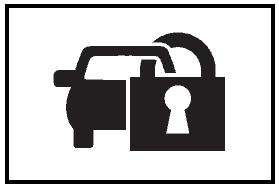
Security and immobiliser indicator
Security symbol — theft-deterrent status rather than a driving fault.A flashing security indicator after switching the vehicle off can be normal: it shows that the immobiliser or theft-deterrent system is active. Its exact appearance and operating sequence depend on the key and alarm equipment fitted.If the engine will not start, check whether an authorised key is being recognised and read any key-related message. Follow the correct backup procedure when applicable. Do not confuse normal flashing on a parked Hilux with an engine-management warning, and have persistent recognition faults diagnosed instead of trying to bypass the immobiliser.
High beam indicator
Blue — main beam headlights onThe blue headlamp symbol confirms that high beam is selected. It is a normal lighting indicator, not an overheating or electrical-fault warning.What to do: dip the headlights when they could dazzle approaching traffic or drivers ahead. If the blue symbol stays on unexpectedly, check the stalk position when safe. Automatic lighting features, where fitted, do not remove our responsibility to select an appropriate beam for the situation.
Front fog light indicator
Green — front fog lamps on; equipped modelsThis symbol confirms that the front fog lights are switched on. It is an operating indication and does not mean the engine or lighting circuit has developed a fault.What to do: use the lamps only when conditions and local rules justify them. Switch them off when no longer needed. If a fog lamp does not actually illuminate despite the indicator, check the exterior lighting separately while safely parked.
Rear fog light indicator
Amber — rear fog lamp on; equipped marketsAn amber rear-fog symbol normally confirms that the bright rear fog light is selected. It is an example of an orange lamp that does not indicate a mechanical problem. Some markets or specifications may not have this feature.What to do: turn it off when visibility improves. Unnecessary rear-fog use can dazzle following drivers. Compare the symbol’s shape and direction with the front-fog indicator if you are unsure which light is active.
Turn signals and hazard warning lights
Green flashing arrowsThe arrows flash when a direction indicator or the hazard warning lights are operating. This normal flashing pattern has a completely different meaning from rapid flashing of a drivetrain fault indicator.What to do: cancel the turn signal once the manoeuvre is complete. Investigate an unusual flash rate or a suspected failed exterior lamp while safely parked. During a breakdown, use the hazard lights as appropriate and follow the roadside safety instructions for the location.
Which Hilux warning lights mean we should stop?
We should respond to the actual fault rather than use one rule for every red or amber lamp. This quick comparison helps us prioritise, but the dashboard message and vehicle-specific handbook take precedence.
Warning or condition
Immediate response
Low engine oil pressure while running
Stop safely and switch the engine off.
Red brake warning with abnormal braking, or with ABS
Stop safely and obtain assistance.
High coolant temperature, steam or coolant loss
Stop and follow the overheating procedure; never open a hot coolant cap.
A/T fluid temperature warning
Stop and follow the specified transmission-cooling procedure.
Water in the diesel fuel filter
Arrange the specified draining or service promptly; do not ignore contamination.
Steady 4WD or differential-lock indication after selection
Confirm the mode is suitable for the surface and has engaged correctly.
Unexpected noise, severe vibration, smoke, reduced braking or sudden power loss can make continued driving unsafe even before a warning is fully understood. Pull over safely and request help if vehicle control or mechanical condition is in doubt. There is no universal safe distance for driving with an unresolved warning.
Why several Hilux warning lights appear together
One underlying problem can affect several functions, so multiple warnings do not necessarily mean multiple failed parts. A shared sensor or electrical fault can make assistance systems unavailable. Equally, we should not automatically blame the battery merely because several lamps appear.
Deal with the most urgent instruction first. A red brake warning combined with ABS takes priority over a maintenance reminder. Once stopped, record the complete display, which lights were steady or flashing and whether the warning appeared during starting, towing, braking or a four-wheel-drive change.
Can we reset Toyota Hilux warning lights?
Start with the cause. A timing-belt reminder belongs after the required belt service; a pressure-system reset belongs after checking and correcting tyres; a fuel-filter warning requires the indicated inspection or service. Clearing a lamp before carrying out the work can hide useful information while leaving the risk unchanged.
A basic engine-code reader may not access every brake, restraint or four-wheel-drive module. If the issue needs diagnosis, preserve the messages and use suitable equipment. Avoid disconnecting the battery or following a reset from another Hilux year as the first response to an unexplained warning.
Conclusion
Understanding Toyota Hilux dashboard symbols means combining the image, colour, behaviour and message. Stop for urgent mechanical warnings, arrange prompt attention for faults and recognise normal drivetrain or lighting indications. Diesel systems and four-wheel-drive controls vary enough that the manual matching your exact Hilux is essential before attempting a reset, regeneration or mode-change procedure.
Frequently Asked Questions
1. What does the fuel filter light mean on a Toyota Hilux?
It can indicate water accumulation or a filter requiring replacement, depending on the version and whether the light is steady or flashing. Read the matching handbook and arrange the indicated service rather than assuming one procedure applies to every Hilux.
2. Is a flashing 4LO light normal?
It can relate to a mode change, but rapid flashing can indicate a four-wheel-drive malfunction on relevant models. Follow the exact selection procedure and do not assume low range is engaged until the display confirms it. Persistent abnormal flashing needs inspection.
3. Can I drive with the Hilux check engine light on?
The fault needs prompt diagnosis. Avoid heavy loads and high engine speeds, and stop safely for severe rough running, major power loss, overheating or another urgent warning. The accompanying message and vehicle behaviour determine whether assistance is needed.
4. Does T-BELT mean the engine is already damaged?
It normally indicates that timing-belt replacement is due on an applicable older engine. Check the maintenance history and correct schedule. Do not reset it without confirming the required work, and do not assume later engines use the same arrangement.
5. What does the yellow triangle mean on a Hilux?
It is the master warning light, which directs us to the information display. Read the message to identify the issue and follow its instructions. The triangle alone does not identify a specific failed component.
If you want to know other articles similar to Toyota Hilux Dashboard Symbols and Meanings you can visit the category Service and Parts.
Auto Guide
I show you the best reviews of all car brands, the information we collect and show is verified by our mechanics, we hope that everything you read here is useful to buy the car of your dreams








.png)

.png)














.png)

.png)

.png)

.png)

.png)

More content of your interest