
Ford Ranger Fuel Tank Size: Complete Guide by Generation

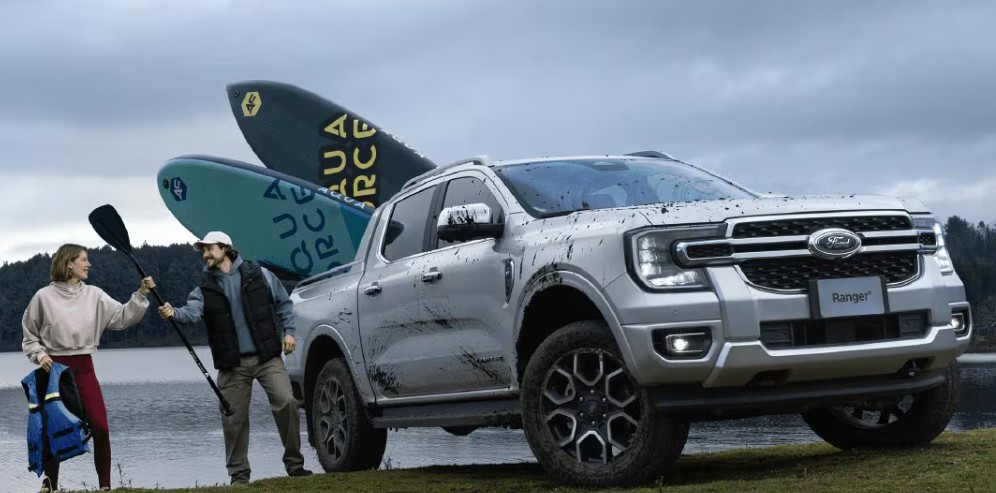
The Ford Ranger fuel tank size is not a single, universal number. Depending on the model year, generation, body configuration, engine, trim level, and country of sale, a Ranger may hold roughly 16.5 to 21.1 US gallons, or approximately 62 to 80 litres, in its standard factory tank. Certain heavy-duty and long-range versions go considerably further, including the Australian Ranger Super Duty with its massive 130-litre tank.
That is a wide spread, isn’t it?
The Ranger name has travelled around the world for decades. It has appeared on compact American pickups, Mazda-derived international trucks, globally developed T6 models, diesel workhorses, petrol-powered lifestyle pickups, off-road Raptors, and even plug-in hybrids. Expecting every one of them to carry the same fuel tank would be like expecting every pair of boots to fit the same foot.
In this guide, we will explain the most common Ford Ranger fuel capacities by generation and market. We will also convert litres into gallons, estimate driving range, discuss usable versus advertised capacity, and show readers how to confirm the correct figure for their particular truck.
Content in this publication
- Ford Ranger Fuel Tank Size at a Glance
- Why Ford Ranger Fuel Capacity Varies
- Ford Ranger Fuel Tank Size by Generation
- First-Generation North American Ford Ranger Fuel Tank Size
- Second-Generation North American Ranger Tank Capacity
- Third-Generation North American Ranger Fuel Capacity
- 2019–2023 North American Ford Ranger Fuel Tank Size
- Current North American Ford Ranger Tank Size
- Ford Ranger Raptor Fuel Tank Size
- Global T6 Ford Ranger Fuel Tank Size
- UK Ford Ranger Fuel Tank Capacity
- European Ford Ranger Fuel Tank Size
- Australian Ford Ranger Fuel Tank Size
- Ranger Super Duty 130-Litre Fuel Tank
- New Zealand Ford Ranger Fuel Capacity
- Ford Ranger Fuel Tank Size in Latin America
- Older International Ranger Tank Sizes
- Litres, US Gallons, and Imperial Gallons Explained
- How Far Can a Ford Ranger Travel on a Full Tank?
- Why the Pump May Not Match the Advertised Capacity
- How Much Fuel Remains When the Light Comes On?
- Does Cab Style Affect Ranger Tank Size?
- Does Engine Size Determine Fuel Tank Capacity?
- Does Four-Wheel Drive Change the Fuel Tank Size?
- Can We Install a Larger Aftermarket Ranger Tank?
- How to Confirm Your Ford Ranger Fuel Tank Size
- Common Ford Ranger Fuel-Tank Mistakes
- Is a Larger Ranger Fuel Tank Better?
- Final Thoughts on Ford Ranger Fuel Tank Size
- Frequently Asked Questions
Ford Ranger Fuel Tank Size at a Glance
For readers looking for a fast answer, here is the broad picture:
| Ranger version or market | Common fuel tank capacity |
|---|---|
| Older North American Rangers | Approximately 16.5–20.5 US gal |
| Later North American compact Rangers | Approximately 16.5–20 US gal |
| 2019–2023 North American Ranger | Approximately 18 US gal |
| Current North American Ranger XL and related models | Approximately 18–18.7 US gal |
| Current North American Ranger Raptor | Approximately 20–20.3 US gal |
| Global T6 diesel Ranger | Commonly 80 L |
| UK and European diesel Ranger | Commonly 80 L |
| Current 3.0-litre global diesel Ranger | 80 L in relevant configurations |
| Australian Ranger Super Duty | 130 L |
| Some older international Rangers | Approximately 63–70 L |
These figures should be treated as a practical overview rather than a substitute for the owner’s manual. Ford itself advises owners that tank capacity varies by model and year and that the manual or official specifications for the exact vehicle should be considered the primary reference.
Why Ford Ranger Fuel Capacity Varies
A pickup’s fuel tank is shaped by far more than the size of the engine. Engineers must package it around the frame, rear axle, exhaust system, spare wheel, driveshaft, emissions equipment, battery components, and suspension hardware.
Several factors influence the final Ranger tank capacity:
- Model year and generation
- Country or regional market
- Petrol, diesel, or plug-in-hybrid powertrain
- Regular Cab, SuperCab, or Double Cab body
- Short-bed or long-bed configuration
- Two-wheel-drive or four-wheel-drive layout
- Standard Ranger or Ranger Raptor
- Factory towing, off-road, or heavy-duty equipment
- Single-tank or optional long-range configuration
That is why two Rangers parked side by side may look almost identical but accept noticeably different amounts of fuel.
North American and Global Rangers Are Not Always the Same Truck
One of the biggest sources of confusion is the Ranger name itself.
For many years, the North American Ranger and the international Ranger followed different development paths. North America received a compact pickup produced primarily for the United States and Canada, while many overseas markets received trucks related to Mazda platforms.
Later, Ford moved toward a global Ranger architecture. However, regional differences remained. Engines, emissions systems, body styles, payload ratings, fuel-tank specifications, and trim structures could still change from one country to another.
Therefore, a specification from an Australian Ranger brochure may not apply to an American Ranger, even when both vehicles share a model year.
Ford Ranger Fuel Tank Size by Generation
Ford Ranger generation labels can become complicated because enthusiasts may count North American and global lineages differently. Instead of pretending that one timeline fits every country, we will separate the major families and explain their typical capacity ranges.
First-Generation North American Ford Ranger Fuel Tank Size
The first North American Ford Ranger arrived for the 1983 model year. These early compact pickups were sold with several cab, bed, engine, and drivetrain combinations.
Many first-generation trucks used tanks in the region of:
- Approximately 16.5 US gallons
- Approximately 17 US gallons
- Approximately 19–20 US gallons on selected configurations
Long-bed trucks and certain extended-cab models generally had room for larger tanks than basic short-bed models. Nevertheless, exact specifications changed during the generation.
Why Early Ranger Figures Often Conflict
Online specifications for older Rangers frequently disagree because they may be describing:
- A different wheelbase
- A different cab style
- An optional rather than standard tank
- A truck with dual tanks
- A Canadian rather than American specification
- Imperial gallons instead of US gallons
- Total capacity rather than the amount normally accepted at the pump
When dealing with a classic Ranger, the vehicle identification number, original manual, build information, and physical tank dimensions are more trustworthy than a generic internet chart.
Second-Generation North American Ranger Tank Capacity
Second-generation North American Rangers, generally associated with the 1993–1997 period, continued to offer multiple chassis and cab combinations.
Typical listed capacities sit around:
- 16.5 US gallons for some short-wheelbase models
- Approximately 20 US gallons for certain extended-cab or longer-wheelbase trucks
In litres, that is roughly:
- 16.5 US gal = 62.5 L
- 20 US gal = 75.7 L
The difference is meaningful. At an average of 22 mpg, a 16.5-gallon truck might have a theoretical range of about 363 miles, while a 20-gallon truck could theoretically travel around 440 miles under similar conditions.
Of course, few drivers use every drop in the tank—and they should not plan to.
Third-Generation North American Ranger Fuel Capacity
The heavily updated Ranger introduced for the late 1990s remained a familiar sight on North American roads for many years. It was offered with regular and extended cabs, multiple bed lengths, four-cylinder and V6 engines, and two- or four-wheel drive.
Common tank sizes included capacities in the general region of:
- 16.5 US gallons
- 17 US gallons
- 19.5 US gallons
- 20 US gallons
The exact number depended heavily on wheelbase and configuration.
Regular Cab Versus Extended Cab
A Regular Cab Ranger may have a smaller tank than a SuperCab from the same model year. However, this is not a rule we should apply blindly. Frame layout, bed length, and drivetrain equipment can alter the available space.
When shopping for an older Ranger, avoid assuming capacity based solely on the engine. A 3.0-litre V6 does not automatically tell us which tank is installed.
The Owner’s Manual Is Still the Best Starting Point
Ford’s official guidance is simple: use the owner’s manual or the current vehicle specification page to identify fuel capacity. This matters especially with older trucks, where replacement tanks and previous-owner modifications may have changed the original setup.
2019–2023 North American Ford Ranger Fuel Tank Size
When the Ranger returned to the United States for the 2019 model year, it entered the midsize-pickup segment with a turbocharged petrol engine and a more modern global platform.
Most 2019–2023 North American Rangers are commonly associated with an 18-US-gallon fuel tank, equivalent to approximately:
- 68.1 litres
- 15 Imperial gallons
That capacity strikes a middle ground. It is large enough to provide useful touring range without adding the weight and packaging demands of a huge long-range tank.
Estimated Range of an 18-Gallon Ranger
Suppose a Ranger averages:
- 18 mpg: approximately 324 miles
- 20 mpg: approximately 360 miles
- 22 mpg: approximately 396 miles
- 24 mpg: approximately 432 miles
These are mathematical estimates, not guaranteed real-world distances. Towing, cold weather, traffic, off-roading, large tyres, roof racks, payload, idling, and aggressive acceleration can reduce range dramatically.
Current North American Ford Ranger Tank Size
Current-generation North American Rangers use different capacities depending on the model and engine.
Ford’s 2026 technical specifications list:
- 18.7 US gallons for Rangers with the 2.3-litre EcoBoost four-cylinder and 2.7-litre EcoBoost V6
- 20.3 US gallons for the 3.0-litre V6 Ranger Raptor
Ford’s consumer-facing model pages sometimes round these figures to 18 gallons and 20 gallons, respectively. For example, Ford lists an 18-gallon tank for the 2026 Ranger XL, while the broader model comparison presents rounded capacities across the lineup.
Why Do Ford’s Numbers Sometimes Look Different?
A technical sheet may show 18.7 gallons while a marketing page says 18 gallons. That does not necessarily mean one is wrong.
Possible reasons include:
- Rounded consumer-facing figures
- Differences between nominal and advertised capacity
- Model-year updates
- Preproduction specifications
- Engine-specific tanks
- Regional measurement conventions
For the most precise answer, match the specification to the exact model year, trim, engine, drivetrain, and VIN.
Ford Ranger Raptor Fuel Tank Size
The Ranger Raptor is not merely a cosmetic trim. Its high-performance engine, wider body, off-road suspension, tyres, cooling package, and underbody components distinguish it from a normal Ranger.
In the current North American lineup, the Raptor’s 20.3-US-gallon tank is larger than the 18.7-gallon tank associated with the 2.3-litre and 2.7-litre models.
That extra capacity helps offset the Raptor’s greater thirst, although it does not automatically guarantee more range.
A Bigger Tank Does Not Always Mean a Longer Range
Imagine two hikers carrying water. One carries a larger bottle but drinks much faster. The other carries less but sips carefully. They may reach the same destination at nearly the same time.
The same principle applies here. Ranger Raptor range depends on consumption as well as tank size. Spirited driving, deep sand, mud, low-range operation, and large all-terrain tyres can make fuel disappear quickly.
Global T6 Ford Ranger Fuel Tank Size
The T6 Ranger became the backbone of Ford’s international pickup lineup. It has been sold across Australia, New Zealand, the United Kingdom, Europe, Asia, Africa, the Middle East, and Latin America.
You may be interested in reading Ford Ranger Timing Belt Replacement Cost: Complete Price Guide
For many T6 diesel versions, the magic number is:
80 litres
That equals approximately:
- 21.1 US gallons
- 17.6 Imperial gallons
Ford documentation for a 3.0-litre diesel Ranger identifies an 80-litre, or 21.13-US-gallon, capacity.
An official UK Ranger brochure also lists an 80-litre diesel fuel tank, alongside a separate 20-litre AdBlue tank for relevant models.
UK Ford Ranger Fuel Tank Capacity
Many diesel Rangers sold in the United Kingdom use an 80-litre fuel tank.
That generous capacity suits the Ranger’s working role. Contractors, farmers, towing users, and rural drivers may cover long distances between fuel stops. An 80-litre tank provides greater flexibility than a smaller urban-focused setup.
However, buyers should distinguish between:
- Diesel fuel capacity
- AdBlue capacity
- Coolant capacity
- Engine-oil capacity
AdBlue is stored separately and should never be poured into the diesel tank.
Is the AdBlue Tank Part of Fuel Capacity?
No.
If a UK specification lists an 80-litre diesel tank and a 20-litre AdBlue tank, the Ranger does not have 100 litres of diesel capacity. It has:
- 80 litres for diesel
- 20 litres for AdBlue
The fluids serve entirely different purposes.
European Ford Ranger Fuel Tank Size
Across European markets, many diesel-powered T6 and later Rangers follow the same general 80-litre pattern as UK models.
Nevertheless, European specifications can vary because Ford sells different:
- Cab styles
- Emissions packages
- Commercial-vehicle configurations
- Powertrains
- Raptor versions
- Plug-in-hybrid models
The introduction of the Ranger PHEV adds another layer. The plug-in hybrid combines a 2.3-litre EcoBoost petrol engine with an electric motor and battery system.
Battery packaging can influence tank design, so readers should not automatically apply the diesel Ranger’s 80-litre figure to every PHEV.
Australian Ford Ranger Fuel Tank Size
Australia is one of the Ranger’s most important markets, and the truck is available in an unusually broad range of work and lifestyle versions.
Most mainstream current-generation Australian Rangers commonly use tanks around 80 litres, depending on configuration. Yet Australia also demonstrates why we cannot give one number for every Ranger.
Ranger Super Duty 130-Litre Fuel Tank
The Australian Ranger Super Duty raises the bar with a 130-litre long-range fuel tank protected by heavy-duty plating. Ford promotes this setup as a way to support extended operation in remote and demanding environments.
In other units, 130 litres equals roughly:
- 34.3 US gallons
- 28.6 Imperial gallons
That is enormous compared with a normal midsize pickup tank.
Who Needs a 130-Litre Ranger Tank?
A tank of this size may appeal to people who regularly drive:
- In remote regions
- Between mining or agricultural sites
- On long-distance towing routes
- Across areas with limited fuel availability
- On extended off-road expeditions
- With heavy payloads that increase consumption
For ordinary commuting, the benefits may be less dramatic. Carrying 130 litres of diesel also adds considerable mass when the tank is full.
How Much Does a Full Tank Weigh?
Diesel density varies with temperature and formulation, but a full 130-litre tank can add well over 100 kilograms of fuel.
This weight counts toward the vehicle’s operating mass. Drivers planning heavy payloads, accessories, passengers, and trailer tongue weight should account for the fuel they carry.
New Zealand Ford Ranger Fuel Capacity
New Zealand Rangers generally follow the international or Australasian specification rather than the historical North American compact-truck pattern.
For many modern diesel models, readers will commonly encounter an 80-litre capacity. Exact figures should still be checked against the New Zealand brochure or owner’s manual because engine and trim availability can differ from Australia.
This distinction matters when importing a vehicle. A Ranger originally sold in another country may not match the standard local specification.
Ford Ranger Fuel Tank Size in Latin America
Latin American Rangers have appeared in numerous forms, including locally assembled models, Mazda-related generations, Argentine-built trucks, and newer global Rangers.
Current-generation specifications can include 2.0-litre turbo-diesel, 2.0-litre bi-turbo diesel, and 3.0-litre V6 diesel powertrains, depending on the country. Ford Colombia’s current Ranger information, for example, lists several of these engine configurations across the lineup.
Many modern global versions use an approximately 80-litre tank, but older Latin American Rangers may have smaller capacities.
Never assume that a specification from Mexico, Brazil, Argentina, Chile, or Colombia applies across the entire region.
Older International Ranger Tank Sizes
Before the global T6 era, many international Rangers were closely related to Mazda pickups. These trucks were offered with different petrol and diesel engines, cab arrangements, wheelbases, and payload ratings.
Common capacities for older international models often fall around:
- 63 litres
- 70 litres
- 75 litres
- 80 litres on selected later versions
Because regional variation is extensive, a broad table cannot capture every version accurately. Two trucks with the same registration year may belong to different production generations if they were sold in different countries.
Litres, US Gallons, and Imperial Gallons Explained
Fuel-capacity discussions become messy when units are mixed.
Here are the basic conversions:
- 1 US gallon = approximately 3.785 litres
- 1 Imperial gallon = approximately 4.546 litres
- 1 litre = approximately 0.264 US gallons
- 1 litre = approximately 0.220 Imperial gallons
Common Ranger Capacity Conversions
| Litres | US gallons | Imperial gallons |
| 63 L | 16.6 US gal | 13.9 Imp gal |
| 68 L | 18.0 US gal | 15.0 Imp gal |
| 70 L | 18.5 US gal | 15.4 Imp gal |
| 75 L | 19.8 US gal | 16.5 Imp gal |
| 80 L | 21.1 US gal | 17.6 Imp gal |
| 130 L | 34.3 US gal | 28.6 Imp gal |
Always check which gallon a source is using. A UK Imperial gallon is larger than a US gallon, so the numbers cannot be compared directly.
How Far Can a Ford Ranger Travel on a Full Tank?
Fuel-tank size tells only half the story. To estimate range, we also need fuel consumption.
The basic formulas are:
Range in miles = tank capacity in US gallons × mpg
Or:
Range in kilometres = tank capacity in litres ÷ L/100 km × 100
Example Range for an 80-Litre Diesel Ranger
If a Ranger consumes:
- 7.5 L/100 km: theoretical range of 1,067 km
- 8.5 L/100 km: theoretical range of 941 km
- 10 L/100 km: theoretical range of 800 km
- 12 L/100 km: theoretical range of 667 km
- 15 L/100 km while towing: theoretical range of 533 km
Real usable range will be lower because drivers normally refuel before the tank is completely empty.
Example Range for an 18.7-Gallon Ranger
At:
- 18 mpg: approximately 337 miles
- 20 mpg: approximately 374 miles
- 22 mpg: approximately 411 miles
- 24 mpg: approximately 449 miles
Again, these are clean mathematical estimates. Real life rarely behaves like a laboratory.
You may be interested in readingFord Ranger Timing Belt Replacement Cost: Complete Price GuideYou may be interested in reading
 Vauxhall Adam Oil Capacity: Complete Engine Guide
Why the Pump May Not Match the Advertised Capacity
A common question sounds like this:
“My Ranger has an 80-litre tank, but I could only add 69 litres. Is something wrong?”
Probably not.
The advertised fuel capacity includes space that may still contain fuel when the gauge reads empty. The truck may preserve a reserve to help protect the fuel system and reduce the chance of the engine running dry.
Differences can also come from:
- The truck not being completely empty
- The filling-station nozzle shutting off early
- Vehicle angle at the pump
- Fuel expansion
- Tank shape
- Gauge calibration
- Temperature
- Filler-neck design
- Variation in pump accuracy
Advertised Capacity Versus Usable Capacity
Advertised capacity is the nominal volume of the fuel system. Usable capacity is the amount drivers can normally consume or replace under real-world conditions.
These figures are rarely identical.
Ford owner documentation warns against overfilling because additional fuel can enter the tank’s expansion space.
Do Not Force More Fuel After the Nozzle Clicks
Repeatedly topping off after the automatic nozzle stops can cause problems. Fuel needs room to expand, especially as temperature rises.
Overfilling may:
- Spill fuel
- Create strong vapour smells
- Affect emissions components
- Contaminate a petrol vehicle’s evaporative-emissions system
- Waste money
- Damage paint or surrounding surfaces
Once the nozzle clicks off normally, forcing in extra fuel is rarely worth the risk.
How Much Fuel Remains When the Light Comes On?
The low-fuel warning does not reveal a perfectly fixed number of litres across every Ranger.
The warning point may vary with:
- Model year
- Software calibration
- Tank design
- Vehicle angle
- Driving conditions
- Fuel movement inside the tank
- Estimated consumption
The distance-to-empty display is also an estimate. It learns from recent driving. After towing a caravan uphill, it may fall like a stone. After gentle highway driving, it may recover.
Treat the warning light as a request to refuel—not as the opening bell for a range experiment.
Does Cab Style Affect Ranger Tank Size?
It can.
Cab and bed configurations alter the wheelbase and available frame space. A Regular Cab long-bed truck may use a different tank than a SuperCab short-bed model, even if both share an engine.
This effect is most noticeable on older Rangers, which were offered in a maze of combinations. Current global lineups are often more standardized, but regional differences remain.
Does Engine Size Determine Fuel Tank Capacity?
Not by itself.
A larger engine may receive a larger tank, as seen with the current North American Ranger Raptor. Yet many global Rangers with different diesel engines share an 80-litre tank.
The engine influences fuel demand, but chassis packaging and product strategy influence tank capacity just as much.
Does Four-Wheel Drive Change the Fuel Tank Size?
Sometimes, but not always.
Four-wheel-drive hardware takes up space under the truck. However, manufacturers often design the tank around the drivetrain so that 4x2 and 4x4 versions retain the same nominal capacity.
We should never assume that four-wheel drive automatically means a smaller or larger tank. The exact specification remains the deciding factor.
Can We Install a Larger Aftermarket Ranger Tank?
Long-range replacement tanks and auxiliary tanks are popular in Australia, Africa, and other regions where drivers travel far from fuel stations.
A larger tank may offer:
- Greater touring range
- Fewer fuel stops
- Better flexibility in remote areas
- The option to refuel where prices are lower
- More security while towing
However, the modification also creates trade-offs.
Potential Disadvantages of a Long-Range Tank
Consider:
- Added fuel weight
- Reduced payload allowance
- Installation cost
- Ground-clearance changes
- Compatibility with exhaust and emissions equipment
- Fuel-gauge calibration
- Warranty implications
- Local inspection or legal requirements
- Increased strain if poorly mounted
- Greater consequences if the tank is damaged
A professional installation is essential. Fuel systems are no place for improvised brackets and hopeful thinking.
How to Confirm Your Ford Ranger Fuel Tank Size
The safest approach is to verify the exact truck rather than relying on a generic answer.
Use this order:
- Check the capacities section of the owner’s manual.
- Enter the VIN on an official Ford owner or support portal where available.
- Review the original sales brochure for the model year and market.
- Check the fuel-tank or capacities section of the technical specification sheet.
- Ask an authorized Ford dealer to decode the VIN.
- Inspect the tank part number if the vehicle has been modified.
- Compare the truck’s cab, bed, drivetrain, engine, and wheelbase with the official listing.
Ford specifically directs owners toward the manual and official model specifications because capacity varies by year and model.
Common Ford Ranger Fuel-Tank Mistakes
Readers can avoid a lot of confusion by steering clear of these mistakes:
- Using an Australian figure for a North American truck
- Confusing Imperial and US gallons
- Assuming every Ranger has an 80-litre tank
- Adding diesel and AdBlue capacities together
- Treating the distance-to-empty display as exact
- Assuming the engine alone determines tank size
- Comparing a Ranger Raptor with a standard Ranger
- Ignoring cab and wheelbase differences
- Trusting a used-car listing more than the owner’s manual
- Forgetting that an aftermarket tank may already be installed
Is a Larger Ranger Fuel Tank Better?
Not automatically.
A larger tank is valuable for long-distance work, towing, remote travel, and overlanding. It reduces the need to stop and gives drivers more freedom to choose where they buy fuel.
A smaller tank, however, costs less to fill at once, carries less weight, and may be perfectly adequate for commuting or urban use.
The best tank is not necessarily the biggest one. It is the one that matches how the truck is used.
Final Thoughts on Ford Ranger Fuel Tank Size
The Ford Ranger has worn many faces over the years, so its fuel capacity cannot be squeezed into one neat answer.
Older North American Rangers commonly carry approximately 16.5 to 20 gallons, while many returning and current American models sit around 18 to 18.7 gallons. The current North American Ranger Raptor carries roughly 20.3 gallons.
Across the global T6 family, 80 litres is one of the most frequently encountered capacities. In the UK, Ford has officially listed an 80-litre diesel tank for relevant Ranger models. Current 3.0-litre diesel documentation also confirms an 80-litre capacity in the applicable configuration.
At the extreme end, the Australian Ranger Super Duty offers a 130-litre long-range tank, showing just how far the Ranger platform has stretched from compact pickup to remote-area workhorse.
The central lesson is simple: identify the year, market, engine, cab, bed, trim, and drivetrain before accepting any capacity figure. The badge on the tailgate says Ranger, but what sits behind it may tell a very different story.
Frequently Asked Questions
1. What is the standard Ford Ranger fuel tank size?
There is no universal standard. Many current global diesel Rangers use an 80-litre tank, while current North American Rangers commonly carry around 18 to 18.7 US gallons. The North American Ranger Raptor has a larger tank of approximately 20.3 gallons.
2. How many litres does a Ford Ranger hold?
Depending on generation and market, a Ranger may hold approximately 62 to 80 litres in a standard factory tank. Some older models fall within that range, while the Australian Ranger Super Duty increases capacity to 130 litres.
3. Does the Ford Ranger Raptor have a bigger fuel tank?
In the current North American lineup, yes. Ford’s technical specifications list 20.3 gallons for the 3.0-litre Ranger Raptor, compared with 18.7 gallons for 2.3-litre and 2.7-litre models.
4. How far can a Ranger travel on one tank?
Range depends on tank size and consumption. An 80-litre diesel Ranger averaging 8.5 L/100 km has a mathematical range of about 941 km, although real usable range will be lower. Towing, terrain, weather, tyres, payload, and driving style all influence the result.
5. Why can’t I add the full advertised capacity at the pump?
The tank probably was not completely empty. Fuel may remain below the gauge’s indicated empty point, and the system needs expansion space. Nozzle shutoff, temperature, vehicle angle, and tank shape can also affect how much fuel the truck accepts. Avoid repeatedly topping off after the nozzle clicks.
You may be interested in readingFord Ranger Timing Belt Replacement Cost: Complete Price GuideYou may be interested in reading
Vauxhall Adam Oil Capacity: Complete Engine GuideYou may be interested in reading
Vauxhall Adam Service Reset: Complete Step-by-Step GuideIf you want to know other articles similar to Ford Ranger Fuel Tank Size: Complete Guide by Generation you can visit the category Service and Parts.
Vauxhall Adam Code 82 Reset: Meaning, Procedure, and Troubleshooting
Vauxhall Adam Engine Management Light: Causes, Fixes, and What to Do Next
Vauxhall Adam Service Theft Deterrent System: Causes, Fixes, and Reset Guide
Vauxhall Adam Dashboard Symbols: Warning Lights Explained
Vauxhall Adam Fuel Tank Capacity: Complete Owner’s Guide
Vauxhall Adam Weight: Kerb Weight, Payload and Limits
Leave a Reply
More content of your interest