

Vauxhall Adam Weight: Kerb Weight, Payload and Limits

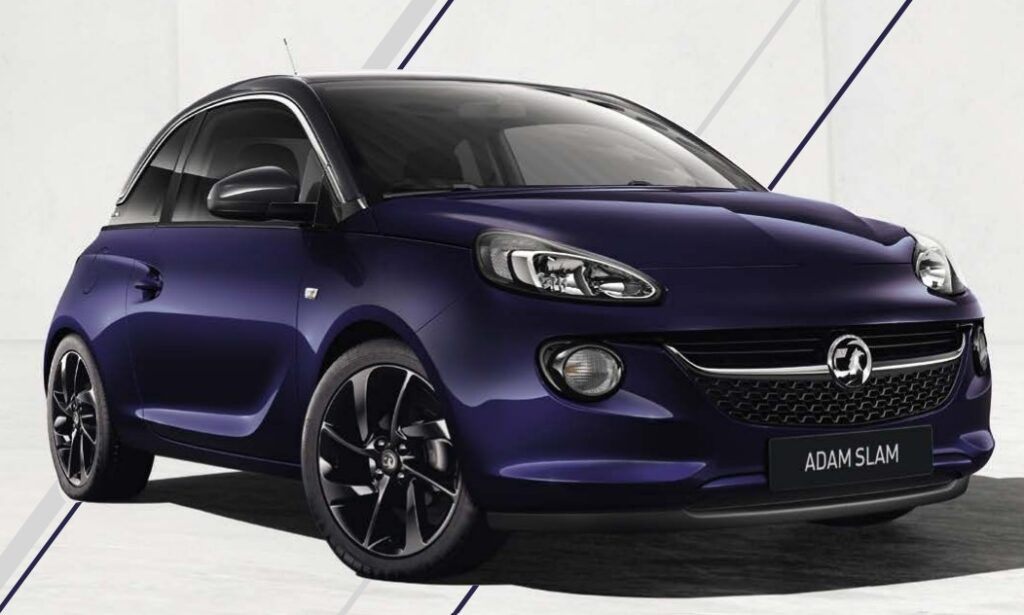
The Vauxhall Adam may look like a lightweight city car, but its compact body hides more mass than many drivers expect. Depending on the engine, transmission, trim level and equipment fitted, the Vauxhall Adam weight can vary noticeably from one version to another.
Most standard Adam models have a kerb weight of roughly 1,086 to 1,135 kg, while heavier and more powerful versions can exceed that range. For example, published specification data lists the minimum kerb weight of some 1.2-litre models at approximately 1,101 kg, while the sporty Adam S can weigh around 1,178 kg.
That might not sound especially heavy, but remember what we are looking at: a three-door hatchback measuring less than 3.7 metres long. The Adam is small on the outside, yet it carries the solid structure, safety systems, infotainment equipment and customisation features of a much larger car.
In this guide, we will examine the Vauxhall Adam’s kerb weight, gross vehicle weight, payload and roof-loading limits. We will also explain why different versions weigh different amounts and why these numbers matter when carrying passengers, transporting luggage, towing or buying a used Adam.
Content in this publication
- How Much Does a Vauxhall Adam Weigh?
- Understanding the Different Weight Figures
- Vauxhall Adam Weight by Engine
- Vauxhall Adam Rocks Weight
- Vauxhall Adam Gross Vehicle Weight
- How Much Can a Vauxhall Adam Carry?
- Maximum Roof Load
- Can the Vauxhall Adam Tow a Trailer?
- Why Does the Adam Weigh More Than Expected?
- How Weight Affects Performance
- How Weight Affects Fuel Economy
- Does Weight Affect Tyre Pressure?
- Vauxhall Adam Weight Compared With Other Cars
- How to Find Your Adam’s Exact Weight
- Loading the Vauxhall Adam Safely
- Does Vehicle Weight Affect Insurance or Tax?
- What to Check When Buying a Used Adam
- Common Mistakes When Reading Weight Specifications
- Is the Vauxhall Adam Too Heavy for Its Size?
- Final Thoughts on Vauxhall Adam Weight
- Frequently Asked Questions
How Much Does a Vauxhall Adam Weigh?
The simplest answer is that a Vauxhall Adam generally weighs between approximately 1,086 and 1,178 kg when empty and ready to drive, depending on the exact model.
Entry-level versions with smaller engines and fewer options usually sit near the bottom of the range. Better-equipped trims, automatic versions, Adam Rocks models and the performance-focused Adam S tend to be heavier.
A practical overview looks like this:
| Vauxhall Adam version | Approximate kerb weight |
|---|---|
| Light standard Adam models | From around 1,086 kg |
| Typical 1.2-litre Adam | Around 1,101 kg |
| Typical standard Adam range | Around 1,086–1,135 kg |
| Adam S 1.4 Turbo | Around 1,178 kg |
| Fully loaded vehicle | Up to the model’s stated gross weight |
These figures should be treated as a guide rather than a universal answer. Wheel size, trim equipment, transmission type, production year and factory options can all move the final number up or down.
Vauxhall Adam Weight in Pounds
For readers who prefer imperial measurements, the common Vauxhall Adam weight range converts approximately as follows:
- 1,086 kg: about 2,394 lb
- 1,101 kg: about 2,427 lb
- 1,135 kg: about 2,502 lb
- 1,178 kg: about 2,597 lb
In other words, the Adam typically weighs somewhere between 2,400 and 2,600 pounds before passengers and luggage are added.
Is the Vauxhall Adam a Lightweight Car?
By modern standards, yes—but only relatively.
The Adam is lighter than most family hatchbacks, crossovers and SUVs. However, it is not unusually light compared with every other city car. Safety structures, airbags, larger alloy wheels, electric equipment and sound insulation all add weight.
Think of it as a small suitcase packed surprisingly well. It does not take up much space, but when we lift it, we realise that plenty has been squeezed inside.
Understanding the Different Weight Figures
Car specifications can feel like alphabet soup. Kerb weight, gross vehicle weight, payload and axle load may appear alongside one another, yet each describes something different.
Before relying on any Vauxhall Adam weight figure, we need to understand exactly what it represents.
What Is Kerb Weight?
Kerb weight is the weight of the vehicle in road-ready condition. It normally includes:
- The engine and transmission
- Standard equipment
- Necessary operating fluids
- Fuel according to the applicable measurement standard
- Factory-fitted components
It normally does not include a full load of passengers, personal luggage or aftermarket accessories.
Definitions can vary slightly between manufacturers and measurement standards. Consequently, two websites may show different figures for what appears to be the same Adam.
Why Kerb-Weight Definitions Matter
One source may include a nominal driver, while another may not. Another specification might use a minimum-weight vehicle without optional equipment.
That does not necessarily mean one figure is wrong. It may simply have been measured under a different standard.
When comparing two cars, we should therefore compare like with like rather than treating every published number as identical.
What Is Gross Vehicle Weight?
Gross vehicle weight, sometimes called gross vehicle mass or maximum authorised mass, is the maximum permitted weight of the car when loaded.
It includes:
- The vehicle itself
- The driver
- Passengers
- Luggage
- Accessories
- Items carried on an approved roof rack
Vauxhall’s specification guides describe gross vehicle weight as the total permissible weight of the vehicle, including passengers and luggage.
For example, published figures for a 1.2-litre Adam include a gross vehicle weight of approximately 1,470 kg. The Adam S is listed with a gross vehicle weight of around 1,565 kg.
What Is Payload Capacity?
Payload is the amount of weight we can add to the empty car before reaching its permitted gross weight.
The basic calculation is:
Payload = Gross vehicle weight − Kerb weight
Using a 1.2-litre Adam as an example:
1,470 kg − 1,101 kg = 369 kg
That 369 kg must cover everyone and everything added to the vehicle.
A published specification for the 1.2i Adam lists a maximum loading weight of 369 kg, while the Adam S is listed at approximately 387 kg.
Vauxhall Adam Weight by Engine
Engine choice is one of the main reasons the Adam’s weight changes. A small naturally aspirated engine is generally lighter than a turbocharged unit with stronger cooling, exhaust and transmission components.
However, the engine is only part of the story. Trim level and equipment can sometimes create a larger difference than expected.
Vauxhall Adam 1.2 Weight
The 1.2-litre petrol Adam is one of the most common versions on the used-car market. Depending on trim and optional equipment, its minimum kerb weight is generally around 1,086 to 1,101 kg.
A representative 1.2i Jam model has been listed with:
- Minimum kerb weight: 1,101 kg
- Gross vehicle weight: 1,470 kg
- Maximum loading weight: 369 kg
- Maximum roof load: 50 kg
The 1.2 is not fast, but its relatively modest weight suits urban driving. It feels manageable in narrow streets and does not demand an oversized engine merely to move away from the lights.
Vauxhall Adam 1.4 Weight
Naturally aspirated 1.4-litre versions usually weigh slightly more than the lightest 1.2 models, although the exact result depends heavily on specification.
The additional engine capacity itself does not transform the Adam into a heavyweight. Larger wheels, climate-control systems, upgraded audio equipment and decorative options may have just as much influence.
We can generally expect a regular 1.4-litre Adam to remain within the broader standard range of roughly 1,086 to 1,135 kg, although a vehicle-specific plate or official model document should be checked for an exact limit.
Vauxhall Adam 1.0 Turbo Weight
The 1.0-litre turbocharged engine may have only three cylinders, but turbocharging requires extra components. The turbocharger, intercooler, associated pipework and cooling hardware add mass.
Even so, the engine was designed to be compact and relatively light. A 1.0 Turbo Adam will normally remain close to the weight of comparable standard models rather than jumping into Adam S territory.
Its stronger torque can make the car feel lighter from the driver’s seat. That is an important distinction: actual mass and perceived performance are not the same thing.
Vauxhall Adam S Weight
The Adam S is one of the heaviest conventional versions because it carries considerably more performance equipment.
Published figures for the 1.4 Turbo Adam S include:
- Minimum kerb weight: 1,178 kg
- Gross vehicle weight: 1,565 kg
- Maximum loading weight: 387 kg
- Maximum roof load: 50 kg
Why does it weigh more? The answer is not simply “a bigger engine.” The Adam S also uses upgraded brakes, sports suspension, larger wheels and tyres, performance-related cooling equipment and additional styling components.
It is the muscular member of the family. The body shell is familiar, but more mechanical hardware sits beneath the colourful clothing.
Vauxhall Adam Rocks Weight
The Adam Rocks and Rocks Air models use crossover-inspired styling, raised suspension and protective body cladding. Some versions also feature a retractable fabric roof.
These features can increase weight compared with a similarly powered standard Adam. Reinforcement around an opening roof, additional roof mechanisms, cladding and suspension changes may each add a few kilograms.
The difference may not look dramatic on paper, but several small additions quickly accumulate. A motor, frame, rails, wiring and reinforcement are like coins dropped into a jar: each seems insignificant until we pick up the jar.
Does the Folding Roof Add Much Weight?
A retractable fabric roof is generally lighter than a traditional metal convertible mechanism. Nevertheless, it still requires more hardware than a completely fixed steel roof.
The roof’s effect is not limited to the fabric panel. We must also account for:
- Electric motors
- Guides and rails
- Control modules
- Wiring
- Drainage components
- Structural reinforcement
Therefore, an Adam Rocks Air may carry a modest weight penalty even if it does not resemble a conventional convertible.
Vauxhall Adam Gross Vehicle Weight
The Adam’s maximum permitted gross weight is normally around 1,470 kg to 1,565 kg, depending on the variant.
The lower end applies to lighter, less powerful models. The upper end is associated with heavier versions such as the Adam S.
The gross figure is more important than many owners realise. Kerb weight tells us what the car weighs before we load it. Gross vehicle weight tells us where we must stop.
Where Can We Find the Exact Gross Weight?
The most reliable vehicle-specific information is normally found on the manufacturer’s identification or weight plate.
Depending on the model and market, the plate may show:
You may be interested in reading Vauxhall Adam Fuel Tank Capacity: Complete Owner’s Guide
- Maximum permitted vehicle weight
- Maximum permitted combination weight
- Maximum permitted front-axle load
- Maximum permitted rear-axle load
The owner’s manual can help us locate and interpret the plate. However, the plate fitted to the actual car should take priority over a generic figure found online.
Why the Vehicle Plate Is Essential
Two Adams that look identical may not have identical limits. One might use a different gearbox, wheel package, emissions specification or factory option.
The registration year alone is not enough. The exact variant matters.
When carrying a heavy load or checking trailer legality, guessing is a poor strategy. A few seconds spent reading the vehicle plate can prevent a far more expensive problem.
How Much Can a Vauxhall Adam Carry?
A typical payload allowance of around 369 to 387 kg sounds generous until we start adding people.
Imagine four adults weighing 75 kg each:
4 × 75 kg = 300 kg
That leaves only 69 kg in a model with a 369 kg payload. Jackets, shopping, luggage, a child seat, drinks and accessories could quickly consume the remainder.
Example Load Calculation
Consider this realistic trip:
| Item | Estimated weight |
| Driver | 80 kg |
| Front passenger | 70 kg |
| Two rear passengers | 120 kg |
| Luggage | 55 kg |
| Child seat and accessories | 12 kg |
| Total payload | 337 kg |
With a 369 kg allowance, only 32 kg remains.
The Adam may offer four seats, but four-seat capacity does not mean we can add unlimited luggage as well. Space often becomes the visible restriction first, yet weight can become the hidden restriction.
Do Aftermarket Accessories Count?
Yes. Anything added after the car was weighed can reduce the remaining payload.
Examples include:
- Large aftermarket wheels
- Upgraded audio systems
- Roof bars
- Bike carriers
- Boot organisers
- Spare wheels
- Permanent tools
- Body styling kits
A few accessories will rarely cause an immediate problem, but the combined effect matters when the car is already carrying several people.
Maximum Roof Load
Published specifications for several Vauxhall Adam variants state a maximum roof load of 50 kg.
Crucially, that limit includes the roof bars or rack—not just the cargo placed on top.
For example:
- Roof bars: 6 kg
- Roof box: 14 kg
- Remaining capacity for luggage: 30 kg
- Total roof load: 50 kg
We should also check whether the specific roof design is approved for roof bars. This is particularly important with fabric-roof models.
Why Roof Weight Changes the Car’s Behaviour
Weight placed high above the road raises the vehicle’s centre of gravity. As a result, the Adam may lean more in corners and react differently during sudden steering movements.
A heavily loaded roof can also:
- Increase crosswind sensitivity
- Extend braking distances
- Increase fuel consumption
- Create additional wind noise
- Reduce high-speed stability
A roof box can make a neat city car feel like it is wearing an oversized hat. The car will still move, but we should adjust our driving accordingly.
Can the Vauxhall Adam Tow a Trailer?
Towing eligibility varies by engine, model year and market specification. Some Adam versions may have no approved towing capacity, while others may be listed with specific braked or unbraked limits.
We should never assume that fitting a towbar automatically means the car is legally approved to tow.
Before attaching a trailer, check:
- The vehicle identification plate
- The owner’s manual
- The official specification for the exact variant
- The towbar’s approval documentation
- Local driving-licence and towing rules
If the gross train weight is absent or the manufacturer lists no towing allowance, the vehicle may not be approved for conventional trailer towing.
Towbar-Mounted Bike Carriers
A towbar-mounted cycle carrier is not always treated in exactly the same way as pulling a trailer, but it still creates a vertical load on the mounting point.
The combined weight of the carrier and bicycles must remain within the approved nose-weight or vertical-load limit. The rear axle must also remain below its permitted load.
Electric bicycles are particularly relevant because they can be much heavier than ordinary bikes.
Why Does the Adam Weigh More Than Expected?
At first glance, a car measuring 3,698 mm long should weigh very little. Yet the Adam’s substantial construction and equipment push it beyond the weight of some simpler city cars.
The standard body measures approximately:
- Length: 3,698 mm
- Width: 1,720 mm
- Width including mirrors: about 1,966 mm
- Height: about 1,484 mm
- Wheelbase: 2,311 mm
Within that compact footprint, Vauxhall packed plenty of hardware.
Safety Equipment Adds Mass
Modern crash protection requires strong pillars, reinforced doors, crumple zones, airbags and electronic systems.
We rarely notice this equipment during an ordinary journey, yet it is always present. It is like the steel frame inside a well-built house: invisible during daily life, invaluable when something goes wrong.
Large Wheels Are Not Weightless
The Adam was offered with several striking wheel designs, including large-diameter alloy wheels.
Larger wheels and wider tyres can increase:
- Unsprung mass
- Rotational mass
- Steering effort
- Rolling resistance
- Suspension workload
The difference between wheel packages may only be several kilograms, but it can affect ride comfort and acceleration more than the raw number suggests.
Rotational Weight Feels Different
Weight that must rotate can influence performance differently from a stationary object in the boot. The engine has to accelerate both the car and the wheels themselves.
That is why a heavier wheel can sometimes make a modestly powered car feel less eager, even when the total weight increase appears small.
Interior Equipment Makes a Difference
The Adam became famous for personalisation. Buyers could choose upgraded entertainment systems, special headliners, climate-control equipment, heated features and numerous decorative packages.
Individually, these options may add little. Collectively, they help explain why a well-equipped Adam can weigh more than a basic version with the same engine.
How Weight Affects Performance
A lighter car generally requires less force to accelerate. It can also feel more responsive when changing direction.
However, engine output and gearing shape the experience just as much as mass.
Acceleration
The 1.2-litre engine has less weight to move than many family cars, but its modest power means acceleration remains relaxed.
The Adam S is heavier, yet its turbocharged 1.4-litre engine produces much more power. Consequently, it accelerates far more strongly despite carrying additional mass.
This illustrates a simple point: we cannot judge performance by vehicle weight alone.
Braking
Additional passengers and luggage increase the energy the brakes must absorb.
A fully loaded Adam may therefore:
- Take longer to stop
- Feel less agile
- Dive more under braking
- Place more heat into the braking system
- Require greater following distance
The brakes are designed for the vehicle’s approved gross weight, but the driver must adapt to the load.
Cornering and Steering
Extra weight changes how quickly the car responds. A lightly loaded Adam may feel nimble and playful, while a fully occupied car can feel more settled but less eager to change direction.
Load location also matters. Heavy items placed too far back can alter the balance more than the same items positioned low and close to the centre of the vehicle.
How Weight Affects Fuel Economy
Moving more mass generally requires more energy, particularly during repeated acceleration.
A heavily loaded Adam may use more fuel in:
- Stop-start urban driving
- Hilly areas
- Short journeys
- Repeated acceleration
- Journeys with a roof box
At a steady speed on a flat road, aerodynamic resistance becomes more important. That is why an empty roof box may hurt fuel economy more than a compact suitcase stored inside the boot.
Can Removing Weight Save Fuel?
Removing unnecessary items may produce a small improvement, although we should not expect miracles.
Good candidates include:
- Unused roof bars
- Heavy items permanently left in the boot
- Boxes of tools not needed for the journey
- Sports equipment carried every day
- Unnecessary cargo organisers
We should never remove safety equipment or essential repair items merely to save weight.
Does Weight Affect Tyre Pressure?
Recommended tyre pressure can change according to vehicle load.
Manufacturers may provide one pressure for normal occupancy and another for a heavily loaded vehicle. The correct figures are normally shown on a label inside the fuel flap or door area, as well as in the owner’s manual.
You may be interested in readingVauxhall Adam Fuel Tank Capacity: Complete Owner’s GuideYou may be interested in reading
Vauxhall Adam Dashboard Symbols: Warning Lights ExplainedWhen preparing for a journey with four occupants and luggage, we should check whether the fully loaded pressure setting applies.
Why Correct Pressure Matters
Underinflated tyres can flex excessively when carrying additional mass. This may lead to:
- Increased heat
- Faster shoulder wear
- Heavier steering
- Reduced fuel efficiency
- Less predictable handling
Overinflating beyond the approved recommendation is not a solution. The target should be the manufacturer’s stated pressure for the specific tyre size and load condition.
Vauxhall Adam Weight Compared With Other Cars
The Adam belongs to the city-car class, but it was designed with more style, equipment and refinement than the most basic urban models.
At roughly 1.1 tonnes, it can be heavier than stripped-back city cars, yet lighter than most superminis and substantially lighter than modern compact crossovers.
That middle position suits its personality. The Adam feels more substantial than a bare-bones runabout without becoming cumbersome in town.
Does More Weight Mean Better Quality?
Not automatically.
Extra weight may come from:
- Stronger construction
- Better sound insulation
- More comfort equipment
- Larger wheels
- Performance components
However, unnecessary mass can also reduce fuel efficiency and responsiveness. Quality depends on how intelligently the weight is used, not simply how much of it exists.
How to Find Your Adam’s Exact Weight
Online guides are useful for general comparisons, but the exact answer should come from information tied to the specific vehicle.
We recommend checking the following sources.
1. Read the Vehicle Identification Plate
The plate provides the legally relevant maximum weights for the actual car.
Do not confuse the maximum permitted weight with the kerb weight. The largest number is not necessarily what the empty car weighs.
2. Check the Owner’s Manual
The manual explains weight terminology, loading precautions and axle limits. Vauxhall’s Adam manuals include technical-data and vehicle-loading guidance.
3. Use the Registration Document
Depending on the country, the registration document may state the vehicle’s mass in service, revenue weight or maximum authorised mass.
The wording and measurement standard may differ, so compare definitions carefully.
4. Use a Public Weighbridge
A weighbridge gives us the most realistic measurement of the car in its current condition.
For a useful result:
- Remove unnecessary cargo.
- Fill the fuel tank to a known level.
- Record who remains in the vehicle.
- Keep the weighbridge receipt.
- Compare the result with the permitted limits.
This method accounts for aftermarket modifications and accessories that may not appear in the original brochure.
Loading the Vauxhall Adam Safely
Safe loading is not just about remaining beneath one headline figure. The weight must also be distributed sensibly.
Place Heavy Items Low
Heavy luggage should sit as low as possible and close to the rear seatbacks.
This reduces movement and limits the effect on the car’s centre of gravity.
Secure Loose Objects
During a sudden stop, an unsecured item can continue travelling forward with considerable force.
A small toolbox may feel harmless when stationary. During a collision, it can behave like a metal projectile.
Use straps, luggage nets or the vehicle’s securing points whenever appropriate.
Do Not Block Visibility
The Adam’s compact shape means luggage can quickly rise above the rear-seat line.
Maintain a clear view through the rear window where possible, and avoid stacking items in a way that interferes with mirrors or seat belts.
Respect Axle Limits
A car can remain under its total gross weight while still exceeding the permitted load on one axle.
This can happen when heavy cargo is concentrated at the back or when a rear-mounted carrier places weight beyond the axle. Correct distribution matters as much as the overall total.
Does Vehicle Weight Affect Insurance or Tax?
For most ordinary UK private-car policies, the Adam’s kerb weight is not the main factor used to calculate premiums. Insurers are more likely to consider the driver, postcode, claims history, vehicle value, repair cost, performance and insurance group.
Vehicle tax is also generally linked more closely to emissions and the rules applying when the car was registered than to the Adam’s kerb weight alone.
Nevertheless, weight may indirectly affect running costs through fuel consumption, tyre wear and braking performance.
What to Check When Buying a Used Adam
Weight figures can also reveal useful information during a used-car inspection.
A seller claiming an unusually low or high figure may simply be quoting the wrong version. We should confirm:
- Engine size
- Transmission
- Trim level
- Wheel package
- Fixed or retractable roof
- Factory equipment
- Aftermarket modifications
- Weight-plate details
An Adam wearing large aftermarket wheels, an audio installation and additional body parts may weigh more than its original brochure figure.
Watch for Unapproved Modifications
Lowered suspension, oversized wheels or poorly installed accessories can alter the way the vehicle carries and controls its mass.
Modifications should be correctly fitted, compatible with axle limits and declared to the insurer where required.
Common Mistakes When Reading Weight Specifications
Weight data seems simple, yet several misunderstandings appear repeatedly.
Confusing Kerb Weight With Gross Weight
Kerb weight describes the road-ready car before its normal payload is added. Gross weight is the legal maximum once loaded.
They are not interchangeable.
Assuming Every Adam Weighs the Same
A 1.2 Jam and an Adam S do not carry identical engines, brakes, wheels or equipment.
Even two cars with the same engine can differ because of transmission and optional features.
Ignoring the Weight of Passengers
People are part of the payload. Four adults can consume most of the Adam’s available loading capacity before a suitcase enters the boot.
Forgetting Roof-Bar Weight
The roof-load limit includes the rack or bars. We cannot place 50 kg of luggage on top of bars that already weigh several kilograms.
Relying on One Unverified Website
Specification databases sometimes mix Opel and Vauxhall variants, model years or measurement standards.
For legal loading decisions, the vehicle plate and official documentation should always win the argument.
Is the Vauxhall Adam Too Heavy for Its Size?
The answer depends on what we value.
Drivers seeking the lightest possible city car may consider the Adam relatively substantial. Yet that weight contributes to its solid feel, equipment level, styling choices and road presence.
The Adam was never intended to be an empty tin box with wheels. It aimed to feel personal, fashionable and more premium than a basic urban runabout.
Its weight reflects that ambition.
Final Thoughts on Vauxhall Adam Weight
The typical Vauxhall Adam weight sits at approximately 1,086 to 1,135 kg for many standard versions, while heavier performance models such as the Adam S can reach around 1,178 kg. Representative gross vehicle weights range from approximately 1,470 to 1,565 kg, with payload allowances commonly around 369 to 387 kg.
Those figures tell us more than whether the Adam is light or heavy. They determine how many passengers and bags we can carry, how the car responds under load and whether roof-mounted equipment can be used safely.
The biggest lesson is simple: never rely on a generic number when an exact limit matters. Check the identification plate, read the owner’s manual and account for every passenger, accessory and piece of luggage.
The Adam may be small, but weight management still deserves serious attention. Load it thoughtfully, respect its limits and it remains the lively, manageable city car it was designed to be.
Frequently Asked Questions
1. What is the average Vauxhall Adam kerb weight?
Most standard Vauxhall Adam models have a kerb weight of approximately 1,086 to 1,135 kg. The exact figure depends on the engine, trim, transmission, wheels and factory-fitted equipment.
2. How much does a Vauxhall Adam 1.2 weigh?
A representative Vauxhall Adam 1.2i has a minimum kerb weight of about 1,101 kg, although lighter or differently equipped 1.2-litre versions may vary slightly.
3. What is the gross vehicle weight of a Vauxhall Adam?
The gross vehicle weight is commonly around 1,470 kg for some standard models and approximately 1,565 kg for the Adam S. The exact permitted figure appears on the vehicle’s weight plate.
4. How much luggage and passenger weight can an Adam carry?
Typical published payload figures are approximately 369 to 387 kg. This allowance includes the driver, passengers, luggage and accessories added to the car.
You may be interested in readingVauxhall Adam Fuel Tank Capacity: Complete Owner’s GuideYou may be interested in reading
Vauxhall Adam Dashboard Symbols: Warning Lights ExplainedYou may be interested in reading
Vauxhall Adam Service Theft Deterrent System: Causes, Fixes, and Reset Guide5. What is the Vauxhall Adam’s maximum roof load?
Several Adam specifications list a maximum roof load of 50 kg, including the weight of the roof bars or rack. Compatibility should be checked carefully on Adam Rocks Air and other fabric-roof versions.
If you want to know other articles similar to Vauxhall Adam Weight: Kerb Weight, Payload and Limits you can visit the category Service and Parts.
Vauxhall Adam Code 82 Reset: Meaning, Procedure, and Troubleshooting
Vauxhall Adam Engine Management Light: Causes, Fixes, and What to Do Next
Vauxhall Adam Service Theft Deterrent System: Causes, Fixes, and Reset Guide
Vauxhall Adam Dashboard Symbols: Warning Lights Explained
Vauxhall Adam Fuel Tank Capacity: Complete Owner’s Guide
Vauxhall Adam Timing Chain Replacement Cost UK: Complete Price Guide
Leave a Reply
More content of your interest