
Nissan Serena 8 Seater Boot Space: The Complete Practical Guide

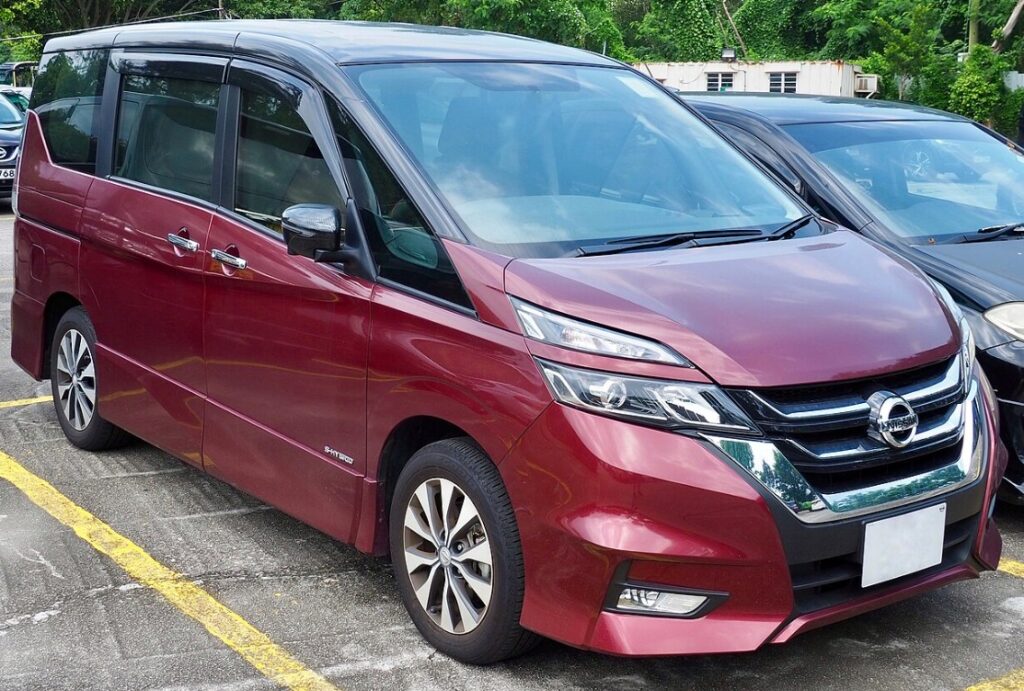
The Nissan Serena 8 seater boot space is one of the vehicle’s biggest attractions—and one of its most misunderstood features. At first glance, the Serena looks like a conventional Japanese people carrier with three rows of seats and a relatively upright rear door. Open the boot, though, and we discover that its real strength is not simply the number of litres behind the third row. Its strongest quality is flexibility.
With all eight seats occupied, the luggage area is naturally limited. We are not going to fit eight adults, eight full-size suitcases, a pushchair, camping equipment, and a week’s groceries behind the rear seats without making compromises. No midsize minivan can perform that kind of magic.
What the Serena does offer is a tall, intelligently shaped cargo area, folding third-row seats, underfloor storage on many versions, sliding second-row seating, and a useful dual-opening rear door on newer generations. It treats cabin space like a set of building blocks rather than a fixed box.
That makes it particularly appealing to families, airport-transfer operators, rideshare drivers, and anyone who frequently switches between carrying people and carrying cargo.
Let’s open the tailgate, move the seats around, and see how much the Nissan Serena can genuinely accommodate.
Content in this publication
- How Big Is the Nissan Serena 8 Seater Boot?
- Why Boot Capacity Figures Can Be Misleading
- Boot Space With All Eight Seats in Use
- Can Eight People and Their Suitcases Fit?
- Boot Space With One Third-Row Seat Folded
- Boot Space With Both Third-Row Seats Folded
- Maximum Cargo Space Behind the Front Seats
- How the Third-Row Seats Fold
- The Serena’s Underfloor Storage Compartment
- The Dual-Opening Rear Door Advantage
- Boot Shape and Loading Height
- Will a Pushchair Fit With Eight Seats Up?
- Can a Wheelchair Fit in the Serena Boot?
- Can a Bicycle Fit Inside?
- Nissan Serena C27 Boot Space
- Nissan Serena C28 Boot Space
- Seven-Seater vs Eight-Seater Boot Space
- How the Serena Compares With an SUV
- How to Maximise Nissan Serena Boot Space
- Common Boot-Space Mistakes
- What to Check Before Buying a Used Serena
- Is the Nissan Serena’s Boot Big Enough for Family Use?
- Final Verdict: Flexible Rather Than Enormous
- Frequently Asked Questions
How Big Is the Nissan Serena 8 Seater Boot?
There is no single boot-capacity figure that applies to every eight-seat Nissan Serena.
The Serena has been produced across several generations, including the popular C25, C26, C27, and current C28 series. Specifications also vary according to market, trim level, powertrain, spare-wheel arrangement, and whether the vehicle was originally sold as a seven- or eight-seat model.
Nissan does not publish one universally applicable luggage-volume measurement for every Serena configuration. Some independent listings quote approximately 280 litres with the third row in use and considerably more when it is folded, but these figures should be treated as estimates rather than guaranteed specifications for every vehicle. An independent New Zealand guide, for example, lists about 280 litres behind the occupied rear seats and roughly 1,300 litres in an expanded configuration.
The more meaningful answer is practical:
- With all eight seats available, there is enough room for everyday bags, shopping, or several small cases.
- With one side of the third row folded, the Serena can combine passenger seating with longer or bulkier cargo.
- With both third-row sections folded, the luggage area becomes substantially larger.
- Moving or folding additional seats creates van-like carrying flexibility, although the seats and interior trim still occupy some space.
In other words, the Serena’s boot is modest in full passenger mode but highly adaptable once we start rearranging the cabin.
Why Boot Capacity Figures Can Be Misleading
A litre figure sounds precise, yet it does not always tell us whether a pushchair, suitcase, bicycle, or mobility aid will fit.
Imagine two boots rated at the same volume. One is wide and rectangular. The other is narrow at floor level but tall above the wheel arches. Technically, they hold the same quantity of air, but they may behave very differently when we load real objects.
The Serena benefits from its minivan shape. Its roof is high, its rear bodywork is relatively upright, and its tailgate opening is broad. This allows us to stack soft luggage upward rather than relying only on floor length.
However, the third-row seats usually fold against the sides of the luggage compartment rather than disappearing completely beneath the floor. That arrangement increases usable floor length, but the folded seats can reduce maximum width.
So, when assessing a Serena, we should consider:
- Floor length behind the third row
- Width between the wheel arches
- Height to the roof
- Tailgate-opening dimensions
- Space occupied by folded seats
- Underfloor storage availability
- How far the second row can slide
These details often matter more than an isolated capacity claim.
Boot Space With All Eight Seats in Use
When all eight seats are occupied, the Serena functions primarily as a passenger vehicle rather than a cargo van.
The third-row seatbacks sit close to the rear door, leaving a relatively shallow luggage floor. The available space is still useful because it extends vertically, but large rigid suitcases can quickly fill it.
What Can Fit Behind the Third Row?
Depending on the generation and the exact dimensions of the items, we can generally expect to carry combinations such as:
- Several backpacks or school bags
- A few soft overnight bags
- Grocery bags
- A compact folded stroller
- Two or three small cabin cases
- A compact wheelchair, subject to its folded dimensions
- Sports bags stacked carefully
- A cooler and a few smaller bags
Soft luggage works particularly well. Duffel bags bend around seat hardware and fit into irregular corners, whereas hard-shell cases behave like stubborn bricks.
The Best Luggage Strategy for Eight Passengers
When every seat is needed, we should pack vertically and avoid oversized cases.
A practical eight-person arrangement could involve:
- One small backpack per passenger
- Soft duffel bags rather than large hard cases
- Frequently needed items stored near the upper rear opening
- Heavy bags positioned low and secured
- Small valuables placed in the underfloor compartment, where fitted
- A roof box for holidays requiring substantial luggage
The difference between an organised load and a chaotic one can be dramatic. The boot may look tiny when eight separate bags are thrown inside, yet surprisingly useful when those bags have similar shapes and stack cleanly.
Can Eight People and Their Suitcases Fit?
Yes—but only when the luggage is compact.
Eight passengers carrying a small bag each is realistic. Eight passengers bringing full-size checked suitcases is not. For airport transfers involving large cases, the Serena may need fewer passengers, a roof-mounted cargo box, or a separate luggage vehicle.
As a general planning guide:
Eight Passengers
Best for:
- Day trips
- School runs
- Restaurant outings
- Short local journeys
- Airport runs with cabin baggage only
Six or Seven Passengers
Better for:
- Weekend breaks
- Medium-size suitcases
- A stroller plus family bags
- Sports equipment
- Longer road trips
Four or Five Passengers
Ideal for:
- Major family holidays
- Large suitcases
- Camping equipment
- Bicycles or outdoor gear
- Bulky purchases
This is where the Serena’s flexible seating earns its keep. Instead of forcing us to choose permanently between a minibus and a cargo carrier, it allows us to adjust the balance for each journey.
Boot Space With One Third-Row Seat Folded
Folding one section of the rear row is one of the most practical configurations.
It allows us to preserve seating for several passengers while creating a taller, longer cargo channel on one side. This works well for families that need to carry a folded pushchair, golf clubs, flat-packed furniture, musical instruments, or long sports equipment.
The exact split and folding mechanism vary by generation, but Serena models commonly allow the third-row seats to be moved independently.
This asymmetrical setup can accommodate:
- Five to seven passengers, depending on seat use
- A large stroller
- Several medium suitcases
- Long sports bags
- A folding table
- Camping chairs
- A compact bicycle with adjustments
- Pet equipment or a travel crate
It is the cargo equivalent of opening one lane on a busy road: passengers can still travel, but bulky items finally have somewhere to go.
Boot Space With Both Third-Row Seats Folded
Fold both sides of the third row, and the Serena becomes a much more capable load carrier.
Nissan’s official regional material highlights that the third-row seats can be folded upward to make room for tall and bulky items, including a bicycle. It also confirms the availability of hidden underfloor storage on the current Serena offered in Singapore.
With the rear row folded, we gain considerably more floor length behind the second row. The space can handle:
- Multiple full-size suitcases
- Large pushchairs
- Several storage boxes
- Camping equipment
- Folded bicycles
- Household appliances in suitable dimensions
- Bulk grocery purchases
- Photography or event equipment
- Pet carriers
- Wheelchairs and mobility equipment
The main limitation is that side-folded seats may intrude into the cargo area. We gain length and height but do not necessarily get a perfectly empty, wall-to-wall rectangle.
Is the Floor Completely Flat?
Not always.
Depending on the generation and seating arrangement, the expanded cargo floor may include rails, hinges, steps, gaps, or slight changes in height. It is usually practical rather than perfectly flat.
For ordinary luggage, this is rarely a problem. For sleeping platforms, delicate equipment, or stacked storage crates, a removable cargo board or custom mat can create a more even surface.
Maximum Cargo Space Behind the Front Seats
For maximum carrying capacity, the second- and third-row areas must be rearranged.
The precise process varies. Some second-row seats slide forward, some fold, and certain versions offer removable or highly configurable centre seating. We should check the mechanism on the actual vehicle rather than assuming that every Serena transforms in exactly the same way.
In its largest practical cargo configuration, the Serena can carry lengthy or bulky items that would never fit in a conventional hatchback. We might use it for:
- Moving boxes
- Market or business stock
- Flat-packed furniture
- Bicycles
- Surfboards, depending on length
- Event displays
- Camping beds
- DIY materials
- Large pet cages
It still is not a panel van. Interior plastics, seat rails, roof trim, air-conditioning vents, and folded seating require care. Nevertheless, for occasional cargo duty, the Serena is impressively adaptable.
How the Third-Row Seats Fold
On many Serena generations, the third-row seats fold upward and secure against the sides of the vehicle.
The typical process involves:
- Removing or lowering the head restraints
- Folding the seatback forward
- Releasing the seat base
- Lifting the folded assembly toward the side wall
- Securing it with the designated strap or latch
We should always follow the instructions for the specific model. A seat that is not properly locked can move during braking and become dangerous.
Advantages of Side-Folding Rear Seats
This system has several strengths:
- It frees much of the luggage floor
- The conversion is usually quick
- Each side can often be folded separately
- Tall objects can stand upright
- The seats remain inside the vehicle for later use
Disadvantages of Side-Folding Rear Seats
The trade-offs include:
- Reduced width around the folded seats
- A less clean cargo-box shape
- Potential interference with wide objects
- More visible seat hardware
- The need to secure the seats carefully
It is a clever compromise. The seats do not vanish like trapdoors, but they move far enough out of the way to make a major difference.
The Serena’s Underfloor Storage Compartment
One of the Serena’s smartest features is the storage area beneath the rear luggage floor, available on many versions.
Nissan describes this as a hidden underfloor compartment that can keep belongings out of sight.
This area is useful for:
- Charging cables
- Emergency equipment
- Cleaning supplies
- Shoes
- Small tools
- Foldable shopping bags
- Wet clothing in a sealed bag
- Valuables that should not remain visible
- Items that might otherwise roll around
It also helps separate small items from the main luggage load. Instead of allowing cables, umbrellas, and bottles to tumble around like loose marbles, we can place them beneath the floor and keep the visible boot tidy.
The compartment’s shape and depth vary by model, and some space may be occupied by vehicle equipment. Therefore, it should be inspected before purchase.
The Dual-Opening Rear Door Advantage
Newer Serena generations are known for a rear door that can be opened in two ways: through the full tailgate or through the upper glass section, often called the half back door or dual back door.
This feature is more useful than it sounds.
In a tight parking space, opening a large tailgate can be awkward. The upper section requires less clearance and allows us to place or retrieve smaller items without lifting the entire door.
Nissan’s current Japanese accessory information specifically notes that items stored on a luggage board can be reached easily through the half back door.
When the Half Back Door Helps
It is especially convenient when:
- Another car is parked close behind
- We need to retrieve one small bag
- The boot is packed tightly
- We are loading groceries
- The full tailgate would strike a wall or garage door
- We want quick access during a road trip
There is one important caution: if luggage is stacked too high or loosely, it may fall outward when the upper door opens. Cargo should always be stable and secured.
Boot Shape and Loading Height
The Serena’s boxy silhouette gives it a practical luggage shape.
Unlike a coupe-styled SUV with a sloping rear roof, the Serena keeps much of its height near the tailgate. That makes the upper portion of the boot genuinely usable.
The opening is also relatively upright, so we can load square boxes, folded strollers, and tall bags without fighting against sharply angled bodywork.
Is the Loading Lip High?
Loading height varies by generation, wheel size, and suspension specification, but the Serena generally offers a manageable loading position for a minivan.
A lower, flatter loading edge is beneficial when lifting:
- Heavy suitcases
- Pushchairs
- Wheelchairs
- Pet crates
- Shopping boxes
- Water containers
Before buying, we should test the boot with the objects we actually carry. A specification sheet cannot tell us whether an individual can comfortably lift a particular wheelchair over the rear sill.
Will a Pushchair Fit With Eight Seats Up?
A compact umbrella stroller may fit behind the third row, particularly when placed upright or diagonally.
A large travel-system pushchair is more challenging. Its frame, wheels, and seat unit can consume most of the available space. In some cases, removing the parcel shelf, separating components, or folding one rear seat may be necessary.
Pushchair-Fitting Tips
- Measure the stroller in its folded position
- Remove detachable wheels when practical
- Place it upright if stable
- Protect the rear glass from hard handles
- Keep the latch area unobstructed
- Use straps to prevent movement
- Test access through the upper rear door
For families with twins or a double stroller, carrying all eight occupants and the stroller may be unrealistic without external storage.
Can a Wheelchair Fit in the Serena Boot?
Many folding manual wheelchairs can fit, but the answer depends on their dimensions and whether all rear seats are occupied.
With the third row upright, a compact wheelchair may fit vertically or at an angle. Larger chairs will generally require one or both third-row sections to be folded.
Powered wheelchairs and mobility scooters present additional challenges because they are heavier and bulkier. Safe loading may require:
- A portable ramp
- A hoist
- A reinforced storage position
- Proper tie-down points
- Professional mobility conversion
- Reduced passenger seating
We should never rely on the seatbacks alone to restrain heavy mobility equipment. In a collision, an unsecured mobility device can become extremely dangerous.
Can a Bicycle Fit Inside?
Yes, particularly with the third row folded.
Nissan itself illustrates the Serena carrying a bicycle in the enlarged luggage area.
Whether the bicycle fits without removing a wheel depends on:
- Bicycle frame size
- Handlebar width
- Saddle height
- Second-row position
- Number of passengers
- Serena generation
A child’s bicycle is straightforward. An adult road or mountain bike may need its front wheel removed or the second row moved forward.
To protect the cabin, we can use:
- A washable cargo liner
- Fork mounts
- Wheel bags
- Elastic straps
- Blankets around pedals and handlebars
The Serena’s tall roof is a major advantage here. Instead of laying the bike flat beneath a mountain of luggage, we may be able to keep it relatively upright.
Nissan Serena C27 Boot Space
The fifth-generation C27 Serena, introduced in 2016, is one of the most common imported versions. It was offered in various markets with petrol-hybrid and e-POWER configurations, although seating arrangements differed by country.
Its luggage-area strengths include:
- A tall, square rear compartment
- Foldable third-row seating
- Flexible second-row movement
- A dual-opening rear door on many versions
- Useful storage spaces throughout the cabin
When shopping for a used C27, check whether the vehicle is genuinely an eight-seater. Some overseas-market versions were sold primarily as seven-seat models, and imported vehicles may have different centre-seat arrangements.
Also inspect the third-row folding latches. The seats should lift smoothly, lock firmly, and remain secure against the side panels.
Nissan Serena C28 Boot Space
The sixth-generation C28 was unveiled in November 2022 and is offered in seven- and eight-seat configurations, depending on grade and market. The premium Luxion version in Japan is a seven-seater, while several other grades can be configured for eight occupants.
The C28 continues the Serena’s focus on cabin flexibility rather than simply chasing a headline luggage figure.
Nissan’s Japanese site describes the current Serena as a seven- or eight-seat minivan and promotes its spacious interior.
Compared with older models, the C28 feels more modern in its storage design and access features. Buyers should still examine the actual trim because:
- Powertrain packaging may affect storage
- Equipment levels vary
- Seven-seat and eight-seat cabins are different
- Dealer accessories can change the luggage floor
- Imported examples may not match domestic brochures
Seven-Seater vs Eight-Seater Boot Space
The difference is not always found directly behind the third row.
A seven-seat Serena may use individual second-row captain’s chairs, while an eight-seater typically adds a centre seating position or a multifunctional centre seat. The luggage area itself can appear similar, but the eight-seat cabin offers a different balance of passenger capacity and movement.
Choose the Eight-Seater When:
- Maximum passenger capacity matters
- We regularly carry children and relatives
- The centre seat will be used frequently
- Flexible family transport is the priority
Choose the Seven-Seater When:
- Second-row comfort matters more
- Easier access to the third row is important
- Adults frequently occupy the middle row
- We rarely need eight seats
Neither version automatically has a huge boot with every seat occupied. The choice is mainly about cabin layout.
How the Serena Compares With an SUV
Many buyers compare the Serena with seven-seat SUVs.
With every seat occupied, both vehicle types may provide limited luggage space. The Serena, however, often has practical advantages:
- A taller roof
- A more upright rear opening
- Sliding side doors
- Better third-row accessibility
- A more configurable passenger cabin
- Easier loading in narrow parking spaces
An SUV may offer greater ground clearance, stronger towing capability, or all-terrain ability. The Serena answers a different question: how can we move people and their belongings efficiently on ordinary roads?
For family logistics, its sliding doors and square cabin can be more useful than rugged styling.
How to Maximise Nissan Serena Boot Space
A few habits can dramatically improve usable capacity.
Use Soft Bags
Soft luggage compresses into corners and stacks more effectively than hard cases.
Pack Heavy Items Low
Heavy objects should sit near the floor and as far forward as practical. This improves stability and reduces the danger of cargo moving during sudden braking.
Use the Cabin Storage Areas
Small items do not all need to occupy the boot. Door pockets, seatback storage, trays, and underfloor compartments can absorb loose belongings.
Fold Only the Seats You Need
Folding one section rather than the entire third row may create enough cargo space while preserving passenger capacity.
Add a Roof Box Carefully
A roof box can solve holiday-luggage problems, but we must respect the roof-load limit, use approved crossbars, distribute weight correctly, and remember the extra vehicle height.
Install a Cargo Barrier or Net
A properly fitted barrier can stop stacked luggage from entering the passenger area during heavy braking.
Use Matching Storage Boxes
Rectangular containers waste less space than a collection of unrelated bags, baskets, and loose objects.
Never Block Driver Visibility
Loading to the roof may be possible, but it can eliminate the view through the rear window. Mirrors, cameras, and local regulations should be considered, and cargo must not obstruct safe driving.
Common Boot-Space Mistakes
Even a flexible minivan can feel cramped when loaded poorly.
Common mistakes include:
- Bringing eight large suitcases for eight passengers
- Assuming every Serena has identical seat mechanisms
- Failing to measure a stroller or wheelchair
- Leaving loose luggage above seatback height
- Blocking the third-row seat latches
- Placing heavy items against the rear glass
- Forgetting that folded seats reduce width
- Overloading the vehicle
- Exceeding roof-rack limits
- Allowing cargo to interfere with seat belts
The maximum payload is not the same as maximum physical space. A Serena may still have room available while already approaching its permitted weight once eight people and their luggage are aboard.
What to Check Before Buying a Used Serena
A practical inspection should go beyond simply opening the boot.
Inspect the Seat Mechanisms
Fold and unfold every rear seat. Look for damaged straps, stiff hinges, missing head restraints, and latches that fail to lock.
Check the Boot Floor
Lift the floor panel and inspect for moisture, corrosion, staining, or accident damage.
Test Both Rear-Door Openings
Where fitted, confirm that the full tailgate and upper half door open correctly. Check the struts, handles, locks, switches, and powered functions.
Look for Water Leaks
Inspect the spare-wheel or underfloor-storage area after rain. Damp carpet or a musty smell can indicate a failed seal.
Bring Your Own Equipment
Take the pushchair, wheelchair, luggage, dog crate, or work equipment that the vehicle will regularly carry. A five-minute physical test is worth more than fifty online estimates.
Confirm Seating Capacity Legally
Check the registration documents and ensure every designated seat has the required belt and mounting hardware. An eight-seat appearance does not automatically confirm legal eight-passenger registration in every country.
Is the Nissan Serena’s Boot Big Enough for Family Use?
For most families, yes—provided expectations are realistic.
In everyday use, the Serena can carry children, shopping, school bags, and a stroller without much drama. For weekend travel, folding one rear seat creates a useful compromise. For major holidays, reducing passenger count or fitting a roof box may be necessary.
The Serena’s greatest achievement is not producing an enormous boot behind eight occupied seats. That would require a much longer vehicle. Its success lies in how quickly it can change roles.
On Monday, it is a school bus. On Saturday, it carries bicycles. During a holiday, it becomes a luggage shuttle. After a furniture purchase, it transforms again.
That versatility is the heart of the vehicle.
Final Verdict: Flexible Rather Than Enormous
The Nissan Serena 8 seater boot space is best described as adaptable, tall, and family-friendly—not unlimited.
With all eight seats occupied, the luggage area suits small bags, groceries, compact cases, and carefully selected family equipment. Large suitcases for every passenger will overwhelm it quickly.
Fold one third-row seat and the Serena becomes far more useful. Fold both, and it offers serious carrying capacity for suitcases, pushchairs, bicycles, camping equipment, or bulky purchases. Clever features such as underfloor storage and the half-opening rear door make day-to-day loading easier.
We should avoid becoming obsessed with a single litre figure. Serena generations, trims, powertrains, and seating layouts vary too much for one number to tell the entire story.
Instead, we should ask a simpler question: can the vehicle adapt to the people and objects we actually carry?
For many families, the answer is a confident yes.
Frequently Asked Questions
1. How much boot space does an eight-seat Nissan Serena have?
Capacity varies by generation and specification. Some independent sources estimate around 280 litres with the rear seats in use, but Nissan does not provide one universal figure covering every Serena. The boot is relatively shallow in eight-passenger mode but benefits from a tall, square shape.
2. Can the Nissan Serena carry eight people and luggage?
It can carry eight people with backpacks, shopping bags, soft overnight luggage, or a few small cases. It is unlikely to accommodate eight large suitcases behind the third row. A roof box or reduced passenger count may be needed for airport trips and long holidays.
3. Do the Nissan Serena’s third-row seats fold flat?
On many models, the third-row seats fold and lift against the sides of the luggage compartment. This clears much of the floor but may reduce cargo width. The precise mechanism depends on the generation and trim.
4. Will a pushchair fit behind the third row?
A compact folded stroller often fits, although a large travel-system or double pushchair may require one rear seat to be folded. Measuring the pushchair and testing it in the specific vehicle is strongly recommended.
5. Is the Nissan Serena suitable for carrying bicycles?
Yes. With the third-row seats folded, the Serena can accommodate bicycles, and Nissan’s official regional material demonstrates this type of use. Larger adult bikes may require the front wheel to be removed or the second row to be moved forward.
If you want to know other articles similar to Nissan Serena 8 Seater Boot Space: The Complete Practical Guide you can visit the category Service and Parts.
Peugeot RCZ Engine Swap: Options, Costs, Compatibility, and What You Need to Know
Mitsubishi Pajero Sport Engine Size: Complete Engine Guide
Mitsubishi Pajero Sport Weight: Kerb Weight, GVM, Payload and What It Really Means
Mitsubishi Pajero Sport Service Reset: Complete Step-by-Step Guide
Mitsubishi Pajero Sport Boot Space: Complete Cargo and Luggage Guide
Mitsubishi Pajero Sport Towing Capacity: Complete Towing Guide
Leave a Reply
More content of your interest