
Mitsubishi Outlander Fuel Capacity: Tank Sizes, Range, and Refueling Guide

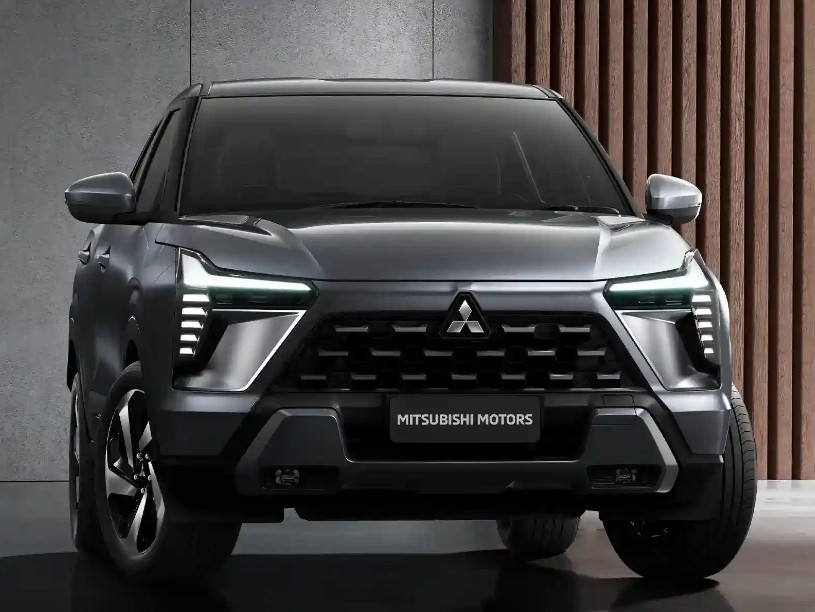
The Mitsubishi Outlander fuel capacity is not identical across every model year, engine, trim, or country. That simple fact explains why drivers often find several different answers when researching the size of an Outlander’s fuel tank.
For the current gasoline-powered Outlander sold in the United States, the fuel tank holds approximately 14.5 US gallons, equivalent to about 54.9 litres. The current Outlander PHEV sold in the United States has a capacity of approximately 14.0 US gallons, or roughly 53 litres. In Canada and some other markets, newer Outlander PHEV specifications commonly list a 56-litre fuel tank.
Older Outlander models can be different again. Depending on the generation, drivetrain, engine, and regional specification, previous gasoline models may hold around 60 to 63 litres, while older plug-in hybrid versions often use a smaller 43- or 45-litre tank.
Confusing? A little. Think of “Mitsubishi Outlander” as a family name rather than one fixed vehicle. Generations change, engines evolve, and markets receive different configurations.
In this guide, we will unpack those differences, convert litres into gallons, estimate driving range, explain why the fuel gauge may appear inaccurate, and help owners determine the correct capacity for their particular Outlander.
Content in this publication
- What Is the Mitsubishi Outlander Fuel Capacity?
- Mitsubishi Outlander Fuel Tank Capacity in Litres
- Mitsubishi Outlander Fuel Capacity in Gallons
- Fuel Capacity of the Current Gasoline Outlander
- Mitsubishi Outlander PHEV Fuel Capacity
- Older Mitsubishi Outlander PHEV Tank Sizes
- Fuel Capacity of Older Gasoline Outlander Models
- Mitsubishi Outlander Fuel Capacity by Generation
- How Far Can a Mitsubishi Outlander Travel on One Tank?
- Why You Cannot Use the Entire Tank Capacity
- When Does the Low-Fuel Warning Light Come On?
- Why the Fuel Gauge May Not Match the Pump
- Should We Fill the Outlander Tank to the Top?
- What Fuel Does the Mitsubishi Outlander Use?
- Does S-AWC Change the Fuel Tank Size?
- Factors That Reduce Outlander Driving Range
- How to Improve Fuel Range Without Driving Slowly Everywhere
- How Much Does It Cost to Fill a Mitsubishi Outlander?
- How Often Will an Outlander Need Refueling?
- How to Find Your Exact Outlander Fuel Capacity
- Is the Mitsubishi Outlander Fuel Tank Large Enough?
- Gasoline Outlander or PHEV: Which Travels Farther?
- Common Mitsubishi Outlander Fuel-Capacity Mistakes
- Final Thoughts on Mitsubishi Outlander Fuel Capacity
- Frequently Asked Questions
What Is the Mitsubishi Outlander Fuel Capacity?
The fuel capacity of a Mitsubishi Outlander generally falls between 43 and 63 litres, depending on the exact version.
Here is a practical overview:
| Outlander version | Approximate fuel capacity |
|---|---|
| Current gasoline Outlander, United States | 14.5 US gal / 54.9 L |
| Current Outlander PHEV, United States | About 14.0 US gal / 53 L |
| Newer Outlander PHEV, selected markets | 56 L / 14.8 US gal |
| Previous-generation Outlander PHEV | 43–45 L / 11.4–11.9 US gal |
| Selected older gasoline Outlanders | Around 60–63 L / 15.9–16.6 US gal |
The 2026 gasoline Outlander listed by Mitsubishi Motors in the United States has a 14.5-gallon tank, while Mitsubishi’s current US specifications list the Outlander PHEV at approximately 14 gallons.
We should treat these numbers as a starting point rather than a universal answer. Your owner’s manual and the label associated with your exact vehicle remain the best references.
Mitsubishi Outlander Fuel Tank Capacity in Litres
For drivers outside the United States, litres are normally the more useful measurement.
The current 14.5-US-gallon gasoline tank converts to approximately:
14.5 × 3.785 = 54.9 litres
That figure is commonly rounded to 55 litres.
Meanwhile, a 14.0-US-gallon PHEV tank converts to approximately:
14.0 × 3.785 = 53.0 litres
However, some markets use a 56-litre specification for newer PHEV models. Mitsubishi Canada, for example, described the redesigned Outlander PHEV as having a 56-litre tank, increased from the previous 43-litre capacity.
Why Do Some Websites Say 55 Litres and Others Say 56?
Small differences can result from:
- Market-specific vehicle configurations
- Different testing or reporting conventions
- Rounding between litres and US gallons
- Model-year updates
- Gasoline versus plug-in hybrid powertrains
- Two-wheel-drive versus all-wheel-drive layouts
- Differences between advertised and usable capacity
A one-litre variation does not necessarily mean one source is wrong. It may simply describe another regional model.
Mitsubishi Outlander Fuel Capacity in Gallons
Drivers in the United States usually see fuel capacity expressed in US gallons.
The most relevant modern figures are:
- Gasoline Outlander: approximately 14.5 US gallons
- Outlander PHEV: approximately 14.0 to 14.8 US gallons, depending on market
- Older gasoline versions: up to approximately 16.6 US gallons
- Older PHEV versions: approximately 11.4 to 11.9 US gallons
Be careful when reading specifications from the United Kingdom or other countries that historically use imperial gallons. A US gallon and an imperial gallon are not the same size.
US Gallons Versus Imperial Gallons
One US gallon equals approximately 3.785 litres.
One imperial gallon equals approximately 4.546 litres.
Therefore, a 56-litre tank equals roughly:
- 14.8 US gallons
- 12.3 imperial gallons
Mixing these units is like using two rulers with slightly different scales. The numbers appear close, but your calculations can drift surprisingly far.
Fuel Capacity of the Current Gasoline Outlander
The current US-market Mitsubishi Outlander uses a 14.5-gallon fuel tank across its mainstream gasoline configuration. Mitsubishi also lists seven-passenger seating and a towing capacity of up to 2,000 pounds for the 2026 model.
Its tank is not enormous for a three-row SUV, but it complements the vehicle’s relatively economical four-cylinder powertrain.
Mitsubishi Canada publishes 2026 Outlander fuel-consumption figures of approximately:
- 9.4 L/100 km in the city
- 7.8 L/100 km on the highway
- 8.7 L/100 km combined
Using the combined figure and a tank of roughly 55 litres, the mathematical range would be:
55 ÷ 8.7 × 100 = approximately 632 kilometres
That does not mean every driver will travel exactly 632 kilometres. Real-world conditions nibble away at theoretical range like small waves wearing down a shoreline.
Traffic, cold weather, hills, tire pressure, cargo, wind, and driving style all matter.
Mitsubishi Outlander PHEV Fuel Capacity
The Outlander PHEV combines a gasoline engine with a rechargeable traction battery and electric motors. Because some journeys can be completed primarily—or entirely—on electricity, tank size tells only part of the story.
Mitsubishi’s current US specification lists the 2026 Outlander PHEV with a fuel capacity of approximately 14 gallons.
In Canada, the newer-generation PHEV has been described with a 56-litre tank, a substantial increase over the previous 43-litre design. Mitsubishi stated that the larger tank, combined with the PHEV battery, supported a total estimated range of 687 kilometres for the cited model.
Why Does a PHEV Still Need a Large Fuel Tank?
A plug-in hybrid is designed to balance two personalities.
Around town, it can behave like an electric vehicle. On a long journey, its gasoline engine provides flexibility without forcing the driver to stop at a charging station.
The fuel tank therefore acts as a long-distance safety net. It becomes especially useful during:
- Highway trips
- Rural travel
- Cold-weather driving
- Towing
- Journeys without reliable charging
- Extended drives after the battery is depleted
The battery handles many short trips efficiently, while the fuel tank opens the door to longer adventures.
Older Mitsubishi Outlander PHEV Tank Sizes
Older Outlander PHEV models generally have smaller tanks than the redesigned version.
The owner’s manual for a 2018-model-year Outlander PHEV lists a 45-litre fuel tank.
The 2020-model-year UK manual lists a 43-litre capacity.
These smaller capacities made sense because the PHEV’s electric system was intended to reduce gasoline use. Nevertheless, owners who frequently drove long distances without charging sometimes noticed that the vehicle required more frequent fuel stops than a gasoline Outlander.
Why Did the PHEV Tank Grow?
Increasing the tank from approximately 43 litres to 56 litres improved long-distance flexibility.
The larger tank can provide:
- More total driving range
- Fewer fuel stops on road trips
- Greater convenience in rural areas
- Better flexibility when charging is unavailable
- More confidence during winter travel
At the same time, newer PHEV versions also gained larger batteries. Instead of choosing between electric usability and gasoline range, the redesigned model tries to strengthen both.
Fuel Capacity of Older Gasoline Outlander Models
Previous Outlander generations were sold with several powertrains, including four-cylinder and V6 engines. Their tank sizes were often larger than those of the current model.
For example, Mitsubishi’s technical information for the 2016 Outlander lists capacities including 16.6 gallons and 15.8 gallons, depending on the drivetrain and engine configuration.
Those figures convert to approximately:
- 16.6 US gallons = 62.8 litres
- 15.8 US gallons = 59.8 litres
This is why an owner of an older V6 Outlander may report filling nearly 60 litres, while a newer Outlander owner can reach “full” after adding considerably less.
They are both driving Outlanders, but mechanically, they are cousins rather than twins.
Mitsubishi Outlander Fuel Capacity by Generation
Exact capacities vary within each generation, but the following summary helps explain the broad pattern.
First-Generation Outlander
Early Outlander models were sold with different engines and drivetrains across Japan, North America, Europe, and other regions. Tank capacities commonly sat around the upper-50-litre to low-60-litre range, although regional variations existed.
Because many first-generation vehicles are now more than two decades old, owners should verify capacity using the original manual rather than relying on a modern Outlander specification.
Second-Generation Outlander
Second-generation models often used tanks close to 60 litres. V6-powered North American versions could have capacities around 15.8 to 16.6 US gallons.
These vehicles were designed during an era when larger naturally aspirated engines were common, so a larger tank helped maintain reasonable cruising range.
Third-Generation Outlander
The third generation introduced the Outlander PHEV to many international markets.
Gasoline versions commonly retained capacities around 60 litres, although the exact number depended on the engine and drivetrain. PHEV versions generally used smaller tanks of approximately 43 to 45 litres.
Fourth-Generation Outlander
The fourth-generation gasoline Outlander uses a tank of around 55 litres in the United States. The newer PHEV uses approximately 53 to 56 litres, depending on regional specifications.
The overall trend is clear: the gasoline model’s tank became somewhat smaller, while the PHEV’s tank became larger than before.
How Far Can a Mitsubishi Outlander Travel on One Tank?
Tank size alone cannot determine driving range. We also need fuel consumption.
The basic formula is:
Range = Fuel capacity ÷ Fuel consumption × 100
Suppose a gasoline Outlander has:
- A 55-litre tank
- Combined consumption of 8.7 L/100 km
The theoretical range is:
55 ÷ 8.7 × 100 = 632 km
Using US measurements, suppose the Outlander has:
- A 14.5-gallon tank
- Combined efficiency of 27 mpg
The mathematical result is:
14.5 × 27 = 391.5 miles
Mitsubishi lists the 2025 gasoline Outlander at 27 mpg combined for front-wheel drive and 26 mpg combined for S-AWC models.
Realistic Gasoline Outlander Range
A practical range for a modern gasoline Outlander may be around:
- 330–390 miles
- 530–630 kilometres
Highway-heavy driving may push the result upward. Short urban trips, winter operation, or aggressive acceleration can pull it downward.
Realistic Outlander PHEV Range
PHEV range is more difficult to summarize because charging habits change everything.
A driver who charges every night and completes short daily trips may go weeks without visiting a fuel station. Another owner who rarely charges may use the PHEV more like a conventional hybrid and refuel much more frequently.
Mitsubishi Canada lists the 2026 PHEV with a 22.7-kWh battery and an electric range of up to 72 kilometres under Canadian testing.
Therefore, total range depends on:
- Battery state of charge
- Fuel level
- Ambient temperature
- Cabin heating or air-conditioning
- Average speed
- Terrain
- Charging frequency
- Driving mode
Why You Cannot Use the Entire Tank Capacity
Drivers are often surprised when the pump stops several litres or gallons below the official tank size.
That is usually normal.
Published fuel capacity represents the approximate total internal volume of the tank. The amount you can add depends on how much fuel remains when you arrive at the station.
Even when the gauge reads empty, the tank may still contain a reserve.
The Fuel Reserve Explained
Manufacturers leave a buffer to reduce the likelihood of:
- Running the fuel pump dry
- Stranding the driver immediately
- Pulling sediment or contaminants toward the fuel pickup
- Interrupting engine operation during cornering or on slopes
For example, a 55-litre tank might accept only 47 to 51 litres after the low-fuel warning appears. That does not automatically mean the tank is undersized or defective.
The dashboard’s “empty” mark is more like a stern warning than a literal measurement of zero.
When Does the Low-Fuel Warning Light Come On?
The exact trigger depends on the year and model, but the warning normally appears while several litres remain.
Remaining range can vary dramatically. One driver may have 60 kilometres left, while another has less because their current fuel consumption is higher.
We should never treat the distance-to-empty display as a promise. It is an estimate based on recent driving.
What to Do When the Warning Appears
Once the low-fuel warning comes on:
- Find a suitable fuel station.
- Avoid hard acceleration.
- Reduce unnecessary idling.
- Do not deliberately test the maximum remaining range.
- Refuel before entering remote areas.
Running out of fuel can be more complicated in a hybrid than many owners expect. Even when battery energy remains, the vehicle may not allow normal driving under every condition.
Why the Fuel Gauge May Not Match the Pump
Fuel gauges are designed for safe, readable information—not laboratory precision.
Several factors can make the gauge and pump appear inconsistent.
The Vehicle Is Parked on a Slope
Fuel moves inside the tank. If the Outlander is parked nose-up, nose-down, or tilted sideways, the float sensor may temporarily report a different level.
The Gauge Is Electronically Damped
Modern gauges often respond gradually. This prevents the needle or digital bars from bouncing every time fuel sloshes around a corner.
After refueling, the display may need a little driving time before it fully updates.
The Pump Stops Early
Automatic fuel nozzles can shut off prematurely because of:
- Fast pump flow
- Fuel foaming
- Nozzle angle
- Vapor-back pressure
- A sensitive station nozzle
Restarting once at a slower flow may help. Repeatedly forcing more fuel into the tank is not recommended.
The Sending Unit Has a Fault
If the gauge consistently behaves strangely, a fuel-level sending unit, wiring connection, or instrument display problem may be involved.
Warning signs include:
- Gauge stuck on full
- Gauge stuck on empty
- Sudden level changes
- Low-fuel light with a nearly full tank
- Distance-to-empty dropping unusually fast
- Vehicle accepting far less fuel than expected repeatedly
Should We Fill the Outlander Tank to the Top?
We should stop when the pump automatically clicks off.
Adding more fuel after the first proper shutoff is known as topping off. It may seem harmless—just squeezing in a final splash—but it can create unnecessary problems.
Why Topping Off Is a Bad Habit
Overfilling may:
- Send liquid fuel into the evaporative-emissions system
- Damage or saturate the charcoal canister
- Cause fuel odors
- Trigger an engine warning light
- Allow fuel to expand and spill
- Waste money
Fuel expands as it warms. The empty space at the top of the tank is intentional, not wasted capacity.
What Fuel Does the Mitsubishi Outlander Use?
Fuel requirements depend on the engine and market.
Many modern gasoline Outlanders are designed to run on regular unleaded gasoline. However, octane labels differ by country. North America typically uses the AKI rating shown at the pump, while Australia, Europe, and other regions commonly use RON.
A number such as 91 RON is not equivalent to 91 AKI.
Always follow:
- The label inside the fuel door
- The owner’s manual
- Market-specific manufacturer guidance
Using premium fuel in an engine designed for regular gasoline does not automatically increase power, economy, or tank capacity.
Does S-AWC Change the Fuel Tank Size?
On current US gasoline Outlander models, the published tank capacity remains approximately 14.5 gallons. However, S-AWC can slightly affect fuel economy because all-wheel-drive hardware adds weight and mechanical load.
Mitsubishi’s 2025 US specifications list:
- 27 mpg combined for two-wheel drive
- 26 mpg combined for S-AWC
Therefore, even when tank size is identical, the two-wheel-drive version may travel slightly farther under comparable conditions.
The tank is the same bucket; the drivetrain changes how quickly we empty it.
Factors That Reduce Outlander Driving Range
A full tank does not guarantee the same range every week.
Cold Weather
Engines take longer to reach efficient operating temperature. Winter fuel blends, denser air, battery performance, and cabin heating can also increase energy use.
PHEV owners may notice a particularly large winter difference because the gasoline engine may run more frequently to provide heat or support the battery.
Heavy Traffic
Stop-and-go traffic increases idling and acceleration. Hybrid systems can recover some braking energy, but congestion still tends to reduce gasoline-model efficiency.
Highway Speed
Steady highway driving is efficient up to a point. As speed rises, aerodynamic drag increases sharply. Driving at 120 km/h usually consumes noticeably more fuel than cruising at 90 or 100 km/h.
Roof Boxes and Accessories
A roof box can act like a small parachute. It increases drag, especially at highway speeds.
Roof racks, oversized tires, mud flaps, and external cargo can also reduce range.
Low Tire Pressure
Underinflated tires create additional rolling resistance. The engine must work harder to move the vehicle.
Check pressure when the tires are cold and use the specification on the driver’s door-jamb label—not the maximum number printed on the tire sidewall.
Towing and Payload
Passengers, luggage, trailers, and steep roads all demand more energy.
A heavily loaded Outlander may travel significantly fewer kilometres or miles per tank than an unladen vehicle on a flat road.
How to Improve Fuel Range Without Driving Slowly Everywhere
Better fuel economy does not require crawling along like a parade float.
A few sensible habits make a meaningful difference:
- Accelerate smoothly rather than suddenly.
- Look ahead and reduce unnecessary braking.
- Maintain correct tire pressure.
- Remove unused roof accessories.
- Avoid carrying permanent heavy clutter.
- Use cruise control on suitable, relatively flat roads.
- Combine short errands when practical.
- Keep up with engine-oil and air-filter maintenance.
- Charge the PHEV regularly.
- Precondition a plugged-in PHEV before departure when supported.
Consistency matters more than perfection. One smooth trip will not transform annual fuel costs, but hundreds of smooth trips can.
How Much Does It Cost to Fill a Mitsubishi Outlander?
To estimate the cost of a full tank, multiply tank capacity by the local price per litre or gallon.
Example Using Litres
Suppose the Outlander has a 55-litre tank and fuel costs $1.70 per litre:
55 × $1.70 = $93.50
Example Using US Gallons
Suppose the tank holds 14.5 gallons and gasoline costs $3.60 per gallon:
14.5 × $3.60 = $52.20
In practice, we rarely add the complete published capacity because some fuel remains in the tank.
A more typical fill from the warning light might involve approximately 80 to 90 percent of total capacity.
How Often Will an Outlander Need Refueling?
A gasoline Outlander covering 12,000 miles per year at 27 mpg would consume approximately:
12,000 ÷ 27 = 444 gallons annually
With a 14.5-gallon tank, that represents around 31 full-tank equivalents per year.
Real refueling frequency depends on how early the driver fills up.
For the PHEV, the answer can be dramatically different. Owners who plug in daily and drive within the electric range may consume very little gasoline during normal commuting.
Mitsubishi Canada notes that the Outlander PHEV uses its 2.4-litre gasoline engine once additional power or range is required, while the combined system is rated using both fuel and electric energy.
How to Find Your Exact Outlander Fuel Capacity
Because specifications vary, we should identify the exact vehicle before trusting a number online.
Use the following checklist:
- Confirm the model year.
- Determine whether it is gasoline or PHEV.
- Identify the engine size.
- Check whether it is two-wheel drive or all-wheel drive.
- Confirm the country where the vehicle was originally sold.
- Read the capacities section of the owner’s manual.
- Verify the VIN with a Mitsubishi dealer if necessary.
Do Not Confuse the Outlander With the Outlander Sport
The Mitsubishi Outlander Sport is a separate, smaller vehicle known as the ASX in many markets.
Its tank capacity is not necessarily the same as the regular Outlander. Mitsubishi’s 2026 US specifications list the Outlander Sport with a 15.8-gallon fuel capacity, which is actually larger than the current US Outlander’s 14.5-gallon figure.
The similar name catches many shoppers off guard.
Is the Mitsubishi Outlander Fuel Tank Large Enough?
For most families, yes.
The current gasoline Outlander’s tank is smaller than the tanks fitted to some older versions, but improved fuel economy helps compensate. A potential range approaching 400 miles under favourable conditions is competitive for ordinary commuting and road trips.
The newer PHEV’s larger tank is particularly useful. Combined with electric driving, it gives owners two energy sources and considerable flexibility.
Still, the ideal tank size depends on how we use the vehicle.
A city driver living near numerous fuel stations may barely think about capacity. A rural driver crossing long distances between towns may value every additional litre.
Gasoline Outlander or PHEV: Which Travels Farther?
A gasoline Outlander offers predictable range based primarily on tank level and fuel economy.
The PHEV can offer greater combined flexibility when it begins with both a charged battery and a full tank. Yet its efficiency advantage depends heavily on charging.
Choose the gasoline Outlander when:
- Home charging is unavailable
- Most trips are long highway journeys
- Purchase simplicity is a priority
- Predictable gasoline operation is preferred
Choose the Outlander PHEV when:
- You can charge regularly
- Daily journeys are relatively short
- You want electric commuting with gasoline backup
- Reducing fuel-station visits matters
- You still need long-distance flexibility
Neither choice is automatically better for everyone. The correct one fits the journey pattern, not merely the brochure.
Common Mitsubishi Outlander Fuel-Capacity Mistakes
Drivers and shoppers frequently make a few understandable errors.
Mistake 1: Assuming Every Outlander Has the Same Tank
Tank size changes by generation, engine, drivetrain, and country.
Mistake 2: Comparing US and Imperial Gallons
The gallon values differ significantly.
Mistake 3: Confusing Capacity With Refill Amount
The tank usually contains reserve fuel when the warning light appears.
Mistake 4: Treating Distance-to-Empty as Exact
The calculation changes according to recent consumption.
Mistake 5: Ignoring PHEV Charging Habits
A PHEV’s practical gasoline range and consumption depend heavily on how frequently it is charged.
Mistake 6: Confusing Outlander and Outlander Sport
They are separate vehicles with different specifications.
Final Thoughts on Mitsubishi Outlander Fuel Capacity
The Mitsubishi Outlander fuel capacity is typically about 14.5 US gallons or 55 litres for the current gasoline model sold in the United States. Current PHEV versions generally hold approximately 53 to 56 litres, depending on the market.
Older gasoline Outlanders may carry roughly 60 to 63 litres, while previous-generation PHEV models often use 43- or 45-litre tanks.
Those differences explain why there is no single number that applies to every Outlander ever built.
The smartest approach is simple: identify the model year, powertrain, drivetrain, and original market, then consult the correct owner’s manual. Once we know the genuine capacity, we can estimate range, plan fuel stops, and understand why the pump may shut off before the advertised volume has been added.
A tank is more than a hollow container under the rear seats. It is part of a larger equation involving efficiency, battery power, weather, driving habits, and vehicle design. Learn that equation, and the Outlander becomes far more predictable on every journey.
Frequently Asked Questions
1. How many litres does a Mitsubishi Outlander hold?
A current gasoline Mitsubishi Outlander generally holds approximately 55 litres. Newer Outlander PHEV models may hold about 53 to 56 litres, depending on the country. Older gasoline versions can hold around 60 to 63 litres, while older PHEVs often have 43- or 45-litre tanks.
2. How many gallons is the Mitsubishi Outlander fuel tank?
The current US gasoline Outlander has a 14.5-US-gallon tank. The current US Outlander PHEV holds approximately 14 gallons. Older gasoline models may hold up to approximately 16.6 gallons.
3. How far can an Outlander travel on a full tank?
A modern gasoline Outlander may cover approximately 330 to 390 miles, or around 530 to 630 kilometres, depending on driving conditions. The PHEV’s total range also includes its electric driving range when the battery begins fully charged.
4. Why can’t I put 55 litres into my 55-litre Outlander tank?
Some fuel normally remains when the gauge reaches empty or the warning light comes on. The advertised capacity represents the approximate total tank volume, not necessarily the amount required during a routine refill.
5. Does the Outlander PHEV have a smaller fuel tank?
Older PHEV models usually have a smaller 43- or 45-litre tank. Newer PHEV versions increased capacity to approximately 53 to 56 litres, bringing them much closer to the current gasoline Outlander.
If you want to know other articles similar to Mitsubishi Outlander Fuel Capacity: Tank Sizes, Range, and Refueling Guide you can visit the category Service and Parts.
BYD Shark 6 Weight: Kerb Weight, Payload, GVM and What It Means
BYD Shark 6 Towing Capacity: Complete Towing Guide
Peugeot RCZ Engine Swap: Options, Costs, Compatibility, and What You Need to Know
Mitsubishi Pajero Sport Engine Size: Complete Engine Guide
Mitsubishi Pajero Sport Weight: Kerb Weight, GVM, Payload and What It Really Means
Mitsubishi Pajero Sport Service Reset: Complete Step-by-Step Guide
Leave a Reply
More content of your interest