

What Year Ford Taurus Is Best? A Complete Used-Car Guide

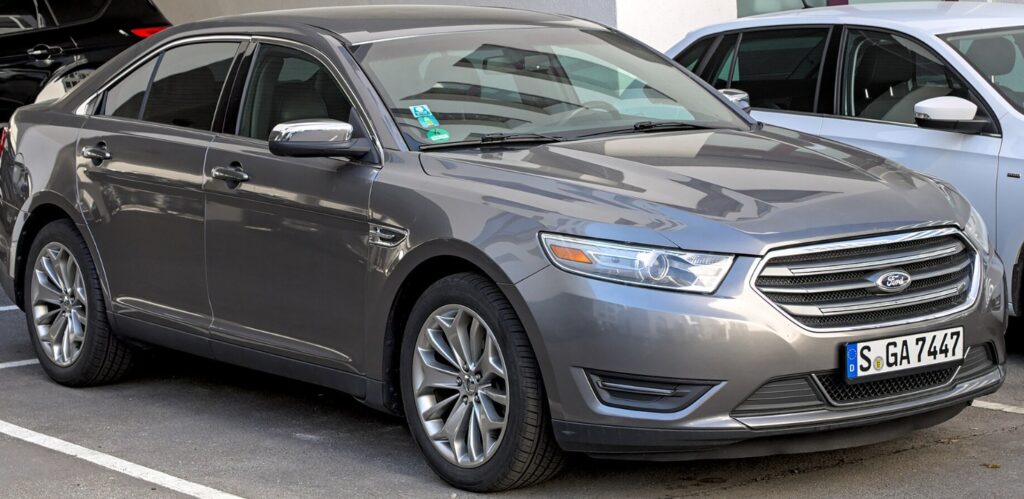
The best Ford Taurus year is generally 2018, especially for buyers who want a modern full-size sedan with proven mechanical components, strong safety credentials, comfortable highway manners, and fewer age-related concerns than earlier models.
However, that answer comes with an important twist. A well-maintained 2015 or 2016 Taurus may be a smarter purchase than a neglected 2018. Likewise, buyers seeking a simple, inexpensive commuter might prefer a clean 2006 model, while performance fans will naturally gravitate toward a later Taurus SHO.
So, what year Ford Taurus is best for you?
That depends on whether we care most about reliability, price, safety, comfort, performance, or long-term ownership costs. Let’s sort through the generations, identify the strongest years, flag the riskier ones, and find the Taurus that delivers the most car for the money.
Content in this publication
- Best Ford Taurus Years at a Glance
- Why the 2018 Ford Taurus Is Our Best Overall Pick
- Is the 2019 Ford Taurus Better Than the 2018?
- Why the 2016 Ford Taurus Is a Strong Value
- Is the 2015 Ford Taurus Reliable?
- Best Older Ford Taurus Year: 2006
- Best Ford Taurus SHO Year
- Which Ford Taurus Generation Is Best?
- Ford Taurus Years We Would Approach Carefully
- Which Taurus Engine Is Best?
- Front-Wheel Drive or All-Wheel Drive?
- Is a Ford Taurus Expensive to Maintain?
- How Many Miles Can a Ford Taurus Last?
- What to Inspect Before Buying Any Taurus
- How Much Should We Pay for a Used Taurus?
- Our Final Ranking of the Best Ford Taurus Years
- Conclusion: What Year Ford Taurus Is Best to Buy?
- Frequently Asked Questions
Best Ford Taurus Years at a Glance
For shoppers who want the main recommendations without circling the parking lot, these are the standout choices:
- 2018 Ford Taurus — best overall
- 2016 Ford Taurus — best balance of price and modern features
- 2015 Ford Taurus — best value for most used-car shoppers
- 2006 Ford Taurus — best inexpensive older model
- 2019 Ford Taurus — best final-year model
- 2017–2018 Taurus SHO — best performance choice
The 2013–2019 Taurus models also benefited from improved side-curtain airbag coverage compared with the earliest sixth-generation cars. IIHS testing applied many of its crashworthiness findings across these later model years, although buyers should still examine the exact safety equipment fitted to an individual vehicle.
Why the 2018 Ford Taurus Is Our Best Overall Pick
The 2018 Taurus sits near the end of the model’s American production run, but it avoids some of the final-year price premium that can follow a 2019 example.
By 2018, Ford had been building this basic Taurus platform for nearly a decade. That matters. Cars often improve as manufacturers refine assembly processes, update software, revise minor components, and address early production quirks. The 2018 model was not revolutionary, but that is partly why it makes sense as a used purchase.
It is like buying a mature smartphone after several software updates rather than ordering the first version on launch day. The design may no longer feel cutting-edge, but most of the major surprises have already surfaced.
What Makes the 2018 Taurus Appealing?
The 2018 model offers:
- A spacious, quiet cabin
- A large trunk
- Available all-wheel drive
- A naturally aspirated V6 in mainstream trims
- Available twin-turbocharged performance in the SHO
- Solid highway stability
- Modern infotainment compared with much older Taurus models
- Fewer age-related problems than early sixth-generation cars
The standard 3.5-liter V6 is not the most efficient engine in the full-size-sedan world, but it is smooth, familiar, and well suited to the Taurus’s substantial weight.
One Recall Detail to Check
Certain 2017–2018 Taurus vehicles were included in a safety compliance recall involving the ignition key system. This does not automatically make the 2018 model a bad choice, but it reinforces one of our most important rules: check the vehicle identification number before buying.
A recall that has been completed is usually less concerning than a hidden collision, skipped transmission services, or years of neglected fluid changes.
Is the 2019 Ford Taurus Better Than the 2018?
The 2019 Taurus was the final American-market model year, which gives it a certain appeal. There is something satisfying about buying the finished version of a long-running nameplate. It is the closing chapter rather than the rough first draft.
Mechanically, however, the 2019 Taurus is not dramatically better than the 2018. It still uses the same basic platform, similar engines, and familiar six-speed automatic transmissions.
A typical 2019 Taurus SEL used a 3.5-liter V6, six-speed automatic transmission, and front-wheel drive, while all-wheel drive remained available on selected configurations. It also provided a particularly large 20.1-cubic-foot trunk, one of the Taurus’s strongest practical advantages.
When the 2019 Taurus Is the Better Buy
Choose the 2019 model when:
- Its service history is complete
- Its price is close to a comparable 2018
- You want the newest possible U.S.-market Taurus
- Lower mileage is more important than saving a few thousand dollars
- You plan to keep the car for several years
When the 2018 Taurus Makes More Sense
The 2018 is usually the smarter value when:
- A similar 2019 costs noticeably more
- Both vehicles have comparable mileage
- The equipment levels are nearly identical
- You are not emotionally attached to owning the final model year
We would not pay a large premium simply because the registration says 2019. Condition should always outrank calendar year.
Why the 2016 Ford Taurus Is a Strong Value
The 2016 Taurus lands in a useful middle ground. It feels modern enough for daily use but has usually depreciated more heavily than the newest examples.
That combination makes it one of the best Taurus years for budget-conscious shoppers who still want contemporary comfort.
The 2016 model can offer features such as:
- Available all-wheel drive
- Touchscreen infotainment
- Leather upholstery on higher trims
- Dual-zone climate control
- Heated and ventilated front seats on selected versions
- Blind-spot monitoring on properly equipped cars
- Adaptive cruise control on some higher-spec examples
Not every 2016 Taurus includes those features, of course. Ford offered several trims and option packages, so two cars from the same year can feel surprisingly different.
The Sweet-Spot Trim
For many buyers, the 2016 Taurus SEL is the sweet spot.
The basic SE may be cheaper, but the SEL generally provides a more pleasant equipment list without adding all the complexity or price of a fully loaded Limited or SHO.
A clean SEL with the regular 3.5-liter V6, documented servicing, and no accident history can make an excellent highway commuter.
Is the 2015 Ford Taurus Reliable?
The 2015 Taurus is another strong candidate, particularly when purchase price matters.
It comes from the later portion of the sixth generation, after the major 2013 refresh. That refresh brought exterior changes, updated technology, revised controls, and mechanical refinements.
The 2015 model does not feel dramatically older than a 2018 from the driver’s seat. Yes, the newer car may have improved infotainment and small equipment changes, but the basic driving experience remains familiar.
Why We Like the 2015 Model
We like the 2015 Taurus because it often provides:
- A lower price than 2017–2019 models
- Similar cabin space
- The same substantial road presence
- Broad parts availability
- Several trim and drivetrain combinations
- A relatively mature platform
Still, shoppers should verify the operation of the rearview camera and check the VIN for any applicable campaigns. Later recall activity has included rear-camera concerns affecting some Taurus model years, so an official VIN search is wiser than relying on the seller’s memory. NHTSA recommends checking recalls using the vehicle’s license plate or 17-character VIN.
Best Older Ford Taurus Year: 2006
Not everyone wants a large, technology-heavy sedan. Some buyers simply need cheap transportation with affordable replacement parts and straightforward controls.
For that mission, the 2006 Ford Taurus deserves consideration.
The 2000–2007 generation is far less glamorous than the later Taurus. It looks like sensible footwear on wheels. Yet that plainness can be an advantage. The car is mechanically familiar, widely understood by independent repair shops, and generally inexpensive to purchase.
Why 2006 Stands Out
Among older Taurus models, the 2006 year is frequently regarded as one of the safer bets because it came late in its generation. By then, the platform and powertrains were well established.
It can be a reasonable option for:
- A first car
- A secondary household vehicle
- Short commutes
- Drivers with a limited purchase budget
- Owners who prefer basic mechanical systems
However, age changes the equation. A 2006 Taurus is now old enough that rubber seals, suspension bushings, cooling-system parts, hoses, electrical connections, and interior materials may matter more than the original design quality.
A beautiful service history beats a low odometer reading on a car this old.
Mileage Is Only Half the Story
Would we rather buy a 2006 Taurus with 90,000 miles and no maintenance records, or one with 140,000 miles and a thick folder of receipts?
In many cases, we would choose the higher-mileage car.
You may be interested in reading Ford Taurus vs Toyota Avalon: Which Full-Size Sedan Wins?
Regular transmission-fluid changes, cooling-system maintenance, brake work, and suspension repairs suggest that the owner treated the car as a machine worth preserving rather than a disposable appliance.
Best Ford Taurus SHO Year
The Taurus SHO is a different animal. It wears the body of a comfortable family sedan but hides a twin-turbocharged engine and standard all-wheel-drive performance underneath.
For enthusiasts, the 2017 or 2018 Taurus SHO is generally the most appealing choice.
These later SHOs combine:
- A 3.5-liter twin-turbocharged EcoBoost V6
- All-wheel drive
- Strong straight-line acceleration
- A mature version of the sixth-generation platform
- More modern technology than early 2010–2012 models
- A restrained, sleeper-like appearance
The SHO can move with surprising urgency. It is less like a lightweight sports car and more like a business-class jet gathering speed down a runway.
Why We Prefer a Late SHO
Later SHOs are newer, tend to have updated electronics, and benefit from years of production experience. However, they are also complicated vehicles with turbochargers, all-wheel-drive hardware, additional cooling demands, and more performance-related stress.
A poorly maintained SHO can turn a tempting purchase price into a deep repair bill.
SHO Components to Inspect Carefully
Before buying, inspect or test:
- Turbocharger operation
- Cooling-system condition
- Transmission shift quality
- Power transfer unit condition
- Rear differential operation
- Oil leaks
- Service records
- Evidence of tuning or modifications
- Signs of repeated hard launches
- Uneven tire wear
A modified SHO is not automatically a bad car, but undocumented engine tuning should make us cautious. Extra power is fun until the repair invoice arrives wearing steel-toed boots.
Which Ford Taurus Generation Is Best?
The Taurus name covers several very different cars. Comparing a 1989 Taurus with a 2018 model is like comparing two houses built under the same family name decades apart.
First Generation: 1986–1991
The first Taurus was a landmark design. Its rounded shape looked futuristic beside the square sedans of the 1980s.
Today, these cars are primarily enthusiast or collector purchases. Finding one in excellent condition is difficult, and parts availability may be inconsistent.
Second Generation: 1992–1995
The second generation refined the original formula. It remains historically interesting, especially in SHO form, but age makes it unsuitable for most people seeking dependable everyday transportation.
Third Generation: 1996–1999
The third-generation Taurus adopted highly rounded styling. It was distinctive, but certain examples developed reputations for transmission and quality concerns.
A clean survivor may still provide inexpensive transportation, but we would not call this the safest generation for a typical buyer.
Fourth Generation: 2000–2007
The fourth generation toned down the styling and became a common fleet and family vehicle.
Late models, particularly 2005–2007 examples, are generally preferable to early cars because they benefit from more years of production refinement. The 2006 model is our favorite budget choice from this group.
Fifth Generation: 2008–2009
The fifth-generation Taurus was essentially a renamed and updated version of the Ford Five Hundred.
It offered a spacious interior, tall seating position, and practical shape. Its two-year run means inventory can be limited, but a maintained example can still be worthwhile.
We would lean toward 2009 because it is the later year, although the final decision should rest on condition.
Sixth Generation: 2010–2019
For most modern used-car buyers, the sixth generation is the best Taurus generation.
It provides:
- Modern crash structures
- Strong V6 performance
- Available all-wheel drive
- Contemporary comfort features
- A huge trunk
- Better highway refinement
- Easier integration into present-day driving
Within this generation, we prefer 2015–2019, with 2018 earning the top spot.
Ford Taurus Years We Would Approach Carefully
No model year is guaranteed to fail, and even a frequently criticized year can be reliable when properly maintained. Still, some Taurus years deserve extra scrutiny.
Early 2000s Models
The 2000 and 2001 Taurus are commonly associated with higher concern over transmission behavior and age-related mechanical issues.
These cars are now more than two decades old, so even a historically dependable example may require work simply because materials deteriorate with time.
The 2003 Ford Taurus
The 2003 Taurus had respectable moderate-overlap crash-test performance for its era, but crash standards and vehicle design have advanced significantly since then.
We would consider one only when the price is low, the structure is rust-free, and maintenance records are convincing.
The 2008 Taurus
The 2008 model introduced the revived Taurus badge on the former Five Hundred platform. It was roomy and generally comfortable, but the 2009 model may be preferable simply because it represents the second and final year of that short generation.
The 2010–2012 Taurus
The 2010 model launched the sixth generation with bold styling and a more premium character. These early cars can still be good purchases, but they deserve careful inspection because they are the oldest versions of the modern platform.
Potential concerns include:
- Worn suspension components
- Aging electronics
- Water-pump-related risk on certain V6 applications
- Transmission shift quality
- All-wheel-drive system maintenance
- Interior control wear
We would not reject a 2011 or 2012 automatically. We would simply demand a stronger price advantage over a 2014–2016 example.
Which Taurus Engine Is Best?
The engine decision can matter as much as the model year.
3.5-Liter Naturally Aspirated V6
For most shoppers, the conventional 3.5-liter V6 is the best all-around choice.
It provides adequate power without the additional turbocharging hardware found in the SHO. It suits the Taurus’s relaxed personality and handles highway merging without feeling strained.
Its disadvantages include modest fuel economy and the potential for expensive repairs when maintenance is neglected.
2.0-Liter EcoBoost Four-Cylinder
Some later Taurus models offered a turbocharged 2.0-liter four-cylinder.
Although it may appear attractive for fuel savings, the Taurus is a heavy car. The smaller turbo engine must work hard, particularly with passengers and luggage.
We would choose it only when:
- Fuel economy is a major priority
- The service records are excellent
- The price is attractive
- A thorough inspection finds no turbo or cooling concerns
3.5-Liter EcoBoost V6 in the SHO
The SHO’s twin-turbo V6 is the exciting choice, not necessarily the economical one.
You may be interested in readingFord Taurus vs Toyota Avalon: Which Full-Size Sedan Wins?You may be interested in reading
Ford Taurus vs Honda Accord: Which Used Sedan Is Better?It delivers impressive acceleration but brings higher potential costs for fuel, tires, brakes, turbocharger-related components, and all-wheel-drive maintenance.
For an enthusiast, those trade-offs may be worthwhile. For a commuter seeking predictable expenses, the regular V6 is usually the calmer decision.
Front-Wheel Drive or All-Wheel Drive?
All-wheel drive can improve traction in snow, heavy rain, and slippery conditions. It also helps the SHO transfer its power to the road.
However, all-wheel drive adds:
- More weight
- More mechanical components
- Additional maintenance requirements
- Potential repair costs
- Sensitivity to mismatched tire sizes
For drivers in mild climates, front-wheel drive is often the better long-term value. It is simpler and generally more efficient.
Buyers in snowy regions may prefer all-wheel drive, but they should still remember that AWD does not improve braking. Quality tires remain the foundation of winter safety.
Is a Ford Taurus Expensive to Maintain?
A regular Taurus is usually less expensive to service than a European luxury sedan, but it may cost more to run than a smaller Ford Fusion, Toyota Camry, or Honda Accord.
The Taurus is large and heavy. That means it can consume:
- More fuel
- Larger tires
- More brake material
- More suspension components over time
- Additional labor for tightly packaged engine repairs
The SHO raises the financial stakes further.
Still, the Taurus can offer tremendous used-car value because depreciation often lowers its purchase price. We may get near-luxury comfort for ordinary-family-sedan money, provided we leave room in the budget for maintenance.
How Many Miles Can a Ford Taurus Last?
A well-maintained Taurus can potentially exceed 200,000 miles, but there is no universal expiration point.
Longevity depends on:
- Oil-change history
- Transmission servicing
- Cooling-system condition
- Driving habits
- Climate
- Rust exposure
- Accident history
- Engine choice
- Quality of previous repairs
A car that spent its life cruising long highway distances may be healthier at 150,000 miles than one with 80,000 miles accumulated through short, cold urban trips.
The odometer tells us how far the car has traveled. It does not tell us how kindly it traveled those miles.
What to Inspect Before Buying Any Taurus
A pre-purchase inspection is essential, especially for a Taurus with all-wheel drive or EcoBoost power.
Exterior and Body
Look for:
- Uneven panel gaps
- Paint overspray
- Rust around wheel arches and subframes
- Moisture inside lights
- Cracked trim
- Windshield damage
- Uneven tire wear
Engine and Cooling System
Check:
- Coolant level and condition
- Oil leaks
- Unusual timing or bearing noises
- Exhaust smoke
- Rough idle
- Signs of overheating
- Warning lights
- Maintenance records
Transmission
During the test drive, pay attention to:
- Delayed engagement
- Hard shifts
- Slipping
- Shuddering
- Hesitation
- Fluid leaks
- Warning messages
Interior Electronics
Test every switch, including:
- Touchscreen
- Climate controls
- Power seats
- Heated and ventilated seats
- Backup camera
- Parking sensors
- Audio system
- Windows and locks
- Steering-wheel buttons
- Blind-spot monitoring
Do Not Skip the VIN Check
Use the VIN to verify open recalls, ownership history, title status, and reported accidents. NHTSA provides a recall-search process using the VIN or license plate, and outstanding recall repairs are generally completed without charge at an authorized dealer.
How Much Should We Pay for a Used Taurus?
Pricing varies by region, mileage, trim, drivetrain, condition, and service history. Rather than focusing on one universal number, compare several local examples with similar specifications.
A car deserves a higher price when it has:
- Complete maintenance records
- One or two careful owners
- No structural accident history
- Matching quality tires
- Recent brakes
- Clean fluids
- No warning lights
- A professional inspection report
A cheap Taurus with four worn tires, leaking suspension, overdue brakes, and questionable transmission behavior is not cheap. It is merely an expensive car wearing a low price tag.
Our Final Ranking of the Best Ford Taurus Years
1. 2018 Ford Taurus
The best overall blend of age, refinement, equipment, availability, and mature engineering.
2. 2016 Ford Taurus
An excellent value for buyers who want modern features without paying late-model prices.
3. 2015 Ford Taurus
A practical choice with much of the later car’s comfort at a lower purchase price.
4. 2019 Ford Taurus
The newest and final U.S. model year, ideal when the price premium is reasonable.
5. 2006 Ford Taurus
Our preferred older budget model, provided condition and maintenance are strong.
6. 2017–2018 Ford Taurus SHO
The enthusiast’s choice, offering serious performance with appropriately serious maintenance responsibilities.
Conclusion: What Year Ford Taurus Is Best to Buy?
So, what year Ford Taurus is best?
For most shoppers, the answer is 2018. It sits late in the final American generation, offers a comfortable and stable driving experience, and avoids much of the age-related deterioration affecting earlier models.
The 2016 and 2015 Taurus are excellent alternatives for value seekers. The 2019 model is appealing as the newest and final-year version, but it is not worth a dramatic premium over an equally clean 2018.
For buyers on a tight budget, a maintained 2006 Taurus can still serve as honest transportation. Performance fans should look toward a 2017 or 2018 SHO, while keeping a larger repair reserve.
Above all, we should buy the car, not merely the year. A detailed service history, clean inspection, smooth test drive, and responsible previous owner matter more than a single number on the registration document.
The best Taurus is not necessarily the newest one in the classifieds. It is the example that has been maintained like someone planned to keep it forever.
Frequently Asked Questions
1. Is the 2018 Ford Taurus reliable?
The 2018 Taurus is generally one of the stronger years because it comes late in the sixth generation and uses well-established mechanical components. Reliability still depends heavily on maintenance, drivetrain, mileage, and previous ownership.
2. Is the 2019 Ford Taurus worth buying?
Yes. The 2019 Taurus can be a good purchase when it has complete service records and costs only slightly more than a comparable 2018. We would not pay a large premium simply because it was the final model year.
3. What Ford Taurus years should we avoid?
We would approach 1996–2001 examples, early-2000s cars with questionable transmission histories, and poorly maintained 2010–2012 models with extra caution. Individual condition matters more than reputation alone.
4. What is the most reliable Ford Taurus engine?
For most buyers, the naturally aspirated 3.5-liter V6 offers the best balance of performance, availability, and mechanical simplicity. The SHO’s twin-turbo V6 is much quicker but can be more expensive to maintain.
5. Is a Ford Taurus a good first car?
A Taurus can be a good first car when it is affordable, properly inspected, and not excessively powerful. However, its large dimensions, fuel consumption, and insurance costs may make a smaller sedan more practical for some new drivers.
You may be interested in readingFord Taurus vs Toyota Avalon: Which Full-Size Sedan Wins?You may be interested in reading
Ford Taurus vs Honda Accord: Which Used Sedan Is Better?You may be interested in reading
Ford Taurus vs Mondeo: Which Ford Sedan Is the Better Buy?If you want to know other articles similar to What Year Ford Taurus Is Best? A Complete Used-Car Guide you can visit the category Models.
Kia Sorento Models: Complete Guide to Trims, Engines and Versions
BYD Shark 6 vs Ranger vs HiLux: Which Ute Makes the Most Sense in 2026?
BYD Shark 6 vs MG U9: Which Ute Makes More Sense in 2026?
BYD Shark 6 vs Ford Ranger Raptor: Which Performance Ute Is Better in 2026?
BYD Shark 6 vs Kia Tasman: Which Ute Is Better?
BYD Shark 6 vs 7: What We Know So Far
Leave a Reply
More content of your interest