

Mazda BT-50 vs Ford Ranger: Which Pickup Is Better?

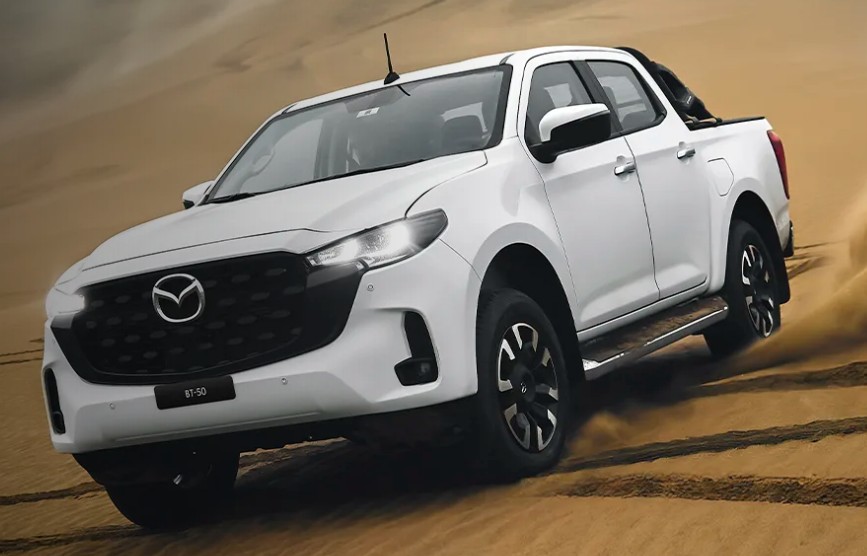
The Mazda BT-50 vs Ford Ranger comparison is an interesting one because these two pickups once shared much more than a place on the same shopping lists. Previous-generation BT-50 models were closely related to the Ranger, but that family connection is history. Today, the Mazda BT-50 is based on the Isuzu D-Max platform, while the Ford Ranger follows Ford's own architecture.
That separation has given both trucks very different personalities.
The BT-50 feels straightforward, tough and deliberately uncomplicated. The Ranger, meanwhile, pushes harder toward technology, refinement and engine choice. Think of the Mazda as a sturdy hiking boot and the Ford as a modern multi-tool. Both can tackle difficult jobs, but they approach them from different angles.
So, which should we buy?
For people who want simplicity, a proven diesel formula and potentially lower ownership complexity, the Mazda BT-50 makes a convincing case. If we care more about outright performance, cabin technology, towing features and the broadest possible model range, however, the Ford Ranger has the stronger hand.
Let's break down exactly where each ute wins.
Content in this publication
- Mazda BT-50 vs Ford Ranger at a Glance
- Are the Mazda BT-50 and Ford Ranger the Same Truck?
- Mazda BT-50 vs Ford Ranger Engine Performance
- Ford Ranger V6 Performance
- Mazda BT-50 vs Ford Ranger Towing Capacity
- Payload and Work Capability
- Off-Road Capability
- Ride Comfort and On-Road Driving
- Interior Quality and Cabin Design
- Safety Technology
- Fuel Economy
- Mazda BT-50 vs Ford Ranger Reliability
- Maintenance and Ownership Costs
- Styling: Rugged Ford or Sleeker Mazda?
- Ford Ranger Advantages
- Mazda BT-50 Advantages
- Mazda BT-50 vs Ford Ranger for Towing
- Mazda BT-50 vs Ford Ranger for Off-Roading
- Mazda BT-50 vs Ford Ranger as a Family Vehicle
- Mazda BT-50 vs Ford Ranger for Work
- Which Truck Offers Better Value?
- Should You Buy a Mazda BT-50 or Ford Ranger?
- Final Verdict
- Frequently Asked Questions
Mazda BT-50 vs Ford Ranger at a Glance
Before digging into the details, here's how the two broadly compare in their current Australian-market forms. Specifications vary by trim and market, so individual versions should always be checked before buying.
| Category | Mazda BT-50 | Ford Ranger |
|---|---|---|
| Main diesel engine | 3.0L turbo-diesel | 2.0L or 3.0L V6 turbo-diesel |
| Main diesel power | Up to 140 kW | Up to 184 kW |
| Main diesel torque | Up to 450 Nm | Up to 600 Nm |
| Transmission | 6-speed automatic | 10-speed automatic |
| Maximum braked towing | Up to 3,500 kg | Up to 3,500 kg |
| Maximum advertised payload | Around 1.2 tonnes | Up to 1,412 kg, depending on configuration |
| 4WD availability | Yes | Yes |
| Rear differential lock | Available | Available |
| Best suited to | Simplicity and value | Performance and technology |
Mazda currently advertises the BT-50 with up to 140 kW and 450 Nm from its 3.0-litre turbo-diesel, up to a 1.2-tonne payload and 3.5-tonne towing capacity. Ford's current Ranger range stretches considerably further, including a 184 kW/600 Nm 3.0-litre V6 turbo-diesel alongside other powertrains.
On paper, therefore, the Ford takes an early lead. Yet specifications never tell the whole story.
Are the Mazda BT-50 and Ford Ranger the Same Truck?
No—not anymore.
This point matters because plenty of buyers still associate the BT-50 with the Ranger.
Older generations of the two pickups shared platforms, engines and numerous mechanical components. The modern BT-50 took a different road. Mazda developed the current generation through its partnership with Isuzu, making it mechanically much closer to the Isuzu D-Max than today's Ford Ranger. Mazda itself confirmed that change when introducing the new-generation model.
That means we shouldn't choose between these trucks based on the assumption that we're getting essentially the same mechanical package with different badges.
We're not.
The Modern Mazda BT-50 Formula
The BT-50 mixes Mazda styling and equipment choices with rugged commercial-vehicle fundamentals. Its main 3.0-litre diesel is relatively traditional in character and is paired with a six-speed automatic transmission.
The result isn't particularly exotic—and that's part of the appeal.
Anyone who wants a ute to behave like a ute rather than a luxury SUV wearing work boots may appreciate that approach.
The Modern Ford Ranger Formula
Ford has taken a more ambitious path.
The current Ranger line offers multiple powertrains, sophisticated electronics and versions ranging from work-focused cab-chassis models to lifestyle-oriented luxury trucks and serious performance machines.
In Australia, Ford currently offers Ranger variants with a 2.0-litre turbo-diesel, 3.0-litre V6 turbo-diesel, plug-in hybrid powertrain and, in the Raptor, a twin-turbo petrol V6.
Few competitors can match that breadth.
Mazda BT-50 vs Ford Ranger Engine Performance
Performance is where the gap becomes much clearer.
Mazda BT-50 3.0-Litre Diesel
The 3.0-litre turbo-diesel remains the heart of the BT-50 range in Australia, producing up to 140 kW and 450 Nm.
Those numbers aren't class-leading, but they don't need to be.
There's enough low-down torque for hauling equipment, towing caravans and dealing with steep roads without making the engine feel constantly stressed.
The six-speed automatic also has fewer ratios to work through than Ford's ten-speed unit. That can make it feel less busy in certain situations.
If we simply want predictable diesel grunt, the BT-50 delivers it.
Is 450 Nm Enough?
For most owners, yes.
Torque figures have become something of an arms race among dual-cab utes, but more isn't automatically necessary. A 450 Nm engine can still tow substantial loads and deal comfortably with normal off-road driving.
Where we notice the difference is when overtaking with a heavy trailer, accelerating uphill or carrying serious weight. That's when the Ranger V6's extra muscle becomes difficult to ignore.
Ford Ranger V6 Performance
The Ranger's available 3.0-litre V6 turbo-diesel produces 184 kW and 600 Nm in current mainstream Australian specifications.
That's a significant advantage.
We're looking at roughly 33 percent more torque than the Mazda's 3.0-litre engine, along with a substantial power increase.
Put your foot down and the Ranger feels less like it's asking permission from the load behind it. There's simply more reserve performance.
Ford pairs the V6 with a 10-speed automatic. The transmission has plenty of ratios to keep the engine in its useful operating range, although drivers who prefer a simpler drivetrain may still like Mazda's six-speed setup.
Which Engine Is Better?
For pure performance, the Ford Ranger V6 wins easily.
For straightforward operation and sufficient everyday diesel performance, however, the Mazda isn't embarrassed.
We'd put it this way: the Ranger gives us power we enjoy having; the BT-50 gives us the power most people actually need.
Mazda BT-50 vs Ford Ranger Towing Capacity
Here's where the contest tightens considerably.
Both trucks can be rated to tow up to 3,500 kg braked in appropriate configurations.
Mazda states that its 3.0-litre BT-50 variants can tow as much as 3,500 kg when properly equipped, while lighter-engine configurations can carry lower ratings depending on the version. Ford also advertises up to 3,500 kg maximum towing capacity for the Ranger.
So does that make them equal?
Not quite.
Towing Capacity Isn't the Whole Equation
A maximum tow rating is only one number in a much bigger equation.
We also need to account for GVM, GCM, tow-ball download, passengers, accessories, fuel, tray loads and any aftermarket equipment.
A ute capable of towing 3.5 tonnes doesn't necessarily allow us to load the vehicle to its maximum payload while simultaneously pulling a 3.5-tonne trailer.
That's where inexperienced buyers get caught.
The Ranger's Towing Technology Advantage
Ford has put considerable effort into making towing easier rather than merely giving the Ranger a big number on the brochure.
Depending on trim, features can include trailer-related blind-spot monitoring, integrated trailer brake functionality and Ford's Pro Trailer Backup Assist.
Those features don't increase the legal maximum towing rating, but they can make life with a caravan, horse trailer or large boat less stressful.
For frequent heavy towing, we'd favor the Ranger V6.
Payload and Work Capability
Mazda advertises BT-50 payload capability of up to approximately 1.2 tonnes, depending on configuration.
Ford advertises an even higher maximum Ranger payload of up to 1,412 kg, although Ford explicitly notes that actual payload varies substantially with body style, grade and configuration.
And that's important.
A base work truck and a heavily equipped luxury dual cab may share the Ranger badge while having very different payload limits.
The same principle applies to the Mazda.
If our truck will genuinely earn its living carrying tools, tanks, service bodies or construction equipment, checking the compliance plate and variant-specific payload matters far more than quoting the highest figure available anywhere in the model range.
Which Is the Better Work Ute?
This one depends on the job.
The Ford range provides enormous configuration flexibility, particularly if we include cab-chassis and specialized heavy-duty derivatives. Mazda counters with a more straightforward range and a practical chassis.
For fleet or work buyers who don't need every electronic bell and whistle, the BT-50 can be wonderfully sensible.
Sometimes simpler really is better.
Off-Road Capability
Neither truck is pretending.
Both can leave the bitumen and do real work away from paved roads.
The BT-50 offers proper 4WD hardware, including high- and low-range operation, hill-descent assistance and a locking rear differential on suitable variants. Mazda has also historically quoted an 800 mm wading capability for the generation.
The Ranger counters with a sophisticated 4WD system on applicable variants, locking rear differential technology and multiple selectable drive modes. Ford currently advertises up to seven drive modes on suitable models and an 800 mm maximum wading figure for mainstream Ranger variants.
Mazda BT-50 Off Road
The Mazda's strengths become obvious on rough tracks.
Controls are relatively easy to understand, the diesel produces useful low-speed torque and the overall package feels engineered around traditional ute priorities.
It doesn't attempt to turn every muddy road into a digital experience.
That can be refreshing.
Ford Ranger Off Road
The Ranger is the more sophisticated machine.
Depending on specification, the truck can use selectable modes and vehicle electronics to optimize behavior for different surfaces.
You may be interested in reading Renault Koleos vs Nissan X-Trail: Which SUV Is Better?
High-end off-road versions push things further again.
The advantage isn't that electronics magically eliminate the laws of physics. They don't. But the Ranger gives less experienced drivers more tools for adapting the vehicle to difficult terrain.
Which One Would We Take Into the Bush?
For demanding recreational off-roading in comparable trims, we'd give the Ranger the advantage because of its broader capability and technology.
For remote-area ownership where simplicity carries its own value, however, a BT-50 remains extremely appealing.
Ride Comfort and On-Road Driving
Here's where modern pickup buyers have become demanding.
Twenty years ago, we tolerated agricultural ride quality because, well, it was a truck.
Today? Not so much.
People expect a dual cab to haul concrete on Friday and take the family hundreds of kilometres on Saturday.
The Ranger excels at this double life.
The Ranger Feels More SUV-Like
Ford has spent years refining the Ranger's road manners.
Steering is relatively composed, the chassis feels settled for a ladder-frame ute and the cabin isolates occupants well enough that longer highway journeys don't feel like punishment.
The V6 strengthens that sense of effortlessness.
Acceleration comes without needing to squeeze every last drop from the engine, particularly when loaded.
The BT-50 Still Feels Like a Proper Ute
The Mazda isn't uncomfortable, but its personality tends to be more traditional.
Unladen ride quality can remind us there's a load-carrying chassis underneath. Put some weight in the back, and the suspension starts making more sense.
Some buyers will actually prefer this character because the truck feels sturdy and direct rather than overly polished.
Others will climb into the Ranger and immediately decide it's worth paying more for the additional refinement.
Interior Quality and Cabin Design
If our ute doubles as the family car, cabin quality matters enormously.
Mazda BT-50 Interior
Mazda has worked hard to ensure its ute doesn't feel like a rebadged commercial truck.
Higher specifications add more attractive materials, comfort features and enough modern infotainment to prevent the cabin from seeming dated.
Yet it remains relatively conventional.
Controls generally look like controls. We don't need a software engineering degree to figure out the ventilation before leaving the driveway.
That's a compliment.
Ford Ranger Interior
The Ranger makes a stronger first impression.
Current Australian Ranger specifications include a large 12-inch portrait-oriented touchscreen even on some lower grades, while selected upper trims receive additional digital instrumentation and premium equipment.
It looks contemporary.
Storage is also well thought out, something that matters surprisingly much when we actually live with a truck.
Phones, sunglasses, cables, bottles, keys and work gear rapidly invade a cabin like ants at a picnic. Ford has clearly considered that reality.
Technology Winner: Ford Ranger
No mystery here.
The Ranger's interface, displays, connected features and available camera systems give it the edge.
Buy the Mazda because we want a functional cabin.
Buy the Ford because we want the cabin to feel like part of the purchase's excitement.
Safety Technology
Both vehicles are modern enough that we shouldn't accept bare-bones safety equipment simply because they're commercial vehicles.
Available systems across the pair include technology such as:
- Autonomous emergency braking, adaptive cruise control, lane assistance, blind-spot monitoring, rear cross-traffic alert, parking assistance and camera-based visibility features, although availability differs by model, specification and market.
Ford's Australian Ranger specifications go particularly deep in higher trims, with features such as 360-degree cameras, lane centring and trailer-related assistance available depending on grade.
The key word is depending.
Never assume every version has the same driver-assistance package. A base work truck and an upper-grade lifestyle model can differ substantially.
Fuel Economy
This is one category where giving a single winner would be misleading.
Fuel consumption varies enormously based on engine, drivetrain, body type, wheel size, load, driving conditions and whether we're towing.
Mazda advertises current BT-50 fuel consumption figures spanning roughly 6.6 to 7.8 L/100 km across parts of its Australian range.
Real-world consumption will often be higher, especially for dual-cab 4WD models being used as intended.
The Ranger's consumption varies even more because Ford offers such a broad range of engines.
Does the Ranger V6 Use More Fuel?
We can't create extra cylinders and 600 Nm of torque out of fresh air.
The V6's extra performance may bring a fuel penalty compared with smaller diesel configurations depending on driving conditions. But when towing heavily, a larger engine working comfortably can sometimes feel more appropriate than a smaller engine constantly being pushed.
That's why we'd choose based on workload, not merely the lowest official consumption number.
Mazda BT-50 vs Ford Ranger Reliability
Reliability comparisons require caution.
Owners often want a simple answer—"Which one lasts longer?"—but reliability isn't a single measurable specification like towing capacity.
Service history, driving environment, modifications, manufacturing year and workload can matter just as much as the badge.
Why the BT-50 Appeals to Reliability-Minded Buyers
The Mazda's powertrain philosophy is relatively conservative.
Its 3.0-litre four-cylinder diesel and six-speed automatic aren't chasing headline output figures. For buyers who associate mechanical simplicity with long-term confidence, that has obvious appeal.
The BT-50's Isuzu connection also matters because Isuzu has spent decades specializing in diesel commercial vehicles.
That doesn't make the Mazda indestructible. Nothing mechanical is.
But the recipe makes sense.
Why the Ranger Isn't Automatically Less Reliable
The Ranger has greater mechanical and electronic complexity in certain configurations, especially as we move toward higher trims and advanced powertrains.
Complexity can mean more potential failure points, but it would be unfair to turn that into a prediction that a Ranger will be unreliable.
The smarter approach is to evaluate the specific engine, transmission and model year we're considering.
Used Buyers Should Focus on History
Given the choice between a perfectly maintained Ranger and a neglected BT-50, we'd buy the Ranger.
Reverse those histories and we'd buy the Mazda.
A badge cannot rescue years of skipped oil changes.
Maintenance and Ownership Costs
This category can swing the final decision.
The Ranger may offer more power and equipment, but replacing sophisticated components isn't free.
Higher-spec trims also bring larger wheels, more sensors and extra equipment that can increase repair costs as vehicles age.
The Mazda's relatively conventional formula may appeal to someone planning to keep the truck for ten years rather than three.
That said, actual servicing prices vary widely between countries and dealers.
Our advice is simple: before signing anything, obtain servicing schedules and estimated maintenance costs for the exact variant.
A slightly cheaper purchase can become expensive if its maintenance doesn't suit our usage.
Styling: Rugged Ford or Sleeker Mazda?
Finally, something we don't need a calculator to debate.
The Ranger looks deliberately tough.
Its broad front, squared-off proportions and muscular stance borrow visual cues from larger American trucks. If we want our ute to look like it could pull a house off its foundations, the Ford delivers the image.
The Mazda is more restrained.
Mazda has carried some of its passenger-car design philosophy into the BT-50, creating a cleaner and slightly more elegant front end.
You may be interested in readingRenault Koleos vs Nissan X-Trail: Which SUV Is Better?You may be interested in reading
Renault Koleos vs Audi Q5: Which SUV Makes More Sense?Neither approach is objectively better.
It's cowboy boots versus a tailored outdoor jacket.
Pick your personality.
Ford Ranger Advantages
The Ranger becomes the stronger choice when we prioritize maximum capability and features.
Its big advantages are engine variety, the available 600 Nm V6 diesel, sophisticated towing technology, extensive trim selection, strong infotainment and impressive on-road refinement.
There's simply more breadth.
A basic work Ranger and a premium Ranger can feel like completely different vehicles.
That's a strength because Ford lets buyers choose exactly how far they want to climb.
Mazda BT-50 Advantages
The Mazda's strengths are almost the opposite.
It's less interested in being everything to everyone.
The BT-50 gives us a capable 3.0-litre diesel, 3.5-tonne towing in relevant variants, proper 4WD capability and respectable payload potential without turning the truck into a rolling technology demonstration.
For buyers who want the important stuff without unnecessary complexity, that's attractive.
It may also present stronger value depending on local pricing and dealer offers.
Mazda BT-50 vs Ford Ranger for Towing
If towing a heavy caravan frequently is our main priority, we'd choose the Ford Ranger V6.
Both can reach the 3.5-tonne maximum braked towing figure in appropriate configurations, but the Ford's additional torque gives us more breathing room.
Six hundred Newton-metres doesn't change the legal towing limit. It changes how easily the vehicle reaches highway speed, handles hills and recovers speed after slowing.
That's what we'll feel from behind the wheel.
For occasional towing of moderate trailers, the BT-50 should be entirely adequate and potentially more economical to buy.
Mazda BT-50 vs Ford Ranger for Off-Roading
For recreational off-roading, we'd lean toward the Ford Ranger, particularly in one of its dedicated adventure-oriented configurations.
Its drive modes, cameras and specialized versions provide enormous capability.
But here's the twist.
If we're travelling through remote country where access to sophisticated diagnostics could become difficult, simplicity suddenly looks attractive.
That's where the BT-50 claws back ground.
The best off-road vehicle isn't always the one with the most buttons. Sometimes it's the one we trust to get home.
Mazda BT-50 vs Ford Ranger as a Family Vehicle
The Ranger wins.
Its stronger road refinement, modern cabin presentation, storage solutions and technology make it easier to live with when the ute serves double duty as weekday transport and weekend adventure machine.
Children won't care about differential ratios.
They will care about comfort, charging devices, rear-seat ventilation and how much stuff they can bring.
The Ford understands this lifestyle exceptionally well.
The Mazda remains perfectly viable as family transportation, but its strongest qualities emerge when utility takes priority over luxury.
Mazda BT-50 vs Ford Ranger for Work
This one is much closer.
If raw configuration choice and payload potential matter, Ranger has a compelling range.
If we just need a dependable diesel workhorse without paying for features that won't earn us money, the BT-50 deserves a serious look.
Businesses should run the numbers rather than shopping emotionally.
Calculate purchase cost, usable payload, servicing expenses, fuel, insurance and expected resale value.
A shiny touchscreen doesn't complete invoices.
Which Truck Offers Better Value?
Value isn't synonymous with cheap.
A $50,000 truck that fails our requirements is worse value than a $60,000 truck that does everything we need.
The Ranger justifies its premium when we actually use its stronger engines, advanced towing systems, cabin technology and broader capability.
If those features will spend their lives untouched, we're paying for potential rather than usefulness.
The BT-50's value proposition becomes strongest for the buyer who says, "Give me a capable diesel, four-wheel drive, a useful tray and the equipment I actually need."
There's something appealingly uncomplicated about that.
Should You Buy a Mazda BT-50 or Ford Ranger?
For most private buyers wanting the strongest all-round package, we'd select the Ford Ranger.
It wins our comparison because it combines serious towing capacity, stronger available diesel performance, excellent technology, broad model choice and impressive everyday refinement.
But this isn't a knockout.
The Mazda BT-50 is arguably the smarter purchase for certain owners.
If we value a simpler drivetrain philosophy, proven commercial-vehicle foundations, capable towing and straightforward operation more than enormous screens or 600 Nm torque figures, the Mazda can make more financial and practical sense.
Choose the Mazda BT-50 If…
We'd lean toward the BT-50 when durability, simplicity, traditional diesel performance and value are higher priorities than class-leading power.
It suits owners who want their ute primarily to be a ute.
Choose the Ford Ranger If…
We'd choose the Ranger when towing performance, cabin refinement, technology, engine choice and all-round versatility matter most.
It suits buyers trying to replace both a work truck and a family SUV with one vehicle.
Our Overall Winner
Ford Ranger.
The gap isn't enormous in every area, but the Ranger's broader talent ultimately wins.
The BT-50 is a capable hammer.
The Ranger is the whole toolbox.
Final Verdict
The Mazda BT-50 vs Ford Ranger debate ultimately comes down to what we expect a modern pickup to be.
The Mazda takes the traditional path. It gives us a strong 3.0-litre diesel, legitimate towing capability, useful payload capacity and proper four-wheel-drive hardware wrapped in distinctive Mazda styling.
The Ford stretches the definition.
It can be a workhorse, tow rig, family vehicle, luxury pickup or high-performance off-roader depending on which version we choose.
That's why the Ranger takes our overall crown.
Its available 3.0-litre V6 diesel is considerably more powerful than Mazda's 3.0-litre unit, its interior feels more sophisticated and its towing and off-road technology can make demanding jobs easier.
Yet buying the "winner" isn't always the smartest move.
A driver who doesn't need a V6, massive screens or extensive electronic assistance could save money and end up perfectly happy with the BT-50. Its relative simplicity is not a weakness—it is part of its identity.
So don't ask only, "Which truck is better?"
Ask a more useful question:
"Which one is better for what we're actually going to do with it?"
For maximum all-round ability, pick the Ranger.
For straightforward, hard-working utility, don't overlook the BT-50.
Frequently Asked Questions
Is the Mazda BT-50 the Same as the Ford Ranger?
No. Although earlier Mazda BT-50 generations shared major mechanical components and platforms with the Ford Ranger, the current BT-50 is based on Isuzu architecture and is closely related to the Isuzu D-Max. The modern Ranger uses Ford's separate platform.
Which Is More Powerful, Mazda BT-50 or Ford Ranger?
The Ford Ranger offers substantially more diesel performance in V6 form. Current Australian specifications list the Ranger's 3.0-litre V6 turbo-diesel at 184 kW and 600 Nm, compared with up to 140 kW and 450 Nm from the BT-50's 3.0-litre turbo-diesel.
Which Is Better for Towing, Mazda BT-50 or Ford Ranger?
Both can tow up to 3,500 kg braked in suitable configurations, but we'd favor the Ford Ranger V6 for frequent heavy towing because its 600 Nm output provides substantially greater performance reserve. Actual towing suitability depends on the vehicle's GVM, GCM, payload and tow-ball limits.
You may be interested in readingRenault Koleos vs Nissan X-Trail: Which SUV Is Better?You may be interested in reading
Renault Koleos vs Audi Q5: Which SUV Makes More Sense?You may be interested in reading
Renault Koleos vs Austral: Which Renault SUV Is Better?Which Is More Reliable, Ford Ranger or Mazda BT-50?
There is no universal reliability winner across every model year and engine. The BT-50's relatively conventional 3.0-litre diesel and six-speed automatic may appeal to buyers seeking mechanical simplicity, while Ranger reliability should be assessed according to the specific engine, transmission, year and maintenance history.
Is the Mazda BT-50 Cheaper Than the Ford Ranger?
That depends on country, trim level and current dealer pricing. The BT-50 can represent strong value when compared with similarly equipped Ranger variants, but Ford offers a much wider range of configurations. Buyers should compare equivalent body styles, drivetrains and equipment rather than simply looking at each model's cheapest advertised price.
If you want to know other articles similar to Mazda BT-50 vs Ford Ranger: Which Pickup Is Better? you can visit the category Models.
Kia Sorento Models: Complete Guide to Trims, Engines and Versions
BYD Shark 6 vs Ranger vs HiLux: Which Ute Makes the Most Sense in 2026?
BYD Shark 6 vs MG U9: Which Ute Makes More Sense in 2026?
BYD Shark 6 vs Ford Ranger Raptor: Which Performance Ute Is Better in 2026?
BYD Shark 6 vs Kia Tasman: Which Ute Is Better?
BYD Shark 6 vs 7: What We Know So Far
Leave a Reply
More content of your interest