

Mitsubishi Outlander vs Nissan Rogue: Which SUV Is the Better Buy?

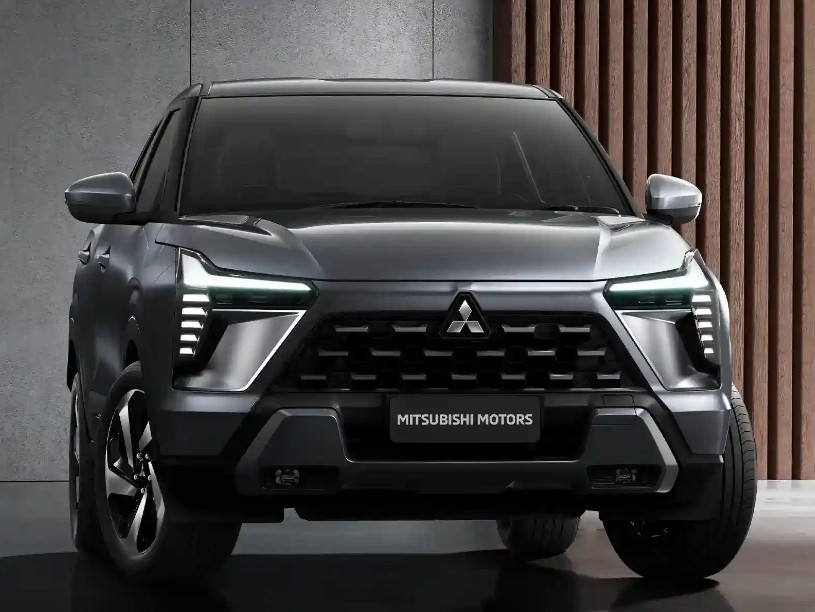
The Mitsubishi Outlander vs Nissan Rogue battle is one of those SUV comparisons that looks straightforward until we start digging beneath the sheet metal. Park them beside each other and they appear to be close relatives: both are compact-to-midsize crossover SUVs, both prioritize families, both offer all-wheel-drive technology, and both compete for buyers who want practicality without moving into a huge, thirsty SUV.
Yet their personalities are surprisingly different.
The Nissan Rogue—known as the Nissan X-Trail in most global markets—leans toward efficiency, everyday usability, and a comfortable two-row layout. The Mitsubishi Outlander takes a slightly more adventurous approach, offering available seven-seat versatility, Mitsubishi's sophisticated S-AWC all-wheel-control technology, and, crucially, one of the most established plug-in-hybrid systems in its class.
So which one should we actually buy?
For most shoppers, the decision boils down to a few questions. Do we need seven seats? Can we charge a vehicle at home? Do we prioritize cargo space or occasional passenger capacity? Are we chasing fuel economy, strong AWD capability, or the simplest ownership experience?
Let's break down the Nissan Rogue vs Mitsubishi Outlander comparison piece by piece.
Content in this publication
- Mitsubishi Outlander vs Nissan Rogue at a Glance
- Design: Outlander Looks Tougher, Rogue Looks Cleaner
- Interior Quality: The Gap Is Smaller Than You Might Expect
- Seating Capacity: The Outlander Has a Major Advantage
- Cargo Space: Rogue Makes Better Use of Two Rows
- Performance: This Depends Heavily on Where We Live
- Mitsubishi Outlander Petrol: Smooth Rather Than Sporty
- Nissan Rogue Performance: Turbocharged Flexibility
- Outlander PHEV: Mitsubishi's Secret Weapon
- Nissan X-Trail e-POWER: A Different Hybrid Philosophy
- Fuel Economy: There Is No Universal Winner
- AWD: Mitsubishi S-AWC vs Nissan e-4ORCE
- Ride Comfort: Rogue Is the Effortless Daily Driver
- Technology and Infotainment
- Safety and Driver Assistance
- Reliability: Which One Should We Trust Long Term?
- Warranty: Mitsubishi Can Be Extremely Competitive
- Running Costs: Think Beyond Fuel
- Which Is Better for City Driving?
- Which Is Better for Road Trips?
- Which Is Better for Large Families?
- Which Is Better for Couples or Smaller Families?
- Mitsubishi Outlander vs Nissan Rogue: Which Should You Buy?
- Final Verdict: Mitsubishi Outlander vs Nissan Rogue
- Frequently Asked Questions
- Is a Mitsubishi Outlander better than a Nissan Rogue?
- Are the Mitsubishi Outlander and Nissan Rogue the same size?
- Does the Mitsubishi Outlander have more seats than the Nissan Rogue?
- Which is more fuel-efficient, the Nissan Rogue or Mitsubishi Outlander?
- Is the Outlander PHEV worth buying over a Nissan Rogue?
Mitsubishi Outlander vs Nissan Rogue at a Glance
Before diving into details, here's the broad picture.
| Category | Mitsubishi Outlander | Nissan Rogue / X-Trail |
|---|---|---|
| Seating | Up to 7 in many markets | Usually 5; some X-Trail markets offer 7 |
| Powertrain philosophy | Petrol plus strong PHEV focus | Petrol, VC-Turbo or e-POWER depending on market |
| AWD technology | Available S-AWC | Available AWD or e-4ORCE |
| Cabin character | Upscale, substantial | Practical, modern, family-focused |
| Third row | Major advantage where offered | Market-dependent |
| Electrification | Plug-in hybrid available | e-POWER hybrid available in many X-Trail markets |
| Best suited to | Families wanting versatility or PHEV capability | Buyers prioritizing efficiency and everyday practicality |
The interesting twist is that neither vehicle has one universal global specification.
The Rogue sold in North America, for instance, isn't mechanically identical to every X-Trail sold elsewhere. Nissan's current X-Trail family can feature e-POWER, VC-Turbo technology and e-4ORCE electric AWD depending on the country. Mitsubishi similarly sells conventional Outlander and Outlander PHEV configurations that vary by region.
That makes this less of a specification-sheet boxing match and more of a question of philosophy.
Design: Outlander Looks Tougher, Rogue Looks Cleaner
Styling is subjective, obviously, but these SUVs approach the family-crossover formula from opposite directions.
The Outlander deliberately tries to look imposing. Mitsubishi's Dynamic Shield front design, broad grille, sculpted bodywork and available large wheels give it considerably more visual weight than we might expect from its footprint. Mitsubishi itself developed the fourth-generation vehicle around a more powerful, substantial visual presence.
The Rogue is smoother.
Nissan gives it plenty of SUV cues, yet its styling generally feels cleaner and less aggressive. The result is something that blends easily into an urban environment without looking anonymous.
Which Design Ages Better?
Our vote narrowly goes to the Outlander for personality.
It looks more expensive than many mainstream crossovers, especially in higher trims. The Rogue's conservative styling may age gracefully, though, and buyers who dislike oversized grilles may prefer Nissan's approach.
In simple terms, the Mitsubishi arrives wearing hiking boots. The Nissan walks in wearing comfortable trainers.
Neither is wrong.
Interior Quality: The Gap Is Smaller Than You Might Expect
Older Mitsubishi interiors sometimes felt a generation behind their competitors. The current Outlander changed that conversation dramatically.
Its dashboard is horizontally arranged, controls are generally easy to understand, and upper trims can feel surprisingly premium. Mitsubishi has continued refining the cabin, including upgraded infotainment and higher-end audio options on newer versions. Recent updated Outlander PHEV models have also received a 12.3-inch infotainment system and additional comfort improvements in applicable markets.
The Nissan Rogue is equally convincing but follows a slightly different philosophy.
Rather than trying to imitate a luxury SUV, the Rogue feels optimized around the realities of family life. Storage spaces are useful, the layout is intuitive, and the cabin makes good use of available room.
Outlander Interior Strengths
The Mitsubishi has an appealing sense of occasion. Depending on trim, quilted upholstery, large displays and attractive materials can make it feel closer to a premium crossover than its badge might suggest.
Rogue Interior Strengths
The Rogue fights back with usability.
Everything seems designed around people carrying phones, bags, drinks, children and all the miscellaneous clutter that mysteriously follows a family everywhere.
If we care primarily about perceived luxury, the Outlander has an edge.
If uncomplicated practicality matters more, the Rogue is difficult to fault.
Seating Capacity: The Outlander Has a Major Advantage
Here we reach one of the biggest differences.
Many versions of the Mitsubishi Outlander provide three-row, seven-passenger seating. Mitsubishi specifically engineered the present-generation platform—including the PHEV—to accommodate a third row, with the PHEV packaging designed to retain seven-passenger capability.
That's unusual in this segment.
We shouldn't mistake the Outlander's rear seats for full-size SUV accommodation, however. Adults probably won't volunteer to spend six hours back there.
The third row is better thought of as an emergency reserve.
Need to bring two extra children to football practice? Excellent.
Grandparents joining us for a short restaurant trip? Manageable.
Seven adults embarking on a cross-country journey? That's where optimism starts becoming punishment.
What About the Nissan Rogue?
The North American Rogue is primarily a five-passenger SUV.
The X-Trail sold elsewhere can vary, with certain markets offering configurations that differ from the Rogue, including seven-seat versions.
For global shoppers, therefore, we need to check the exact specification available locally.
Still, the Outlander has built much more of its identity around seven-passenger flexibility.
Winner for Families: Mitsubishi Outlander
Even an occasional third row can fundamentally change how useful a vehicle is.
We might use those seats only ten times per year. On the eleventh occasion, though, they can save us from needing another car.
Cargo Space: Rogue Makes Better Use of Two Rows
There's a trade-off.
Third-row seats need somewhere to live.
When all Outlander seats are raised, the cargo area naturally becomes much smaller than it is in a dedicated two-row SUV. Fold the third row and the Mitsubishi becomes far more useful, but buyers who constantly haul bulky cargo may find the Rogue's simpler arrangement preferable.
The Nissan is especially attractive if our usual routine involves four or five passengers plus luggage rather than six or seven people.
Think airport runs, shopping, pushchairs, sports equipment and suitcases.
In those scenarios, a well-designed two-row SUV often beats a compromised three-row vehicle.
Performance: This Depends Heavily on Where We Live
Here's where a global comparison gets interesting.
There isn't one universal Rogue engine, and there isn't one universal Outlander powertrain.
Nissan uses different technologies across the Rogue/X-Trail family. The fourth-generation X-Trail is offered internationally with technologies including VC-Turbo, e-POWER and e-4ORCE, depending on market. Nissan's e-POWER setup is particularly unusual because the petrol engine generates electricity while electric motors provide the driving force rather than the engine directly powering the wheels in the conventional sense.
The Outlander also takes several forms, but its most distinctive version is unquestionably the PHEV.
Mitsubishi Outlander Petrol: Smooth Rather Than Sporty
Conventional Outlander models are generally built around comfort and predictable daily performance rather than outright acceleration.
That's fine.
Does anyone really buy a seven-seat family crossover because they want to attack a mountain road like a rally driver?
Acceleration is sufficient for normal commuting and motorway use, but some versions can feel strained during hard overtaking or when fully loaded.
The upside is refinement.
The throttle response is generally easy to manage, and the vehicle's personality encourages relaxed driving.
Nissan Rogue Performance: Turbocharged Flexibility
Where sold with Nissan's variable-compression turbocharged engine technology, the Rogue offers an interesting balance between low-speed torque and efficiency.
The system alters compression characteristics to respond to different power demands.
In normal driving, that translates into decent low-end shove without requiring a large-displacement engine.
We wouldn't call the Rogue a performance SUV, but its responsive torque delivery suits overtaking and merging well.
Which Feels Faster?
That depends entirely on the versions being compared.
A conventional Outlander versus a turbocharged Rogue can favor Nissan.
Introduce the Outlander PHEV or X-Trail e-POWER into the discussion and everything changes.
That's why shoppers should resist articles claiming one universal horsepower winner without specifying country, model year and powertrain.
Outlander PHEV: Mitsubishi's Secret Weapon
If there is one reason the Mitsubishi Outlander vs Nissan Rogue comparison becomes fascinating, it's the Outlander PHEV.
Mitsubishi has spent years developing this formula.
The current system combines petrol power with substantial battery capacity, electric propulsion and twin-motor all-wheel drive. Mitsubishi's S-AWC system coordinates those components to manage traction and vehicle behavior.
Recent versions have pushed the technology further. The updated European Outlander PHEV was announced with more than 80 km of electric range under WLTP testing, while specifications vary substantially in other regions.
That means the right owner can complete much of their normal commuting without regularly using petrol.
Why the PHEV Changes the Ownership Experience
Suppose our work commute is relatively short and we have home charging.
We leave every morning with a charged battery.
You may be interested in reading Mitsubishi Outlander vs Toyota Highlander: Which SUV Should You Buy?
Drive to work.
Return home.
Plug in overnight.
For many routine journeys, the Outlander behaves more like an electric vehicle with a petrol safety net than a conventional petrol SUV.
Yet when we want to drive several hundred kilometres, we simply refuel instead of planning a journey around public charging stations.
That's an extremely compelling compromise.
But Only If We Charge It
Buying a plug-in hybrid and rarely plugging it in defeats much of the purpose.
The battery adds weight. The powertrain adds complexity. And we're paying extra for hardware we aren't properly exploiting.
If home or workplace charging isn't realistic, another Rogue/X-Trail or standard Outlander configuration may make more sense.
Nissan X-Trail e-POWER: A Different Hybrid Philosophy
Nissan's answer outside some Rogue markets is e-POWER.
It behaves differently from a traditional hybrid because the wheels are driven electrically while the petrol engine acts as an onboard source of electrical generation.
That gives the X-Trail a driving character closer to an electric vehicle than many conventional hybrids.
Acceleration can feel immediate because electric motors deliver torque quickly.
Nissan also pairs e-POWER with available e-4ORCE technology on applicable X-Trail variants, giving the vehicle electronically managed all-wheel-drive capability. Nissan says the latest X-Trail generation was developed around stronger rough-road performance alongside improved on-road quietness and comfort.
PHEV vs e-POWER
The difference is important.
The Mitsubishi can potentially travel significant distances using electricity charged from an external source.
The Nissan e-POWER system produces the electricity it needs onboard.
So which idea is better?
Home charger available? We lean toward the Outlander PHEV.
No charger available? Nissan's approach becomes incredibly attractive because we get much of the smoothness of electric propulsion without changing our refueling routine.
Fuel Economy: There Is No Universal Winner
Comparing fuel economy globally using a single number would be misleading.
Different countries use EPA, WLTP, WLTC and other testing systems. Engines vary. Wheel sizes vary. AWD availability varies.
Instead, we should look at the broader pattern.
The Rogue/X-Trail is generally engineered to deliver strong efficiency without asking much from the owner.
The Outlander PHEV can dramatically reduce petrol consumption for drivers who charge frequently, but results depend heavily on usage.
A 25-kilometre commuter with home charging and a 500-kilometre-per-week motorway driver could own identical Outlander PHEVs and report wildly different fuel consumption.
Context matters more than the sticker.
AWD: Mitsubishi S-AWC vs Nissan e-4ORCE
This is one of the closest battles.
Mitsubishi has considerable history with sophisticated four-wheel-control systems, and S-AWC is far more than an AWD badge glued to the tailgate.
On the Outlander PHEV, front and rear electric motors allow extremely quick adjustment of driving force. Mitsubishi's control system can coordinate torque distribution and braking behavior to enhance stability and traction.
Nissan's e-4ORCE takes a similarly electronic approach on compatible X-Trail models.
Electric motors offer engineers much finer torque control than many traditional mechanical systems.
Which Is Better in Snow?
Both are highly capable when properly equipped.
Tires remain enormously important.
The world's cleverest AWD system on inappropriate tires can be less useful than a simpler AWD vehicle wearing proper winter rubber.
For buyers regularly dealing with snow, gravel roads or poor surfaces, we'd place both SUVs near the top of the mainstream crossover class.
Mitsubishi gets a slight emotional advantage here because S-AWC is such a central part of the Outlander's identity.
Ride Comfort: Rogue Is the Effortless Daily Driver
The Nissan's strongest quality might be how little effort it demands from us.
Steering is easy.
The ride is comfortable.
Visibility is generally good.
Controls don't require a computer-science degree.
Drive one for a week and it quickly becomes background machinery—and we mean that as a compliment.
Good family cars shouldn't constantly demand attention.
Outlander Feels More Substantial
The Outlander often feels heavier and more planted, particularly in electrified form.
Some drivers will interpret that as reassuring solidity. Others may prefer the Rogue's lighter personality.
Recent Outlander updates have also focused specifically on suspension tuning, ride stability and refinement.
If comfort is our only priority, Nissan narrowly wins.
For a more substantial, almost near-premium feeling, Mitsubishi pulls ahead.
Technology and Infotainment
Both models now deliver the technology buyers expect from modern crossovers.
Depending on trim and market, we can find large touchscreens, digital instrument displays, smartphone integration, surround-view cameras, wireless charging and comprehensive driver-assistance systems.
Mitsubishi's newer Outlander updates have brought larger 12.3-inch infotainment systems to applicable versions, while Nissan continues to emphasize connected technology and driver assistance within the Rogue/X-Trail range.
The biggest lesson?
Don't compare only the nameplates.
Compare trims.
A high-spec Rogue can feel dramatically different from a base Rogue, just as an entry Outlander and luxury-oriented Outlander trim can seem like different vehicles.
Safety and Driver Assistance
Both manufacturers offer modern active-safety equipment.
Depending on region and specification, features can include forward collision warning, automatic emergency braking, blind-spot monitoring, adaptive cruise control, lane assistance, traffic-sign recognition and multi-camera parking systems.
Higher-spec Outlander PHEV variants can include Mitsubishi's MI-PILOT Assist suite, combining adaptive cruise and lane-related assistance technologies.
Nissan offers its own ProPILOT-related driver-assistance technology in various Rogue/X-Trail markets.
Neither system turns the SUV into a self-driving car.
These remain driver-assistance features, and we remain responsible for controlling the vehicle.
Reliability: Which One Should We Trust Long Term?
Reliability comparisons need more nuance than brand stereotypes.
Both vehicles use modern electronics and increasingly sophisticated powertrains.
A conventional naturally aspirated petrol engine may be mechanically simpler than a turbocharged variable-compression engine, plug-in hybrid system or multi-motor hybrid arrangement.
But simplicity alone doesn't guarantee reliability.
Maintenance history, driving environment and local service quality can matter just as much.
Outlander Reliability Considerations
The conventional Outlander appeals to buyers who want relatively straightforward family transportation.
The PHEV introduces additional components, including its traction battery, electric motors, charging system and associated electronics.
That sounds intimidating, but Mitsubishi has unusually deep experience with plug-in-hybrid SUVs. The Outlander PHEV first launched in Japan in 2013, and Mitsubishi reported approximately 430,000 cumulative global PHEV sales by early 2026.
Rogue Reliability Considerations
Modern Rogue/X-Trail powertrains can also be technologically ambitious.
Potential buyers should research the specific engine and transmission combination sold in their country rather than relying on general Rogue reliability discussions from another market.
You may be interested in readingMitsubishi Outlander vs Toyota Highlander: Which SUV Should You Buy?You may be interested in reading
Mitsubishi Outlander vs Kia Sorento: Which SUV Is Better?That's especially important with used vehicles.
A Canadian Rogue forum, Australian X-Trail review and European e-POWER ownership report might effectively be discussing three different mechanical configurations.
Warranty: Mitsubishi Can Be Extremely Competitive
Warranty coverage varies significantly by country, so local terms should always be checked before buying.
That said, Mitsubishi often uses warranty coverage as a competitive weapon.
For example, Mitsubishi's current U.S. Outlander warranty program includes a 10-year/100,000-mile limited powertrain warranty for the original owner, alongside other coverage, although restrictions and subsequent-owner terms apply.
Other countries have completely different programs.
This is one area where buyers shouldn't simply assume Nissan and Mitsubishi coverage is equivalent.
A strong warranty can materially change the financial equation, particularly if we intend to keep the vehicle for many years.
Running Costs: Think Beyond Fuel
People often compare SUVs by fuel economy and stop there.
That's only part of ownership cost.
We also need to consider tires, scheduled maintenance, insurance, depreciation, financing, registration, battery-related coverage on electrified models and local parts availability.
A more expensive PHEV can potentially save money on fuel but cost more upfront.
A simpler petrol Rogue could use more fuel yet cost less to acquire.
The winner depends on how far we drive and how long we intend to keep the SUV.
Which Is Better for City Driving?
For purely urban life, the Nissan Rogue is extremely convincing.
Its manageable dimensions, easy controls and practical cabin fit commuting beautifully.
An Outlander PHEV with reliable charging, however, can be even more interesting.
Silent electric running transforms stop-and-go traffic. Instead of burning petrol while crawling through city streets, we can potentially complete much of the journey electrically.
So our city winner depends on infrastructure.
No convenient charging: Rogue/X-Trail.
Reliable home charging: Outlander PHEV.
Which Is Better for Road Trips?
The answer flips again.
Both make excellent long-distance vehicles, but the Rogue's spacious two-row configuration can be particularly convenient for luggage-heavy journeys.
The Outlander counters with seating flexibility and, in PHEV form, the ability to continue using petrol once its initial electric range has been depleted.
Neither creates the range anxiety sometimes associated with a full battery-electric SUV.
For families who occasionally need seven seats, Mitsubishi wins.
For five passengers plus large amounts of luggage, Nissan can make more sense.
Which Is Better for Large Families?
Outlander.
This one's easy.
If the locally sold version has seven seats, those additional seating positions give Mitsubishi an advantage that no amount of clever cargo organization can completely replace.
The important caveat is that the third row is compact.
Families regularly transporting six adults should probably move into a genuinely larger SUV.
But for two adults, several children and occasional extra passengers, the Outlander is brilliantly flexible.
Which Is Better for Couples or Smaller Families?
Now we'd lean Nissan.
If we're never going to use a third row, why carry the compromises associated with one?
The Rogue's two-row focus can produce a more straightforward package for couples, commuters and families with one or two children.
It does the ordinary things exceptionally well.
And that's more important than it sounds.
Mitsubishi Outlander vs Nissan Rogue: Which Should You Buy?
Here's the simplest way to make the decision.
Choose the Mitsubishi Outlander if we value occasional seven-seat capacity, want strong all-weather technology, like a more upscale-looking cabin, or have access to the compelling Outlander PHEV.
Choose the Nissan Rogue/X-Trail if we mainly need five seats, prioritize straightforward everyday practicality, don't need external charging, or prefer Nissan's available turbocharged or e-POWER powertrain philosophy in our market.
Neither vehicle dominates every category.
That's what makes this comparison interesting.
Who Should Buy the Mitsubishi Outlander?
The ideal Outlander owner wants versatility.
Maybe we have three children.
Maybe grandparents regularly join us.
Maybe we spend weekends heading toward mountains, beaches or campsites.
Maybe we can install a charger at home and want to reduce petrol use without moving to a fully electric vehicle.
In those scenarios, the Mitsubishi makes an unusually strong case.
Who Should Buy the Nissan Rogue?
The Rogue buyer values simplicity.
We want a comfortable cabin, useful cargo area, efficient powertrain and an SUV that disappears effortlessly into everyday life.
There's no need to justify unused third-row seats or remember to plug anything in if we select a conventional Rogue configuration.
The Nissan simply gets on with the job.
The One Question That Can Decide Everything
Ask ourselves:
Will we genuinely use the Outlander's extra capabilities?
If the answer is yes, buy the Mitsubishi.
If the third row will remain permanently folded and the PHEV will rarely be charged, we're paying for solutions to problems we don't have.
Then the Rogue becomes the smarter buy.
Final Verdict: Mitsubishi Outlander vs Nissan Rogue
The Mitsubishi Outlander vs Nissan Rogue comparison doesn't produce one universal champion because these SUVs serve subtly different buyers.
The Rogue/X-Trail is arguably the better conventional all-rounder. It's comfortable, practical, efficient and easy to live with. For a household that needs five seats and wants minimal complication, Nissan's approach is tremendously persuasive.
The Outlander is more ambitious.
Its available third row expands what a compact family SUV can do. Its S-AWC system gives it genuine all-weather credibility. And the Outlander PHEV adds an entirely different dimension, allowing owners with suitable charging habits to complete substantial everyday mileage on electricity while retaining petrol-powered long-distance flexibility.
If we were choosing a straightforward five-seat family crossover, we'd lean toward the Nissan Rogue/X-Trail.
If we wanted the most versatile vehicle, we'd choose the Mitsubishi Outlander.
And if home charging were available?
The Outlander PHEV would probably be our pick of the entire range.
It asks a little more from its owner, but it gives considerably more back when its abilities match our lifestyle.
Frequently Asked Questions
Is a Mitsubishi Outlander better than a Nissan Rogue?
The Mitsubishi Outlander is better for buyers who need additional seating flexibility, value S-AWC all-wheel-control technology or want a plug-in-hybrid SUV. The Nissan Rogue may be the better choice for shoppers who prioritize five-seat practicality, cargo usability and a straightforward daily-driving experience. The best choice depends heavily on the locally available powertrains.
Are the Mitsubishi Outlander and Nissan Rogue the same size?
They compete in roughly the same crossover class and have similar overall missions, although their dimensions and interior packaging differ depending on model year and market. The Outlander distinguishes itself by offering a third row in many regions, while the North American Rogue is primarily designed around five-passenger seating.
Does the Mitsubishi Outlander have more seats than the Nissan Rogue?
Generally, yes in the North American comparison. The Mitsubishi Outlander offers seven-passenger seating, whereas the current Nissan Rogue is primarily a five-passenger vehicle. However, Nissan sells the related X-Trail in numerous international markets, and available seating configurations can vary by country.
Which is more fuel-efficient, the Nissan Rogue or Mitsubishi Outlander?
It depends on powertrain and driving pattern. A petrol Rogue can deliver strong fuel economy without requiring charging. The Outlander PHEV can use dramatically less petrol during shorter journeys if it is regularly charged. Nissan X-Trail e-POWER models available in certain markets introduce another highly efficient option, making country-specific comparisons essential.
Is the Outlander PHEV worth buying over a Nissan Rogue?
It can be, particularly if we have convenient home charging and frequently make shorter journeys. Under those conditions, much of our daily driving can potentially be completed electrically while the petrol engine remains available for longer trips. If charging is inconvenient or impossible, the Rogue/X-Trail—or a conventional Outlander—may represent better value.
You may be interested in readingMitsubishi Outlander vs Toyota Highlander: Which SUV Should You Buy?You may be interested in reading
Mitsubishi Outlander vs Kia Sorento: Which SUV Is Better?You may be interested in reading
Mitsubishi Outlander vs Toyota RAV4: Which SUV Is the Better Buy?If you want to know other articles similar to Mitsubishi Outlander vs Nissan Rogue: Which SUV Is the Better Buy? you can visit the category Models.
Kia Sorento Models: Complete Guide to Trims, Engines and Versions
BYD Shark 6 vs Ranger vs HiLux: Which Ute Makes the Most Sense in 2026?
BYD Shark 6 vs MG U9: Which Ute Makes More Sense in 2026?
BYD Shark 6 vs Ford Ranger Raptor: Which Performance Ute Is Better in 2026?
BYD Shark 6 vs Kia Tasman: Which Ute Is Better?
BYD Shark 6 vs 7: What We Know So Far
Leave a Reply
More content of your interest